The Durer Tarot Gallery
Browse the verified Giacinto Gaudenzi Tarot of Dürer card fronts in canonical suit order. A clearly labeled group from Gaudenzi’s separate monochrome 1989 Tarocchi Dürer edition follows, with the 2002 edition card back identified separately. Tap any image to open the larger carousel view.
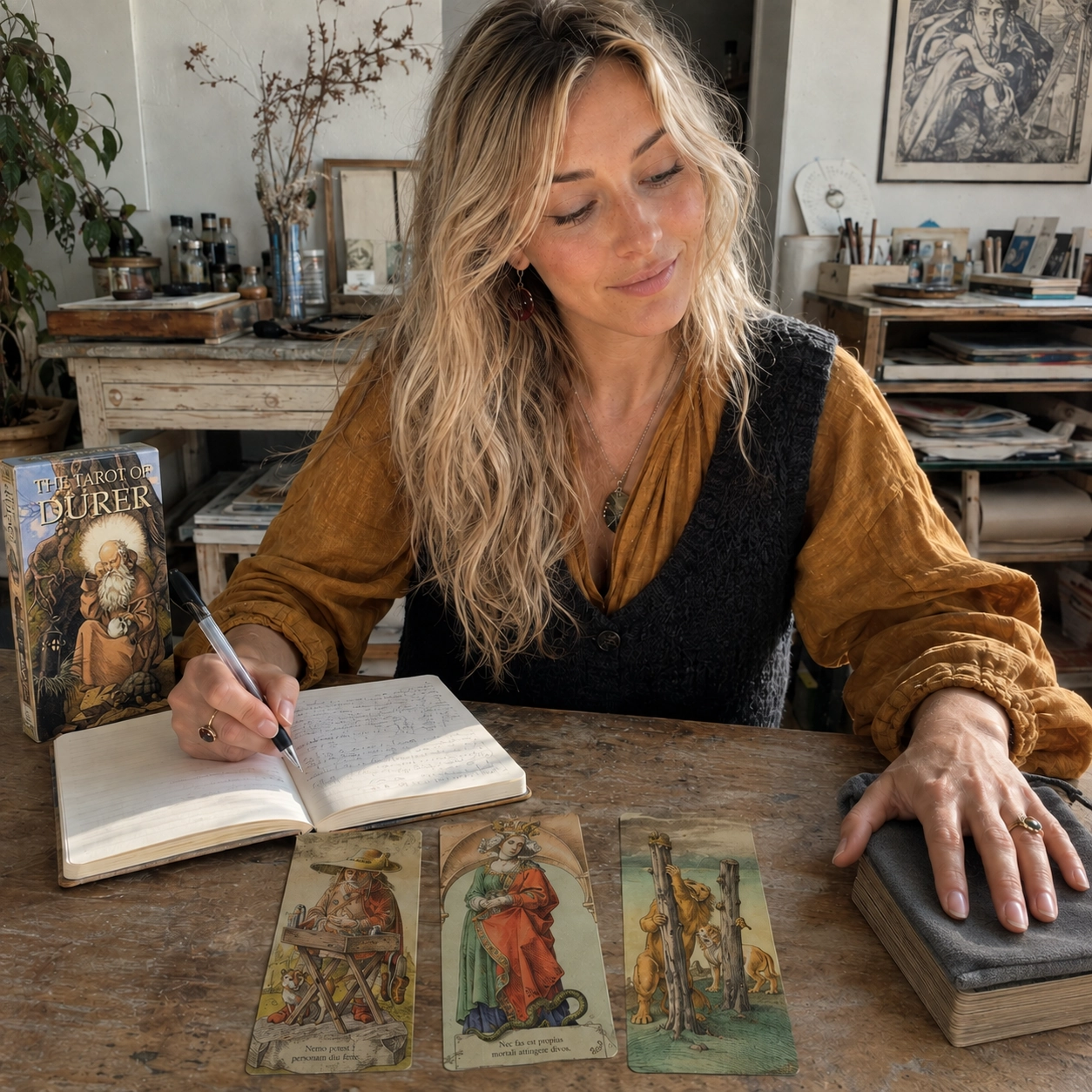
A note from Aurica
The Durer Tarot feels like opening a drawer in an old printmaker’s room and finding every tool still warm from use. Giacinto Gaudenzi’s fine lines hold so much weather and personality: dusty fields, watchful animals, worn cloth, sharp little gestures, and faces that seem to know more than they say. I love that its Renaissance atmosphere is never merely decorative; it gives each card the weight of a fable that has survived because it still tells the truth.
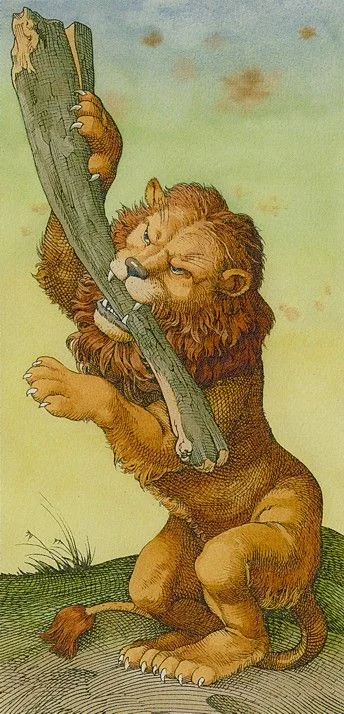
When I read with it, I begin with the action. The Magician is not posing with polished symbols; he is a working maker surrounded by practical tools, while the cat beneath his table adds its own alert curiosity. The High Priestess feels composed and guarded under her great arch, and the lions in the Two of Wands turn raw appetite into a question about direction. I let that visible movement speak first, then bring it back to the card’s familiar tarot role and the question in front of me.
This is a deck I would choose when a situation has layers, mixed motives, or an old pattern hiding inside a modern problem. Its animals can reveal instinct before the human figure admits anything, while the Latin motto plaques slow me down and keep me from reaching for an easy slogan. Beside gentler cards, that antique sharpness can feel protective; beside difficult ones, it can show exactly where pride, fear, wit, or desire has taken the reins.
What stays with me is the deck’s earthy intelligence. It can be strange, stern, and mischievous, yet it never makes human nature feel hopeless. The Durer Tarot invites you to look closely, trust the clue that keeps catching your eye, and remember that even an old story can reveal a brave new way forward.
The Durer Tarot review: old-world symbolism with teeth
The Durer Tarot is not a soft, pastel, beginner-keyword deck. It feels like a tarot pack pulled from a Renaissance studio: coins stamped with faces, birds watching from strange perches, foxes slipping through sword scenes, knights, saints, artisans, Latin mottoes, and bodies that look weighted by history. That mood is exactly why the deck is worth a proper TarotFans page.
This upgrade keeps the evidence clean. Sixty-three colored card fronts were matched to archived card codes and the labeled public Flickr archive for Giacinto Gaudenzi’s 2002 deck, making their Major numbers and suit ranks safe to name and sort. Eight monochrome images are genuine cards from Gaudenzi’s separate 1989 Tarocchi Dürer, while the remaining green image is the 2002 edition’s card back—not Death. Those nine images are grouped separately after the verified 2002 faces. No missing cards are invented.
As a reading deck, The Durer Tarot feels best when you want texture. It is strongest for questions about discipline, craft, status, hidden motives, family patterns, spiritual pressure, and the old habits that keep shaping a present choice. The images rarely give a one-word answer. They give you a scene, and the scene asks you to slow down.
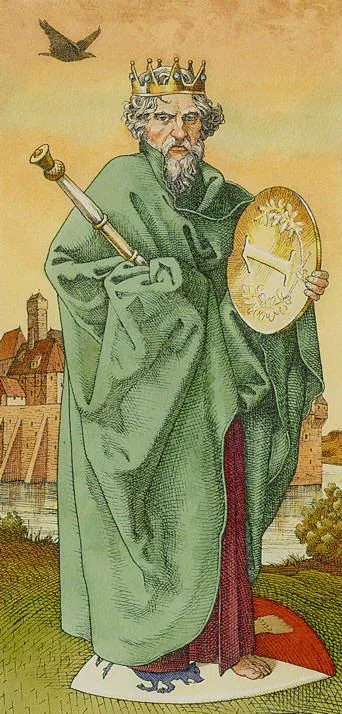
Card study
King of Pentacles: power, office, and the weight of symbols
The King of Pentacles has the authority of a portrait and the awkwardness of a person carrying too many symbols at once. The coin, bird, robe, and guarded posture make the image feel less like simple success and more like responsibility.
In a reading, I would use this image to ask who is holding power, what that power costs, and whether status is protecting the querent or trapping them in a public role.
How The Durer Tarot reads in practice
The deck is readable if you already know the bones of tarot. Pentacles still feel material, Swords still cut, Cups still carry feeling, and Wands still burn with force or effort. What changes is the emotional temperature. A fox beside blades makes strategy feel alive. A bird above a cup makes a feeling less private and more like a message. A knight is not just movement; he is movement inside a world of rank, heraldry, and consequence.
That makes The Durer Tarot a good choice for readers who like to blend traditional meanings with visual observation. I would not rush through it in a ten-minute spread. I would pull fewer cards, write down the animals and tools, and ask what each figure is doing with their hands. This is a deck where gesture matters.
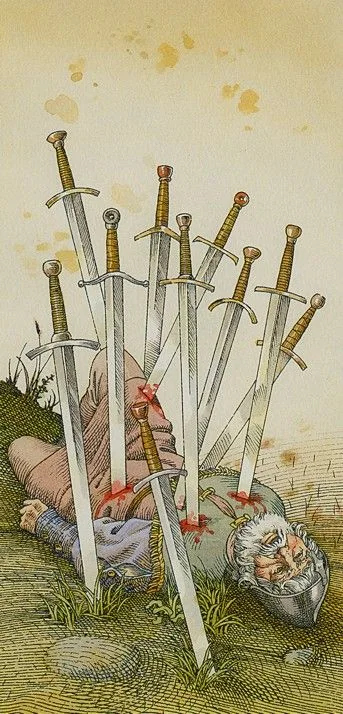
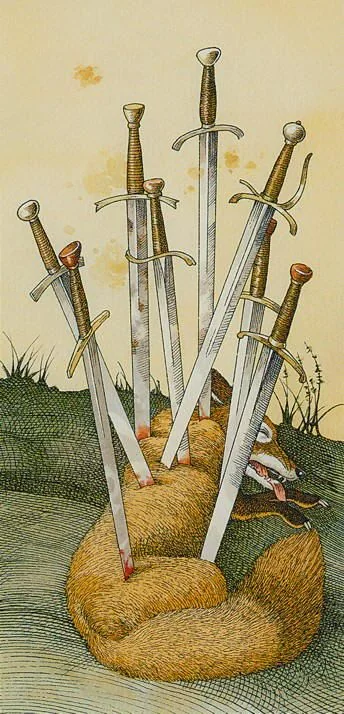
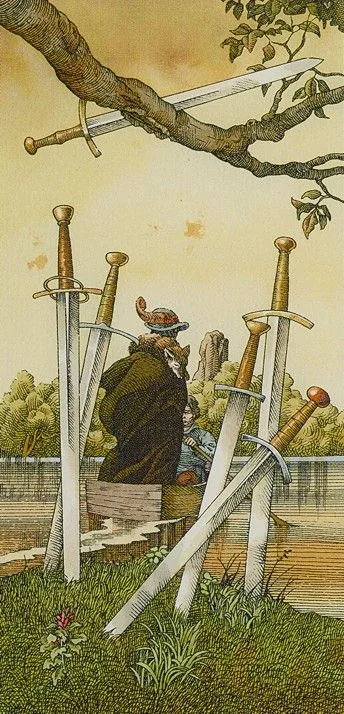
The Swords feel physical and clever
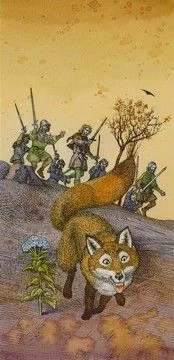
These four identified Sword scenes show why the deck has bite. The suit is not abstract intellect only; it becomes injury, strategy, concealment, and the mental work of moving through danger.
Artwork, sources, and gallery honesty
The TarotFans gallery is useful because it lets you see the verified 2002 deck sequence at once. It opens with the available Major Arcana, then groups the Minor Arcana as Wands, Cups, Swords, and Pentacles in ascending rank. Archived Albideuter card codes and exact source matches establish identities that visual interpretation alone could not safely prove—for example, whether a fox scene is the Seven or Eight of Swords.
The eight monochrome cards are still valuable because they come from Gaudenzi’s separate 1989 Tarocchi Dürer deck and carry readable Italian titles. They are labeled by edition and placed together after the verified 2002 cards. The final green image is explicitly labeled Rückseite—“reverse” or card back—in the archived source, so it is identified as a card back rather than misnamed Death.
Card study
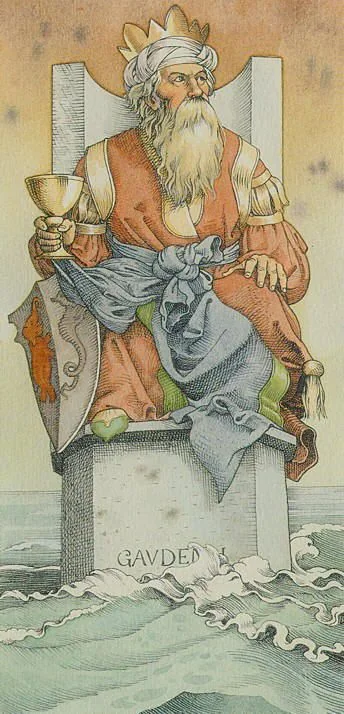
King of Cups: emotion as authority, not softness
The cup imagery in this deck is not only romantic or gentle. The throne-like posture, water, and formal costume make feeling look like something governed, inherited, and tested.
In relationship or family readings, this is the kind of image I would use to ask whether emotional authority is being used wisely. Is someone offering care, demanding loyalty, or sitting above a feeling they do not want to admit?
Reading slowly: questions that suit this deck
The Durer Tarot is especially useful when a question has history behind it. Try it for inherited family patterns, the cost of a public role, the difference between cleverness and avoidance, or the craft required to turn an intention into something real. These images tend to answer through posture, tools, animals, and consequences rather than a single comforting keyword.
A simple three-card spread works well: What has been inherited? What is being made now? What consequence needs to be faced? Keep the cards visible for a few minutes before reaching for a guidebook, and note which figure acts, which figure watches, and which object carries the most visual weight.
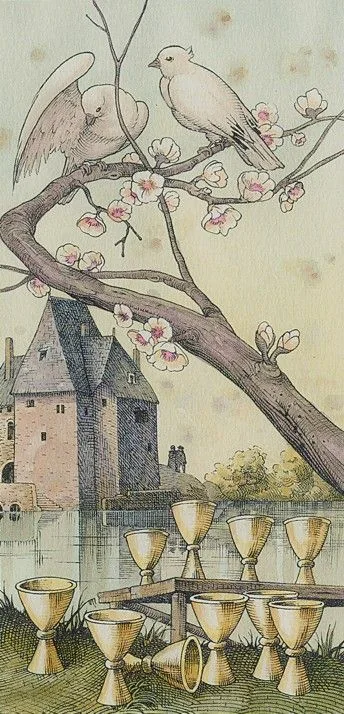
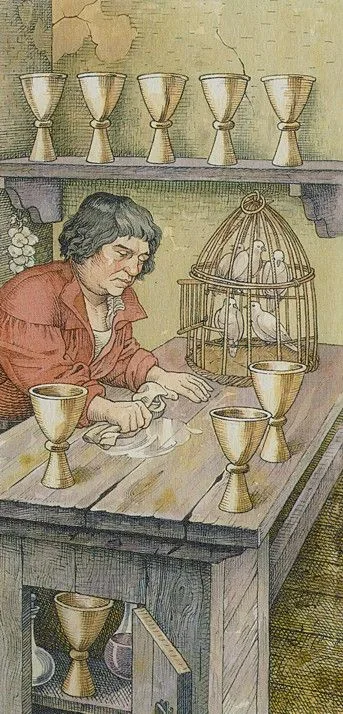
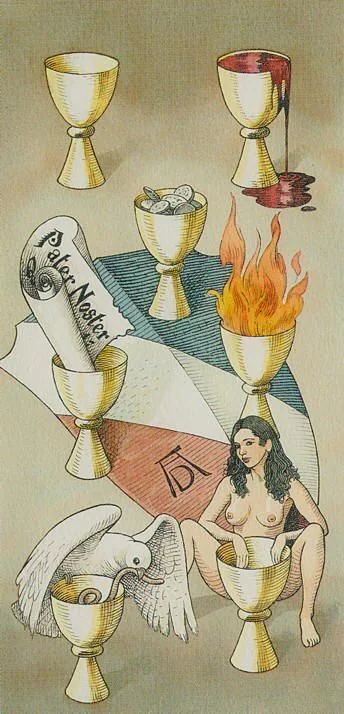
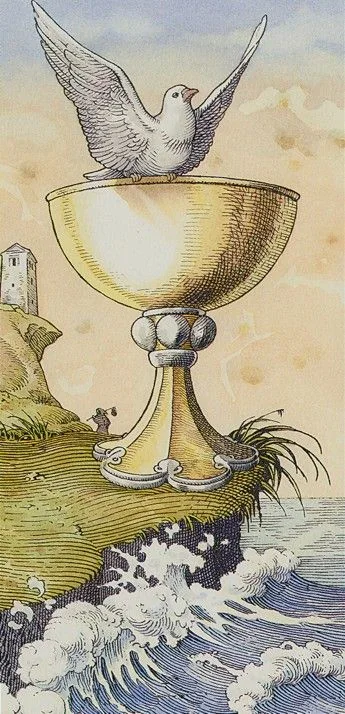
The Cups are tender but not simple
The Durer Tarot makes the emotional suit feel ceremonial, domestic, and sometimes haunted. Birds, tables, shelves, and vessels turn feeling into a place where memory collects.
Strengths and watch-outs
The biggest strength is atmosphere. The Durer Tarot has a coherent visual world, and that makes readings feel grounded. You are not jumping from one random fantasy painting to another. You are staying inside a strange historical language where animals, tools, coins, and gestures keep repeating. That repetition helps the deck build meaning over time.
The watch-out is accessibility. The art asks for patience, and some cards may not match a modern reader’s mental image of the Rider-Waite-Smith scene. If you need instant keywords, bright contrast, or a gentle self-care voice, this deck may feel stern. If you enjoy art history, symbolic clues, and old-world weirdness, that sternness becomes part of the appeal.
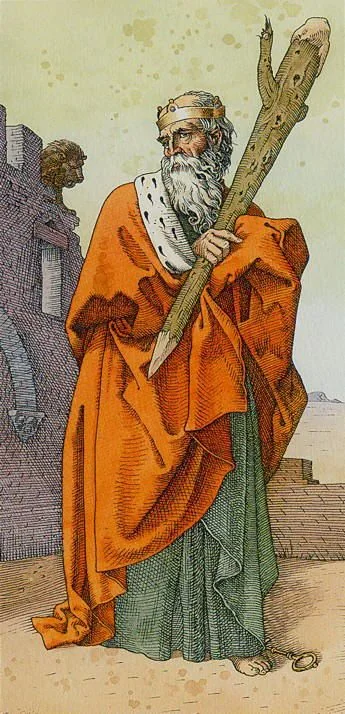
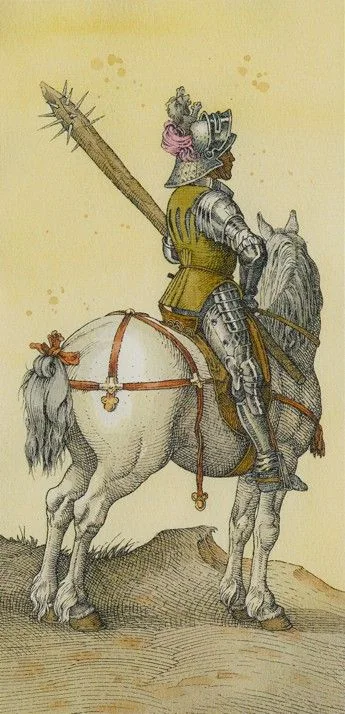
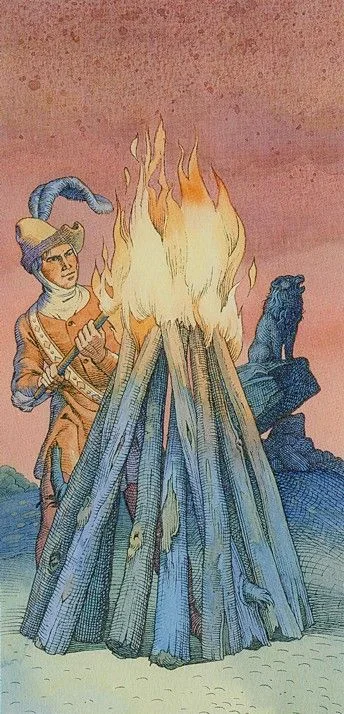
The Wands burn like work and will
The wand cards have a rougher energy: fire, riding, labor, strength, and the question of what a person does when desire needs discipline.
Who will love this deck
I would recommend The Durer Tarot to collectors of historical-feeling decks, intermediate readers, and anyone who likes tarot imagery with animals and old print energy. It is also a strong study deck because each card gives you something to investigate. You can read the tarot meaning, then look again at the bird, coin, blade, garment, landscape, and direction of the figure’s gaze.
It may also appeal to readers who want a deck that does not flatter every question. The Durer Tarot can feel practical, sometimes severe, and often quietly moral. It asks what someone has made, what they owe, what they fear, and whether the beautiful symbol in their hand is a blessing or a burden.
Card study
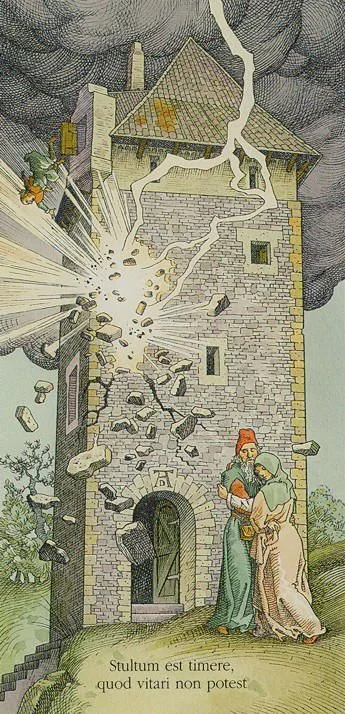
The Tower: disruption as visible architecture
The Tower-style card is one of the most immediate images in the recovered set: stone, lightning, falling structure, and figures dwarfed by an event larger than personal preference.
In a reading, I would not soften this too much. It points to the moment when a structure reveals its weakness. The useful question is what can be rebuilt honestly after the wall has already cracked.
What to know before buying The Durer Tarot
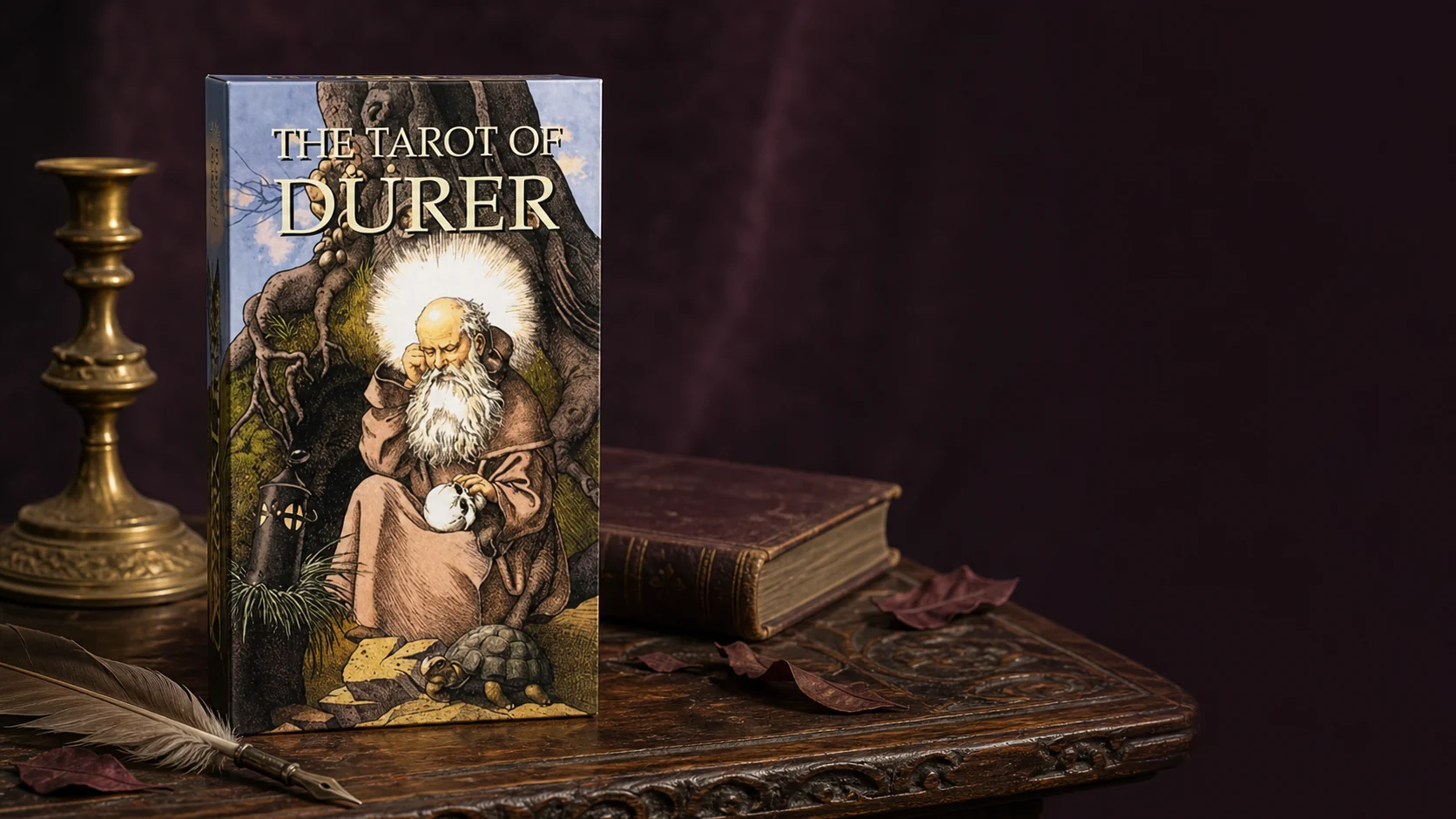
The verified product reference for this review is the 2002 Llewellyn/Lo Scarabeo edition illustrated by Giacinto Gaudenzi, ISBN 978-0738702452. Because older tarot decks can circulate through different sellers and conditions, compare the listing title, box front, ISBN, language, and included booklet before ordering. The product image should show the white-bearded figure beneath the large The Tarot of Durer title.
This is also a deck to buy for study rather than speed. The 2002 system contains 78 cards, while the TarotFans gallery currently verifies 63 of its faces. Eight additional images are labeled cards from Gaudenzi’s 1989 edition, and one is the 2002 card back. The 15 missing 2002 faces are not replaced with guesses.
The majors carry an antique voice
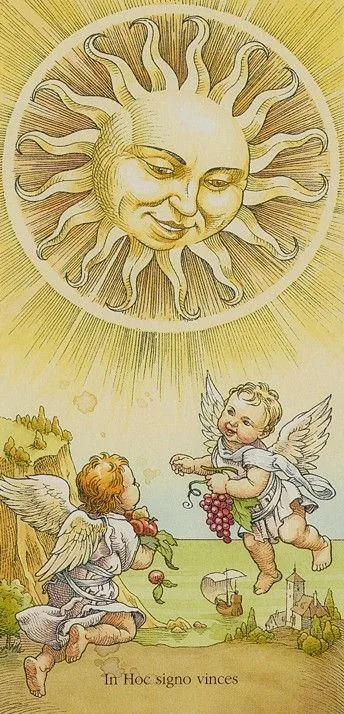
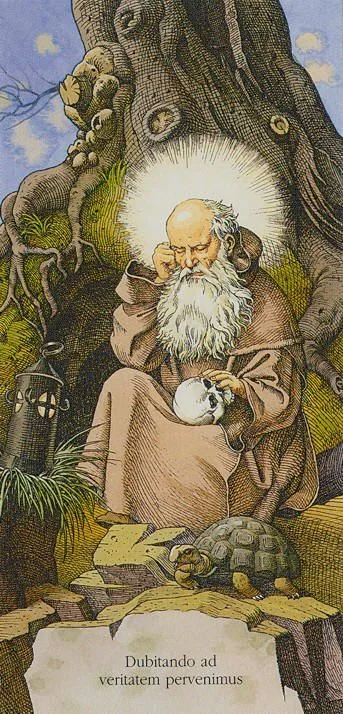
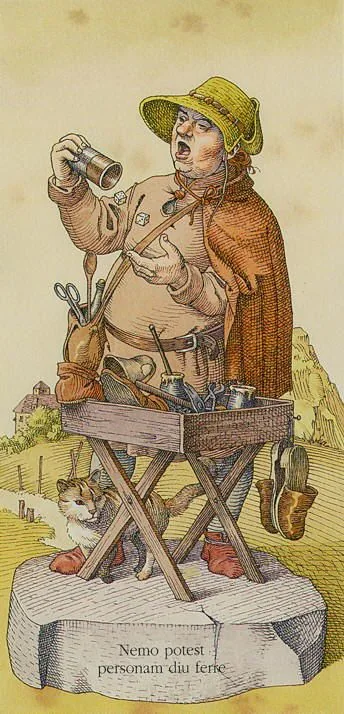
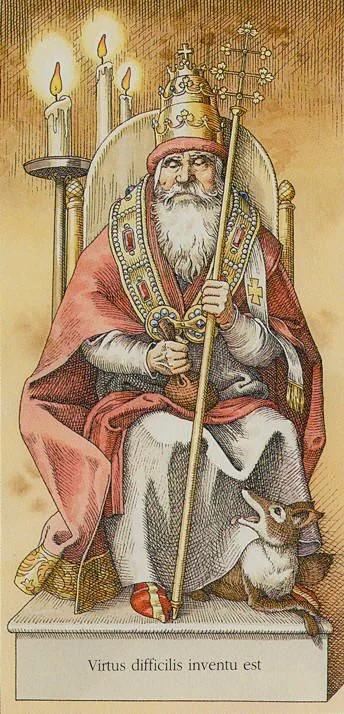
These verified Major Arcana images show why the deck feels rooted in older art. Their exact identities are confirmed by the numbered Flickr archive, while their posture, costume, and symbolic action keep the spiritual atmosphere distinctively Dürer-like.
Golden rule: read the action before naming the card
With The Durer Tarot, start with what the image is doing. Who holds the object? Which animal observes the scene? Where does the figure look, and what changes if the symbol is treated as a duty rather than a decoration? Let those visible actions form the first sentence of the reading before you add a traditional card meaning.
That habit keeps this historical-looking deck alive. It prevents the artwork from becoming a museum label and gives its strange birds, tools, coins, ladders, storms, and formal gestures a practical voice in the present question.
Final Thoughts
The Durer Tarot is a serious, beautiful, symbol-heavy deck for readers who like old-world art and visual study. It is not the simplest first tarot deck, and the current TarotFans archive verifies 63 of its 78 cards while separately preserving eight cards from Gaudenzi’s 1989 edition and the 2002 card back. The confirmed sequence is still enough to show the deck’s personality: clever animals, formal figures, hard lessons, and a Renaissance mood that rewards slow attention.
My recommendation is for patient readers, art-history lovers, and collectors who want a deck with a stern but rewarding visual language. If you prefer instant keywords and bright modern scenes, it may feel demanding. If you enjoy finding meaning in gestures, animals, craft, rank, and consequence, The Durer Tarot has the kind of depth that grows with repeated readings.
The Durer Tarot FAQ
What can I preview in The Durer Tarot gallery?
The gallery presents the card faces and related archival images that could be identified confidently from labeled sources. Tap any card to open the larger carousel preview.
How were the cards identified and ordered?
The colored faces were matched to archived card codes and a labeled public Tarot of Dürer album. They are arranged as Major Arcana followed by Wands, Cups, Swords, and Pentacles, with related archival artwork presented separately.
What style is The Durer Tarot?
It has a Renaissance and Albrecht Dürer-inspired atmosphere: old-world figures, animals, coins, cups, blades, wands, Latin mottoes, and linework that feels closer to an illuminated print than a modern digital fantasy deck.
Is The Durer Tarot beginner friendly?
It can work for beginners who like historical art, but it is better for readers willing to study. The cards reward slow looking, journaling, and comparison with traditional tarot meanings.
Where can I buy The Durer Tarot?
Use the product link on this page as a starting point, then check the listing photos, edition details, seller, and availability before buying. Older art decks can move in and out of stock.