Russian Tarot of St. Petersburg Cards
Explore the verified Russian Tarot of St. Petersburg card fronts in deck order. Choose an official group below, then open any card for a larger carousel view.
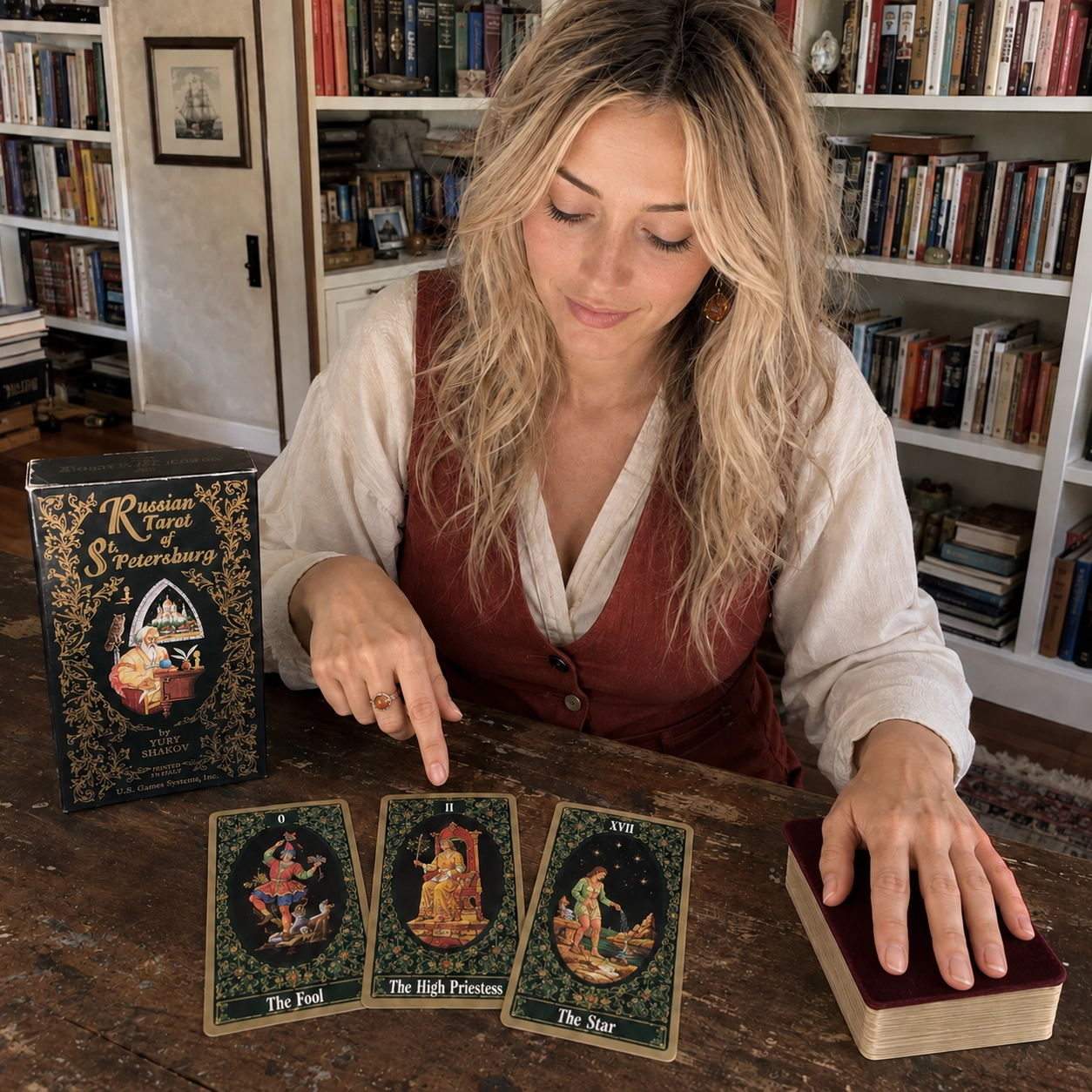
Aurica’s Quick Take
Russian Tarot of St. Petersburg is a classic 78-card tarot deck painted by Russian artist Yury Shakov. It keeps a familiar tarot structure, but dresses it in the jewel-bright world of Russian lacquer miniature painting: black backgrounds, glowing reds and golds, dramatic costumes, and small scenes that feel like folk tales held under candlelight.
This is a beautiful choice if you want a Rider-Waite-Smith-friendly deck with a very different cultural and visual flavor. It reads clearly enough for beginners, but the art has enough depth for collectors and experienced readers who enjoy symbolism, color, costume, and historical mood.
I am always caught by the way these cards seem to glow out of darkness. The Fool’s bright clothes skip against the black lacquer ground, while The High Priestess sits with a quieter, guarded weight and The Star opens a small pool of hope. I notice which colour or gesture reaches me first, then ask what that detail is saying about the question in front of me.
In a spread, I let the ornate gold vines act like a frame around the emotional centre. They make every scene feel precious, but the figures are rarely decorative: a turned shoulder can suggest reluctance, a raised hand can become a warning, and a patch of red can show where desire is running hottest. I compare that first feeling with the card’s familiar tarot role and with its neighbours before settling on a practical message.
I reach for this deck when a reading needs honesty with a little ceremony. Its storybook beauty can soften a difficult truth without hiding it, especially when a choice has become tangled in old habits. Each bright figure stepping out of the lacquer-dark background reminds me that one clear, courageous next step can bring the whole path back into view.
What Makes This Deck Special?
The first thing most readers notice is the art style. The cards look like tiny lacquer boxes or painted icons: dark backgrounds, oval frames, luminous details, and figures that feel theatrical without becoming messy. The deck has a formal, storybook quality. It is not soft or casual; it feels more like opening a cabinet of old tales, saints, rulers, wanderers, and village scenes.
Yury Shakov was known for Russian miniature work, and that matters here. The cards do not feel like a standard tarot deck with Russian decorations added later. The whole world of the deck is built from that miniature-painting language. Even simple pip cards feel dressed, staged, and intentional.
Art Style: Black Lacquer, Gold Light, and Storybook Drama
The Russian Tarot of St. Petersburg has a rich, polished look. Many cards place bright figures against deep black space, which makes the colors feel even more jewel-like. Red, gold, green, purple, and blue do a lot of emotional work. A bright robe can make a character feel confident; a heavy dark background can make the same scene feel private, serious, or fated.
Because the scenes are compact, the deck rewards slow looking. You may not get a wide landscape or a busy modern collage. Instead, you get one focused image that asks: Who is holding power here? What is being offered? What does this face or gesture reveal?
How the Russian Tarot of St. Petersburg Reads
In readings, this deck is direct but elegant. It often gives a clear emotional picture first, then a deeper symbolic layer after you sit with the card. It is especially good for questions about duty, pride, family patterns, ambition, loyalty, creative discipline, and the difference between outer appearance and inner truth.
The deck follows a mostly familiar tarot structure, so you do not need to learn a completely new system. The suit naming can feel a little old-world: Wands may appear as Clubs, and Pentacles may appear as Coins. That is not a problem; it simply changes the flavor. Clubs still carry fire, action, effort, and will. Coins still carry earth, resources, work, body, money, and practical life.
Beginner Friendliness
This deck can work for beginners, especially if you already know the basic Rider-Waite-Smith meanings or you are learning with a guidebook beside you. The images are not abstract in a confusing way. Most cards show people, actions, objects, and moods you can describe in plain language.
The main challenge is the deck’s old-world tone. Some cards feel formal, stern, or historically charged. A brand-new reader may need time to stop asking, “What does this exact costume mean?” and start asking, “What is the person doing, feeling, protecting, or avoiding?” Once you read it that way, the deck becomes much easier.
Reading Example: Easy Question
Question: “What should I focus on today?”
If you draw a Coins card, the answer is usually practical: handle the task, protect your energy, care for your body, or make one grounded choice. In this deck, Coins often feel like real work in real life, not vague abundance talk. The message may be as simple as: make the budget, clean the desk, finish the thing you keep postponing.
Grounded daily guidance
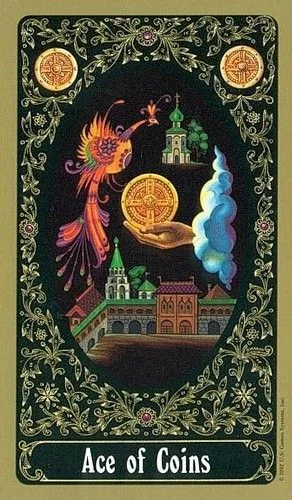
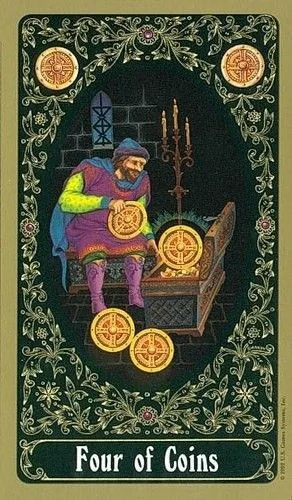
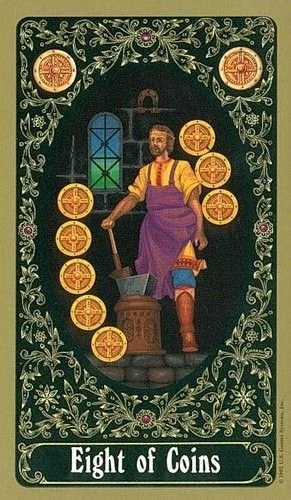
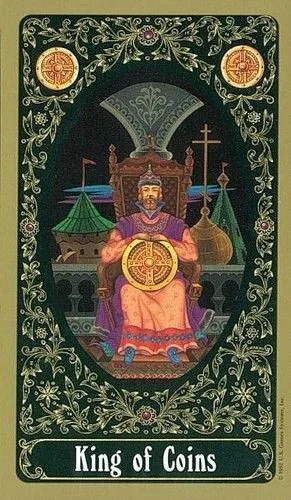
Coins in this deck feel practical and serious: money, craft, responsibility, skill, and the kind of stability you build one careful action at a time.
Reading Example: Medium Question
Question: “What is happening in this relationship?”
The Cups suit can be tender, but it does not always feel soft here. The Russian miniature style gives emotional cards a sense of ritual and consequence. A Cups card may show affection, longing, memory, or loyalty, but it can also ask whether love is being acted out as duty, performance, or genuine care.
Card study
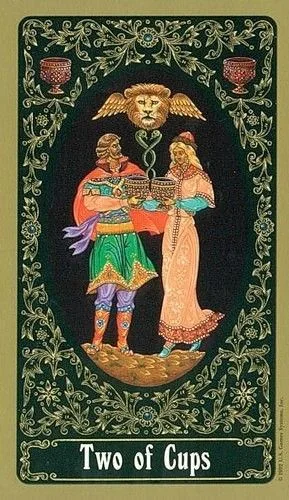
2 of Cups: a promise that must be lived, not just spoken
Under the winged lion and the two cups set high in the vine border, a richly dressed pair stand close and meet each other through a shared vessel. His green and coral clothing feels lively beside her softer peach gown, yet neither figure disappears into the other. Upright, I read this as mutual regard made visible through an exchange; in shadow, the ceremony may be prettier than the agreement. Beside guarded Swords, it asks for honest terms, while warm Cups can show a bond that is truly being tended.
Listening beneath the ceremony
The painted formality can be enchanting, but I never let it answer for the people in the spread. After the promise of the Two of Cups, I listen for what the surrounding faces and colours reveal about care that is offered freely, duty that has gone quiet, or affection waiting to be spoken aloud.
Emotional weather
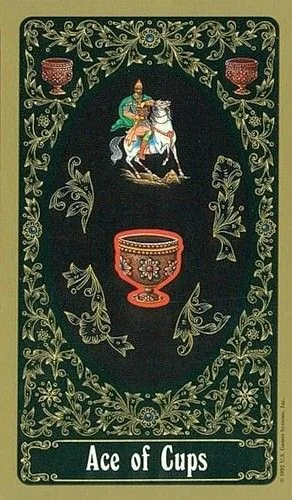
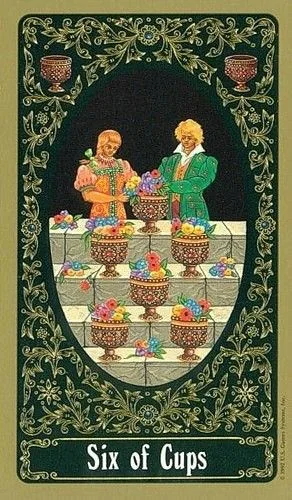
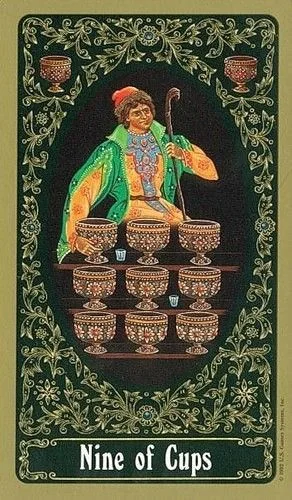
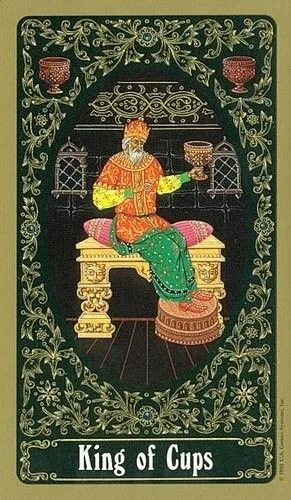
The Cups cards are lovely for emotional pattern reading because the deck makes tenderness, pride, memory, and self-control all visible.
Reading Example: Hard Question
Question: “What truth am I avoiding?”
This is where the deck becomes powerful. The darker background and formal figures make shadow cards feel serious without becoming sensational. The Devil, Swords cards, and some Major Arcana can point to control, fear, old authority, mental pressure, or a pattern that has become too normal to question.
Card study
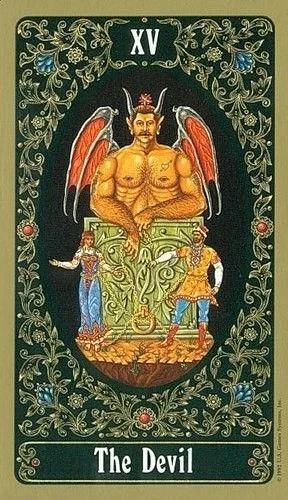
The Devil: power, fear, and the habit you keep obeying
The horned, red-winged figure sits above two smaller people who face him from either side of a green, carved throne. The black field makes his orange body and spread wings feel inescapably large, while the tiny figures below show how power can distort proportion in our minds. Upright, this can expose a habit, fear, or authority we keep feeding; in shadow, shame itself becomes another chain. In a reading, I look to the neighbouring card for the first place where choice is still alive.
Where the pressure gathers
The Devil can make the whole table feel darker, so I pause before turning intensity into fate. The next four cards help me trace whether the pressure comes from an ending, an old fear loop, a harsh thought, or the relief that arrives when denial finally loosens its grip.
Shadow and pressure
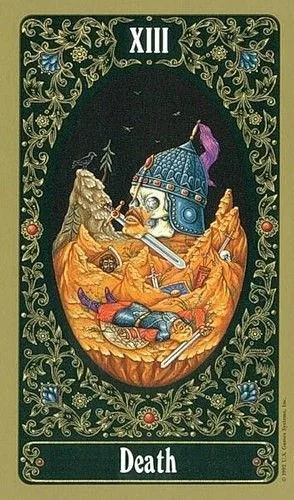
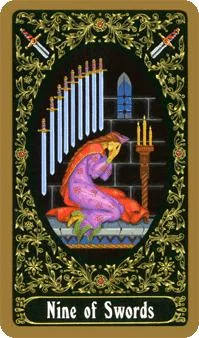
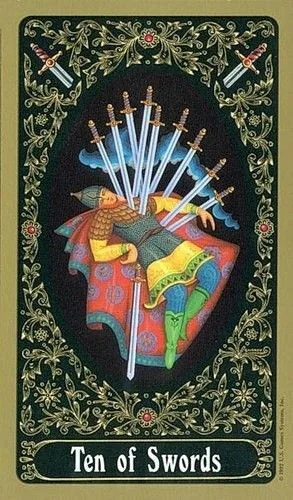
These cards are best approached gently. They are not threats; they are mirrors for endings, fear loops, pressure, and the moment when truth finally becomes more useful than denial.
Best Uses for This Deck
- Reflective personal readings where you want a serious, story-rich tone.
- Creative and artistic questions because the deck is full of color, craft, costume, and mood.
- Family, tradition, and duty readings where the tension between personal desire and social role matters.
- Collector study if you love historic, cultural, or miniature-inspired tarot art.
- Beginner practice with a twist if you want familiar tarot meanings in a more unusual visual world.
Card study
Judgement: hearing the call beneath the old story
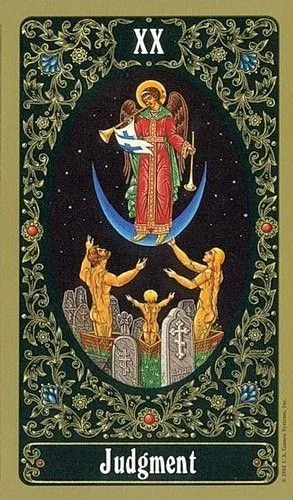
Against a star-pricked black sky, a haloed angel stands on a blue crescent and sounds a trumpet over three rising figures among marked graves. Red and green robes glow inside the gold-vined frame, so the call feels both solemn and alive. Upright, Judgement asks us to answer what we already know and step beyond an old identity; in shadow, we may keep waiting for permission. Nearby cards show whether the needed response is forgiveness, responsibility, or a brave new beginning.
When the old story turns
Judgement does not whisper in this deck; its trumpet opens the sky. I follow that call into the Major Arcana around it, watching how innocence, courage, collapse, and awakening describe the chapter that is ending and the truer life asking to begin.
Major Arcana turning points
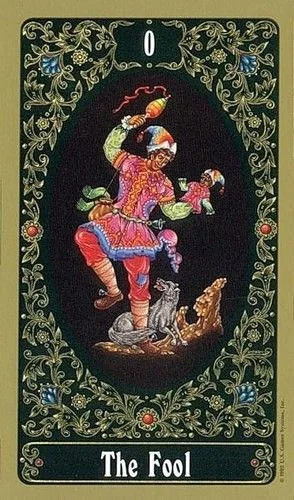
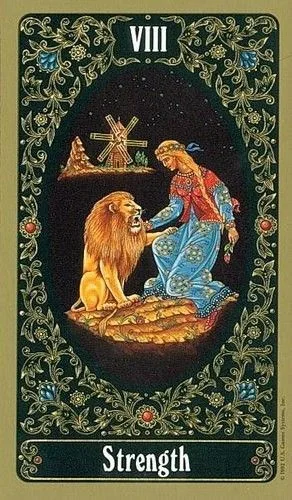
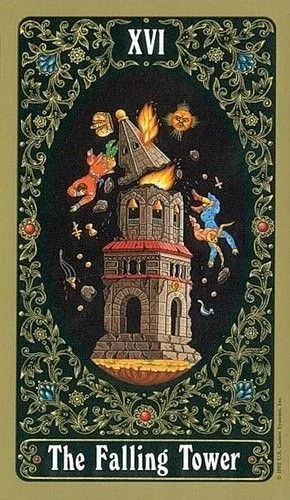
The Major Arcana feel grand in this deck, but still readable: beginnings, courage, collapse, awakening, and the choice to live with more truth.
What to Know Before Buying
If you want soft pastel tarot, modern diversity, or loose intuitive collage, this may not be your perfect match. Russian Tarot of St. Petersburg is more formal, old-world, and theatrical. Some readers will love that immediately. Others may find it beautiful but emotionally distant at first.
Also remember the suit language: Clubs can stand where you may expect Wands, and Coins can stand where you may expect Pentacles. Once you know that, the deck becomes much easier to use.
For collectors, this is one of those decks that feels distinctive on the shelf. For readers, it is best when you want the cards to feel like serious little paintings rather than casual daily prompts.
TarotFans Reading Tip
With the Russian Tarot of St. Petersburg, do not rush to decode every costume or historical reference. Start with the human scene. Ask: Who has power? Who is waiting? Who is speaking? Who is silent? What is being protected? Once you answer those simple questions, the deeper symbolism opens naturally.
Final Thoughts
Russian Tarot of St. Petersburg is a rich, dramatic, and memorable tarot deck. It brings traditional tarot into a world of black lacquer shine, folk-tale feeling, royal color, and miniature-painting precision. I like it most for readers who want beauty with gravity: a deck that can be elegant, stern, tender, and honest in the same spread.
If the art calls to you, this deck is absolutely worth studying. It is not the most casual beginner deck, but it is clear enough to learn with and deep enough to keep returning to.

Russian Tarot of St. Petersburg FAQ
Is Russian Tarot of St. Petersburg based on Russian lacquer miniature art?
Yes. The deck is strongly shaped by Russian lacquer miniature and folk-art traditions: dark backgrounds, glowing colors, careful borders, and dramatic figures. That art style is one of the main reasons the deck feels so different from many standard Rider-Waite-Smith decks.
Does Russian Tarot of St. Petersburg use Clubs and Coins instead of Wands and Pentacles?
Many readers will see the suits named as Clubs and Coins. In practice, Clubs read like Wands: energy, action, will, conflict, and creative fire. Coins read like Pentacles: money, work, resources, health, and grounded everyday life.
Is Russian Tarot of St. Petersburg good for beginners?
It can be good for beginners who enjoy detailed art and are willing to learn slowly. The structure is familiar, but the tone is more formal and historical than many modern beginner decks. If you want the easiest possible first deck, choose a simple Rider-Waite-Smith clone; if you want beauty and depth while learning, this deck can work well.
What kind of guidebook comes with Russian Tarot of St. Petersburg?
Most editions come with a small companion booklet rather than a large modern guidebook. Expect basic meanings and deck notes, not a full course. I recommend pairing it with a general tarot guide if you are still learning card meanings.
What reading style suits this deck best?
This deck suits reflective, symbolic, and story-based readings. It is especially strong for questions about power, duty, family patterns, craft, tradition, ambition, and emotional self-control. It can do quick daily pulls too, but it shines when you give the images time.
Is Russian Tarot of St. Petersburg more of a collector deck or a working reader deck?
It can be both. Collectors love the distinctive art style, while working readers may appreciate its clear tarot structure and serious mood. If you connect with formal, jewel-toned, old-world art, it is very usable in real readings.