Gill Tarot Card Gallery
Browse the complete Gill Tarot card gallery in official deck order. Tap any card to open a larger carousel view.
Aurica’s Quick Take
I read the Gill Tarot as a study deck: bright, orderly, and surprisingly meditative. It is not trying to be a modern cinematic tarot. Instead, it gives you pips, numbers, courts, majors, keywords, and symbolic diagrams that ask for patient reading.
That makes it especially good for journaling, spiritual questions, Kabbalah-adjacent study, Thoth-influenced readers, and anyone who wants tarot to feel like a language of pattern. If you want soft fantasy scenes or fully illustrated everyday situations on every minor, this probably will not be your easiest first deck.
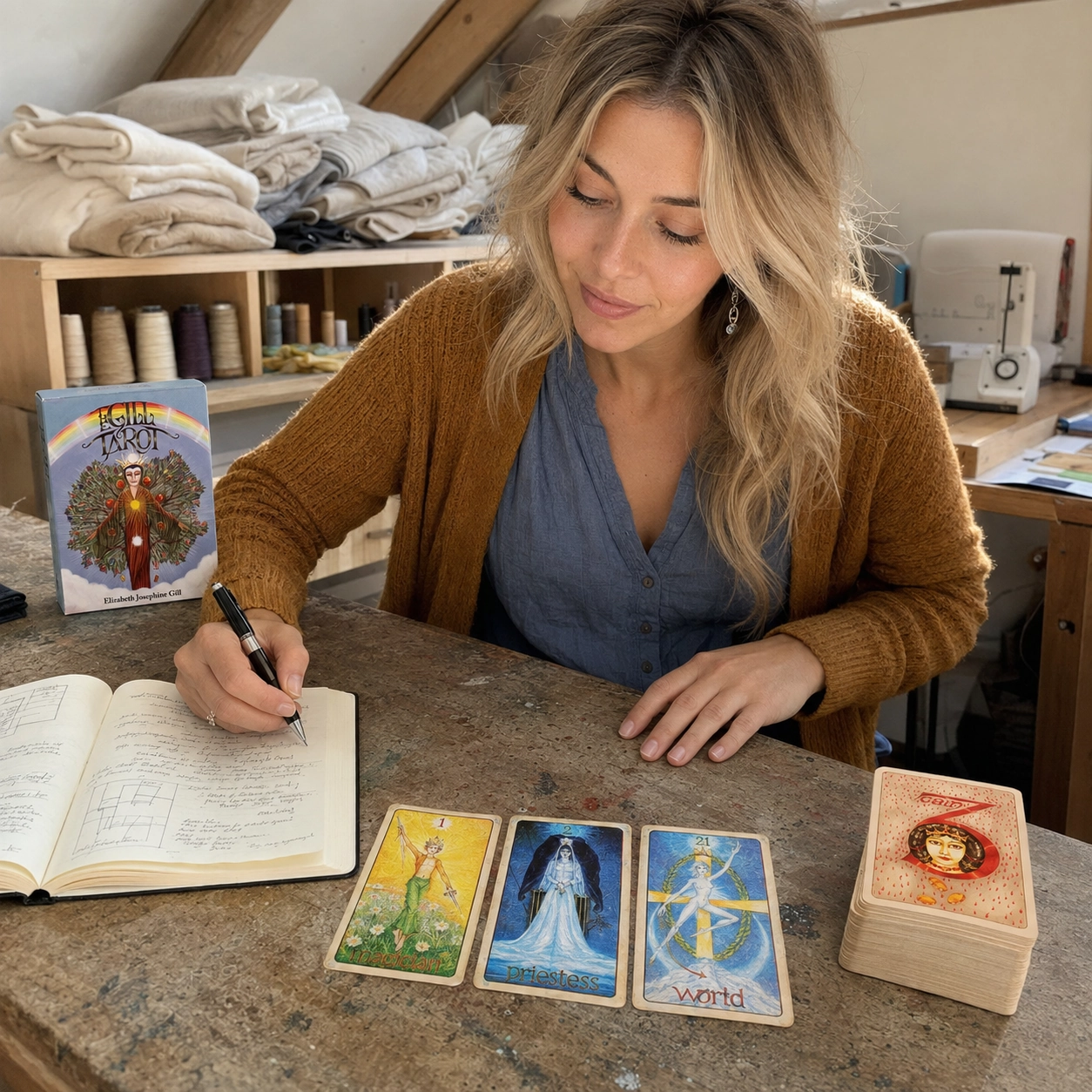
What draws me back is the way a single colour or shape can begin to hum once the cards are together. The Magician’s yellow feels like a lamp switched on; the Priestess gathers the room into blue stillness; the World opens that quiet into a wider circle. I begin with the printed keyword, then notice where my eye keeps returning, compare that feeling with the card’s traditional work, and test it against the question and its neighbours. The deck rewards that slow conversation rather than a hurried first impression.
I especially enjoy Gill Tarot when a reading needs structure without losing its soul. Its diagrams can make a tangled choice feel like coloured threads laid across a table: one shows the pressure, another the missing balance, and a third the next honest movement. Give these cards time, keep a notebook nearby, and trust yourself to notice the pattern they are patiently revealing—there is real confidence waiting in that clear, colourful language.
Gill Tarot is a calm, esoteric tarot for readers who like color, number, keywords, and spiritual structure more than busy story scenes. The artwork by Elizabeth Josephine Gill feels simple at first, but the cards keep opening up when you sit with their geometry, elemental color, and one-word prompts.
This upgraded TarotFans review uses the complete, deck-specific Gill Tarot card set in official order, prepared from the supplied source scans for a clearer full-gallery experience.

Card study
Magician: will, focus, and the first clean act
The Magician card is one of the clearest examples of this deck’s voice. The figure stands in bright yellow light, with the number one and a simple field of symbols around him. It feels less like stage magic and more like directed attention.
In readings, I would use this card to ask what tool is already in the querent’s hand. Gill Tarot often turns a card into a meditation: notice the color, the number, the posture, and the keyword before rushing to a memorized meaning.
Artwork, mood, and symbolism
The deck’s art has a handmade directness: strong color blocks, simple figures, pips, circles, triangles, and elemental symbols. Many cards include a keyword such as Construction, Skill, Despair, or Beauty, so the deck gives a reader a doorway without closing down interpretation.
Because the imagery is symbolic rather than scene-heavy, the cards work best when you read them slowly. A cup card may speak through shape and emotional weather. A wand card may speak through heat, direction, or pressure. The minors are not empty; they are more like spiritual diagrams.
A four-card study spread for focus


Use this line when you need to begin carefully: what wants to start, what skill can shape it, what inner knowing should be protected, and what balance keeps the choice clean.
How Gill Tarot reads in practice
In a practical reading, Gill Tarot is direct but not loud. It tends to show the architecture underneath the question: the number pattern, the emotional pressure, the place where energy is blocked, or the point where a choice needs discipline. I like it for questions that deserve reflection rather than instant reassurance.
The court cards are especially interesting because they often carry titles such as Prince, Princess, Queen, or King alongside keywords like Nurture, Action, and Reflection. That helps the court feel like an active quality instead of just a personality type.
Card study
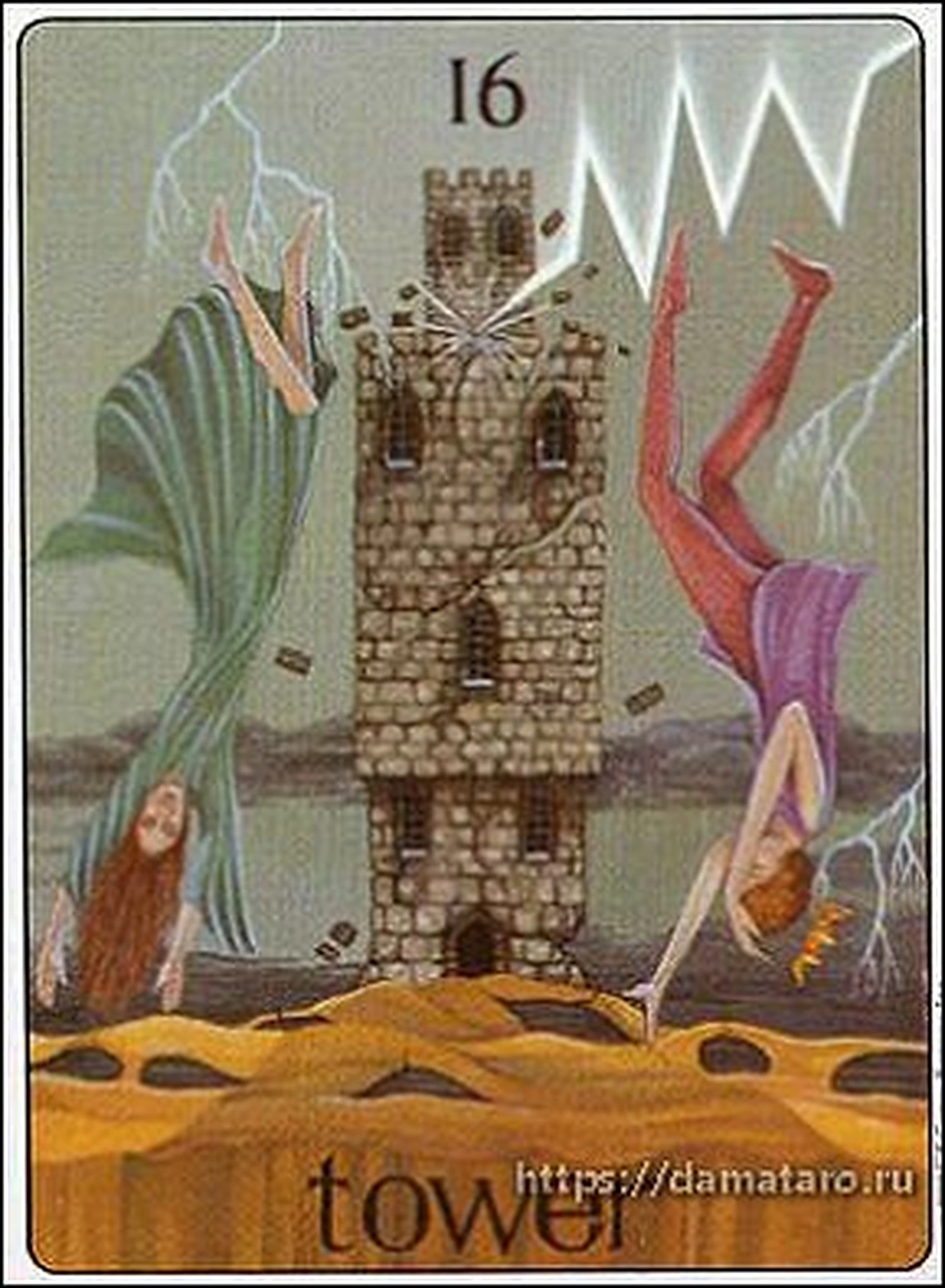
Tower: a pattern that can no longer hold
The Tower is stark and memorable here. The broken structure, lightning, falling body, and grey landscape make the message clear without needing extra decoration.
I would read it as a point where truth interrupts the old structure. In Gill Tarot’s language, the card asks what has become too rigid, what shock is revealing, and where freedom begins after the false wall breaks.
Beginner friendliness
Gill Tarot can work for beginners who enjoy keywords, number study, and symbolic art. It is harder for beginners who rely on fully illustrated Rider-Waite-Smith scenes, because many minors ask you to read pips and abstract shapes rather than tiny everyday stories.
My simple beginner method is: name the card, read the printed keyword, notice the number, describe the dominant color, and then write one sentence about what the image is doing. That method keeps the reading grounded and gives the deck room to teach.
When the answer needs patience
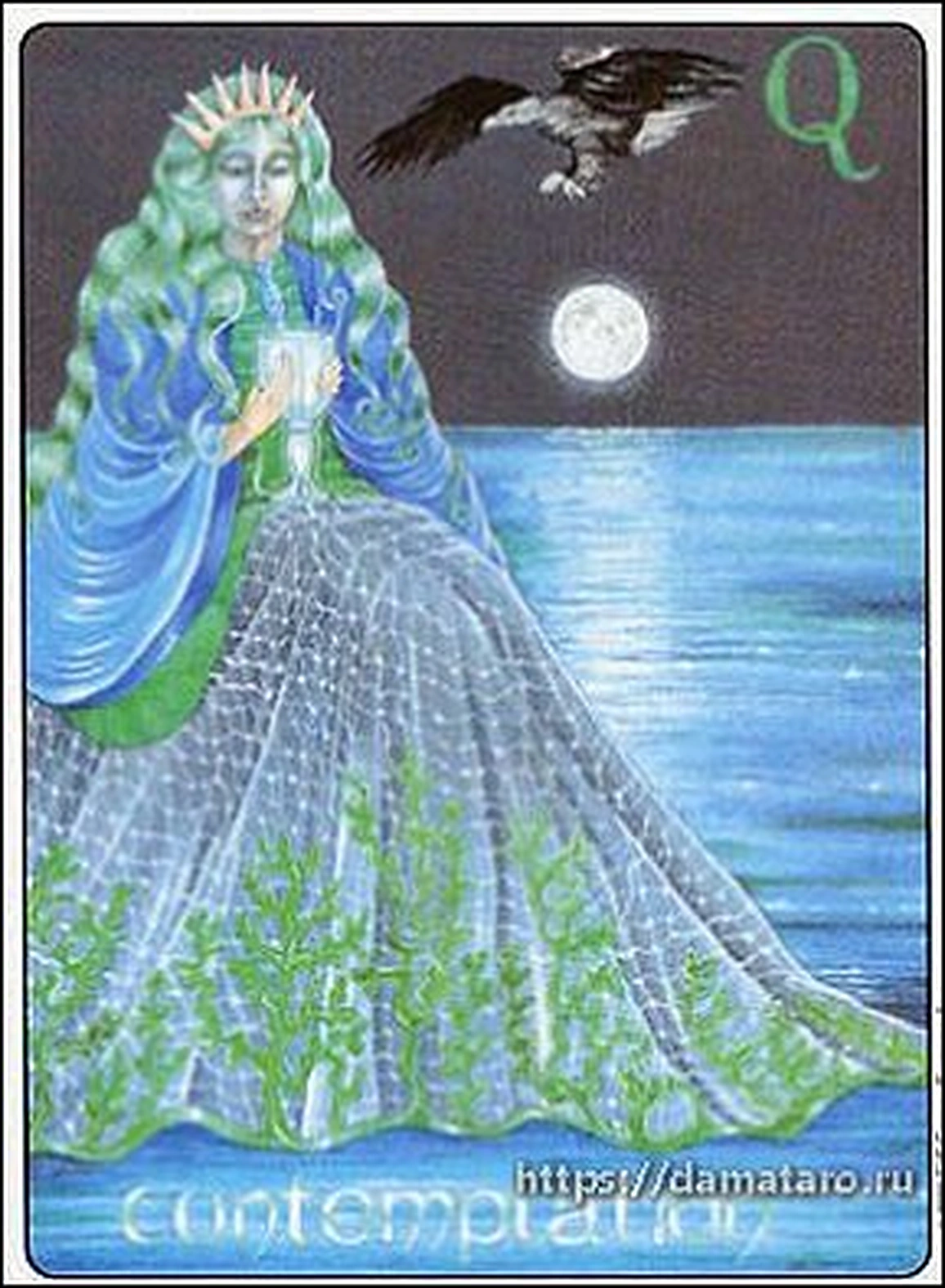
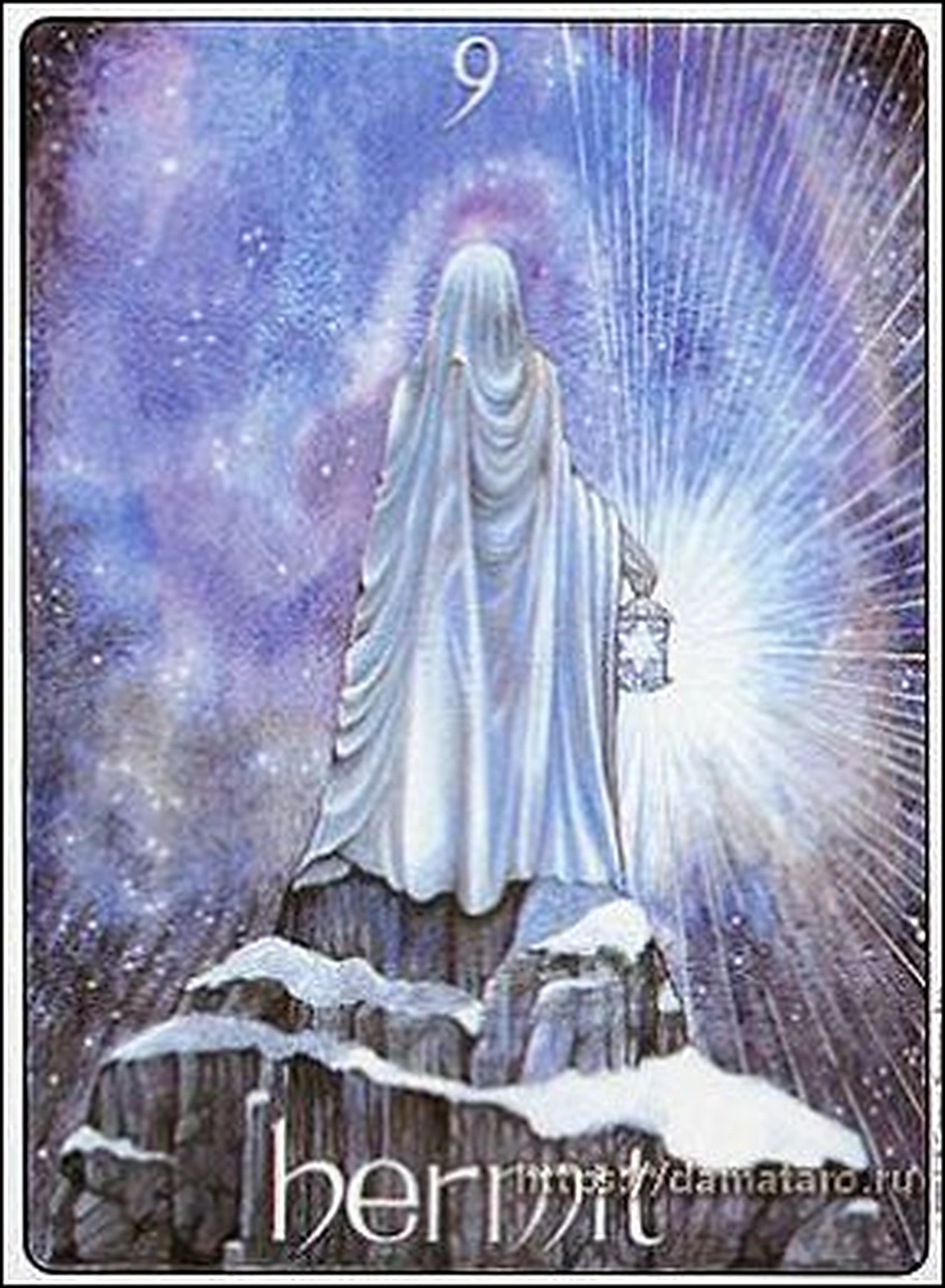


This sequence is for quiet questions. It moves from reflection, to solitude, to careful blending, to the mystery that still needs time before it becomes clear.
Best readings for this deck
I like Gill Tarot for meditation, spiritual study, shadow-pattern questions, year-ahead themes, decision work, and journaling prompts. It is also useful when a querent keeps repeating the same situation and wants to see the underlying pattern instead of only hearing advice.
For love readings, I would keep the question mature and reflective: what is the pattern, where is balance missing, what is projection, and what does growth ask now? For career readings, I would focus on discipline, direction, timing, and the relationship between vision and practical action.
Card study
Strength: calm authority instead of force
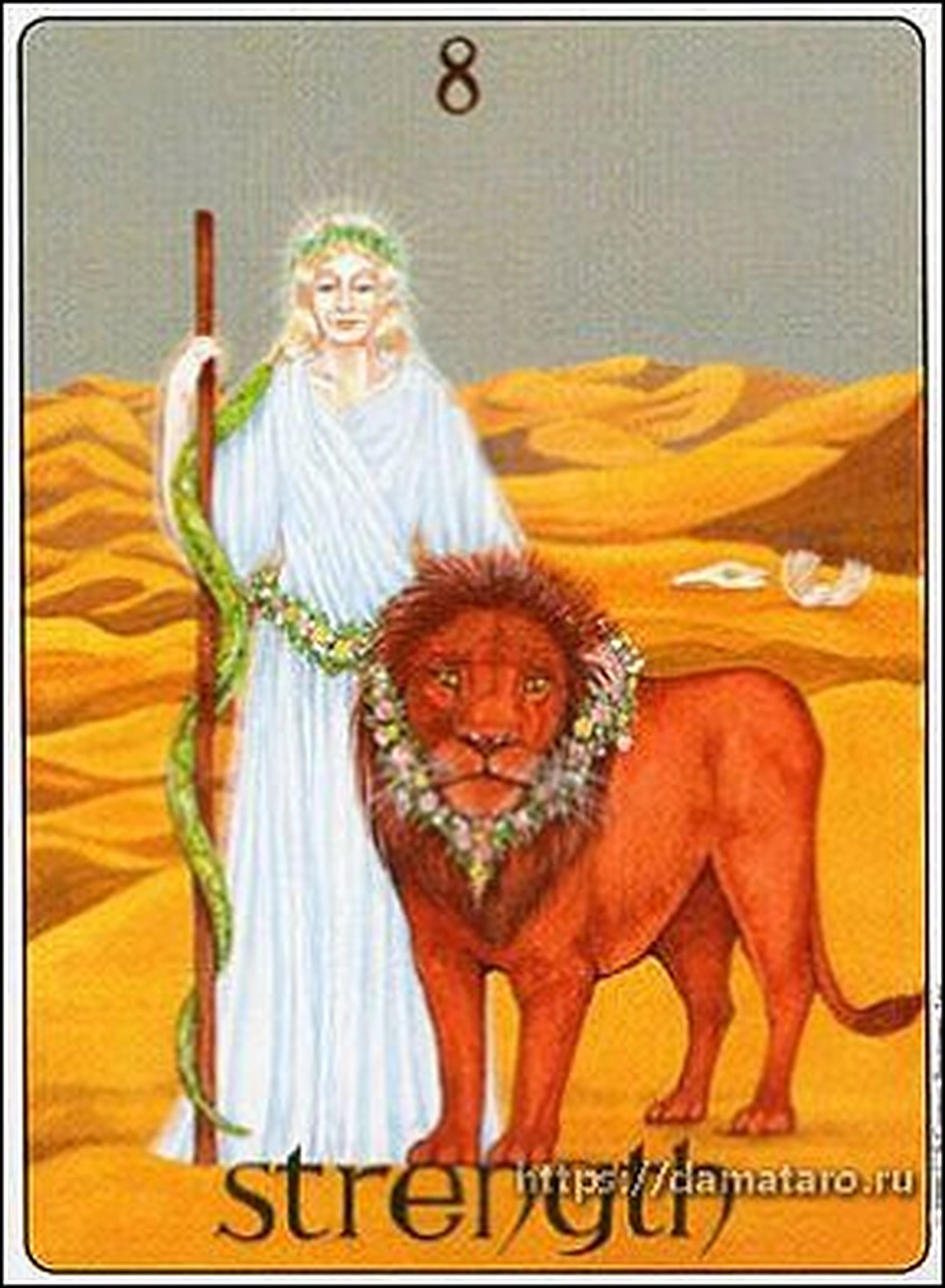
Strength shows one of the deck’s gentler forms of power. The figure and lion are steady, warm, and iconic, with the number eight making the card feel balanced and contained.
In a reading, I would not treat this as domination. It is the courage to hold the center, stay present, and guide instinct without shaming it. That message fits Gill Tarot’s best side: clarity with restraint.
Pros and cons
| What works beautifully | What to know first |
|---|---|
| Strong symbolic structure rewards journaling, meditation, and repeated study. | The TarotFans gallery presents the complete verified Gill Tarot set in official deck order. |
| Printed keywords make abstract minors easier to enter without flattening the cards. | Readers who want fully illustrated RWS-style scenes may find many cards sparse. |
| Bold color and simple geometry make spreads easy to scan for patterns. | The deck’s esoteric voice can feel more like study than casual comfort. |
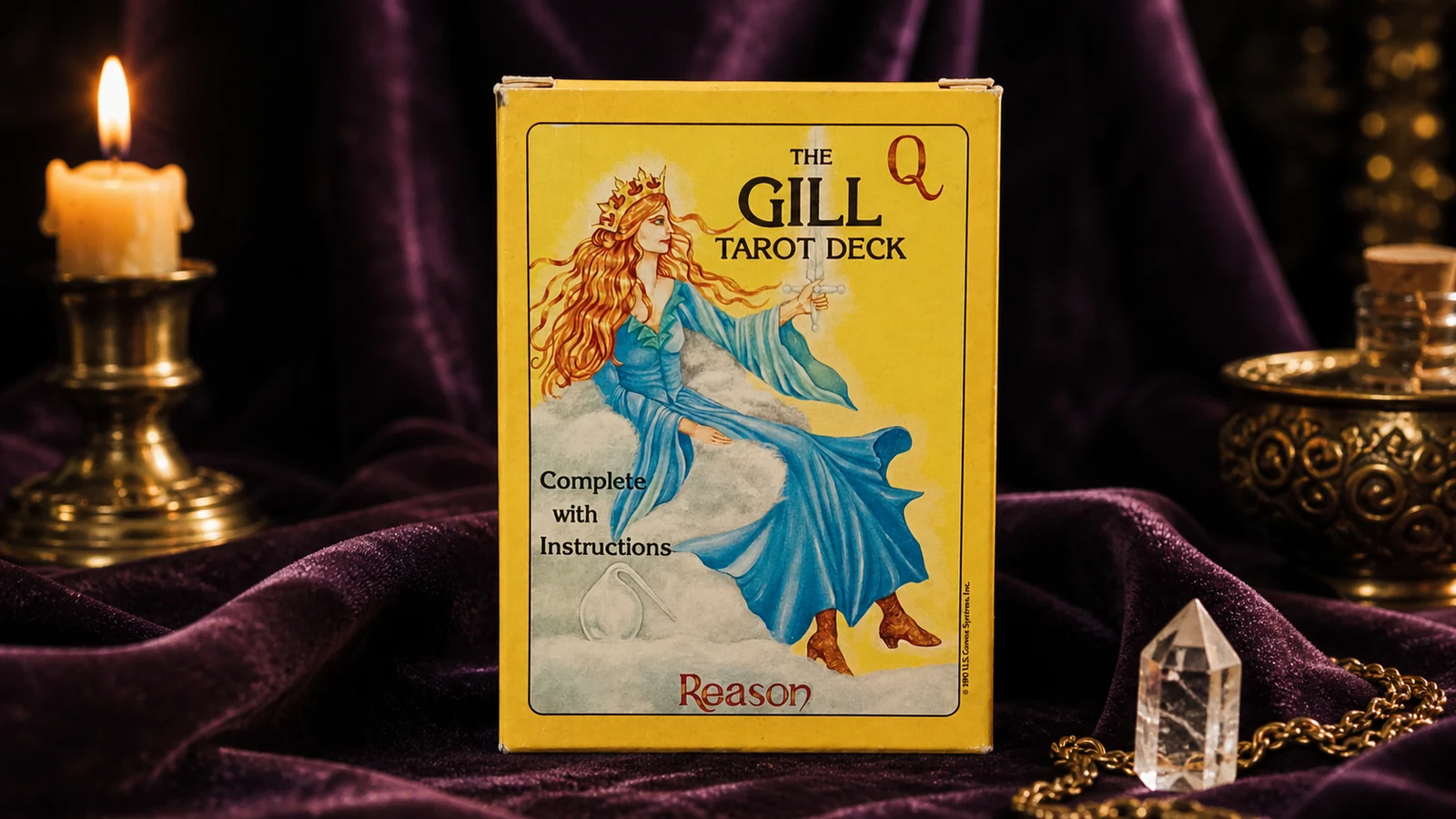
| Excellent for spiritual questions, inner pattern work, and thoughtful decision readings. | The vintage edition shown in the final CTA may differ from newer packaging, so check the listing details before buying. |
Breaking an old pattern

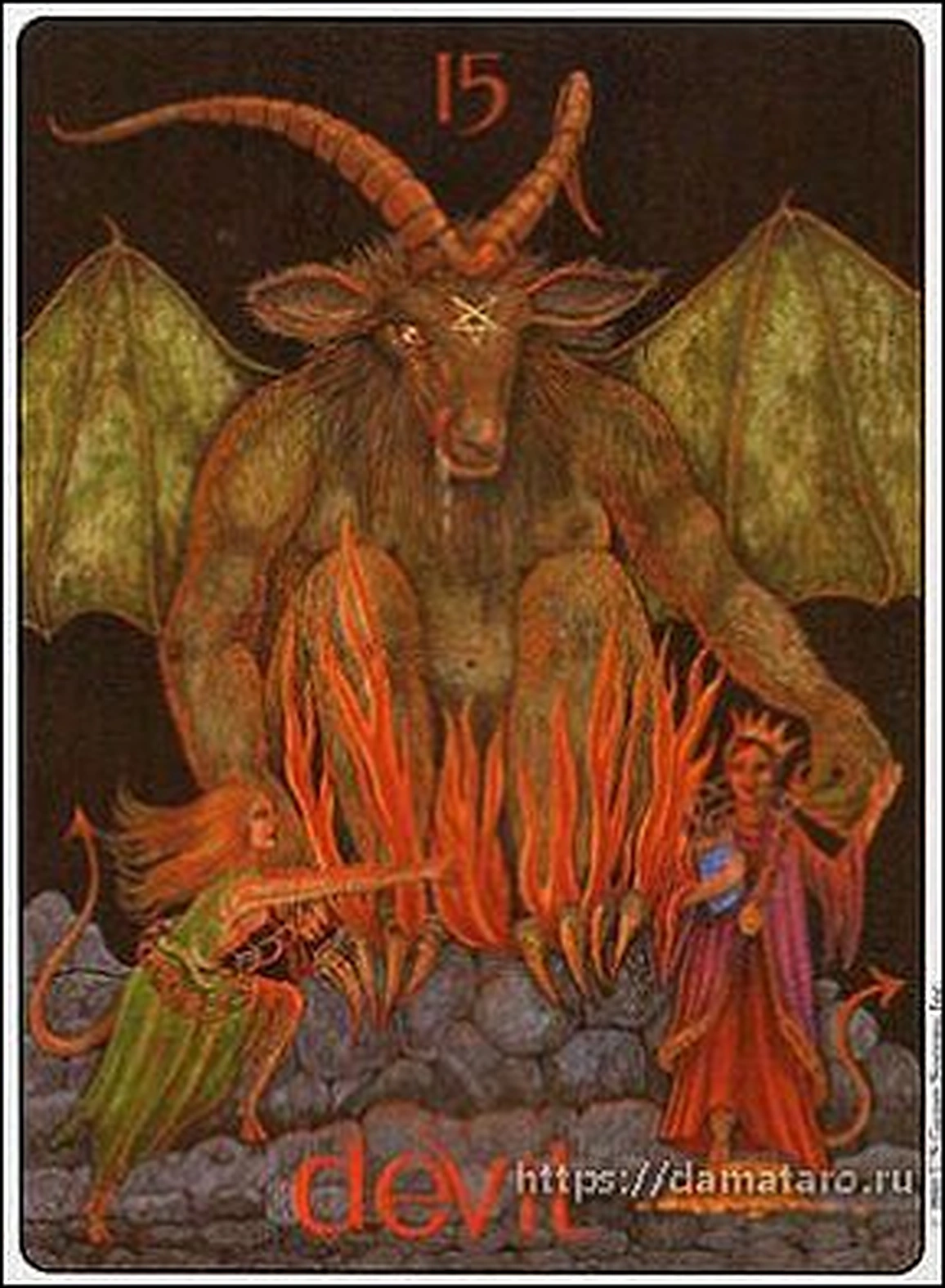
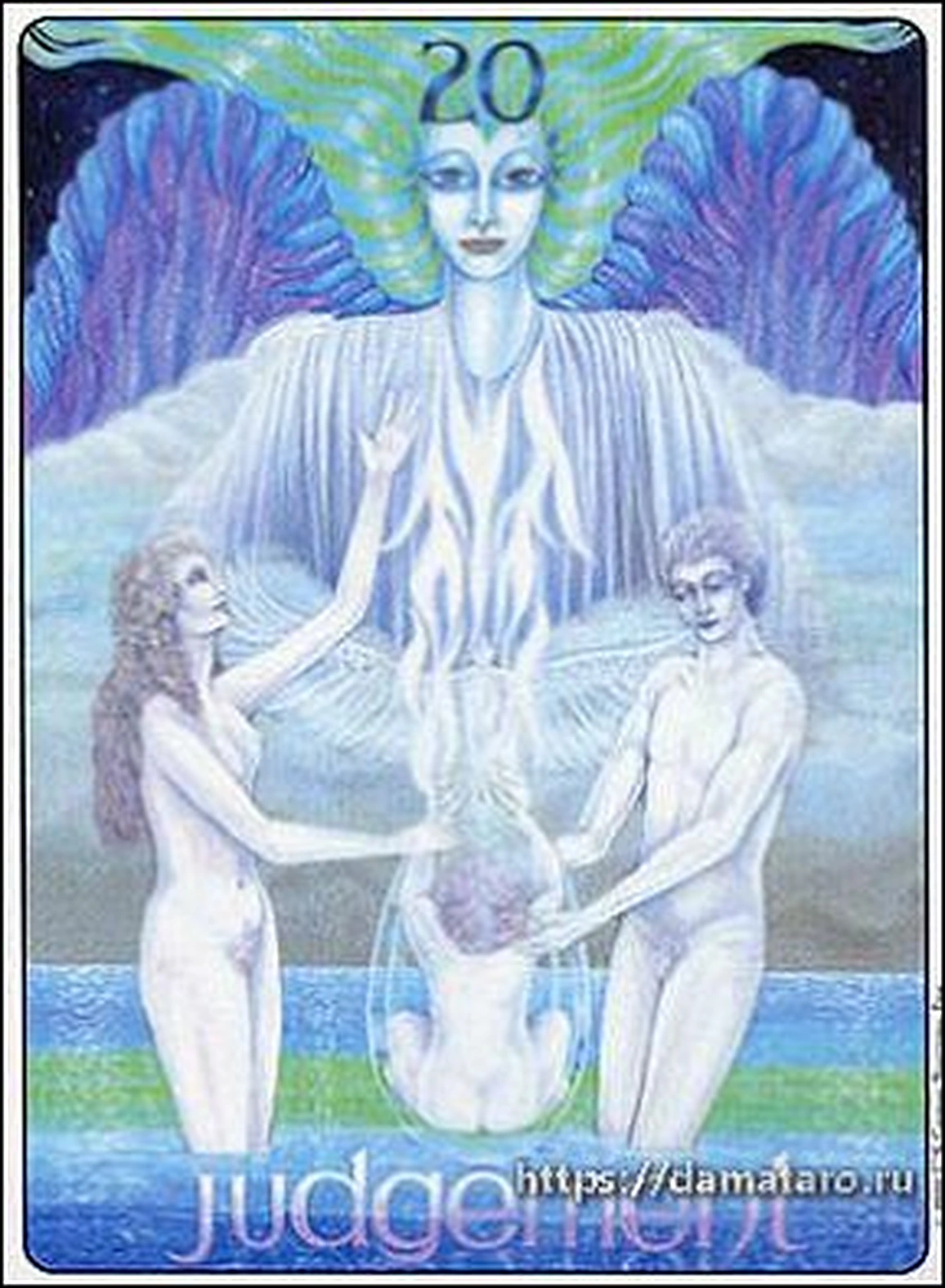
This line is for a heavy but useful reading: what is ending, what still has hooks in the situation, what breaks the false structure, and what wake-up call follows.
Final Thoughts
Gill Tarot is worth exploring if you want tarot to feel like a symbolic study system. It is not the warmest or most decorative deck, but it has a steady voice and a lot of depth for readers who enjoy number, color, geometry, and keyword meditation.
The best way to test it is to browse the complete Gill Tarot gallery, choose one card that attracts you and one card that resists you, then journal both. If the images start making you ask better questions, the Gill Tarot is doing its work.
Gill Tarot FAQ
Does the gallery use verified Gill Tarot artwork?
Yes. The gallery uses deck-specific Gill Tarot card fronts that were safely matched rather than filling gaps with uncertain images.
Who created the Gill Tarot?
The Gill Tarot artwork is by Elizabeth Josephine Gill. The deck is known for bold symbolic images, keywords, pips, and an esoteric study feeling.
Is Gill Tarot beginner-friendly?
It can be beginner-friendly for readers who like keywords and symbolism, but it is less scene-based than a Rider-Waite-Smith deck. New readers may want a guidebook or meaning notes nearby.
What kind of readings suit Gill Tarot best?
I like it for meditation, journaling, spiritual study, pattern recognition, shadow work, and questions where the querent wants structure rather than a soft story scene.
Does Gill Tarot follow Rider-Waite-Smith symbolism?
It uses the 78-card tarot structure, but the visual language feels more symbolic, keyword-based, and esoteric than a straightforward RWS clone.
Can Gill Tarot work for daily card pulls?
Yes. Its printed keywords, strong colors, numbers, and geometric symbols make it useful for a focused daily pull. Start with the keyword, then note the dominant color and shape before connecting the card to your day.


