Fairy Lights Tarot Card Gallery
Browse the verified Fairy Lights Tarot card art. Choose a group, then tap any card to open a larger carousel view.
Aurica’s Quick Take
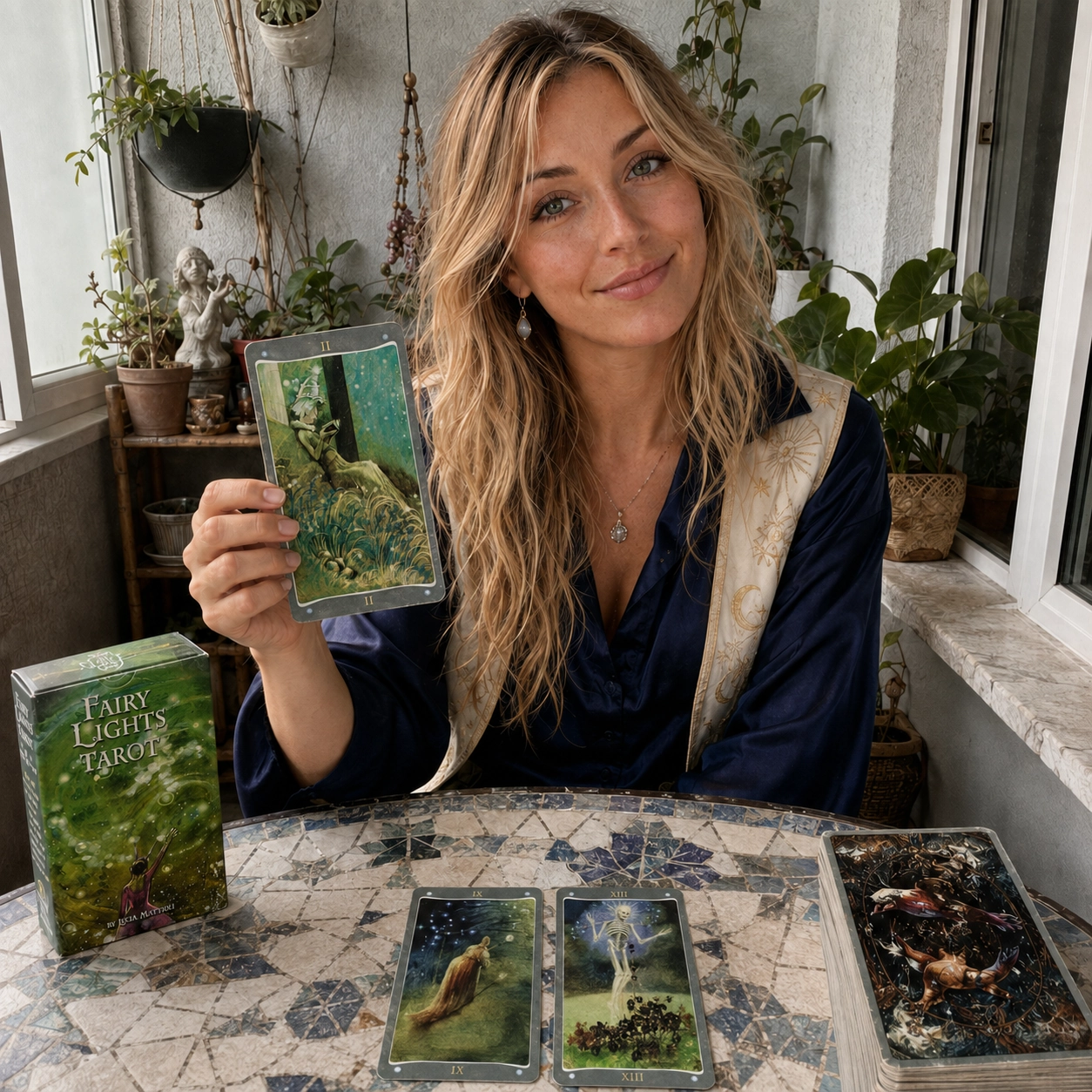
I find Fairy Lights Tarot wonderfully strange and luminous. Lucia Mattioli’s moonlit greens, silver mist, and sparks of gold make every card feel like a half-remembered path through the woods. I reach for it when I want a reading to begin with atmosphere: where the light gathers, which figure turns away, and what seems to be waiting just beyond sight.
Each card is half of one of thirty-nine larger paintings, so the deck rewards slow looking. The High Priestess feels less like a distant guardian and more like a secret doorway hidden in living green. I notice the quiet invitation first, then compare it with the cards beside her to decide whether intuition is asking for patience, trust, or one brave step closer.
This remains an honest seventy-seven-card recovered Gallery because the Three of Pentacles could not be safely sourced. I would rather leave one space open than pretend certainty. Even so, the surviving cards reveal the deck’s heart beautifully: images lean toward one another, colours continue unfinished conversations, and a spread becomes a little story assembled from light and shadow.
The Hermit and Death make that language especially clear to me. One carries a warm cloak through the dark; the other lifts a bright skeleton above the flowers. Together they suggest that endings need not extinguish the lamp we have earned along the way. Let the card that catches your eye become your first small lantern, and trust yourself to follow where its fairy light leads.
What Makes Fairy Lights Tarot Different?
Fairy Lights Tarot is not a plain keyword deck. It is built around atmosphere, pairing, and visual echo. Lucia Mattioli’s art often shows a figure, creature, doorway, tree, cup, blade, or tiny source of light inside a larger landscape. The images feel like they are whispering to each other across the spread.
That means the deck works best when you read slowly. Instead of asking only “what does this card mean,” ask what kind of light is present, what direction the figure faces, what is hidden in the background, and whether the scene feels safe, enchanted, lonely, or ready to change. Those details make the reading come alive.
Moonlit card study
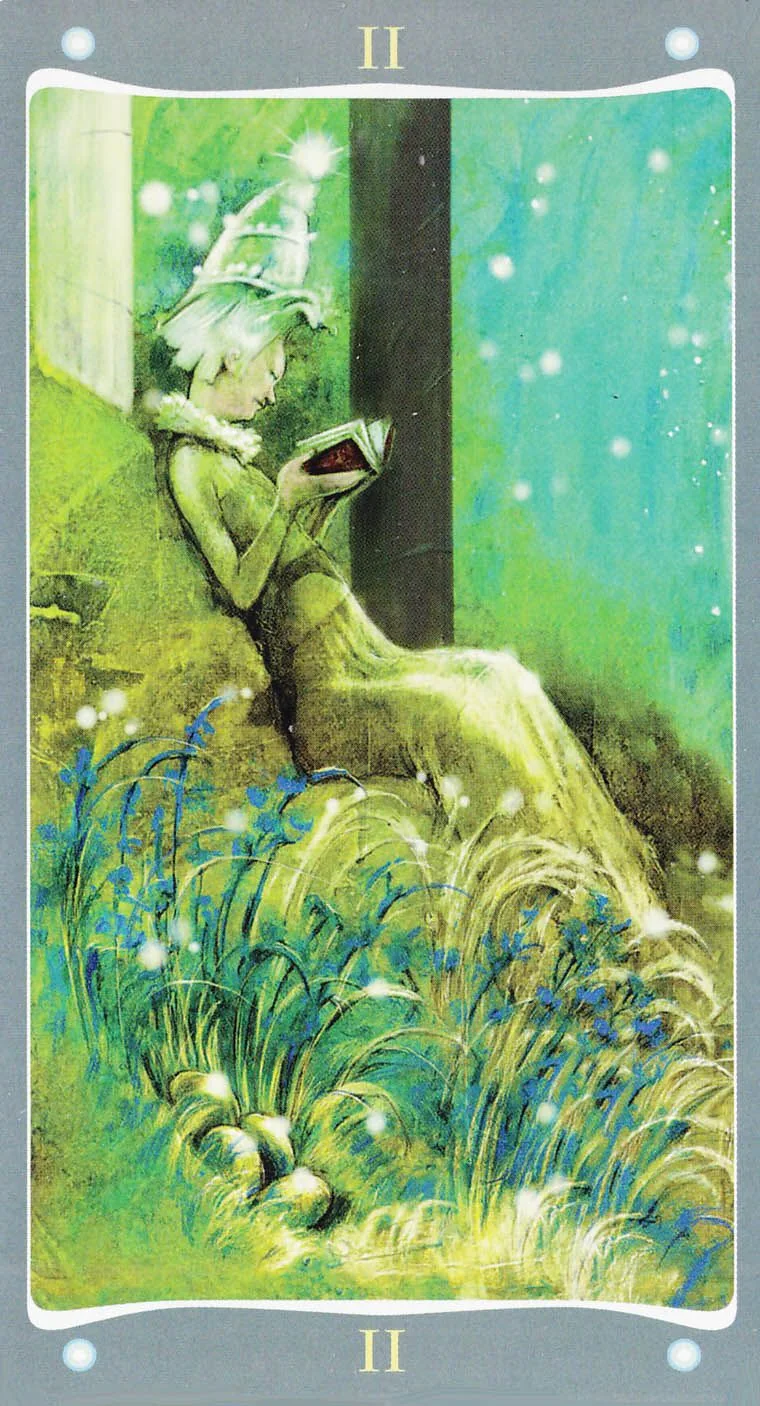
The High Priestess: intuition as a secret doorway
The High Priestess in this deck feels like a threshold card. The green-blue glow, watery softness, and figure near a doorway-like space make intuition feel less like a rule and more like an invitation. She is not shouting wisdom; she is asking you to step closer and notice what has been quietly lit.
Compared with a traditional Rider-Waite-Smith High Priestess, this version feels more fairy-tale than temple-like. It is excellent for questions about dreams, timing, privacy, and the part of a situation that can only be understood when the noise drops.
How It Reads in Practice
In readings, Fairy Lights Tarot can be gentle, but it is not shallow. The soft colors make the deck feel dreamy, while the scenes often hold loneliness, desire, danger, or transformation. Cups can look like longing. Swords can feel like night air and hard truth. Wands glow with movement and risk. Pentacles often bring the body back into forest, field, stone, and shelter.
Because the art is not always obvious at first glance, this deck rewards journaling. Pull one card, describe only what you can see, then connect those observations to the card name. The meaning usually arrives through the image’s mood before it arrives through a memorized definition.
Four-card moment: the first doorway
Majors as moonlit invitations
These four Major Arcana cards show the Fairy Lights voice beautifully: a beginning figure, a magical instrument, a hidden teacher, and a deep night sky. The deck turns the tarot journey into a walk through enchanted thresholds.


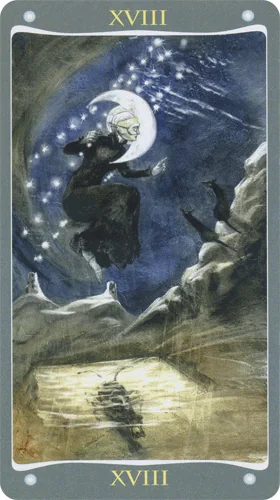
As a group, they say that this deck reads through openings. Look for doors, paths, lights, and the small object that tells the reader where attention wants to go next.
Best Uses for Readings
Fairy Lights Tarot is especially strong for dream journaling, intuitive daily pulls, creative questions, inner-child work, shadowy emotional patterns, and relationship readings where the real question is not “yes or no” but “what is happening underneath?” It gives you images that are easy to sit with for a while.
I would also use it for seasonal readings, especially around twilight months, liminal times, or any spread about imagination and transition. The deck’s fairy-tale energy helps when a situation feels symbolic, unfinished, or emotionally layered.
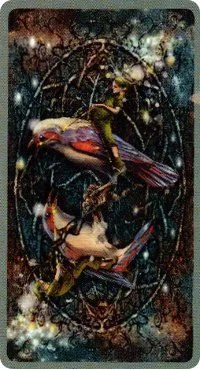
Luminous healing study
The Star: hope as a tiny light in the dark
The Star is one of the deck’s clearest examples of soft light against darkness. The card does not feel like loud optimism. It feels like a small point of guidance that becomes visible only when the reader stops rushing. That makes it beautiful for healing questions and quiet recovery work.
Traditional Star meanings of hope, renewal, and spiritual trust are still present, but this artwork makes them more intimate. The card says: do not demand a sunrise yet; follow the spark you can actually see.
Artwork and First Impressions
The artwork is watercolor-like, textured, and sometimes misty. Greens, blue-grays, golds, black shadows, white glows, and warm orange washes repeat across the deck. Many cards have an almost storybook composition: one strange figure, one emotional landscape, and one bright symbol pulling the eye.
The deck also has a distinctive border and numbered/title styling that gives it a classic Lo Scarabeo feel. Some cards are instantly readable, while others are deliberately odd. That oddness is part of the charm. Fairy Lights Tarot is a deck for people who enjoy looking twice.
Four-card moment: cups and feeling
Emotion becomes water, glow, and distance
These cup cards show how the deck handles feeling. Instead of simple romance imagery, it gives water, vessels, separation, moonlight, and small gestures that suggest longing, rest, memory, and emotional choice.
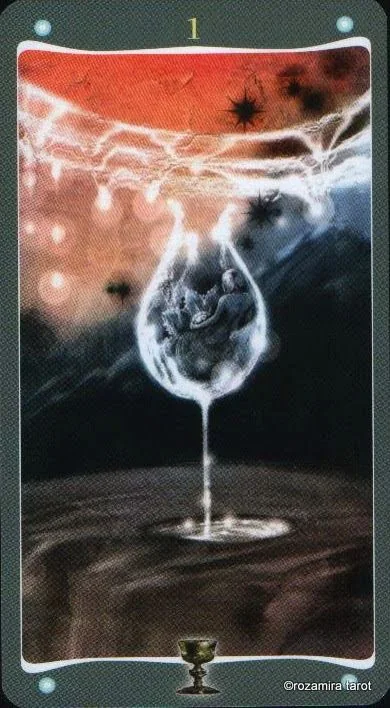


Read this group by tracking closeness and distance. Where is the cup? Is the figure reaching, waiting, turning away, or being surrounded by light? That is where the emotional message begins.
Who Will Love It?
You may love Fairy Lights Tarot if you collect fairy, fantasy, or Lo Scarabeo decks; enjoy The Tarot of the Secret Forest style of dreamy illustration; or want a reading deck that feels poetic without becoming sugary. It is good for readers who like to build meaning from visual clues.
You may struggle with it if you want every card to mirror familiar Rider-Waite-Smith scenes. Some images ask for patience. The missing Three of Pentacles in this recovered gallery also means collectors should treat the TarotFans gallery as a very strong preview, not a complete archive.

Transformation study
Death: change as a fairy-tale crossing
The Death card keeps the deck’s enchanted quality while still feeling serious. Pale figure work, dark ground, and a sense of movement make the card feel like a crossing rather than a shock scene. It is about leaving one world of the story and entering another.
Compared with a more literal skeleton-and-banner Death card, this one reads as eerie transformation. It is useful when a reader needs to name the ending without making it feel only frightening.
Beginner Friendliness
Fairy Lights Tarot can work for a beginner who loves the art and is willing to use a guidebook or keyword list. It is not the most obvious first tarot deck because some cards are symbolic rather than direct. But if the images make you curious, that curiosity can become a great learning engine.
A simple practice helps: pull one card, write three visible details, write the traditional meaning, then write one grounded next step. This keeps the deck from becoming too vague and teaches you how its fairy-light symbolism speaks.
Four-card moment: action under pressure
Wands and swords bring the spark into conflict
These four cards show the deck’s more active side. It is not only soft and pretty; it can show urgency, defense, anxiety, and decision through sharp light, dark land, and figures caught in motion.

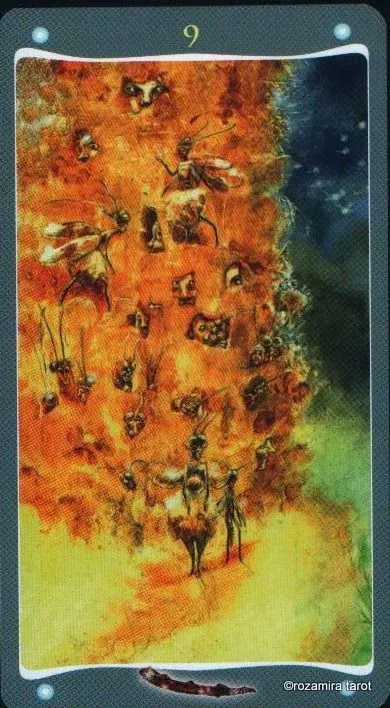


The lesson here is that light can also expose. In difficult readings, Fairy Lights Tarot often asks what truth has appeared, what boundary is needed, and what tiny flame still remains under stress.
Final Thoughts
Fairy Lights Tarot is a lovely choice for readers who want tarot to feel enchanted, intuitive, and slightly mysterious. It is best when you give it time. The deck does not always deliver a blunt answer in one glance, but it offers visual threads that can deepen a reading beautifully.
If you enjoy moonlit fantasy, forest symbolism, gentle shadow work, and decks that reward close looking, Fairy Lights Tarot is worth exploring. Just keep the gallery count honest: TarotFans currently shows 77 recovered card images, with Three of Pentacles still missing from the verified source set.

Frequently Asked Questions
Is Fairy Lights Tarot good for beginners?
It can be beginner-friendly for visual, patient learners, but it is not the most literal first deck. Keep a keyword list or guidebook nearby while you learn the deck’s dreamlike symbolism.
How many Fairy Lights Tarot cards are shown here?
This TarotFans gallery shows 77 recovered card-front images out of 78. The Three of Pentacles was not safely recovered from the verified source board, so the count stays honest.
What is the Fairy Lights Tarot art style like?
It has a luminous watercolor fantasy style with misty greens, blue-grays, warm gold light, fairytale figures, moonlit scenes, and a soft enchanted mood.
What readings suit Fairy Lights Tarot best?
It is especially strong for intuitive daily pulls, dream journaling, creative questions, emotional check-ins, relationship patterns, and spiritual reflection.
Who created Fairy Lights Tarot?
The deck is illustrated by Lucia Mattioli and published by Lo Scarabeo. It has a related visual spirit to dreamy fairy-tale and forest-style tarot decks, but its paired-image concept gives it its own voice.


