Explore the Tarot of the Secret Forest Cards
Browse this verified partial Gallery in canonical deck order. Choose an official group, then open any card for a larger carousel view.
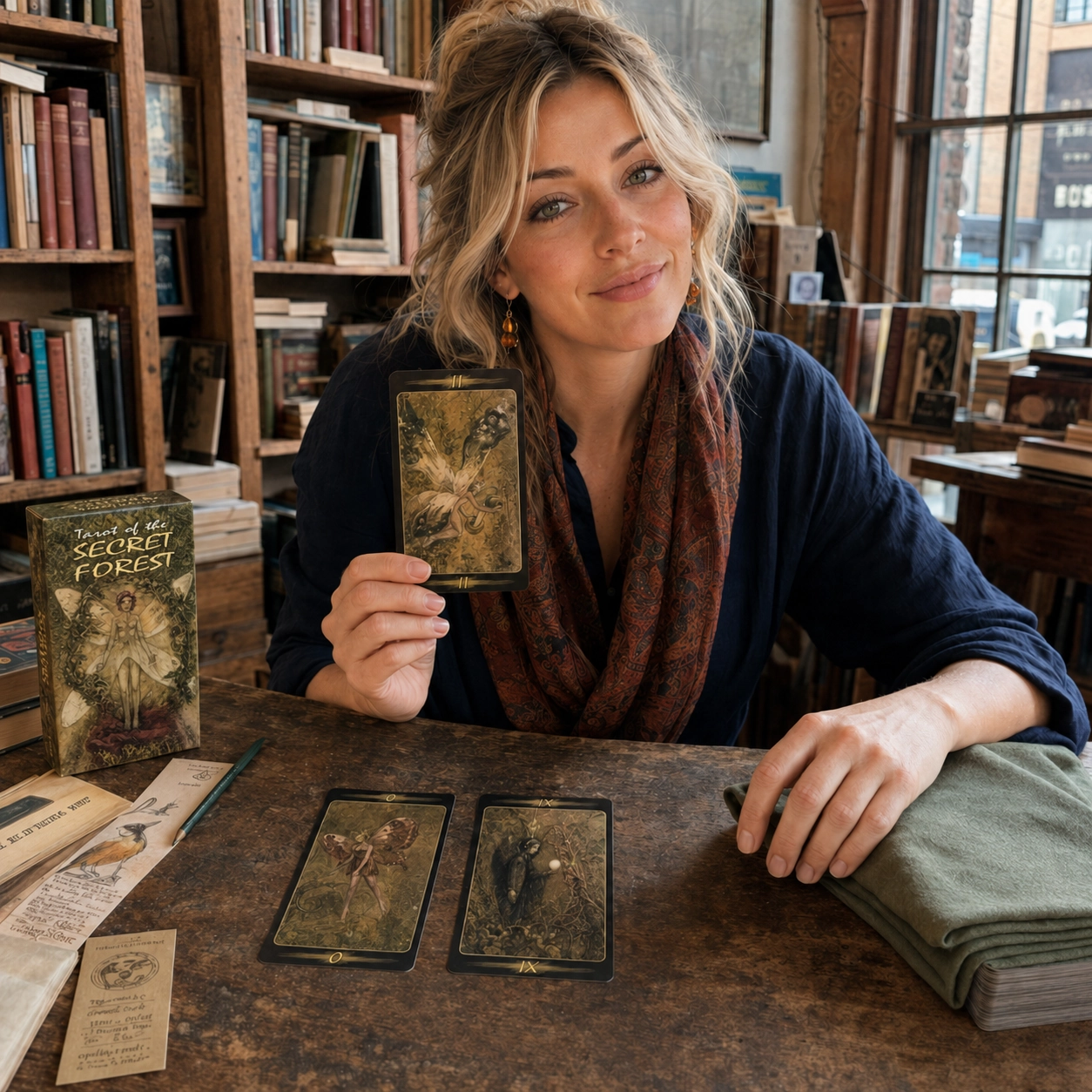
Aurica’s Quick Take
Tarot of the Secret Forest is for readers who like mystery, nature, and shadowy fairy-tale energy. It is not the plainest beginner deck, but it can be powerful for journaling, dreamwork, and honest questions about what is happening beneath the surface.
Quick answer: choose this deck if you want a reading atmosphere that feels intimate, symbolic, and a little wild. Skip it if you need bright literal images or a deck that explains everything fast.
I meet this deck as though I am stepping under branches just after rain, when every root and moth seems to hold a secret. The Fool feels less like a loud leap and more like the first rustle beside an unseen path. The High Priestess asks me to pause at the threshold, while The Hermit reminds me that solitude can be a lantern rather than a wall.
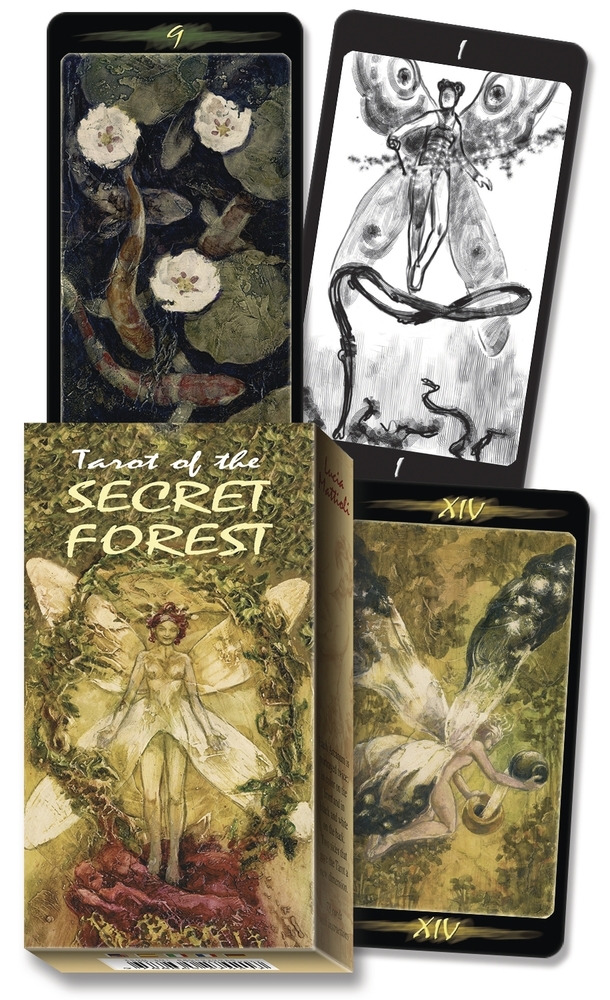
I love the tension between the rich colour face and its black-and-white reverse. One side shows me the feeling in full bloom; the other can seem like its memory, echo, or hidden cost. In a reading I begin with the detail that catches my eye, compare it with the card’s familiar tarot role, then let the surrounding cards tell me whether that shadow needs curiosity, a boundary, or action.
I reach for Tarot of the Secret Forest when a dream, relationship, or creative block refuses to speak plainly. It rewards slow looking: a turned head, a dark opening between trees, or one bright wing can become the thread that leads back to the real question. I finish by naming one grounded next step, and the forest always seems to leave a small lantern glowing beside the path ahead.
What is Tarot of the Secret Forest?
Tarot of the Secret Forest is a Lo Scarabeo deck illustrated by Lucia Mattioli, and its personality is obvious almost immediately: dense woodland imagery, emotional half-light, creatures, roots, pathways, and scenes that feel as if they are hiding one more meaning just outside the lantern glow. The native TarotFans gallery above shows the 74 available verified card images so you can judge the actual visual language before deciding whether this deck belongs on your table.
This full fix keeps the count honest. Some older TarotFans reviews exaggerated incomplete galleries or leaned on community-review filler. Here, the goal is simpler and more useful: show the real card art, keep the page warm and readable, and explain how the deck behaves in a reading without padding it to a fake 78-card claim.
Artwork and deck personality
The art style leans into shadowy woodland fantasy instead of clean teaching-deck clarity. You notice rich dark greens, earthy golds, tangled branches, mirrored moods, and figures who look as if they belong to the forest rather than merely standing inside it. That makes the deck memorable. It also means the artwork carries part of the interpretation, so your eyes matter as much as your keyword list.
At the table, this deck feels quieter than many mass-market tarot decks. The scenes ask you to pause and watch instead of racing to a verdict. That is excellent for journaling, intuition practice, emotional honesty, and questions that need nuance. It is less ideal if you want very fast, blunt yes-or-no reading energy.
Card study
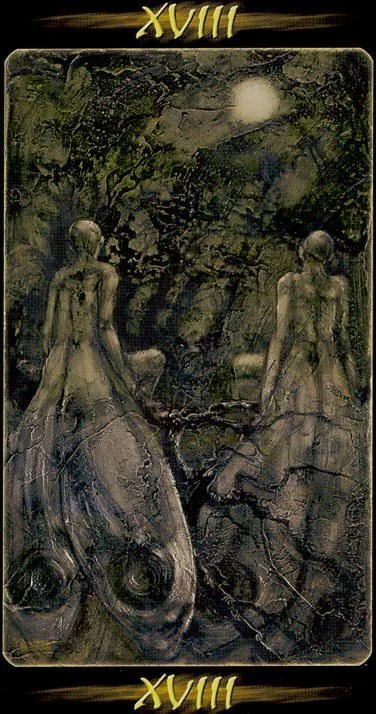
The Moon: naming the hidden mood
The Moon is one of the clearest examples of why this deck works best when you read the scene before the textbook meaning. In Tarot of the Secret Forest, the image feels like standing in emotional twilight: you know something matters, but you cannot force clarity by rushing. For a practical reading, I would ask what feels half-seen, what story fear is trying to write, and what one honest next step would calm the situation without pretending everything is already certain.
How Tarot of the Secret Forest reads in practice
This deck reads best when you move in three steps: first describe the visible detail, then name the emotional weather, and finally turn that feeling into one grounded piece of advice. That method keeps the review teen-readable and keeps the reading practical. Instead of saying a card is “mysterious,” ask what in the image creates that mood and what it suggests you should do next.
For example, if a reading feels emotionally foggy, this deck can help you name the hidden pattern without becoming dramatic. If a reading is about growth, repair, or creative work, the forest imagery often adds patience and depth. The deck is atmospheric, but it does not have to be vague when the question is clear.
Try this spread
Entering the hidden path


Use this four-card moment when you know a change is starting but you cannot see the whole map yet: the beginning, the intuition, the uncertainty, and the wiser slower response.
Double-sided concept and shadow work
One of the most interesting things about Tarot of the Secret Forest is its double-sided structure. The color side gives you the full emotional world of the card. The black-and-white reverse can feel like a sketch, a memory, or the more hidden version of the same message. That is part of why so many readers connect this deck with shadow work and dream journaling.
You do not need an elaborate ritual to use that feature well. Pull the card in color first and write down the immediate mood. Then imagine the quieter shadow side and ask what the card is saying underneath the visible drama. This simple practice makes the deck feel thoughtful rather than merely gothic or moody.
Card study
The Hermit: retreat that becomes useful
The Hermit in this deck does not feel like punishment or disappearance. It feels like deliberate quiet. That matters for real life because the card is often less about leaving people behind and more about creating enough silence to hear your own answer. If this shows up in a love, school, or work reading, the grounded advice is to reduce one distraction, protect one private thought, and let the next wise move come from observation instead of pressure.
Beginner friendliness
Tarot of the Secret Forest is medium-friendly for beginners. A brand-new reader can use it, especially if they naturally learn through imagery, but they should keep spreads short and avoid expecting instant certainty from every card. The reward is that the deck teaches careful observation. The challenge is that it asks for patience.
A useful beginner routine is one card a day with three notes: what you saw first, what feeling the image created, and what action the card might suggest in ordinary life. That keeps the deck grounded and stops the symbolism from floating away into pure aesthetic mood.
Love, friendship, and emotional readings
For relationship questions, this deck is most helpful when you ask about patterns rather than predictions. Ask what is hidden, what is being protected, where fear is shaping the story, and what action would create more honesty or peace. That style matches the art because the scenes feel layered and private instead of loud and obvious.
It also works beautifully for friendship healing, emotional recovery, and questions where the reader needs to respect their own intuition. The forest mood can be tender, but it can also be fierce about boundaries. That balance is one of the deck’s strengths.
Try this spread
Forest trials and transformation

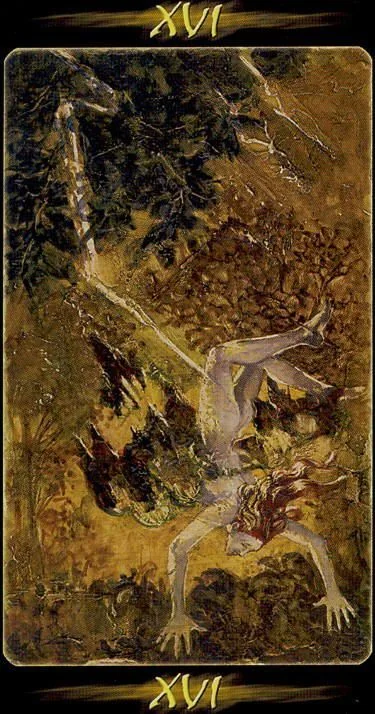


This spread is useful when a situation feels intense. It helps you name what is ending, what is cracking, what keeps you tangled, and what kind of courage actually helps.
Career, money, and creative readings
Although the deck is famous for atmosphere, it can still be practical. In career and money readings, use it to ask where your energy is going, what needs structure, and what quiet habit would make life steadier. In creative readings, it excels as a prompt deck: what wants to grow, what fear is interfering, and what next draft or next practice session would move the work forward.
The card imagery helps because it often frames effort as a living process rather than a harsh demand. That makes the deck especially good for readers who need encouragement without empty fluff.

Card study
8 of Pentacles: roots, repetition, and skill
The 8 of Pentacles brings the review back to earth. Tarot of the Secret Forest can feel dreamy, but this card proves the deck still knows how to talk about practice, craft, and patient progress. When I read it, I would talk less about perfection and more about rhythm: what are you willing to repeat kindly until it becomes real? That makes it a strong card for money habits, creative work, healing routines, and rebuilding confidence one small step at a time.
Turning patience into practical progress
The forest becomes most useful when its atmosphere leads to a clear action. After noticing the card that feels brightest or most guarded, I ask what can be repeated gently this week. That question brings the next four cards down from dream into daily life.
Try this spread
Work, patience, and roots


A grounded spread for money, school, habit-building, or long-term healing: the seed, what you are protecting, the practice, and the mature caring result.
Pros and cons
| Pros | Cons |
|---|---|
| Beautiful forest atmosphere with a strong visual identity. | The moody style may feel too indirect if you want a plain teaching deck. |
| Great for journaling, intuition practice, and emotional pattern reading. | Some cards need slower study before they feel instantly readable. |
| Honest native TarotFans gallery lets you preview 74 verified card images locally. | The gallery is intentionally partial, so this review does not pretend all 78 cards were recovered. |
What to know before buying
Buy Tarot of the Secret Forest if the artwork makes you want to slow down and look. That reaction matters. A good deck is not simply the most famous one; it is the one you will actually use, study, and return to when a question feels real. If the forest mood feels inviting, strange in a good way, or emotionally honest, that is a strong sign.
If you prefer crisp instructional decks with bright scenes and immediate textbook clarity, this may not be your easiest first choice. But if you like symbolism, atmosphere, and cards that reward a second look, this deck has real depth.
Final thoughts
Tarot of the Secret Forest is not trying to be the loudest deck in the room. It is trying to be a doorway into slower, more image-led reading. For the right reader, that makes it memorable: the deck feels intimate, a little uncanny, and genuinely useful for emotional truth.
If several cards in the gallery make you pause, wonder, or start mentally writing a journal entry, that is the best buying clue. Watch the walkthrough, compare the card scenes, and trust the reaction you have when the forest imagery meets your real question.

Frequently Asked Questions
Is Tarot of the Secret Forest good for beginners?
It can be, especially for readers who learn by looking at pictures slowly. A beginner will do best with one-card pulls, short spreads, and a guidebook or keyword list nearby.
Why does this review say 74 available card images instead of all 78?
Because the TarotFans native gallery keeps the count honest. This local gallery currently verifies 74 same-deck card images, so the subtitle and FAQ reflect the real available count instead of padding missing cards with uncertain images.
What kind of readings is Tarot of the Secret Forest best for?
It is strongest for reflective readings where mood and symbol matter: dreamwork, journaling, relationship patterns, emotional honesty, and creative self-inquiry.
Does Tarot of the Secret Forest follow Rider-Waite-Smith meanings?
Yes, but the art adds its own woodland-fantasy tone. Use classic meanings as the backbone, then let the visual details deepen the message.
What makes this deck feel different from lighter beginner decks?
Its double-sided concept, shadowy forest atmosphere, and symbolic scenes ask for patience. It rewards readers who want to sit with an image instead of rushing to a keyword.
Who should skip Tarot of the Secret Forest?
Skip it if you want a very bright, plain, instantly literal teaching deck. Choose it if mystery, atmosphere, and image-led reading are part of why you love tarot.