English Magic Tarot Cards
Explore the complete deck in official tarot order. Choose a group or select any card to open the larger carousel view.
A note from Aurica
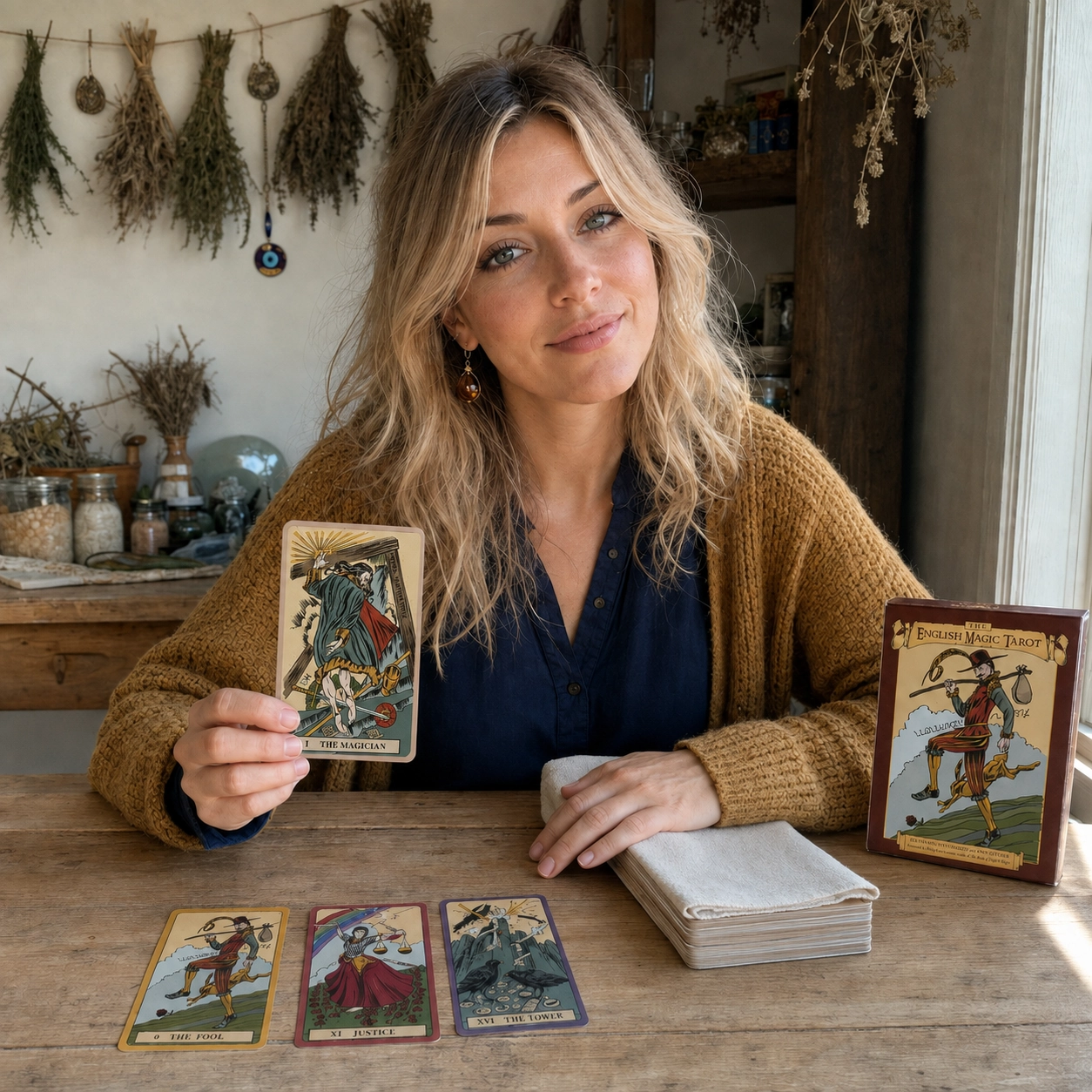
English Magic Tarot feels like stepping through a crooked timber doorway into a story already in motion. Its Elizabethan travellers, scholars, queens, animals, and storm-lit landscapes have the rough warmth of an old woodcut, yet their gestures feel wonderfully immediate. I love the sense that every card is carrying both a private desire and the noise of the wider world.
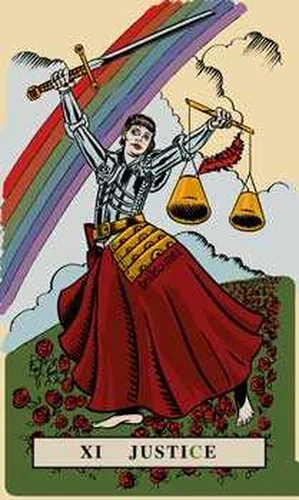
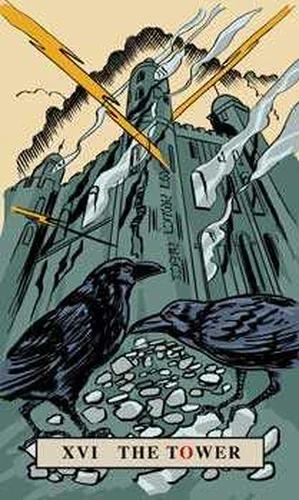
When I read with it, I begin with the person who seems most awake. The Magician twists beneath a beam of sudden light, caught between inspiration and the practical tools scattered below him. Justice holds her balance inside a garden of red flowers, while the Tower turns certainty into weather. Those details help me ask not only what is happening, but who is choosing, who is watching, and what consequence is already gathering at the edge of the scene.
This deck speaks especially clearly when a question involves influence, ambition, reputation, or a truth that can no longer stay private. I let its rich border colours set the first mood, then follow the figure’s gaze and hands before returning to the card’s familiar tarot role. Beside softer cards, its historical drama can reveal courage and loyalty; beside sharper cards, it shows where performance has replaced honest intention.
What stays with me is its lively faith in human imagination. Even The Fool’s uncertain road carries companionship, colour, and the promise that curiosity can be wiser than perfect preparation. English Magic Tarot invites you to meet change with clear eyes and a brave heart, trusting that your next true choice can open a brighter chapter.
English Magic Tarot review: woodcut history, spellcraft, and political weather
English Magic Tarot is not a soft-focus fantasy deck. It has the bite of old pamphlets, occult diagrams, court intrigue, and a country arguing with itself. The artwork feels carved rather than polished, which gives the cards a direct historical charge. You are not just looking at symbols of love, money, fear, and power; you are looking at those symbols as if they were printed in a moment when ideas could still be dangerous.
The best way into this deck is to move between the moving images of the walkthrough and the stillness of each card. In motion, the deck feels theatrical; held still, small gestures, tools and glances begin to reveal the argument inside each scene.
The deck reads best when you let its visual language be a little severe. Its magic is not only moonlight and candles. It is law, rebellion, print culture, monarchy, church, experiment, rumor, and personal will. That makes it a sharp deck for readers who want tarot to comment on systems as well as feelings.
Card study
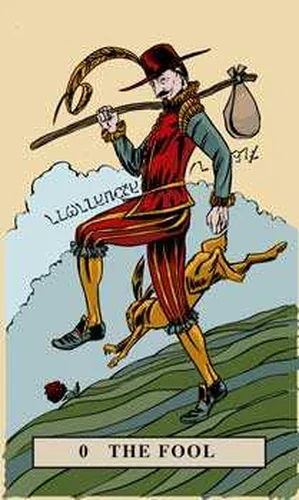
The Fool enters a world where every step has a witness
The Fool is the right doorway into English Magic Tarot because innocence here does not feel weightless. The card suggests a person moving through a world of signs, pressure, and consequence. It can still mean a beginning, but the beginning is not detached from history.
In a reading, I would ask what kind of risk the querent is taking and who benefits if they stay naive. The card can be liberating, but it can also be a warning to notice the road, the audience, and the rules already in motion.
How the deck reads in real spreads
English Magic Tarot is strongest when the question involves power. That can mean obvious power, such as work politics, institutions, public reputation, money, inheritance, or law. It can also mean subtler power: who gets believed, which story becomes official, who controls the room, and what bargain a person makes to stay safe.
For daily reading, it may feel too intense if you only want comfort. But for journaling, shadow work, creative research, historical imagination, or strategic questions, it has a satisfying edge. The cards invite you to read the personal story and the surrounding system at the same time.
Majors: personal will meets public consequence
These majors show the deck’s central tension. Choice, craft, law, and collapse are not abstract ideas; they feel like events unfolding in a charged social world where a private decision can become visible very quickly.

Gallery notes and card identity
The TarotFans native gallery is preserved as a complete 78-card set. The card files already use clean English Magic Tarot filenames and readable labels, so this upgrade does not rename a stable gallery simply for motion. The displayed order remains the practical TarotFans order: majors first, then Wands, Cups, Swords, and Coins.
The suit of Coins matters in this review because the deck’s practical questions often feel tied to land, labor, resources, and civic life. Keeping Coins in the captions preserves the tone of the existing gallery instead of forcing a different vocabulary onto the deck.
Card study
The Magician makes skill look like a public act
The Magician in this deck is useful because magic does not feel like private decoration. It feels like technique, rhetoric, tools, timing, and the ability to change what other people think is possible.
When this card appears, I would read it as agency with responsibility. What tool is already on the table? What message is being shaped? And where does influence become manipulation if the reader is not honest about intent?
From a single choice to the wider world
A lone card can show the spark of intention; the four-card sequence reveals what happens when that intention meets witnesses, custom and consequence. Reading both scales keeps the deck personal without losing its rich social atmosphere.
Wands: fire, command, and the cost of visibility
The Wands suit carries ambition and public heat. These four cards are good for questions about leadership, courage, performance, conflict, and the fatigue that comes from holding a visible position for too long.


Strengths, limits, and best readers
The main strength of English Magic Tarot is atmosphere with argument. Many decks are beautiful; this one is opinionated. It gives readings a historical texture and can make ordinary questions feel connected to larger patterns. That is useful when a situation is not only emotional but political, professional, familial, or institutional.
The limitation is that the deck may feel austere for readers who want lush contemporary faces or instantly tender scenes. Its woodcut feeling asks for attention. It rewards a slower eye, especially if you enjoy symbolism that looks like it came from a broadsheet, a spell book, or a disputed chronicle.
Cups: feeling under pressure from culture and duty
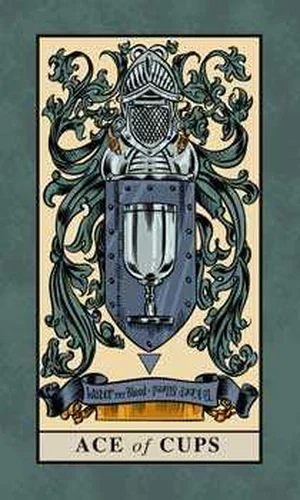
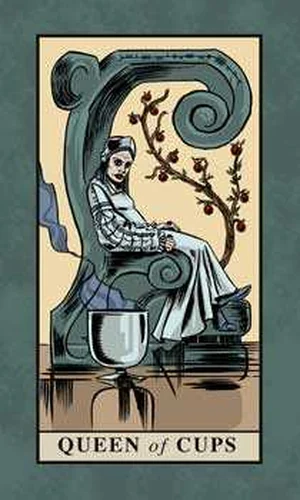
The Cups are not only romantic or gentle here. They show feeling inside custom, loyalty, memory, and social expectation, which makes them useful for questions where emotion and obligation are difficult to separate.


Reading tips for English Magic Tarot
Begin by naming the social setting of the card. Is the figure alone, witnessed, judged, crowned, armed, advised, trapped, celebrated, or exposed? That one observation often tells you how the card wants to behave in the spread. English Magic Tarot is very good at showing the pressure around a person, not just the person’s inner mood.
For a four-card spread, try this structure: the private motive, the visible role, the rule or institution in the way, and the action that restores agency. This lets the deck use its historical sharpness without turning every reading into a lecture. The final card should still answer what the querent can do next.
Card study
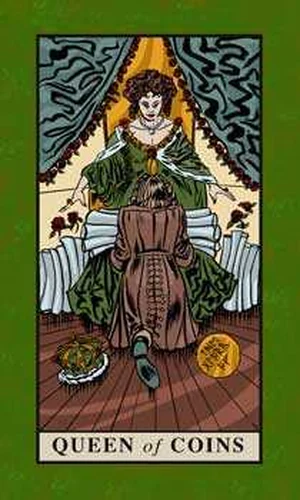
Queen of Coins grounds magic in stewardship
The Queen of Coins is one of the best anchors in the deck because she brings the argument back to care, resources, and the material world. Her power is not only mystical. It is custodial: what is kept alive, fed, protected, and managed well.
In practical readings, this card asks what kind of stability is actually humane. It can point to money, home, land, health, or work, but it also asks whether the structure supports the people inside it.
Grounded care before a clean decision
The Queen of Coins asks what can be tended in practical terms before the Swords demand a precise answer. That pause between stewardship and judgment gives the closing visual rhythm more warmth and makes the sharper cards easier to use well.
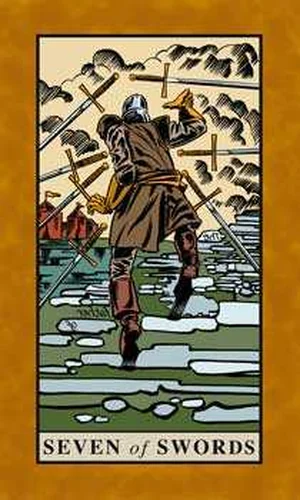
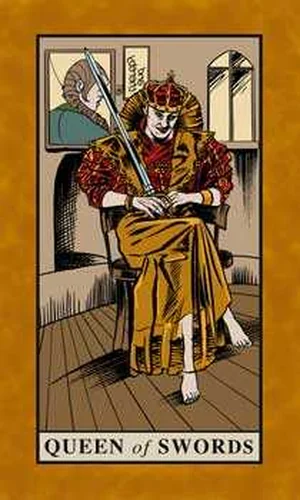
Swords: truth, pain, strategy, and clean judgment
The Swords suit is especially strong in English Magic Tarot. It reads well for arguments, documents, decisions, secrecy, accusations, and the moment when clarity matters more than pleasing everyone.


Final Thoughts
English Magic Tarot is a strong choice for readers who like their decks intelligent, historical, and a little severe. It is not the easiest comfort deck, but it is excellent for seeing how personal choices are shaped by larger forces. If your readings often involve power, duty, public identity, family systems, money, politics, or moral courage, this deck has a voice worth hearing.
Its voice becomes clearest when you browse slowly, compare repeating symbols, and let the historical setting sharpen a present-day question. The result is a deck that rewards courage, curiosity and thoughtful attention.
English Magic Tarot FAQ
Is the complete English Magic Tarot shown here?
Yes. The Gallery contains all 78 card fronts in official tarot order: the 22 Major Arcana followed by Wands, Cups, Swords and Coins.
Who created English Magic Tarot?
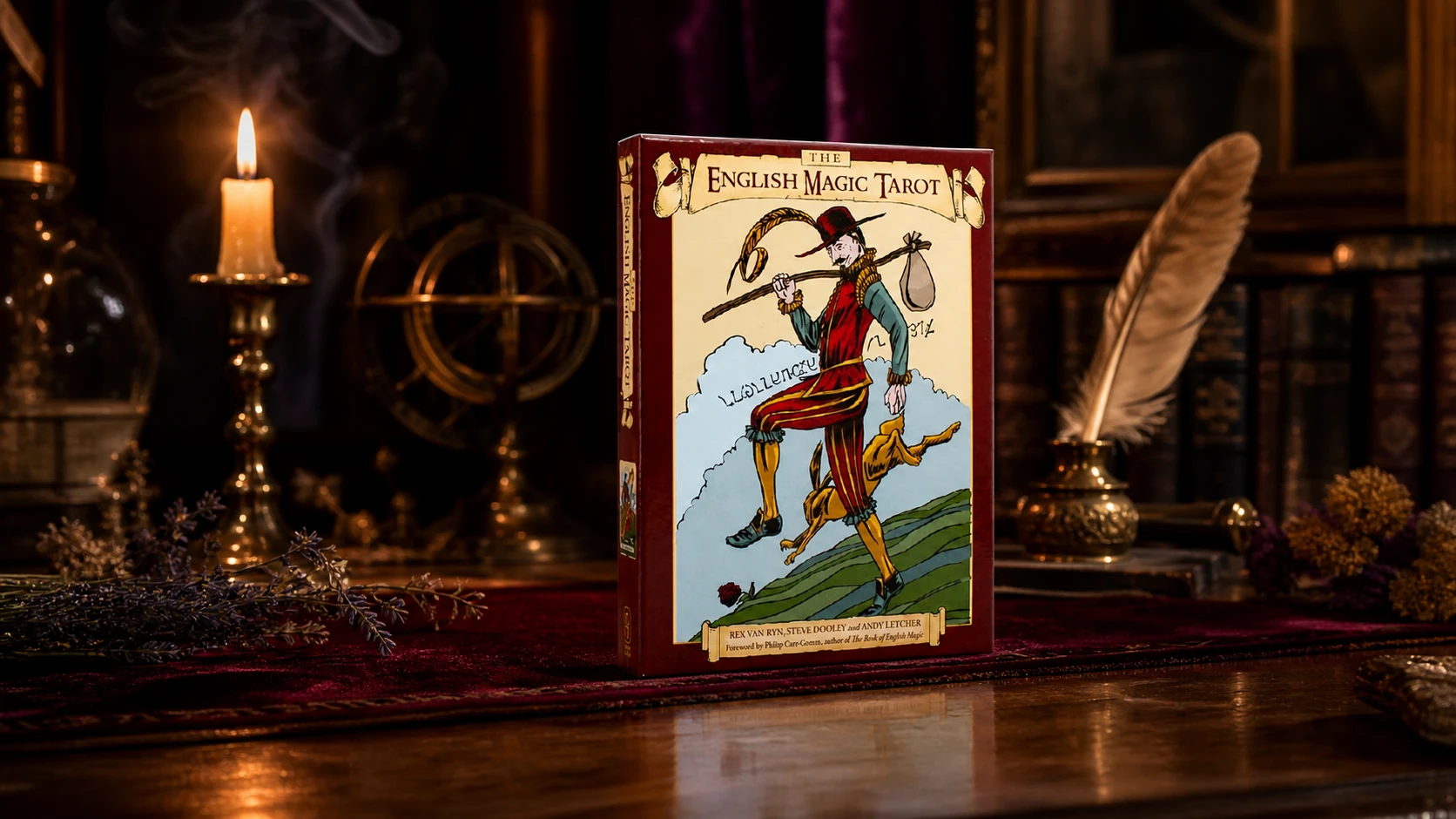
Rex Van Ryn illustrated the deck, Steve Dooley contributed its colour work, and Andy Letcher wrote the accompanying text. Weiser Books published this edition in 2016.
Is English Magic Tarot beginner friendly?
It can suit a beginner who enjoys historical imagery and political symbolism. The familiar tarot structure helps, although the woodcut-like scenes reward patient looking.
What readings suit English Magic Tarot best?
It is especially strong for questions about power, institutions, conscience, strategy, responsibility and the way personal choices sit inside a larger culture.
Where can I buy English Magic Tarot?
The product links on this page lead to the exact 2016 English Magic Tarot boxed deck by Rex Van Ryn, Steve Dooley and Andy Letcher.