Vintage collage, quiet ancestral magic
Antiquarian Tarot Cards
Browse this verified partial archive by official group, then open any card for a larger carousel view. Missing cards are not padded or invented.
Aurica’s Quick Take
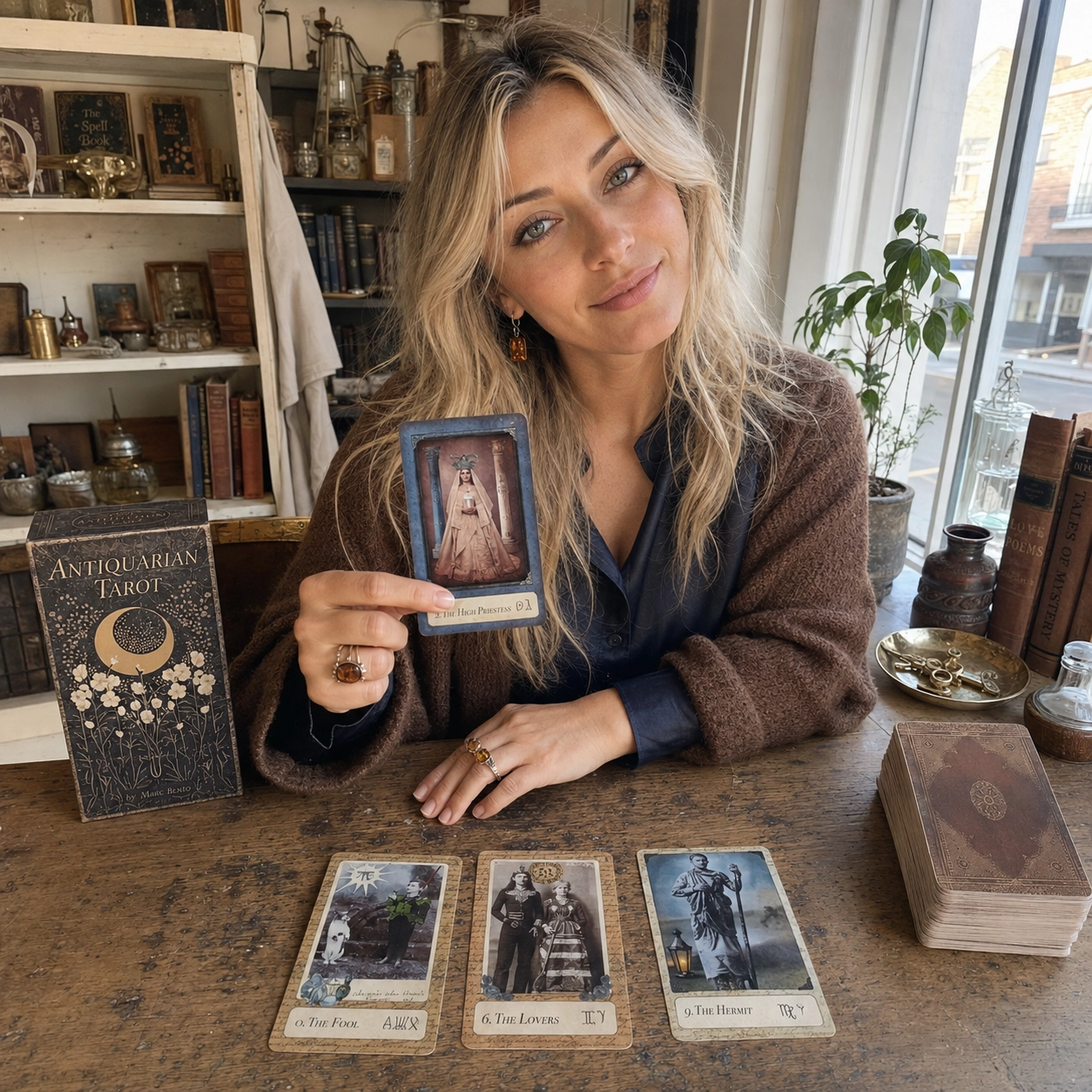
Antiquarian Tarot feels like opening a box of old letters, cabinet photos, pressed paper, and tiny symbolic notes. It is not trying to be bright, glossy, or modern. Its magic is quieter. The cards look aged, layered, and personal, as if every image has already lived a long life before it enters your reading. That antique-print mood is the main reason I find the deck so intimate.
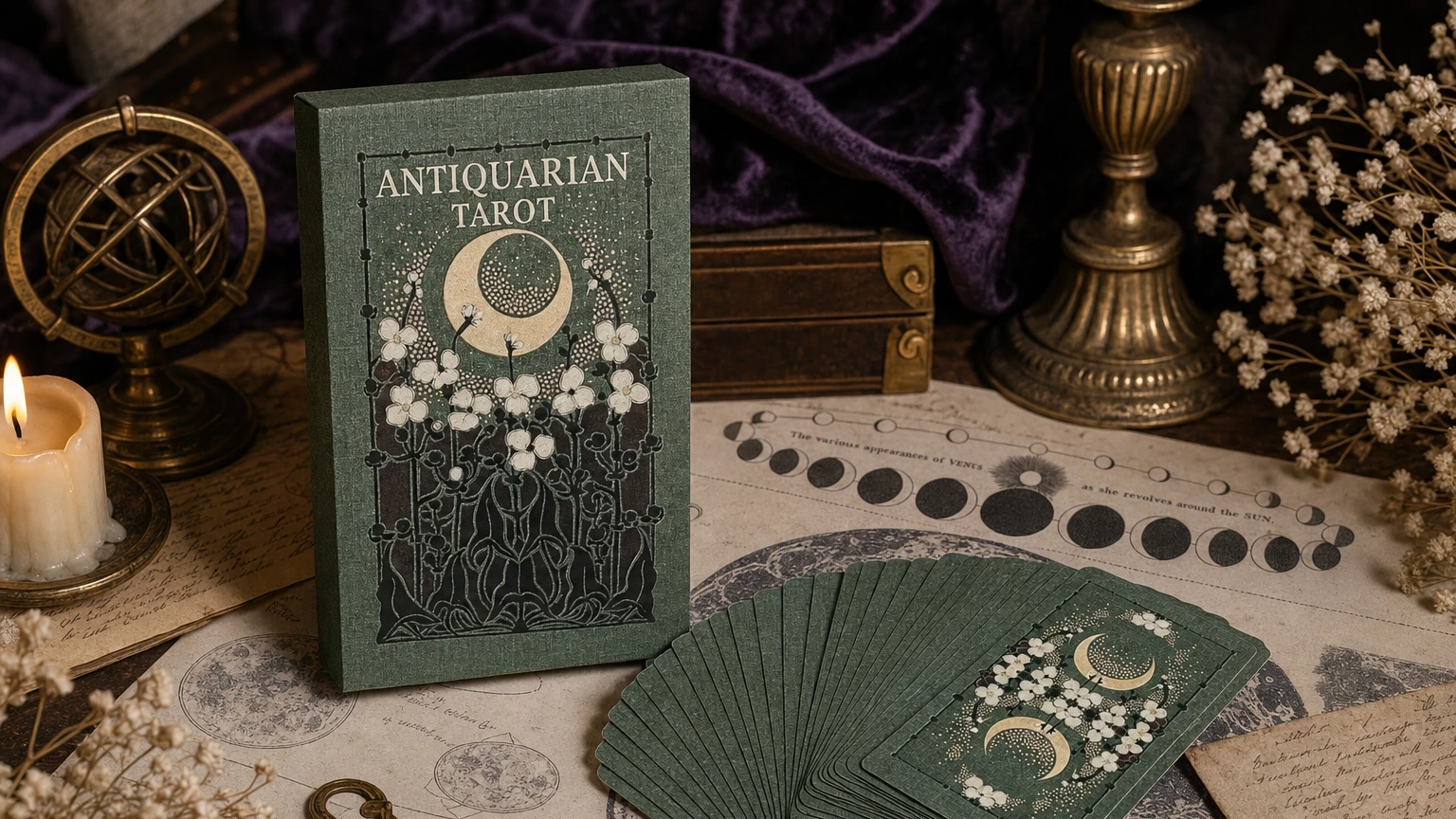
The deck was created by Maree Bento of Divine Muses, and it uses 19th-century-style collage, handwritten details, antique photographs, fabric-like texture, and old-world illustration. It stays close enough to the Rider-Waite-Smith family that most tarot readers can follow the structure, but the feeling is very different from a clean modern deck. Instead of loud color, the deck gives me faded paper, private faces, and little symbolic clues that ask me to slow down.
I would not call Antiquarian Tarot flashy. I would call it reflective. The people on the cards often feel like ancestors, memory figures, or characters from a secret family album. That can make a reading feel more personal than expected. A simple question about work, love, or timing can start to feel like a conversation with history: What pattern is repeating? What is old but still active? What truth has been sitting quietly in the background?
This review presents a verified partial same-deck gallery. I am keeping that scope honest, so it remains a rich visual sample without pretending every card image is displayed here.
I reach for this deck when a question needs patience rather than noise; follow the faded face or handwritten mark that catches your eye, and let its quiet history remind you that even an old pattern can open into a wiser, more hopeful next chapter.
What Makes This Deck Read Differently
The strongest feature of Antiquarian Tarot is atmosphere. Some decks tell you what they mean with big action and saturated color. This one whispers through sepia tones, typewritten words, old portraits, astrological marks, and collage choices. I find that useful when a reading needs patience. The card does not rush to one obvious answer. It gives you a room to sit in.

Deck-specific card study
The High Priestess feels like a secret kept in paper and ink
The High Priestess is one of the clearest examples of why this deck works for reflective readers. In a brighter deck, this card can feel moonlit and dreamy. Here, it feels more like an old document with a hidden message. The image asks me to listen for what is quiet, archived, or not ready to be said out loud.
In a reading, I would use this card when the querent already senses the truth but has not trusted it yet. Antiquarian Tarot makes that intuition feel private rather than dramatic. The answer may be in a diary, a memory, a repeated sign, or the small feeling that keeps returning when everything else gets noisy.
Because the artwork feels aged, the deck is especially good for questions about memory, family stories, old habits, spiritual study, and emotional patterns that have been around for a while. It can also work beautifully for journaling. I like to ask, “What looks inherited here?” or “Which symbol feels like it was added later?” Those questions fit the deck better than trying to force it into a fast, shiny yes-or-no style.
Old keys at the start: trust, skill, hidden knowing, and choice
These four cards show the deck’s antique storybook voice right away. The Fool feels like a figure stepping out of an old photograph, The Magician gathers tools with ritual focus, The High Priestess keeps secrets under the surface, and The Lovers makes choice feel tender and fated.


Beginners can still use it because the tarot bones are familiar. The majors, suits, courts, and many scenes keep enough traditional shape to read clearly. But I think the deck rewards readers who enjoy looking closely. Small details matter here. The charm is in the quiet symbols, the old paper feeling, and the way a face can seem both distant and deeply personal.
How I Would Use Antiquarian Tarot
I would reach for this deck when the question needs depth instead of speed. It is lovely for shadow journaling, ancestor-themed reflection, creative blocks, spiritual study, and relationship questions where the past still shapes the present. The deck’s vintage collage style makes it easy to talk about layers: what happened, what was covered over, what was decorated, and what still shows through.
A turning point in faded light: movement, balance, solitude, and change
This strip feels like an old moral tale. The Chariot asks for direction, Justice asks what is fair, The Hermit asks for private wisdom, and Wheel of Fortune reminds us that time itself is part of the reading.


It can also be a strong deck for readers who like historical charm. The cards feel like found objects. That makes each draw feel a little ceremonial, almost like choosing a photograph from a drawer and asking why this one wanted to be seen today. If you enjoy old books, antique shops, family albums, handwritten labels, and faded color, this deck may feel immediately friendly.
Deck-specific card study
The Hermit turns solitude into a gentle historical pause
The Hermit in Antiquarian Tarot does not feel like a loud spiritual performance. It feels like stepping away from the parlor, the family table, or the public story so you can hear your own lamp-lit thought. The antique style makes the card feel patient and almost archival.
When I see this card, I would not rush the querent into action. I would ask what needs to be studied, remembered, or quietly accepted. The deck’s old-world mood supports that message perfectly: wisdom may not arrive as a thunderbolt. It may arrive as one careful sentence written in the margin.
The main thing to know is that Antiquarian Tarot is not built for everyone’s taste. If you want rainbow color, sleek digital fantasy, or very obvious modern scenes, it may feel too muted. But if you like soft mystery and vintage symbolism, the deck can become very easy to bond with. Its quietness is not emptiness. It is space.
Reading Style: Vintage, Symbolic, and Intimate
Antiquarian Tarot has a strong mystic and Hermetic flavor without becoming cold or academic. The handwritten signs and symbolic details give the deck a study-table feeling, but the old portraits keep it human. That balance matters. A reading can move between practical life and spiritual pattern without feeling like two separate worlds.
Heart memory: new feeling, partnership, friendship, and nostalgia
The Cups cards show how tender this deck can be. New emotion, connection, community, and memory all feel filtered through antique paper, which makes the suit especially strong for questions about longing, family, and old love stories.


The color palette is part of the reading style. Faded tones soften the cards and make them feel less reactive. Even intense cards can feel like they are being viewed through time, which can help a difficult message land with more tenderness. Death, The Tower, or Nine of Swords still carry weight, but they do not scream. They ask what has been building, what has aged, and what is finally ready to change.
Deck-specific card study
Six of Cups makes nostalgia feel sweet but not simple
The Six of Cups is a natural fit for Antiquarian Tarot because the whole deck already speaks in the language of memory. This card can feel gentle, but it also asks what we are doing with the past. Are we being nourished by it, or are we trying to live inside it forever?
In a reading, I would treat this card as a soft invitation to revisit something with care. It might point to childhood, an old friendship, a creative style you once loved, or a pattern that began long ago. The antique artwork helps the message feel specific: the past is present, but it should be handled with honesty.
I also like how the deck handles the minors. The suits feel like little historical scenes rather than plain keyword cards. Cups can feel like memory and longing. Swords can feel like old letters, hard truths, and mental pressure. Pentacles feel grounded in objects, work, and security. Wands bring effort, creative heat, and the push to keep moving even when the paper is worn and the story is complicated.
Who Will Like This Deck Most?
You may love Antiquarian Tarot if you enjoy vintage art, collage, antique photographs, subtle symbolism, and decks that feel personal rather than polished. It suits reflective readers, journal keepers, collectors of unusual tarot art, and anyone who likes a deck with a strong historical mood. It is also a beautiful match for slow readings where the question needs time to breathe.
Earthly evidence: resource, practice, harvest, and legacy
The Pentacles cards ground the deck in objects, work, and lasting value. In this strip, the antique style makes success feel built over time: a seed, a craft, a private garden, and a family or community legacy.


You may not love it if you need crisp modern illustration, bright color, or a deck where every card explains itself instantly. This deck is readable, but it likes attention. It wants you to look at the paper texture, the face, the handwritten marks, and the emotional echo behind the scene.
My overall feeling is that Antiquarian Tarot is a soulful, old-world deck with a quiet voice. It is not trying to entertain you with sparkle. It is trying to invite you closer. For the right reader, that closeness is exactly the magic.
Antiquarian Tarot FAQ
Is Antiquarian Tarot good for beginners?
Yes, it can work for beginners who already like vintage art and patient observation. The structure is familiar enough for Rider-Waite-Smith readers, but the collage details reward slow looking more than quick keyword reading.
What is the art style of Antiquarian Tarot?
The art style is old-world collage with antique photographs, aged paper, handwritten marks, historical illustration, and muted color. It feels like a symbolic family album or a box of old letters.
Who created Antiquarian Tarot?
Antiquarian Tarot was created by Maree Bento of Divine Muses. Her work is known for vintage collage, spiritual symbolism, and a strong antique-paper mood.
What readings suit Antiquarian Tarot best?
It is especially good for reflective readings, journaling, old patterns, family or ancestor themes, spiritual study, creative blocks, and questions where memory or history matters.
Does the TarotFans gallery show every card?
No. This TarotFans review presents a verified partial gallery. It is a strong visual sample of the same deck, and missing cards are not padded, invented, or presented as complete coverage.
Where can I buy Antiquarian Tarot?
The existing TarotFans source points to the Divine Muses shop page for Antiquarian Tarot. I preserved that non-Amazon source instead of adding an Amazon affiliate link.