Meet every card
Explore The Cathar Tarot Cards
Move through this verified Watkins edition in its own sequence, from the Major Arcana into Wisdom, Love, Swords, and Shields. Choose a group or open any card in the Lightbox.
All Cards selected.
A note from Aurica
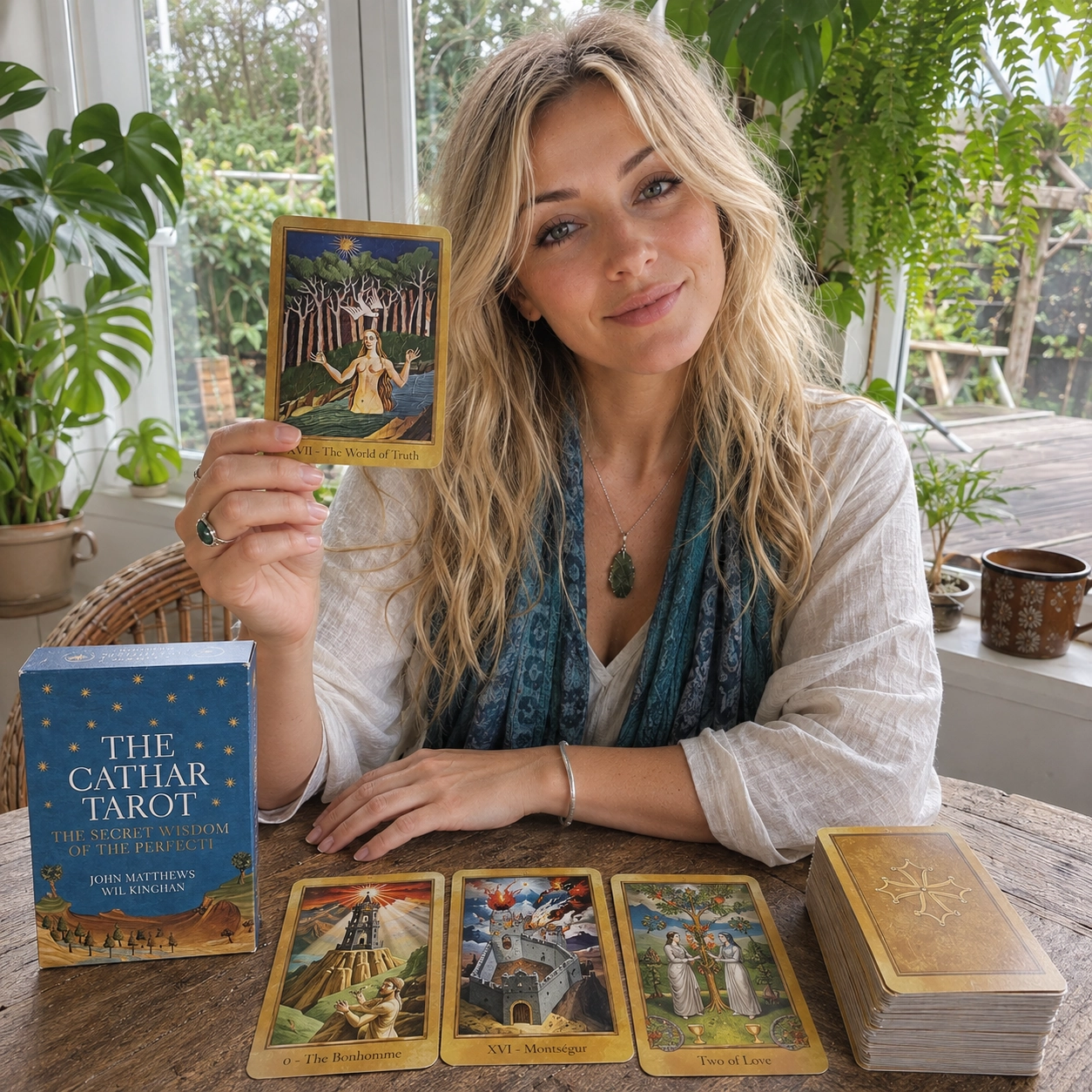
I feel the hush of a stone chapel when I open The Cathar Tarot, followed almost at once by wind on a mountain path. Its gold borders glow like little windows, yet the scenes inside them are never merely decorative. A raised hand, a closed door, or a cup held between two people can turn the whole reading.
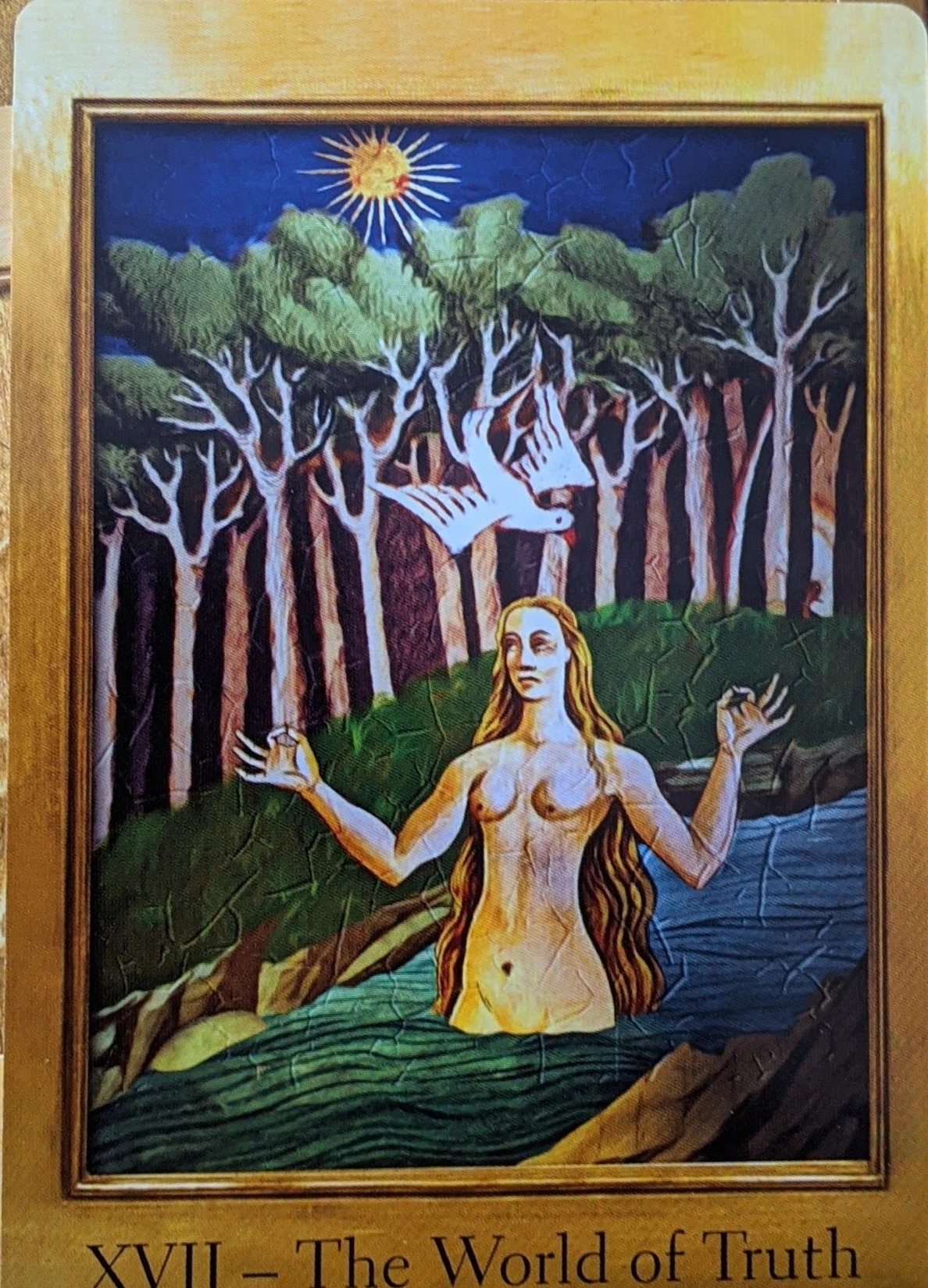
The World of Truth is the card I keep returning to. The pale figure rises from dark water with open arms while white trees reach into a deep blue sky. She looks vulnerable, but not defeated. For me, that image asks whether honesty can be offered without armour and whether the life around it is ready to give that honesty shelter.
I begin with the detail that catches my breath, then bring it back to the title and the question. Beside Montségur, truth may need a safe way out of a burning situation. Beside Two of Love, it may be asking for a brave, mutual conversation. The neighbouring cards keep intuition from drifting away from the actual spread.
This is not the deck I rush. I let unfamiliar names slow my hands, and I listen for the difference between conviction and stubbornness, solitude and exile, devotion and fear. That small pause makes its guidance feel clear rather than theatrical.
If these blue-and-gold scenes draw you closer, trust your curiosity and take the path one card at a time; The Cathar Tarot can help a quiet inner truth find its own warm light.
A path through light and shadow
The Cathar Tarot Review
The Cathar Tarot does not arrive like a quiet set of familiar keywords. It opens a blue-and-gold door into stone chambers, mountain paths, candlelit vows, feasts, trials, and sudden shafts of light. The card names themselves ask me to slow down: this is a deck with its own vocabulary, and it becomes most eloquent when I let that vocabulary breathe.
Created by John Matthews and Wil Kinghan, this 2016 Watkins Publishing edition contains 78 cards arranged as Major Arcana, Wisdom, Love, Swords, and Shields. I treat those names as invitations rather than obstacles. They make the reading feel less like reciting a lesson and more like listening for what a scene is protecting, revealing, or asking us to carry forward.
What makes this deck feel different?
Gold borders hold each scene like a small illuminated window. Within them, medieval rooms, hill towns, robed figures, towers, manuscripts, cups, blades, and red-cross shields create a world that feels both intimate and severe. Even when a card is gentle, there is often a threshold nearby: a doorway, arch, wall, path, table, or distant building.
That repeated sense of crossing makes the deck especially vivid for questions about conviction and change. I begin by asking where the eye wants to enter the picture, who appears able to move, and what seems closed. Only then do I bring in the card title and its place in the deck.
Card study
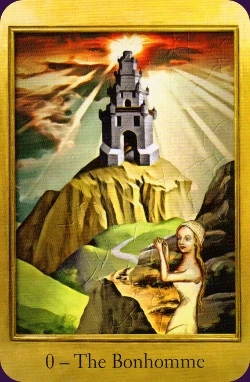
The Bonhomme — a small figure beneath a radiant tower
A pale figure sits low in the foreground with a sheet or map spread before them, while a tall dark tower rises from a rocky hill. White-gold rays pour across a red sky and divide the landscape into bright paths. The scale is striking: the traveller is tiny, the tower immense, yet the light reaches both.
In a reading, I would let that contrast speak before I rushed to certainty. Upright, the card can suggest beginning with humility and attending to the path already visible. In shadow, the shining destination may become an ideal so large that the present step is forgotten. I would ask: what modest act keeps your guiding truth connected to the ground?
How The Cathar Tarot reads in practice
This deck reads beautifully when the question has moral or emotional weight, but it dislikes being hurried. A three-card line is often enough: what I believe, what the situation is showing me, and what action keeps those two in honest conversation. The renamed cards can make a spread feel unfamiliar at first, yet that small pause is useful; it interrupts automatic interpretation.
I pay close attention to posture and distance. A lowered head, an offered cup, a figure separated by a wall, or people gathered around one table can reveal where trust is growing and where fear has narrowed the room.
Four-card moment
Crossing the threshold
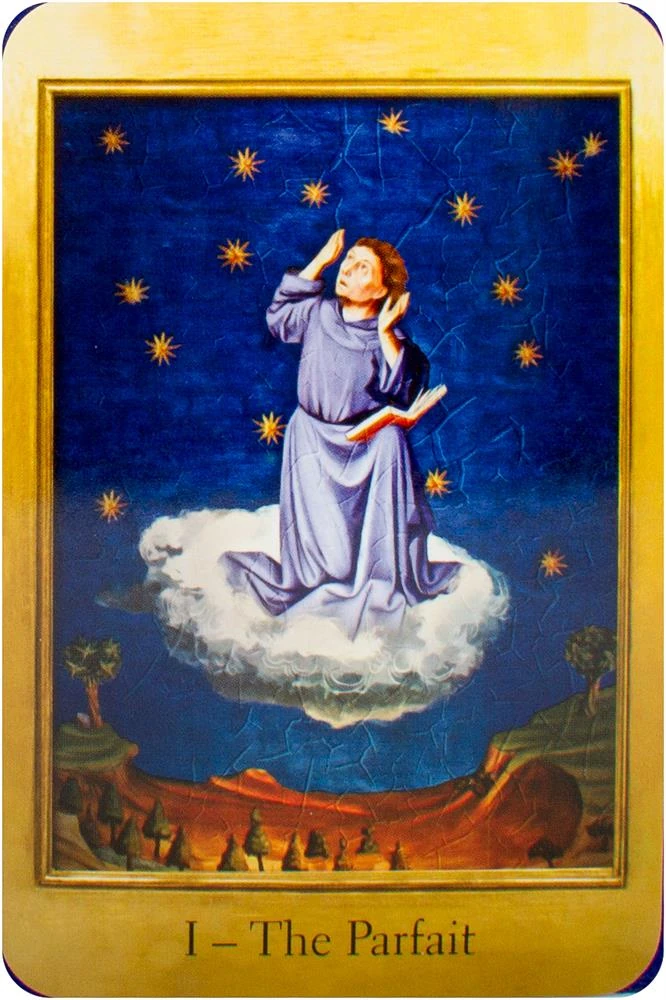
The Parfait, Ascension, The Apparelamentum, and The Consolamentum each place a person or sacred image at a point of change. Read them together as a gentle progression: listen, awaken, accept what is changing, and name what you are ready to carry onward.


Is The Cathar Tarot beginner-friendly?
It can be, but it is not a deck I would hand to a new reader who wants every card to look immediately familiar. Its strength is also its learning curve: the Major Arcana and two renamed suits ask you to build a relationship with this particular system. Keep the guidebook nearby and give yourself permission not to know on the first glance.
For an easy reading, pull one card and write down the first visible action. For a medium reading, add what the title changes about that action. For a deeper reading, place a second card beside it and ask where the two scenes agree, resist, or open a new door.
Card study
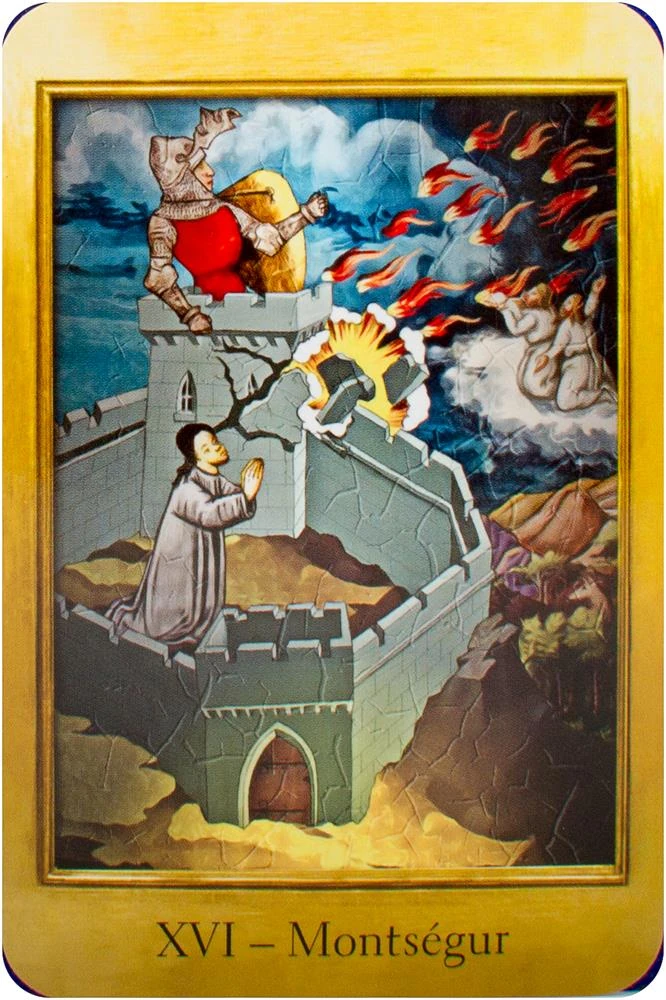
Montségur — urgency spiralling around the tower
A pale stone tower dominates the scene as red-orange fire streams across its upper edge. Three figures move along the curving outer stair: one high beside the flames, another reaching upward, and a third lower down. Mountains and dark clouds press around the architecture.
The card feels like pressure made visible. Upright, it can show the moment when a defended position must meet reality and movement can no longer be delayed. In shadow, urgency may scatter attention or trap us in a dramatic loop. In an actual spread, I would look to the neighbouring card for the safest direction of travel rather than assuming every person must take the same route.
Reading the four suits in this deck
Wisdom often shows learning as lived experience: books, teachers, storms, work, and the humility of being instructed. Love is not painted as sweetness alone; cups pass between people, sit beside solitude, and gather communities around shared tables. Swords brings exposed weather, difficult clarity, and choices that cannot stay hidden. Shields returns the story to protection, service, shelter, inheritance, and the structures we build together.
I find the suit names most helpful when used as questions. What must be understood? What wants to be shared? What truth cuts through confusion? What deserves protection? That turns the deck’s unusual language into practical reading movement.
Four-card moment
Wisdom learned with the whole body
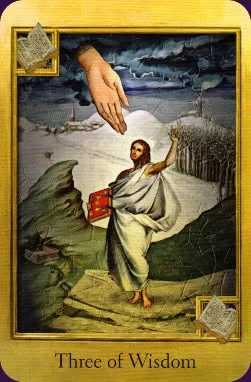
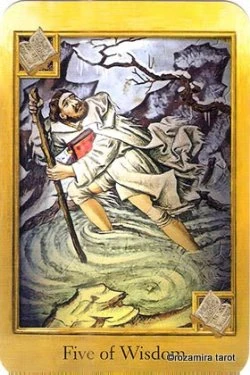
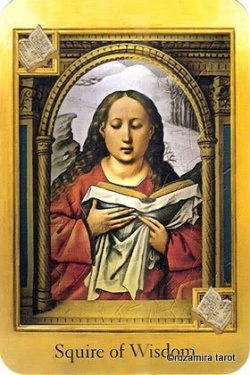
Three of Wisdom reaches from a dark sky toward a kneeling figure and red book; Five of Wisdom runs through wind and broken weather; Seven of Wisdom bends over books in a quiet room; Squire of Wisdom holds an open book close to the heart. Together they show knowledge arriving through invitation, ordeal, study, and devoted attention.

Questions this deck answers especially well
I would reach for The Cathar Tarot when a question circles belonging, conscience, loyalty, promises, endurance, or the cost of defending an old position. It is also compelling for creative work: the architecture and strong gestures can reveal where an idea needs form and where it needs freedom.
Try asking: What truth am I protecting? Which promise still has life in it? Where have I confused endurance with staying still? What would let this situation move without betraying what matters? These questions give the deck room to be searching rather than merely predictive.
Card study
The World of Truth — openness in a winter-blue landscape
A pale unclothed figure rises waist-deep from dark blue water with both arms open. Behind her, a forest of white trunks branches against a deep blue sky, and one bright gold star hangs above the horizon. The scene feels exposed and still, with no wall or robe between the figure and the cold-looking landscape.
Upright, I read this as the courage to become visible without ornament: a truth that can stand in the open. Its shadow is vulnerability without enough shelter, or honesty offered before the listener is ready to receive it. In a spread, I would ask what support the surrounding cards provide, then choose a way of speaking that is clear without becoming cruel.
Art, atmosphere, and emotional range
The palette moves between chapel blue, sunlit gold, blood red, stone grey, and woodland green. Those colours do real reading work. Blue can feel like distance, contemplation, or night; red gathers urgency around robes, shields, fire, and interiors; gold creates moments when an idea seems to break through the walls.
I love that the deck can be solemn without becoming emotionally flat. A lonely figure under rain sits in the same world as an exchanged cup, a shared meal, and a bright landscape. The result is a reading voice that understands tenderness as something chosen and practised, not merely felt.
Four-card moment
Love offered, withheld, and shared
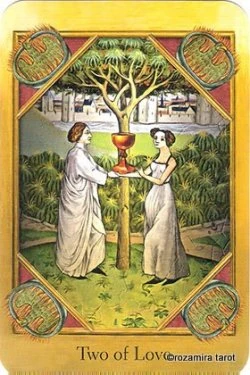
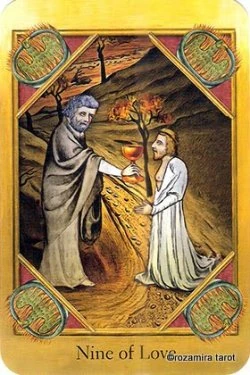
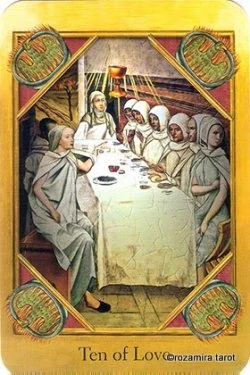
Two of Love exchanges cups beneath a branching tree; Four of Love sits alone with a cup and bowed head; Nine of Love brings two figures together beside firelight; Ten of Love gathers a long table of people beneath a raised cup. The sequence asks where feeling begins, where it closes, how it returns, and what becomes possible when it is shared.

Who will connect with The Cathar Tarot?
This deck may call to readers who love medieval visual worlds, spiritually searching stories, renamed systems, and cards that reward patient study. It is a strong choice for journaling and for readers who enjoy tracing a theme across a whole spread.
It may feel less comfortable if you want a very plain learning deck, instantly familiar titles, or bright contemporary scenes. That is not a flaw; it is the deck being honest about its own doorway.
What to know before buying
Check that the listing matches The Cathar Tarot: The Secret Wisdom of the Perfecti by John Matthews and Wil Kinghan, published by Watkins in 2016. The direct Amazon link on this page uses ISBN 178028912X. Edition details matter when a deck has distinctive card names and packaging, so compare the box rather than relying on a generic search result.
The verified Gallery above is the best place to test your response. Look at several Major Arcana cards and at least one card from each suit. If the renamed language makes you curious instead of impatient, the deck is already showing you how it wants to be read.
The golden rule for this deck
Do not translate the card too quickly. Let the title, visible action, and emotional weather sit together for a moment. The pause between recognition and explanation is where The Cathar Tarot often gives its clearest answer.
Final Thoughts
The Cathar Tarot is not a neutral window. It is a carved doorway, edged in gold, opening onto a world of vows, towers, books, cups, blades, shelter, fire, and difficult light. When I meet it slowly, the renamed cards stop feeling like obstacles and begin to feel like fresh questions.
If you are drawn to decks with a complete inner world, start with one card and one honest sentence about what you see. This deck has a beautiful way of reminding us that clarity need not arrive as thunder; sometimes it begins as a small light finding the path home.

The Cathar Tarot FAQ
Who created The Cathar Tarot?
John Matthews and Wil Kinghan created The Cathar Tarot: The Secret Wisdom of the Perfecti. This review follows the 2016 Watkins Publishing edition represented by the verified Gallery and ISBN 9781780289120.
Does The Cathar Tarot use familiar tarot card names?
Only partly. The deck keeps a 78-card shape while giving many Major Arcana cards Cathar-specific names and renaming two suits Wisdom and Love. Swords remains familiar, while Shields carries the practical, material current.
Is The Cathar Tarot suitable for beginners?
It suits a curious beginner who is happy to learn this deck on its own terms. The unfamiliar names make the guidebook especially valuable, so begin with one-card pulls and let image, title, and question meet before reaching for a memorised keyword.
What readings suit this deck best?
I find its strongest questions are about conscience, belonging, promises, pressure, endurance, and the line between an inner truth and the world around it. Its historical atmosphere rewards slow, reflective readings rather than hurried prediction.
How should I work with the renamed suits?
Start with what is visibly happening in the card, then listen to the suit name. Wisdom asks how knowledge is learned or carried; Love asks how feeling is offered, withheld, or shared; Swords brings clarity and conflict; Shields returns the reading to protection, labour, resources, and the tangible world.
What should I check before buying?
Confirm the exact edition, box title, creators, and card count shown by the seller. The page reviews the 2016 Watkins Publishing edition, and the direct product link uses ISBN 178028912X.