Journey Into Egypt Tarot Card Gallery
Explore the named card fronts currently available for this review. Select any card to open the larger lightbox view.

A note from Aurica
I reach for Journey Into Egypt Tarot when a question feels like a doorway between the life I can name and an older story moving quietly underneath it. Julie Cuccia-Watts fills these cards with temples, lunar rhythms, ritual gestures, and watchful figures. I find myself slowing down, as though I have stepped from bright daylight into a painted chamber where every object has been placed with care.
The High Priestess draws me first. Her blue, star-lit form rises above a sleeping figure and a row of moons, making intuition feel less like a sudden answer and more like something ripening through a full cycle. Beside her, The Empress reclines among mirrors, vessels, and carved animals. Together they ask me to listen inward, then give that knowing a body: a choice, a boundary, a piece of work, or a kindness I can actually offer.
In a reading, I begin with the detail that seems to glow—the direction of a gaze, the shape of a doorway, the moon named beneath a card, or the distance between two figures. Then I compare that feeling with the card’s familiar tarot role and with its neighbours in the spread. This deck rewards patient looking. Its Egyptian and astrological language can deepen a question, but the clearest message still arrives through the relationship between image, position, and the life in front of me.
I especially love it for meditation, creative work, and moments when a neat one-line answer would be too small. Let its painted chambers remind you that moving slowly is not the same as standing still; sometimes it is how your wisest next step finally comes into view.
Journey Into Egypt Tarot is one of those decks that asks you to slow down before you decide what a card means. The named native gallery gives a strong sense of the deck’s Egyptian-inspired mystery-school atmosphere: temple spaces, ritual gestures, sacred animals, mythic bodies, and scenes that feel like thresholds.
I read this deck best when I let the art behave like a symbolic chamber. A staff, a crown, a pool of water, a guarded doorway, or the direction of a figure’s gaze can change the message. Instead of rushing to a one-line keyword, I would ask: what is being initiated, protected, offered, or transformed here?
That is also why the deck benefits from being browsed before someone buys it. The same Egyptian-inspired mood repeats across majors and minors, but each suit carries a slightly different temperature. Wands feel active and ceremonial, Cups feel like offerings and departures, Swords feel severe and clarifying, and Coins bring the temple down into practical life.
Journey Into Egypt Tarot quick take
Choose this deck if you enjoy slow, atmospheric tarot with spiritual depth. It is especially good for meditation, mythic spreads, shadow work, creative questions, and readings where the querent needs meaning as much as instruction. Skip it if you want a bright party deck or the clearest possible beginner scenes. The gallery is a generous look at the deck’s visual language, while unavailable cards are left out rather than guessed.

Card study
The High Priestess as the sealed temple
In a reading about whether to share a private spiritual idea, The High Priestess feels like a clear pause. I do not read her here as only “mystery.” I read her as protected knowledge, a chamber where not every visitor is ready to enter.
The practical advice is to keep the idea quiet until it has structure. Journal it, dream with it, and let it become stronger before explaining it to people who may flatten it.
Artwork and first impression
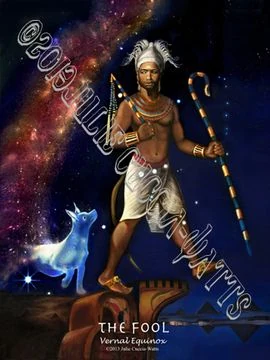
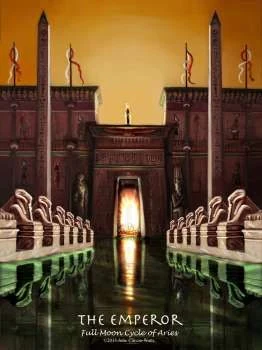
The images feel staged like sacred drama. Figures face one another, hold tools, point toward invisible forces, and stand in spaces that feel larger than ordinary rooms. The deck’s Egyptian inspiration gives the cards gravity without turning them into a history lesson. I would describe it as symbolic tarot art with ritual atmosphere, not as a literal guide to ancient Egypt.
The card fronts also have a large, square-ish presence. They want room on the table. I would rather use three cards and read them deeply than throw a crowded spread and miss the subtle body language.
Four-card temple path
Entering the first chamber
Read this sequence as step forward, gather the tool, listen inward, and build the container. It is a simple initiation spread for beginning a serious personal project.

How the symbolism reads
Journey Into Egypt Tarot is readable if you know tarot structure, but it does not reward mechanical keyword reading. The deck shines when you read the scene. A figure’s posture may suggest resistance or devotion; a doorway may show an invitation or a boundary; water may feel like memory, grief, purification, or the underworld.
That makes the deck useful for readers who like layered interpretation. It can answer practical questions, but it usually asks for the spiritual pattern beneath the practical choice.
Card study
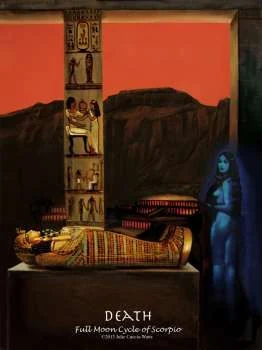
Death as ritual transformation
For a question about leaving an old identity, Death feels ceremonial rather than shocking. The card has threshold energy: something is ending, and the ending deserves to be marked with care.
My reading would be: make the change visible. Clear the desk, return the object, write the goodbye, or set a boundary. This deck often turns inner change into ritual action.
Let the water settle before the next question
The High Priestess and Death both ask for a deliberate pause, but the Cups reveal what that pause is protecting. I look for the feeling that wants care, the feeling that has completed its lesson, and the one honest gesture that can carry the reading forward.
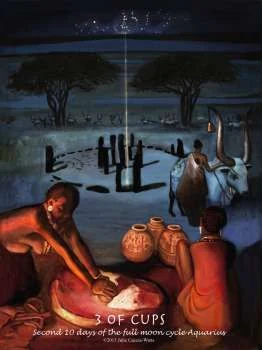
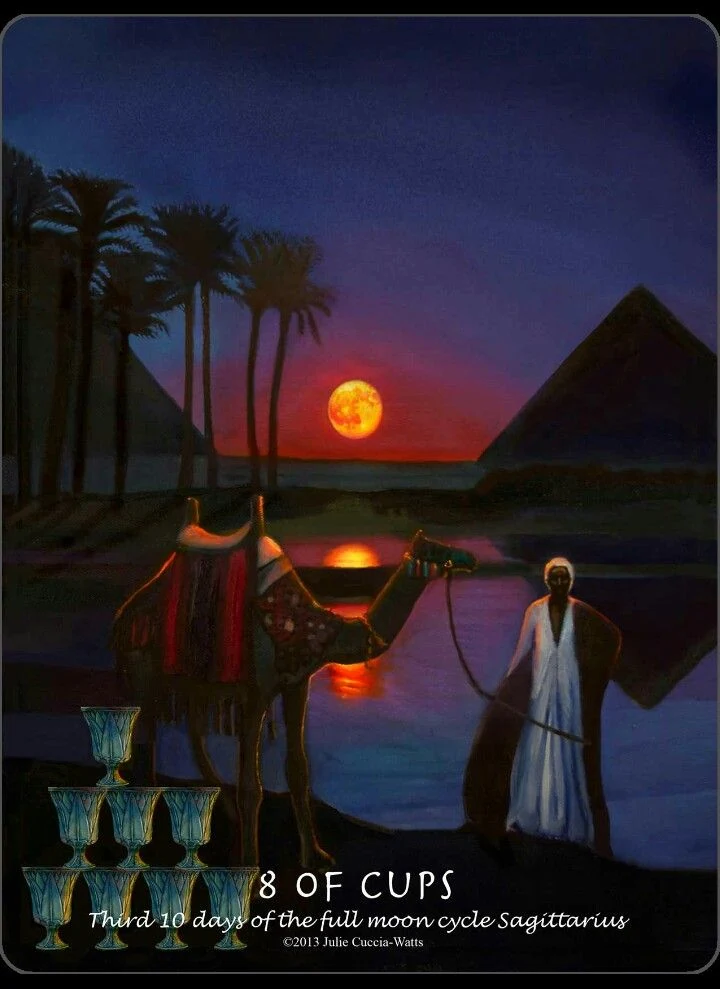
Four-card water story
Emotional offering and departure
These Cups cards move from first feeling to shared emotion, then to departure and mature compassion. It is a strong mini-spread for deciding what emotion deserves care and what has already taught its lesson.


Best uses for this deck
I would reach for Journey Into Egypt Tarot for spiritual direction, ancestor questions, dream journaling, identity work, creative blocks, and long-form personal study. It is also beautiful for mythic spreads: gate, guide, test, offering, and next step. The deck can feel intense, but that intensity is the point.
For daily pulls, keep the question grounded. Ask what threshold you are standing at, what tool you need, and what action would honor the answer. That keeps the deck’s spiritual mood useful instead of vague.
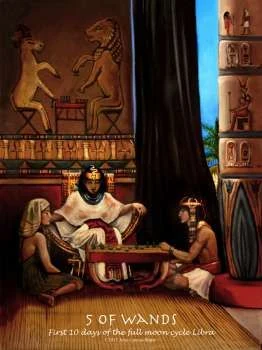
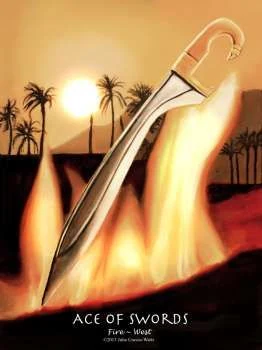
Four-card pressure spread
Conflict, burden, clarity, movement
This strip starts with tension and overload, then cuts through with a clear idea and moves toward distance. It is the deck’s practical side: name the struggle, choose the blade, move on.


Clarity needs a human measure
The pressure spread can cut through noise, yet the King of Swords asks what kind of authority will remain after the decision is made. I read the next card by testing the cleanest boundary against compassion, proportion, and the life that must continue around it.
Card study
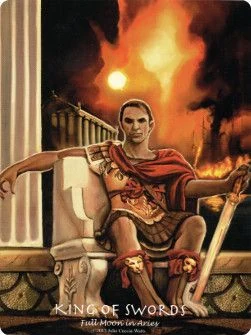
King of Swords as hard authority
The King of Swords gives the deck one of its sharper voices. For a difficult decision, I would not read him as soft advice. He is command, strategy, law, and the burden of being clear when emotion is loud.
The useful message is to decide from principle, not panic. Say the clean sentence. Make the boundary real. Then notice where control may become too rigid.
Pros and cons
| Pros | Cons |
|---|---|
| Rich Egyptian-inspired atmosphere makes spiritual and symbolic readings vivid. | Some card fronts are unavailable, so the gallery avoids guessing or presenting uncertain images. |
| Excellent for shadow work, identity shifts, dreams, creative blocks, and mythic spreads. | Very quick yes/no or party-style readings may feel too heavy for the deck’s tone. |
| Native TarotFans gallery replaces fragile third-party embeds and lets readers inspect the card art locally. | Readers wanting very plain Rider-Waite-Smith scenes may need time to learn its visual language. |
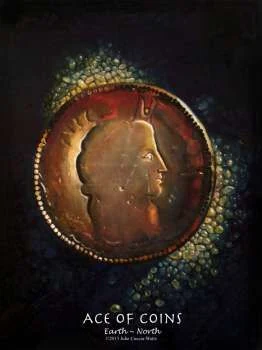
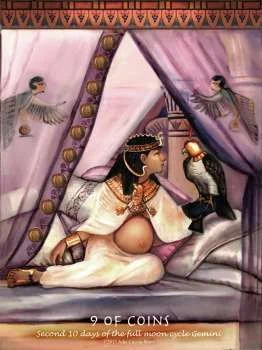
Four-card earth temple
Building the sacred container
Use this for money, work, health, and body questions. The sequence moves from seed to protection, then earned beauty and mature stewardship.


Final Thoughts
Journey Into Egypt Tarot works because it makes tarot feel like a passage through symbolic rooms. It is not fluffy, and it is not the fastest deck on the shelf. Its strength is the way each card asks you to look, reflect, and cross a small threshold.
I like it most for slow readings, spiritual study, creative decisions, and moments when the querent needs meaning as much as advice. The named native gallery above gives a strong view of the deck’s visual language.
Journey Into Egypt Tarot FAQ
Is Journey Into Egypt Tarot a full tarot deck?
Yes. Journey Into Egypt Tarot is a 78-card deck. This review displays only the card fronts that could be named confidently and leaves unavailable images out.
What is the art style of Journey Into Egypt Tarot?
It is Egyptian-inspired, ceremonial, and symbolic: temple scenes, mythic figures, ritual posture, sacred-looking geometry, and cards that feel like small initiation rooms.
Is Journey Into Egypt Tarot beginner friendly?
It can work for a patient beginner, but I prefer it as a second deck. The structure is recognizable, while the images reward slow visual reading and study.
Does it follow Rider-Waite-Smith meanings?
Mostly in broad structure. The majors and suits are familiar, but titles such as The High Priest and The Drowned Man give the deck its own voice.
What readings suit this deck best?
Use it for spiritual direction, dream work, identity shifts, shadow work, creative blocks, and questions where meaning matters as much as practical advice.


