Explore the Stretch Tarot Cards
Browse the verified exact-edition card fronts recovered from the supplied sources and creator click-throughs, arranged in standard tarot order. Choose a group to filter the continuous gallery, or select any card to open the full-size Lightbox. Unavailable or uncertain fronts are not inferred.
Showing the selected card group.

A note from Aurica
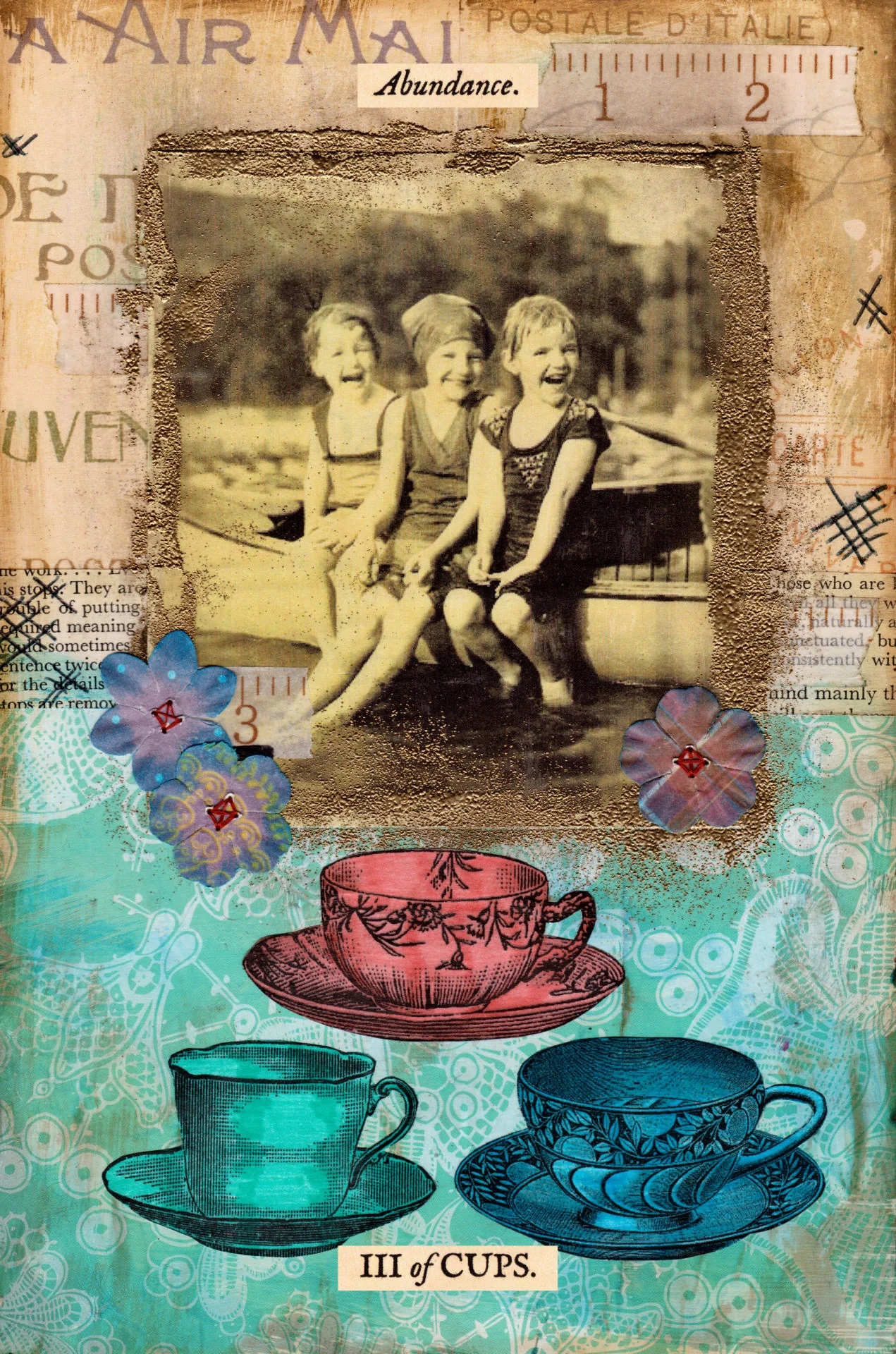
I love how The Stretch Tarot lets a reading feel handmade. Torn paper, old faces and bright spills of colour keep their seams, like memories placed side by side on a kitchen table. I notice which fragment catches first—the blue stillness of The High Priestess, the warm company of the Three of Cups, or a skull softened by flowers—and let that tug show me where the question feels tender.
Then I return to the card's traditional work. The printed keyword opens the door without closing the room; I compare neighbouring images, watch where figures turn, and ask whether the collage softens an old meaning or sharpens its tension.
Meet these cards patiently and their unlikely pieces can help you see that your own scattered pieces are still capable of becoming a brave, beautiful new picture.
A handmade collage deck with a pulse of its own
The Stretch Tarot began with Joseph Stretch cutting, painting and assembling images by hand, and that physical history still flickers through every card. Torn paper, old photographs, bright paint and tiny cream labels meet like fragments from different lives pinned onto the same dream.
I would not rush this deck. First notice the face, object or colour that catches you; then return to the card's traditional role and the printed keyword. That small movement—from image, to structure, to the question—lets its strange beauty stay useful.
What makes The Stretch Tarot different?
These are mixed-media collages rather than tidy retellings of familiar Rider-Waite-Smith scenes. A vintage photograph might sit beside a butterfly, a medical drawing, sheet music, flowers or a found word. The joins remain visible, so each card feels made rather than polished smooth.
The palette changes sharply across a spread: turquoise can open a cool reflective space, red can make an emotion immediate, and black can gather a difficult card into silence. Small printed words such as Unity, Abandonment, Perception and Skill offer a foothold, but the picture always has more to say than the label.

Card study
The High Priestess: a blue figure inside a map of memory
A seated woman in a vivid blue dress faces forward from an ornate chair. Dark round jewels cross her bodice, and a black-and-white map opens behind a crown of sharp radiating points. Her right arm rests outward while her gaze lifts slightly above us, creating a feeling of attention held in reserve.
In a reading, I hear this as knowledge that has not yet become speech. Upright, the map and still pose can suggest inner guidance, pattern recognition and privacy. In shadow, that reserve may harden into distance or withheld truth. Ask what you already sense, then look to the neighbouring card for the action that can carry it into the world.
How the deck reads in practice
The Stretch Tarot reads through collision. A soft old portrait may be crossed by a hard geometric mark; flowers may gather around a skull; a figure may carry an animal head or stand inside a diagram. Those contrasts can make the emotional tension of a question visible very quickly.
For a three-card reading, try what I can see, what I am avoiding, what can move. Describe one literal detail from each card before interpreting it. Then compare the printed keyword with the traditional meaning and decide whether they agree, sharpen one another or create a useful contradiction.
Four-card story
When the first brave movement begins
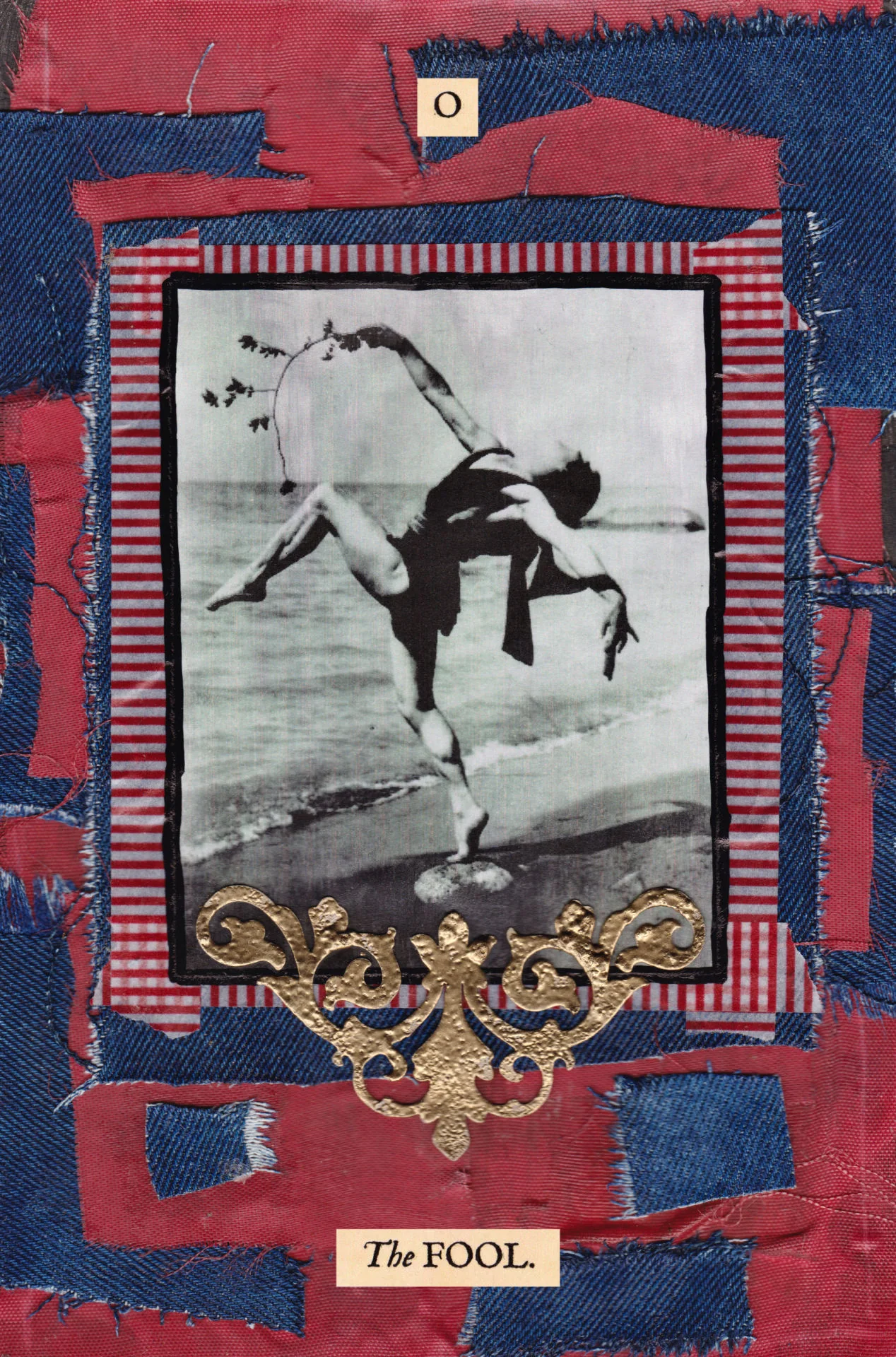
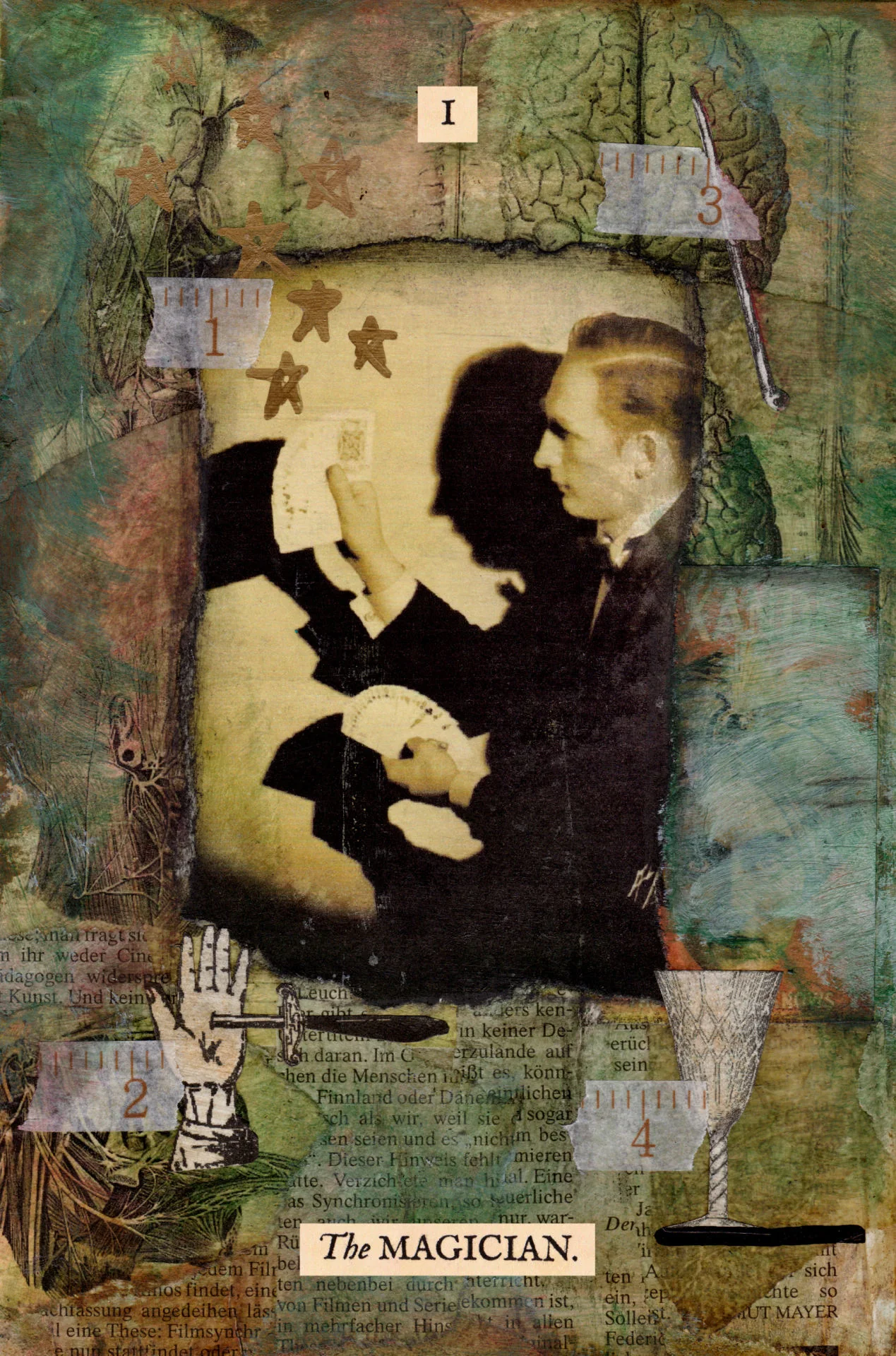
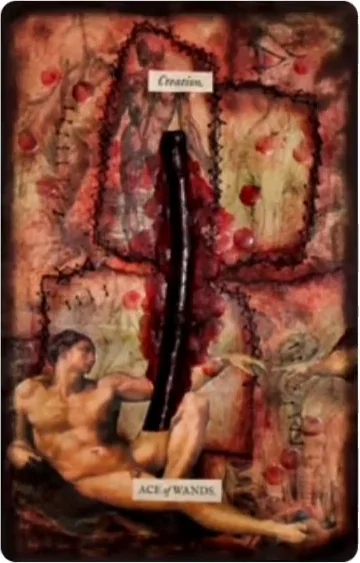
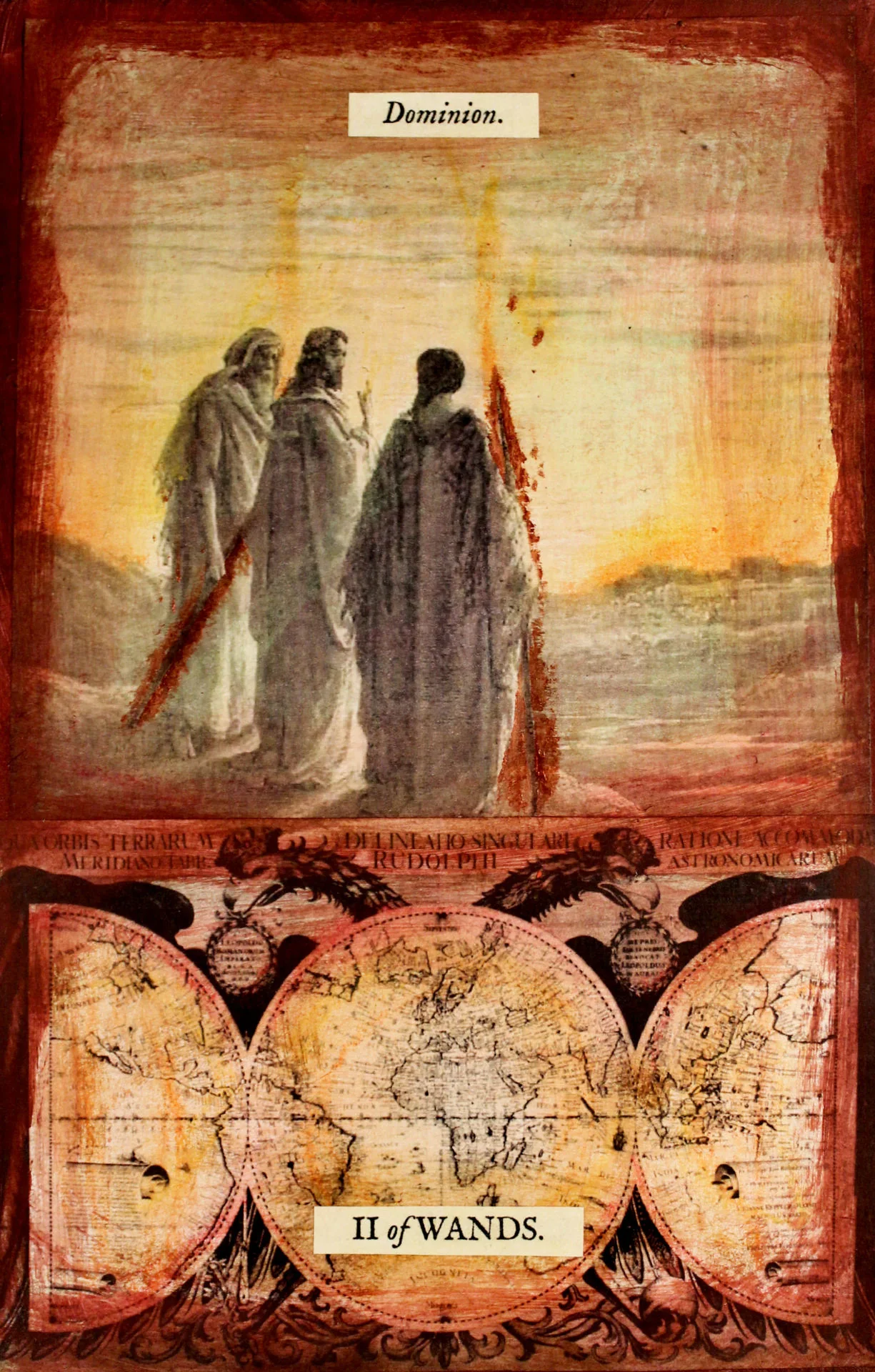
The Fool tips forward in a black-and-white balancing pose against stitched red and blue cloth. The Magician studies paper in a green, ochre and newsprint workshop. The Ace of Wands rises as one dark vertical spark through a red collage field, while the Two of Wands places three cloaked figures above paired world maps. Together they move from risk, to intention, to ignition and wider command.
Beginner guidance: let the keyword open, not close, the card
A patient beginner can learn this deck because its cream keyword labels give many Minor Arcana cards an immediate entry point. Yet those labels are deliberately compact. Peace on the Two of Swords does not erase the blindfold and crossed blades; Skill on the Eight of Pentacles does not remove the patience of making.
Start with one card a day. Write down the visible subject, the strongest colour, the printed word and one action the card might invite. Keep a traditional reference nearby, especially for the pip sequence and courts. The deck becomes friendlier when you allow image and structure to talk to each other.
Card study
Eight of Cups: a lone walk into pale water
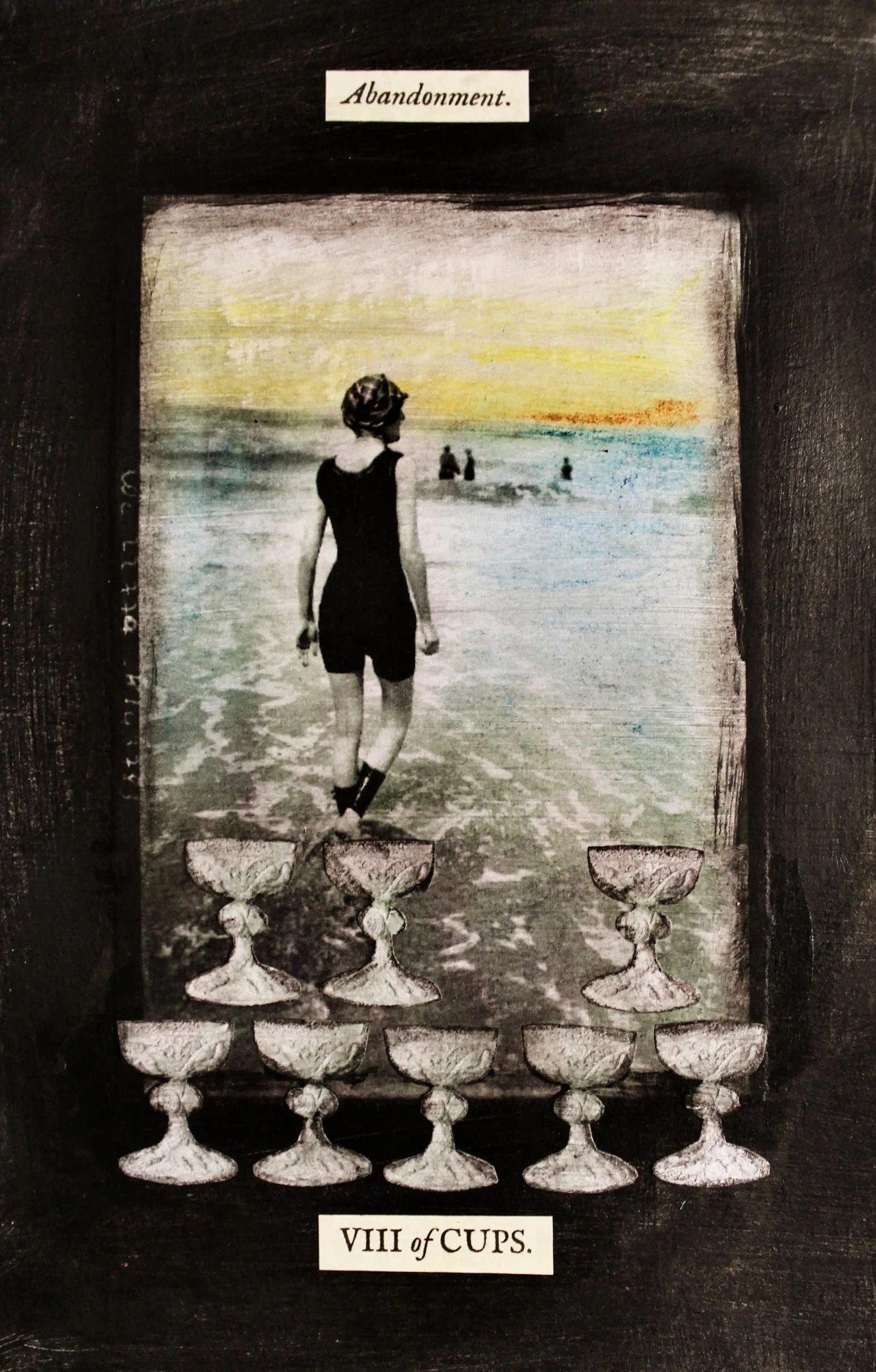
A small dark figure walks away through shallow water toward a washed yellow horizon. Eight cups sit in uneven rows across the foreground, close enough to count but too low to block the path. The surrounding black frame makes that bright strip of distance feel both exposed and necessary.
Upright, the card can name an honest departure from something emotionally complete but no longer alive. In shadow, the walk may be avoidance: leaving before grief or gratitude has been spoken. In a spread, look at the card beside the horizon. It often shows what the leaving is truly for.
Prompts from gentle to demanding
Gentle: Which colour in this spread feels most like today? Deeper: What two images seem to belong to different stories, and what happens when I let them meet? Demanding: Where am I trusting a neat label more than the complicated truth in front of me?
The last prompt is the heart of reading this deck well. Its keywords are door handles, not rooms. Open one, and then stay long enough to notice who is waiting inside.
Four-card story
How the heart gathers, grieves and chooses
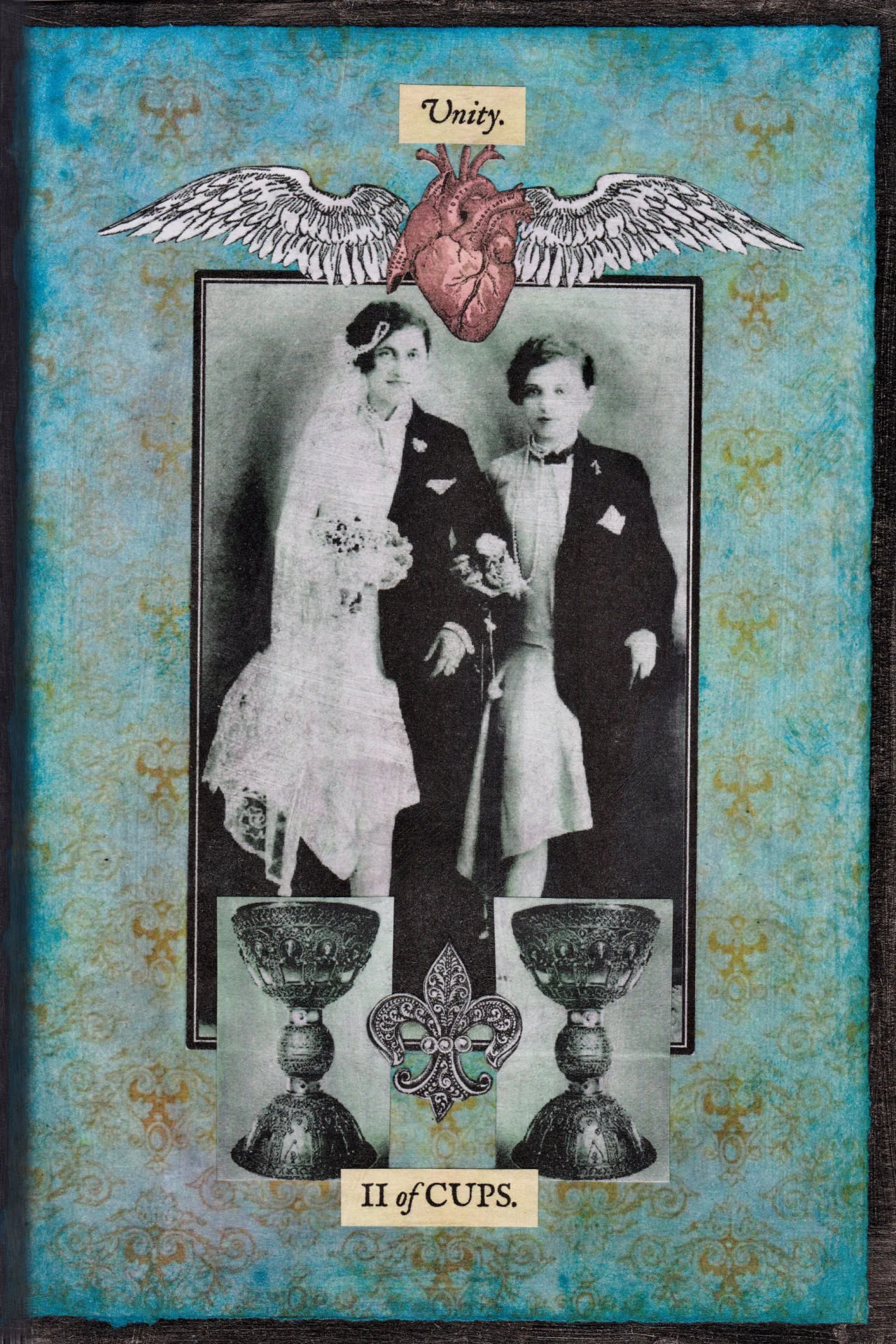
The Lovers share a kiss against a violet field; the Two of Cups places a wedding portrait beneath a winged anatomical heart; the Three of Cups brings three laughing women above three brightly coloured teacups; and the Five of Cups bends a solitary white-clad figure above five small vessels. The group holds attraction, union, abundance and disappointment without pretending they are separate worlds.


Relationships, work and creative readings
In relationship questions, watch gaze and distance before deciding whether a card is warm or difficult. The Lovers close the space between two people; the Eight of Cups opens that space into a journey. Ask what kind of closeness the spread can honestly sustain, rather than forcing a yes or no.
For work and creative questions, the deck's handmade texture feels especially alive. The Three of Pentacles places a working interior behind three marked coins, while the Eight of Pentacles surrounds a maker with flowers and green. These images ask whether the work needs collaboration, repetition, rest or the courage to show its rough edges.

Card study
Nine of Swords: a pale body above a row of blades
A pale horizontal figure floats or rests against a wall of dark portrait squares. Nine upright swords stand in a strict row below, and a narrow bedlike rail runs across the bottom. The almost colourless body looks exposed against the black field, while the small keyword Cruelty gives the scene a hard verbal edge.
Upright, this can name anxious thought, sleeplessness or a mind that keeps arranging pain into the same severe pattern. In shadow, the cruelty may be self-directed or inherited from another voice. I would ask which single fear contains a fact that needs action, and which remaining fears need to be set down with care.
Who will connect with this deck?
This deck will suit readers who love surreal collage, vintage photographs, outsider art, visible texture and cards that can make an ordinary question feel freshly strange. It is a beautiful fit for journaling, shadow work, creative blocks and readings where emotional contradiction matters.
It may be less comfortable for someone who wants seamless digital illustration, modern everyday scenes or a literal Rider-Waite-Smith remake. Browse several courts and Minor Arcana before deciding. They reveal the deck's real reading voice more honestly than one dramatic Major.
Four-card story
A path through disruption and renewal
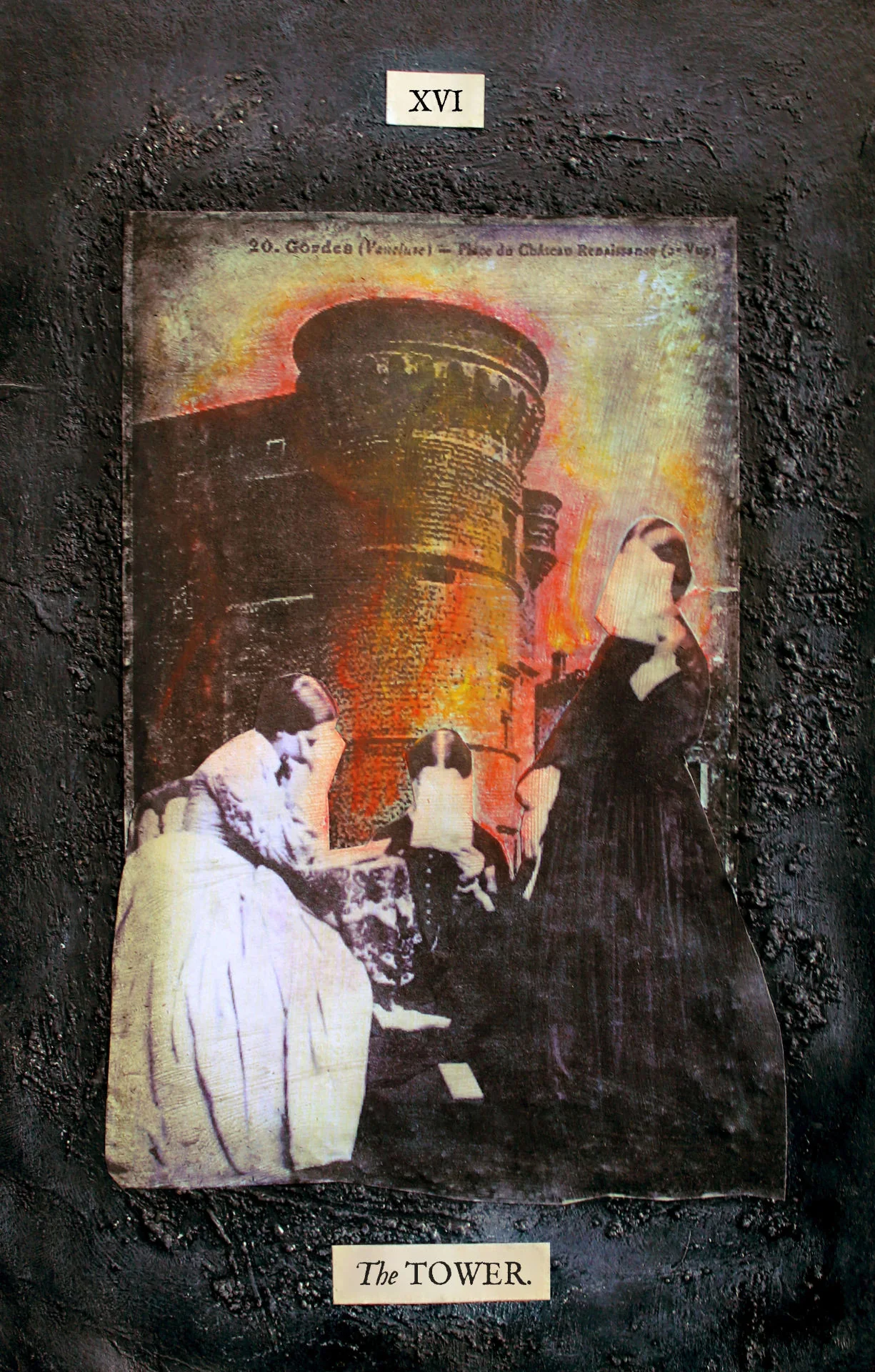
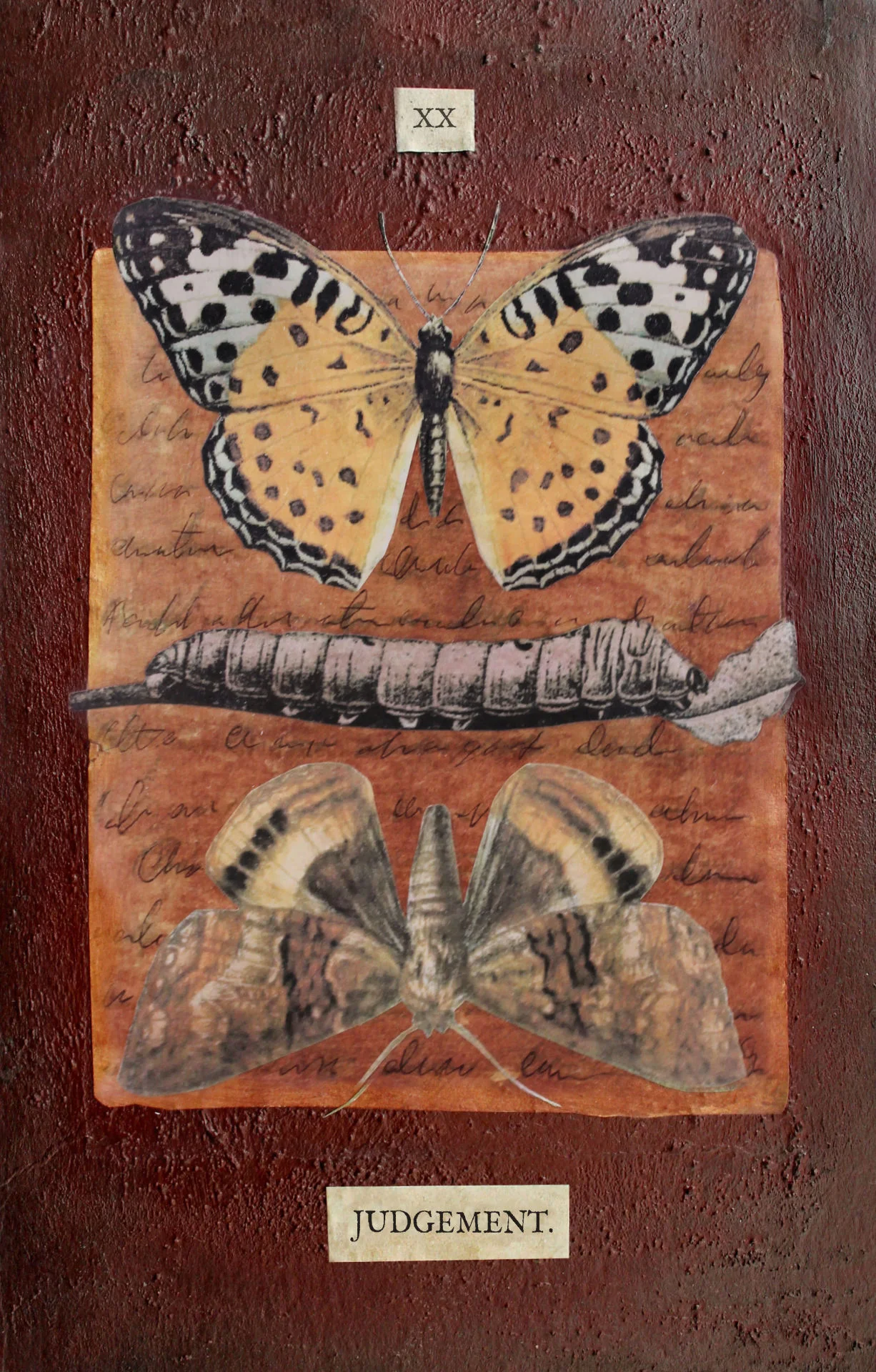
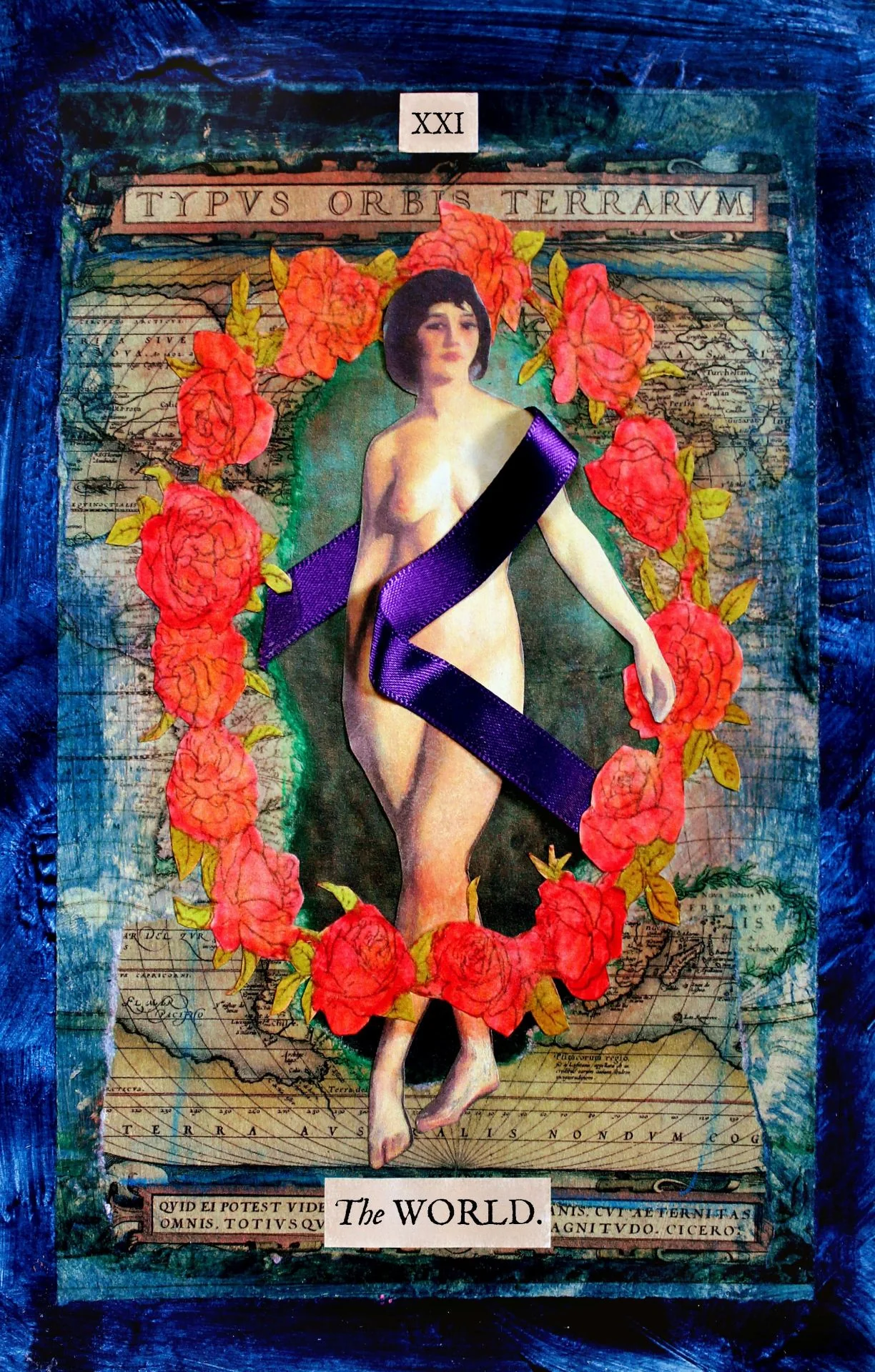
Death centres a white skull among soft pink flowers; The Tower layers startled figures over a burning cylindrical tower; Judgement moves from caterpillar to resting moth to open-winged butterfly; and The World places a standing woman wrapped in dark ribbon inside roses and an old map. The sequence makes change bodily: ending, rupture, emergence and a wider sense of wholeness.

Buying guidance for the exact edition
Joseph Stretch's official product page identifies The Stretch Tarot as a 78-card mixed-media deck, first printed in 2016 after a Kickstarter campaign. The official photographs match the matte black box, black-bordered collage cards and ornate black-and-cream eye back shown in this review.
The buttons lead directly to the creator's product page rather than to an affiliate marketplace. At the time of this review pass, the official listing reported the deck out of stock. Availability can change, so compare the creator name, black portrait box and card-back design before considering any resale copy.
Aurica's golden rule for The Stretch Tarot
Let the collision speak, then let tradition steady it. The unexpected pairing shows where the feeling catches; the card's established role shows how that feeling belongs to the question.
Final Thoughts
The Stretch Tarot feels alive because it never hides the cut edge. Its photographs, paint, paper, words and odd little emblems keep their separate histories, then meet in a card that can surprise you again on the next draw.
If you enjoy tarot that asks for a second look, this deck can become a rich creative companion. Stay honest about what is visible, hold the keyword lightly, and let each strange joining help you make a clearer joining of your own.

The Stretch Tarot FAQ
Who created The Stretch Tarot?
Joseph Stretch created The Stretch Tarot from handmade mixed-media collages and published it through Stretch Tarot.
How many cards are in The Stretch Tarot?
The physical deck contains 78 cards. This review shows the verified exact-edition card fronts available to TarotFans without filling uncertain gaps by guesswork.
Does The Stretch Tarot follow Rider-Waite-Smith?
It keeps the familiar 78-card tarot structure, suits and court ranks, but its surreal collage scenes and printed keywords create their own visual language.
Is The Stretch Tarot suitable for beginners?
It can suit a patient visual beginner. The printed keywords offer a foothold, while a simple traditional reference helps keep the collage associations grounded.
What readings suit this deck best?
It is especially expressive for journaling, creative questions, emotional crossroads, shadow work and readings where two apparently different feelings need to be held together.
Where can I buy The Stretch Tarot?
The shop buttons lead to Joseph Stretch's official product page. The listing was out of stock during this review pass, so check the creator's page for current availability and verify the exact black-box edition before buying elsewhere.