Explore the Skyrim Tarot Cards
Browse Wendy M. Schardein’s verified card fronts in their official sequence: Major Arcana, Staves, Cups, Swords and Septims. Choose a group to filter the continuous Gallery, or select any card for the full-size Lightbox. This independent fan-created edition is not the later licensed retail deck.
Showing the selected card group.
A fan-made deck built from Skyrim’s own weather
This Skyrim Tarot feels like walking through a stone arch and finding the whole game world waiting on the other side. Wendy M. Schardein set manipulated Skyrim screenshots inside a dark masonry frame, then gave each card a pale scroll title. Snow, fire, moonlight, armour and wooden halls do not merely decorate the meanings; they decide the emotional temperature of the reading.
Schardein completed the card art in 2014 after beginning the project in 2013. Her creator pages describe 22 Major Arcana and four suits of 14 cards, with Staves and Septims carrying the places of Wands and Pentacles. She later documented having a personal tarot-size copy printed in 2018. That history matters because this independent fan deck is not the later licensed retail Skyrim Tarot from Insight Editions.
What makes the system feel unmistakably Skyrim?
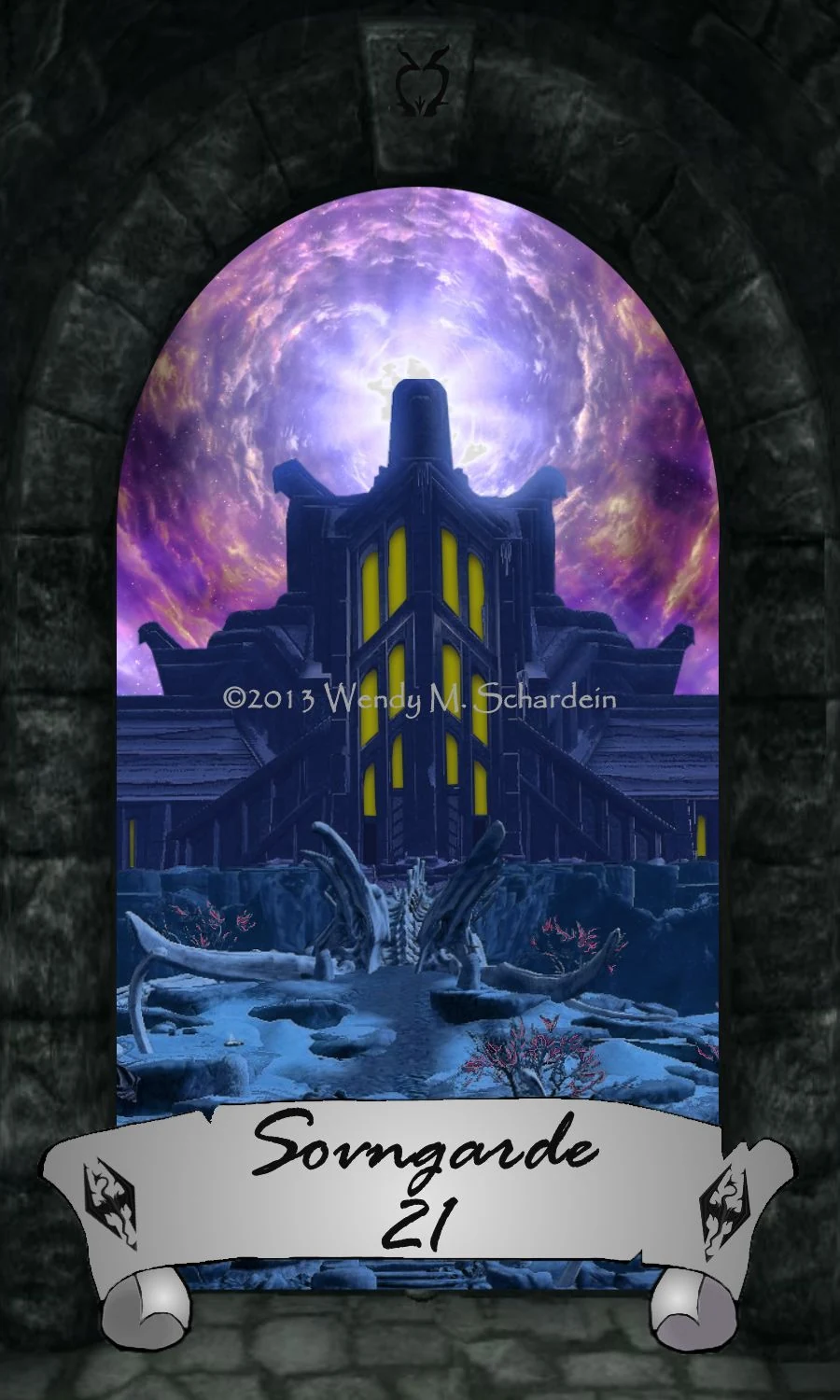
The cleverest changes happen where the game world can carry the traditional card’s weight. The Chariot becomes The Dragonborn, a figure whose power only matters when it is directed. The Devil becomes The World-Eater, placing appetite and domination beneath a dragon’s wings. The World becomes Sovngarde, not a simple ending but a radiant threshold where a long journey finds meaning.
I begin with what the screenshot makes me feel, then return to the card’s tarot function. A known character can offer a swift emotional clue, but it should never take over the question. The reader still has to notice posture, distance, weather and movement, then test that impression against the surrounding cards.

Card study
The Dragonborn — the chosen path already moving
An armoured archer walks toward us beneath a bright blue sky, bow carried low and a dragon flying high above the pine trees. The open road and distant wings give the scene movement without making it frantic; the figure looks prepared rather than posed.
Here the familiar Chariot role becomes the Dragonborn: will, direction and the burden of being the one who must act. Upright, it can gather scattered energy behind a chosen aim. In shadow, purpose may harden into tunnel vision. I would ask what the reader is steering, what power they are carrying, and whether the road ahead still belongs to them.
How Skyrim Tarot reads in practice
This deck speaks in quests, loyalties and visible consequences. A figure walking down a road gives a different answer from one seated behind a closed door; a dragon overhead changes the scale of a choice; cups arranged around a family soften a scene that might otherwise feel like pure game lore.
For a three-card reading, try the quest I have accepted, the force that challenges me, and the resource already in my inventory. Describe one concrete detail on each card before naming a meaning. That small discipline lets intuition stay lively without turning every Skyrim reference into a prediction.
Four-card story
Four thresholds in a hero’s journey
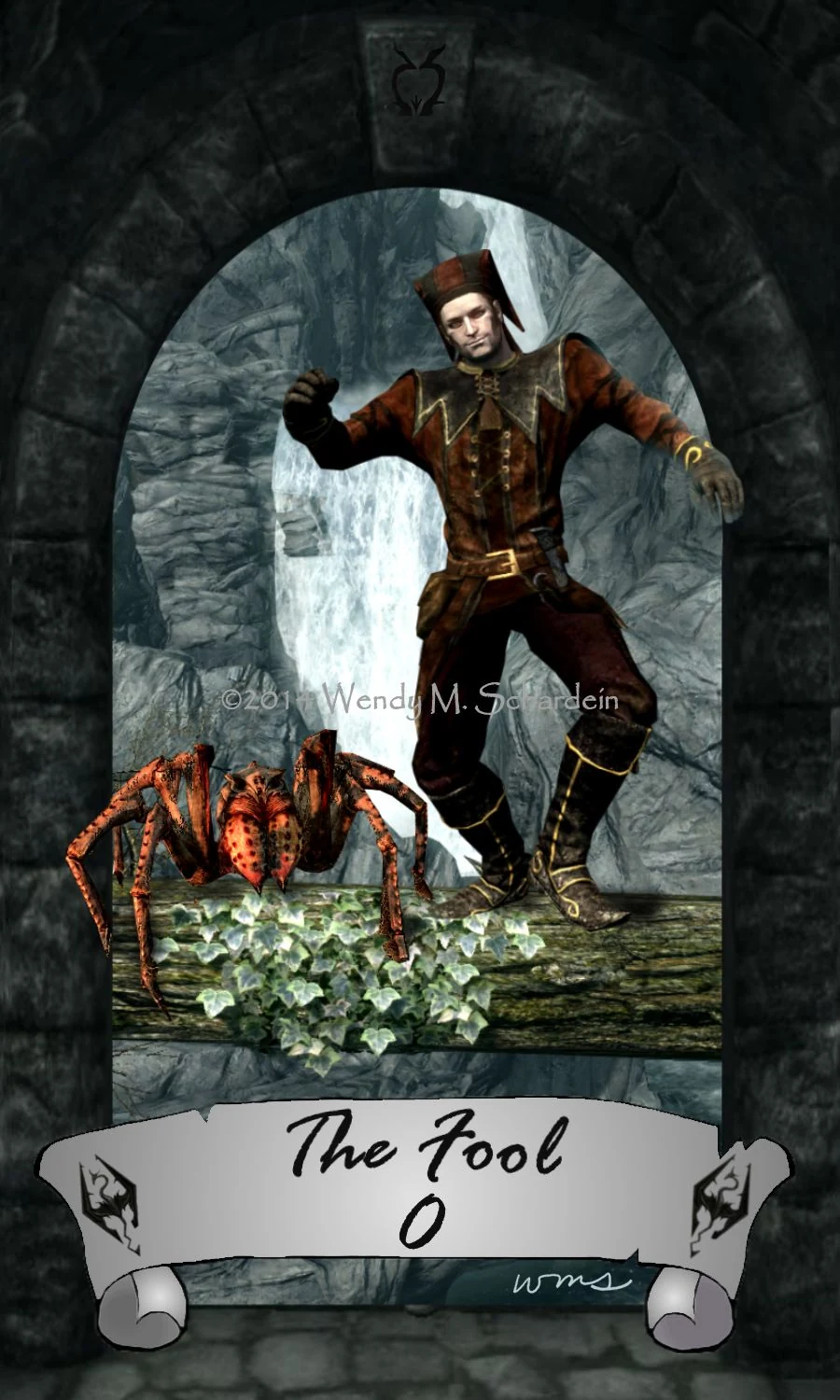
The Fool steps forward beside a giant spider; The Dragonborn advances beneath a flying dragon; Wheel of Fortune places a robed figure before a ring of signs; Sovngarde glows purple beyond a monumental hall. Together they move from risk, through chosen direction and changing conditions, toward a destination that feels larger than one ordinary life.

Beginner guidance and three ways to ask
A Skyrim fan may enter these images quickly, but familiarity can also create shortcuts. If you love a particular character, pause before making them automatically wise or trustworthy. Read the scene in front of you, compare it with the card’s established function, and let the position in the spread decide which part of the story matters.
Gentle
Which card shows the emotional weather around me today?
Deeper
What quest am I treating as destiny when it is still a choice?
Demanding
Where has being strong become a way to avoid asking for help?

Card study
The Tower — fire breaking through stone
A round stone tower stands in smoke and grey weather while flames burst through openings at several heights. Small figures fall away from the structure, and the dark masonry fills almost the entire arch. There is no polite distance from the disaster; the card shows the moment when damage can no longer be hidden.
In a reading, The Tower can expose a belief, promise or structure that has become impossible to maintain. Its useful face is fierce honesty and release; its shadow is the fear that every crack means total ruin. Look to the neighbouring cards for what is truly falling, what remains solid, and which first practical action belongs after the shock.
Reading conflict without turning life into a battle
Skyrim naturally supplies weapons, armour, rivalries and danger. In a spread, those images can sharpen a boundary or reveal where effort is being wasted, but not every disagreement needs a dragon-sized answer. Notice whether a figure is advancing, guarding, resting or carrying too much before deciding what courage looks like.
Staves are especially direct here. Fire becomes labour, ambition and the heat between people. When several appear together, ask whether the spread wants motion, restraint, shared effort or a clean refusal. The best answer is the one that can leave the fantasy world and become an honest conversation or next step.
Four-card story
Four faces of fire and effort
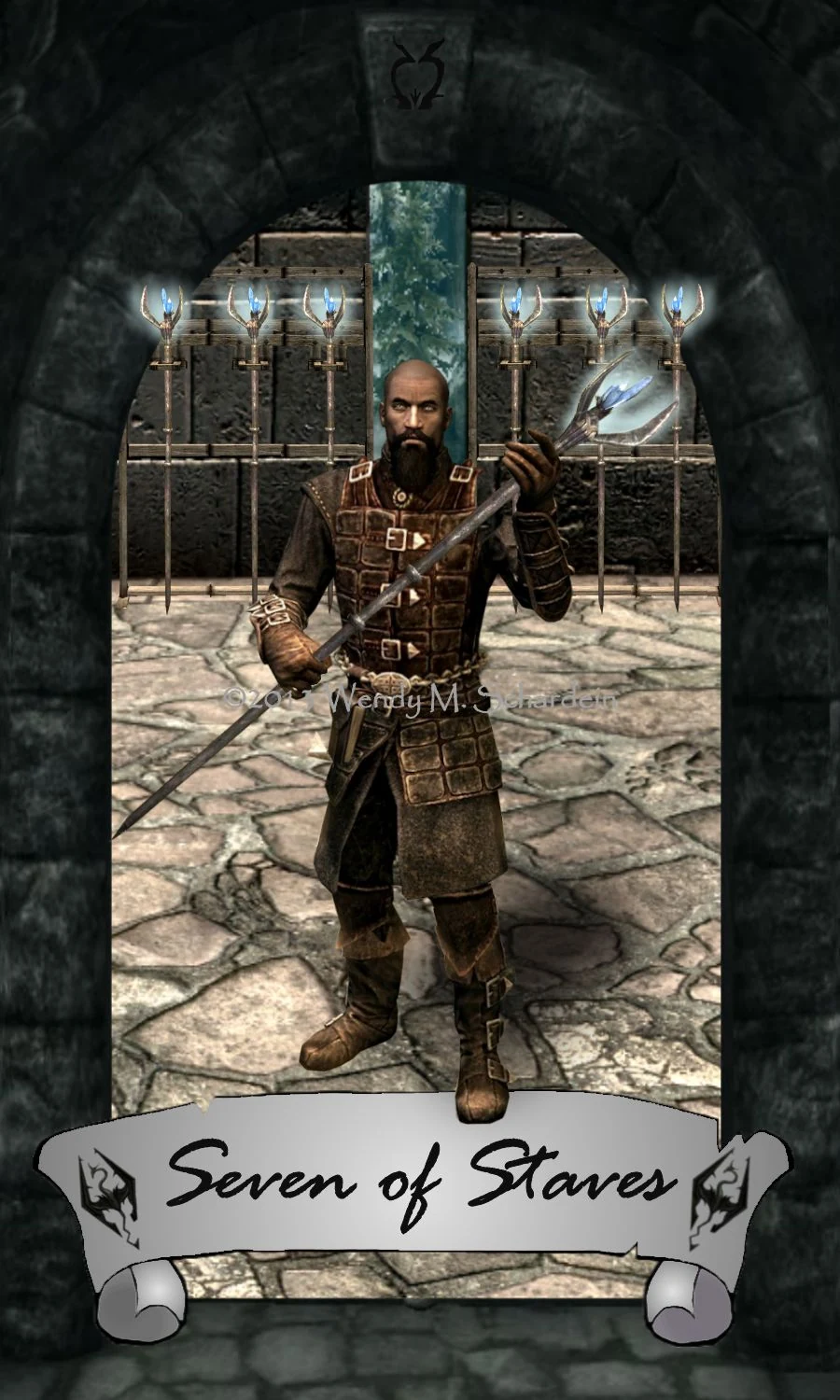
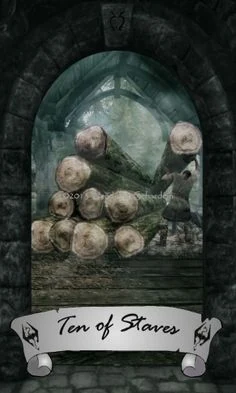
Five of Staves turns energy into a contest between two figures; Seven of Staves stands armed before a wall of bright staffs; Ten of Staves makes effort literal in a heavy pile of cut logs; Queen of Staves meets us upright in a firelit hall. The suit moves from friction to defence, burden and composed command.


Who will connect with this deck?
This edition may delight Skyrim players, fan-art collectors and tarot readers who enjoy narrative images with a strong sense of place. It is expressive for identity, courage, loyalty, conflict, creative work and life transitions that feel like crossing a threshold. The renamed cards can also wake up a reader who has grown too comfortable with familiar labels.
You may prefer another deck if you want an officially licensed product, polished original illustration, close Rider–Waite–Smith staging or a currently available boxed set. Browse the Minors as carefully as the dramatic Majors; the everyday suit scenes reveal whether this visual language can keep speaking after the first rush of recognition.
Card study
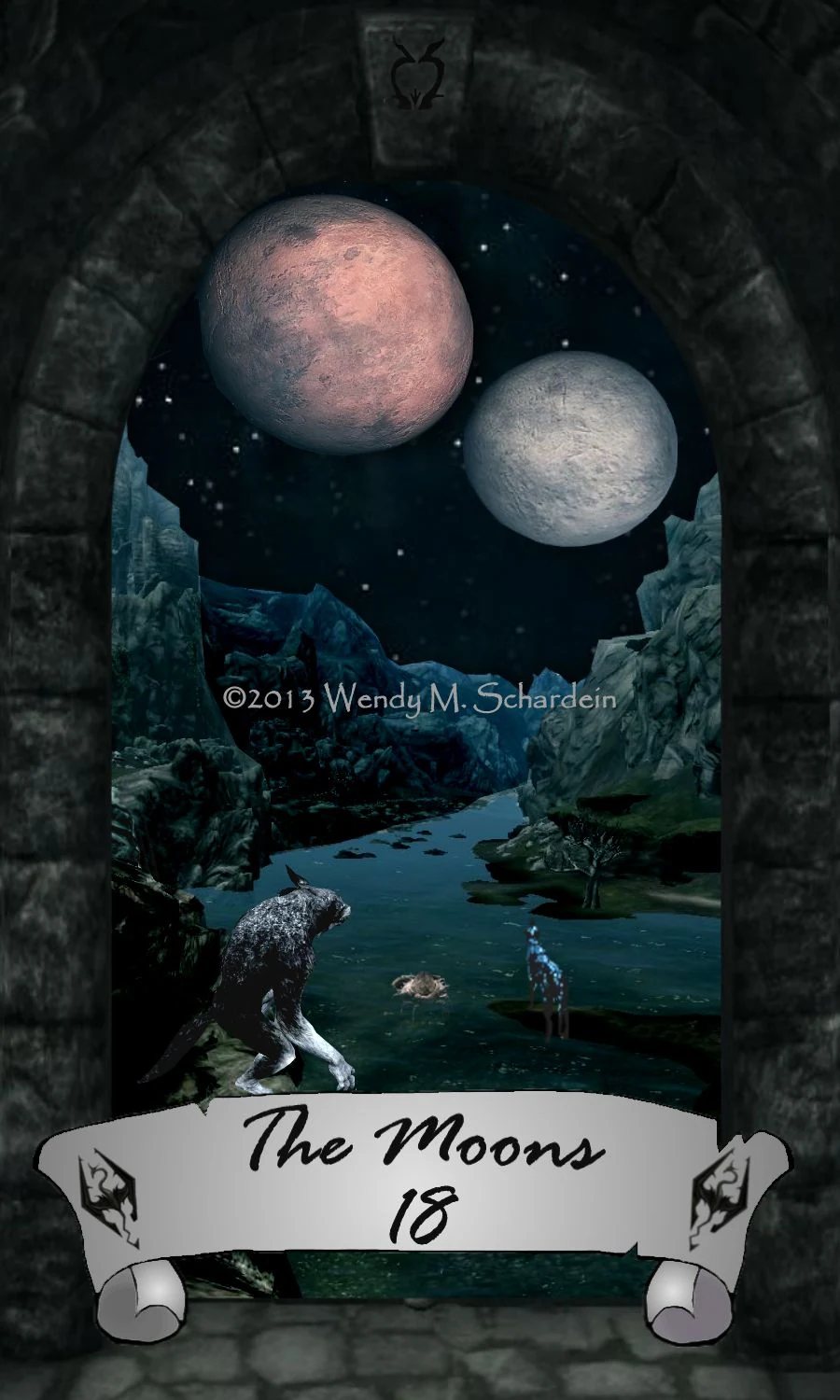
The Moons — two lights over uncertain ground
Two enormous moons hang over a dark blue landscape of water, rock and distant figures. Their different colours make the sky feel doubled, as though one scene is being held beneath two competing lights. The path through the lower half is present, but it does not offer an easy ending.
This deck pluralises The Moon, which makes uncertainty feel layered rather than simply hidden. Upright, the card can honour intuition, dreams and incomplete knowledge. In shadow, fear may enlarge whatever has not been checked. Name the feeling first, compare it with the spread’s visible facts, and wait for the next honest piece of information before declaring the journey lost.
Relationships, belonging and the places we return to
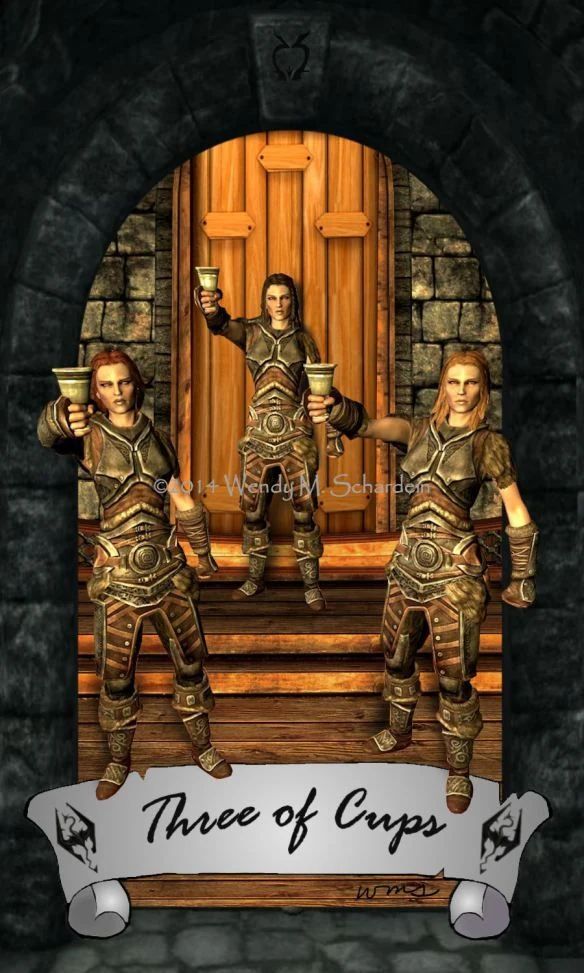
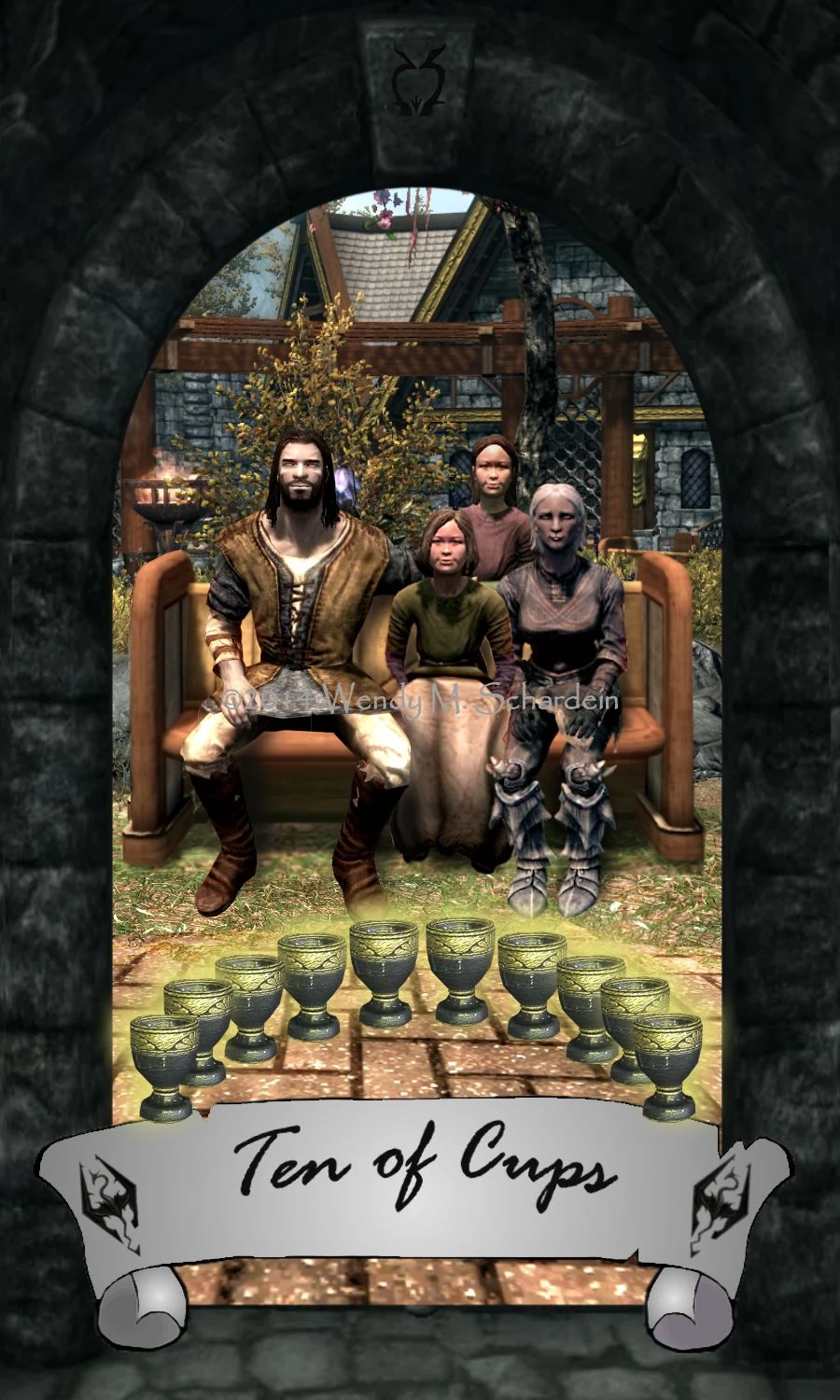
The Cups cards are often quieter than the dragons and towers. They bring the reading inside: two companions holding vessels, three people raising a toast, a solitary figure beside fallen cups, a family gathered behind a row of cups. These scenes let the deck ask not only who will fight beside us, but where tenderness, disappointment and home are allowed to exist.
In love or friendship readings, look at gaze, distance and what is being shared. A raised cup can be an invitation, while a turned body can hold grief even in a warm room. The practical question is simple: what exchange is truly possible here, and what feeling needs to be named before anyone can move closer?
Four-card story
Belonging, celebration, grief and home
Two of Cups shows two companions holding cups side by side; Three of Cups raises three vessels in a bright doorway; Five of Cups places a solitary seated figure above fallen cups; Ten of Cups gathers a family behind a neat row of vessels. Read together, they let relationship have warmth, ceremony, disappointment and the possibility of a shared home.


Buying and exact-edition guidance
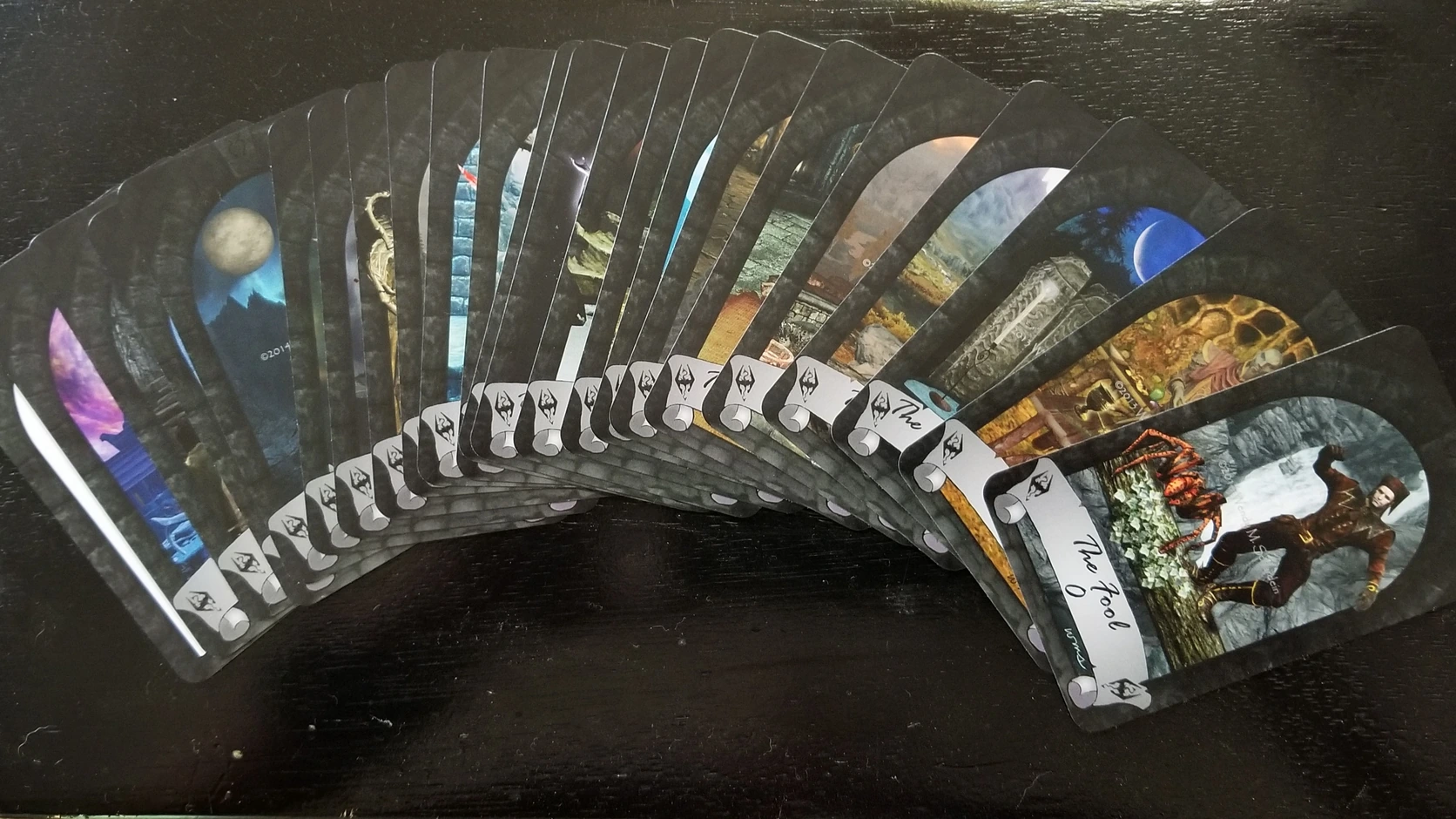
This page reviews Wendy M. Schardein’s independent 2013–2014 Skyrim Tarot. Her own site says the artwork uses manipulated screenshots from The Elder Scrolls V: Skyrim with credited stock elements, and her 2018 post shows the tarot-size cards she had printed for personal use. Earlier posts record an attempted publication path, followed by the unresolved Bethesda permission problem.
The later licensed The Elder Scrolls V: Skyrim Tarot Deck and Guidebook published by Insight Editions is a different edition. Its packaging and artwork are not evidence for Schardein’s cards, so this page does not use an Amazon product link or pretend the licensed box contains the Gallery shown here. The buttons lead to the creator’s archive instead.
Aurica’s golden rule for Skyrim Tarot
Let the world set the mood, but let the card’s action answer the question.
Recognition is the doorway, not the whole reading. Step through it, notice what the figure is actually doing, and bring one brave, ordinary choice back with you.
Final thoughts
Wendy M. Schardein’s Skyrim Tarot is affectionate, handmade and full of the particular weather that makes the game memorable. Its rough-edged screenshot collage will not resemble a modern licensed art deck, yet the renamed archetypes and carefully chosen scenes often reveal why a familiar tarot function still matters.
I would recommend it as a fascinating visual archive and a reading deck for people who already feel at home in Skyrim. Choose the card that makes the road ahead feel a little clearer, and trust yourself to carry its courage into the life waiting beyond the screen.
 See the creator’s printed Skyrim TarotSee the creator’s printed Skyrim Tarot
Skyrim Tarot FAQ
Who created this Skyrim Tarot?
Writer and artist Wendy M. Schardein created this independent fan-made Skyrim Tarot from 2013 to 2014, using manipulated screenshots and credited stock elements. It is the edition shown in this Gallery.
Is this the officially licensed Skyrim Tarot sold in shops?
No. This page preserves Wendy M. Schardein’s earlier independent edition. The later licensed retail deck and guidebook from Insight Editions is a different product with different card art and must not be used to identify or sell the edition reviewed here.
How is the deck structured?
It uses 22 Major Arcana and four 14-card suits. The deck renames The Chariot as The Dragonborn, The Devil as The World-Eater, The Moon as The Moons, The World as Sovngarde, Wands as Staves, and Pentacles or Coins as Septims.
Is Skyrim Tarot suitable for beginners?
It can work for a beginner who already knows Skyrim and keeps a trusted tarot guide nearby. The familiar structure helps, but the screenshot scenes often rely on character and game-world knowledge rather than classic Rider–Waite–Smith staging.
What readings suit this deck best?
Its strongest readings concern identity, courage, conflict, loyalty, quests, difficult choices and the kind of change that asks someone to become an active participant. Small spreads keep the game references from crowding the actual question.
Can I buy Wendy M. Schardein’s edition?
The creator documented having a personal copy printed in 2018, but she also stated that she could not get the deck commercially published. The official-source buttons here are for provenance and browsing, not a retail offer. Do not assume a current product called Skyrim Tarot contains these cards.


