Tarot of the Divine Cards
Explore the verified Tarot of the Divine card fronts in deck order. Choose a group below, then open any card for a larger carousel view.
A note from Aurica
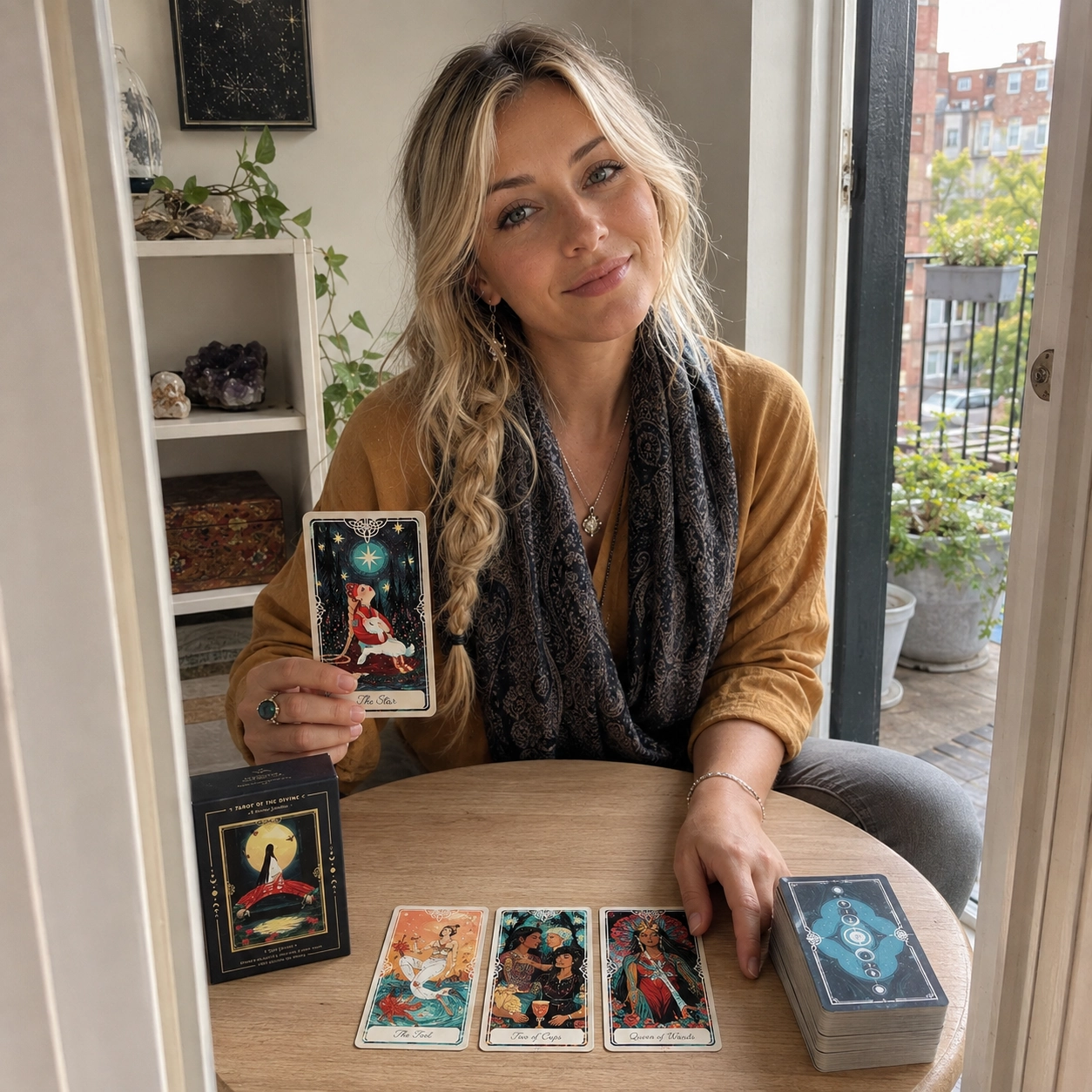
I love how Tarot of the Divine makes a spread feel like a circle of storytellers gathering around the table. Each card carries a tale from somewhere in the world, yet the emotions arrive before I need to name the myth: longing, courage, envy, devotion, the hush before a choice. I find myself pausing over faces and gestures, letting the picture tell me where the reading is tender and where it is asking for honesty.
The Star is especially beautiful here. The woman looking upward while she holds the white creature feels like hope with something living in its arms—not a bright promise floating far away, but comfort that must be protected and fed. In a reading, I notice what has survived the hard night, then look to the cards beside it for the small action that keeps that hope alive.
When a question has become tangled in one narrow version of events, this deck reminds me that fear, love, pride, sacrifice, and transformation wear many different costumes. I begin with the detail that catches my breath, connect it to the card’s usual role, and ask what the surrounding cards change about the tale. That turns each myth into a living mirror: not a fixed answer, but a fresh angle that helps the true shape of the question come into view.
May these many-coloured stories help you meet your own next chapter with a kinder heart, a clearer voice, and the quiet courage to turn the page.
Gallery note: this TarotFans native gallery was rebuilt from the original TarotFans source and arranged in canonical tarot order. We recovered 77 clean card images; Queen of Coins was not cleanly available, so the gallery stays honest instead of using a wrong replacement.
A folklore-rich tarot deck where every card opens a story
Tarot of the Divine by Yoshi Yoshitani is a bright, story-led tarot deck inspired by fairy tales, myths, legends, and sacred stories from around the world. If you like tarot decks with clear symbolism, bold color, and a guidebook that sends you deeper into folklore, this is one of the easiest modern decks to recommend.
The deck follows the familiar 78-card tarot structure, but each card is paired with a world story. The result feels like tarot, picture-book mythology, and a tiny global library all at once. You can read it traditionally, but the best moments happen when you let the story on the card deepen the meaning.
What makes Tarot of the Divine special?
The magic of this deck is that it gives familiar tarot meanings a fresh story doorway. Instead of only asking “what does this card mean?”, you can ask “what story is this card telling?” That makes it especially friendly for readers who learn through characters, myths, and emotional scenes.
- Artwork: vivid, graphic, and instantly readable, with strong color palettes and expressive figures.
- Structure: traditional tarot card names, so you do not have to relearn the system from scratch.
- Theme: global folklore and mythology, with many cultures represented across the deck.
- Reading style: intuitive, story-based, and excellent for journaling or client readings where imagery matters.
Four-card story doorway

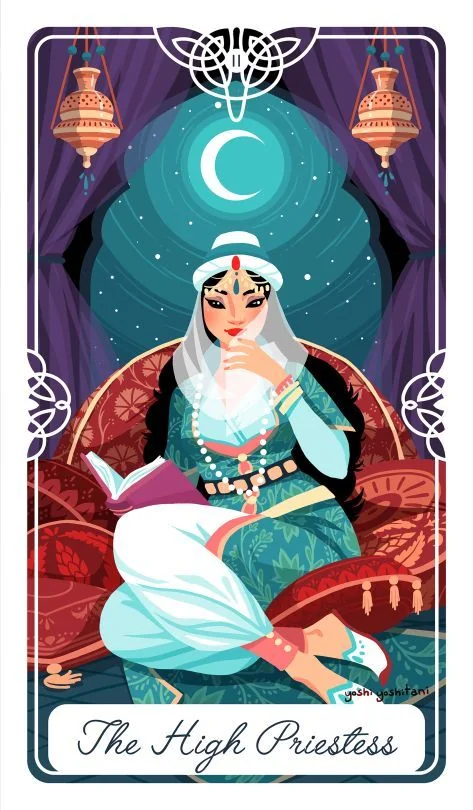
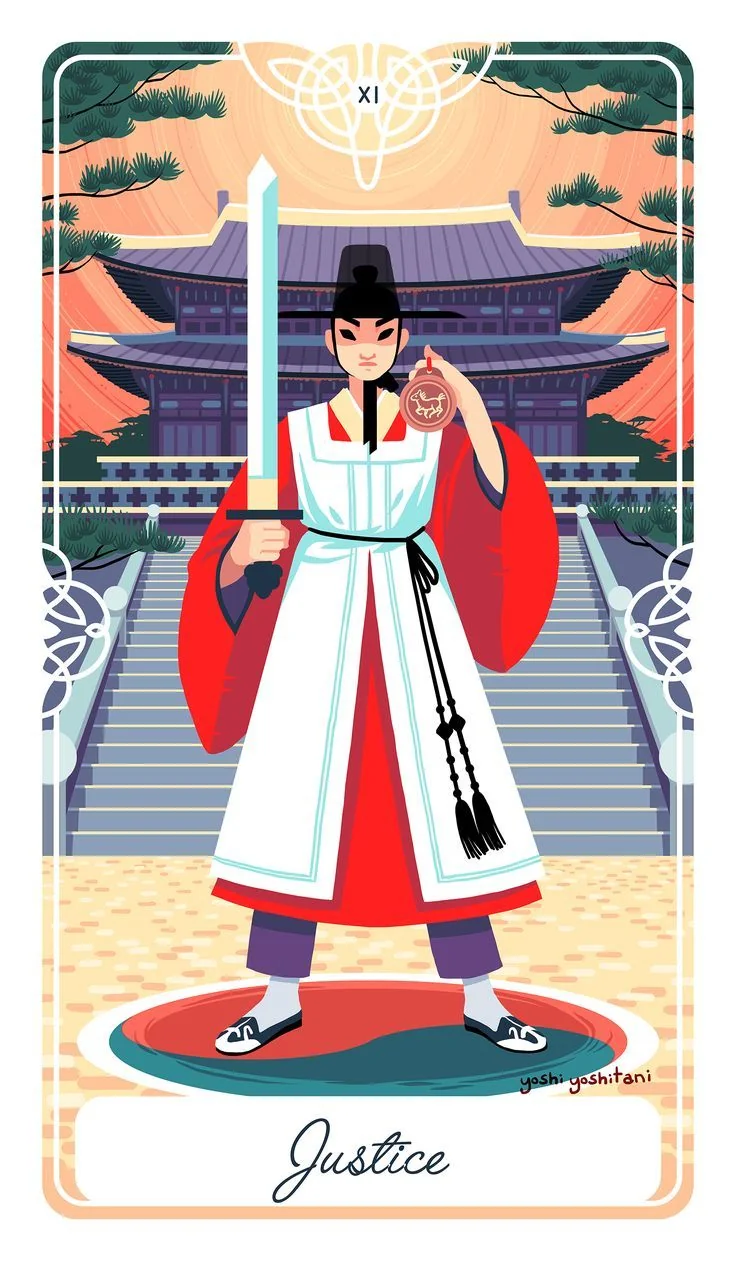

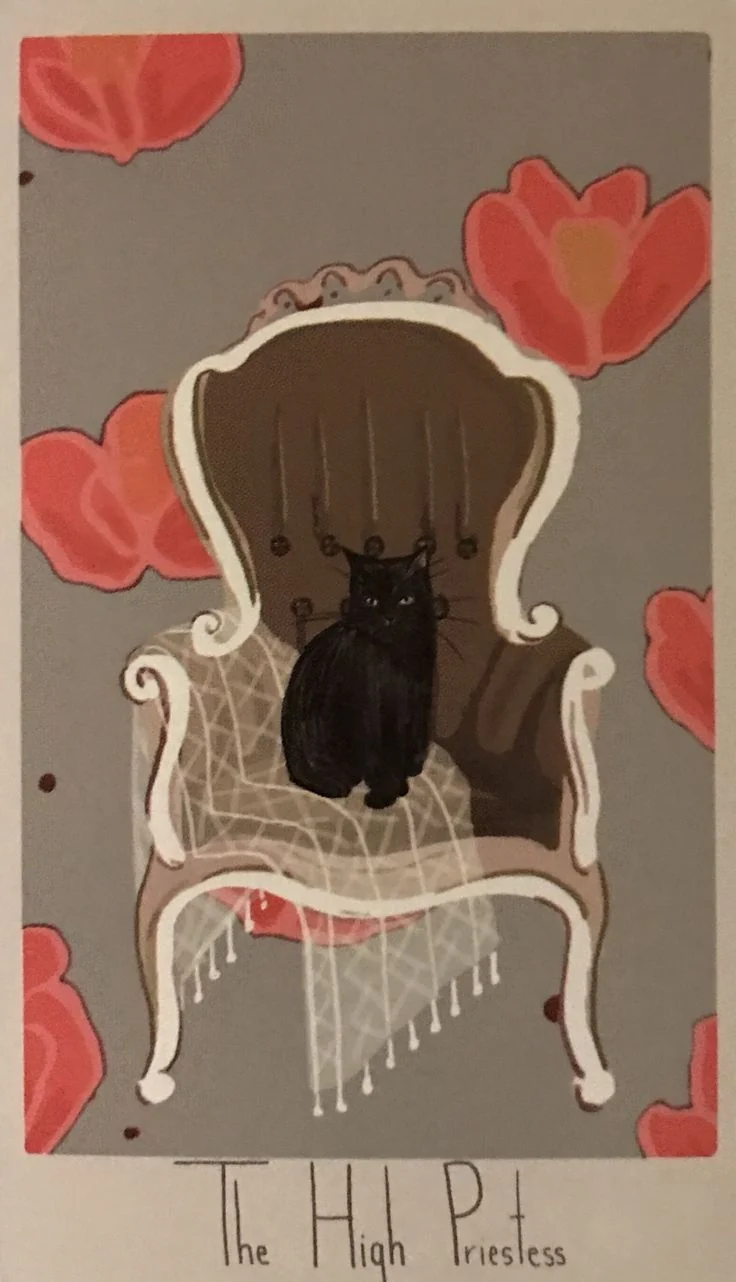
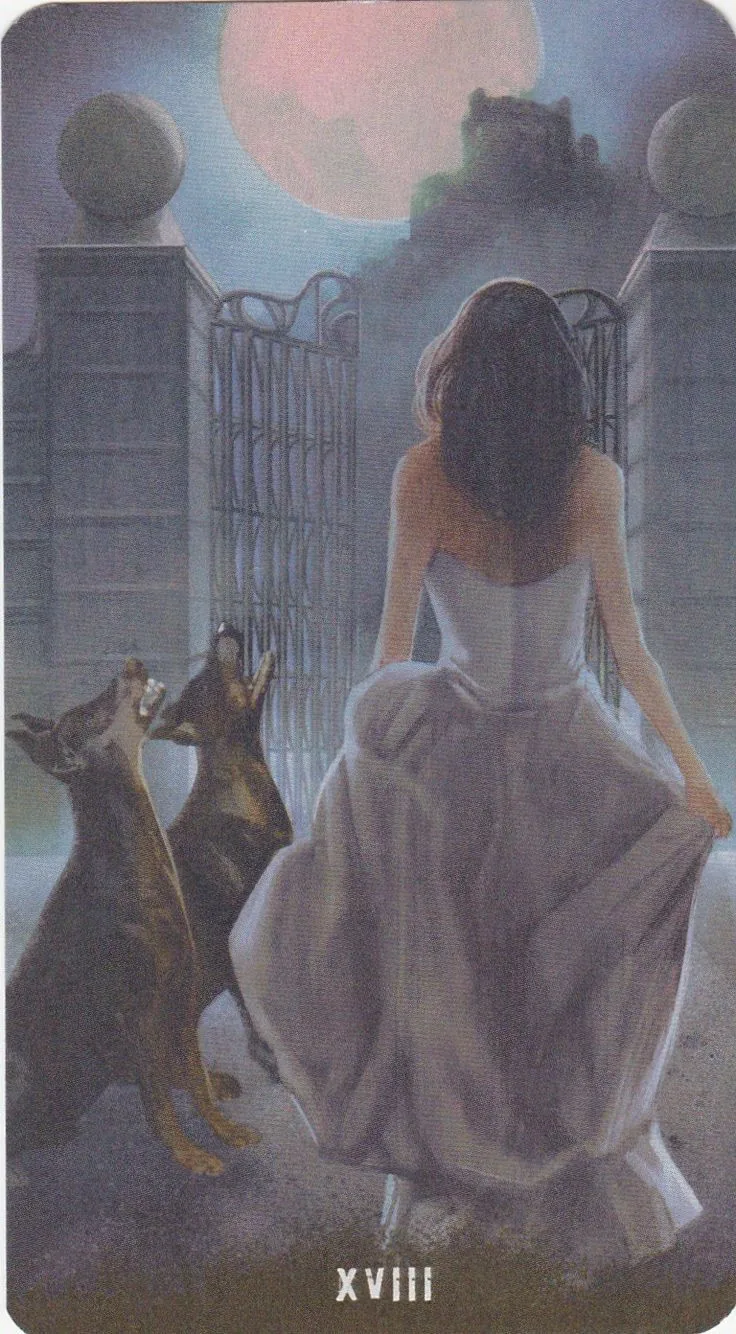
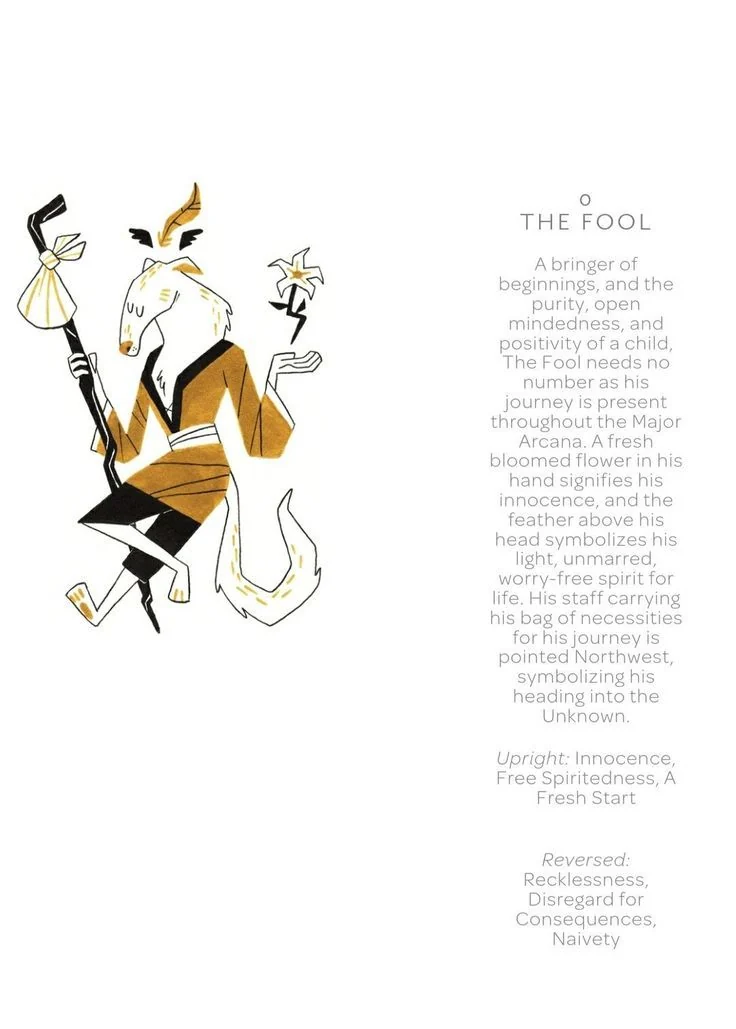
This first set shows why Tarot of the Divine feels so readable: each card is a doorway into a tale. The Fool asks what you are willing to risk, The High Priestess asks what wisdom is hidden, Justice asks what truth must be named, and The World shows the larger pattern finally coming together.
Card analysis: how the deck turns tarot into story
Tarot of the Divine is strongest when a card’s folklore pairing adds emotional movement to a familiar tarot idea. The art does not just decorate the card; it gives the card a reason, a mood, and a character arc.
Card analysis
The Fool as a brave first step into longing
The Fool is one of the clearest examples of this deck’s storytelling style. The image carries the feeling of stepping toward a dream before you fully know what it will cost. It is innocent, but not silly; hopeful, but not careless.
In a reading, this Fool is excellent for questions about beginnings, identity, risk, and desire. It can say: “You are allowed to want more, but stay awake to what the journey asks from you.”
How Tarot of the Divine reads in real spreads
In readings, the deck tends to speak through plot. A single card gives you the normal tarot meaning, but a small spread can feel like a mini folktale: a character faces a test, meets a helper, receives a warning, and chooses a path.
This makes it lovely for reflective questions like “What story am I repeating?”, “Where am I growing braver?”, or “What lesson is this season teaching me?” It is less ideal if you want very plain, stripped-back symbolism with no extra cultural or literary layer.
Relationship and heart questions

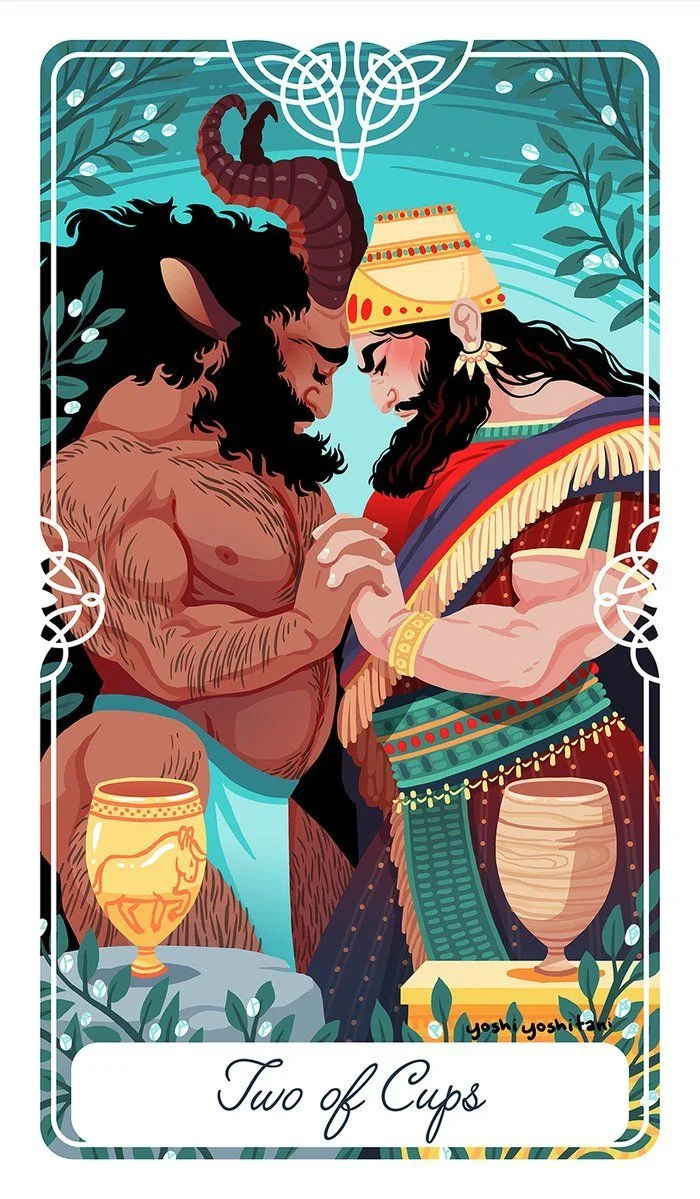


For love and friendship readings, this deck often feels tender rather than sugary. The cards show connection as a living story: choice, recognition, memory, and emotional renewal all sitting beside each other.
Reading the space between two hearts
After a relationship spread, I like to pause before naming the bond. The figures, distance, gaze, and colours show whether connection feels open, guarded, remembered, or newly offered. The surrounding cards then tell me whether the Two of Cups is describing romance, friendship, creative partnership, or the brave work of meeting myself honestly.
This little pause keeps the folklore from becoming decoration. It lets the story sharpen the real question, so tenderness can have shape and choice can have somewhere practical to land.
Card analysis
Two of Cups as soul recognition, not just romance
The Two of Cups is especially beautiful here because the bond feels active and mutual. It is not only “two people like each other.” It is the moment when a connection changes the way both people understand themselves.
For clients, I would read this card as respect, trust, and chosen alliance. It can be romantic, but it can also speak to a best friend, collaborator, mentor, or any relationship where both sides become stronger through the bond.
Guidebook and companion book
The deck comes with a small guidebook that gives concise card meanings and introduces the story connection. For deeper reading, Yoshitani’s companion book Beneath the Moon retells the myths and legends behind all 78 cards. You can use the deck without the extra book, but folklore lovers will probably want both.
If you are new to tarot, I recommend pulling one card, reading the short guidebook entry first, then looking up the story later only if the card really catches your attention. That keeps the deck from becoming homework while still letting the mythology enrich your practice.
Fire, courage, and creative action
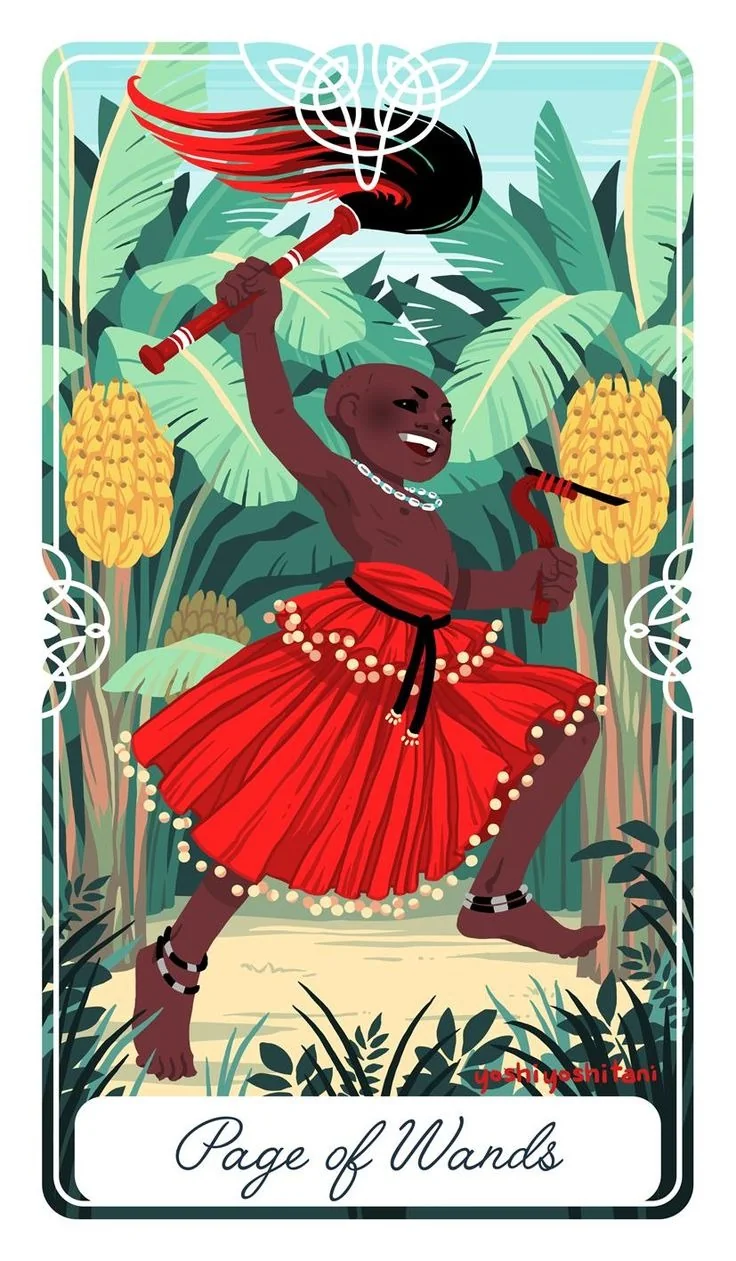


The Wands cards make the deck feel bold and alive. They are useful for questions about confidence, leadership, creative risk, and the difference between rushing forward and acting with real inner strength.
Who will love this deck?
- Beginners who want a beautiful deck that still uses traditional tarot names.
- Story lovers who connect with myths, fairy tales, legends, and character arcs.
- Journal readers who like pulling a card and then writing through the story behind it.
- Collectors who want a modern deck with a strong concept and recognizable art style.
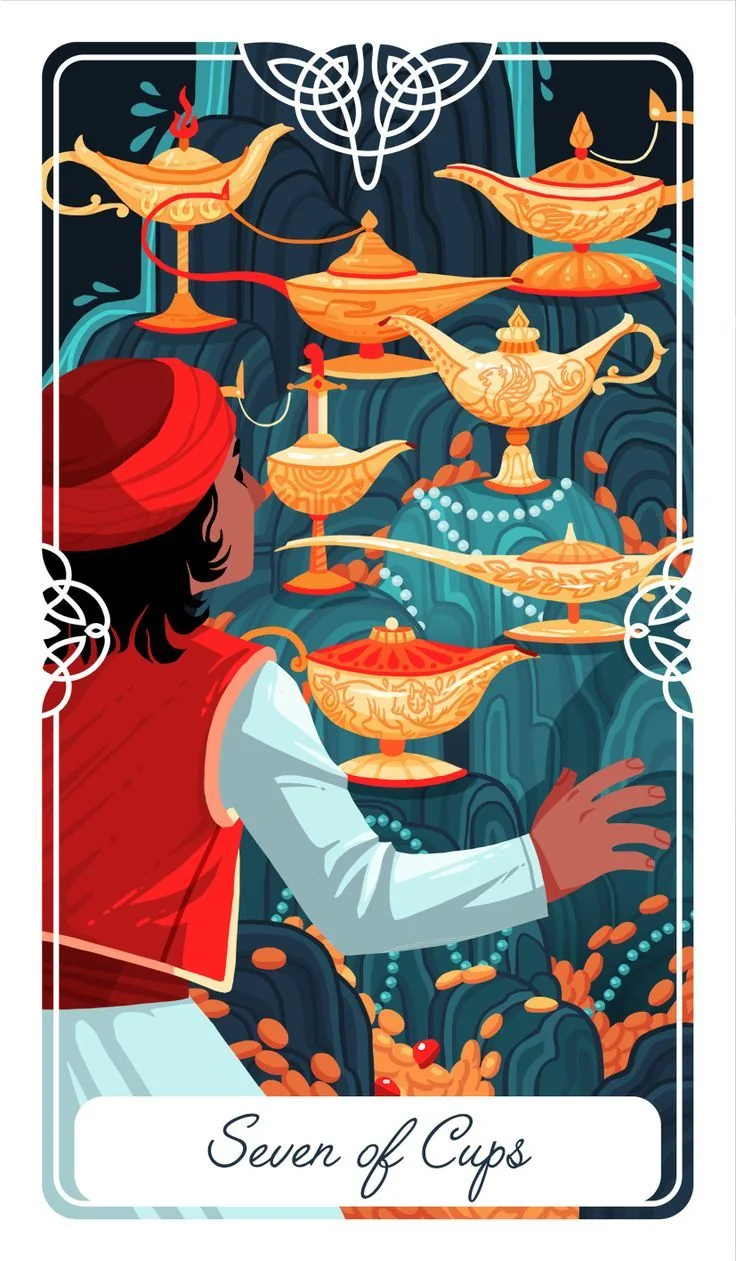
Card analysis
Seven of Cups as temptation, fantasy, and choosing clearly
Seven of Cups is a perfect card for this deck because the artwork naturally supports questions about wishes, illusions, and tempting possibilities. It feels enchanting, but it also asks you to notice what is real and what is only glittering in the distance.
In practical readings, I would use this card for decision fatigue, online comparison, crushes, dream projects, and moments when every option looks magical until you ask what it actually requires.
What to know before buying
This is not a plain Rider-Waite clone. Many cards are easy to read right away, but some become richer when you learn the story behind them. If you want the most traditional visual symbolism possible, you may prefer a classic RWS-style deck. If you want a tarot deck that feels global, literary, colorful, and emotionally alive, Tarot of the Divine is a beautiful choice.
Money, effort, and real-world growth


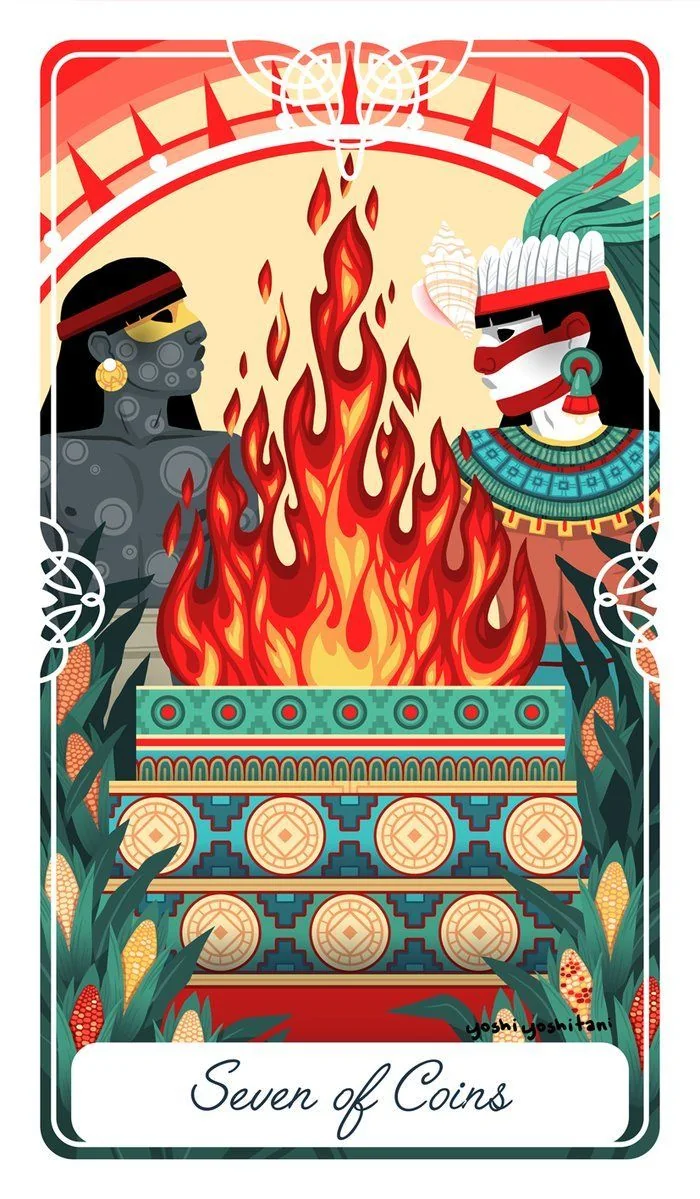

The Coins suit feels grounded and human here. These cards are helpful for money, work, skill-building, generosity, boundaries, and the slow kind of success that grows from repeated care.
Final thoughts
Tarot of the Divine is a warm, clever, and visually memorable tarot deck. It respects the tarot system while reminding you that every card is also a story about choice, courage, loss, love, power, and transformation. For readers who want their deck to feel like a bookshelf of myths in card form, this one is absolutely worth exploring.

Tarot of the Divine FAQ
Is Tarot of the Divine good for beginners?
Yes. It keeps traditional tarot card names, so beginners can learn the usual tarot system while enjoying the folklore artwork. The only learning curve is that some story references become richer when you read the guidebook or companion book.
Does Tarot of the Divine follow Rider-Waite-Smith meanings?
Mostly yes. The deck uses the standard 78-card tarot structure and familiar titles, but the visual scenes are filtered through myths and legends instead of copying classic Rider-Waite-Smith imagery exactly.
Do I need Beneath the Moon to use the deck?
No. The included guidebook is enough for normal readings. Beneath the Moon is best if you want the full retellings behind each card and a deeper folklore experience.
What kind of readings does Tarot of the Divine suit best?
It shines for reflective readings, journaling prompts, relationship questions, creative blocks, life transitions, and any spread where story, symbolism, and emotional pattern matter.
Is Tarot of the Divine more of a collector deck or a working deck?
Both. The artwork is collectible, but the card titles and structure are clear enough for regular readings. If you enjoy decks with a strong theme, it can absolutely become a working deck.