Visconti Tarot Card Gallery
Explore this verified partial Gallery in tarot order. Choose a group below, then select any card to open its larger Lightbox view.
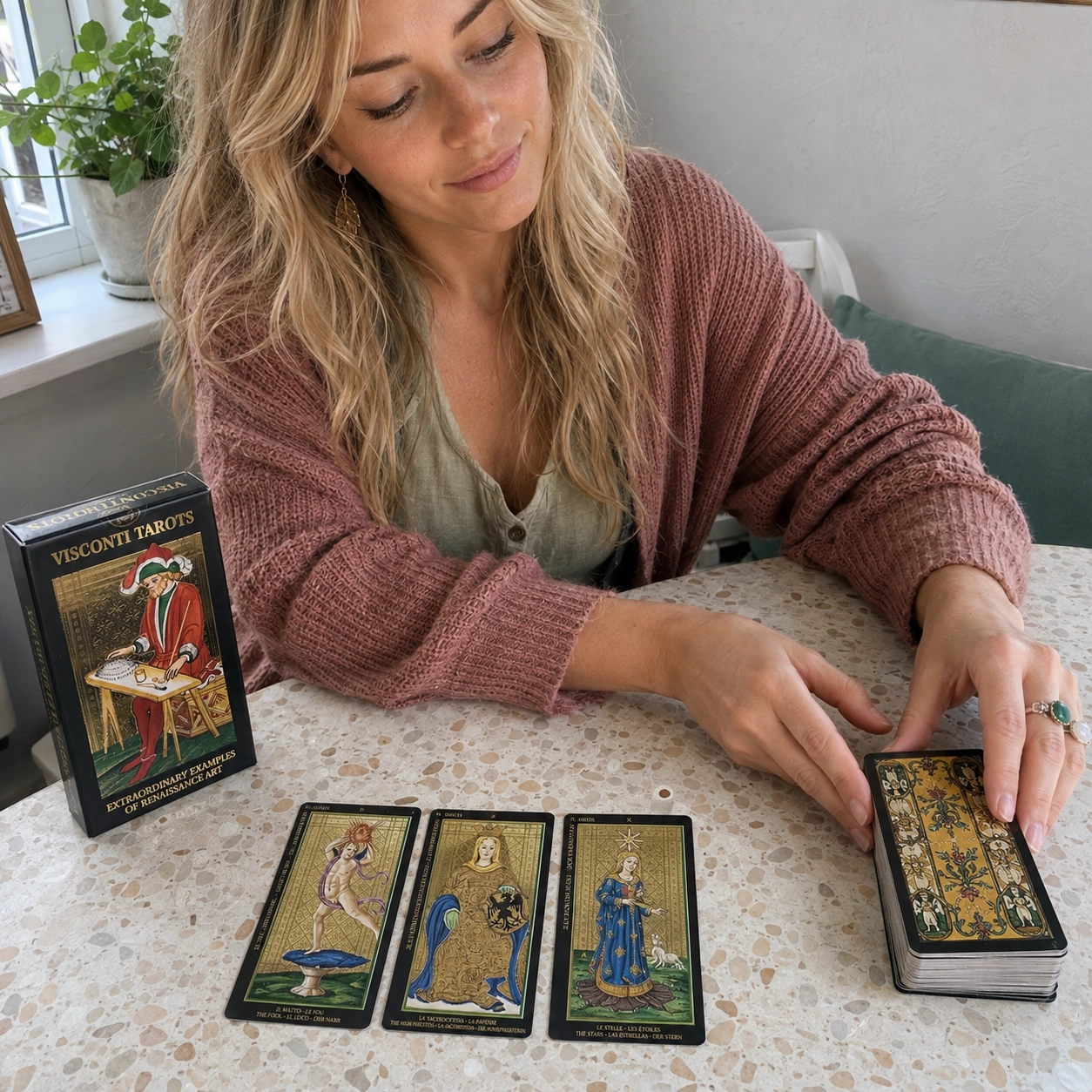
A note from Aurica
Visconti Tarot feels like opening a painted manuscript whose gold remembers every hand that turned the page. Broad black borders hold each scene like a chapel window, while courtly figures carry rank, family, faith, and expectation. I slow down here, because the deck’s beauty is not decoration; it is part of the question.
The Fool catches me because he looks tenderly out of step with all that ceremony. Beside the watchful High Priestess and the clear promise of The Star, his awkward freedom becomes brave rather than careless. I notice who seems bound by a role and who can still choose; that contrast often reveals where duty has become a costume.
The pips ask for another kind of attention. I watch number, suit, symmetry, and whether the objects crowd or open the space. Cups feel like vows; Coins like inheritance held close; Swords like a decision that must be spoken; and Wands like authority gathering momentum. Then I test that impression against the neighbouring cards.
I reach for Visconti Tarot when a question carries history inside it—family expectations, reputation, money, tradition, or the pressure to remain the person everyone knows. These cards ask what deserves honour, what is merely old, and what a truthful next step looks like once the velvet and ceremony are set aside.
For all its age and grandeur, this deck leaves me with a living hope: the story you inherit may shape the room, but it does not have to close the door. Read slowly, keep the image that warms or unsettles you in view, and let Visconti Tarot help you choose a future that feels honestly your own.
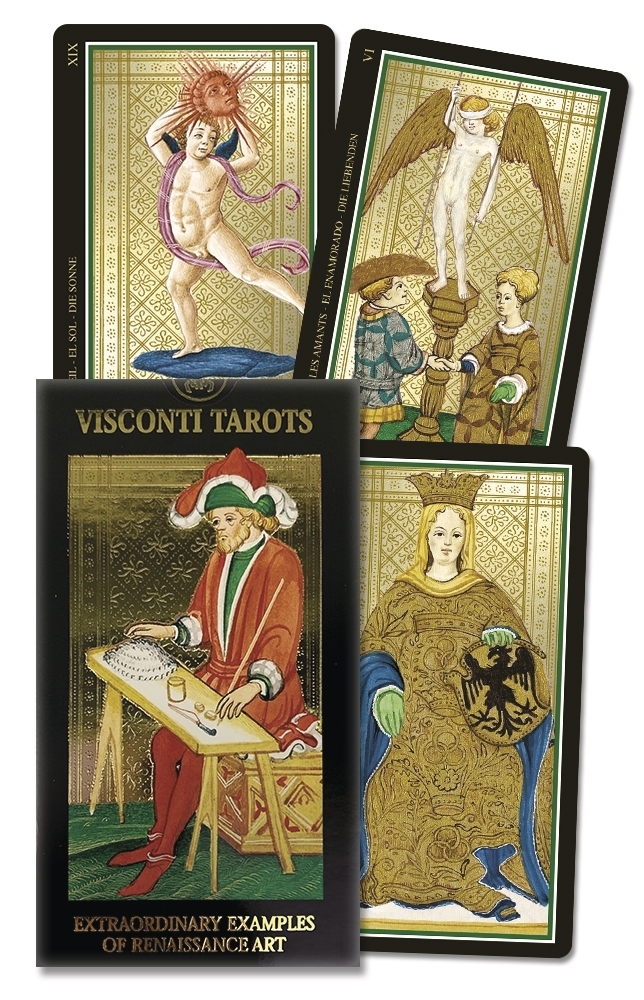
The Visconti Tarot feels less like a modern deck and more like a little museum in your hands. The art comes from the Visconti-Sforza world of 15th-century Milan: gold-leaf mood, courtly figures, armor, robes, heraldry, cups, coins, swords, and batons arranged with formal Renaissance beauty.
This is not the deck I reach for when I want a quick Rider-Waite-Smith scene on every minor card. I reach for it when I want a reading to slow down. A queen’s posture matters. A knight’s horse matters. A pip-card pattern matters. The whole deck asks for patience, symbolism, and respect for the past.
The TarotFans native gallery now shows 73 available Visconti Tarot card images, renamed with best-effort tarot labels and re-sorted into a reader-friendly order. Because historical Visconti decks can include restored or variant images, I keep the original source number in each filename for easy correction later.
Artwork, history, and first impressions
The first thing I notice is the ceremony. These cards do not feel casual. They feel like old families, vows, public roles, church bells, inheritance, reputation, and private choices made under a beautiful surface. The black borders and luminous Renaissance colors make each card feel like a framed manuscript fragment.
That mood is why the deck is so powerful for questions about legacy, tradition, duty, reputation, money, spiritual authority, and family pressure. It can answer everyday questions, but it answers them in an old voice. Instead of saying “just do this,” it asks what role you are carrying, who benefits from that role, and what kind of honor is actually real.
Card study
The Magician: craft, skill, and Renaissance attention
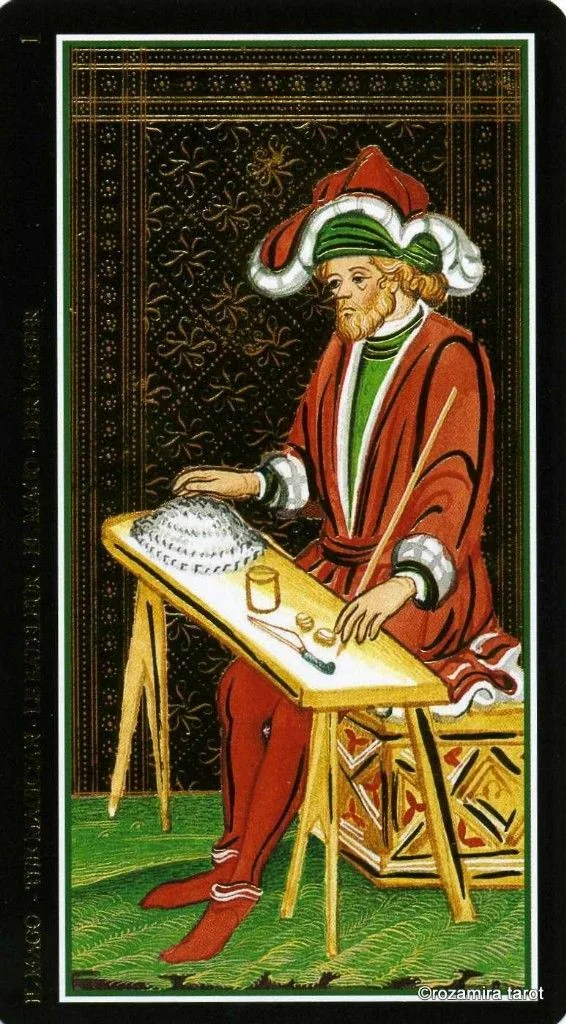
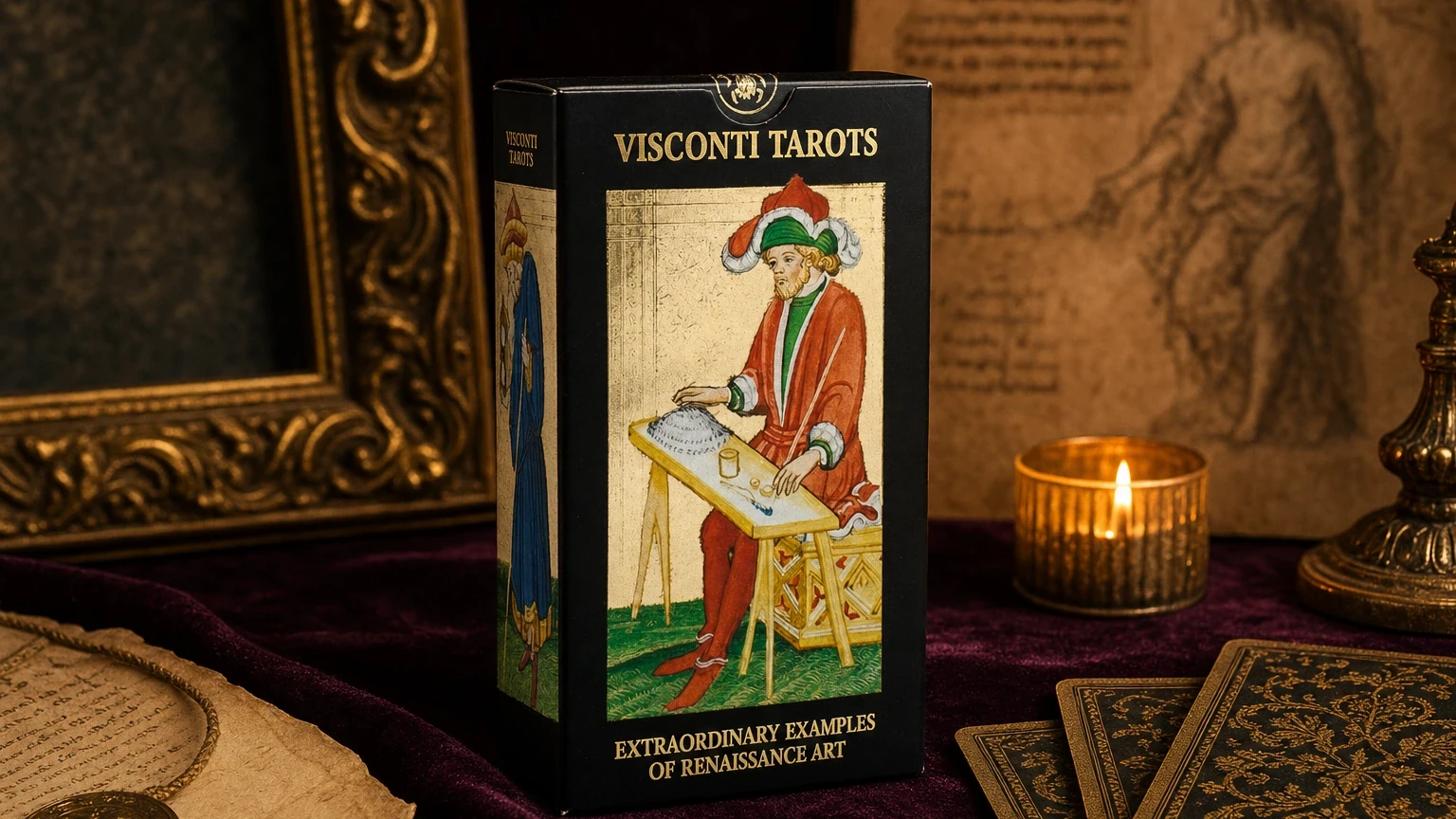
The Magician is especially important here because the product box itself uses this image: a red-clothed figure at a table, focused on tools and small acts of craft. In a reading, I see this card as applied skill, careful hands, and the ability to shape a situation without needing noise.
The Visconti mood makes The Magician feel less like stage magic and more like trained artistry. The message is simple: use what is on the table, but use it with discipline.
How the pip cards read
The pip cards are where this deck teaches a different reading style. Many minor cards show suit objects arranged in formal patterns instead of full story scenes. That means you read number, suit, balance, crowding, crossing, symmetry, and the relationship between cards in the spread.
Cups feel like vows, emotional exchange, feasts, and bonds. Coins feel like inheritance, resources, status, and what a family protects. Swords feel like rank, judgment, truth, and conflict. Wands or batons feel like authority, travel, action, and will. Once you accept that the deck is symbolic rather than cinematic, it becomes easier to hear.
Authority, justice, ending, and collapse


This line feels like an old system being tested. Rank and law come first, but Death and Tower say that a proud structure cannot stay untouched forever. It is strong for family, institution, and reputation questions.
Reading with courtly figures
The court cards are beautiful in a very old-fashioned way. Queens, kings, pages, and knights do not always show their feelings plainly. They show role, posture, costume, tool, and status. That makes the deck useful for asking who has influence, who is waiting, who is acting, and who is bound by expectation.
I like the Visconti Tarot for readings where social pressure matters. It can show a person who is powerful but lonely, dutiful but tired, wealthy but constrained, or honorable but too attached to appearances. The deck understands that power can be gorgeous and heavy at the same time.
Major study
Justice: fairness with a ceremonial edge
Justice in this gallery is formal and direct. The sword and scales do not feel abstract; they feel like a public decision, a ruling, or a truth that must be named. In a Visconti reading, this card asks what is fair, but also what is lawful, visible, and accountable.
I would use it for questions about agreements, reputation, family expectations, and decisions that need clean boundaries. The card says beauty is not enough if the balance is false.
Who will love the Visconti Tarot?
This deck is best for readers who enjoy tarot history, Renaissance art, antique symbolism, and decks that do not explain everything instantly. If you like Marseille-style pips, museum objects, medieval courts, and slower reflective readings, Visconti Tarot has a rare voice.
I would be more careful if you want your very first tarot deck to teach every minor meaning through obvious modern scenes. The pips need study. The courtly world may feel distant at first. But if you are willing to slow down, the deck rewards you with gravity, texture, and a sense of tarot before it became a modern spiritual product.
Courtly choice and movement


This moment reads like influence, invitation, conflict, and practical proof. It is useful when someone needs to move, but not forget the cost, message, or material outcome of that movement.
Reading pip-card patterns
When the minors appear together, the Visconti Tarot becomes wonderfully clean. You can compare suit families at a glance: Cups ask what is shared, Coins ask what is held, Swords ask what must be decided, and Wands ask where action or rank is pressing forward.
Emotion, resources, truth, and action


This strip is a simple way to read the pips: emotional memory, material pressure, a clear decision, and a new act of will. It is useful when a reading needs to move from feeling into practical direction.
Pros and Cons
| Pros | Cons |
|---|---|
| Gorgeous Renaissance atmosphere with a true historic-tarot feeling. | Not the easiest beginner deck if you need illustrated RWS-style minors. |
| Excellent for legacy, family, reputation, duty, money, and tradition questions. | Pip cards require suit and number knowledge instead of instant scene-reading. |
| Gold, courtly figures, armor, and symbolic details make readings feel ceremonial. | The current TarotFans gallery is an honest 73-card partial set, not a full 78. |
| Best-effort renamed gallery is easier to browse than source-order labels. | Some historic/variant card identifications may need correction if clearer official evidence appears. |
Shadow study
Death: a formal ending, not a cheap scare
The skeleton figure feels stark, old, and ceremonial. I do not read it as random doom. In this deck, Death feels like a procession: serious, unavoidable, and part of the order of life.
When this card appears, I ask what needs a proper ending. Not a dramatic escape, not vague avoidance, but a real goodbye that clears the road for what comes next.
Reading change through the Visconti lens
After Death clears the old arrangement, I pause before reaching for another cluster of images. In this deck, change rarely feels hurried; it arrives with ceremony, as if the room itself must acknowledge what has ended before the next role can begin.
That pause gives the following cards more honesty. The Star can offer direction, The Devil can name attachment, Judgement can call the truth forward, and The World can show what is ready to become whole. Read together, they turn transition into a sequence rather than a single dramatic moment.
Turning point, vision, temptation, and completion

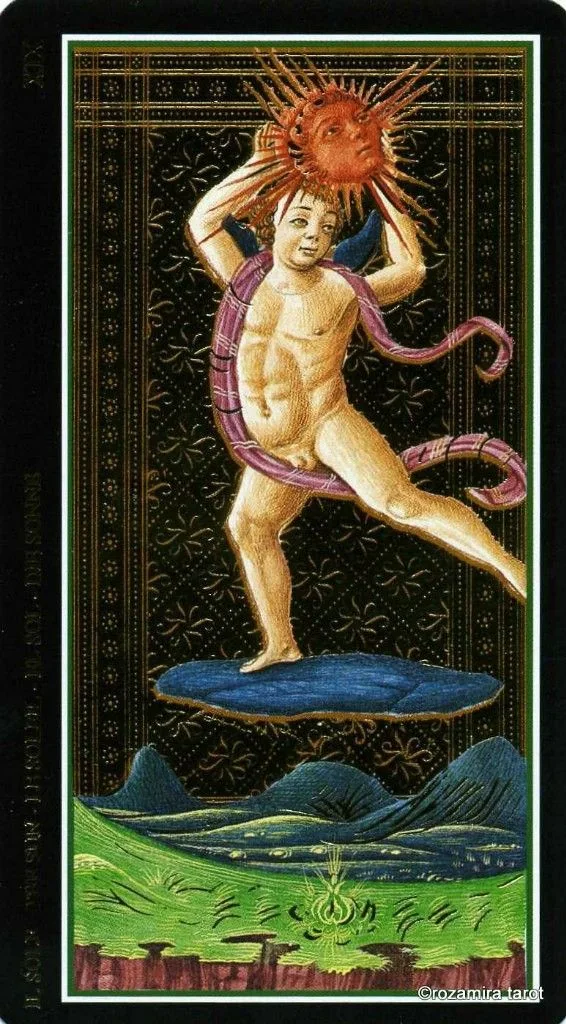


This moment feels like a soul-level checkpoint: hope appears, attachment is named, a call is heard, and the cycle asks to be completed. It is a strong four-card line for shadow work with a clear finish.
Final Thoughts
Visconti Tarot is a beautiful choice if you want tarot to feel historical, symbolic, and a little sacred. It may not be the fastest deck, but speed is not its gift. Its gift is weight: the sense that a card can carry family, faith, power, money, art, and memory all at once.
If you enjoy slow readings, antique beauty, and tarot that feels like a Renaissance manuscript brought back to life, this deck is worth reading with patience.
Visconti Tarot FAQ
Is the Visconti Tarot good for beginners?
It can be used by beginners, but it is not the easiest first deck. The pip cards are symbolic and less scene-based than Rider-Waite-Smith minors, so it helps to know basic suit and number meanings.
Does Visconti Tarot follow Rider-Waite-Smith meanings?
Not exactly. Many broad tarot ideas still apply, but this deck comes from an older visual tradition. It reads more through suits, numbers, ranks, historic imagery, and courtly symbolism than through modern RWS-style scenes.
Why do the pip cards look different?
Many Visconti pip cards show arranged suit symbols instead of full story scenes. That means you read the number, suit, pattern, and surrounding cards. It is less obvious at first, but it can make readings more disciplined and intuitive.
What kinds of readings suit this deck best?
I like it for questions about legacy, family patterns, duty, spiritual seriousness, reputation, money, tradition, and major life choices. It gives readings a formal, reflective feeling instead of a casual modern tone.
Does this page show every card in the deck?
No. The current TarotFans native gallery shows 73 available Visconti Tarot card images. I keep that count honest while still using the available gallery cards for examples and reading notes.
Why are some labels marked best-effort?
Historic Visconti-style decks can include restored, variant, or reconstructed cards. The gallery now uses tarot-friendly names instead of source labels, while preserving source numbers in filenames so future corrections stay simple.