THE CARD GALLERY
Explore the Nicoletta Ceccoli Tarot Cards.
Step into the deck’s beautiful, uneasy dream world in a clear reference order. Every shown card is a clean, individually checked exact-edition image; uncertain or externally watermarked copies have not been used. Select a card to open the larger carousel and follow its details more closely.
Showing all recovered cards.
Aurica’s Quick Take
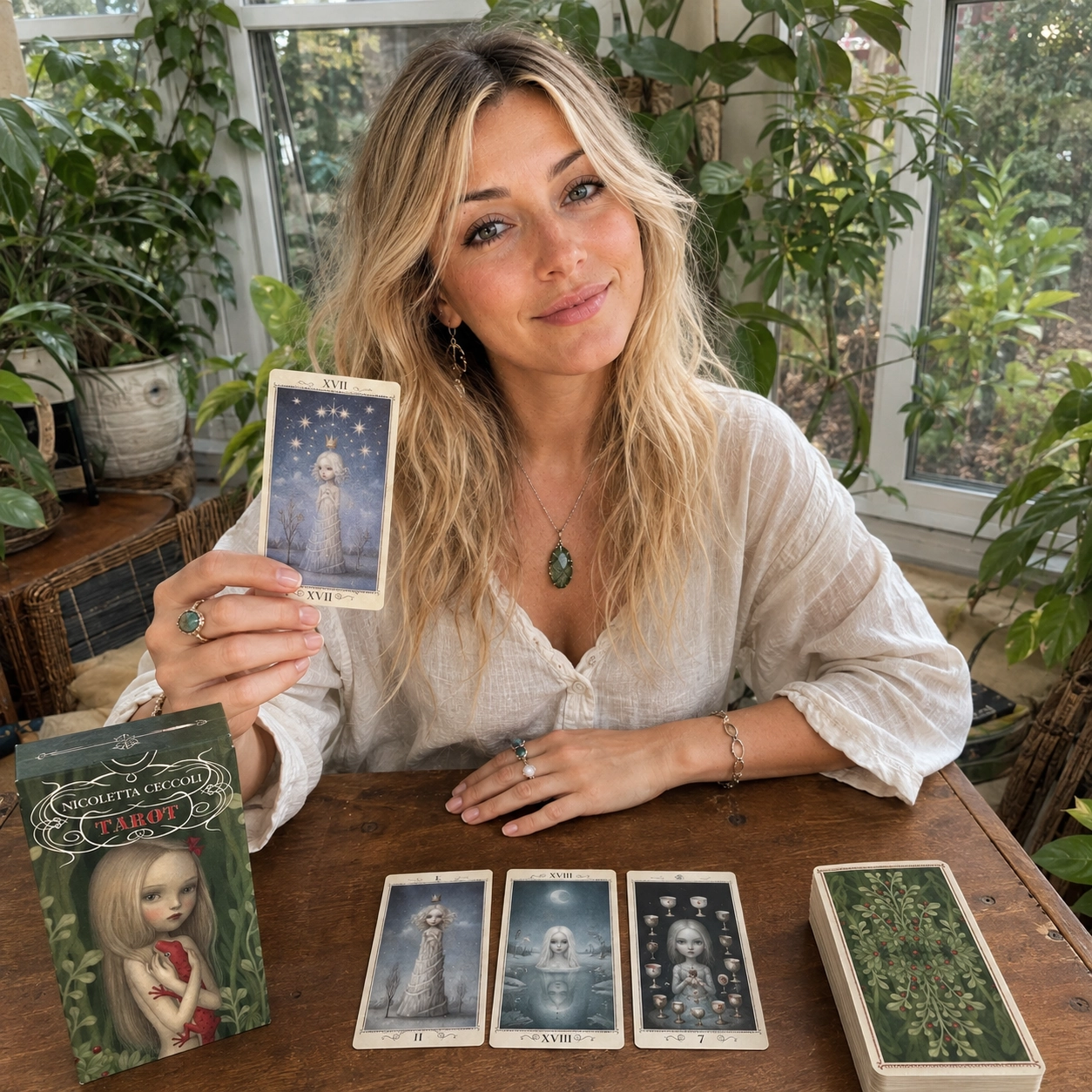
I feel as though I have stepped into a nursery after midnight when I open this deck: everything is delicate, beautifully arranged, and just strange enough to make me look twice. Nicoletta Ceccoli’s pale figures rarely explain themselves. Their quiet faces let a tiny gesture, a hidden creature, or one bright red detail carry the feeling of the whole card.
I would reach for it when a reading is circling a feeling that cannot yet speak plainly. I begin with the expression and posture, then ask what in the scene feels too large, too small, protected, tempted, or trapped. Only after that do I bring in the card’s traditional role. That order keeps the reading intuitive without letting it float away from the question.
This is not the deck I would choose for blunt, literal answers, but it can be wonderfully honest about vulnerability, imagination, and the stories we build around desire. If you let its dream logic unfold slowly, these cards can help you meet your tender inner world with courage and curiosity.
What makes Nicoletta Ceccoli Tarot different?
The Nicoletta Ceccoli Tarot is a standard 78-card tarot conceived by Riccardo Minetti and illustrated by Nicoletta Ceccoli. The familiar Major and Minor Arcana are present, yet the pictures refuse to behave like ordinary teaching diagrams. Doll-like girls share rooms with insects, sweets, toys, masks, and impossible animals. Scale slips. Innocence brushes against appetite. A scene can look soft at first and reveal a sharp little tooth on the second glance.
That tension is the deck’s true language. It reads less like a list of symbols and more like a half-remembered dream: emotionally exact, visually surprising, and open enough for your own associations to enter. Readers who know the Rider–Waite–Smith structure will have an anchor; beginners may want a reference book nearby while they learn how Ceccoli’s images bend that structure into something more private.
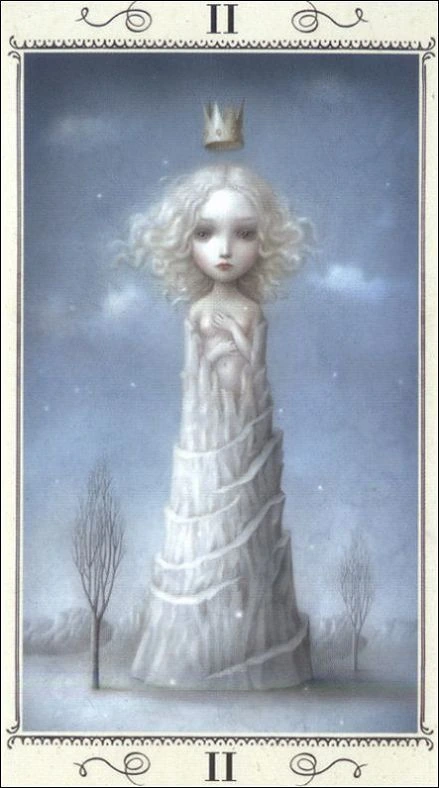
CARD STUDY · THE HIGH PRIESTESS
The silence behind the glass
A pale figure stands in a tall white dress beneath a tiny crown, held between a thin winter tree and an empty blue sky. Her body feels still, almost sealed inside the fabric, while her direct gaze makes that stillness alert rather than helpless.
In a reading, this High Priestess asks you to notice what has not moved yet. Upright, she can be the quiet knowledge that needs no performance. In shadow, the same stillness can become distance or self-protection. Ask what you already sense, then check whether the surrounding cards invite patience or a gentle step out of isolation.
How this deck reads in practice
Ceccoli’s pictures often give the emotional truth before they give the practical answer. A relationship question may show who feels small, who is watching, or where sweetness has become a hiding place. A creative question may reveal fascination and fear in the same image. I find it most useful to name the atmosphere first, choose the detail that holds my eye, and then connect both to the card’s established function.
That makes the deck especially strong for shadow work, dream journaling, creative blocks, and tender conversations with the self. For fast yes-or-no reading it can feel too nuanced. Give it questions that begin with “what am I not seeing?” or “what feeling is shaping this choice?” and it becomes much more generous.
FOUR-CARD MOMENT
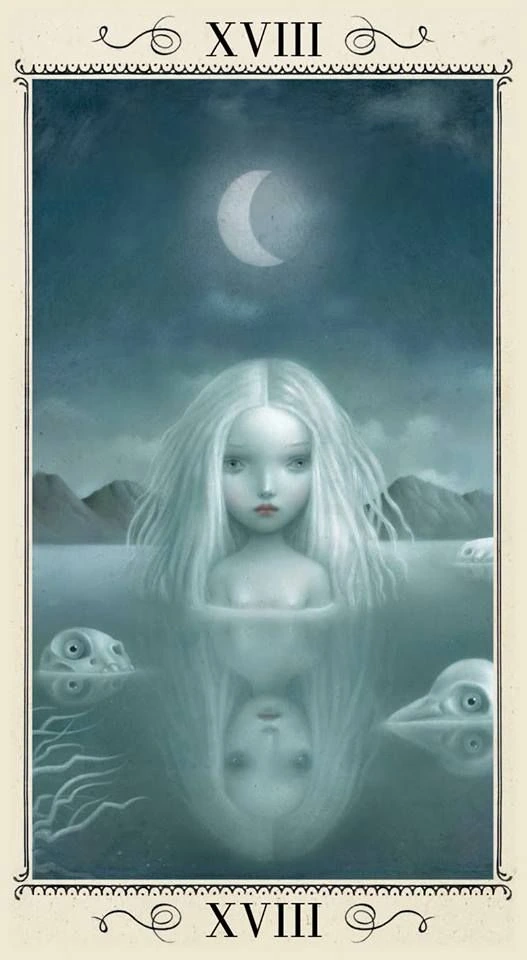
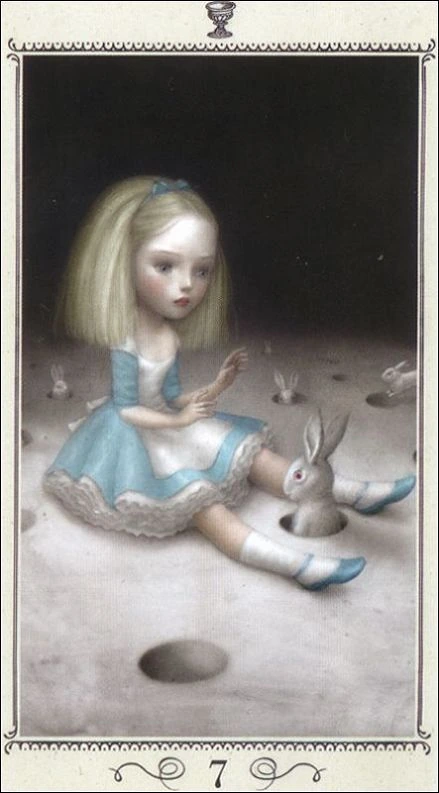
A dream that knows you are watching
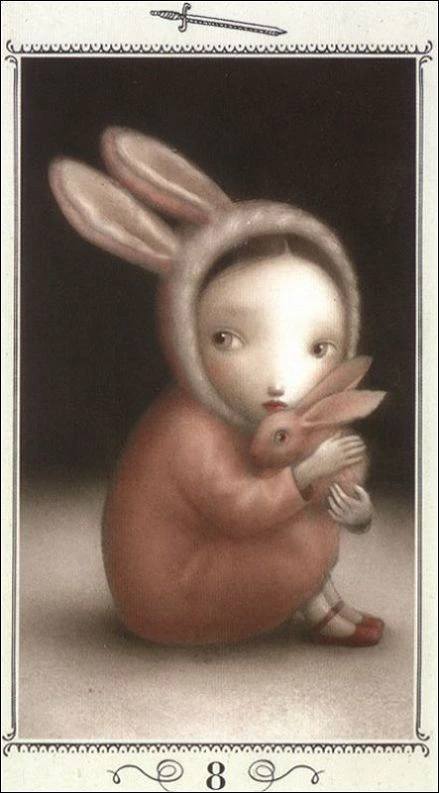
The Moon, Seven of Cups, Eight of Swords, and The Devil create a misty sequence about projection: uncertainty opens many tempting stories, until one of them begins to feel like a cage.

Is Nicoletta Ceccoli Tarot beginner-friendly?
It can be, but it is not a deck of obvious visual keywords. The numbered cards do not always hand you the familiar scene you expect, and Ceccoli’s recurring girls can look emotionally neutral until you study their posture and surroundings. A beginner who loves the art may learn beautifully with it; a beginner who wants immediate textbook confirmation may feel lost.
Keep a short journal with three lines for each pull: what I see, what I feel, and what the tarot card traditionally does. The meeting point between those three lines is usually where this deck begins to speak.
CARD STUDY · THE STAR
Hope with bare feet on cold ground
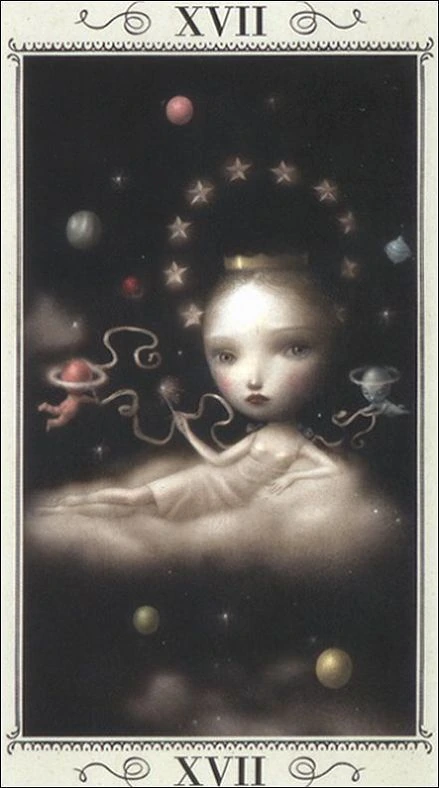
A slender figure rises beneath a field of stars, her pale dress stretching downward like a column of mist. The landscape is sparse, but the sky is alive. That contrast makes hope feel less like celebration and more like a steady light kept through a quiet season.
Upright, The Star can restore trust after strain. In shadow, it may show hope held so far away that it becomes untouchable. In an actual spread, look to the neighboring cards for the small earthly action that can bring the promise down from the sky.
Nicoletta Ceccoli’s art and symbolic language
Ceccoli works with porcelain skin, soft clouds, antique toys, fruit, flowers, insects, and theatrical scale. Red often arrives like a pulse against moss green, smoke blue, or cream. The result is beautiful, but never merely decorative. A tiny creature can carry the instinct a human figure will not admit. A crown may look less like authority than a burden. Sweets can suggest comfort, hunger, reward, or the danger of being consumed by what looks inviting.
Read repeated objects as emotional echoes, not fixed dictionary entries. When a rabbit, mask, cherry, or wing appears, ask what it is doing in this scene. Is it companion, temptation, disguise, or escape? The action matters more than the label.
FOUR-CARD MOMENT
Tenderness with teeth
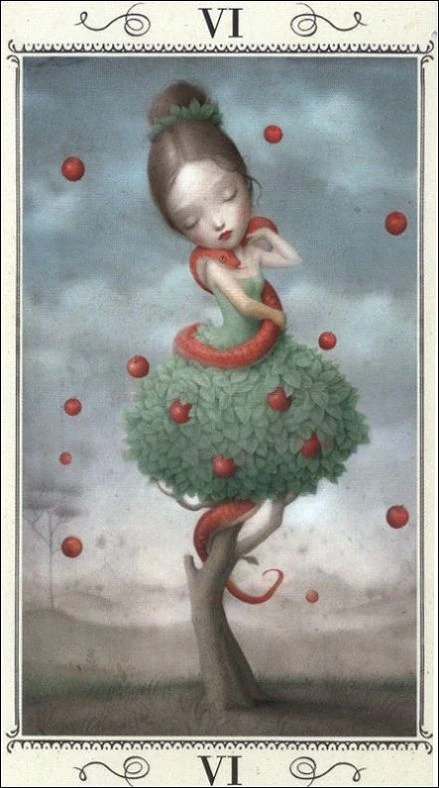
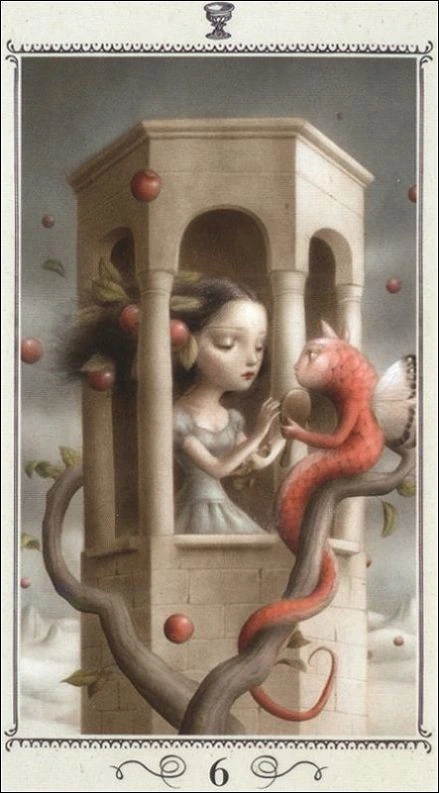
The Fool, The Lovers, Six of Cups, and Page of Cups show innocence as something alive rather than naïve—curious, relational, nostalgic, and still learning how to protect its softness.


A four-card reading for the dollhouse door
Use this spread when a situation feels charming on the surface but emotionally complicated underneath. Lay the cards from left to right and let each picture answer one part of the story.
- The room: What emotional atmosphere am I standing inside?
- The small figure: Where do I feel vulnerable, underestimated, or unseen?
- The hidden creature: What instinct, desire, or warning is moving below the polite surface?
- The open door: What choice returns scale, freedom, and perspective?
Read the four images as one scene before separating their meanings. Notice where the figures look, which detail repeats, and whether the final card widens or narrows the world. If you want to compare this dreamlike unease with a darker, more dramatic visual voice, See Gothic Tarot Deck on Amazon.
FOUR-CARD SPREAD
The dollhouse door spread
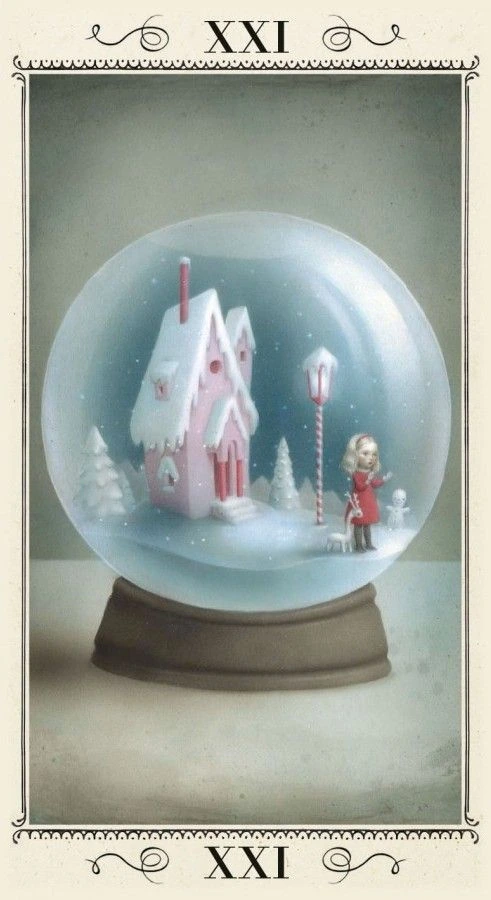
The Fool names the room, The High Priestess protects the quiet truth, Seven of Cups reveals the tempting story, and The World shows the door back into wholeness.
Who will connect with this deck?
This deck suits collectors of surreal illustration, intuitive readers, artists, journalers, and anyone drawn to cards that reveal mixed feelings rather than flattening them. It can be a beautiful companion for questions about identity, longing, boundaries, imagination, and the tender places where fear dresses itself as perfection.
It may not suit readers who prefer bold elemental symbols, literal scenic pips, or a brisk fortune-telling voice. Its figures are deliberately enigmatic. If their stillness feels emotionally blank to you, the deck may remain closed; if it feels like an invitation to listen, it can become remarkably intimate.
CARD STUDY · THE TOWER
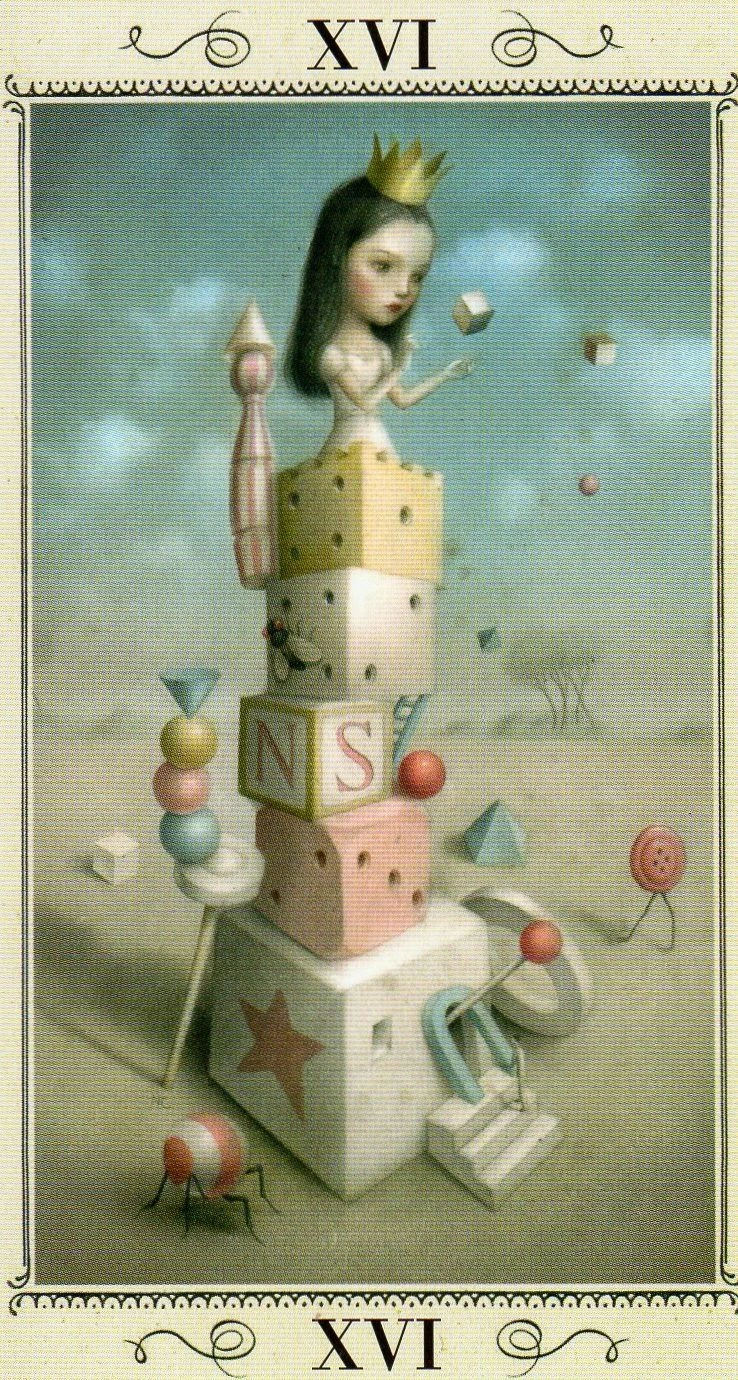
When the perfect little world cannot hold
The Tower in this deck does not need a conventional lightning-struck building to create rupture. Its visual world makes instability personal: the polished surface, the vulnerable figure, and the sense that something carefully arranged can no longer stay untouched.
In a reading, I would ask what has become too fragile to carry the truth. Upright, the card can clear a false structure quickly. In shadow, it can show dread of change before anything has actually fallen. Let the next card tell you whether the moment needs action, preparation, or simply the honesty to stop pretending the old shape still fits.
Buying guidance and deck details
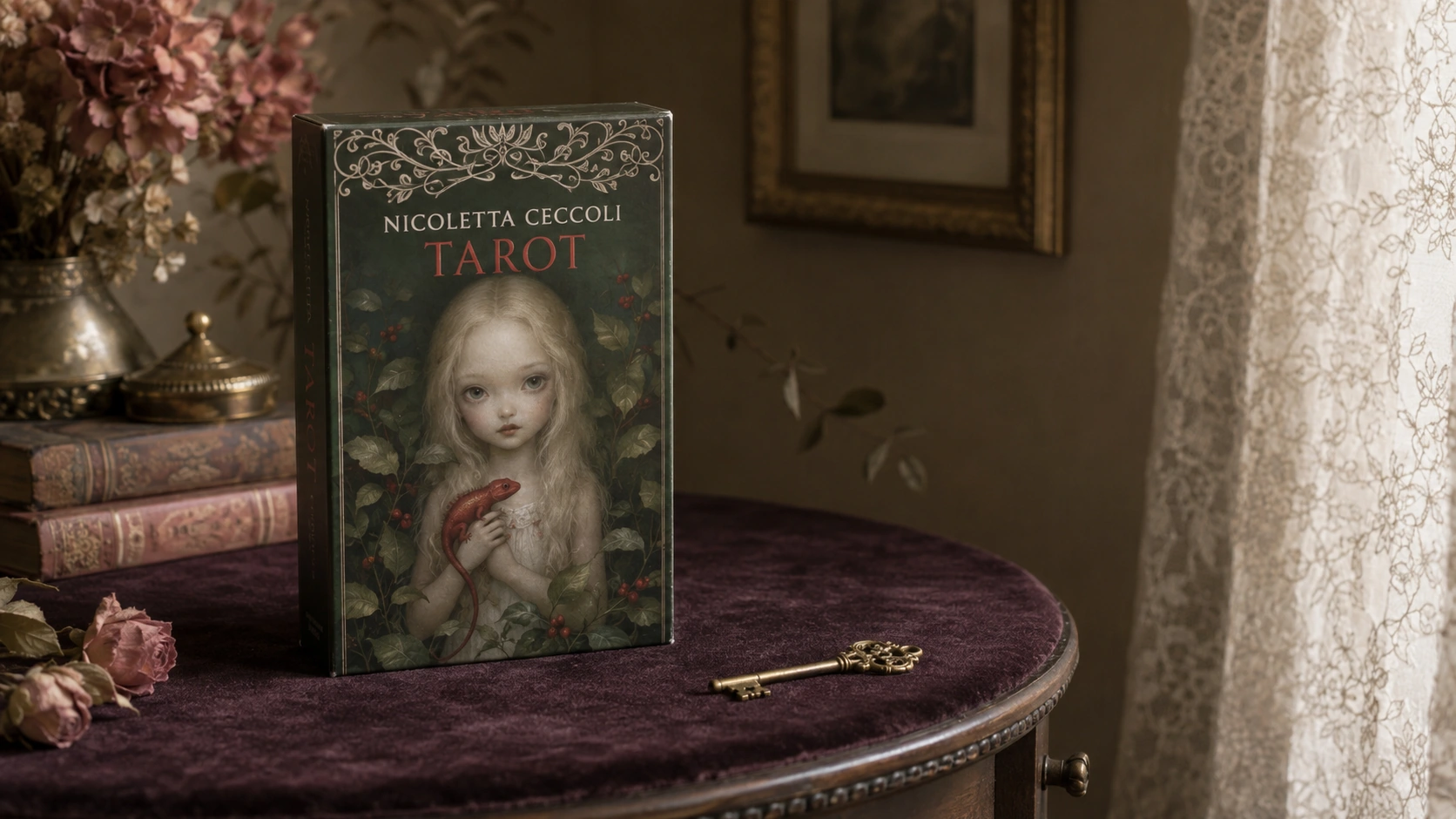
The full-size edition is published by Lo Scarabeo and distributed in English by Llewellyn. It contains 78 cards measuring about 66 × 120 mm with multilingual instructions; the accompanying booklet is credited to Lunaea Weatherstone. The tall format gives Ceccoli’s figures room to breathe, while the pale ornamental borders keep the dream scenes feeling like pages from a peculiar storybook.
Choose the full-size deck if you want the artwork to remain easy to study. Mini editions also exist, so check the product title and dimensions before ordering. The direct Amazon button on this page points to the full-size ISBN 978-0738744438 edition reviewed here.
| Pros | Cons |
|---|---|
| Distinctive, emotionally rich surreal artwork | Meanings are not always literal at first glance |
| Excellent for journaling, shadow work, and creative readings | Quiet facial expressions may feel distant to some readers |
| Familiar 78-card structure beneath an original visual language | The tall cards may be less comfortable for small hands |
FOUR-CARD MOMENT
Small courage in strange weather
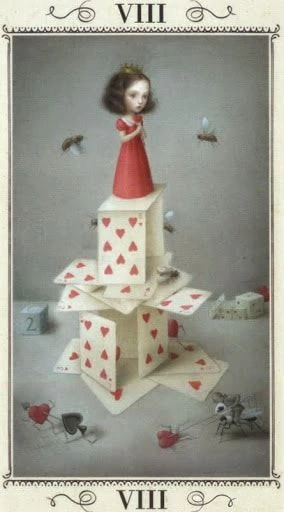
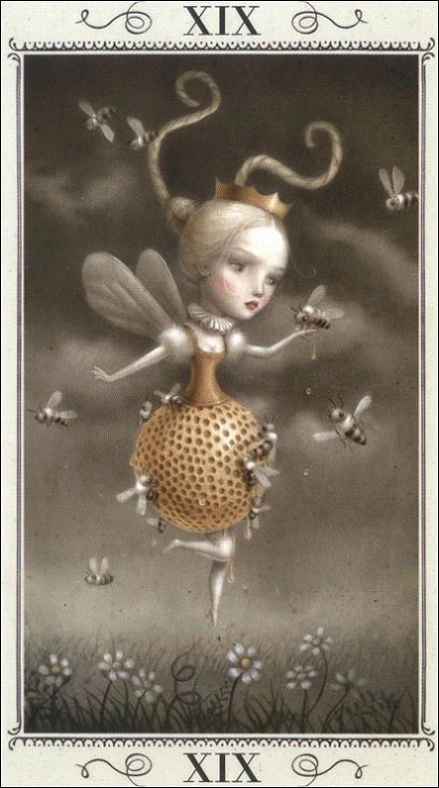
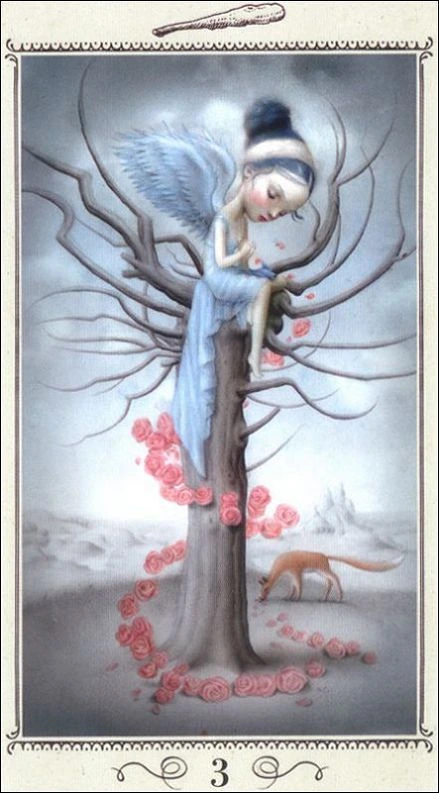
Strength, The Sun, Three of Wands, and Queen of Pentacles gather resilience around the body: brave tenderness, returning warmth, a wider horizon, and the grounded care that helps a vision live.

A golden rule for reading this deck
Do not confuse a quiet face with an empty card. Look at scale, posture, companions, and the one detail that breaks the palette. Ceccoli’s figures often keep their feelings behind a porcelain stillness; the surrounding world tells you what the face will not.
Final thoughts
Nicoletta Ceccoli Tarot is beautiful in the way a dream can be beautiful: not because it is safe, but because it gives shape to something difficult to say while awake. It rewards patient readers who can hold sweetness and unease in the same hand.
If you love this kind of visual storytelling, continue with our Tarot of Mystical Moments review or compare its moonlit strangeness with the Deviant Moon Tarot review. For the right reader, Ceccoli’s deck is not a puzzle to solve; it is a small door that opens when you are willing to notice what your first glance missed.
QUESTIONS, ANSWERED
Nicoletta Ceccoli Tarot FAQ
Who created the Nicoletta Ceccoli Tarot?
The deck was conceived by Riccardo Minetti and illustrated by Nicoletta Ceccoli. The four-line page header credits Ceccoli because her art is the deck’s defining visual identity.
How many cards are in the deck?
The official Lo Scarabeo edition contains 78 cards: 22 Major Arcana and 56 Minor Arcana.
Is Nicoletta Ceccoli Tarot good for beginners?
It can be, especially for a beginner who feels strongly drawn to the pictures. Its dreamlike scenes are less literal than many teaching decks, so keeping a traditional tarot reference nearby is helpful at first.
What kinds of readings suit it best?
It shines in reflective readings about emotions, relationships, imagination, boundaries, creative blocks, and shadow patterns. Open questions usually work better than blunt yes-or-no prompts.
Is the full-size deck the same as the mini edition?
The artwork belongs to the same deck family, but the physical size and packaging differ. The product links here point to the full-size 2014 edition with ISBN 978-0738744438.
Why can some cards feel unsettling?
Ceccoli often places soft, childlike beauty beside strange scale, watchful creatures, or hints of danger. That contrast is intentional and can make hidden feelings easier to notice in a reading.