Mystical Tarot Cards
Explore this verified partial selection of Mystical Tarot card art. Choose a group or open any card for a larger carousel view.
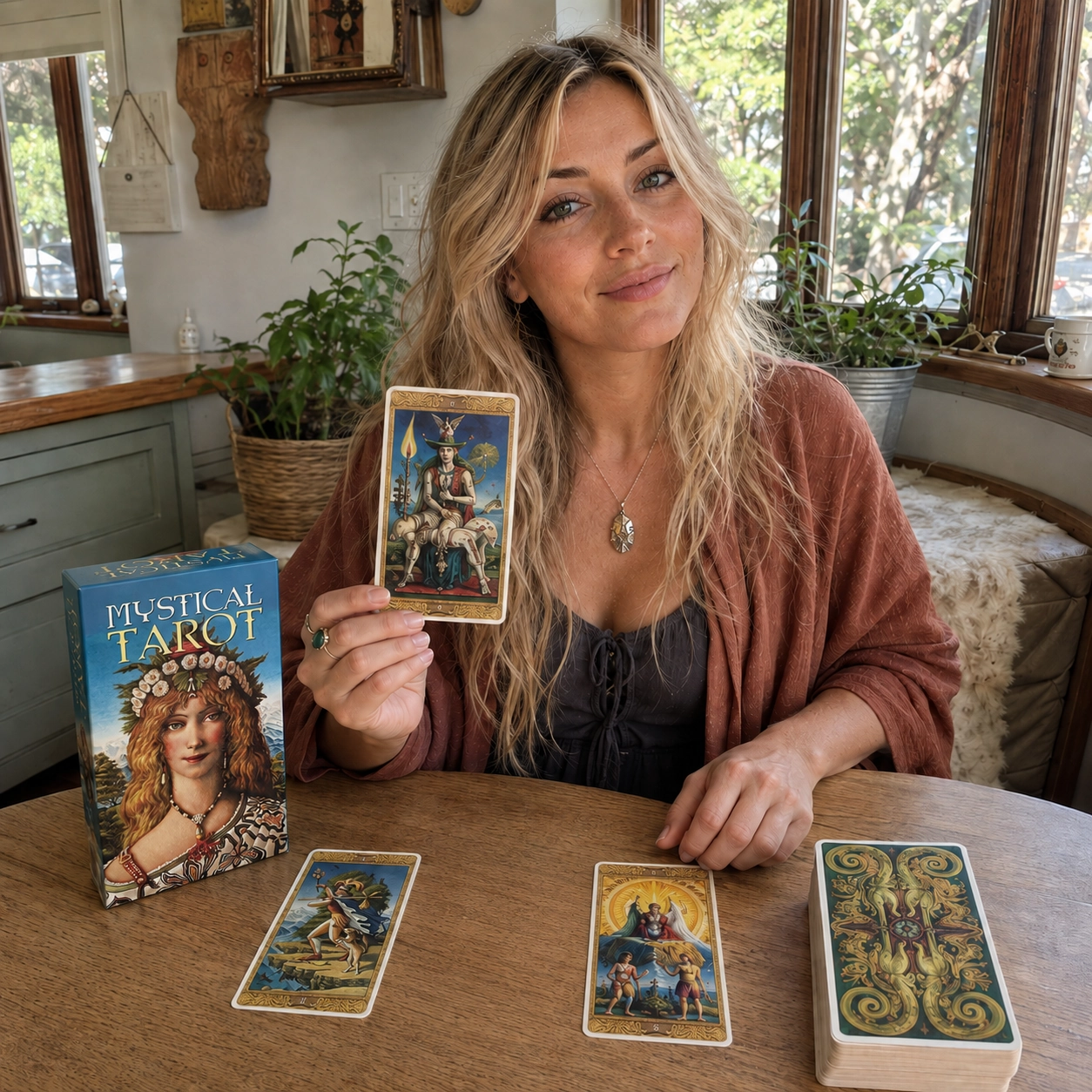
Aurica’s Quick Take
I love how Mystical Tarot makes an ordinary question feel as though I have opened a painted door. The gold frames catch my eye first, but it is the small gestures inside them that hold me: The Fool stepping into the wind with his dog close behind, The Magician sitting calmly among curious animal forms, and The Lovers beneath that enormous sun. I begin with whichever detail feels brightest, then ask why it wants my attention today.
The Magician has a wonderfully strange steadiness here. Flame and light appear on either side of him, yet he does not seem hurried by either one. When I draw him, I read that calm as a reminder that having power is not the same as scattering it. I look to the neighbouring cards to see where skill needs focus, where confidence is genuine, and where a clever performance may be hiding uncertainty.
This deck rewards slow looking. Its pictures are ornate, but I never try to decode every symbol at once. I notice a face, a direction, a colour, or the space between two figures; I compare that first feeling with the card’s familiar tarot role; then I turn it into one plain sentence I can use. That keeps the reading intuitive without letting it drift into mist.
I would reach for Mystical Tarot when a relationship, creative choice, or inner conflict needs both imagination and honesty. Its dramatic scenes bring hidden feelings close enough to name, while the traditional structure keeps my feet on the ground. Each golden-framed image feels like a small doorway, and I hope you step through the one that helps your own courage shine.
Mystical Tarot is for readers who like traditional tarot structure wrapped in lush esoteric atmosphere. It feels magical, theatrical, and symbol-rich: a deck for candlelit reflection, intuitive journaling, relationship pattern work, and readings where one visual detail can change the whole message.
This is not a plain keyword deck. It asks you to look at posture, color, ritual objects, facial expression, and the mood of the scene. If you enjoy decks that make you pause and notice, Mystical Tarot has plenty to offer.
Mystical Tarot Card Images
The gallery above gives you a broad look at the available Mystical Tarot card images in a clean TarotFans viewer. Use it to feel the deck’s borders, colors, symbolic density, and reading mood before deciding whether this style belongs on your table.
Art Style: Ornate, Magical, and Dramatic
Mystical Tarot leans into a rich old-world fantasy style. The cards often feel like little ritual paintings: gold-toned borders, expressive figures, ceremonial objects, and backgrounds that suggest a story already in motion. The mood is not minimal or modern. It is layered, decorative, and a little mysterious.
That visual richness is the deck’s main gift. A beginner can still use it, but the deck rewards patient looking. Instead of jumping straight to “The Chariot means willpower,” ask: who is moving, what is being controlled, and what part of the picture feels tense or awake?
Mystical invitation
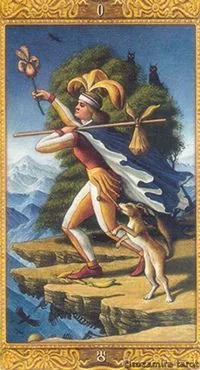


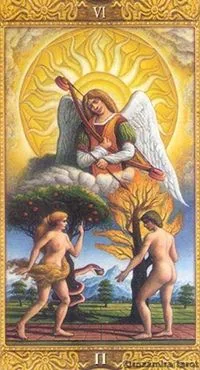
These four cards show how the deck opens a reading: curiosity, will, intuition, and choice all feel like doors into a more enchanted room.
How Mystical Tarot Reads
Mystical Tarot reads best when you combine classic tarot structure with image-based intuition. The familiar meanings are there, but the artwork asks you to translate them through the visible scene. One card may speak through a hand gesture. Another may speak through a color, a doorway, or the way a figure turns away.
In practice, that makes the deck good for reflective readings. It can answer practical questions, but it works best when the reader turns the symbol into a grounded sentence: “This is the pattern,” “This is the fear,” or “This is the next kind action.”
Card close-up
The Lovers: choice with emotional honesty
The Lovers is a useful case study because Mystical Tarot makes the card feel like more than romance. Read the atmosphere first. Does the image feel open, tense, enchanted, watched, or protected?
In a love reading, I would read this card as alignment: do your words, desire, and behavior point in the same direction? In a work or life-choice reading, it asks you to choose the path you can stand beside with a whole heart.
Beginner Friendliness
Mystical Tarot can be beginner-friendly, but it is not the easiest “instant answer” deck. New readers should start with one-card draws and simple three-card spreads. Before checking a guidebook, say what you actually see: “a figure waiting,” “a bright cup,” “a guarded posture,” “a doorway,” or “a stormy background.”
That simple noticing keeps the deck from becoming vague. You do not need to decode every symbol at once. Begin with one detail, then turn it into one practical question or next step.
Ritual focus and power
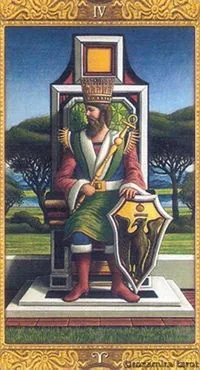

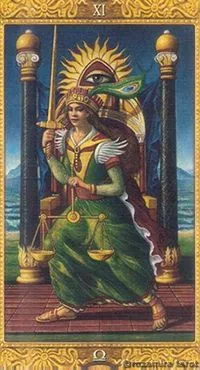

Here the deck becomes structured and ceremonial: authority, tradition, fairness, and direction all ask for mature choices rather than vague wishing.
Easy, Medium, and Hard Reading Examples
Easy: one-card daily noticing
Ask, “What should I notice today?” If you pull The Fool, do not overcomplicate it. Name the first feeling in the image, then choose one small action that supports fresh movement: send the message, take the walk, begin the page, or say yes to a harmless experiment.
Medium: three cards for situation, hidden need, next step
Try situation, hidden need, next step. If The Emperor appears with Ace of Cups, the reading may not be “control versus emotion.” It may be asking you to give your feelings a safe container: a clear time, a boundary, or a practical plan.
Hard: four cards for truth, fear, pattern, repair
For a messy relationship, work, or healing question, use four cards: truth, fear, pattern, repair. Let the strongest image speak first. Then ask whether the final card points toward rest, boundaries, courage, apology, or a real-world conversation.
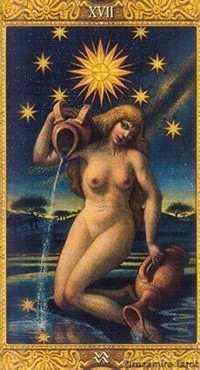
Card close-up
The Star: hope that becomes a practice
The Star is lovely in this deck because the message is not just “hope.” Look for the quality of light, openness, and relief in the image. What part of the scene feels clean, honest, or ready to breathe again?
In readings, I would treat The Star as hope with a routine. Drink water, tell the truth, return to the small practice that steadies you, and let healing be something you repeat gently.
Best Uses for Mystical Tarot
- daily reflection when you want one beautiful image to sit with
- creative journaling and symbolic writing prompts
- relationship pattern readings with soft but honest language
- shadow work that stays grounded and non-scary
- spiritual questions where atmosphere and intuition matter
- tarot study when you want to compare classic meanings with a more ornate deck voice
Shadow into insight
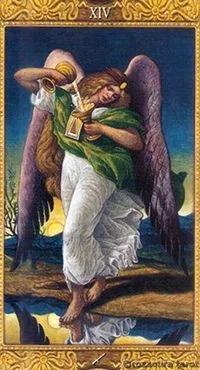
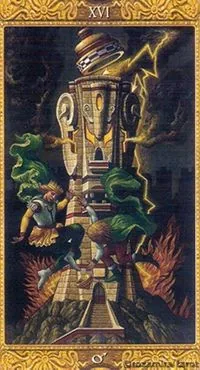
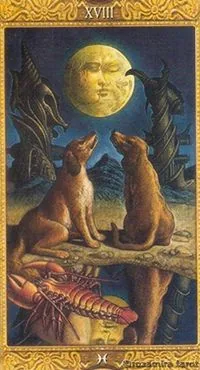
The dramatic cards are not here to frighten you. They help name attachment, disruption, uncertainty, and the first clean breath after confusion.
What to Know Before Buying
Buy Mystical Tarot if you like its visual language as much as its tarot system. The deck’s ornate style is the point. If the images make you want to lean closer, it can become a rich companion for intuitive practice.
If you need large keywords, very modern scenes, or simple uncluttered illustrations, this may not be your easiest first deck. It asks for attention. That is a strength for reflective readers, but it can feel busy if you prefer spare card art.

Card close-up
10 of Cups: happiness with a real emotional shape
10 of Cups can become generic in many readings: “happy family,” “fulfillment,” “emotional success.” In Mystical Tarot, slow down and ask what kind of happiness the picture is showing. Is it peaceful, celebratory, protected, shared, or still a little fragile?
That makes the card more useful. Instead of promising a perfect ending, it can ask, “What would make joy livable here?” The answer may be gratitude, honest repair, or making space for the people who actually nourish you.
Aurica’s Golden Rule
Do not force Mystical Tarot to speak in generic tarot keywords. Look at the image, name the feeling, then turn the message into one kind and doable action. The deck becomes clearer when the picture teaches before the memorized meaning takes over.
Heart and home blessings


The cup cards show the deck’s tender side: new feeling, mutual care, emotional blessing, and the mature heart that can hold joy without pretending life is perfect.
Final Thoughts
Mystical Tarot is a strong choice for readers who want classic tarot meanings with a more magical, ornate, and intuitive surface. It is beautiful, but it is not passive. It asks you to notice, interpret, and turn symbol into action.
If you love decks that feel a little ceremonial and story-rich, Mystical Tarot is worth exploring. If you prefer clean modern imagery, start elsewhere and come back when you want something moodier, deeper, and more symbolic.
Mystical Tarot FAQ
Is Mystical Tarot good for beginners?
Yes, if you like image-based learning. The structure follows familiar tarot patterns, but the artwork is rich enough that beginners should go slowly: describe the picture first, then check the guidebook or your notes.
Who created Mystical Tarot?
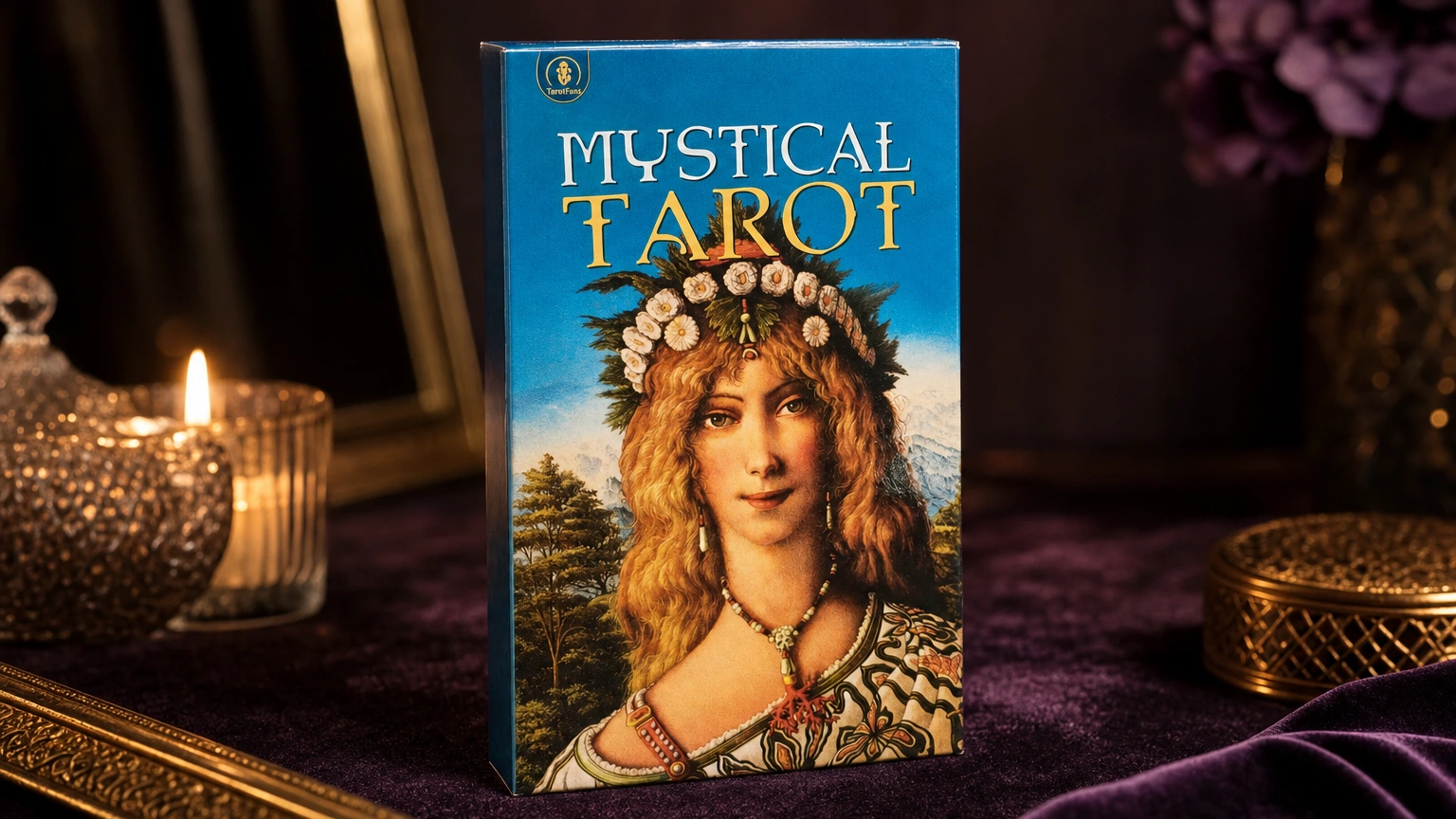
Mystical Tarot is illustrated by Luigi Costa and published by Lo Scarabeo. The deck has an ornate, old-world fantasy feeling, so it suits readers who enjoy symbolism, ceremony, and dramatic card art.
Does Mystical Tarot follow traditional tarot meanings?
Mostly, yes. You can read it with classic tarot meanings as your base, then let the posture, colors, setting, and ritual details add the deck’s own voice.
What kind of readings does Mystical Tarot do best?
It is strongest for reflective questions: relationships, creative blocks, spiritual journaling, shadow work, and choosing a next step when the answer needs nuance rather than a quick yes or no.
What should I know about the Mystical Tarot guidebook?
Use the guidebook as a helpful second voice, not the whole reading. Aurica’s advice is to notice the image first, write one plain sentence about what you see, then use the book to refine the meaning.
Is the Mystical Tarot Gallery complete?
No. This review presents a verified partial selection of Mystical Tarot artwork, giving you an honest look at the deck’s atmosphere without implying complete coverage.