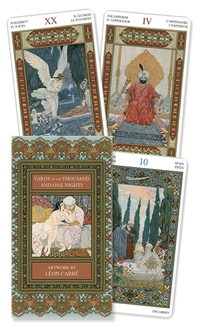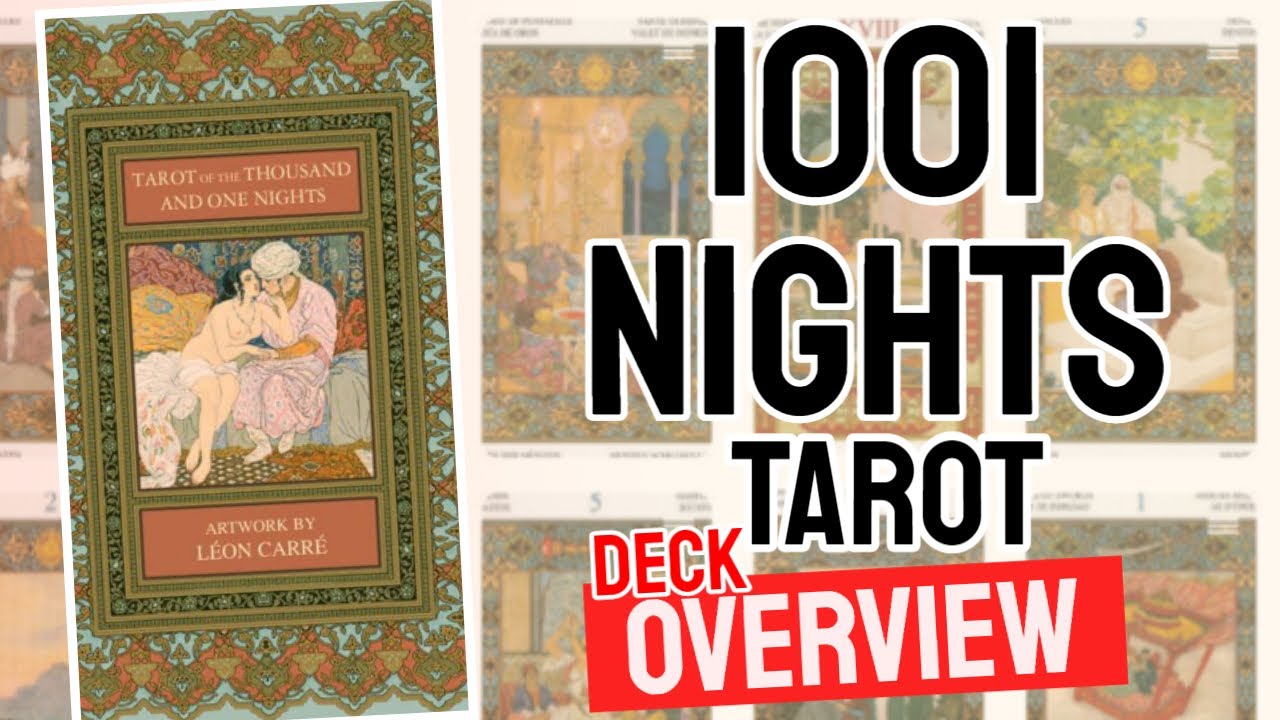
Tarot of the Thousand and One Nights Card Gallery
Explore the Tarot of the Thousand and One Nights cards in a native TarotFans gallery. Tap any card to open a larger carousel view and study the ornate storybook artwork up close.
A note from Aurica
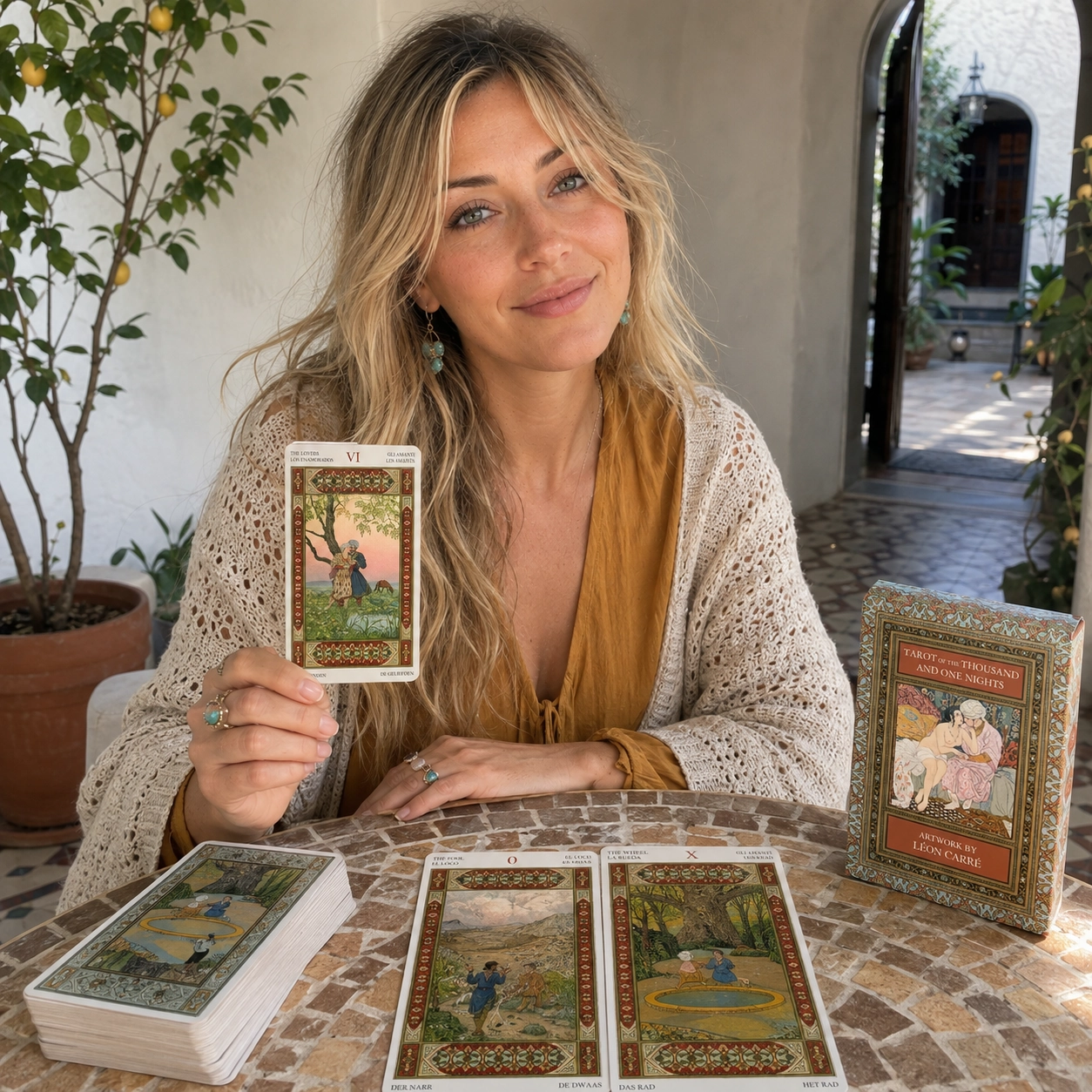
I love how this deck makes a reading feel like opening a carved door into a story already in motion. The colours are warm with spice, garden shade, tiled courtyards, and distant lamps, yet the people inside them never feel like decorations. A glance across a room or a hand held back can carry as much meaning as the grandest palace.
The Lovers is the card I keep returning to. Beneath the tree, the couple seems wrapped in a private moment while the world continues around them. In a reading, I would not rush to call that romance alone. I would ask what promise is being made, what choice brings two lives closer, and whether the heart is brave enough to be honest about the cost.
The Fool and The Wheel deepen that question beautifully. The Fool walks into a wide, uncertain landscape, while The Wheel gathers life around its golden circle. Together they remind me that a new chapter rarely arrives with every detail settled; it begins when we recognise the invitation and decide how consciously we will step into it.
I reach for Tarot of the Thousand and One Nights when a question contains several truths at once: desire and duty, wonder and risk, tenderness and pride. I begin with the traditional card meaning, then notice who is watching, who is moving, and where the picture seems to breathe. The neighbouring cards tell me whether the tale wants courage, patience, or a wiser ending.
My gentle rule is to let the story illuminate the choice rather than carry me away from it. These cards can turn uncertainty into a path of small, meaningful decisions, and every honest step gives you the chance to become the hopeful author of what comes next.
Tarot of the Thousand and One Nights Review: A Rich Story Deck for Real Questions
Tarot of the Thousand and One Nights is dramatic, ornate, and very story-driven. It takes inspiration from the famous Arabian Nights world of journeys, bargains, palaces, secrets, desire, danger, clever choices, and hard-earned wisdom. I read that theme symbolically: not as a history lesson, but as a visual language for the way a life can become a tale.
This is not a minimal deck. The art has old-world detail, strong borders, theatrical scenes, and plenty of emotional tension. That makes it beautiful for readers who enjoy slow looking. A spread can feel like the beginning of a journey, the middle of a test, and the moment when the seeker has to decide what kind of story they are willing to live.
How the Deck Reads
The deck keeps a familiar tarot backbone while giving some cards a more storybook name. The Hanged Man appears as The Bound Man, Strength becomes Courage, The Tower becomes Danger, Justice becomes The Venerable Woman, and The Hierophant becomes The Venerable Man. Those changes do not break the tarot system. They make the majors feel like roles in a fable.
The minor cards are practical in a surprisingly grounded way. Chalices speak about feeling and longing. Wands bring motion, ambition, and boldness. Swords show strategy, conflict, and mental pressure. Pentacles bring trade, craft, money, and long-term effort. Because the scenes often include markets, rooms, travelers, rulers, and thresholds, the deck can still answer everyday questions about work, relationships, money, and timing.
A Brave New Chapter


This four-card moment feels like leaving the old road. Begin with innocence, follow the spark, accept visible progress, and let joy prove that the risk was not wasted.
Artwork, Mood, and Symbolism
The strongest feature of Tarot of the Thousand and One Nights is its narrative pull. Every card feels like a scene, not just a symbol. That can be wonderful for intuitive reading because the reader can ask: who has power here, who is waiting, what is being offered, what is hidden, and what choice would change the story?
The ornate style also means the deck asks for patience. It is better on a calm table than in a rushed reading. Beginners can use it, but they may want a guidebook or a basic tarot reference nearby. Experienced readers may enjoy how the images add mood without abandoning the classic structure.

Card study
The Magician: skill, timing, and the tale you choose to tell
The Magician works beautifully in this deck because the whole world feels like a story being shaped. I read this card as cleverness, focus, and the ability to use what is already available.
For work or study, it says to practice with intention. For love, it can show confident communication and attraction. As advice, it asks the seeker to stop waiting for perfect conditions and start using the tools already on the table.
Love, Temptation, and Emotional Choice
In love readings, this deck is best when the question has layers. It can show attraction, longing, delay, social pressure, fantasy, honesty, and the difference between real devotion and a beautiful distraction. It is especially good for questions where someone needs to understand the story behind a feeling.
I would not use it for quick yes/no romance questions. I would use it for questions like: what is being promised, what is being avoided, what pattern is repeating, and what choice would make the relationship more honest?
Love Needs Honest Choices
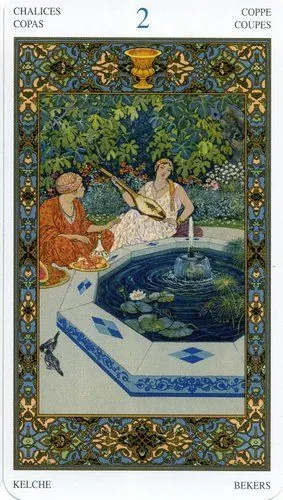


This sequence asks whether the heart is meeting clearly, choosing with care, refusing what feels empty, and opening to a cleaner kind of love.

Shadow-friendly guidance
Danger: the warning before the crash
Danger is this deck’s Tower energy, but the name changes the tone. It feels less like random destruction and more like a clear warning. Something unstable is already showing signs.
In practical readings, I would not use this card to scare anyone. I would use it as a chance to act early: tell the truth, repair the weak point, leave the bad plan, or stop pretending the tension is harmless.
Career, Money, and Creative Work
For career and money questions, the deck can be surprisingly useful. Its marketplaces, rulers, workers, journeys, and negotiations make practical themes easy to see. Pentacles feel like trade, craft, and patience. Wands feel like ambition and movement. Swords feel like strategy and conflict.
Creative readers may especially enjoy it. The images can act like story prompts, helping writers and artists explore motivation, risk, desire, and consequence. It is a strong deck for journaling because each card feels like a scene with a before and after.
Untangling the Mind


This is the mental path from stuck silence to pain, then distance, then clean authority. It is useful for boundaries, difficult talks, and choosing truth over drama.
Who Will Enjoy Tarot of the Thousand and One Nights?
- Readers who like ornate Lo Scarabeo-style tarot art and dramatic fantasy atmosphere.
- People who read tarot through story, setting, faces, and emotional tension.
- Journalers, writers, and creative readers who want images that feel like scenes.
- Readers who enjoy classic tarot structure with a few evocative renamed cards.

Emotional reward
9 of Chalices: pleasure, wishes, and knowing when enough is enough
The 9 of Chalices shows the deck’s richness at its best. It can mean pleasure, comfort, and a wish coming close enough to taste.
But in this storybook world, I also feel the question behind the feast: does this joy truly satisfy the heart, or is it only a beautiful room full of distractions? A good wish should make life fuller, not smaller.
Stable Growth Over Time


This is grounded magic: accept the seed, wait through the slow part, practice the craft, and build something that can support a home, a business, or a future self.
Pros and Cons
| Pros | Cons |
|---|---|
| Rich storybook atmosphere makes spreads feel alive and memorable. | The ornate artwork can feel busy if you prefer clean, modern decks. |
| Great for journaling, creative prompts, love questions, timing, and personal courage. | Some renamed majors may require a short adjustment period. |
| Works with familiar tarot structure while adding a mythic Arabian Nights mood. | Not the fastest deck for quick one-card answers on a phone screen. |
| Strong visual scenes help intuitive readers describe what is happening in a spread. | Beginners may want a guidebook or RWS reference beside them. |
Final Thoughts
Tarot of the Thousand and One Nights is best for readers who want tarot to feel like a tale with danger, beauty, longing, cleverness, and consequence. It is not plain or quiet. It is a deck for readers who enjoy mood and are willing to let one image unfold slowly.
If you want a simple teaching deck, choose something cleaner. If you want a dramatic storybook tarot that can turn ordinary questions into rich symbolic scenes, this deck has a memorable voice.
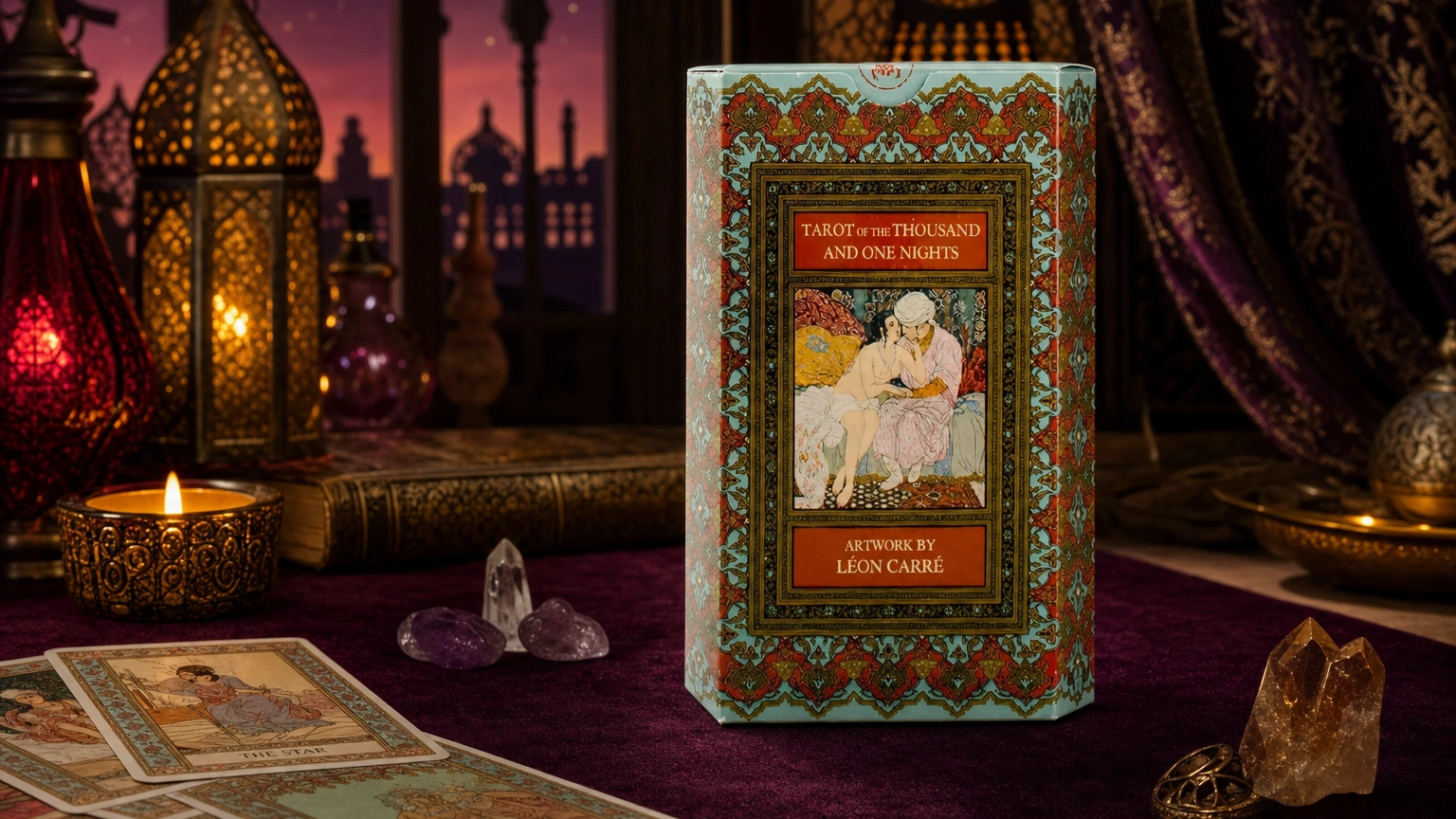
Tarot of the Thousand and One Nights FAQ
Is Tarot of the Thousand and One Nights good for beginners?
It can be beginner friendly for patient readers who enjoy detailed art. Total beginners may want a guidebook or basic tarot reference nearby because the scenes are ornate and some card names are changed.
Does it follow Rider-Waite-Smith meanings?
Broadly, yes. The deck keeps the familiar tarot structure, while several Major Arcana cards use story-flavored titles such as The Bound Man, Courage, Danger, The Venerable Woman, and The Venerable Man.
What kinds of readings suit this deck best?
I like it for love, temptation, patience, money, travel, career choices, creative blocks, and any reading where the person wants to understand the story behind a situation.
Is the Arabian Nights theme respectful?
I use the theme as a symbolic storybook lens: journeys, choices, wishes, hidden motives, risk, and wisdom earned through experience. The review keeps the focus practical and avoids treating the theme as a flat version of real cultures.
Who might not enjoy this tarot deck?
Readers who prefer minimal, borderless, modern, or very direct decks may find it too detailed. It is better for people who enjoy classic illustrated fantasy and narrative tarot reading.
Is this a good deck for shadow work?
Yes, especially for shadow work around desire, fear, temptation, avoidance, pride, and the stories we tell ourselves. The deck is dramatic, but it can still be used gently and thoughtfully.