
Mage: The Awakening Tarot Cards
Browse the available same-edition Mage: The Awakening Tarot card fronts in official Rider–Waite–Smith sequence. Tap any card to open a larger carousel view.
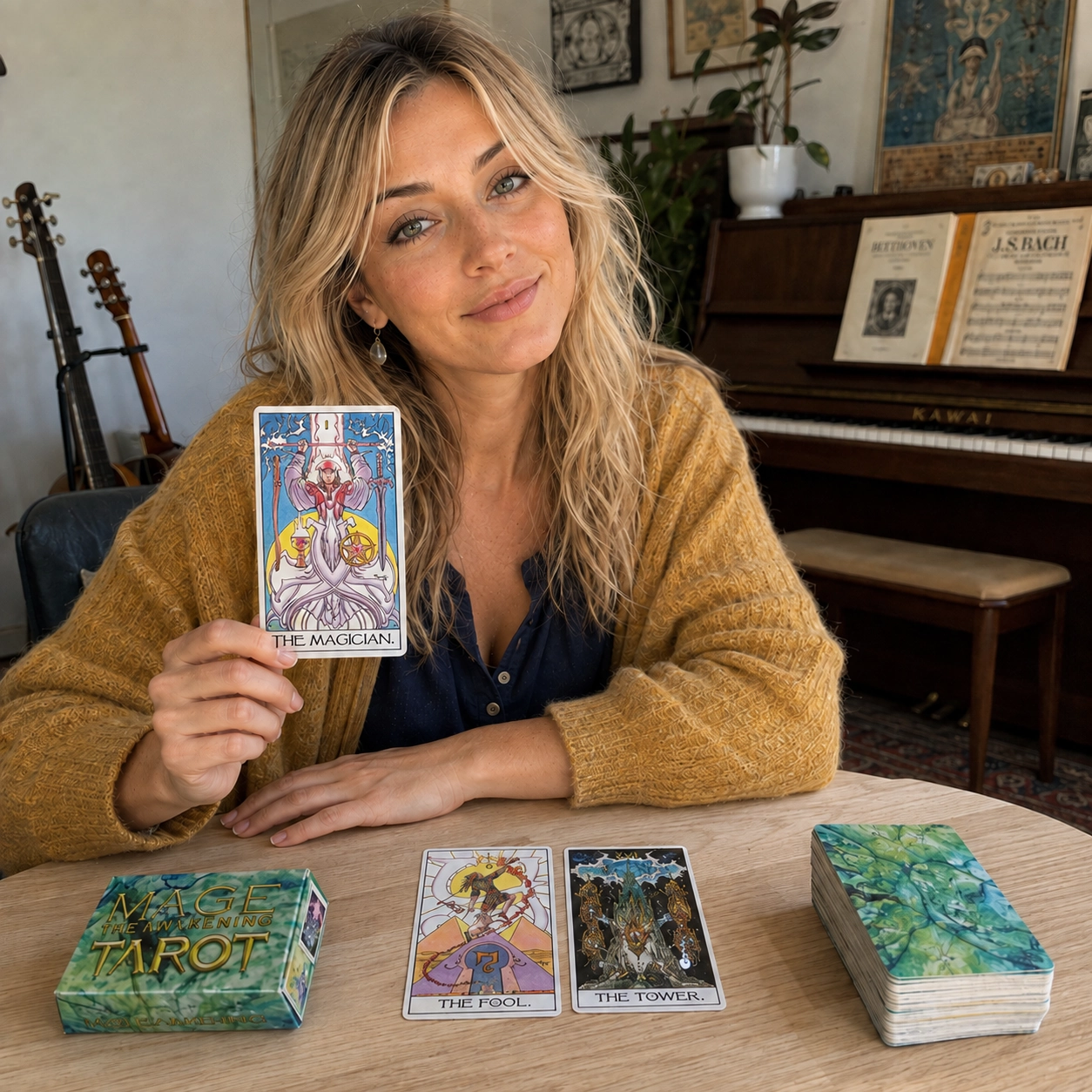
Aurica’s Quick Take
Mage: The Awakening Tarot is a 78-card Rider-Waite-Smith-based deck made to work both as a stand-alone tarot and as a companion to White Wolf’s Mage: The Awakening role-playing game. Its strongest feature is not one uniform art style. Five credited artists create a shifting world of ritual tools, masks, celestial geometry, city-scale danger, spirits, and sudden magical breakthroughs.
My verdict: I find this most rewarding for readers who enjoy occult systems, narrative campaigns, mixed-media fantasy art, or tarot images that feel like fragments of a larger supernatural story. It asks more of me than a visually uniform deck, but the changing hands give each spread the sensation of crossing from one hidden chamber into another.
I notice that contrast most clearly when The Magician’s pale figure gathers every suit around one bright centre, while The Fool reaches across pyramids and The Tower plunges into a darker, more dangerous register. Those shifts are not noise to smooth away. They show me where a question changes temperature—from curiosity, to focused will, to a truth that can no longer remain safely contained.
When I read with it, I begin with the card’s familiar tarot function, then let the visible mood sharpen the message. I ask which gesture pulls my eye, where the light opens or closes, and whether nearby cards make the moment feel like invitation, warning, or transformation. That simple rhythm keeps the game-world symbolism vivid without letting it overwhelm the reading.
I would reach for this deck when a creative project, relationship, or life choice feels charged with unseen forces and the ordinary answer seems too small. Mage: The Awakening Tarot reminds me that insight is not merely discovering a secret—it is choosing, with courage and care, what kind of magic I am ready to make from it.
What exactly is Mage: The Awakening Tarot?
White Wolf published the deck in 2009. It is also listed under the name Supernal Tarot. The set follows the familiar 78-card structure: 22 Major Arcana and 56 Minor Arcana, with Wands, Cups, Swords, and Pentacles and the Page, Knight, Queen, and King courts. Strength is VIII and Justice is XI, matching the common Rider-Waite-Smith numbering.
The cards measure about 2.75 by 4.75 inches and were issued with a 72-page full-colour booklet. The credited artists are Stephanie Pui-Mun Law, Michael Kaluta, Yasmine, Vince Locke, and Saana Lappalainen. That group approach explains why the gallery changes voice from delicate watercolour to harder graphic linework and darker horror-fantasy scenes.
This is important buying context: it is not simply a conventional tarot with “mage” pasted over the title. It was conceived in conversation with a tabletop world about people awakening to magic and trying to understand power, perception, consequence, and identity. You do not need to play the game to read the cards, but familiarity with supernatural storytelling makes the deck’s dramatic shifts feel intentional rather than inconsistent.

The Magician — power gathered into one body
A pale, androgynous figure rises against a blue field, lifting a long red wand with both hands. White flame or radiance climbs behind the head. A wooden staff stands at the left, a sword at the right, while a chalice and pentacle occupy the foreground. The yellow disk behind the figure makes the composition feel charged and ceremonial.
The four suit emblems immediately anchor the card in the Magician’s traditional role: the resources are present, but they need direction. Here the crossed white robes, pink-red armour, lifted wand, and intense frontal gaze make that direction feel like an act of concentration rather than casual confidence.
In a reading, the useful expression is preparation becoming action: gather the tools, name the intention, and do the work. Its shadow is theatrical control—displaying power, technique, or certainty without accepting responsibility for the result.
How this deck reads in practice
The deck reads best when you use two layers at once. Start with the established tarot function of the card, then ask how this particular scene changes its temperature. A familiar archetype may become more ritualistic, more psychological, or more dangerous. The illustrated Minor Arcana give you enough action and atmosphere to read without reducing every card to a memorized keyword.
The changing artists can also become useful data. When a spread jumps from luminous watercolour to severe ink or graphic fantasy, ask whether the reading itself has changed register. Has an emotional question become strategic? Has private uncertainty become a public consequence? Instead of forcing visual consistency, let the contrast show where the story turns.
The awakening sequence
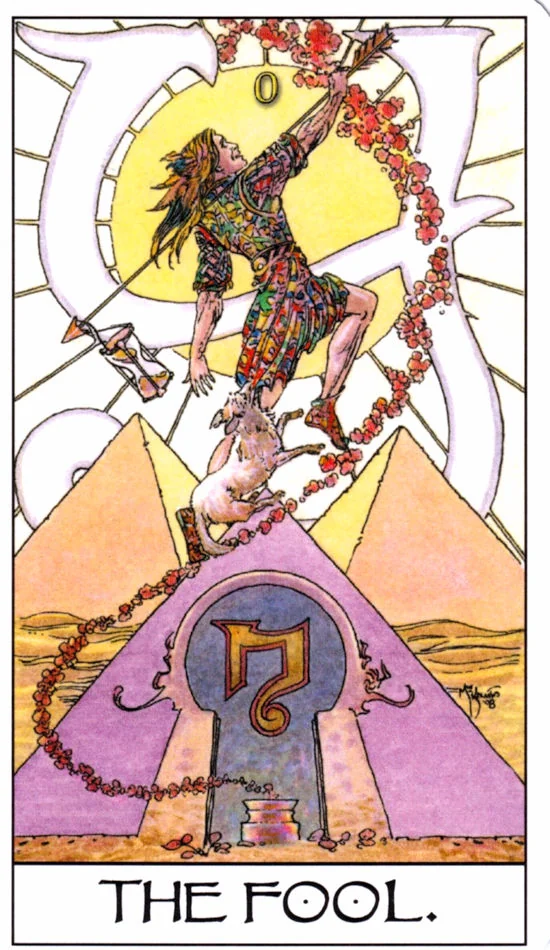

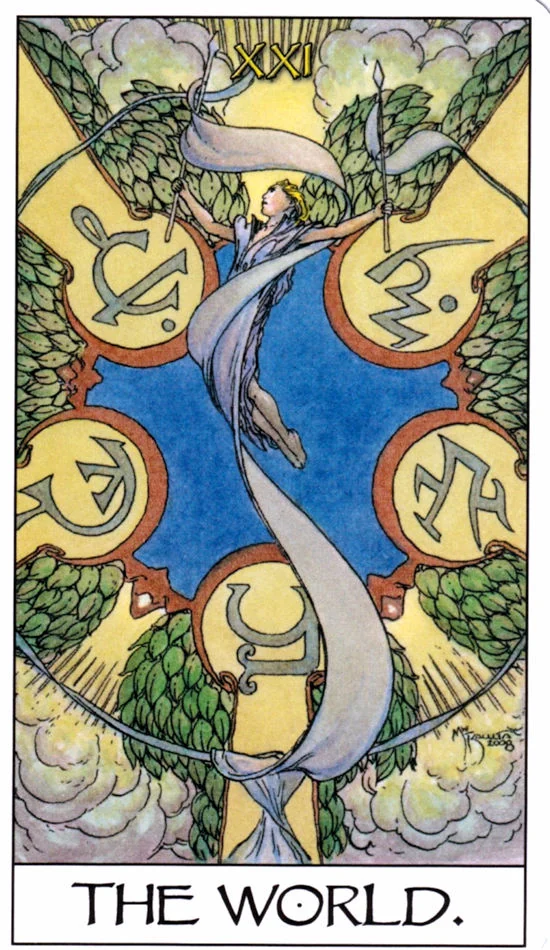
Read together, these four cards move from the first step into the unknown, through deliberate practice and hidden knowledge, toward integration. It is a compact spread for any new discipline: What calls me? What can I do? What must I learn inwardly? What would completion look like?
Is it beginner-friendly?
Structurally, yes. The deck keeps the standard suits and courts, uses illustrated scenes, and stays close enough to Rider-Waite-Smith meanings that a beginner can orient themselves. The full-colour booklet also gives the original set more support than a deck sold with a tiny folded leaflet.
Visually, it is a medium-difficulty first deck. The five-artist approach means the visual grammar changes, and the game-world atmosphere may invite more interpretation than a clean teaching deck. A new reader who loves the imagery will probably enjoy that challenge. A new reader who wants instant consistency may prefer to learn with a classic RWS deck beside it.
The High Priestess — identity behind the masks
A hooded blue figure sits within a star-filled, architectural space. Mask-like faces float around the body, each with a different expression, while the figure appears to work with another face or mask at the centre. Above, a pale panel carries a crescent-like glyph beneath the Roman numeral II.
The familiar High Priestess theme of hidden knowledge becomes a study of layered identity. The surrounding faces suggest roles, possible selves, or perceptions that can be worn and removed. The deep blue field and scattered stars keep the scene inward and nocturnal even though it is crowded with presences.
Upright, this card asks for quiet discernment: which voice is intuition, and which is a mask adopted for safety or approval? In shadow, it can show secrecy becoming avoidance, or so many competing interpretations that no inner answer is trusted.
Easy, medium, and hard questions to ask
Easy — one card
What quality should I practise today? Describe the figure’s posture, the strongest object, and the first practical action the image suggests.
Medium — three cards
What am I noticing, what am I misreading, and what can I test? This separates intuition from assumption without dismissing either.
Hard — five cards
Where does my power come from, who is affected by it, what am I refusing to see, what consequence is already forming, and what is the ethical next move? This suits the deck’s recurring concern with magic and responsibility.
Will, restraint, law, surrender


This group is a useful corrective to the fantasy of limitless power. Strength asks for self-command, the Chariot for directed motion, Justice for accountability, and the Hanged Man for the wisdom to stop forcing an outcome.
Art style and personality
The mixed authorship is the deck’s personality. Some cards are airy and luminous; others are tightly drawn, symbolic, or unsettling. The palette repeatedly returns to aqua, blue, white, violet, and flashes of gold, but line weight, anatomy, and atmosphere can change sharply from one card to the next.
That makes the deck feel like a supernatural anthology rather than a single illustrated poem. It is especially effective for campaign journaling, character work, shadow questions, creative planning, and readings about systems of influence. It can feel less gentle in a quick emotional check-in because even ordinary cards may imply a wider hidden world.
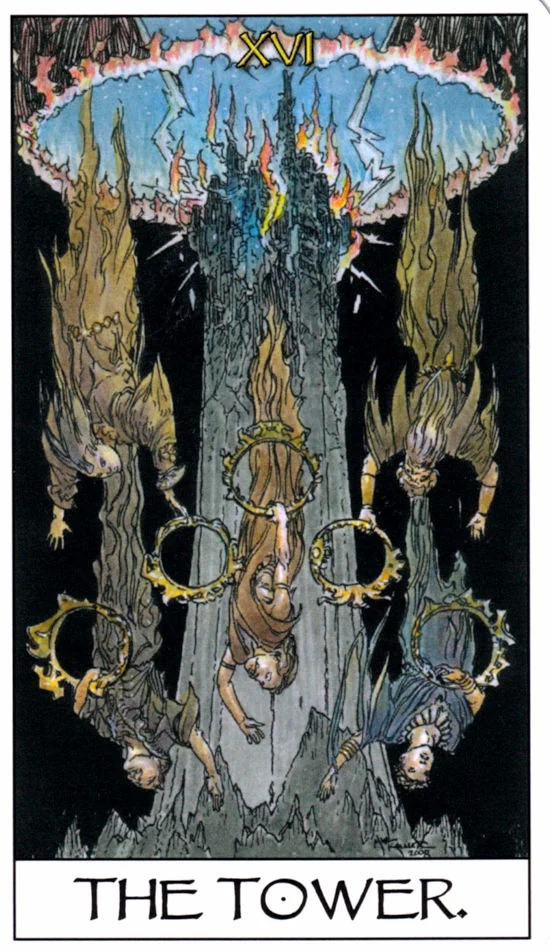
The Tower — catastrophe with no safe edge
A dark central tower burns and splits beneath a jagged blue opening rimmed with fire. Human figures tumble upside down along both sides and through toothed golden rings. The black void, vertical flames, and downward bodies create a sense of collapse that extends far beyond one damaged building.
This Tower does not romanticise disruption. The repeated falling figures make the cost communal, while the rings resemble mechanisms or thresholds that no longer protect anyone. The image asks who else is carried down when a structure fails.
In a useful reading, it names the truth that cannot be contained and the structure that must be rebuilt. Its shadow is disaster fixation: treating every shock as destiny instead of identifying the precise failure, protecting people, and choosing the next stabilising action.
Who will enjoy it—and who may not?
Best for: experienced beginners and intermediate readers; fans of Mage: The Awakening or urban fantasy; collectors of out-of-print and collaborative decks; game masters and players who use cards for character, plot, or world-building prompts; and readers who like symbolic density.
Think twice if: you require a single consistent artist, prefer minimalist pips, dislike darker fantasy imagery, or need a deck that can be replaced cheaply. Because this 2009 set can be scarce, listings vary. Check that a second-hand offer includes all 78 cards and the 72-page booklet, and ask for photographs of the exact item rather than relying on a stock cover.
Shadow, rupture, uncertainty, revelation

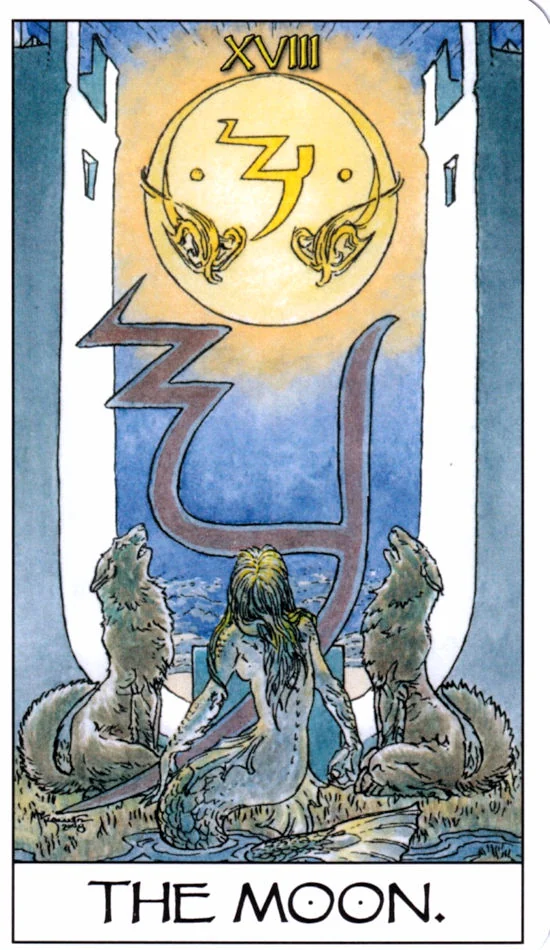

Use this sequence when a situation feels obscured: identify the attachment, locate the breaking point, name what remains uncertain, and define what genuine clarity would reveal. The Sun is not forced optimism here; it is the test of whether the truth can finally be seen.
What to know before buying
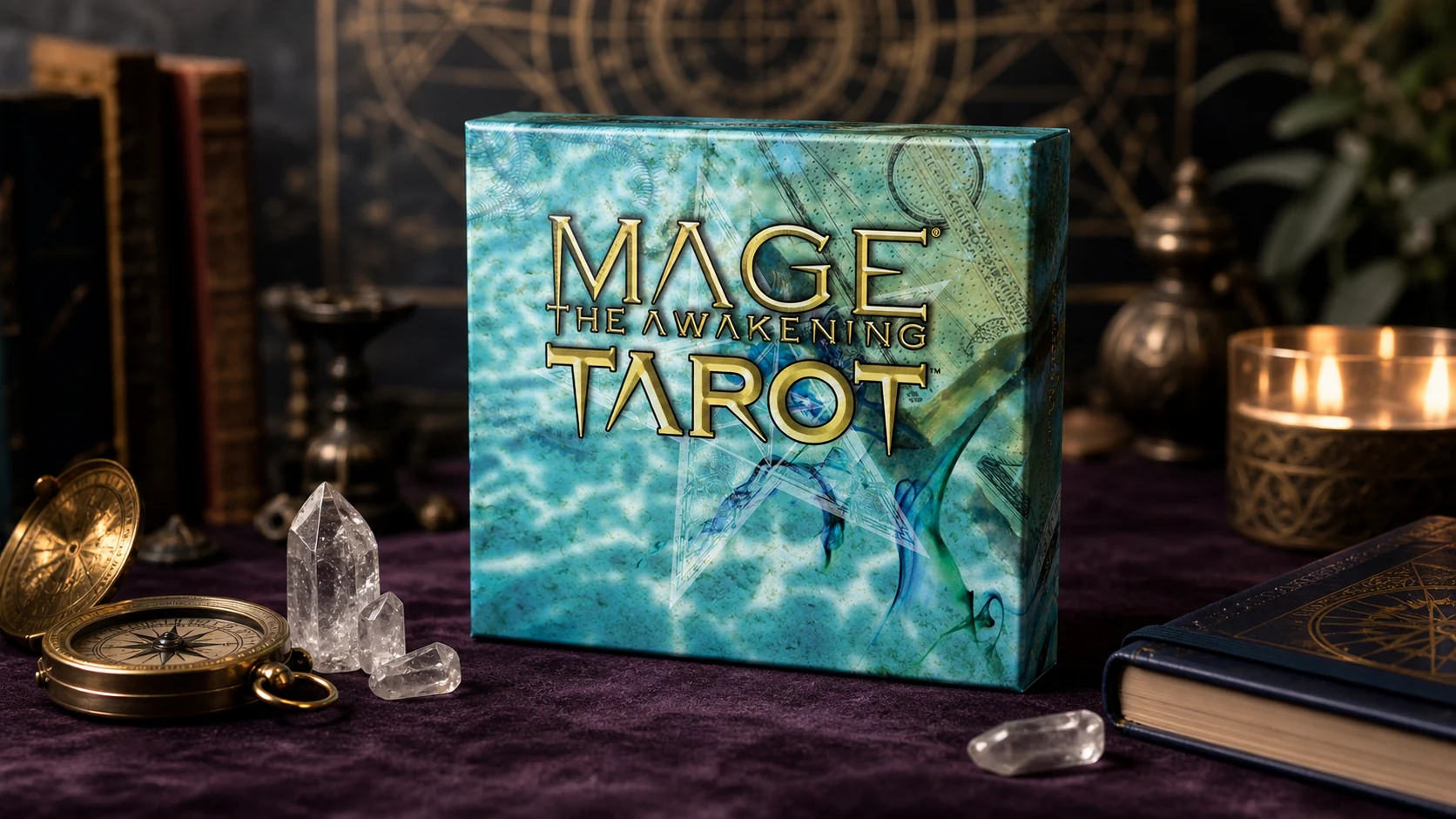
The original package is a complete 78-card tarot with a full-colour companion booklet, not the Mage: The Awakening Second Edition role-playing rulebook that appears prominently in some videos and search results. Verify the word Tarot on the aqua product cover and use ISBN/ASIN 1588463710 when comparing listings.
Condition matters. Confirm card count, booklet presence, box wear, card warping, and whether the blue-green non-reversible backs match across the whole set. A very low price may indicate cards only, an incomplete deck, or the separate RPG book.
Orica’s golden rule
Power is not the same as permission. Whenever the deck presents a spectacular act, ask who carries the consequence. That single question keeps its magical imagery connected to real choices and makes the reading more ethical, specific, and useful.
Final thoughts
Mage: The Awakening Tarot succeeds because it treats tarot as a living supernatural system rather than decorative vocabulary. The standard structure keeps it readable, while the five artists and role-playing context give familiar cards new pressure, scale, and narrative possibility.
It is not the smoothest or most uniform deck, but that is part of its appeal. For the right reader, every shift of style feels like crossing into another chamber of the same hidden world.
Mage: The Awakening Tarot FAQ
How many cards are in Mage: The Awakening Tarot?
The deck contains 78 cards: 22 Major Arcana and 56 Minor Arcana. The TarotFans gallery shows all 78 card fronts.
Is it a real tarot deck or only a role-playing accessory?
It is both. White Wolf made it for use with the Mage: The Awakening role-playing game, but it follows a complete Rider-Waite-Smith-based tarot structure and can be read as a stand-alone deck.
Who created the artwork?
The credited artists are Stephanie Pui-Mun Law, Michael Kaluta, Yasmine, Vince Locke, and Saana Lappalainen. Their different approaches give the deck its anthology-like visual character.
Does the original set include a guidebook?
Yes. The original 2009 White Wolf set includes a 72-page full-colour booklet. When buying used, confirm that the booklet and all 78 cards are present.
Is Mage: The Awakening Tarot good for beginners?
It is manageable for a motivated beginner because it uses familiar suits, courts, and illustrated RWS-based scenes. The changing artists and dense occult atmosphere make it slightly harder than a simple teaching deck.
Is Mage: The Awakening Tarot out of print?
The 2009 set is commonly encountered through remaining stock and second-hand listings rather than as an easy current release. Availability and condition vary, so verify the exact product, card count, booklet, and seller photographs.


