Alchemical Visions Tarot Cards
Browse an honest partial Gallery of individually verified Alchemical Visions Tarot card fronts in canonical tarot order. Choose a group or open any card for a larger carousel view.

A note from Aurica
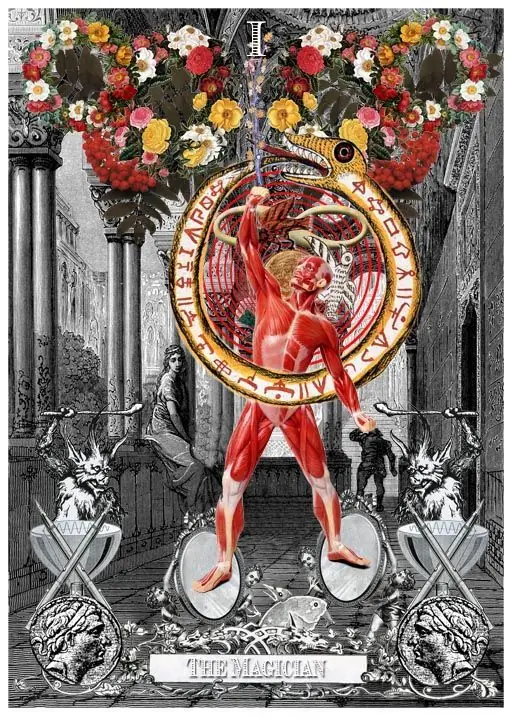
I feel this deck as a deep red doorway into an old workshop, where every card seems to hold smoke, metal, memory, and a half-heard question. The Magician catches me first: I follow the figure’s posture and the objects gathered around him, then ask what the reading is ready to shape rather than trying to solve every symbol at once.
When The Lovers, Death, and Temperance sit together, their collage-like scenes create a striking emotional rhythm—choice, release, and careful recombination. I notice where the colour grows intense and where the image becomes still, compare that feeling with each card’s familiar tarot work, and let the surrounding spread show whether change needs courage, patience, or both.
This is not the deck I would rush through. Its dense alchemical language rewards a small spread, a quiet journal, and one clear question at a time. If the imagery feels crowded, choose the detail your eye keeps returning to; that detail can become the thread that leads the whole reading home.
Whenever these visions feel mysterious, remember that transformation does not ask you to understand everything at once—only to meet the next honest symbol with curiosity and take one brave, hopeful step forward.
Alchemical Visions Tarot is a large-format Arthur Taussig deck for readers who like tarot to feel symbolic, mysterious, and psychologically deep. Its images mix alchemy, myth, Jungian shadow work, and old magical language, so the deck feels less like a quick keyword tool and more like a visual study room.
Quick answer: choose Alchemical Visions Tarot if you want a richly layered, occult-leaning deck for journaling, meditation, shadow work, and thoughtful readings. Skip it if you need tiny travel cards, simple beginner flashcard imagery, or a bright modern deck with very literal scenes.
What is Alchemical Visions Tarot?
Alchemical Visions Tarot is a 78-card tarot deck by Arthur Taussig, created around the idea of tarot as a symbolic path of transformation. The title points directly at alchemy: the slow inner process of turning raw material into insight, strength, and self-knowledge.
The deck is best approached slowly. Instead of asking only “what does this card mean?” it invites you to ask, “what is changing here?” That makes it especially useful for reflective questions, long journal spreads, creative blocks, spiritual study, and readings where the emotional atmosphere matters as much as the final answer.
Deck details at a glance
- Deck: Alchemical Visions Tarot
- Creator: Arthur Taussig
- Card count: 78 tarot cards
- Style: alchemical, mythic, occult, symbolic, and dreamlike
- Best for: shadow work, journaling, meditation, spiritual study, and readers who enjoy layered symbolism
- Not ideal for: tiny reading spaces, very quick shuffling, or readers who prefer ultra-literal scenes
Artwork and first impression
The first impression is bold and ceremonial. Alchemical Visions Tarot does not try to be soft background decoration. The cards feel like images you enter: symbolic figures, ritual objects, unusual compositions, and a sense that every detail might matter.
Because the images are full of references, the deck rewards a second look. A beginner can still pull one card and name the mood, but intermediate readers will probably get more from it because they can connect the visuals to classic tarot structure, mythic pattern, and personal intuition.
Deck-specific card study
The Magician reads as the start of the Great Work
In many decks, The Magician is about confidence, tools, and focused will. In Alchemical Visions Tarot, I would also read it as the first conscious step into transformation. The tools are not only practical objects; they feel like ingredients in an inner experiment.
In a real reading, this card asks: what are you trying to change, and are you ready to participate in that change instead of only wishing for it?
How it reads in practice
In practice, Alchemical Visions Tarot works best when you combine traditional meanings with direct observation. Start with the card title, then notice what the image changes. Does it make the message heavier, stranger, more sacred, more psychological, or more urgent?
This deck is not trying to flatten tarot into simple yes-or-no answers. It is stronger for “what is really happening under the surface?” questions: emotional patterns, identity shifts, recurring dreams, creative thresholds, and spiritual lessons that need time to unfold.
Card moment: transformation and pressure


Use these cards when a situation feels like it is changing shape: Death names the ending, Temperance shows the careful mixing, The Tower shows pressure that cannot stay hidden, and The Sun brings the lesson back into clear daylight.
Is Alchemical Visions Tarot beginner-friendly?
It can work for curious beginners, but it is not the easiest first tarot deck. The art has many symbols and the card size is more dramatic than pocket-friendly. If you are brand new, keep a simple tarot keyword list nearby and read one card at a time.
If the images fascinate you, that curiosity is a good sign. Try a one-card daily pull for a week. Write three notes: what you noticed first, the traditional meaning, and one practical action. That routine keeps the reading grounded while the deck teaches you its visual language.
Deck-specific card study
Temperance feels like careful inner mixing
Temperance is a perfect card for this deck because alchemy is about mixture, patience, proportion, and timing. Here, I would read it as the art of not rushing the process. Something is being blended, tested, and refined.
For relationships, Temperance asks for measured communication. For creative work, it asks you to let different influences combine before judging the result too early.
Love, career, and creative readings
For love readings, Alchemical Visions Tarot is best for emotional pattern questions rather than simple “will they text?” questions. Ask what needs honesty, what is being projected, where trust is developing, and which boundary would make the situation healthier.
For career and money readings, the deck is useful when you are dealing with pressure, ambition, training, patience, or a big transition. For creative work, it can feel like a mirror for the unconscious: what wants to be made, what fear is blocking it, and what small ritual or practical step would bring it back into motion.
Card moment: choices and creative work


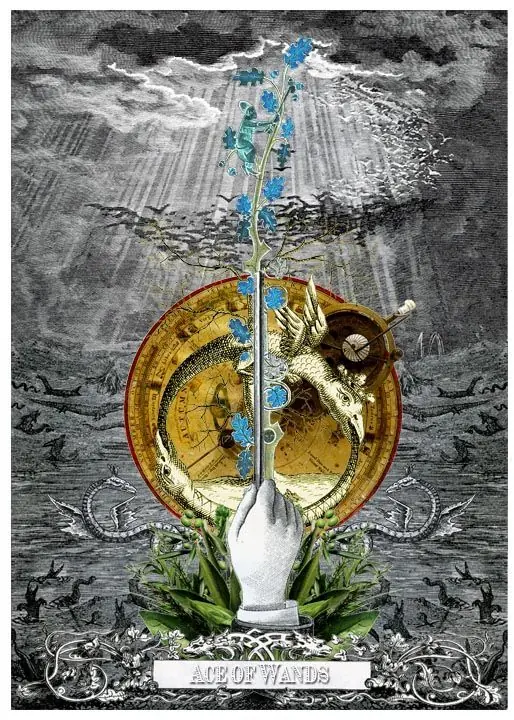
For a creative block, read these as a four-step mirror: The Lovers names the choice, The Hermit asks for honest solitude, Ace of Wands restarts the spark, and The Sun shows what becomes visible when the work is ready.
Pros and Cons
| Pros | Cons |
|---|---|
| Rich alchemical and mythic symbolism for deep readings. | The larger cards may be harder to shuffle for small hands. |
| Large artwork format supports study, meditation, and journaling. | The symbolism can feel dense if you want quick, literal answers. |
| Strong mood for shadow work, spiritual questions, and creative reflection. | Not the most portable everyday deck. |
| Good fit for readers who enjoy discovering new details over time. |
Final thoughts on Alchemical Visions Tarot
Alchemical Visions Tarot is worth exploring if you want a deck that treats tarot as transformation, not just prediction. It is atmospheric, symbolic, and serious without losing the wonder that makes a deck memorable.
If several cards make you pause and ask what they mean, that is the spark this deck is built for. It may not be the simplest first deck, but for the right reader it can become a powerful companion for study, journaling, and deep personal readings.

FAQ
Is Alchemical Visions Tarot good for beginners?
It can be, but it is better for patient beginners than for people who want the simplest possible first deck. Use a keyword guide and start with one-card pulls.
What kind of readings is Alchemical Visions Tarot best for?
It is best for shadow work, journaling, meditation, creative blocks, spiritual study, and questions about change or inner patterns.
Is Alchemical Visions Tarot a large deck?
Yes. The larger card format is part of the deck’s visual impact, but it may feel less convenient for fast shuffling or travel.
Does Alchemical Visions Tarot follow traditional tarot meanings?
It uses tarot structure, but the alchemical artwork gives each card a specific symbolic flavor. Read the card title, then let the image add nuance.
Who should skip Alchemical Visions Tarot?
Skip it if you want a tiny deck, very literal beginner scenes, or a bright modern style with little occult atmosphere.