
Japaridze Tarot Cards — All Tarot Cards Revealed
Browse the complete verified Japaridze Tarot card gallery in the artist’s official sequence. Tap any card to open a larger carousel view.
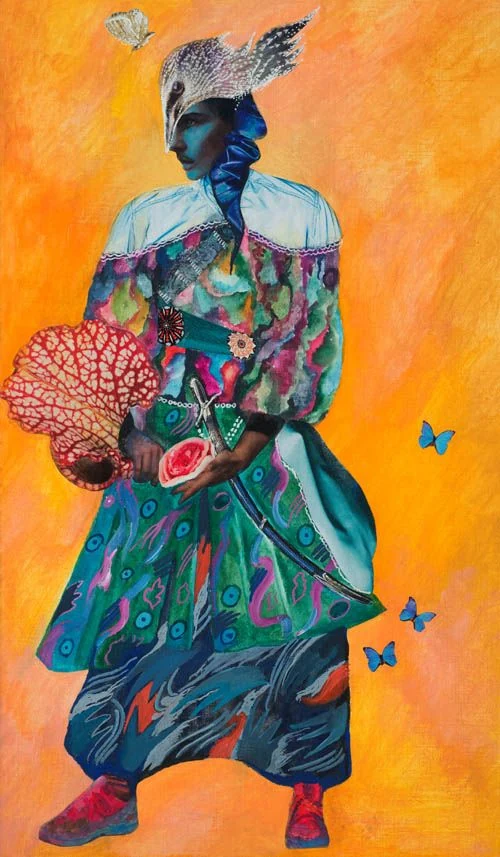
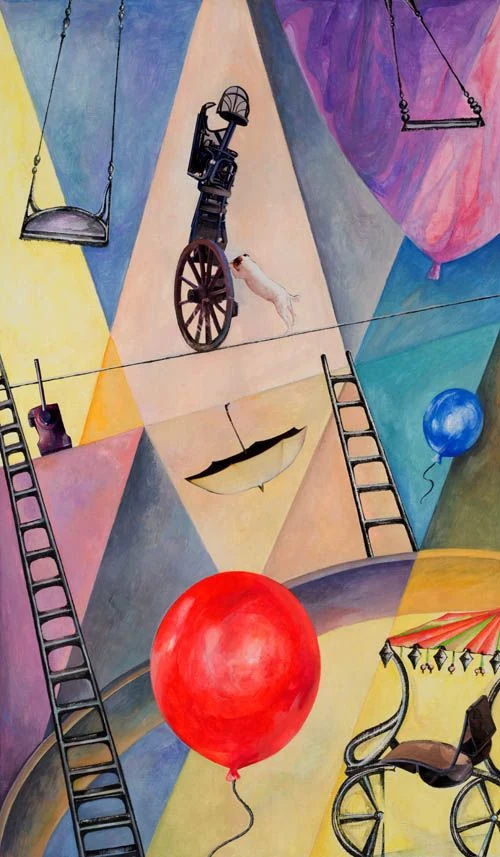
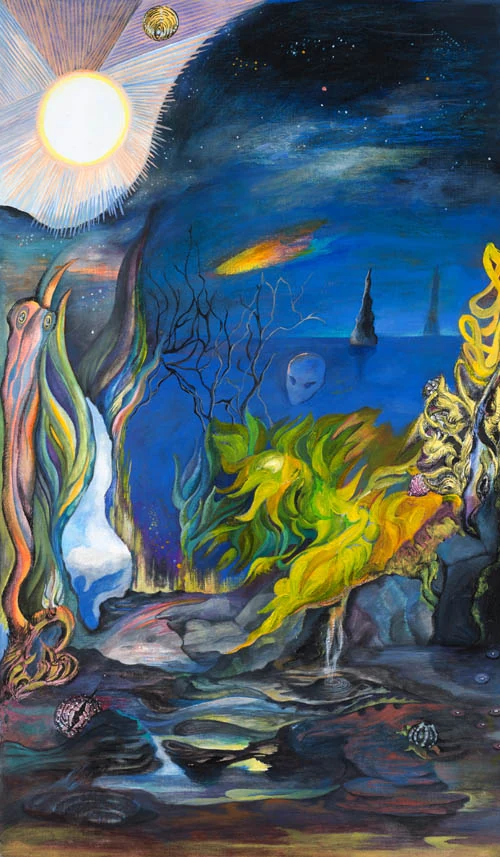

A note from Aurica
Japaridze Tarot feels to me like stepping into an artist’s dream just as the paint is beginning to move. Nino Japaridze’s colours can be airy and tender one moment, then strange and electric the next. I love that the deck does not smooth away uncertainty; it lets beauty, unease, humour, and longing share the same table.
The Magician catches my eye first, with that deep blue sky, sharp yellow sparks, and pale figure poised inside a world that seems half-made. Love shifts the mood into bright fragments and embracing forms, while The Star opens a quieter shoreline beneath drifting moons. The Moon feels more solitary still, a luminous sphere suspended above dark water as if an emotion has finally become visible.
In a reading, I begin with the card’s familiar tarot role, then notice which colour, gesture, or impossible detail refuses to be ignored. I also listen to the elemental language of Fire, Tides, Winds, and Gardens, because it gives the surreal pictures a steady backbone. When nearby cards echo the same motion or colour, that repetition often shows me where the question is gathering its real emotional weight.
I would reach for this deck when a situation feels too layered for a tidy answer, especially for creative work, relationships, identity, and moments of inner change. It rewards patience: name what you can see, honour what you feel, and let the traditional meaning keep your feet on the ground. Japaridze Tarot turns the strange into a doorway, and every careful reading can help you step through with more courage and wonder.
Japaridze Tarot review: surrealism with an elemental backbone
Orica’s quick take: Japaridze Tarot is not a decorative repainting of a familiar system. Nino Japaridze rebuilds the tarot world through collage, dream logic, theatrical figures, animals, landscapes, and objects that seem to have wandered in from different eras. The images are strange, but they are not random. Color, number, element, posture, and visual tension give each scene a deliberate reading language.
This is a rewarding deck for readers who enjoy metaphor and can tolerate ambiguity. It is less suited to someone who wants every card to deliver an instant conventional keyword. The strongest readings happen when you identify the traditional structure, notice what Japaridze has renamed or displaced, and let that difference become part of the interpretation.
Deck details at a glance
- Artist: Nino Japaridze, a Franco-Georgian contemporary artist based in Paris.
- Publisher: U.S. Games Systems.
- Structure: a complete tarot with renamed Major Arcana, elemental suits, and distinctive court titles.
- Minor Arcana: Winds, Fire, Tides, and Gardens.
- Court sequence: Jester, Stranger, Queen, and King.
- Guidebook: a substantial full-color companion with descriptions and divinatory meanings.
- Best for: visual reading, shadow work, creative inquiry, journaling, and psychologically layered spreads.
How the project became a complete tarot
The project began in 2011 when gallerist Steve Lucas proposed that Japaridze create a group of paintings inspired by the Major Arcana. As those works developed, they caught the attention of tarot historian and U.S. Games founder Stuart R. Kaplan. He encouraged the artist to extend the series into a complete deck, turning the initial group of archetypal paintings into a two-year project spanning the full tarot structure.
That origin matters because the cards feel like paintings first and deck components second. The scenes have room for texture, collage, and private symbolism. Yet the later Minor Arcana do not feel like an afterthought: their elemental and numerical patterns create a clear framework beneath the surreal surfaces.

Deck-specific card study
The Drowned: suspension becomes immersion
Japaridze renames the Hanged Man as The Drowned. The shift is more than cosmetic: suspension in air becomes surrender to water, and the archetype acquires the emotional weight of submersion, breath, and a changed relationship to control.
In a reading, this card can still indicate pause, reversal, or a necessary change of perspective. Its water imagery adds questions about overwhelm and emotional surrender: are you choosing to stop, or have circumstances carried you beyond the point where the old strategy can work?
Renamed archetypes and the deck’s own vocabulary
Several names announce that this deck wants to be read on its own terms. The Emperor becomes War, emphasizing force, territory, command, and the cost of imposed order. The Lovers becomes Love, widening the card beyond a single choice or couple. The Wheel of Fortune is shortened to Fortune, while the Hanged Man becomes The Drowned.
These changes do not erase traditional meanings. They redirect attention. When a familiar archetype receives a new title, compare the two: what does the conventional name emphasize, what does Japaridze’s name expose, and which version better describes the question in front of you?
Card moment: a transformed Major Arcana
Power, attachment, surrender, and change
These renamed archetypes make the deck’s method visible. Authority becomes conflict, relationship becomes a larger field of love, suspension enters the depths, and the turning wheel becomes the lived experience of fortune.


The four elemental suits
The Minor Arcana is organized as Winds, Fire, Tides, and Gardens. The correspondences are intuitive without being flat substitutions. Winds can carry thought, language, distance, and conflict; Fire handles impulse, courage, heat, and creative force; Tides move through emotion, intimacy, memory, and changing states; Gardens concern material life, cultivation, resources, and what grows through sustained care.
The renamed courts are equally useful. A Jester is experimental, exposed, and capable of revealing truth through play. A Stranger arrives with movement and unfamiliarity. Queens and Kings hold a more established relationship with the suit, but the paintings often resist tidy gendered assumptions.
Card moment: four elemental beginnings
How each suit opens a path
The four Aces offer a clean way into the system: a thought or cut in the air, an ignition, an emotional current, and the first cultivated possibility. Compare their colors and movement before applying a standard elemental keyword.


How Japaridze Tarot reads in practice
Begin with the visible contradiction. Many cards combine beauty with unease, play with danger, or stillness with implied movement. Name the two strongest forces in the image and ask how they coexist. That tension is often more useful than trying to identify every object immediately.
Then return to structure. Card number, suit, court position, and Major Arcana sequence keep the reading from drifting into free association. A practical method is: describe the scene, identify its emotional weather, connect it to the card’s system, and finish with one sentence that answers the actual question.

Deck-specific card study
Justice: balance under a changing sky
Japaridze’s Justice does not present a sterile courtroom. Its surreal composition and sharply staged objects make balance feel contingent, lived, and exposed to weather. The card asks how fairness is constructed rather than assuming it arrives automatically.
In a reading, look for the standard themes of truth, accountability, and proportion, then ask what the image suggests about protection and consequence. Justice here can be a decision, but it can also be the atmosphere created by many earlier decisions.
Beginner friendliness
A committed beginner can learn with this deck, especially because the set includes a detailed illustrated guidebook. The paintings provide abundant visual material, and the deck’s numerical and elemental organization rewards systematic study. One suit at a time is easier than trying to memorize everything at once.
The challenge is that the imagery can outrun certainty. Avoid turning every strange object into a fixed symbol. Keep a journal with three columns: what is visibly present, what the guidebook emphasizes, and what proved relevant after the reading. Over time, repeated patterns become a personal but accountable vocabulary.
Reading prompts from easy to challenging
Easy: “What atmosphere am I carrying into today?” Pull one card and describe its weather, color, and movement before naming a meaning.
Medium: “What is growing, and what is scattering my attention?” Use one Gardens card and one Winds card to compare cultivation with mental movement.
Challenging: “What part of this transition requires surrender rather than control?” Use a three-card line for the force you are applying, the depth you are avoiding, and the form that can emerge next.
Card moment: the mind under pressure
Winds move from clarity to consequence
This sequence moves from a clean mental opening through conflict and anxiety toward a mature relationship with discernment. It is useful for seeing where thought becomes strategy, and where strategy begins to wound.


Who will connect with this deck?
Japaridze Tarot suits readers who love surrealism, collage, fine-art decks, and images that continue unfolding after the first glance. Artists and writers may find it especially productive because the cards behave like narrative prompts without collapsing into a single obvious story.
You may prefer another deck if you want conventional Rider-Waite-Smith scenes, compact cards, minimalist symbolism, or quick keyword recognition. The physical set is generously sized, and the artwork asks for time. Those qualities are central to the experience rather than minor design choices.

Deck-specific card study
The World: completion remains alive and porous
The World gathers the deck’s expansive imagination into an image of integration. Rather than presenting completion as a sealed trophy, the scene suggests a living environment in which identity, creature, landscape, and movement continue to interact.
In a reading, this supports fulfillment, arrival, and a cycle understood as a whole. It also asks what must remain open after success. Integration is not the end of motion; it is the capacity to carry what has been learned into the next landscape.
What to know before buying
The current U.S. Games edition is a deluxe set with a revised full-color guidebook. Publisher specifications list cards at roughly three by five-and-a-quarter inches and a box around four-and-a-half by six-and-a-half inches, so readers with smaller hands may prefer to shuffle in sections or use an overhand method.
The direct product link uses the matching ISBN/ASIN for Nino Japaridze’s deck rather than an Amazon search page. As always, availability and edition packaging can change, so check the listing photographs and publisher information before ordering.
Orica’s golden rule for Japaridze Tarot
Let the contradiction speak before you resolve it. If a card feels beautiful and threatening, playful and sad, or still and unstable, do not flatten that tension into one keyword. The space between those impressions is often where this deck gives its most precise answer.
Final Thoughts
Japaridze Tarot succeeds because it has a genuine visual philosophy. Its renamed archetypes, elemental suits, unconventional courts, and layered paintings work together rather than competing for novelty. It respects tarot structure while allowing the artist’s own world to transform it.
If these images make you pause, compare, and invent better questions, the gallery is the best test. Move slowly through the Major Arcana and each suit; notice whether the deck’s strange combinations become clearer rather than merely stranger. That gradual recognition is its natural reading rhythm.

Japaridze Tarot FAQ
Is Japaridze Tarot good for beginners?
It can suit a visually curious beginner, especially one willing to use the substantial guidebook. The structure is recognizably tarot, but renamed cards and surreal scenes mean that observation should come before memorized keywords.
Why are some Japaridze Tarot cards renamed?
Nino Japaridze reimagines several familiar archetypes through her own symbolic language. The Emperor becomes War, the Lovers becomes Love, the Wheel becomes Fortune, and the Hanged Man becomes The Drowned.
What are the four suits called?
The Minor Arcana uses Winds, Fire, Tides, and Gardens. They broadly echo Swords, Wands, Cups, and Pentacles while giving the deck a more elemental and poetic vocabulary.
What comes with the Japaridze Tarot set?
The current U.S. Games set includes the complete deck and a revised full-color guidebook with artwork, card descriptions, and divinatory meanings. Publisher specifications list the cards at approximately three by five-and-a-quarter inches.
What readings suit this deck best?
It is especially strong for shadow work, creative inquiry, identity transitions, emotional patterns, and questions that benefit from metaphor rather than a blunt yes-or-no answer.
Does the gallery show the complete deck?
Yes. Every card identity was reconciled to the artist’s official sequence, with the supplied Pinterest section used wherever it exposed a suitable card source and the artist’s official gallery used to complete or improve unavailable images.


