Explore the FateShifters Astrology Tarot Cards
Browse the recovered artwork archive in tarot, zodiac and planetary groups. These images carry dark side panels and title strips; retail photographs show white-bordered fronts and alternate artwork too. This is not an exact preview of every physical edition. Select a card for a larger view.
Showing all recovered card fronts.
Aurica’s Quick Take
What draws me into FateShifters is the warmth inside its spectacle. A young traveller stands in golden light; a woman leans gently over a lion; cups rise between people who have turned toward one another. The fantasy costumes may catch my eye first, but those small gestures give me a way into a reading.
I would begin with the familiar tarot sequence and let the astrology cards wait beside it. One extra sign or planet can become a lovely change of light across a spread. Too many at once can drown out the quieter story already taking shape. This is a deck I would approach with curiosity, a little patience, and room for more than one artistic voice. Let its bright worlds remind you that a new perspective can begin with one gentle question.
A gathering of fantasy worlds
FateShifters Astrology Tarot brings a Waite–Smith foundation into richly coloured fantasy illustration. Cloaks billow, skies glow, and familiar gestures remain visible beneath the elaborate clothes. The recovered images carry a dark information panel at the left and a coloured title strip. Retail photographs show white-bordered printed fronts and alternate artwork as well, so I would not treat this archive as an exact preview of every physical edition.
The archived project’s artist credits name Daniel Kamarudin, Raymond Chen, Tommy Suhartono, Carlos Villas, Leesha Hannigan and Mario Wibisono. I would not reduce that collaboration to one illustrator, or guess which hand painted a particular card. The pleasure is in noticing how different visual voices can meet around the same tarot story.

A bright beginning, with an edge beneath it
The Fool wears a short blue-green outfit and carries a red bundle high over one shoulder. Golden light opens behind the figure, while a small pale dog appears near the rocky ledge. The lifted face and easy posture make the scene feel airy, almost as if the next step has already been imagined.
That contrast is the heart of the card: possibility above, uncertain footing below. In an opening position, I would read it as permission to begin without demanding a complete map. Its shadow appears when excitement becomes a reason not to look down. Ask, “What small first step keeps my wonder alive while giving me firmer ground?”
Let the tarot speak before adding the stars
The project’s archived tarot explanation connects its symbolic approach to Waite–Smith. That gives me a familiar path through the images, even when a dramatic costume or luminous background makes a card feel like a scene from another world. I start with the action: who reaches, who waits, who turns away?
For a first reading, draw three tarot cards for the situation, its tension and a useful response. Read them before adding one astrology card as an optional lens. The extra card can colour the conversation without replacing it. Write down what changed in your interpretation; if nothing became clearer, you are allowed to leave that extra layer out.
From the first spark to a shared welcome
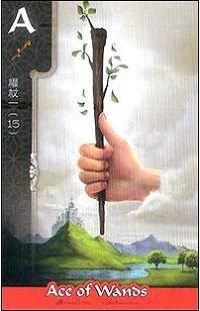
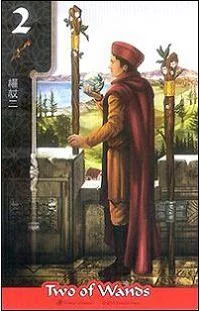
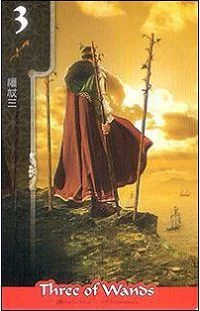
A hand offers a sprouting wand, a watcher considers the view, another figure faces the distance, and a flower-hung gateway welcomes people together. Read these as four positions for a creative project: the spark, the choice, the reach and the place where others can join you.

A gentle way in for beginners
If the fantasy scenes make you want to look closely, that interest is worth following. Begin with a small group of cards rather than trying to memorise every symbol and every extra at once. The familiar suit titles and many recognisable Waite–Smith scenes offer footholds; the additional courts and astrology material still deserve their own unhurried study.
Try three levels of practice. Easy: name the strongest feeling in one card, then describe the visible gesture that gave you that feeling. Medium: place two tarot cards together and ask what moves between them. Deeper: add one zodiac or planet card, then explain precisely what it changes. A beautiful image becomes useful when you can connect it to a question in plain language.
Give the glow somewhere to go
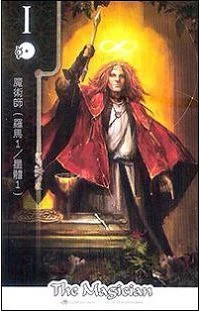
A red-haired figure in a flowing red cloak raises one arm against a brilliant golden background. A table stands in front, while pale clothing and dark trousers keep the body distinct from the surrounding blaze. The lifted arm is dramatic, but the table gives that drama a place to become an action.
For me, this is where inspiration asks for a pair of working hands. Upright, the card can speak of using what is available with intention instead of waiting for a perfect moment. Its tension is all performance and no practice: a magnificent promise that never reaches the table. In a reading about starting something, ask what you can actually make, say or arrange today.
What the different artistic voices add
Some cards feel like an intimate encounter; others expand into a grand, almost theatrical landscape. That change of scale can be lovely in a spread. A small gesture may answer an enormous sky, reminding me that the next useful move does not need to match the size of the worry.
The same variety may be less comfortable if you want one painter’s style throughout. Look through several suits before deciding. Notice whether the faces and gestures remain readable to you, not simply whether the colours are beautiful. A deck can be visually dazzling and still need time before its quieter details become familiar.
Make room for feeling without losing yourself
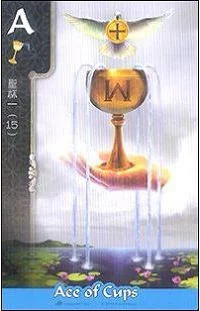
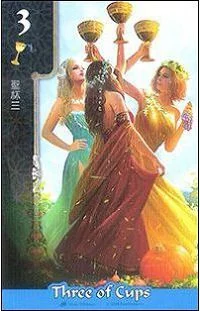
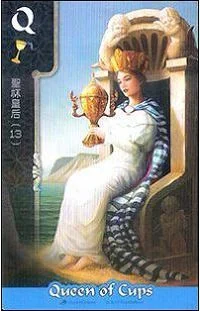
The offered cup becomes an exchange, then a shared celebration, then a more private act of listening. I would use these four cards as prompts for what is opening, what needs reciprocity, where support lives and what deserves quiet attention. Their warmth is not a promise that every relationship is easy; it is an invitation to notice how care is given and received.

Who I would invite into this deck
I would show FateShifters to a reader who loves detailed fantasy art and wants the option of an astrological layer without setting tarot aside. It may also appeal to someone who enjoys comparing alternate illustrations and noticing how a familiar archetype changes under another artist’s brush.
I would be more cautious if you want a compact, visually uniform learning deck or a thoroughly documented astrology course in the box. The retailer describes an instruction booklet, not a verified comprehensive teaching manual. Let the actual edition and the information supplied with it shape your expectations.
Pros & Cons
| Pros | Cons |
|---|---|
| Recognisable tarot gestures inside vivid fantasy scenes. | Several artistic voices can feel less visually consistent. |
| Zodiac and planet cards offer an optional extra lens. | Extra cards and alternate fronts need edition-specific sorting. |
| The familiar tarot foundation gives beginners a starting point. | The supplied booklet should not be assumed to teach a complete astrology system. |
| Different interpretations of an archetype reward close looking. | Listings may describe different extras; check the physical contents. |
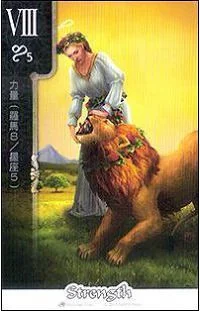
Tenderness that does not need to shout
A woman in pale clothing bends toward a lion with a full reddish mane. Her hands are close to its head, while the lion’s body curves through the grass beneath a warm yellow sky. There is weight and power in the animal, yet the woman’s posture feels attentive rather than victorious.
I read the meeting between them as steadiness in the presence of strong feeling. Strength is not the absence of anger, fear or desire; it is the ability to stay with that energy without letting it do all the speaking. The shadow is mistaking gentleness for endless tolerance. In a difficult conversation, ask what a calm, clear boundary would look like if you did not have to prove your power first.
Before you choose a physical copy
The archived project homepage describes a 100-card design. A retailer specification breaks that core down into 78 tarot cards, 12 zodiac signs and 10 planet cards, and separately mentions promotional material and nine replacement paintings. Those extras are not additional standard tarot positions.
The recovered archive also includes alternate court and other additional fronts. Product photographs show white-bordered printed cards and some different illustrations alongside the matching branded box. Keep those presentation and artwork differences in mind: this partial image archive is not proof of the exact contents of every retail box. Ask the seller for clear photographs and a complete inventory of the edition being offered. The historical project documented an Asia Edition in Taiwan; an international edition was discussed as a plan, which is not enough evidence to promise a particular later release.
Four ways to move a question forward
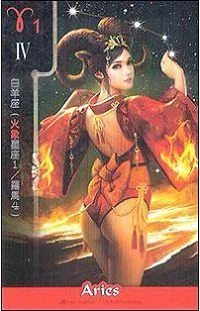
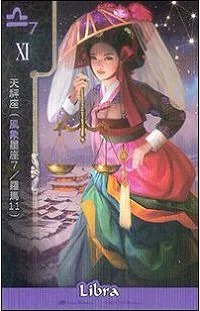
These zodiac figures offer a simple reflection exercise rather than a rule from the booklet: where might Aries prompt initiative, Cancer ask for care, Libra invite balance and Capricorn call for commitment? Let each answer remain connected to your question. You do not have to turn every sign into a prediction or a label for another person.


My golden rule: let the extra card earn its place
Keep the first story clear. If a sign, planet or alternate painting deepens what you can already see, welcome it. If it makes the reading crowded, set it aside and return to the people, gestures and choices on the tarot cards. More images do not always mean more understanding.
FateShifters is most inviting when its grandeur leads back to something human: a beginning, a conversation, a gentle hand beside a powerful creature. I would let those moments guide the reading. You can enjoy the stars overhead and still take the next step with your feet on the ground.
FateShifters Astrology Tarot FAQ
How many cards are in FateShifters Astrology Tarot?
The project describes a 100-card core: 78 tarot cards, 12 zodiac cards and 10 planet cards. Retailer descriptions and observed archives also include alternate or promotional fronts. Check the contents of the particular copy rather than assuming that every extra appears in every box.
Who created the artwork?
The archived official artist page credits Daniel Kamarudin, Raymond Chen, Tommy Suhartono, Carlos Villas, Leesha Hannigan and Mario Wibisono. This is a multi-artist project; a reliable card-by-card artist key was not available in the sources checked.
Is the Gallery the complete physical deck?
No. It is a recovered partial archive, including additional and alternate fronts. Missing images have not been replaced with guessed cards, and an online archive should not be treated as a retail packing list.
Can I read it without knowing astrology?
Yes. Start with the standard tarot cards, then bring in a sign or planet when you want another perspective. There is no need to learn the extra material before making a first small spread.
Is the deck based on Rider–Waite–Smith?
Its archived tarot explanation explicitly describes a Waite–Smith symbolic foundation. Fantasy settings and additional cards give it its own character, so look at the actual image rather than expecting every detail to match a traditional deck.
What should I check before buying?
Compare the actual box, edition, card inventory and booklet. Ask which alternate and promotional fronts are included. Do not assume a listing contains the same extras as an online gallery or another reader’s copy.