The Jungian Tarot Card Gallery
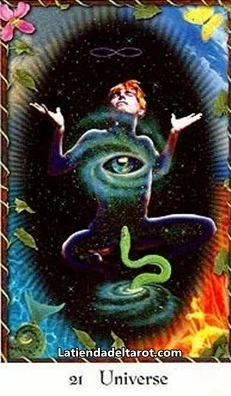
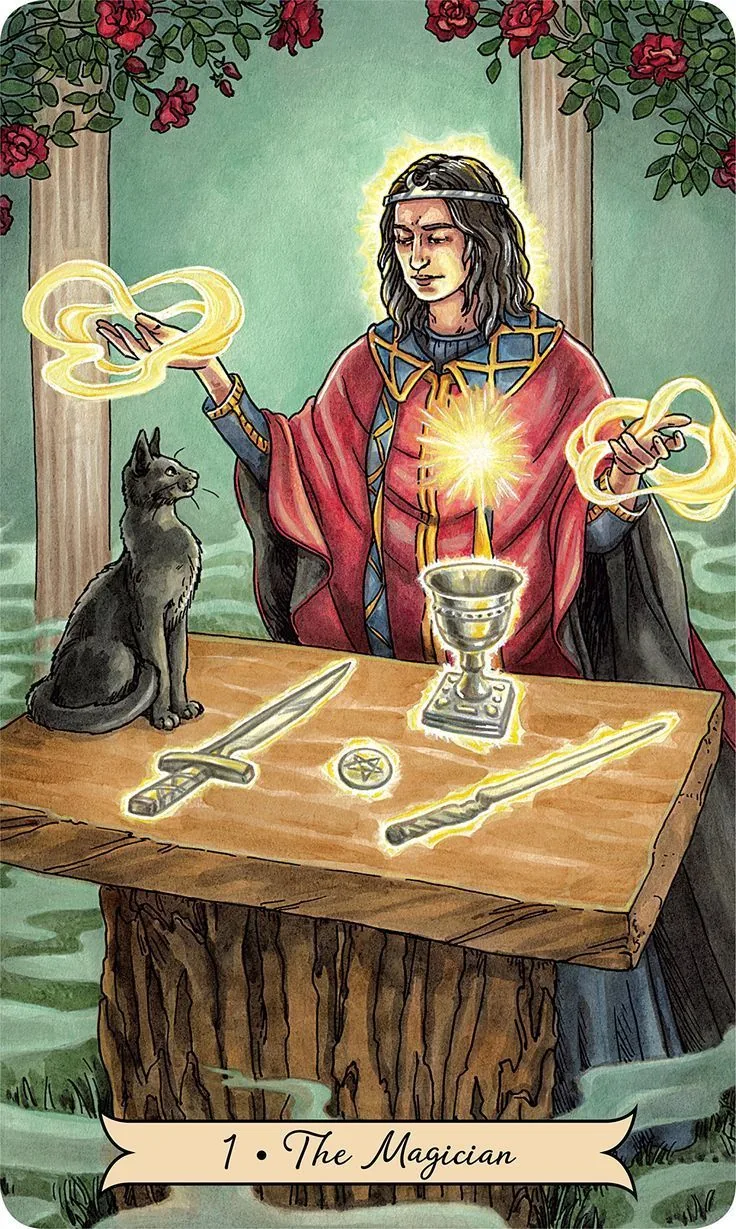
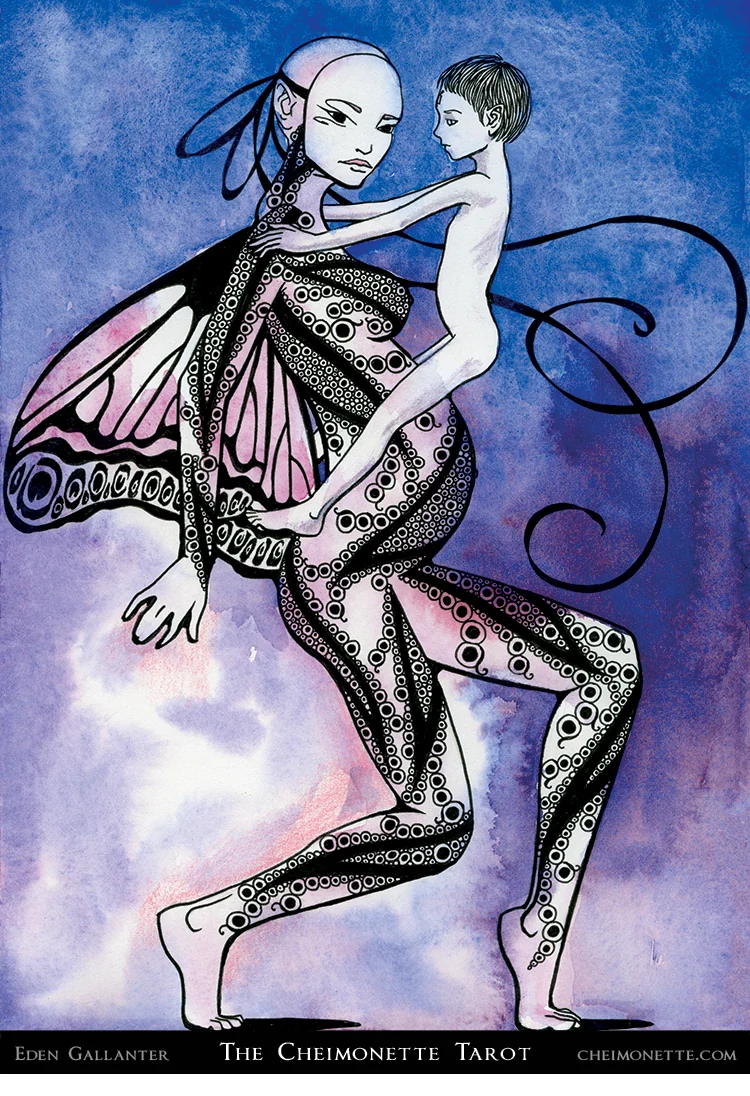
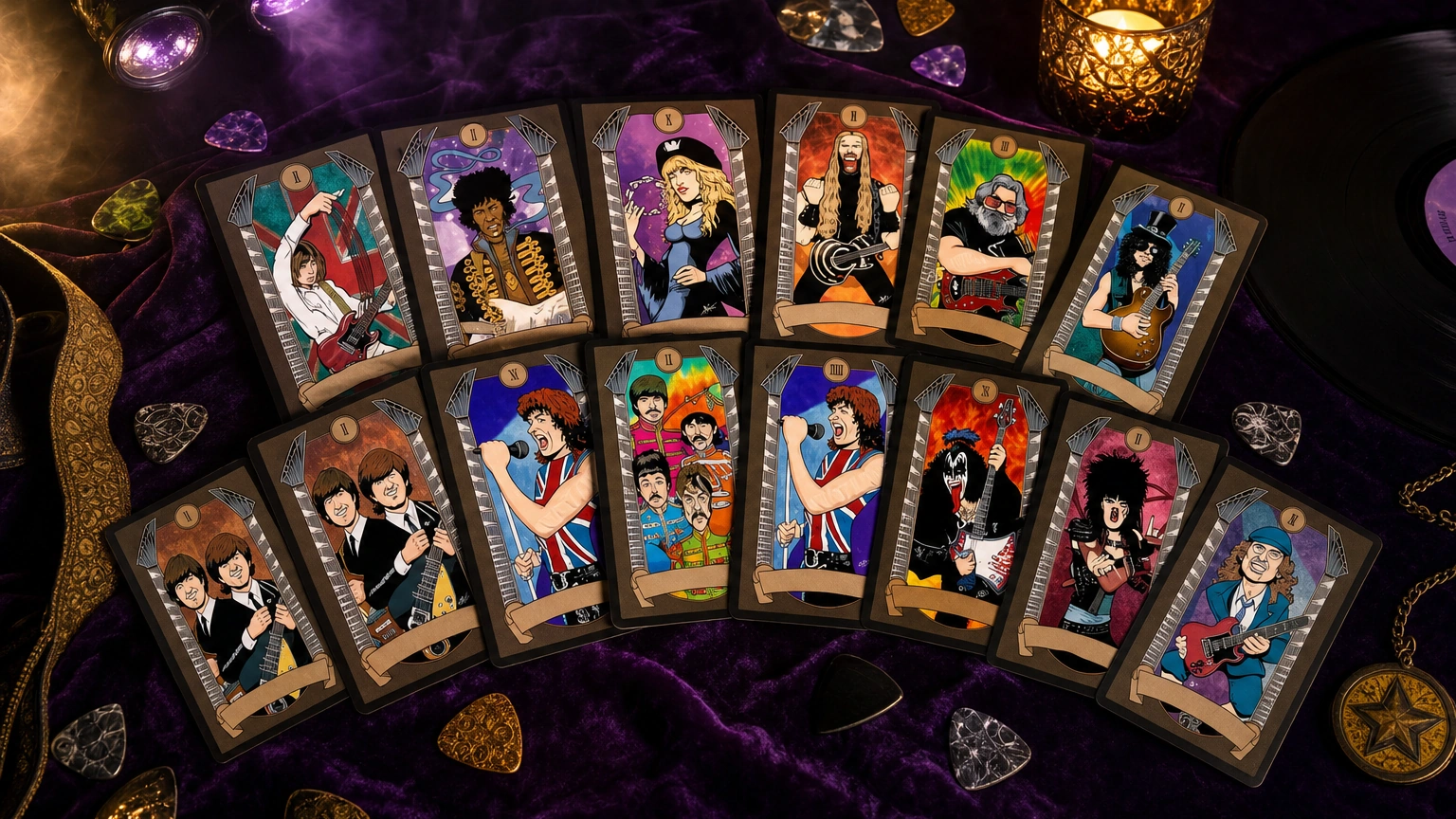
Browse this partial recovered archive without a completeness claim. Verified titles are shown where evidence supports them; unresolved cards remain neutrally labelled. Choose a group or open any card in the larger Lightbox.
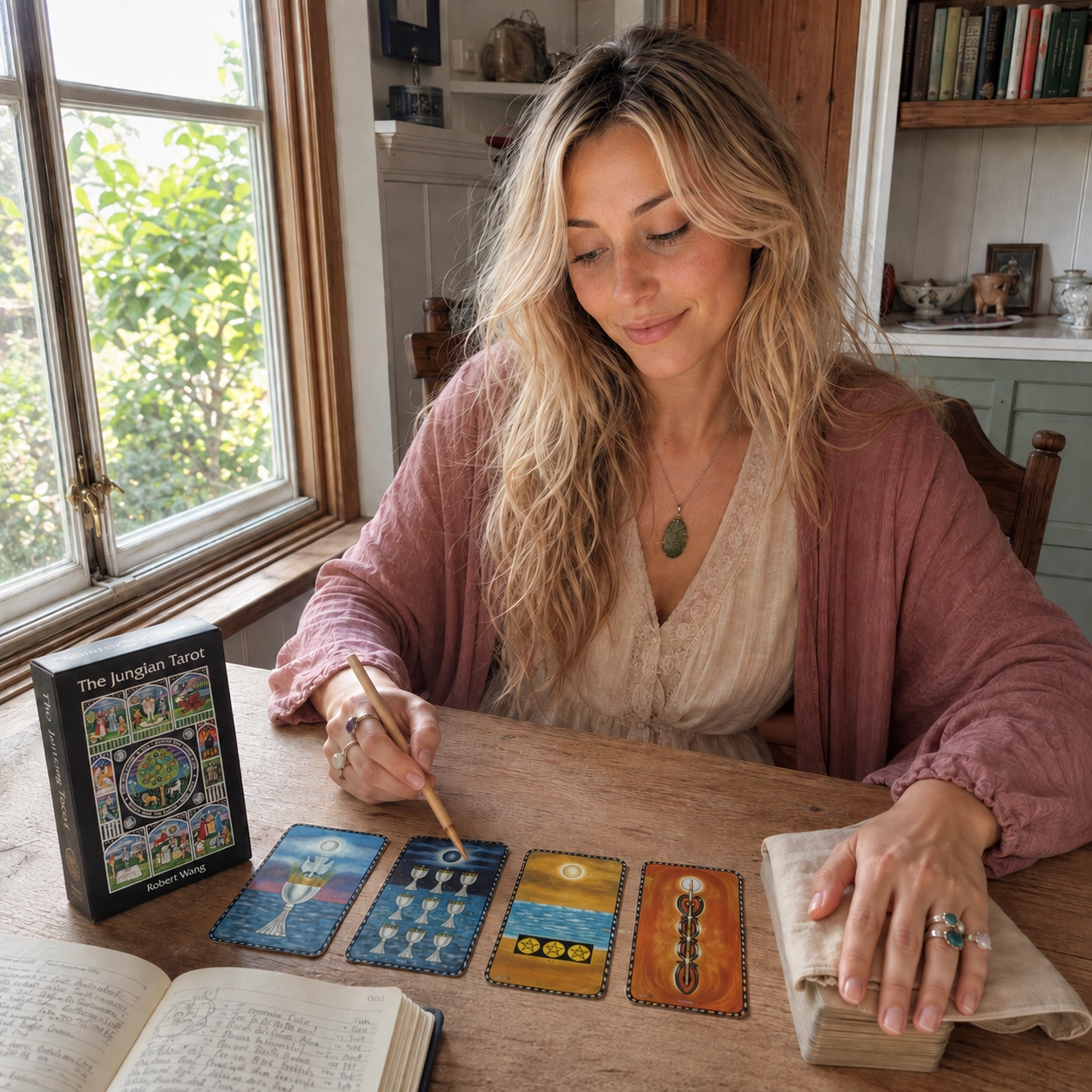
Aurica’s Quick Take
The Jungian Tarot feels like a visual dream journal laid open on the table. I read it by noticing posture, colour, repeated symbols, and mood, then bringing those details gently back to the question.
Quick answer: choose this deck if you enjoy psychological symbolism, shadow-work language, and a slower study-deck rhythm. It may feel less welcoming if you want bright decorative art or instant keywords on every card.
I love how these images turn inner weather into something I can almost touch. A moon hangs above a cup, a figure pauses beneath an arch, or one colour gathers around a difficult feeling. I begin with the detail that tugs at me, connect it to the card’s familiar role, and listen for what the surrounding cards repeat.
The Ace of Cups feels especially clear here: silver, blue, and open, like emotion arriving before the right words. Beside the Nine of Cups and the warm earth of the Three of Coins, it can ask whether a wish needs to be felt, shared, or given a practical home.
I reach for The Jungian Tarot when a reading needs patience and an honest look beneath the surface. Keep the spread small, trust the detail that first catches your heart, and let its archetypes remind you that even a hidden feeling can become a clear and hopeful next step.
What is The Jungian Tarot?
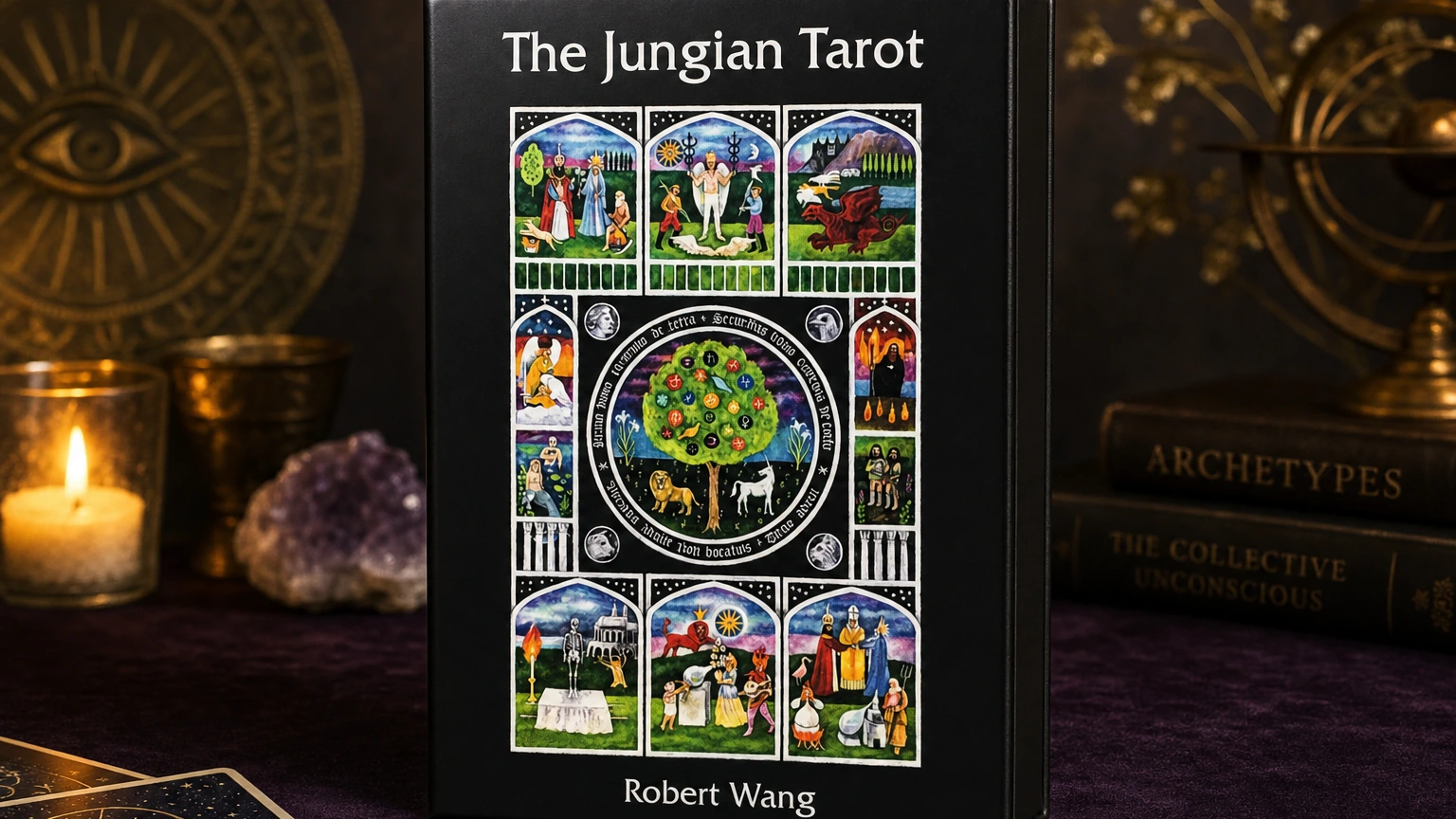
The Jungian Tarot is a symbolic deck created by Dr. Robert Wang as a visual gateway into Jungian psychology. Its images invite you to notice archetype, colour, pattern, and emotional movement before translating those impressions into a grounded reading.
Gallery note: This is a transparent partial archive from the recovered TarotFans source set. It is presented without a completeness claim, and cards whose exact titles could not be verified remain neutrally identified rather than guessed.
The in-article studies and four-card moments use the same evidence-backed assets as the Gallery, so the visual details discussed below can be checked directly against the artwork.
Artwork and first impression
The first thing to notice is the mood: cream-toned symbolic figures, archetypal forms, and sparse psychological imagery that asks the reader to interpret pattern, mood, and inner movement. That matters because tarot is partly a visual conversation. If the picture gives you something specific to notice, the reading becomes easier to explain in plain language.
For teen readers and newer readers, this is helpful. You do not have to sound mysterious to read well. Start with one detail, name what it suggests, and then connect it to the card title. That small habit keeps the reading warm, clear, and grounded.

Card study
Ace of Cups: feeling as an archetypal signal
The Jungian Tarot is strongest when you read a card as both an image and a psychological clue. Ace of Cups can begin with simple emotion, then deepen into questions about projection, longing, and what the inner life is trying to show you.
How it reads in practice
In practice, The Jungian Tarot is best when you let the picture slow you down. Ask: what is moving, what is still, what feels protected, and what feels exposed? Those questions work for love, school, career, money, friendships, and creative choices.
The deck is not trying to be invisible. It has a personality. That is a strength when you want a reading with atmosphere, but it also means you should check whether the style fits your question. A dramatic deck can make a small issue feel bigger if you do not stay grounded.
Try this spread
Shadow and insight spread


Use this when a feeling keeps repeating: the emotion, the wish underneath it, the choice it points toward, and the practical structure that can hold the insight.
Beginner friendliness
The Jungian Tarot can be beginner-friendly if you enjoy the artwork enough to study it. The best beginner deck is not always the plainest deck; it is the one that makes you come back, compare cards, and write down what you noticed.
Try this simple method: pull one card, write three visible details, then look up the traditional meaning. If your details and the meaning point in the same direction, you are learning the deck’s language. If they disagree, write both down and keep watching the pattern.
Card study
Nine of Cups: satisfaction without pretending everything is solved
Nine of Cups is useful for checking whether a wish is genuinely nourishing or only temporarily comforting. In this deck, emotional fulfillment works best when you name both the desire and the pattern behind it.
Love, friendship, and emotional readings
For relationship questions, The Jungian Tarot is most useful when the question is about behavior, timing, boundaries, or emotional pattern. Instead of asking whether someone likes you, ask what is healthy, what is confusing, and what action protects your peace.
Look for distance between figures, repeated colors, guarded body language, open gestures, and cards that seem to point toward or away from each other. Those visual clues make the reading easier to explain without overpromising.
Try this spread
Dream-symbol check


For dream journaling or symbolic reading, treat the unnamed source card as an image prompt, then compare feeling, patience, and material outcome.
Career, money, and creative readings
For career and money readings, keep the questions practical. Ask what needs focus, where energy is being wasted, and what step would make the situation more stable. The deck’s atmosphere can add motivation, but the answer still needs to become a real-world next step.
For creative work, The Jungian Tarot is especially useful as a prompt deck. Pull a card for the mood of a project, one for the obstacle, and one for the next draft or next study session. The goal is not to predict your whole future; it is to help you move with more honesty.
Card study
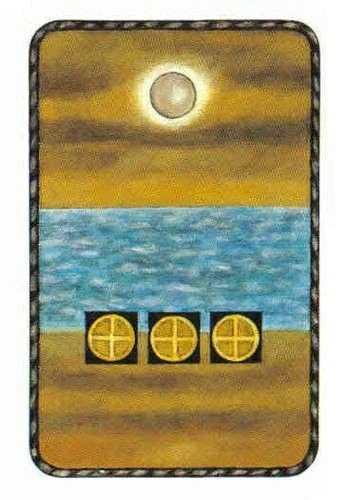
Three of Coins: building the inner and outer structure
The Coins cards keep the review grounded. Three of Coins asks what support, practice, and visible structure would help an insight become real instead of staying only in your journal.
Turning insight into a practical next step
A symbol becomes useful when it changes the way you meet the question. After noticing the card that carries the strongest charge, name one choice, conversation, or small action that could give its message a real shape. The deck can open the inner door; your next honest step is what carries the reading into daily life.
Try this spread
Grounded archetype spread


This four-card moment helps turn a big archetypal theme into a plain next step: direction, structure, emotional release, and movement away from confusion.
Pros and cons
| Pros | Cons |
|---|---|
| Memorable artwork with a clear deck personality. | The strong style may not suit readers who want neutral images. |
| Good for intuitive reading, journaling, and creative prompts. | Some cards may need extra study if the theme pulls your attention away from classic meanings. |
| Native TarotFans gallery lets you preview the card art locally. | Collectors who need every product detail should still compare the physical listing before buying. |
Final thoughts on The Jungian Tarot
The Jungian Tarot is worth exploring if its world makes you want to look twice. A tarot deck does not have to be perfect for everyone. It has to be readable for you: clear enough to use, interesting enough to return to, and honest enough to support real questions.
If several cards make you pause, wonder, or start a journal note, that is a good sign. Use the gallery, watch the video, and let your own reaction decide whether this deck feels like a useful reading companion.
Frequently Asked Questions
Is The Jungian Tarot good for beginners?
It can work for beginners if the artwork makes you curious, but it is best paired with a simple keyword guide and slow one-card practice.
Is the TarotFans Gallery a complete deck?
No. It is a partial recovered archive, presented without padding or guessed card names. Unverified titles remain neutrally labelled so the Gallery stays honest.
What readings does The Jungian Tarot handle best?
It works especially well for daily pulls, creative prompts, relationship reflection, and readings where mood and visual detail help you understand the question.
Does The Jungian Tarot follow classic tarot structure?
Yes, but its style may rename, reframe, or visually reinterpret the familiar tarot pattern. Read the title first, then let the art add tone.
Who should skip The Jungian Tarot?
Skip it if you want bright decorative art, easy beginner keywords, or fully labeled card faces for every image, or if the art style distracts you from the question instead of helping you focus.
Can I use The Jungian Tarot for serious readings?
Yes. A beautiful or themed deck can still support serious readings when the question is clear, the spread is simple, and the reader stays honest about what the cards do and do not say.