Tarot Lukumi Card Gallery
Browse the verified printed card fronts in this archival selection. The card back and unavailable records are omitted, visible creator marks are preserved, and every caption follows the printed title or a corroborated numbered identity.
Aurica’s Quick Take
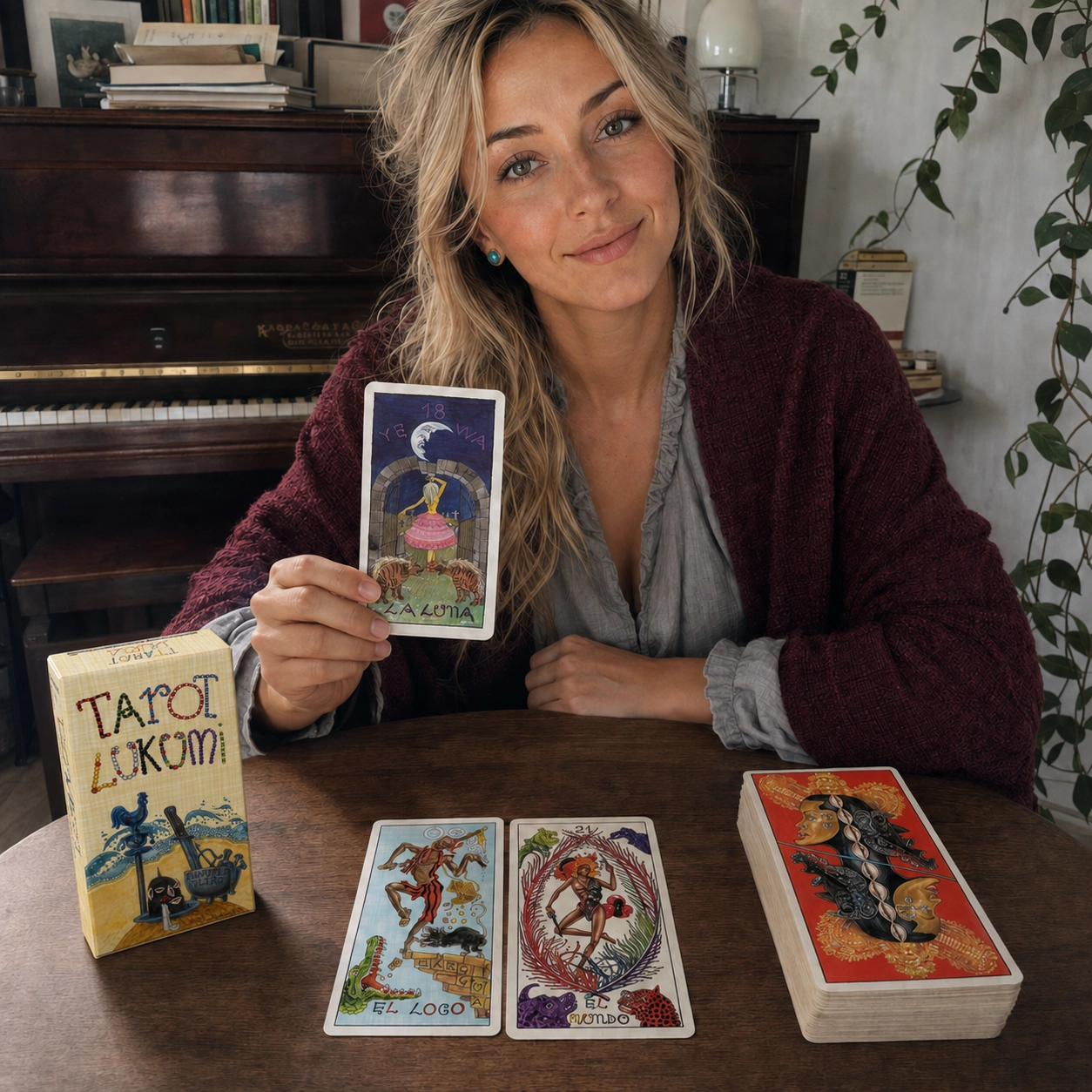
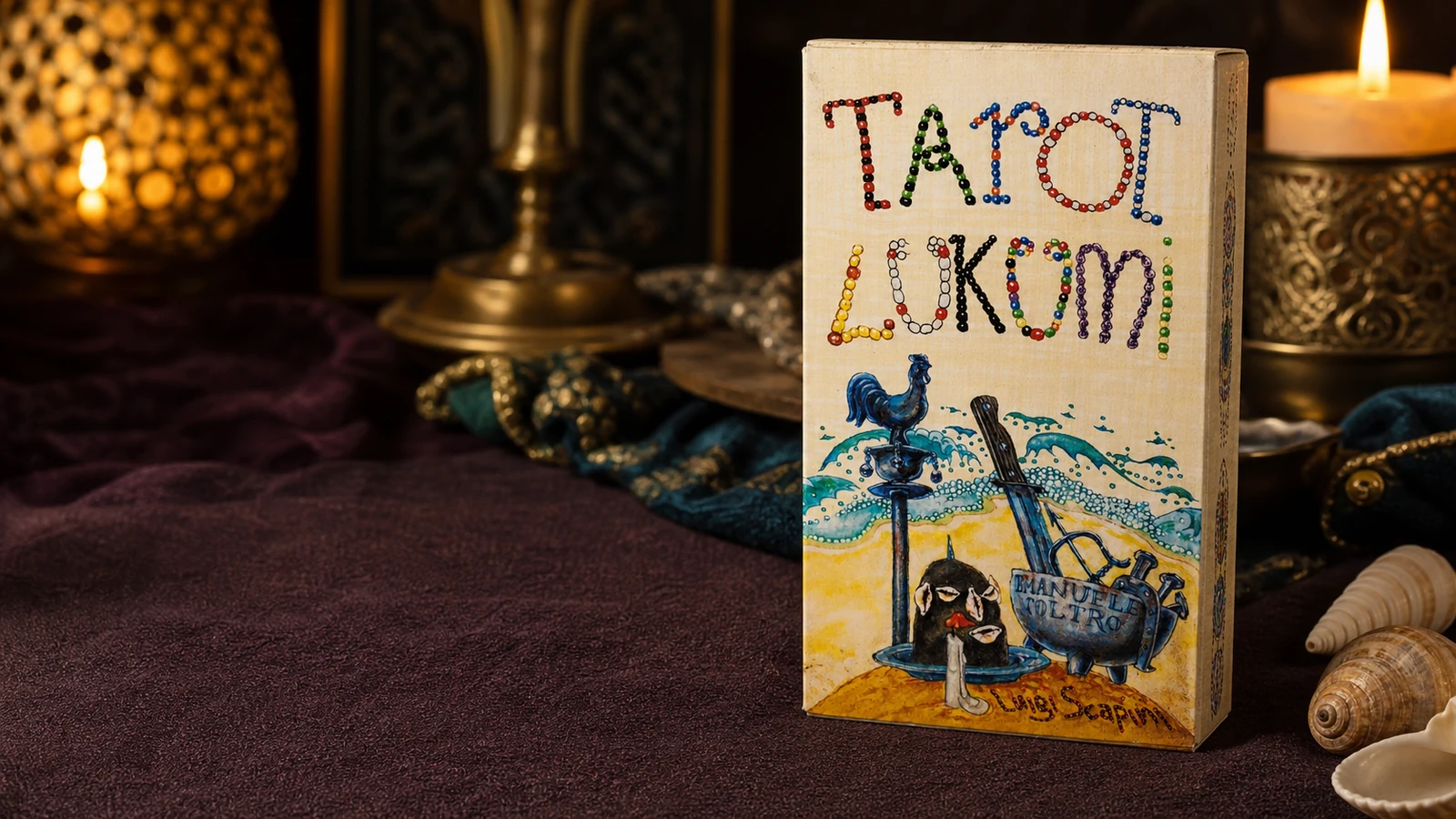
Tarot Lukumi is a 2003 Dal Negro deck conceptualized by Tata Emanuele Coltro Guidi and illustrated by Luigi Scapini. Its seventy-eight-card structure is recognizably tarot, but its mostly Spanish labels, Orisha imagery and scenes drawn from Lukumí religious narratives give it a voice that is markedly different from a standard Rider–Waite–Smith clone.
I read this deck slowly. Scapini’s figures, animals and ritual objects crowd the frame with deliberate intensity, so my first question is not “Which keyword fits?” but “Where is the image asking me to look?” That pause lets the deck’s own visual language lead instead of forcing it into familiar shorthand.
La Luna captures that approach beautifully: a pink-clad figure walks beneath an arch while two tigers hold the foreground and the crescent watches from a deep blue sky. Beside it, El Loco feels restless and almost unruly, while El Mundo gathers movement into a living ring. I find the contrast useful when a reading turns on the difference between wandering, crossing a threshold and arriving somewhere whole.
I also pay close attention to the illustrated minors. Siete de Espadas places strategy at a forge, and the familiar suits—Bastos, Copas, Espadas and Oros—carry elemental force through distinctive scenes rather than relying on repeated symbols alone. For me, that makes a spread feel narrative: each card adds a place, a gesture and a consequence.
I would reach for Tarot Lukumi when I have time to study rather than skim. The cultural material deserves humility and further learning, while the art rewards patient, image-first reading. Meet it with respect and curiosity, and this vivid deck can open a path from first impression to a deeper, more attentive conversation.
What makes Tarot Lukumi different?
The deck keeps the familiar four suits—Bastos, Copas, Espadas and Oros—with courts named Sota, Caballo, Reina and Rey. What changes is the visual language. The minors are fully illustrated with ritual objects, animals, tools, landscapes and figures connected to Lukumí stories, while the majors bring tarot archetypes into conversation with Orisha identities and symbols.
That makes the cards highly readable, but not culturally neutral. A strong interpretation should distinguish between what is visibly present, what traditional tarot contributes and what requires further learning about Lukumí practice.
La Emperatriz: abundance that belongs to a living world
La Emperatriz sits beside falling water, flowering plants, fruit and birds. Her white clothing and composed posture create stillness, while the fertile landscape keeps the card from feeling passive. Abundance here is not an isolated luxury; it is a relationship among land, nourishment, beauty and stewardship.
In a reading, this image can point to growth that needs care rather than force. Its shadow asks whether comfort has become possessiveness, or whether the reader is receiving support without tending the source that provides it.

How the deck handles power and transformation
La Forza places a seated figure, curving horns and an open landscape at the centre of the composition rather than relying on the familiar lion-taming spectacle. El Colgado turns suspension into a charged ritual image, while La Torre sends figures tumbling from a struck white structure into turbulent water. El Diablo is physically dense and confrontational; El Mundo is ringed by animals and movement rather than polished classical symmetry.
Together, these majors make change feel embodied. They ask what power costs, what must be released and which forces are larger than the ego’s preferred explanation.
Courts of fire, water and earth
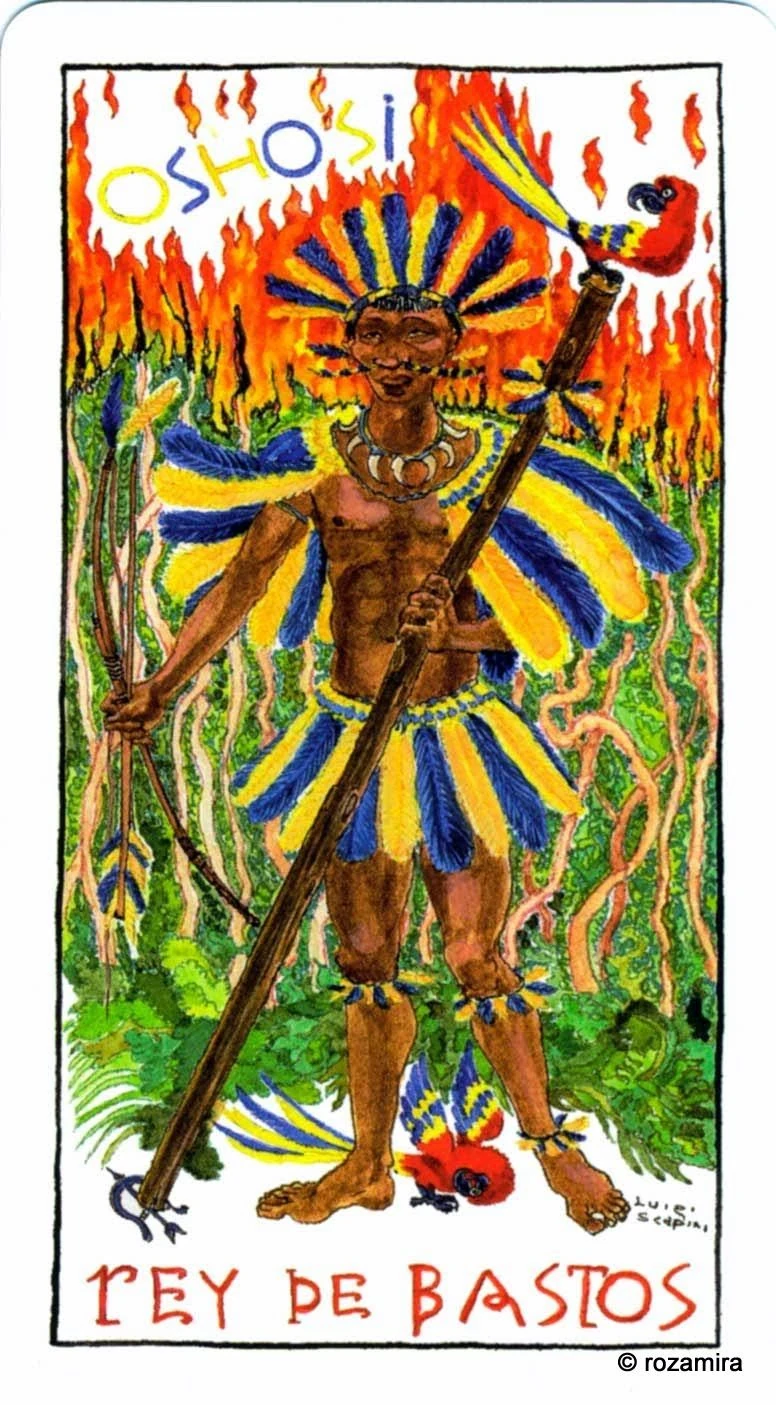
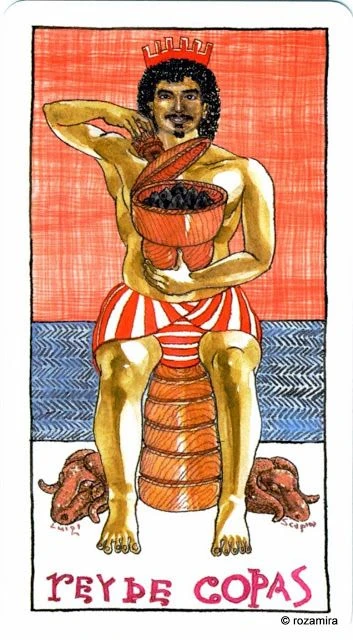
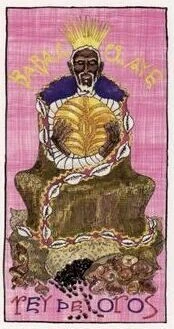
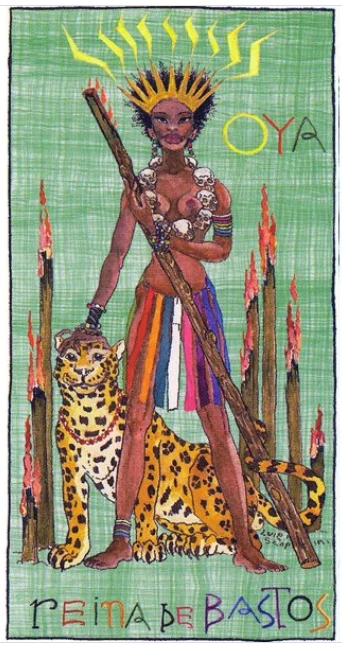
These court cards show how the deck gives rank and element a specific personality. Rey de Bastos is surrounded by flame and Oshosi imagery; Rey de Copas holds emotional substance close to the body; Rey de Oros is rooted in material abundance; Reina de Bastos stands with feline confidence and a commanding staff.
Siete de Espadas: strategy at the forge
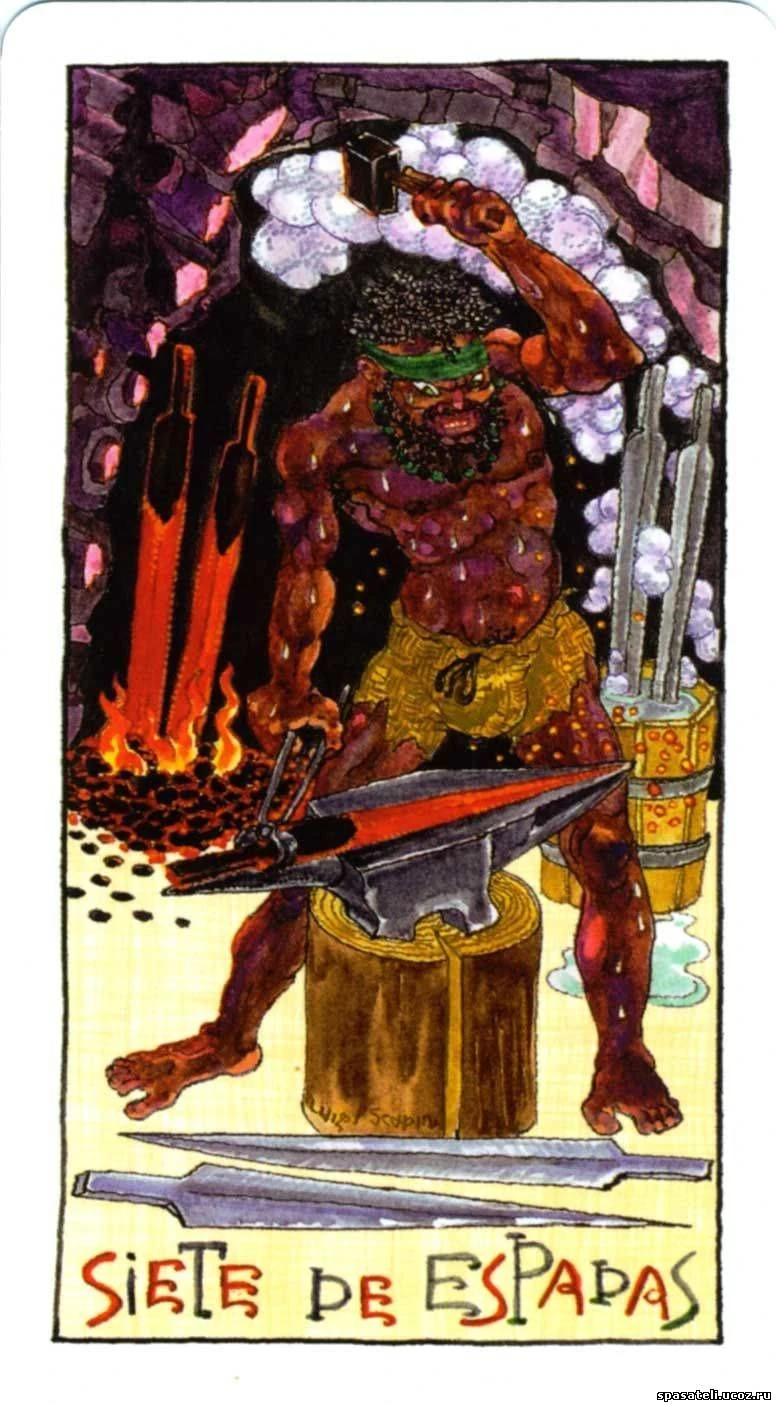
A muscular figure works at an anvil inside a hot, cavernous forge. Instead of depicting stealth as a person slipping away with stolen swords, the card makes strategy look like fabrication: plans are hammered into shape, tested under pressure and sharpened before they are used.
Upright, the image favors preparation, technical skill and deliberate timing. In shadow, cleverness can become manipulation or secrecy for its own sake. Ask whether the plan is being refined because it is wise—or hidden because it cannot survive honest scrutiny.
Reading with the printed titles and illustrated minors
The sampled labels are mostly Spanish, while La Forza follows the wording visible on that image. Bastos corresponds to Wands, Copas to Cups, Espadas to Swords and Oros to Coins or Pentacles. The titles establish the tarot role; the illustration supplies the deck-specific story.
For each pull, try three passes: name the traditional function, describe only what you can see, then ask how the Lukumí scene changes the emotional temperature of the message. This method prevents the artwork from becoming decoration while also avoiding confident claims about symbols you have not researched.
Who will connect with Tarot Lukumi?
Collectors, culturally curious readers and experienced tarot practitioners are most likely to appreciate this deck. Beginners can use it, but the cultural references and non-RWS minors make a good guidebook or independent study especially valuable. Readers looking for a neutral learning deck may prefer a more conventional starting point.
The 2003 edition appears to be out of print, so availability and condition vary. Treat unusually cheap copies cautiously, compare the full packaging and card backs, and remember that a complete original edition should contain seventy-eight cards.
A respectful way to approach the deck
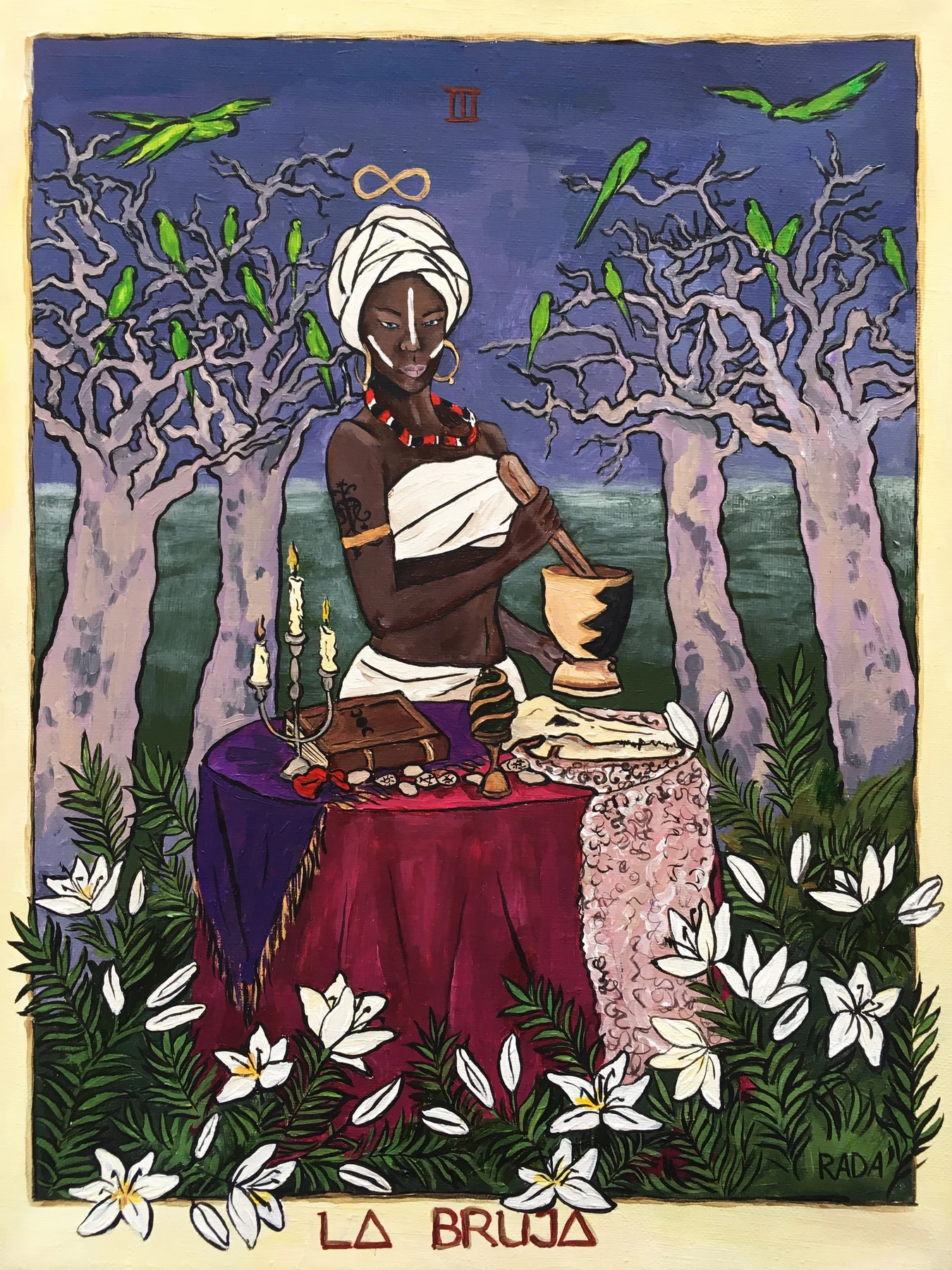
Lukumí is a living religious tradition, not merely an aesthetic theme. Use the deck with curiosity and humility: learn the difference between tarot convention and tradition-specific symbolism, avoid presenting a single image as a complete explanation of an Orisha, and consult knowledgeable cultural sources when a reading depends on details beyond the card itself.
Final Thoughts
Tarot Lukumi is memorable because it does not flatten its subject into generic mystical decoration. Scapini’s figures, ritual settings, animals and elemental colors give the cards an immediate physical presence, while Guidi’s concept asks tarot readers to encounter a spiritual vocabulary with deeper roots than the spread on the table.
For the right reader, it can be a vivid study deck and a powerful visual prompt. Let close observation, tarot fluency and genuine respect travel together, and each reading can become a more patient, vivid and meaningful conversation.
Tarot Lukumi FAQ
Who created Tarot Lukumi?
Tata Emanuele Coltro Guidi conceptualized the deck, Luigi Scapini created the artwork, and Dal Negro published the 2003 edition.
How many cards are in Tarot Lukumi?
The complete printed deck contains seventy-eight cards: twenty-two Major Arcana and fifty-six Minor Arcana.
What language are the card titles?
The visible labels are mostly Spanish. The suits are Bastos, Copas, Espadas and Oros, with courts named Sota, Caballo, Reina and Rey; the sampled La Forza image is captioned exactly as printed.
Does Tarot Lukumi follow Rider–Waite–Smith imagery?
It uses the conventional tarot framework, but its fully illustrated minors and Orisha-centered symbolism create a distinct visual system rather than a straightforward RWS copy.
Is Tarot Lukumi suitable for beginners?
A motivated beginner can use it, but the nonstandard imagery and cultural references make it better with guidebook support and careful study.
Is Tarot Lukumi still in print?
The 2003 Dal Negro edition appears to be out of print, so copies are generally found through specialist or second-hand sellers.