Explore the artwork
Tarot Mucha Card Gallery
Explore the verified Tarot Mucha artwork in its familiar tarot order. Select any card to open the larger Lightbox.
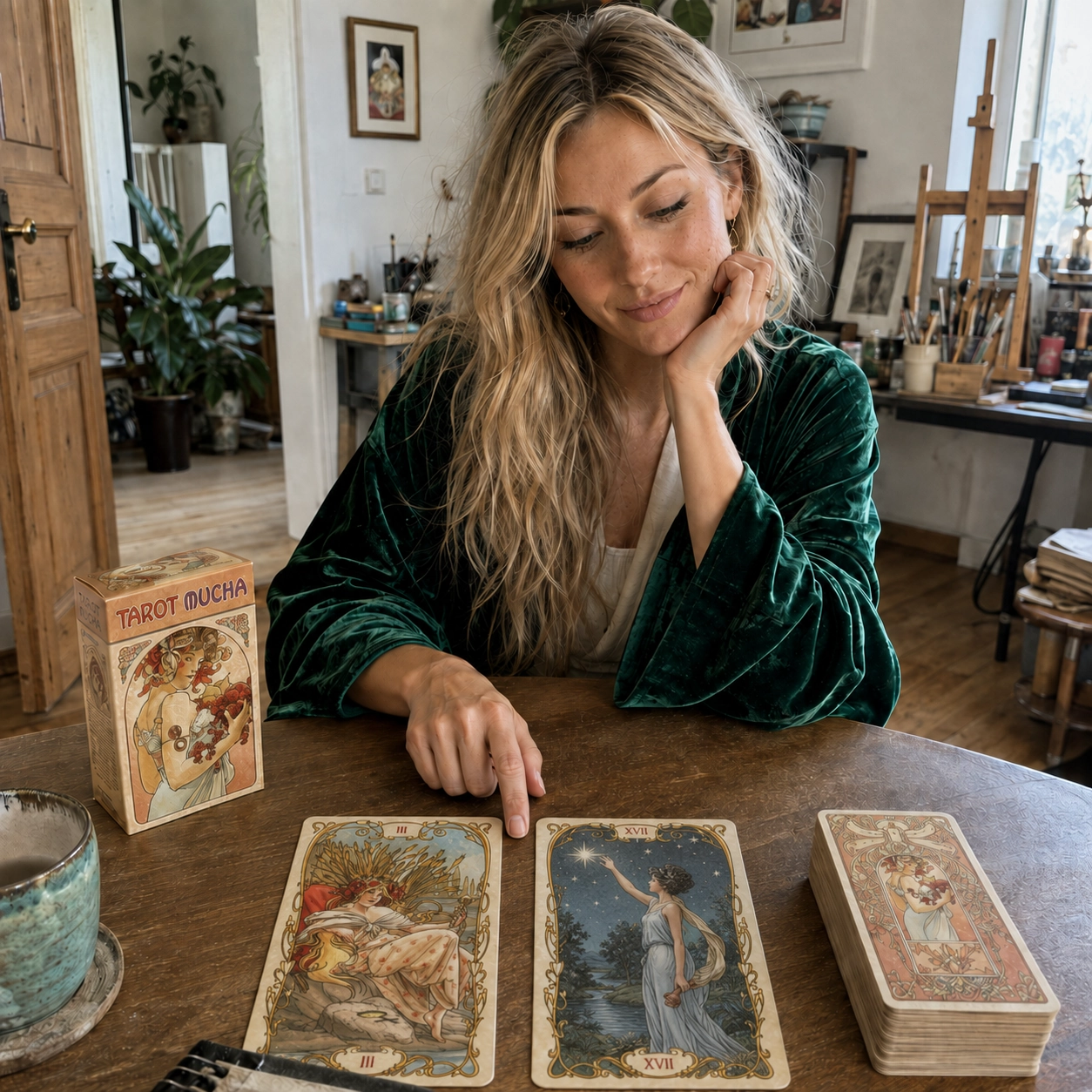
Tarot Mucha Review: Quick Take
Tarot Mucha is a deck for readers who want tarot to feel like a visual world, not just a stack of keywords. Its strongest readings come from noticing costume, posture, color, framing, and repeated symbols, then connecting those details back to the classic card meaning.
Quick answer: choose Tarot Mucha if you want grace, pattern, romantic clarity, and calm visual storytelling. Skip it if you prefer stark minimalist cards or a rough, shadow-heavy visual style.
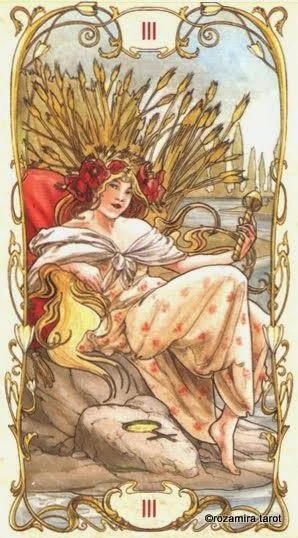
I love how these cards make a reading feel like stepping into an old illustrated salon, where every fold of fabric and curl of gold line seems to carry a mood. The Empress feels warm without becoming soft-edged, while The Star opens a quieter patch of sky. I notice the detail that catches first, test it against the card’s familiar role, and then listen for how the cards beside it change the feeling.
I reach for Tarot Mucha when a question needs beauty and honesty in the same breath. It suits daily pulls, creative blocks, relationship patterns, and gentle journaling, especially when I turn the atmosphere into one practical next step.
Let its graceful lines remind you that clarity does not have to feel harsh: you can meet the truth with beauty, steadiness, and a hopeful heart.
What is Tarot Mucha?
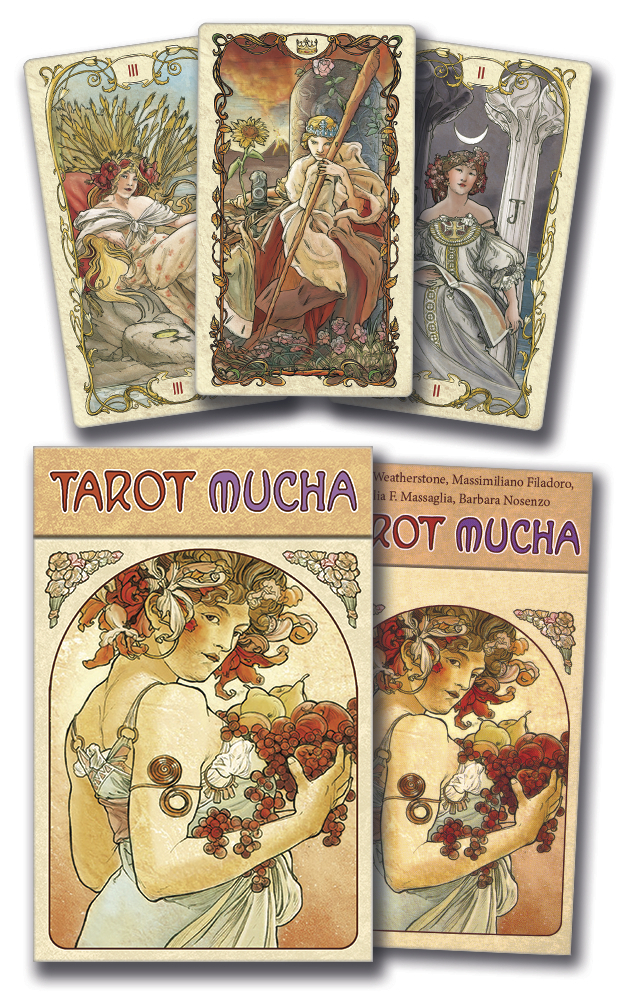
Tarot Mucha is a themed tarot deck with a full major and minor arcana structure. The TarotFans native gallery above shows all 78 cards, so you can scan the actual visual language before deciding whether the deck belongs on your reading table.
The deck identity for this repair was checked against the live YouTube review, the existing local manifest, and the card filenames in the theme-owned gallery. The gallery folder used here is tarot-mucha-cards, so the in-article studies and four-card moments use the same verified asset set as the carousel.
Artwork and first impression
The first thing to notice is the mood: decorative Art Nouveau lines, soft theatrical faces, floral curves, and golden poster-like elegance inspired by Mucha-era design. That matters because tarot is partly a visual conversation. If the picture gives you something specific to notice, the reading becomes easier to explain in plain language.
For teen readers and newer readers, this is helpful. You do not have to sound mysterious to read well. Start with one detail, name what it suggests, and then connect it to the card title. That small habit keeps the reading warm, clear, and grounded.
Card study
The Empress: beauty that still has boundaries
Tarot Mucha shines when a card asks you to notice line, gesture, and softness. The Empress feels fertile and generous, but the decorative frame also reminds readers that beauty needs structure to become real care.
How it reads in practice
In practice, Tarot Mucha is best when you let the picture slow you down. Ask: what is moving, what is still, what feels protected, and what feels exposed? Those questions work for love, school, career, money, friendships, and creative choices.
The deck is not trying to be invisible. It has a personality. That is a strength when you want a reading with atmosphere, but it also means you should check whether the style fits your question. A dramatic deck can make a small issue feel bigger if you do not stay grounded.
Try this spread
Art Nouveau self-care spread


Use this for a gentle reset: what nourishes you, what needs moderation, what you have earned, and what hope is ready to return.
Beginner friendliness
Tarot Mucha can be beginner-friendly if you enjoy the artwork enough to study it. The best beginner deck is not always the plainest deck; it is the one that makes you come back, compare cards, and write down what you noticed.
Try this simple method: pull one card, write three visible details, then look up the traditional meaning. If your details and the meaning point in the same direction, you are learning the deck’s language. If they disagree, write both down and keep watching the pattern.

Card study
Justice: elegant balance, not cold judgment
Justice is a strong identity check for an Art Nouveau deck. The image can look graceful, but the reading still asks for honesty, clean choices, and consequences that are named without drama.
Love, friendship, and emotional readings
For relationship questions, Tarot Mucha is most useful when the question is about behavior, timing, boundaries, or emotional pattern. Instead of asking whether someone likes you, ask what is healthy, what is confusing, and what action protects your peace.
Look for distance between figures, repeated colors, guarded body language, open gestures, and cards that seem to point toward or away from each other. Those visual clues make the reading easier to explain without overpromising.
Try this spread
Clear choice relationship check


This four-card moment keeps love readings calm: attraction, fairness, mutual care, and the pause needed before the next conversation.
Career, money, and creative readings
For career and money readings, keep the questions practical. Ask what needs focus, where energy is being wasted, and what step would make the situation more stable. The deck’s atmosphere can add motivation, but the answer still needs to become a real-world next step.
For creative work, Tarot Mucha is especially useful as a prompt deck. Pull a card for the mood of a project, one for the obstacle, and one for the next draft or next study session. The goal is not to predict your whole future; it is to help you move with more honesty.
Card study
Nine of Pentacles: earned ease and personal style
The Pentacles suit is where Tarot Mucha becomes very practical. Nine of Pentacles reads as self-respect, independence, and the pleasure of building a life that feels beautiful because it is supported.
From practical progress to creative courage
The Nine of Pentacles asks what has already been patiently built; the creative spread that follows turns that earned steadiness toward the next brave piece of work. Read the transition as an invitation to value your craft before asking it to grow.
Try this spread
Creative confidence spread


For art, writing, or study goals, read these as tools, vision, practice, and the charisma to share your work without shrinking.
Pros and cons
| Pros | Cons |
|---|---|
| Memorable artwork with a clear deck personality. | The strong style may not suit readers who want neutral images. |
| Good for intuitive reading, journaling, and creative prompts. | Some cards may need extra study if the theme pulls your attention away from classic meanings. |
| Native TarotFans gallery lets you preview the card art locally. | Collectors who need every product detail should still compare the physical listing before buying. |
Final thoughts on Tarot Mucha
Tarot Mucha is worth exploring if its world makes you want to look twice. A tarot deck does not have to be perfect for everyone. It has to be readable for you: clear enough to use, interesting enough to return to, and honest enough to support real questions.
If several cards make you pause, wonder, or start a journal note, that is a good sign. Use the gallery, watch the video, and let your own reaction decide whether this deck feels like a useful reading companion.

Frequently Asked Questions
Is Tarot Mucha good for beginners?
Yes, if the artwork makes you curious and you are willing to pair image reading with a simple tarot keyword guide. Beginners can start with one-card pulls before moving into complex spreads.
Does this page show every Tarot Mucha card?
Yes. This review presents the complete verified Tarot Mucha deck in its familiar tarot order, with each card opening into a larger Lightbox view.
What readings does Tarot Mucha handle best?
It works especially well for daily pulls, creative prompts, relationship reflection, and readings where mood and visual detail help you understand the question.
Does Tarot Mucha follow classic tarot structure?
Yes. Read the traditional card title first, then let the deck’s Art Nouveau world add tone, setting, and emotional detail.
Who created the Tarot Mucha artwork?
Tarot Mucha was illustrated by Giulia F. Massaglia and published by Lo Scarabeo. Its decorative line, graceful figures, and warm poster-like atmosphere give the deck its recognisable voice.
Can I use Tarot Mucha for serious readings?
Yes. A beautiful themed deck can still support serious readings when the question is clear, the spread is simple, and the reader stays honest about what the cards do and do not say.