Explore Shakespeare Tarot
Enter Chris Leech’s Renaissance stage in deck order: the Major Arcana, then Staffs, Cups, Swords, and Crowns. Choose a group to filter the continuous Gallery, or open any card in the full-size Lightbox.
A theatre of tarot, memory and human motive
The Shakespeare Tarot opens like an old playhouse after dark. Chris Leech builds every card as a wide collage where engraved faces, landscapes, stage objects, quotations and sudden touches of colour share the scene. Prospero becomes The Magician, Hamlet hangs inside the pause of The Hanged Man, and Shylock stands where Justice must weigh law against mercy.
The deck keeps a complete tarot structure while renaming Wands as Staffs and Pentacles as Crowns. That familiar skeleton helps, but the art refuses to behave like a simple illustrated glossary. A sword may be both suit emblem and stage property; a line of text may sharpen the card, contradict it or expose the character’s hidden weather.
Artwork that asks the eye to wander, then return
These landscape cards feel closer to miniature stages than upright portraits. Leech places one central figure among circular insets, architecture, animals, tools and quotations that run around the edges like voices from the wings. Most scenes begin in black, white and old-paper tones, then gold, green, violet or sea-blue catches the eye.
I let my gaze wander first. Then I return to the figure’s hands, the object carrying colour and the line of text that presses hardest against the image. Only after that do I bring in the traditional card function. The method keeps the reading imaginative, but it also keeps every interpretation tied to something visibly present.

Card study
The Magician — Prospero gathers the elements
A robed, bearded figure stands between a dark cavern and an engraved woodland. One circular scene contains a winged serpent wound around a staff; another shows a hand drawing a bow beneath the sun. A flute, bowl, goblet and long blade lie across a white-clothed table, while a sleeping figure curls in a smaller inset.
Chris Leech links this card with Prospero, and the image makes his power feel assembled rather than effortless. Upright, The Magician can be skill, intention and the ability to bring several tools into one act. In shadow, command slips into manipulation or theatrical control. In a reading, name the tool already within reach, then ask whether it serves the question or merely proves that power is available.
How The Shakespeare Tarot reads in practice
This deck reads through motive. Who wants the crown, who guards the secret, who speaks plainly, and who performs a role because the room demands it? That makes it especially alive for relationships, creative decisions, leadership, conflict and any question where several people are telling different versions of the same story.
Try a three-card spread called the role, the hidden line, the next scene. The first card shows what is being performed, the second reveals the feeling or fact beneath it, and the third names the action that can move the plot. Describe the visible evidence before deciding which character is hero, fool or villain.
Four-card scene
Four powers upon the stage
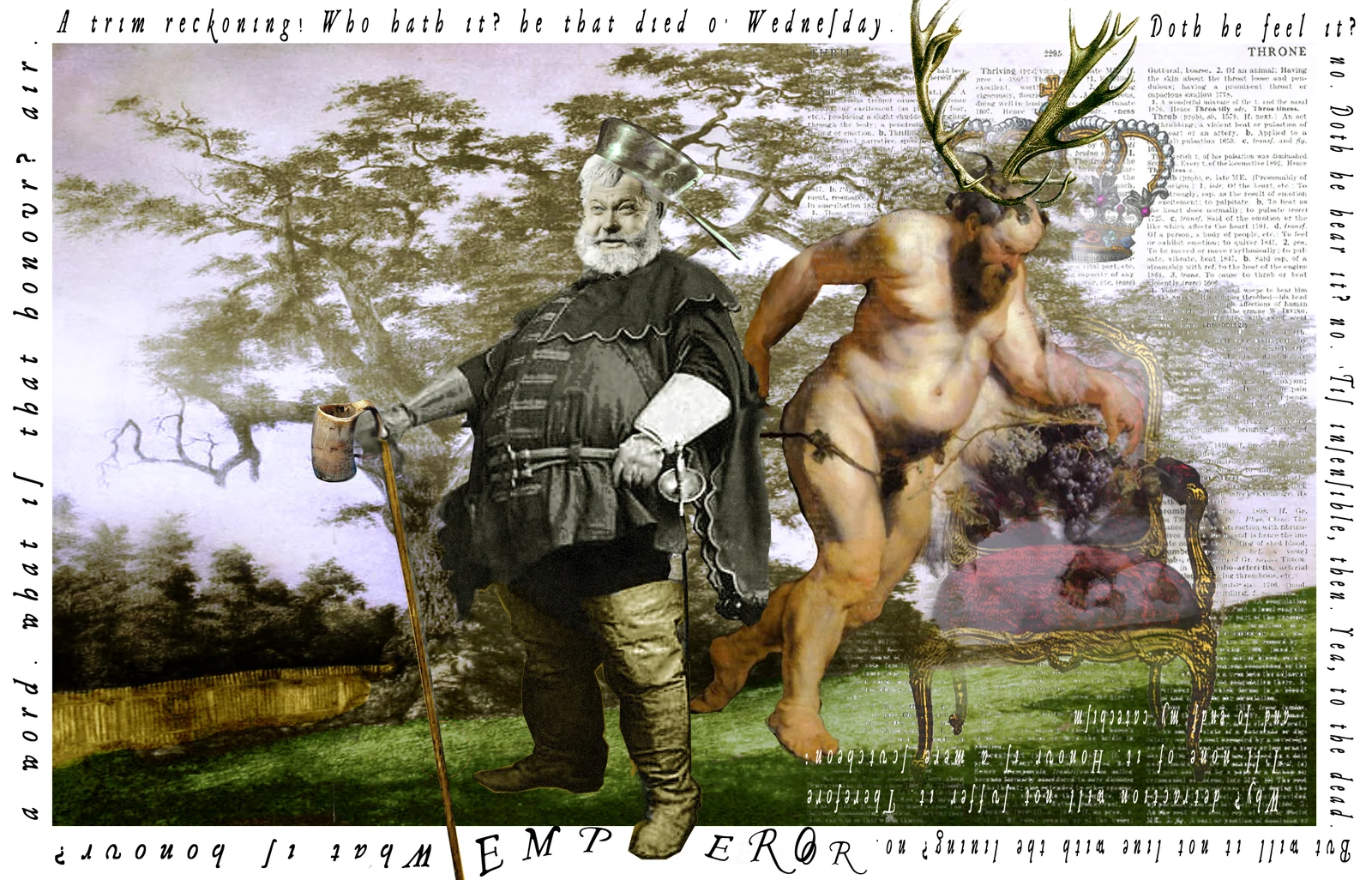
The Emperor gives authority to Falstaff, The Hierophant places Shakespeare inside the machinery of cultural devotion, Justice brings Shylock before the scales, and Judgment calls Pericles toward reckoning and return. Together they ask who writes the rule, who performs it, who pays its price and who receives another act.


Beginner guidance and three useful prompts
A beginner can learn with this deck, but it is not a plain teaching deck. Keep a small note that Staffs correspond to Wands and Crowns to Pentacles. Start with one card, read its title, look slowly across the whole landscape, and write one sentence about what changes between the left and right side of the scene.
Gentle
Which role would help me meet today with honesty?
Deeper
What feeling is speaking through the scenery rather than the dialogue?
Demanding
Where am I rehearsing an old script because an unwritten future feels frightening?
Card study
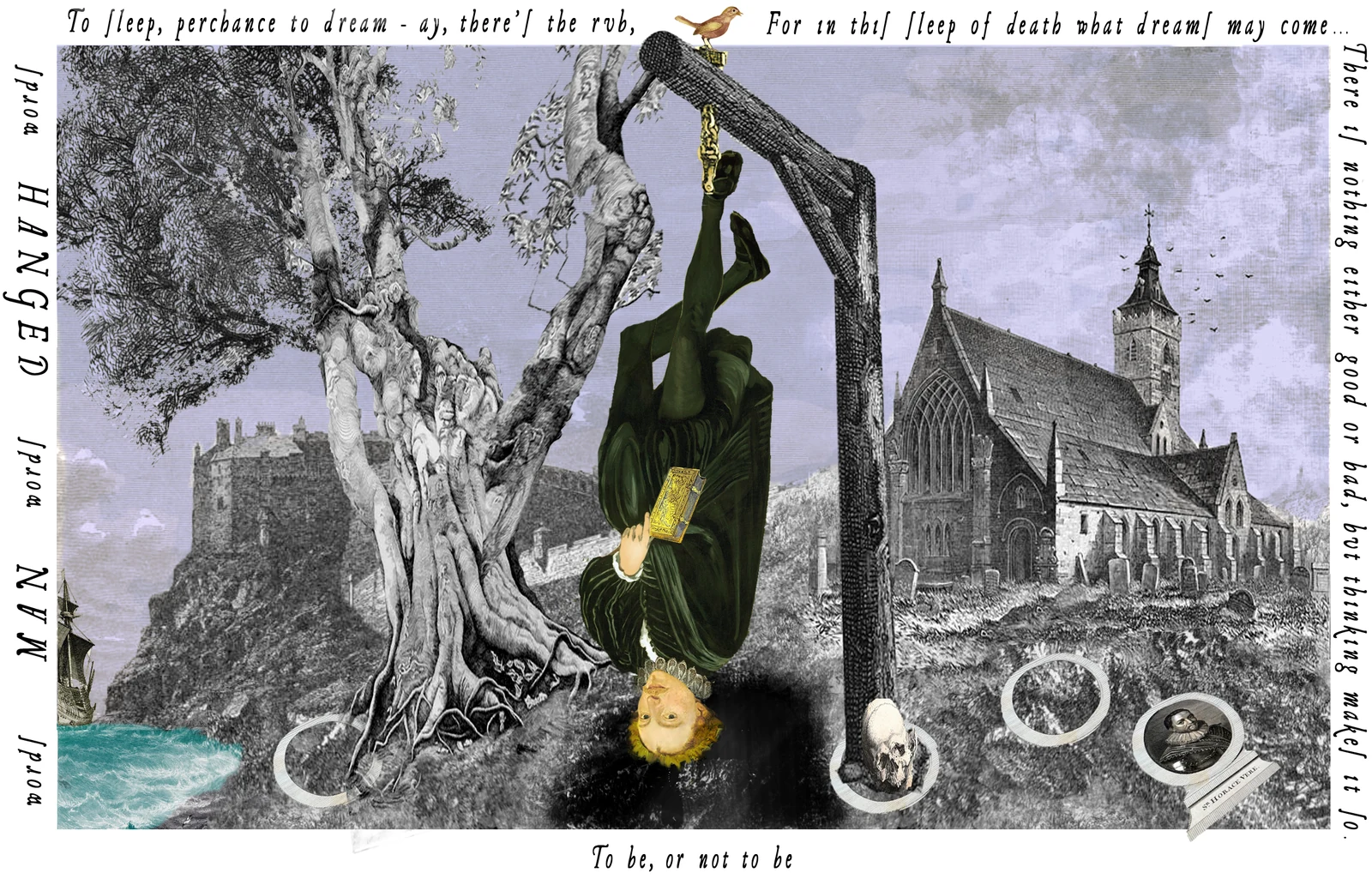
The Hanged Man — Hamlet suspended between thought and action
A dark-clothed figure hangs upside down by one ankle from a wooden beam beside an ancient tree. He holds a small gold book close to his chest. A church and graveyard sit beyond him, a skull rests near the post, and the border carries fragments of the sleep soliloquy and the words To be, or not to be.
The creator mapping identifies Hamlet, turning suspension into a mind caught between possibility and consequence. Upright, The Hanged Man can ask for surrender, a changed angle or a pause that reveals what haste cannot. In shadow, reflection becomes paralysis. I would ask what the reader can see only from this strange position, and what decision becomes possible once the pause has done its honest work.
Love readings without mistaking drama for devotion
Shakespeare gives this deck a rich language for love, but not a simple one. Desire can be tender, comic, strategic, loyal, jealous or fatal. When relationship cards appear, notice whether the figures face one another, an audience, a letter, a weapon or the open distance. Direction tells you where the emotional energy is actually travelling.
Do not let a famous romance decide the reading before the surrounding cards speak. The Lovers may ask for a value-led choice; a Cup may carry invitation, projection or emotional courage. The deck becomes kinder and clearer when every grand declaration is followed by one practical question: what does this bond make possible in ordinary life?
Four-card scene
Four ways desire changes the plot
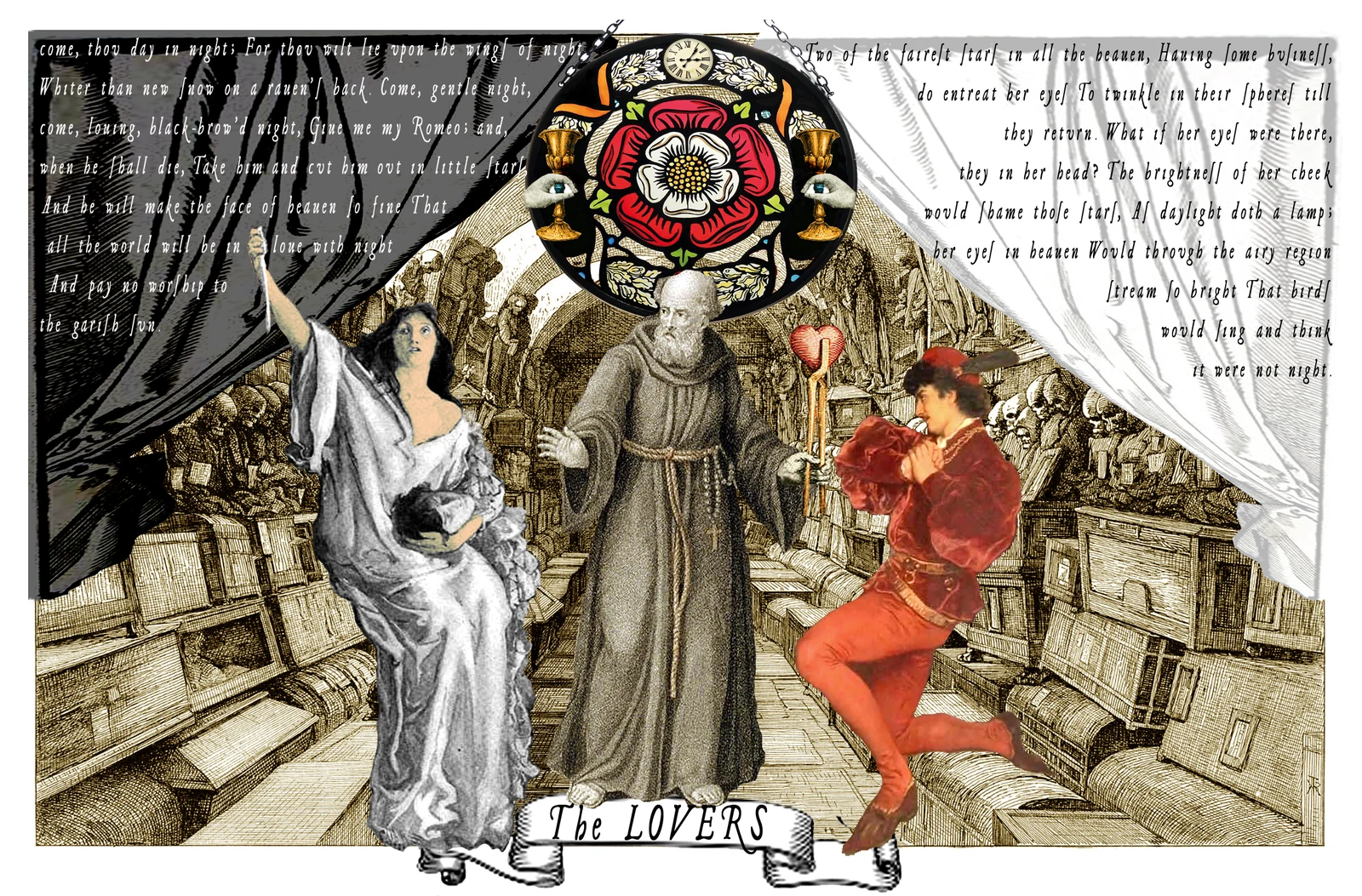
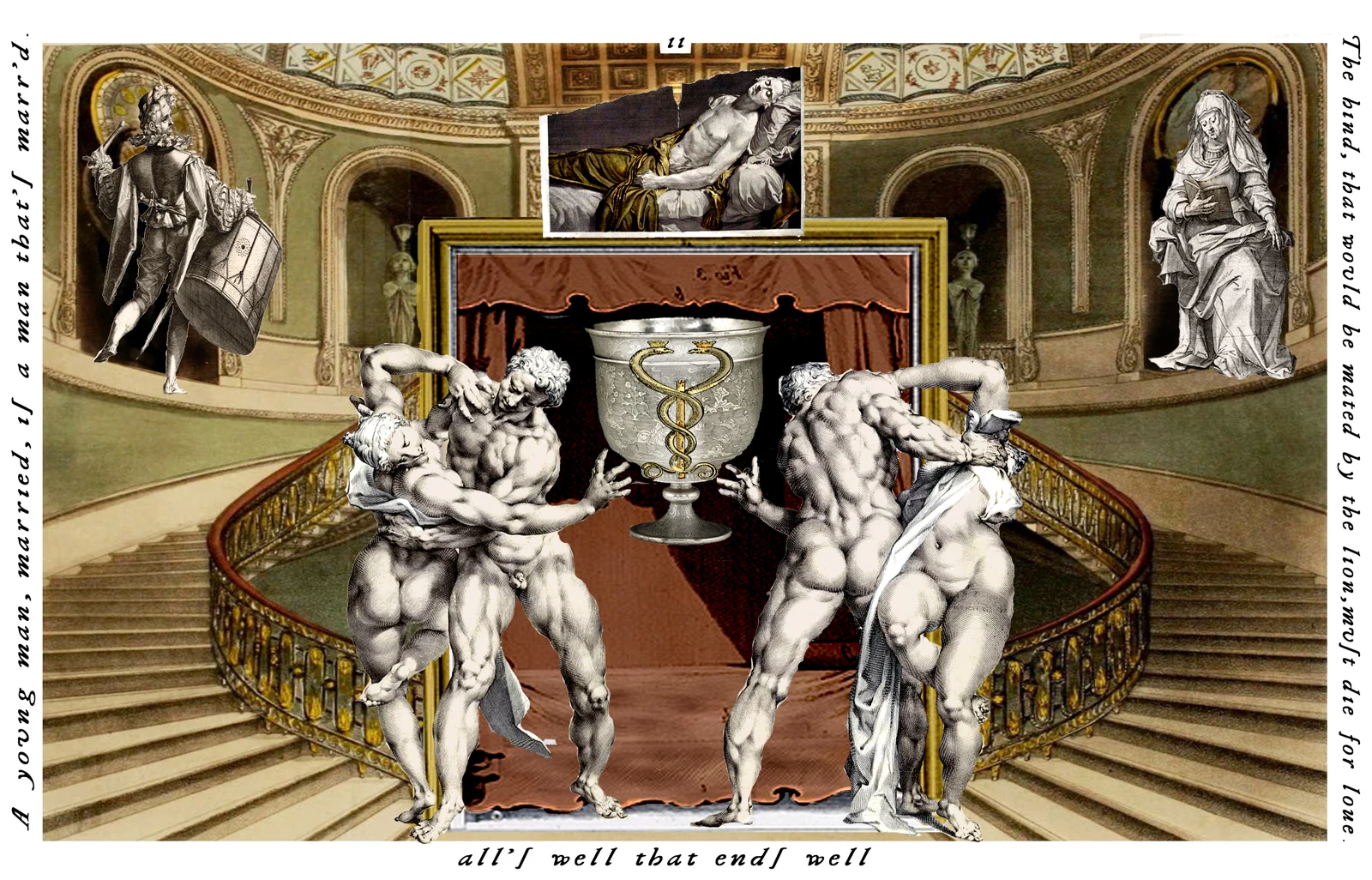
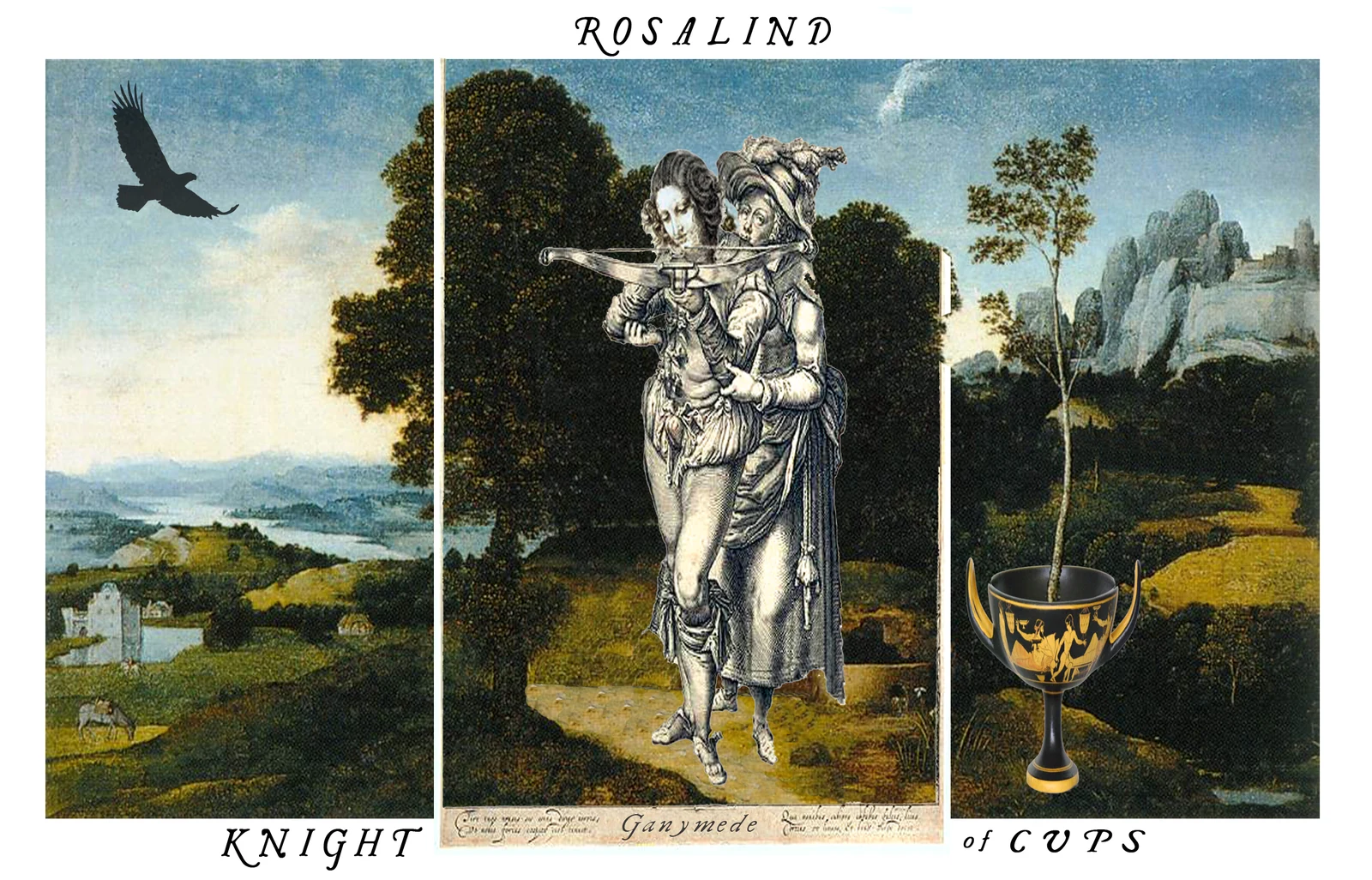
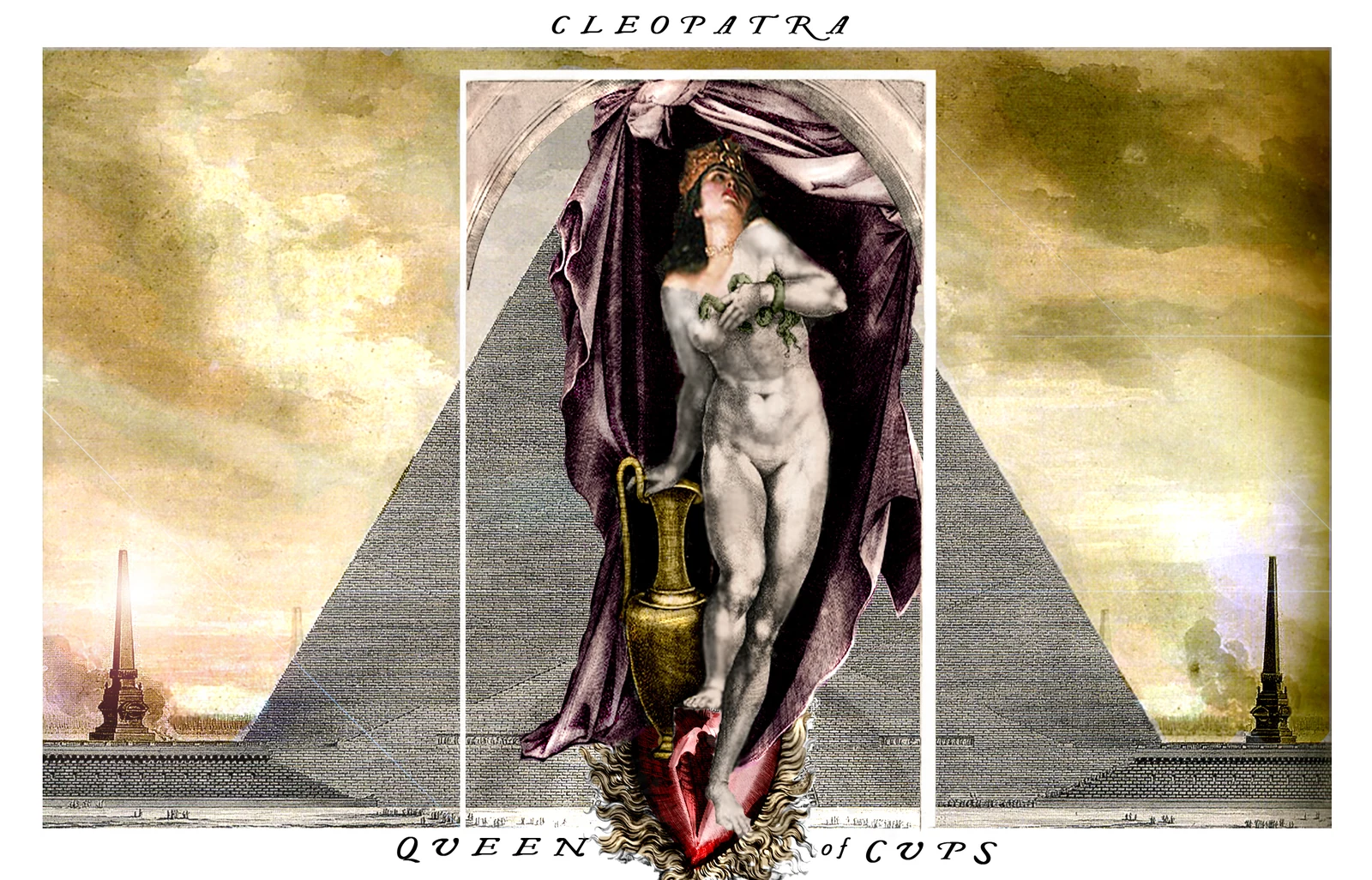
The Lovers carries Romeo and Juliet; Two of Cups turns toward Helena and Bertram; Knight of Cups moves through Rosalind’s romantic wit; and Queen of Cups gives emotional sovereignty to Cleopatra. Across the four, love appears as choice, pursuit, performance and power rather than one tidy promise.
Who will feel at home in this deck?
The Shakespeare Tarot may delight literary tarot readers, theatre lovers, collage collectors and journalers who enjoy cards with many doors. It is particularly expressive for character work, creative writing, relationship dynamics, public roles, ethical choices and moments when language hides as much as it reveals.
You may prefer another deck if you want conventional portrait cards, large central suit symbols, minimalist graphics or instant keyword reading. Browse the Minor Arcana as carefully as the famous Majors. The numbered cards reveal whether the deck’s wide stage can keep speaking after the first pleasure of recognition.
Card study
Justice — Shylock weighs law against mercy
A stern robed man stands before pale Venetian buildings with a cross-shaped sword, small golden scales and a long blade. A chained monkey sits apart at the right, while an oversized gold coin interrupts the lower border. The word JUSTICE crosses a white scroll, surrounded by lines about judgment, instruction and stolen blessing.
Leech names Shylock in the source image, so the traditional balance of Justice arrives inside a story of contract, prejudice, money and mercy. Upright, the card can ask for accountability and proportion; in shadow, a rule may be applied without humanity. In a reading, separate what is lawful from what is fair, notice who holds the scales, and let nearby cards show whether repair requires a boundary, restitution or compassion.
Work, creativity and the courage to revise the script
Staffs bring heat, ambition and performance; Swords sharpen argument and consequence; Cups hold desire and loyalty; Crowns ground the story in status, labour, body and exchange. For work or money questions, the literary setting can make a problem feel grander than it is, so finish by naming one real task, resource or conversation.
For creative work, the deck is wonderful at revealing cast and conflict. Ask what scene wants to be written, which voice has been kept offstage, and what the central figure refuses to see. A difficult card is not a command to manufacture tragedy. It may simply show where the draft needs a braver revision.
Four-card scene
Four shadows before the curtain falls
The Hanged Man suspends Hamlet, The Tower gives Macbeth a world breaking open, Nine of Swords gathers around Ophelia, and Ten of Swords carries the finality of Coriolanus. This sequence distinguishes hesitation, collapse, anguish and ending, so one dark card does not flatten every difficult reading into the same tragedy.


Buying guidance for the exact 2017 edition
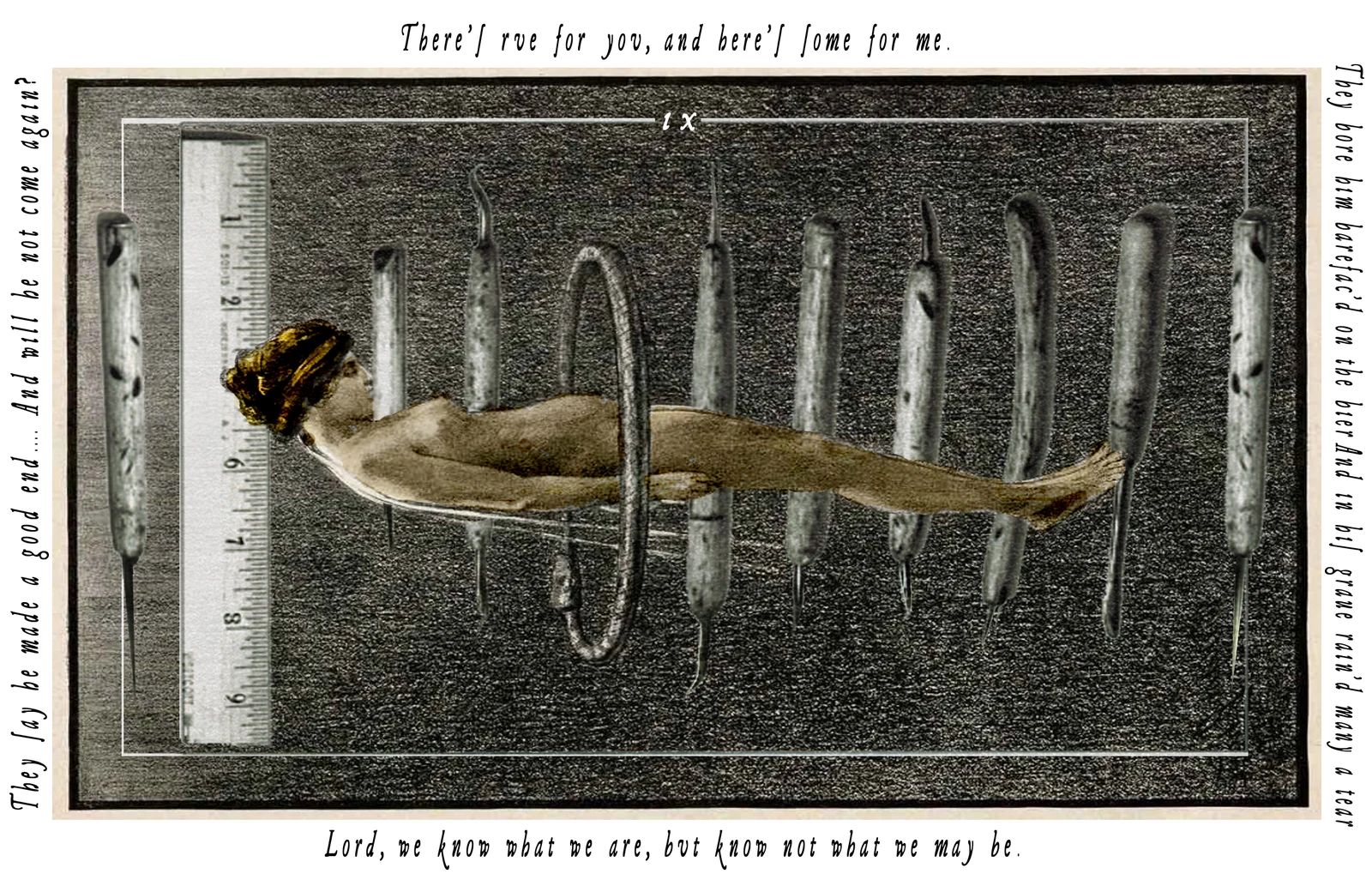
The reviewed deck is The Shakespeare Tarot created by Chris Leech, published by Welkin in 2017, with 78 landscape cards divided into Major Arcana, Staffs, Cups, Swords and Crowns. The complete Gallery was recovered from the historical creator site and corroborated against the assigned video and exact-deck records.
No current direct retail destination was verified strongly enough to place a commercial button on this release. In particular, the accessible evidence did not establish one reusable exact-edition package photograph and card-back reference suitable for a generated Last image CTA. That module is therefore omitted, and Aurica’s lifestyle module is correctly deferred behind the same public gate.
When considering a second-hand listing, match Chris Leech, Welkin, 2017, the landscape format and the renamed Staffs and Crowns suits. A listing for another Shakespeare-themed deck is not the same edition.
Aurica’s golden rule for The Shakespeare Tarot
Read the gesture before you believe the speech.
Characters can promise, protest and perform, but hands, distance and direction often tell the quieter truth. Let the card beside them decide what the next honest line must be.
Final thoughts
The Shakespeare Tarot is strange, learned and emotionally alert. Its complete cast does more than decorate traditional meanings; it turns every spread into a meeting between archetype and human motive, with quotations whispering around the edges.
I recommend it to a patient reader who enjoys literature without needing every symbol to resolve at once. Look slowly, listen for the line beneath the line, and trust that even an old play can open a brave new scene in your own life.
The Shakespeare Tarot FAQ
Who created The Shakespeare Tarot?
British artist Chris Leech created The Shakespeare Tarot. Contemporary deck records identify Welkin as publisher and 2017 as the publication year.
How many cards are in The Shakespeare Tarot?
It is a complete 78-card tarot: 22 Major Arcana followed by Staffs, Cups, Swords and Crowns, with 14 cards in each suit.
Which Shakespeare characters appear in the deck?
The creator’s archived card titles connect figures including Prospero, Falstaff, Romeo and Juliet, Hamlet, Shylock, Ophelia, Macbeth, Cleopatra and many others with traditional tarot roles.
Does The Shakespeare Tarot follow Rider–Waite–Smith?
It keeps the familiar 78-card architecture, but it renames Wands as Staffs and Pentacles as Crowns. Its wide collage scenes interpret meanings through plays, characters, quotations and Renaissance imagery rather than copying classic compositions.
Is The Shakespeare Tarot suitable for beginners?
It can suit a beginner who enjoys close looking and already knows some Shakespeare. The complete structure is reassuring, but the landscape collages and literary references reward a guidebook, short spreads and a simple Staffs/Wands and Crowns/Pentacles note.
Where can I buy the exact Chris Leech edition?
No current direct product page with sufficiently clear exact-edition packaging and seller details was verified for this release. Use the creator, publisher and 2017 edition details as checks, and avoid listings that show a different Shakespeare-themed deck.