Art of Life Tarot Cards
Explore the verified partial Art of Life Tarot card archive. Choose a group, then open any card for a larger carousel view.
A note from Aurica
Art of Life Tarot feels like wandering through a quiet gallery with a question folded in my pocket. Each card gives me a familiar tarot doorway, then lets a painting and a few carefully chosen words change the light around it. I find myself pausing before I interpret, noticing which face, colour, or small movement has caught me first.
That pause matters with this deck. The white space around each artwork makes the image feel almost framed, while the quotation below offers a second voice. I begin with the picture rather than treating the words as an automatic answer: where does my eye settle, what emotion lives in the scene, and how does that feeling meet the card’s traditional role?
In a spread, I like to read the paintings as a conversation. A figure turning away can create distance; a bright horizon can soften a difficult card; repeated reds or blues can reveal where desire or calm is gathering. Then I test that first impression against the question and the neighbouring cards, so the art deepens the message without replacing sound tarot structure.
The quotations can be lovely prompts for journaling, meditation, or a thoughtful daily draw, but I would not force every line to fit. Sometimes the most honest reading comes from the tension between the printed thought and what the artwork makes me feel. That little disagreement can show where I am repeating somebody else’s wisdom instead of listening to my own experience.
I reach for Art of Life Tarot when I want a reading to feel spacious, reflective, and quietly creative. Let one detail become your thread, follow it through the spread, and trust that your own life can meet these old masterpieces with a meaning that is vivid, useful, and entirely new.
Art of Life Tarot is a reflective tarot deck for readers who love paintings, quotes, and slow symbolic study. Instead of giving you only a scene to decode, each card also offers a line of wisdom that can become a journal prompt.
This TarotFans gallery currently includes 72 verified card images. The recovered set is partial, so the page keeps the count honest while still giving you a strong visual tour of the deck.
Quick take: who this deck is best for
Choose this deck if you like museum-style artwork, literary quotes, and readings that feel calm and thoughtful. It is especially good for daily pulls because one card can become a complete reflection for the day.

Major Arcana art study
The Fool: living in the present
The Fool sets the tone with a reminder to live in the present. The image feels less like reckless risk and more like permission to begin with openness.
Compared with a traditional Fool, this version reads like a quote you would tape above a desk: simple, direct, and useful when fear is making the first step too heavy.
Artwork and first impression
The deck feels like a small portable art gallery. The cards use paintings, portraits, landscapes, and still-life imagery, then pair those images with tarot titles and short quotations.
That means the first reading layer is visual, the second is tarot structure, and the third is the quote. When all three agree, the card can feel very clear.
Four-card moment: entering the gallery
Beginnings, skill, quiet strength, and solitude


This row shows the deck’s gentle teaching voice: begin where you are, use what you have, stay brave, and listen inward before moving again.
How Art of Life Tarot reads
Art of Life Tarot is strongest when you want reflection rather than drama. The quotes can soften difficult cards and make positive cards feel more practical.
For a daily pull, write the card title, the quote, and one real-life action it suggests. That keeps the reading from floating away into pretty words.

Major Arcana art study
Justice: truth as a daily practice
Justice in this deck invites a calm check-in with honesty. The fine-art style makes the card feel thoughtful rather than severe.
It asks where your choices need more balance, and where a beautiful explanation might still need to meet the facts.
Gallery notes and missing cards
The gallery has been kept in a clean tarot order: Major Arcana first, then Wands, Cups, Swords, and Pentacles. The filenames and labels are SEO-friendly and card-name focused.
Because the recovered source contains 72 images, TarotFans does not claim this is a complete 78-card gallery. The partial count is part of the page’s transparency.
Four-card moment: creative fire
Wands as momentum and inner spark


The Wands cards show the deck’s creative rhythm: inspiration, vision, recognition, and the point where too much effort starts to become weight.
Using this deck for readings
Try it for morning journaling, creative planning, and emotional reframing. It is also useful when a client or friend needs a gentle prompt rather than a heavy symbolic lecture.
For deeper spreads, let each quote become the advice line. Then use the tarot title to decide where that advice belongs: thought, feeling, action, or pattern.

Major Arcana art study
The Moon: dream language and uncertainty
The Moon works well in this deck because art and quote both naturally leave room for mystery. It does not need to explain everything to be useful.
In readings, it asks you to notice what is felt but not proven yet. That makes it strong for dreams, intuition, and confusing emotional weather.
Deck details
- Deck name: Art of Life Tarot
- Known creator: Charlene Livingstone
- Gallery status: 72 verified recovered card images on TarotFans
- Style: fine-art collage, tarot titles, inspirational quotes
- Best for: daily pulls, journaling, creative reflection, thoughtful readings
Four-card moment: emotion, thought, and real life
Cups, Swords, and Pentacles as practical guidance


This group moves from new feeling to sorrow, transition, and practical beginning. It is a simple spread for asking how to heal and what to build next.
Pros and cons
| Pros | Cons |
|---|---|
| Beautiful fine-art style with memorable quotes. | The TarotFans source gallery is partial at 72/78 verified images. |
| Excellent for journaling, daily pulls, and reflective readings. | Readers who dislike quote-based decks may prefer more scene-driven tarot. |
| Clean gallery order and SEO-friendly labels make the cards easier to browse. | Some traditional tarot details may feel looser because the art comes first. |
TarotFans golden rule
If a card makes you pause and write one honest sentence, it has already done useful work. Art of Life Tarot is built for exactly that kind of pause.
Final thoughts on Art of Life Tarot
Art of Life Tarot is a lovely fit for readers who want tarot to feel reflective, artistic, and quotable. It may not be the most literal teaching deck, but it can be a powerful companion for thoughtful daily practice.
Use the gallery as your test: if the paintings and quotes make you want to journal, this deck probably belongs close to your reading table.

Art of Life Tarot FAQ
Is Art of Life Tarot beginner-friendly?
Yes. The card titles are familiar and the quotes give beginners an extra doorway into the meaning, though the art-card style reads differently from a plain Rider-Waite-Smith deck.
Is the TarotFans gallery complete?
The current TarotFans gallery has 72 verified recovered images, so it is presented honestly as a partial gallery rather than an all-78 claim.
What makes Art of Life Tarot different?
Each card pairs tarot with fine-art imagery and an inspirational quote. It feels like a small gallery visit, a journal prompt, and a tarot reading at the same time.
What readings suit this deck?
It works beautifully for daily pulls, creative blocks, self-reflection, journaling, mindset questions, and readings where a quote can unlock the message.
Why are only 72 cards shown?
The recovered source set contains 72 verified card fronts. TarotFans keeps that count honest instead of padding missing cards with uncertain images.
Is the final product image generated?
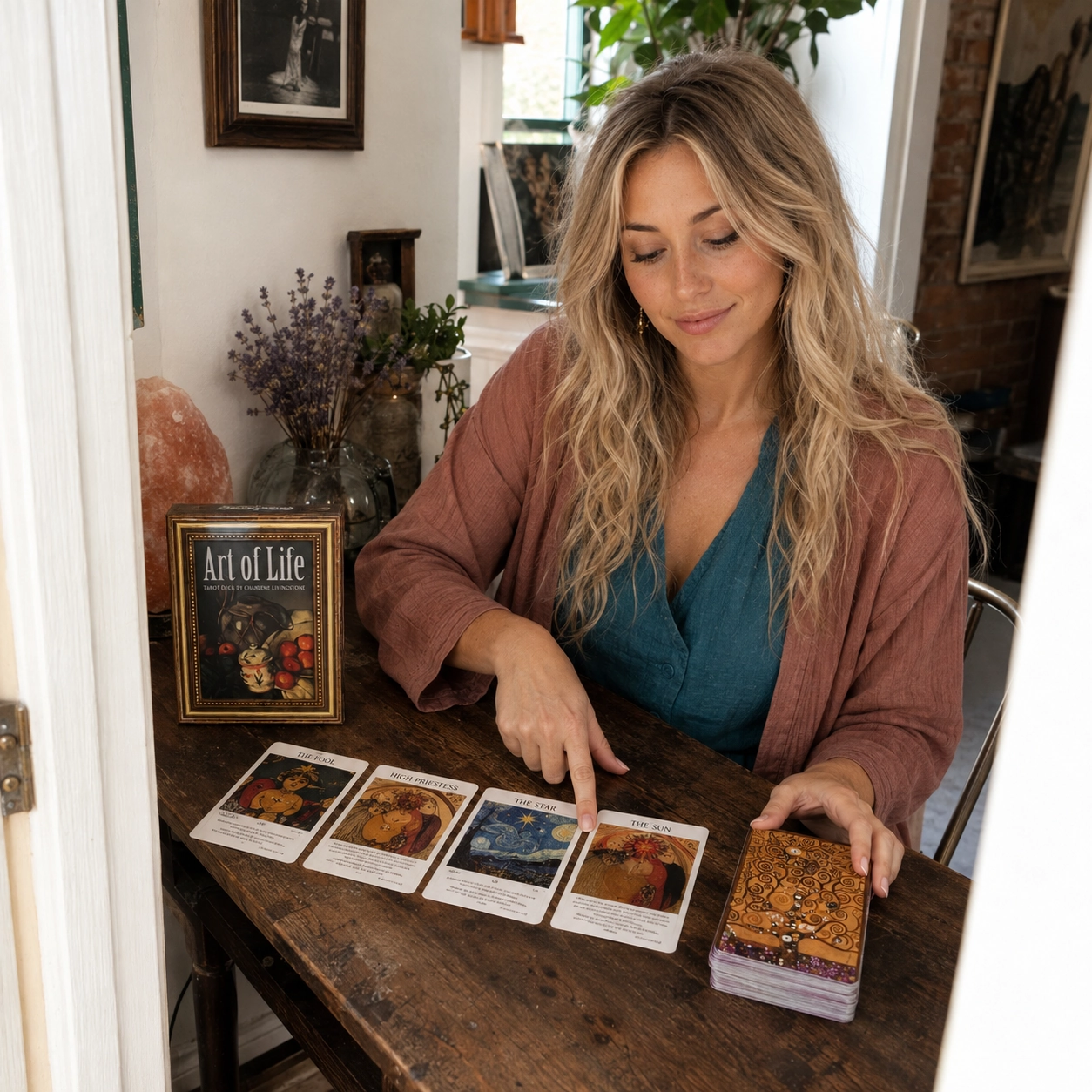
Yes. The bottom product image uses GPT Image 2 with an Art of Life Tarot cover reference, then it is placed above the final Amazon CTA.