Sacred Circle Tarot Review
Tarot Deck By Anna Franklin and Paul Mason
TAROT CARDS REVEALED
View Sacred Circle Tarot on Amazon
Explore the Sacred Circle Tarot Cards
Browse the verified card artwork in the deck’s own Pagan-inspired sequence. Choose an official group to filter the continuous gallery, or select a card for the full-size Lightbox.
View Sacred Circle Tarot on Amazon
Aurica’s Quick Take
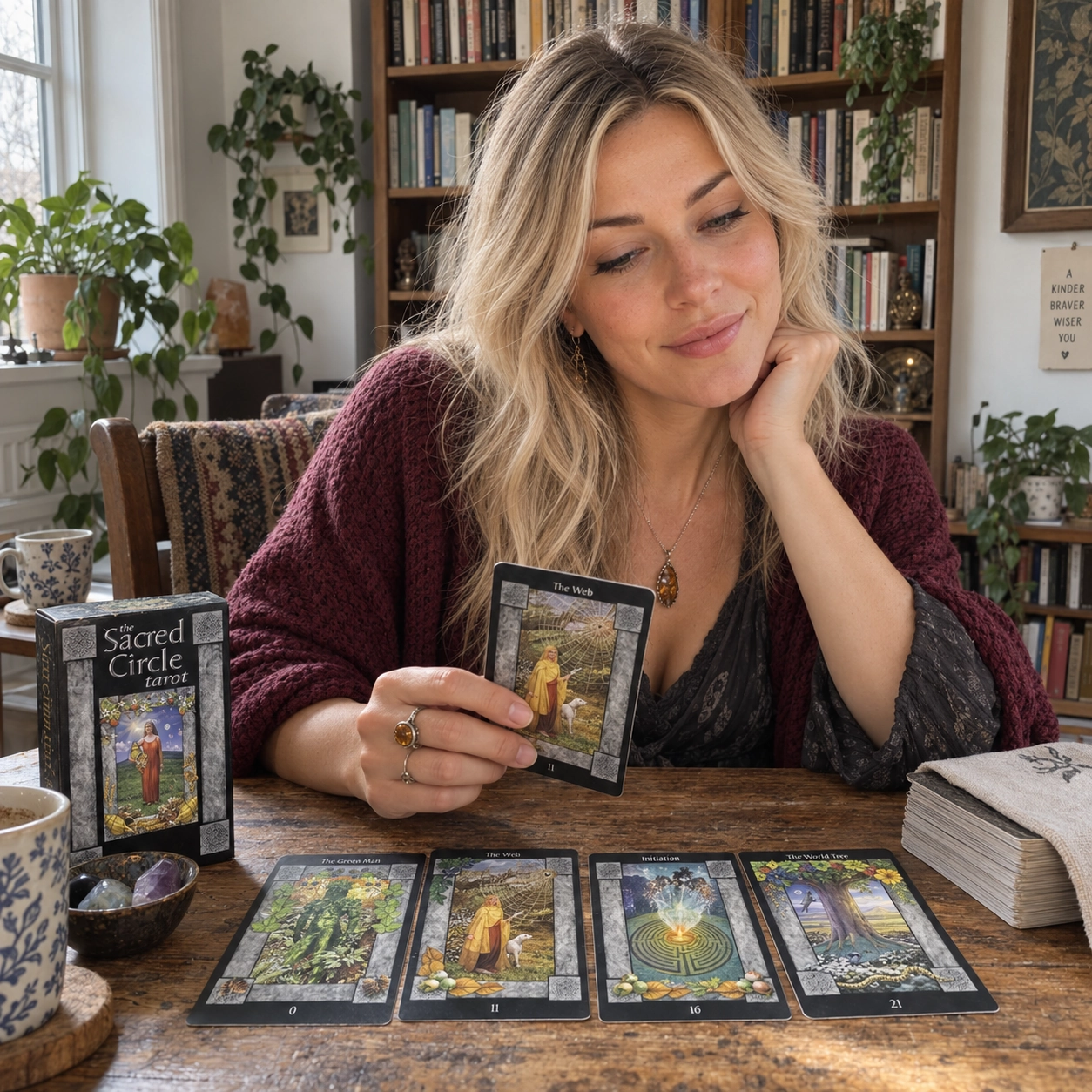
There is something wonderfully hushed about this deck, as if every card has just been lifted from a clearing after rain. I love the way its stone borders hold the image steady while leaves, stars, flames, and winding paths keep moving inside them. It makes a reading feel protected, but never closed.
I would reach for Sacred Circle Tarot when a question is really about belonging: where you fit, what season you are living through, or which part of yourself is ready to come home. The renamed Majors slow me down in the best way. Instead of rushing toward a memorised keyword, I have to meet The Web, Initiation, or The World Tree as a living presence.
If you are new to the deck, begin with three cards: what is taking root, what needs gentle tending, and what wants to grow toward the light. Let the landscape speak before the label. With patience, Sacred Circle Tarot becomes a warm green path back to your own inner steadiness.
What Sacred Circle Tarot feels like in a reading
Sacred Circle Tarot feels like stepping away from a bright room and letting your eyes adjust beneath trees. At first, Paul Mason’s images can seem quiet and almost ceremonial. Then the small tensions begin to appear: a figure pausing at a threshold, a road disappearing into mist, a glow held against deep violet sky. The deck does not hurry to explain itself. It asks you to notice.
I find its strongest readings begin with atmosphere. Before naming a textbook meaning, ask where the light is falling, what the figure is facing, and whether the landscape feels open, guarded, fertile, or bare. Those details turn the card from a symbol into a place where your question can breathe.

THE 2014 DECK EDITION
A Celtic landscape you can actually read with
Written by Anna Franklin and illustrated by Paul Mason, Sacred Circle Tarot carries a familiar tarot structure into standing stones, woodland paths, ritual spaces, and the turning seasons. The renamed Major cards make the deck feel like a living journey rather than a costume placed over an older system. Its blend of photography, drawing, and digital imagery gives the landscapes their unusual, dreamlike stillness.
The deck contains 78 cards. Its suits are Wands, Cups, Swords, and Discs, with Page, Knight, Queen, and King courts. That familiar backbone gives you somewhere steady to stand while the Pagan and Celtic imagery opens a different door.
- Best for
- Seasonal reflection and earth-centred readings
- System
- Renamed Major Arcana; Wands, Cups, Swords, Discs
- Edition
- Llewellyn, 2014 deck edition

CARD STUDY
The Green Man begins in the living world
Leaves crowd the frame until the figure seems to emerge from the forest itself. His face is not separate from the greenery; it is held inside it, surrounded by growth, flowers, and curling vines. That visual abundance makes the card feel less like a leap into emptiness and more like a first step taken with nature at your back.
In a reading, The Green Man can mark curiosity, trust, and the moment before a path becomes familiar. Upright, he asks where life is inviting you to begin. In shadow, all that green can become distraction—following every rustle without choosing a direction. The practical question is simple: what beginning feels alive enough to deserve one real step today?
The renamed Majors are the deck’s real heartbeat
The Sacred Circle Majors do not merely repaint the usual titles. The Green Man, The Lady, The Lord, The Druid, The Warrior, The Shaman, The Web, Initiation, Rebirth, and The World Tree create a mythic vocabulary of their own. You can still recognise the broad tarot journey, but the emotional emphasis changes.
That makes the deck especially rewarding for readers drawn to seasonal spirituality, earth-centred ritual, and questions of belonging. It also means beginners should keep the guidebook close for the first few readings. The names are intuitive once you meet them in sequence, yet they are not a one-to-one visual copy of Rider–Waite–Smith.
FOUR-CARD STUDY
Four guardians of belonging
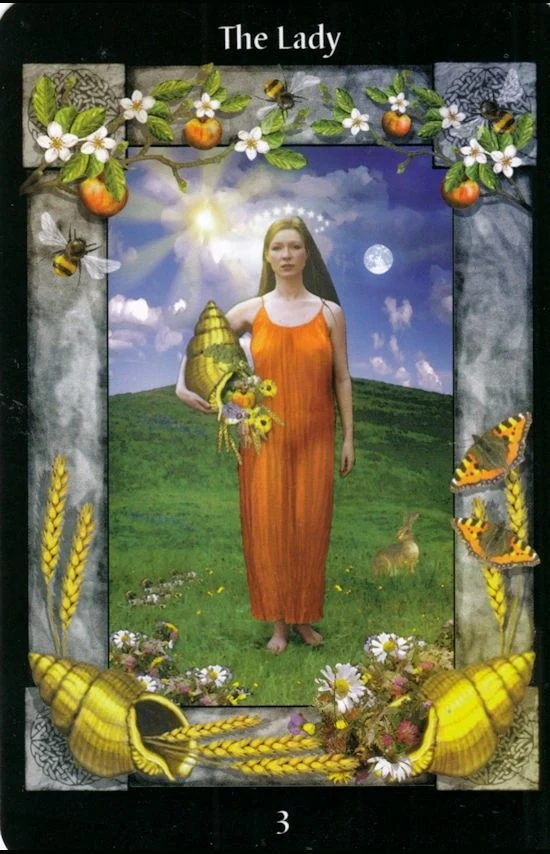
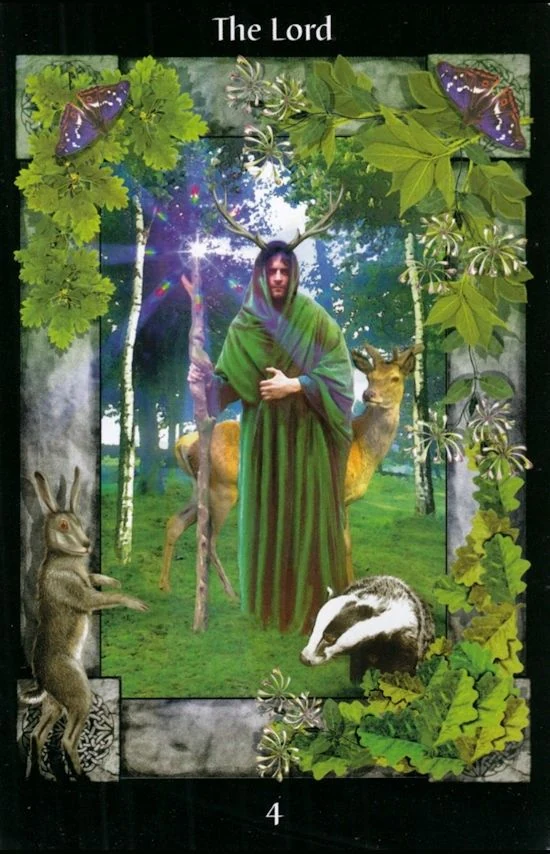
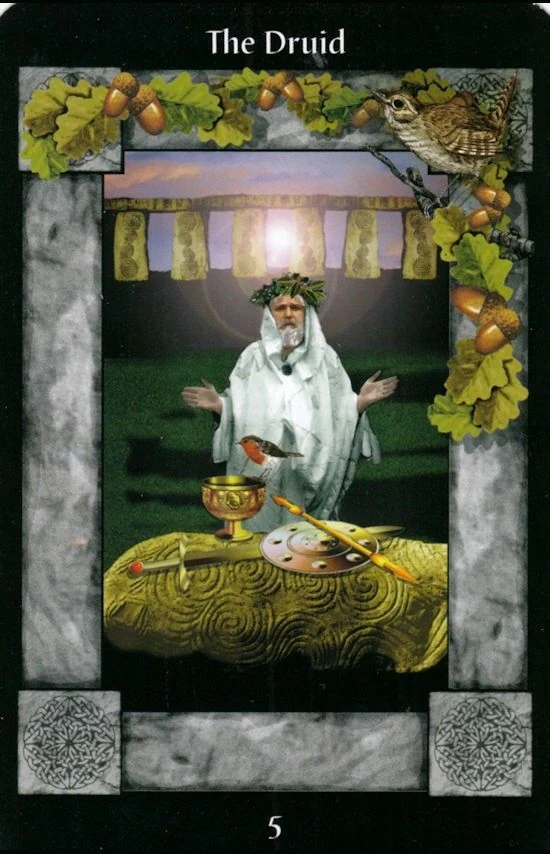
The Lady, The Lord, The Druid, and The Warrior hold four different forms of authority: nurturing presence, embodied stewardship, learned tradition, and active protection. Read them together when a question asks not only “What should I do?” but “What kind of strength does this moment need?”

How the artwork speaks
Mason’s borders feel like carved thresholds. The stone blocks and knotwork hold each scene still, while branches, fruit, flowers, animals, fire, water, and changing skies keep the inner image alive. This contrast is useful in readings: the border suggests the role or lesson of a card; the scene shows how that lesson is moving now.
Try describing the weather of a card before its meaning. A clear horizon can signal room to act. A dark passage can point to uncertainty that must be entered rather than solved from a distance. A bright object against shadow often reveals where attention wants to go.
CARD STUDY
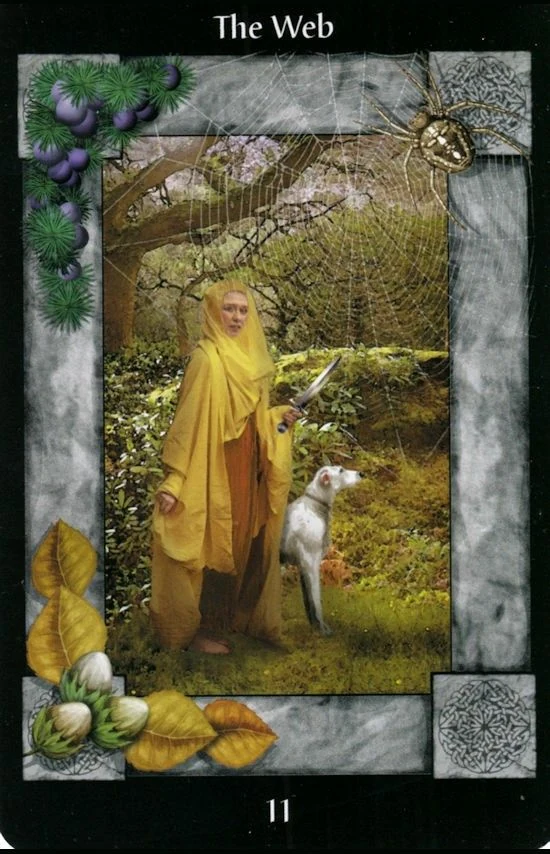
The Web asks what connects the choice
A woman in a golden cloak stands beneath spreading branches, with stones and the woodland floor gathered around her. The scene is spacious but not empty; every line appears to lead into another. The image turns consequence into something organic rather than punitive.
In a reading, The Web asks you to trace relationship and cause. Upright, it can bring balance through honesty: this action touches that person, this promise shapes that future. In shadow, it can feel like being trapped by threads you helped create. Instead of asking whether a choice is “fair” in the abstract, ask what connection needs to be acknowledged before you move.
A four-card spread for the turning year
This deck loves questions that unfold over time. Lay four cards in a circle rather than a straight line: What is ending? What is stirring? What needs tending? What is ready to be shared? Read the final card back toward the first so the spread feels seasonal, not final.
For an easier daily version, pull one card for the atmosphere and one for your next grounded action. For a deeper reading, add a centre card for the pattern that connects all four positions.
FOUR-CARD STUDY
Fire, descent, guidance, return
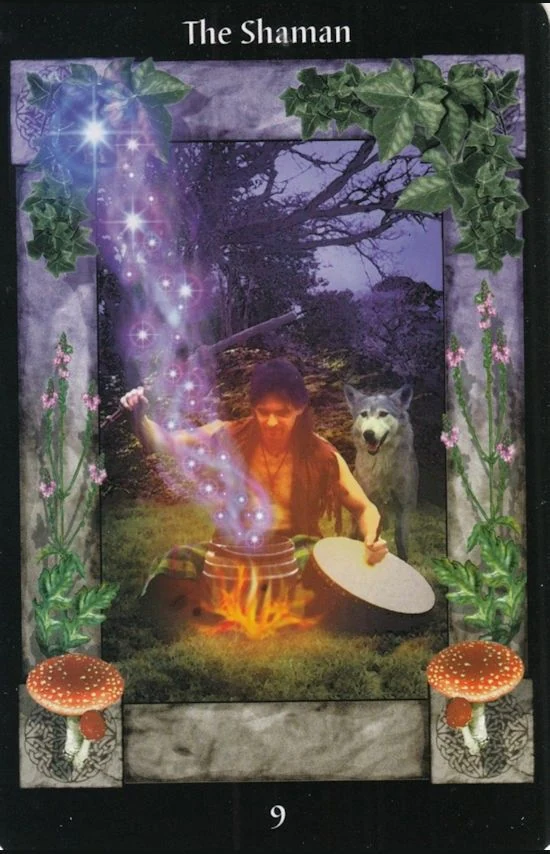
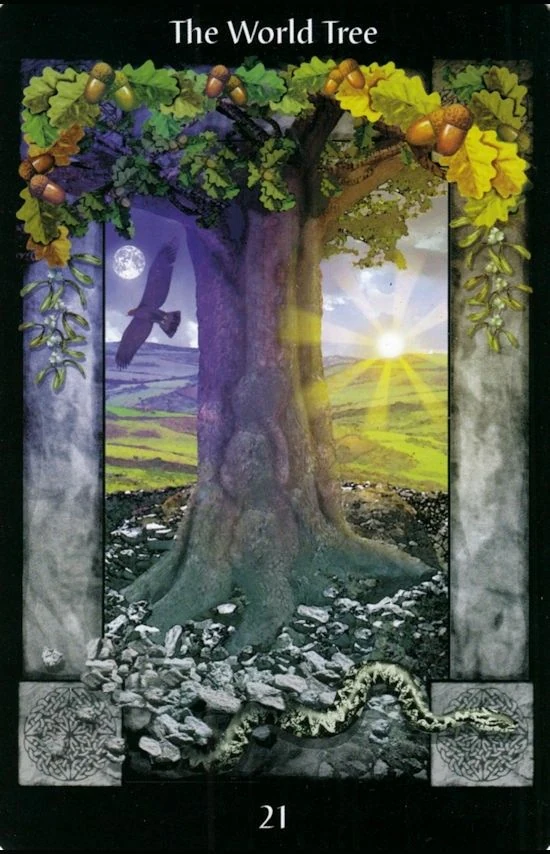
The Shaman, The Underworld, The Star, and The World Tree form a complete inner journey. Something is kindled, carried through darkness, oriented by a distant light, and finally returned to a larger living pattern.


Reading gently when a card feels dark
The Underworld, Death, The Tower, and Initiation can look solemn, but this deck rarely feels cruel. It treats difficult passages as thresholds. Rather than predicting disaster, ask what has become too small, what truth is waiting beneath the surface, and what support belongs beside you while you cross.
The deck’s golden rule is: read the landscape before the verdict. A difficult card may contain a gate, a guide, a path, or a glimmer of light. Let that visible detail shape the next question.
CARD STUDY
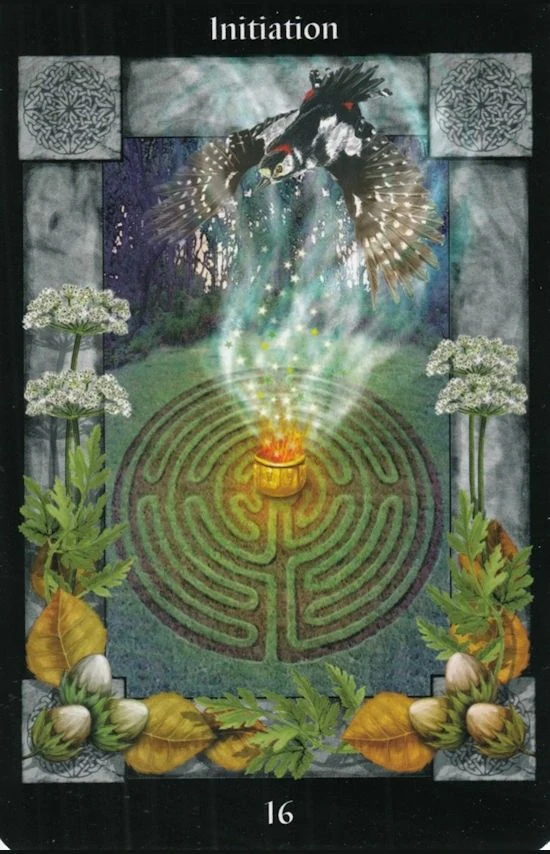
Initiation makes change physical
A glowing figure rises above a spiral labyrinth, framed by stone and greenery. The spiral matters: this is not a straight escape from an old self. The path turns inward, doubles back, and still reaches the centre. Light pours through the upper half of the card, making transformation feel both mysterious and embodied.
Upright, Initiation can signal a passage that changes how you understand yourself. In shadow, it can reveal the wish to claim a new identity without walking the uncomfortable middle. In an actual reading, ask what practice, promise, or honest conversation would make the change real.
The four suits keep the reading grounded
The Minor Arcana returns to familiar terrain—Wands, Cups, Swords, and Discs—but gives each suit a clear atmosphere. Wands bring heat and creative movement. Cups hold feeling, intuition, and relationship. Swords sharpen thought and conflict. Discs place the question in body, work, resources, and the living earth.
When a spread feels muddy, sort its message through those four lenses. Where is the spark? What is the feeling? Which thought is cutting through? What needs practical care? That elemental check keeps an intuitive reading from floating away.
FOUR-CARD STUDY
Four seeds for one intention
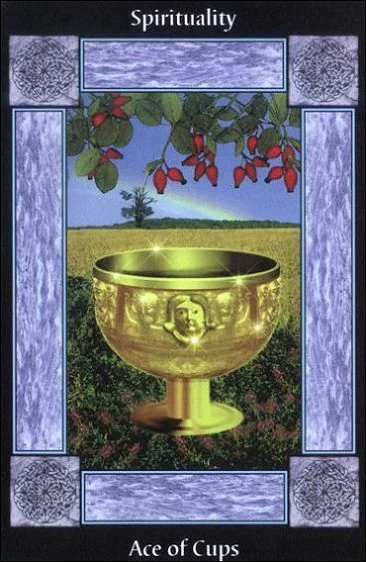
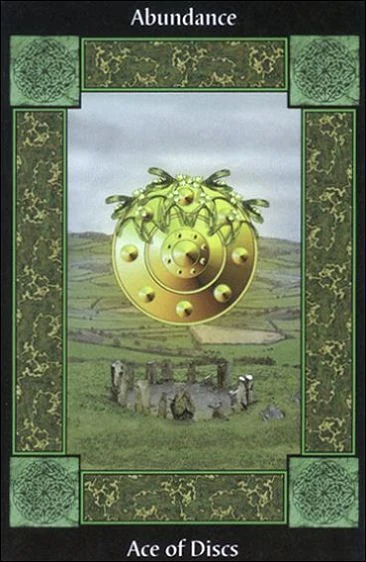
The four Aces strip each suit back to its first living impulse: the wand’s spark, the cup’s receptive depth, the sword’s bright line of thought, and the disc’s promise of tangible growth. Use them as a compact planning spread for one intention you want to nurture.


Who will enjoy Sacred Circle Tarot?
This deck suits readers who love forests, ritual imagery, Celtic atmosphere, and tarot that rewards slow looking. It can work for beginners who enjoy learning through story and symbolism, although the renamed Majors ask for more patience than a close RWS clone.
It may be less comfortable for someone who wants bright contemporary scenes, instant keyword cues, or highly literal everyday situations. Sacred Circle Tarot is at its best when you have time to sit with the image and let one detail become the thread you follow.
Sacred Circle Tarot pros and cons
What I love
- A distinctive Celtic and Pagan visual world
- Renamed Majors that deepen the deck’s identity
- Familiar four-suit structure beneath the new language
- Strong landscapes for intuitive and seasonal readings
- Especially rich for spiritual growth and threshold questions
What to know first
- The renamed Majors need a little learning time
- The solemn palette may feel too quiet for some readers
- Small symbolic details reward unhurried viewing
- The non-reversible card back makes orientation visible
- Readers wanting a close RWS clone may prefer another deck
Buying the right edition
The Amazon link on this page points to the 2014 Sacred Circle Tarot Deck by Anna Franklin and Paul Mason. An older boxed kit, The Sacred Circle Tarot: A Celtic Pagan Journey, also appears in second-hand listings and includes a companion book. Check the cover and product details before ordering so you know which edition you are choosing.
The cards shown in the Gallery match the Sacred Circle artwork and its renamed Major Arcana sequence. The 2014 deck remains the clearest direct retail match for the buying links used here.
View Sacred Circle Tarot on AmazonFinal Thoughts
Sacred Circle Tarot is not a deck that shouts across the table. It gathers meaning slowly, through branches, stone, flame, water, and the feeling of standing at a threshold. Its renamed archetypes give familiar tarot bones a different pulse, one that feels seasonal and deeply rooted.
If you enjoy readings that connect inner change with the natural world, this deck has a beautiful patience. Give it room, describe what you see before deciding what it means, and the cards begin to feel less like answers handed down and more like a circle you have been invited to enter.
 View Sacred Circle Tarot on Amazon
QUESTIONS READERS ASK
Sacred Circle Tarot FAQ
Is Sacred Circle Tarot good for beginners?
Yes, especially for a beginner drawn to nature-based symbolism. The four suits and court structure are familiar, but the renamed Major cards deserve time with the guidebook while you learn their particular language.
Who created Sacred Circle Tarot?
Anna Franklin wrote the deck, and Paul Mason illustrated it. The 2014 boxed deck is published by Llewellyn.
What suits does the deck use?
The Minor Arcana uses Wands, Cups, Swords, and Discs. Each suit runs from Ace through Ten, followed by Page, Knight, Queen, and King.
Why are some Major Arcana names different?
The renamed cards place the Major journey inside a Celtic and Pagan framework. Titles such as The Green Man, The Lady, The Lord, The Druid, The Web, Initiation, Rebirth, and The World Tree give the deck its own spiritual vocabulary.
Is the card back reversible?
No. The back is non-reversible, so orientation can be visible before you turn a card over.
What readings suit Sacred Circle Tarot best?
It is especially expressive for spiritual growth, seasonal reflection, creative direction, belonging, life transitions, and questions where the surrounding emotional landscape matters as much as a quick answer.