Tarot In Wonderland Card Gallery
Explore the verified Tarot In Wonderland artwork in one continuous gallery. Select any card to open the larger Lightbox, then use the previous and next controls to move through the available cards.

Aurica’s Quick Take
Tarot In Wonderland is a playful, clever, Alice-inspired tarot deck for readers who enjoy storybook symbolism, odd turns, chessboard logic, tea-party chaos, and cards that make you ask better questions. It looks whimsical, but it does not read shallow. The cute surface can make hard truths easier to approach because the deck invites curiosity before defensiveness.
I would reach for this deck when a reading feels tangled: mixed signals, changing roles, creative blocks, identity shifts, or a situation where the “rules” no longer make sense. Wonderland gives the reading a language for confusion without making the reader feel foolish for being confused.
I love how this deck turns uncertainty into a room I can wander around. The Fool skips towards the dark rabbit hole with such bright trust, while The Lovers feels less like a tidy romance and more like a scene where power, choice, and expectation are all speaking at once. I begin with the detail that tugs at me, then test that feeling against the card’s familiar tarot role and the cards beside it.
The artwork often makes me smile before it makes me pause. That small change of pace is useful: curiosity loosens the knot, and then the practical question can appear. Who is making the rules here? Which role have I outgrown? What honest next step would bring me back to solid ground?
Wonderland can open an imaginative door, and I love how this deck still leads the reading back to a kind, workable choice in the real world. Follow the rabbit that sparks your curiosity, and trust yourself to carry one clear, hopeful step home from the adventure.
Tarot In Wonderland card details
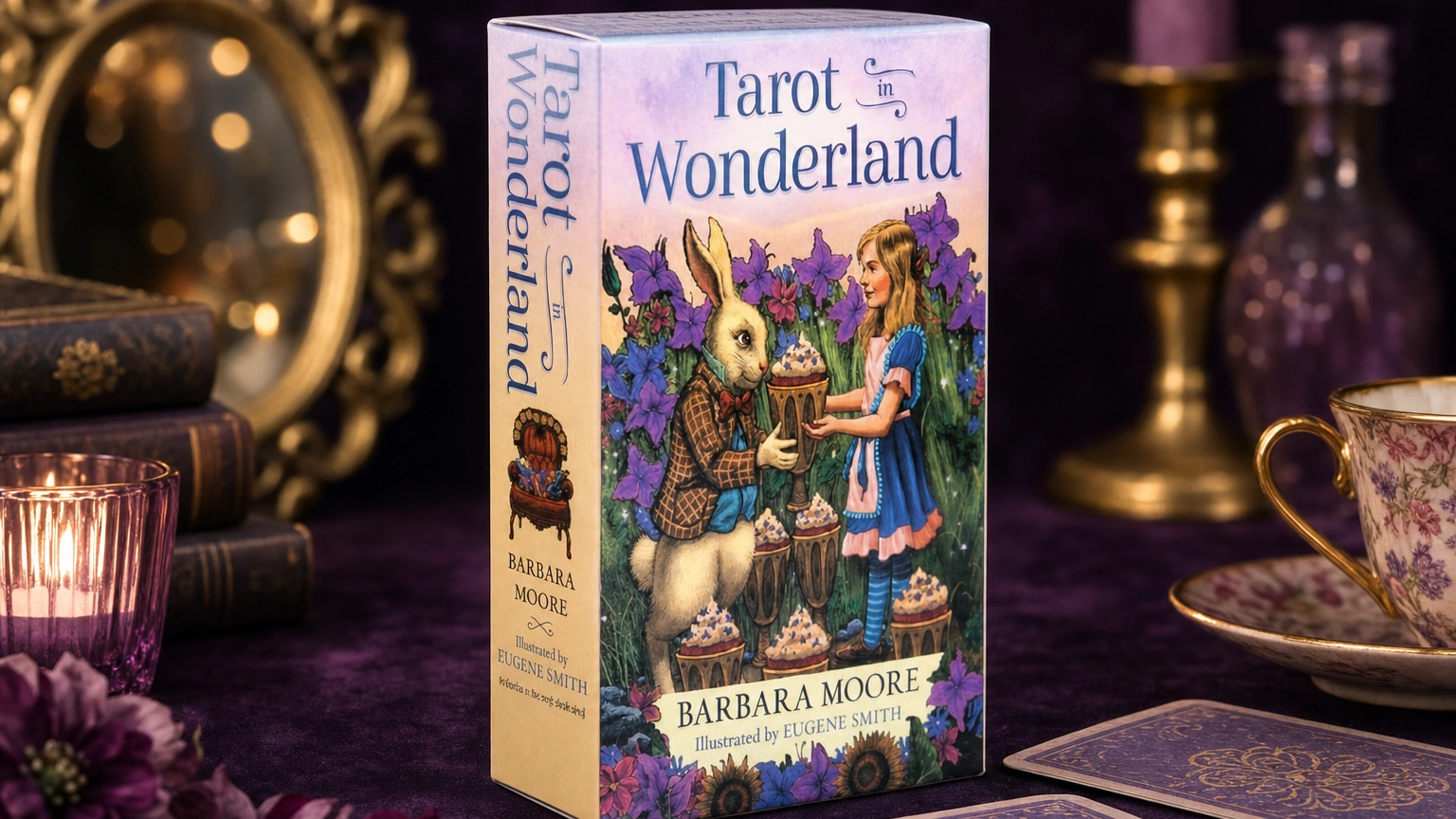
This is a full tarot system inspired by Alice’s Adventures in Wonderland and Through the Looking-Glass, written by Barbara Moore with artwork by Eugene Smith. The structure stays close enough to Rider-Waite-Smith that familiar tarot meanings still help, while the Wonderland world adds its own emotional weather.
The deck uses the classic major and minor arcana rhythm: big archetypal turning points, four suits, court cards, and scenes that invite story reading. The difference is mood. A card may still be about choice, grief, skill, or power, but the image may ask it through riddles, costumes, strange logic, or a character who is trying to find the way through an impossible place.
Art style: whimsical, theatrical, and sharper than it first looks
The art is bright, busy, and full of story clues. Alice, the White Rabbit, the Queen of Hearts, the Mad Hatter, and other Wonderland figures move through tarot scenes that feel familiar but slightly tilted. That tilt is the point. The deck often shows what happens when a person follows a rule too long, enters a role too deeply, or keeps trying to be sensible in a place that is not sensible.
In readings, I like to start with the scene before the keyword. Who is acting? Who is watching? What rule is being obeyed? What rule is quietly breaking? Those questions help the deck become practical instead of just decorative.
First impressions
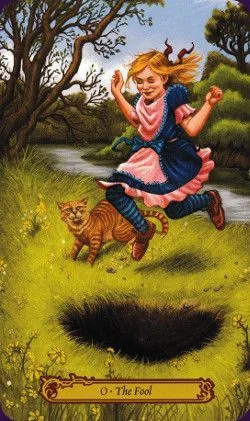


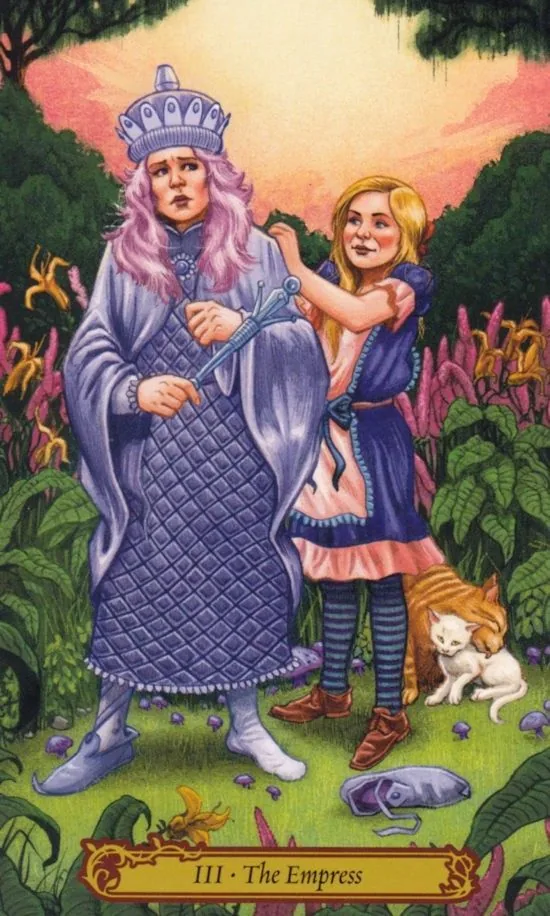
These opening cards show how quickly the deck moves from curiosity to power, intuition, and embodiment. It is playful, but it asks the reader to pay attention.
How Tarot In Wonderland reads in real spreads
Tarot In Wonderland reads best when you let the image speak first and the traditional meaning speak second. The Rider-Waite-Smith structure gives you the bones. Wonderland gives you the behavior: who is rushing, hiding, performing, bargaining, or pretending the strange thing is normal.
For a daily pull, I would keep the question simple: “What rule am I living by today?” or “Where am I being invited to get curious?” For a relationship reading, I would ask what roles each person keeps playing. For shadow work, I would ask where confusion has become a shelter instead of a temporary stage.
Card close-up
The Fool: curiosity before certainty
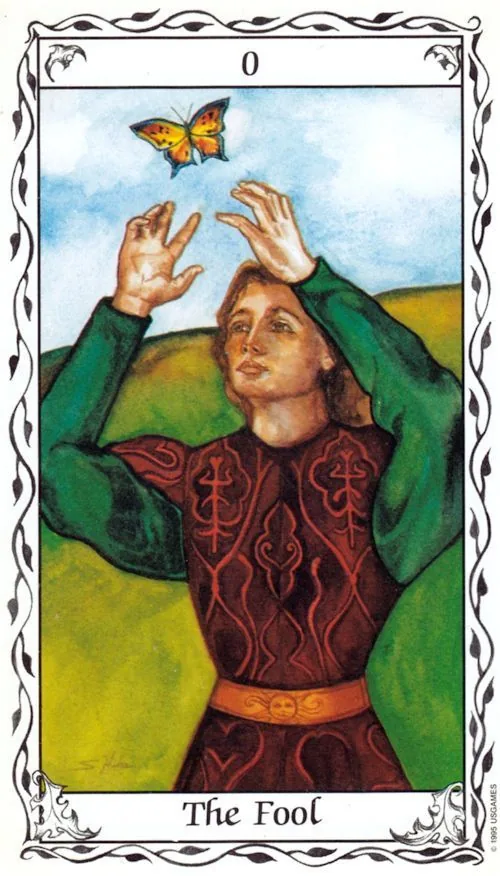
The Fool is a perfect doorway into this deck. Instead of treating the card as blind risk, I would read it as the moment before a strange path teaches you something. In a real reading, this card asks: where do you need enough innocence to begin, but enough awareness not to ignore the hole in the path?
Beginner friendliness
I would call Tarot In Wonderland medium-easy. If you know Alice, you will catch many clues quickly. If you are new to tarot, you can still read it, but keep a simple Rider-Waite-Smith guidebook close. The deck is not difficult because it is dark or abstract. It is difficult because it is witty. Sometimes the point is hidden inside the joke.
A beginner-friendly way to use it is to pull one card, name three things you see, then turn those details into one action. For example: “I see waiting, a strange rule, and a character who is unsure. My action is to pause before I agree to something.” That is enough. You do not need to solve the whole Wonderland puzzle every time.
Pressure and choice
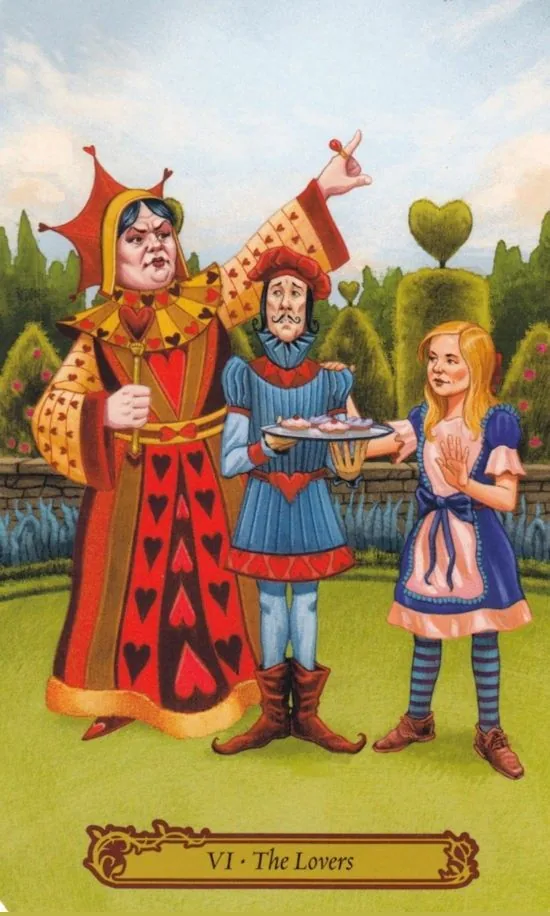
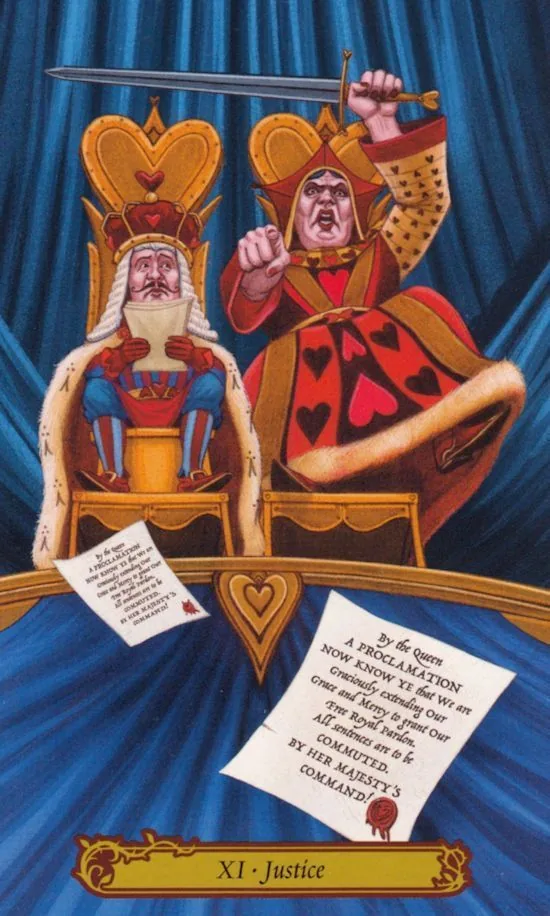
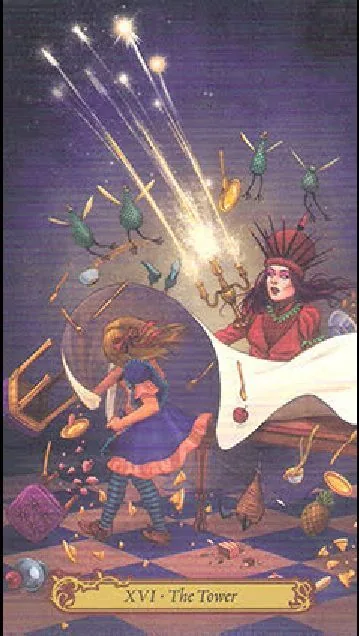
When the story turns, this deck often asks what choice, rule, collapse, or leap is shaping the whole reading.
Easy, medium, and hard reading examples
Easy example: a one-card daily pull
Pull one card and ask, “What energy wants my attention today?” If you pull The Fool, do not only write “new beginning.” Ask where you are stepping into unfamiliar territory and what one small thing would make that step wiser.
Medium example: a two-card decision reading
Use The Fool and The Magician as a teaching pair. The Fool shows the emotional weather: curiosity, risk, and not knowing yet. The Magician shows the choice point: what tools you actually have. Together they ask you to begin, but not empty-handed.
Hard example: a shadow-work question
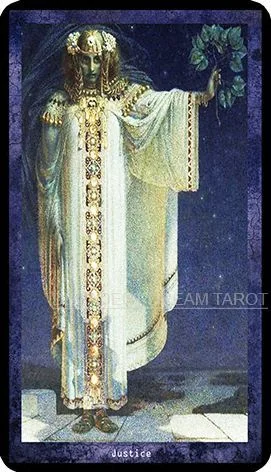
Bring in The High Priestess and ask what truth has been avoided. In this deck, secrecy can feel dreamlike and protective, but the reading should still land in real life. What do you know quietly? What protection is no longer needed? What mature action would change the pattern without drama?
Card close-up
The Magician: use the tools on the table
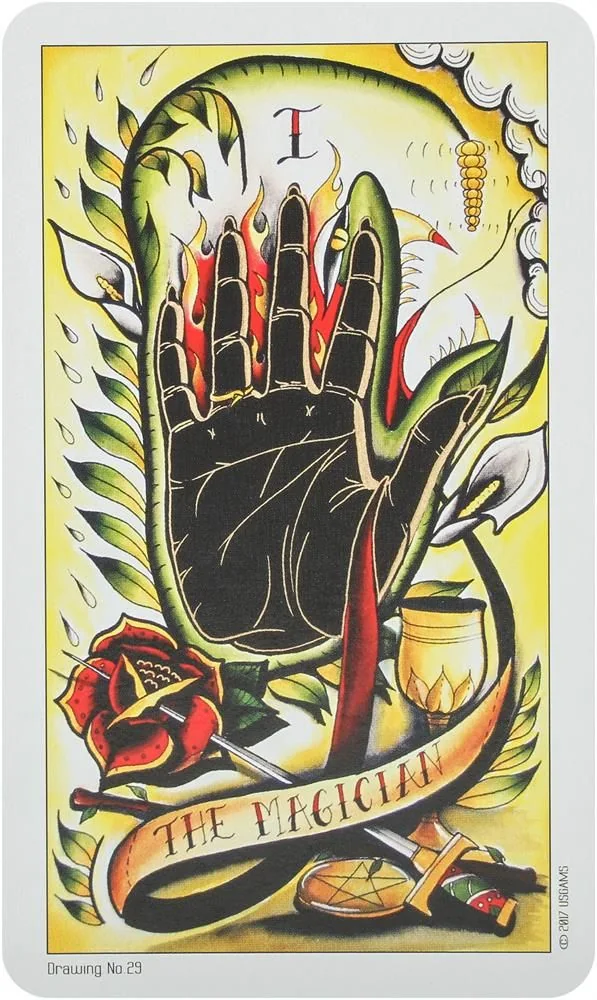
The Magician is where Wonderland becomes practical. The card asks what can actually be done with the tools already present. In a reading, I would look for agency: not perfect control, but the next skillful move.
Best uses for Tarot In Wonderland
- creative blocks where the reader needs a strange new angle
- relationship readings where roles keep changing
- identity questions, experiments, and “who am I becoming?” moments
- confusing situations where the old rulebook has stopped working
- playful daily pulls that still need real insight
The deck is also lovely for journaling. Wonderland symbolism gives the mind permission to be honest indirectly. Sometimes a reader can write the truth more easily when it arrives dressed as a rabbit, a queen, a door, or a tea party.
Heart language


The cups in this deck are tender without becoming syrupy. They show longing, disappointment, pleasure, and emotional maturity with a storybook edge.
What I like most
What I like most is the way the deck keeps its humor useful. A whimsical tarot deck can become cute wallpaper if it forgets the reading. Tarot In Wonderland usually avoids that. The scenes create questions: Who has power here? What rule is silly? What rule is dangerous? What tiny detail changes the whole meaning?
That makes the deck especially good for readers who already know tarot keywords but want to become better image readers. It trains you to slow down and notice the scene.
Card close-up
The High Priestess: listen under the nonsense
The High Priestess gives the deck a quiet center. In a Wonderland reading, she reminds us that not every strange thing needs to be solved loudly. Sometimes the wiser move is to notice the pattern, keep your inner knowing clean, and wait until the right door opens.
What to know before buying
This deck is charming, but it is not shallow. Its humor can expose avoidance, denial, circular thinking, and the little stories we tell ourselves when we do not want to make a choice. If you want a plain, minimal, keyword-style tarot deck, this may feel too busy. If you like symbolic worlds with personality, it can be a joy.
The guidebook is helpful because Barbara Moore gives the deck a clear reading spine. I would not treat the Alice theme as decoration. It is part of how the deck thinks.
Grounding the reading


The swords show why this deck is not only whimsical. It is very good at naming mental loops, hard choices, and the truth that cuts through performance.
Aurica’s golden rule
When the scene feels absurd, ask what rule has stopped making sense. That is the golden rule for Tarot In Wonderland. The deck often reveals the hidden rule before it reveals the answer. Once you name the rule, the reading becomes much easier to use.
Final thoughts
Tarot In Wonderland is best for readers who want play, story, and practical truth in the same spread. It can be gentle, funny, and strange, but it can also be surprisingly direct. Let the deck be odd. Then ask the grounded question: what is this scene asking me to see, choose, release, or try next?
Tarot In Wonderland FAQ
Is Tarot In Wonderland beginner-friendly?
Yes, with one gentle caveat. Tarot In Wonderland is friendly for visual beginners because the scenes are expressive and memorable, but it is clever rather than plain. Keep a simple Rider-Waite-Smith meaning guide nearby until the Wonderland jokes and reversals feel familiar.
Do I need to know Alice in Wonderland to read with this deck?
You do not need to know every Alice reference. Knowing the story helps you catch extra layers, but the cards still show mood, conflict, choice, and consequence clearly enough for real readings.
Who created Tarot In Wonderland?
Tarot In Wonderland pairs Barbara Moore’s tarot writing with Eugene Smith’s Alice-inspired artwork. That combination is why the deck feels playful on the surface but structured enough for practical spreads.
How close is Tarot In Wonderland to Rider-Waite-Smith?
It keeps a Rider-Waite-Smith backbone, so familiar tarot meanings are still useful. The Wonderland setting changes the emotional flavor: confusion, curiosity, role-play, rules, and absurdity become part of the message.
What readings suit Tarot In Wonderland best?
I like it for creative blocks, mixed signals, identity questions, relationship patterns, and any moment where life feels a little upside down. It is especially good when a serious truth needs a softer doorway.
Is Tarot In Wonderland the same as Wonderland Tarot?
No. Tarot In Wonderland is its own deck, with its own Barbara Moore and Eugene Smith system and artwork. Do not swap in images, guidebook notes, or assumptions from similarly named Wonderland decks.