Maroon Tarot Cards
Explore this curated selection of clearly identifiable Maroon Tarot card fronts. Use the filters, then tap any card for a larger carousel view.
Aurica’s Quick Take
Choose this deck if you like entering an image rather than extracting a keyword. Skip it if you want sparse line art or a visual system that disappears behind traditional meanings.
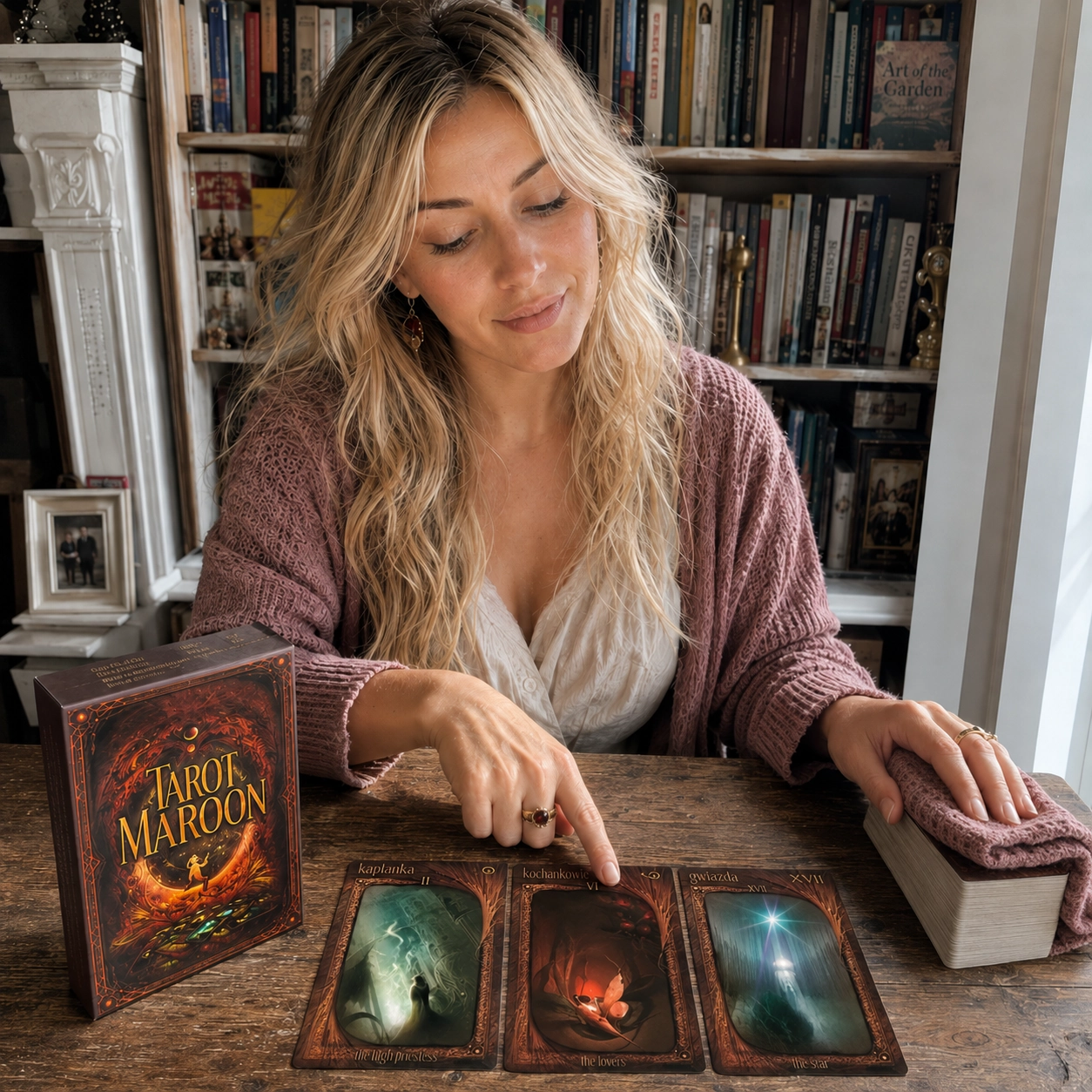
I am drawn to the way these cards make people feel small without making them powerless. A figure may stand at the lip of a vast green chamber, beneath a sweep of pale light, or inside a world that seems to breathe around them. That scale gives a reading the hush of stepping through an unfamiliar doorway. I notice where the eye wants to travel first, then ask what the landscape is revealing about the question that the figure cannot yet say aloud.
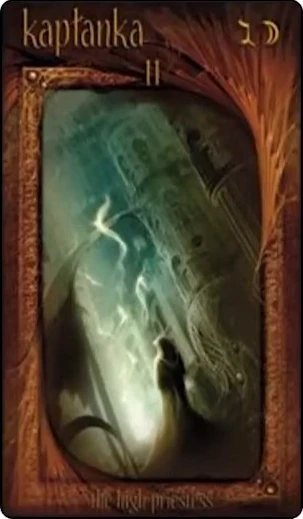
The High Priestess feels like a quiet climb toward something half-seen, while The Lovers turns intimacy into a warm, strange little flame held inside curling darkness. The Star opens the space again, cool and luminous after all that closeness. When they meet in a spread, I would read the movement as listening inward, choosing what deserves tenderness, and then allowing hope to become visible. The traditional card roles are still there, but Maroon Tarot lets atmosphere carry them into the room.
This is a deck I would read slowly. I would begin with colour, distance and gesture, compare that first feeling with the card’s familiar meaning, and then watch how the neighbouring images answer one another. Its shadows are not empty; they make the brighter details matter. Give these cards time to unfold, and their deep maroon world can help you trust the small brave light you already carry forward.
Deck identity: this is the Maroon Tarot. The review and Gallery below follow the deck shown in the original TarotFans walkthrough.
The Maroon Tarot Review: cinematic tarot built from thresholds
Maroon Tarot turns the familiar tarot structure into a sequence of glowing rooms, impossible buildings, watchful figures, and suspended symbols. The deck feels theatrical without becoming detached from reading practice: each scene offers an immediate mood, then rewards a second look for the detail that changes the message.
What makes Maroon Tarot visually distinctive?
Maroon Tarot’s digital-surreal style uses scale as part of the symbolism. Cups become architecture, coins float like planets, and figures often stand at the edge of a portal or monumental space. The pictured edition adds Polish titles above each scene and English titles below it, while astrological marks give many majors another layer of reference.
Deck-specific card study
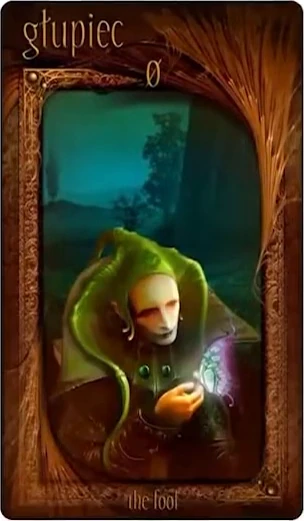
The Fool: wonder carries its own risk
This Fool does not stride across an open cliff. A masked, green-clad figure studies a butterfly while a ruined vertical world rises behind him. Curiosity is the engine, but the enclosed setting makes innocence feel stranger and more deliberate.
In a reading, the card can mark the moment fascination becomes movement. Upright, it supports experimentation and trust; in shadow, it asks whether the beautiful distraction has replaced attention to the path itself.
How Maroon Tarot reads in practice
The deck reads best when traditional structure and direct observation work together. Begin with the card name, then notice where the scene directs your eye: toward a light source, a distant doorway, a hidden face, or an object enlarged beyond ordinary scale. That visual emphasis often supplies the reading’s verb.
For a daily pull, name the emotional weather before consulting the book. For a larger spread, track repeated colors and thresholds. Several doors or circular frames can indicate a change of state even when the cards come from different suits.
Card moment: consciousness and creation
How consciousness enters the deck
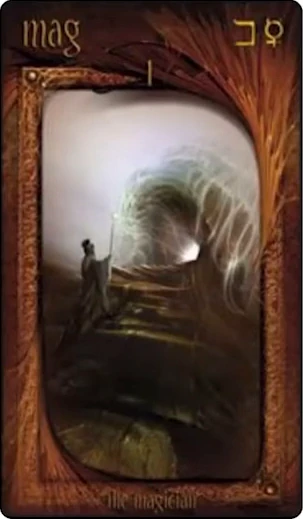
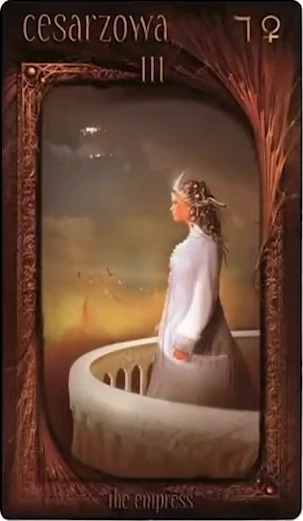
The Fool begins with fascination; the Magician directs possibility; the High Priestess listens beneath the surface; and the Empress gives vision a body. Together they move from impulse to agency, inward knowledge, and creation.
Beginner friendliness
Maroon Tarot can suit a beginner who learns visually and enjoys detail. The titles retain a recognizable tarot framework, but the fully scenic minors sometimes communicate atmosphere before literal action. Keep a short traditional reference nearby while learning how this deck uses scale, light, and architecture.
Easy, medium, and hard readings with Maroon Tarot
Easy: ask what deserves your attention today and identify the brightest or nearest object. Medium: compare what a figure faces with what remains behind them. Hard: read the architecture itself—what contains, elevates, isolates, or opens the scene—and connect that structure to the querent’s choices.
Deck-specific card study
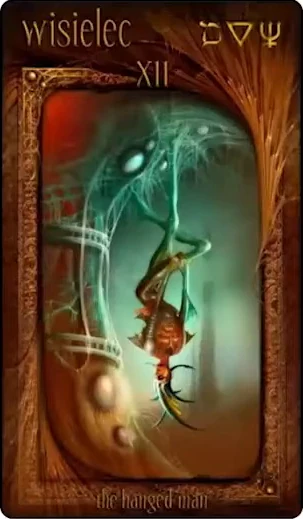
The Hanged Man: surrender inside the machine
The figure hangs inside a circular, almost clockwork structure. Reversal is not passive decoration here; it changes the whole system of perception.
Upright, the card favors a pause that allows cause and effect to rearrange. In shadow, suspension can become fascination with delay. Ask what is visible from this angle that ordinary orientation concealed.
Art style and deck personality
This is a polished, dramatic deck with a strong authorial voice. Greens and blue-greens create depth, while red and amber scenes carry urgency or heat. Its visual density is an advantage for journaling and layered spreads, though minimalist readers may find that the artwork enters the conversation before the question has fully settled.
Card moment: suspension, ending, and rupture
The deck’s darker cards change the room
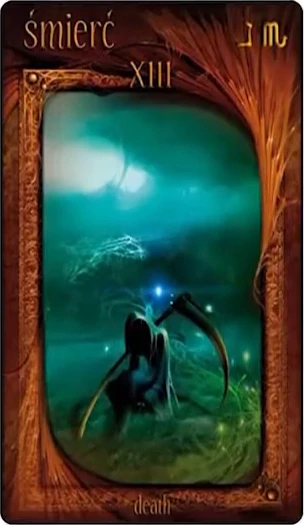
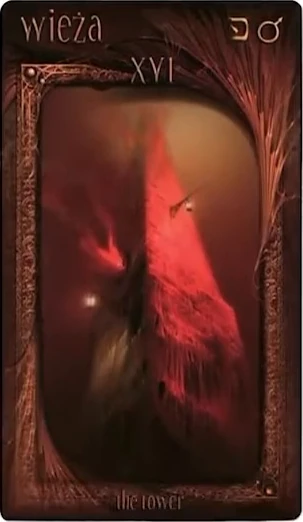
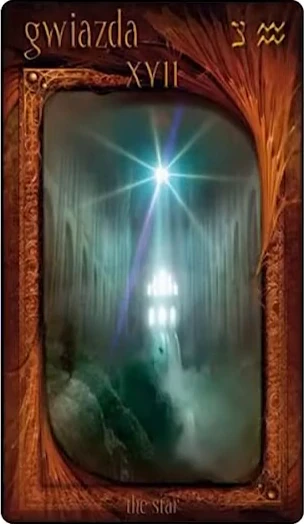
The Hanged Man alters perspective, Death clears a submerged field, the Tower turns structure into red motion, and the Star restores orientation through a single point of light. These images describe psychological transitions rather than flat omens.
Who will love this deck?
It suits imaginative readers, digital-art collectors, journalers, and clients who respond quickly to atmosphere. It is especially useful for creative blocks, relationship patterns, inner work, and questions about transitions. Readers who prefer historical engraving, minimalist symbolism, or neutral client decks may want something quieter.
What Orica likes most
The strongest feature is the way each card behaves like a place. You can ask where the figure stands, what controls the scale, and where the exit might be. Those questions create practical reading language without flattening the dreamlike quality into a generic keyword.
Deck-specific card study
The Star: one point of light reorganizes the dark
A brilliant star pierces a tall, shadowed interior. The image offers hope without pretending the surrounding space has already become easy or bright.
In readings, the card supports orientation after upheaval: not a finished rescue, but a trustworthy point by which to navigate. Its shadow asks whether inspiration is being admired from a distance instead of followed.
What to know before buying
Maroon Tarot’s detailed scenes benefit from good lighting and enough table space to notice the layered backgrounds. If you are buying a copy, check the card dimensions, finish, language, and guidebook contents with the seller so the edition matches the reading experience you want.
Card moment: the emotional suit
Cups move from source to horizon
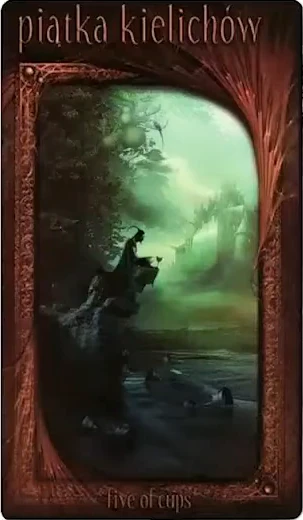
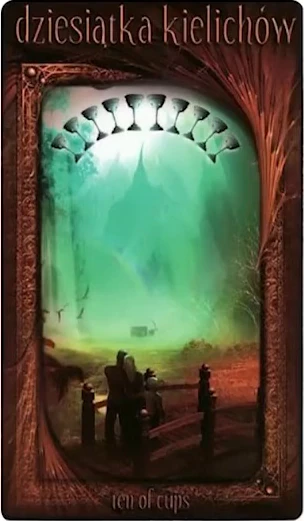
The Ace presents feeling as a luminous vessel. The Five places grief beside a distant route, the Nine opens into abundance, and the Ten frames fulfilment as a shared landscape. Cups become environments we enter, not objects we merely count.


Orica’s golden rule for Maroon Tarot
Read the doorway before the destination. When a scene feels overwhelming, find the threshold, frame, staircase, vessel, or circle that organizes it. That structure usually reveals what is changing and what the querent can actually do next.
Final Thoughts
Maroon Tarot rewards readers who revisit an image and allow its scale to shift their interpretation. Its familiar tarot skeleton keeps the dream architecture grounded, while the visual drama supplies enough movement for long-term study.
Choose Maroon Tarot for imaginative journaling, layered client work, and spreads about transition. Its rich visual language gives the deck enough depth for repeated study without losing the familiar structure of tarot.
 VIEW MAROON TAROT ON EBAY
Maroon Tarot FAQ
What is Maroon Tarot?
Maroon Tarot is the deck presented in this TarotFans review and card walkthrough. Its layered, cinematic scenes and maroon-toned framing give it a dramatic, immersive reading style.
Is Maroon Tarot suitable for beginners?
Yes for visually confident beginners. Its scenes are more layered than a basic Rider–Waite–Smith deck, but familiar card titles and the accompanying book provide a dependable bridge.
What makes the pictured edition distinctive?
The photographed cards place Polish titles above the artwork and English titles below it. Their maroon-brown frames surround luminous digital scenes, theatrical architecture, and planetary or elemental marks.
What readings suit Maroon Tarot best?
It is especially effective for inner-pattern work, creative questions, relationship dynamics, and readings where atmosphere and visual association matter as much as memorized keywords.
Why is the Gallery a curated selection?
The original walkthrough includes a card-back frame and a card obscured by an end-screen graphic. This Gallery keeps only distinct, clearly identifiable fronts rather than presenting obstructed imagery as usable evidence.
What makes Maroon Tarot especially useful in readings?
Its strongest cues are scale, light, architecture, thresholds, and the direction each figure faces. Those details make it especially useful for questions about choices, transitions, emotional patterns, and creative work.