Lost Tarot of Nostradamus Cards — 74 of 78 Verified
Browse 74 verified Lost Tarot of Nostradamus card fronts from the exact Pinterest board linked in the TarotFans worksheet. The Lovers, Two of Moons, Four of Stars, and Eight of Spheres were not available as usable card fronts, so this gallery keeps the count honest instead of padding to 78. Tap any card to open the larger carousel view.
Lost Tarot of Nostradamus review: prophecy, planets, and Renaissance mystery
Orica’s quick take: The Lost Tarot of Nostradamus is a historical-fantasy tarot built from a genuinely intriguing visual premise. John Matthews and Wil Kinghan take the strange prophetic paintings associated with the so-called Nostradamus manuscript and turn their popes, towers, suns, wheels, beasts, scrolls, and celestial diagrams into a complete 78-card reading system. The result is less like stepping into a familiar Rider-Waite-Smith scene and more like opening an illuminated book in an astrologer’s study.
This is an excellent deck for readers who enjoy Renaissance imagery, alchemy, astrology, church history, prophetic symbolism, and cards that reveal themselves slowly. It is not the easiest first deck. The renamed suits—Suns, Moons, Stars, and Spheres—and the unusual court titles require guidebook time, while the layered archival collage can resist a quick emotional read. For the right reader, that resistance is part of the appeal.
The official deck contains 78 cards. TarotFans has 74 verified card-front images from the exact deck represented by the worksheet source. The Lovers, Two of Moons, Four of Stars, and Eight of Spheres were not available as usable fronts, so the gallery below stays honest rather than filling those four spaces with uncertain artwork.
Card study
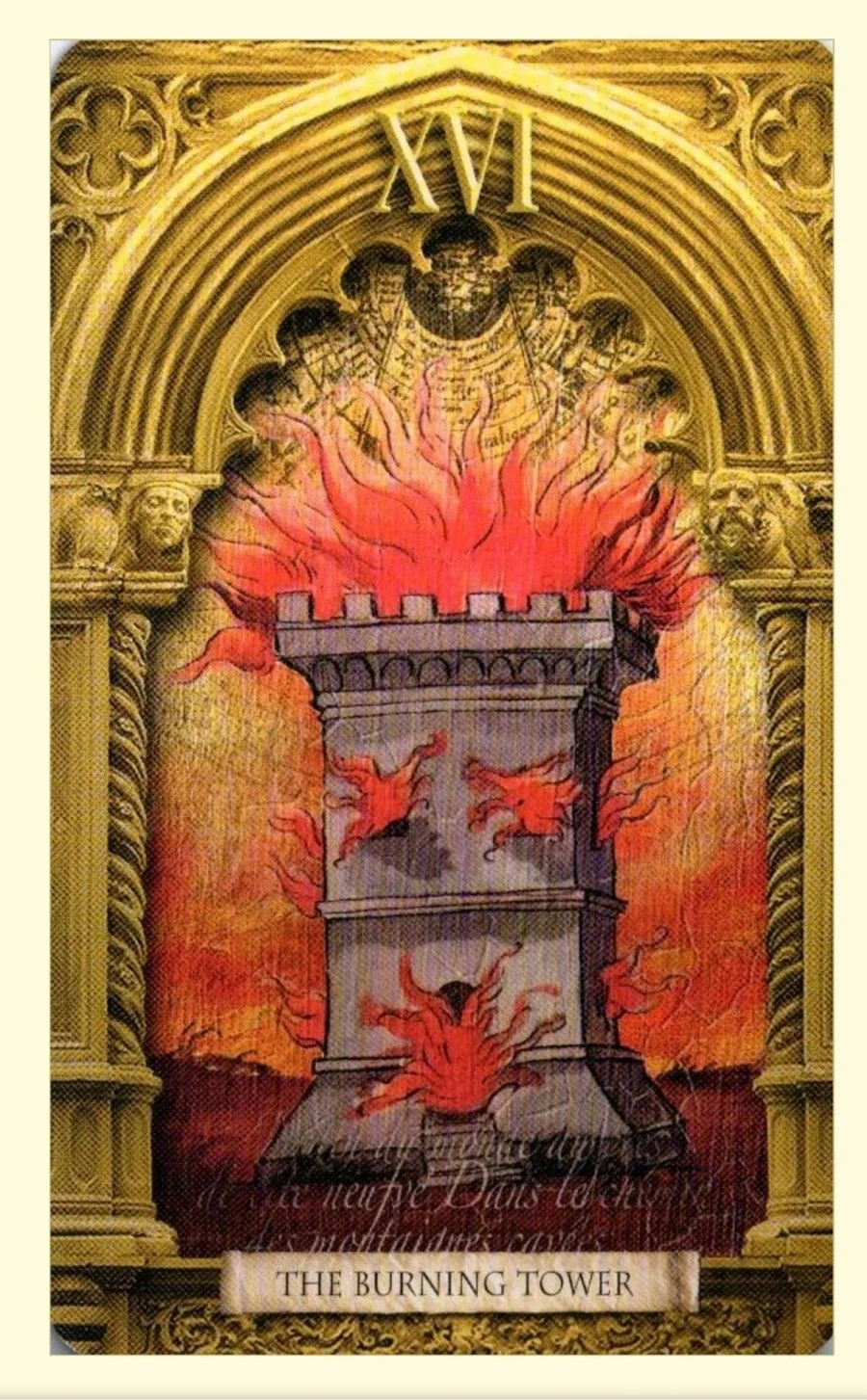
The Burning Tower turns collapse into a public spectacle
A square stone tower rises beneath a pointed Gothic arch. Red-orange fire climbs from the roof, bursts through the walls, and spreads across the lower scene. Above it, several male heads appear within the tracery while the Roman numeral XVI hangs at the apex. Carved animal heads on the side capitals watch the blaze from a rigid architectural frame.
The structure is formal; the fire is not. That contrast makes the card feel like a system failing inside the very frame that once gave it authority. Upright, it can mark exposure, rupture, or the end of a protected arrangement. In shadow, it can describe staying loyal to an institution after its central promise has burned away. Ask: Which part of this crisis is the actual collapse, and which part is my fear of being seen during it?
What is The Lost Tarot of Nostradamus?
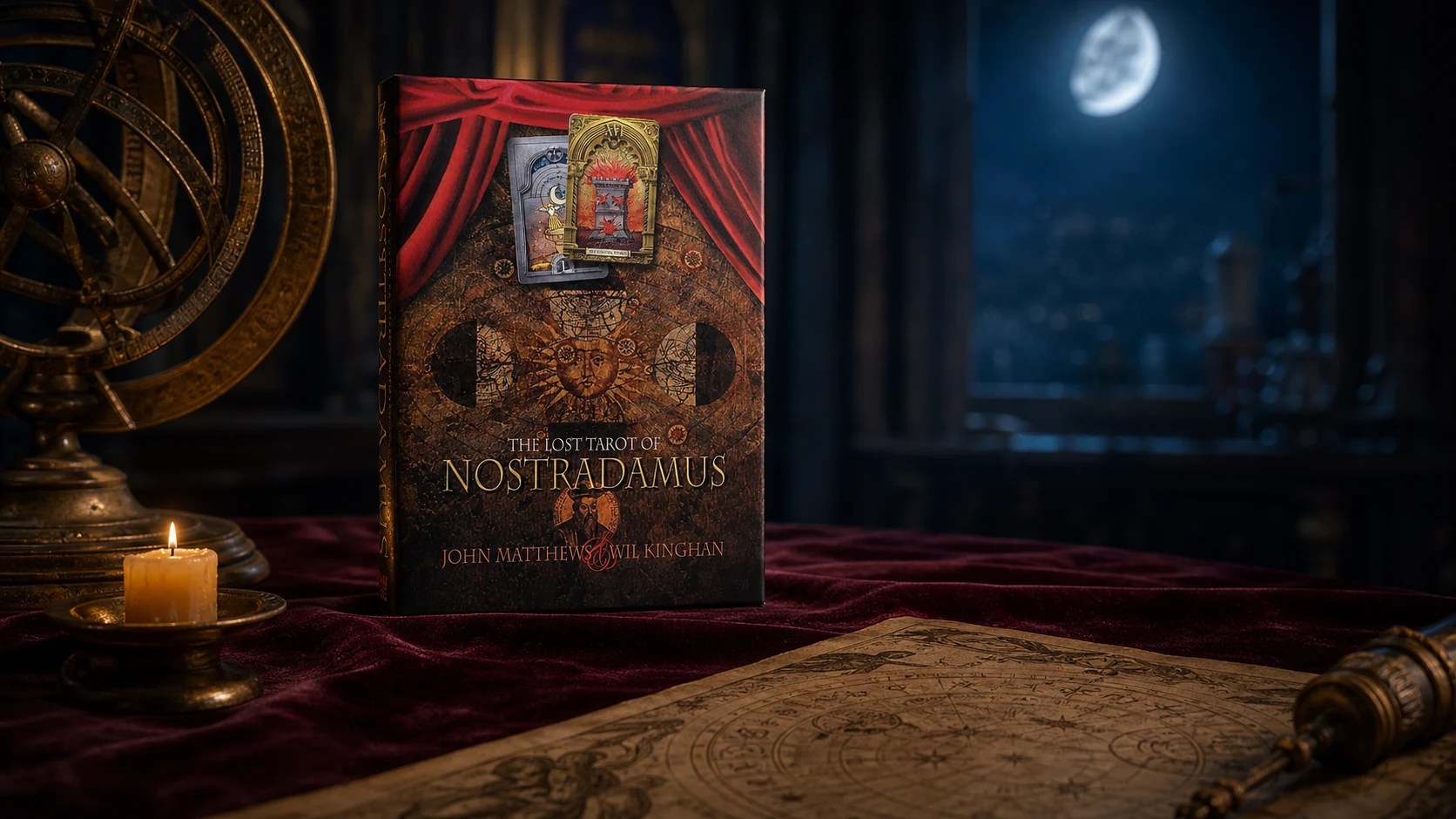
The deck is credited to John Matthews and Wil Kinghan. Matthews is known for work on myth, Arthurian traditions, and divination; Kinghan is credited with adapting and developing the visual material. Modern editions describe the deck as drawing on a manuscript discovered in Rome in 1994 containing eighty enigmatic paintings long associated with Michel de Nostredame, better known as Nostradamus.
That attribution deserves careful language. The deck’s publishing story presents the images as connected with Nostradamus, but historians have also discussed the manuscript in relation to the older Vaticinia de Summis Pontificibus prophetic tradition. In other words, the historical object and its imagery are real and fascinating, while direct authorship by Nostradamus is not a settled scholarly fact. You do not need to accept the strongest attribution claim to appreciate what the deck does with the material.
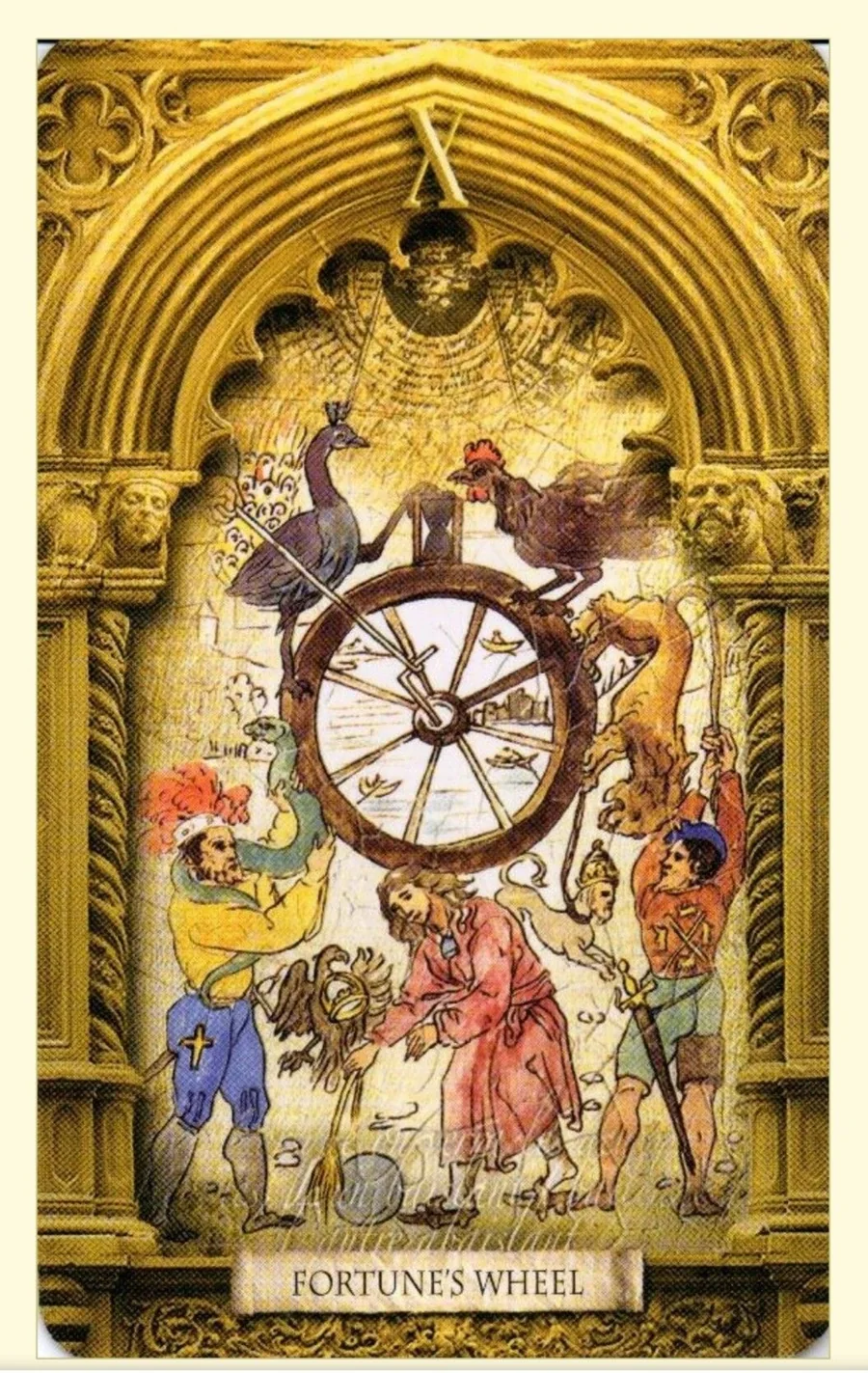
Rather than reproducing a standard tarot and adding antique decoration, the creators build a different symbolic grammar around the paintings. The major arcana remain recognizable, but some titles shift: Strength becomes Fortitude, the Wheel becomes Fortune’s Wheel, the Tower becomes The Burning Tower, and the World becomes The Completed World. The minor arcana are arranged as Suns, Moons, Stars, and Spheres, with court ranks tailored to each suit.
Four pack
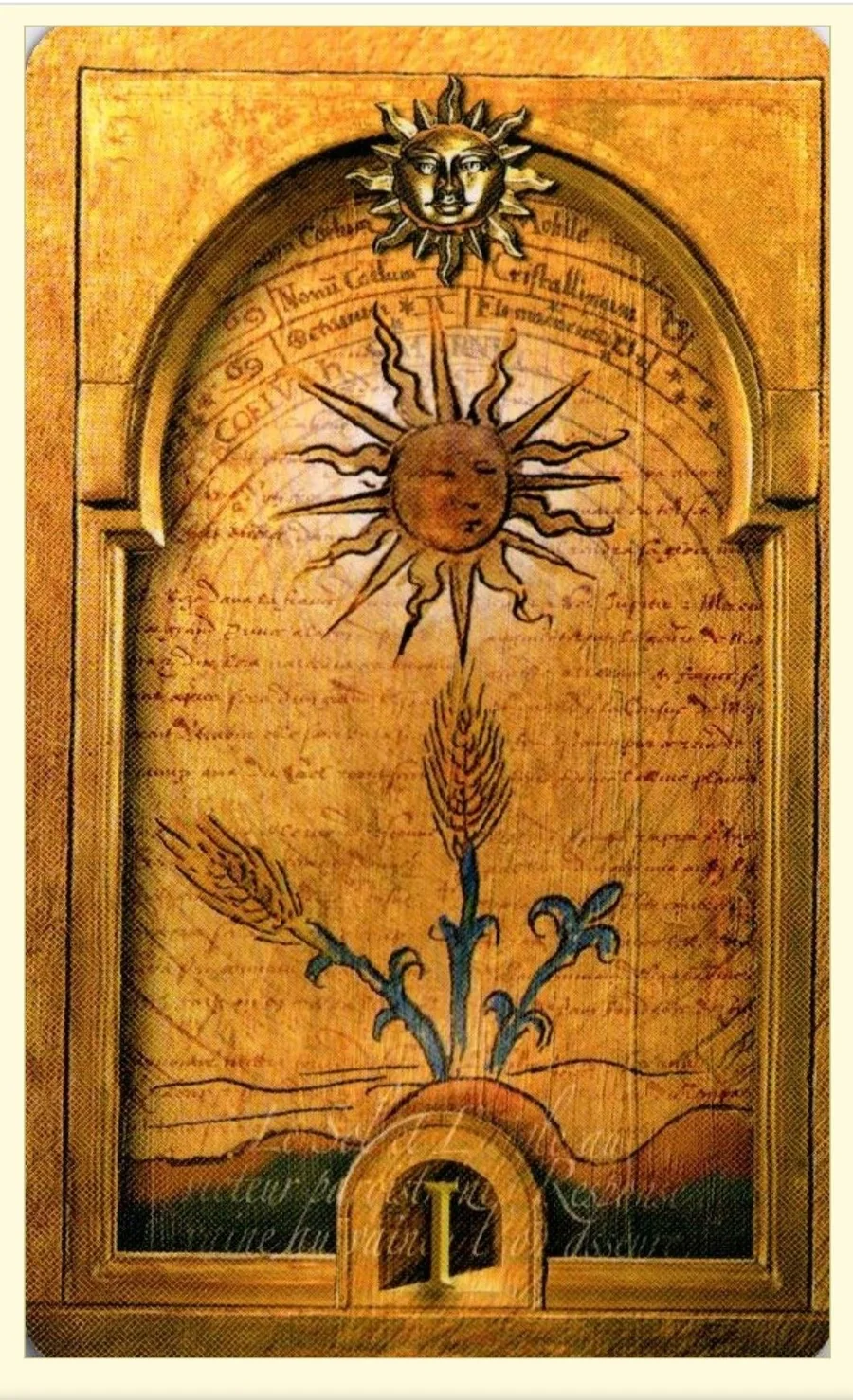
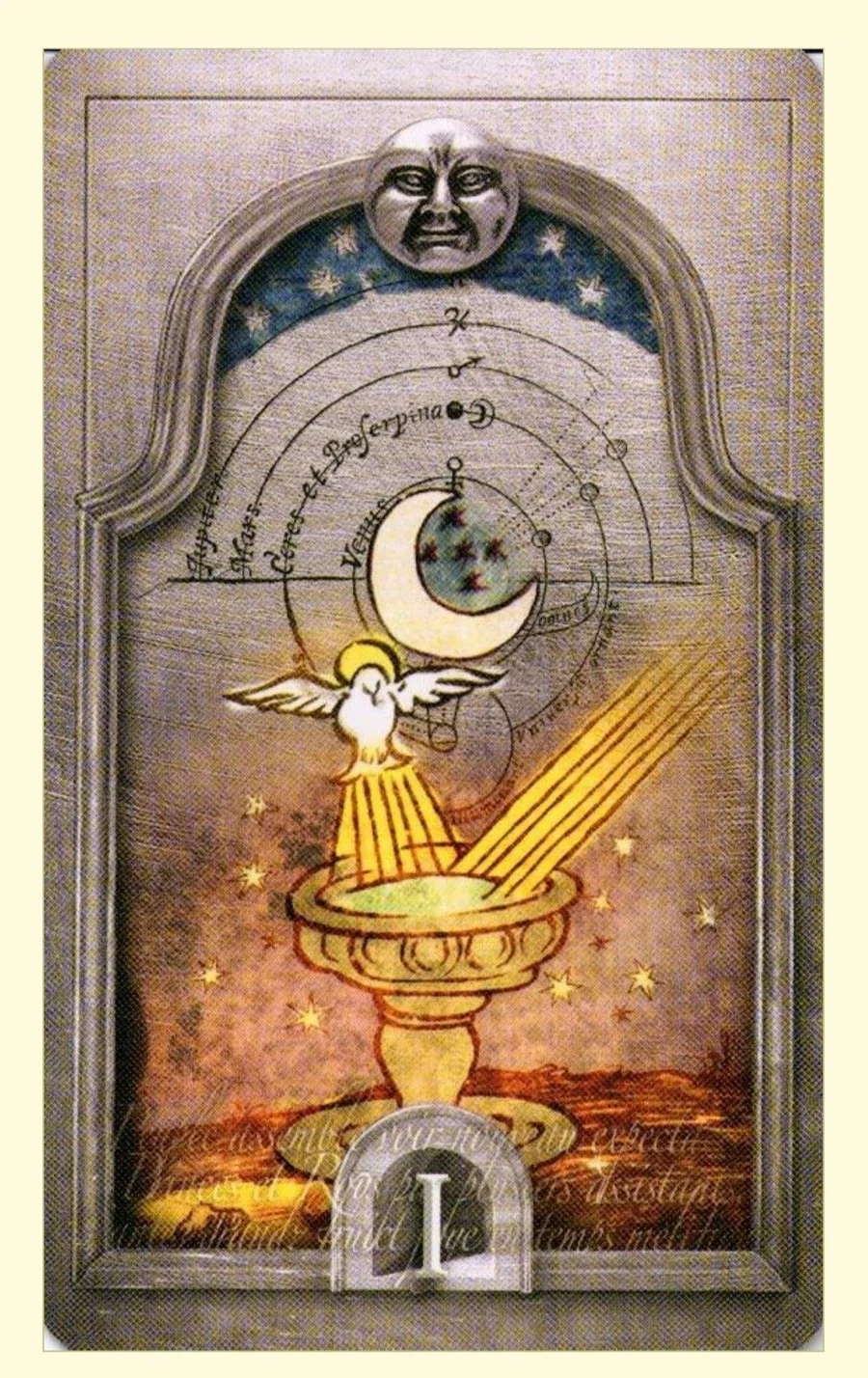
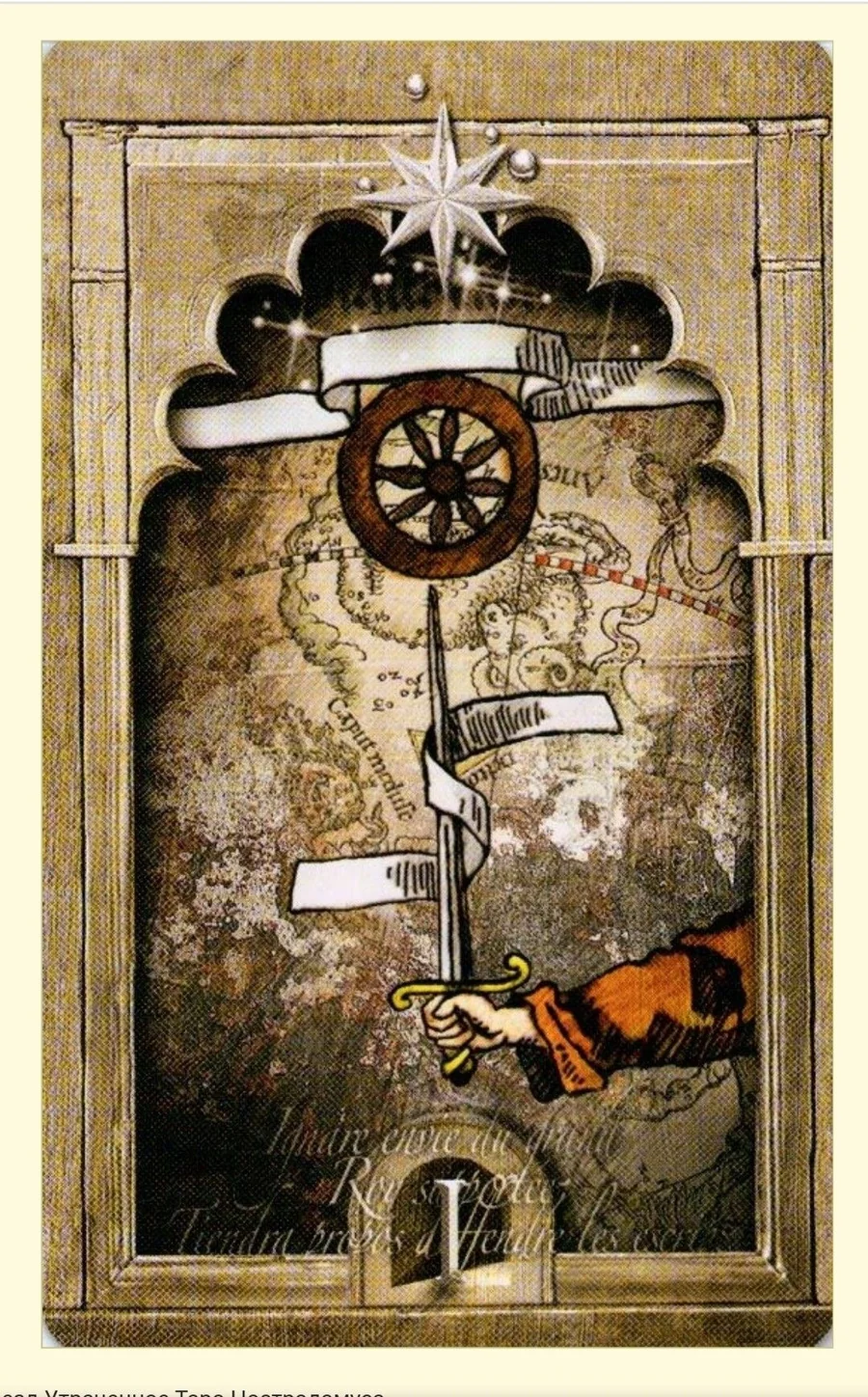
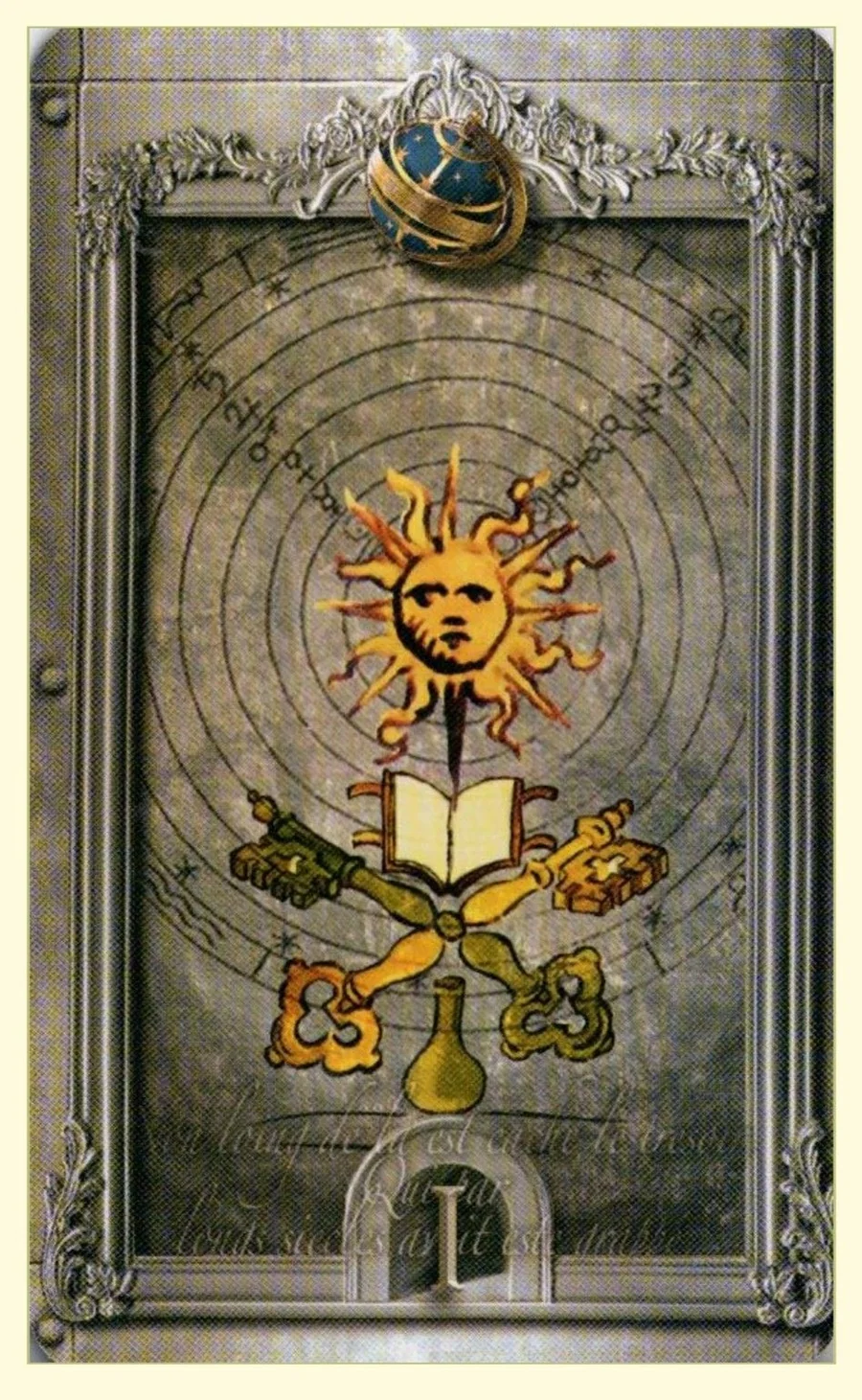
Four celestial emblems replace the familiar suit objects
One of Suns, One of Moons, One of Stars, and One of Spheres introduce the deck’s elemental language. Instead of wands, cups, swords, and coins appearing as everyday objects, celestial bodies and diagrams place each suit inside a larger cosmology.
How the deck reads in practice
The Lost Tarot of Nostradamus reads best as a conversation between tarot structure, visible detail, and historical atmosphere. Start with the card’s function, then name the strongest concrete feature: a burning building, a moon face, a scroll, a globe, a religious figure, a wheel, or a boundary. Only after that should you move into prophecy or esoteric association. This order keeps the reading grounded.
The deck is especially effective for long-range planning, institutional questions, spiritual study, creative research, inherited beliefs, and situations where the present is shaped by a large system. It can also be incisive for career readings because so many images ask who holds authority, who interprets the signs, and who must act without complete certainty.
It is less natural for casual yes-or-no pulls or readings that depend on instantly relatable body language. Many figures feel emblematic rather than intimate. The cards often speak as diagrams, proclamations, or fragments of a larger historical drama. A compact three-card spread gives each image enough room.
Suit structure and unusual court titles
The renamed suits are not merely decorative. They change how the deck sounds on the table. Suns feel active, visible, vital, and directional. Moons draw attention to cycles, reception, ambiguity, feeling, and reflection. Stars suggest orientation, ideals, distance, hierarchy, and spiritual aspiration. Spheres emphasize systems, matter, knowledge, craft, and the world understood through pattern.
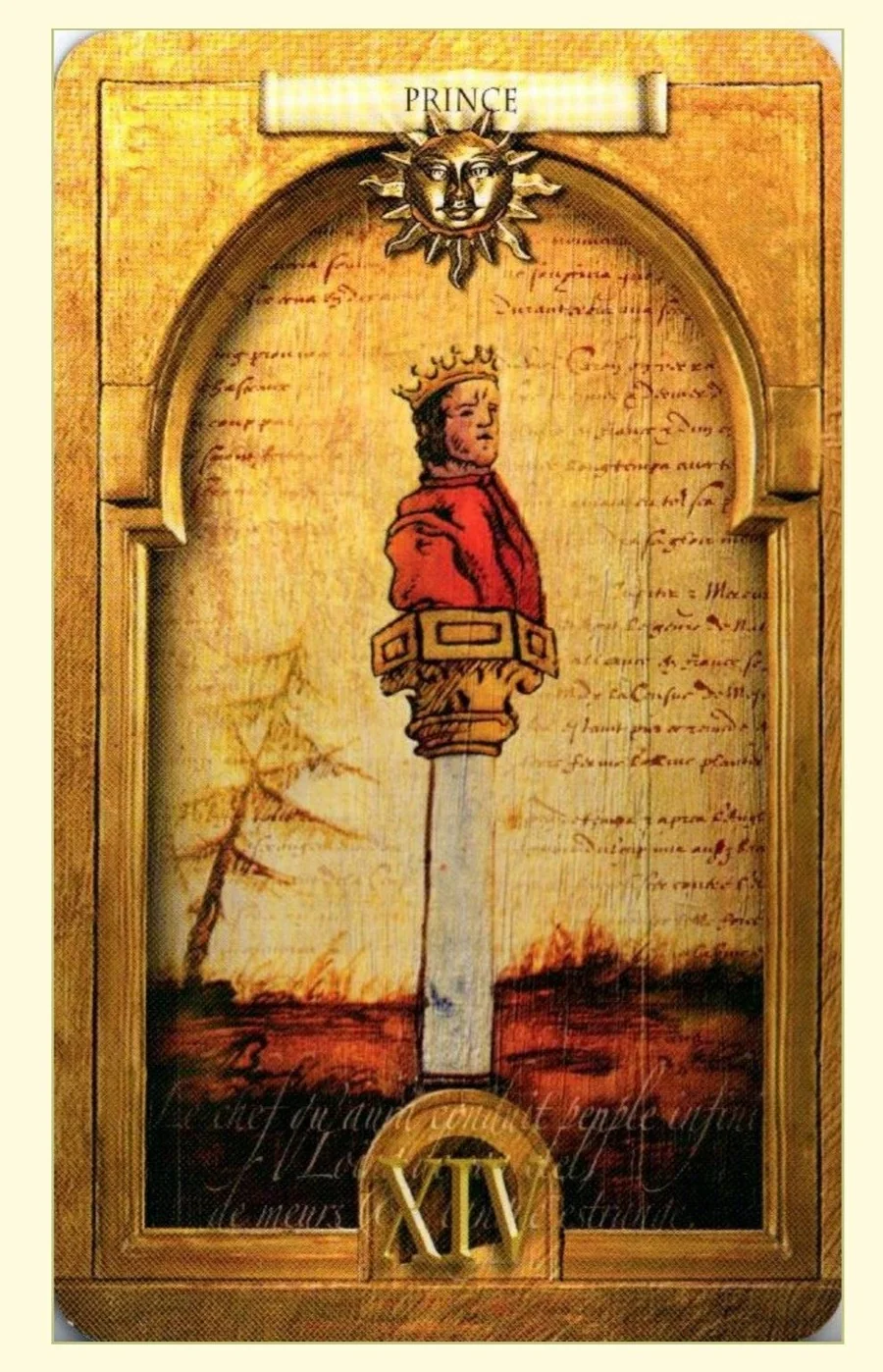
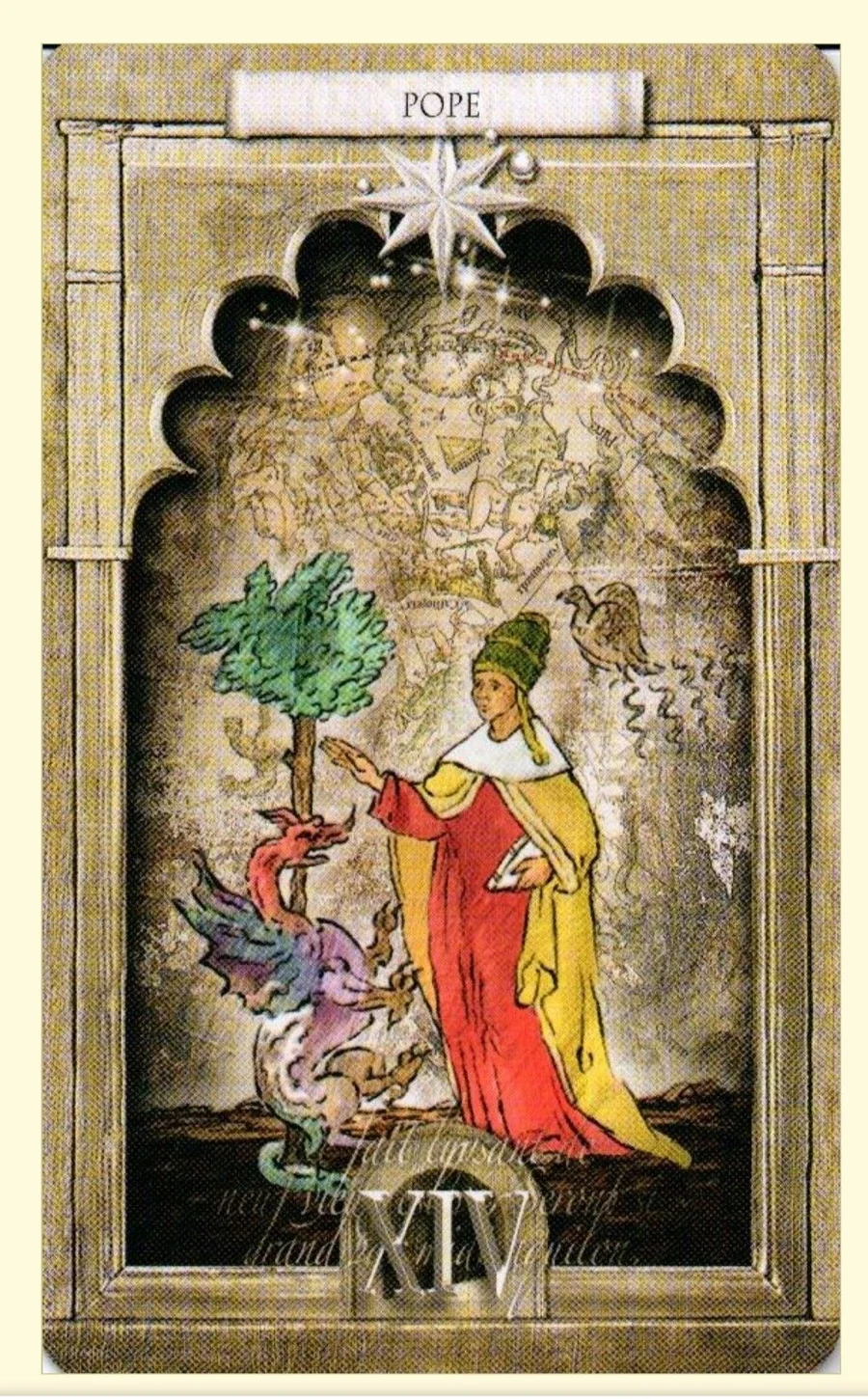
The courts make the deck’s personality even clearer. Suns use Page, Knight, Lady, and Prince. Moons move through Neophyte, Initiate, Prophetess, and Master. Stars use Postulant, Cardinal, Abbess, and Pope. Spheres progress through Apprentice, Astrologer, Astronomer, and Alchemist. These ranks shift a court reading away from family roles and toward stages of training, office, initiation, and mastery.
When a court appears, ask two questions: What function does this title perform, and what visible action confirms it? That prevents a grand rank such as Pope or Alchemist from becoming a vague label for “wisdom.” The image should still tell you how that wisdom is being used.
Card study
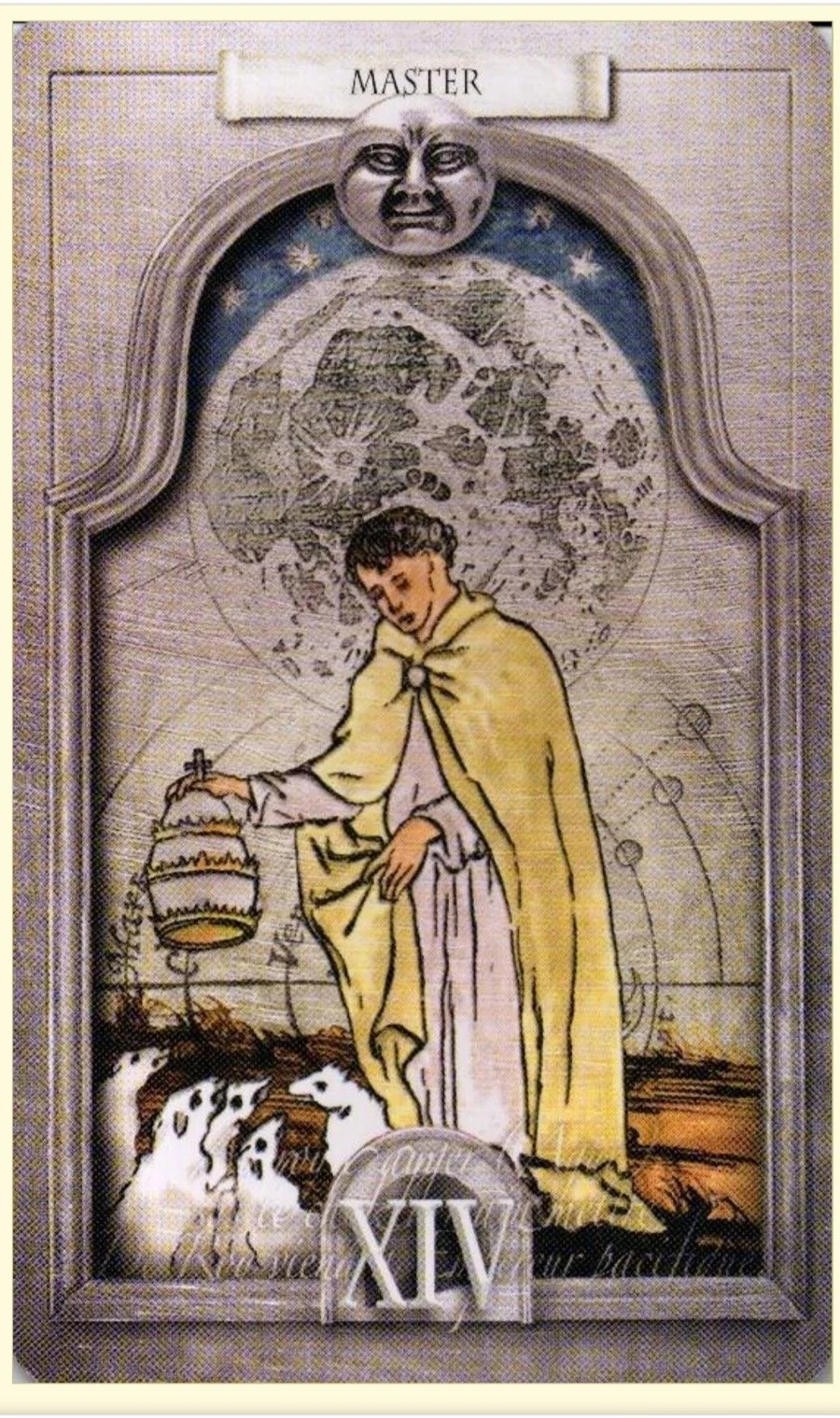
The Master of Moons carries feeling without spilling it
A dark-haired figure in a pale yellow cloak stands before a large lunar disk covered with fine map-like marks. One hand steadies a layered vessel or lantern suspended above foaming water; the other gathers the robe. Small dark-and-white forms move through the water below, while a solemn moon face looks straight out from the top of the arched frame.
The figure is active but controlled. Water is present, yet the vessel remains held; the moon is enormous, yet the person works at human scale. The image suggests emotional command as careful containment rather than denial. In a reading, this Master can represent holding a complicated atmosphere without becoming its servant. Ask: What feeling needs a sound container, and what would responsible stewardship look like today?
Is The Lost Tarot of Nostradamus beginner friendly?
It is better as a second deck than a first. A motivated beginner can certainly learn with it, but the unusual suit and court system adds an extra translation step. The pictures also do not consistently stage the familiar Rider-Waite-Smith scenes that many beginner books describe.
If this is your first deck, keep a simple tarot reference beside the supplied guidebook. For each pull, write the familiar card function, the Lost Tarot title, three visible details, and one sentence connecting the image to your real question. Do not begin by trying to decode every Latin phrase, astrological ring, or historical allusion. Observation comes before expertise.
For experienced readers, the departures are a strength. They interrupt automatic keyword reading and make you look again. A card you think you know may become stranger, more political, more ceremonial, or more concerned with time.
Four pack
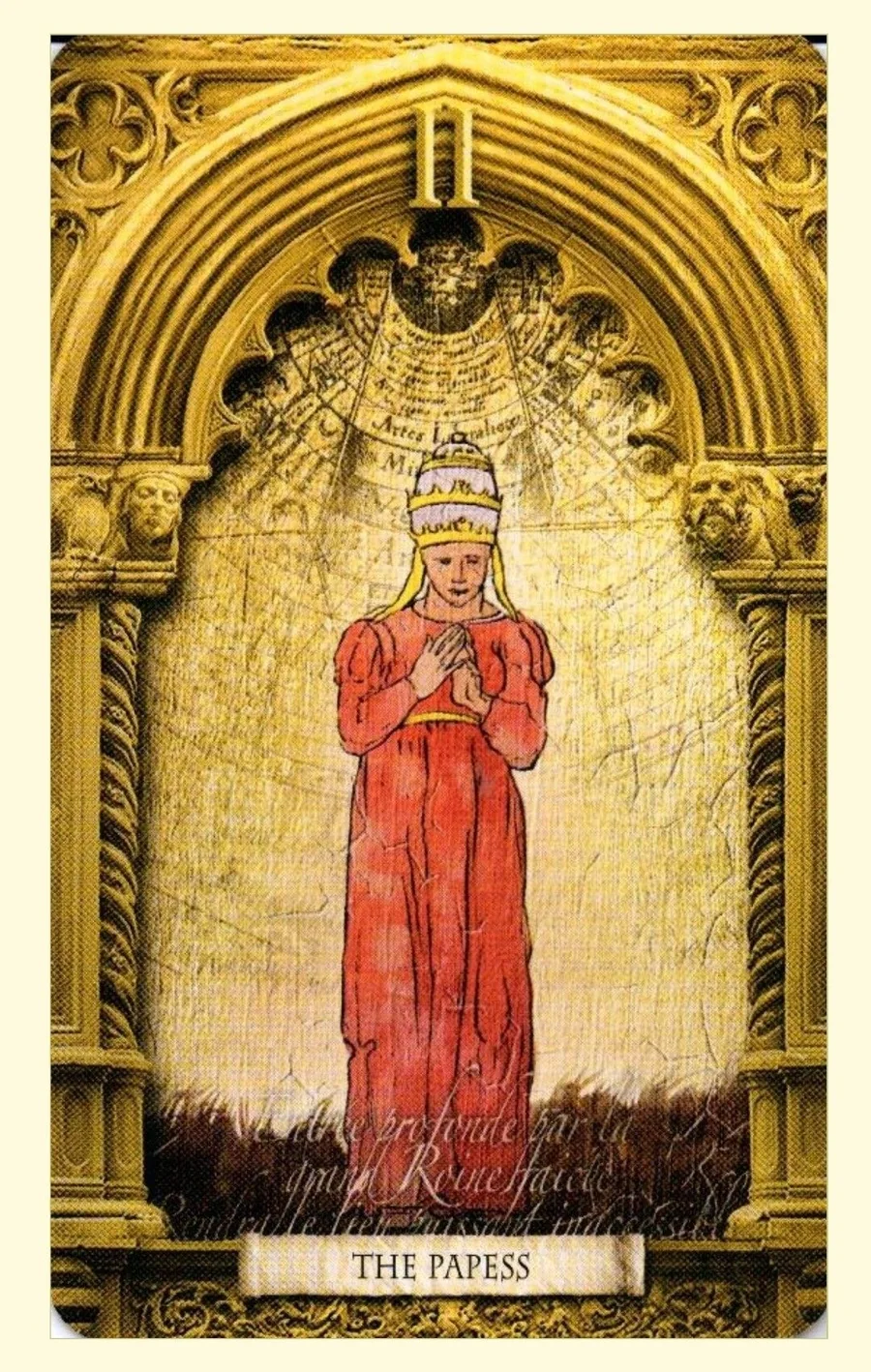
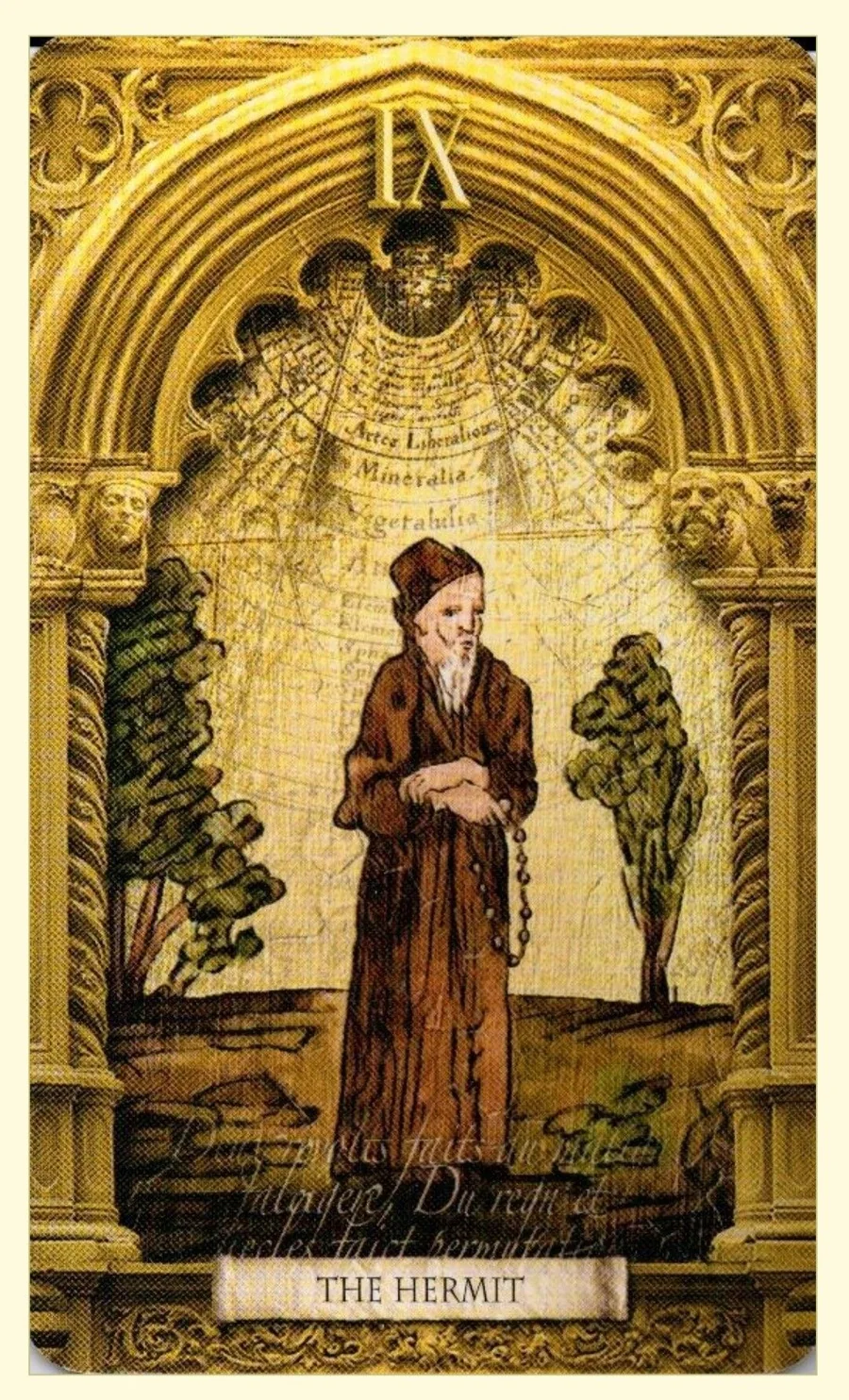
The prophetic majors ask how we read signs
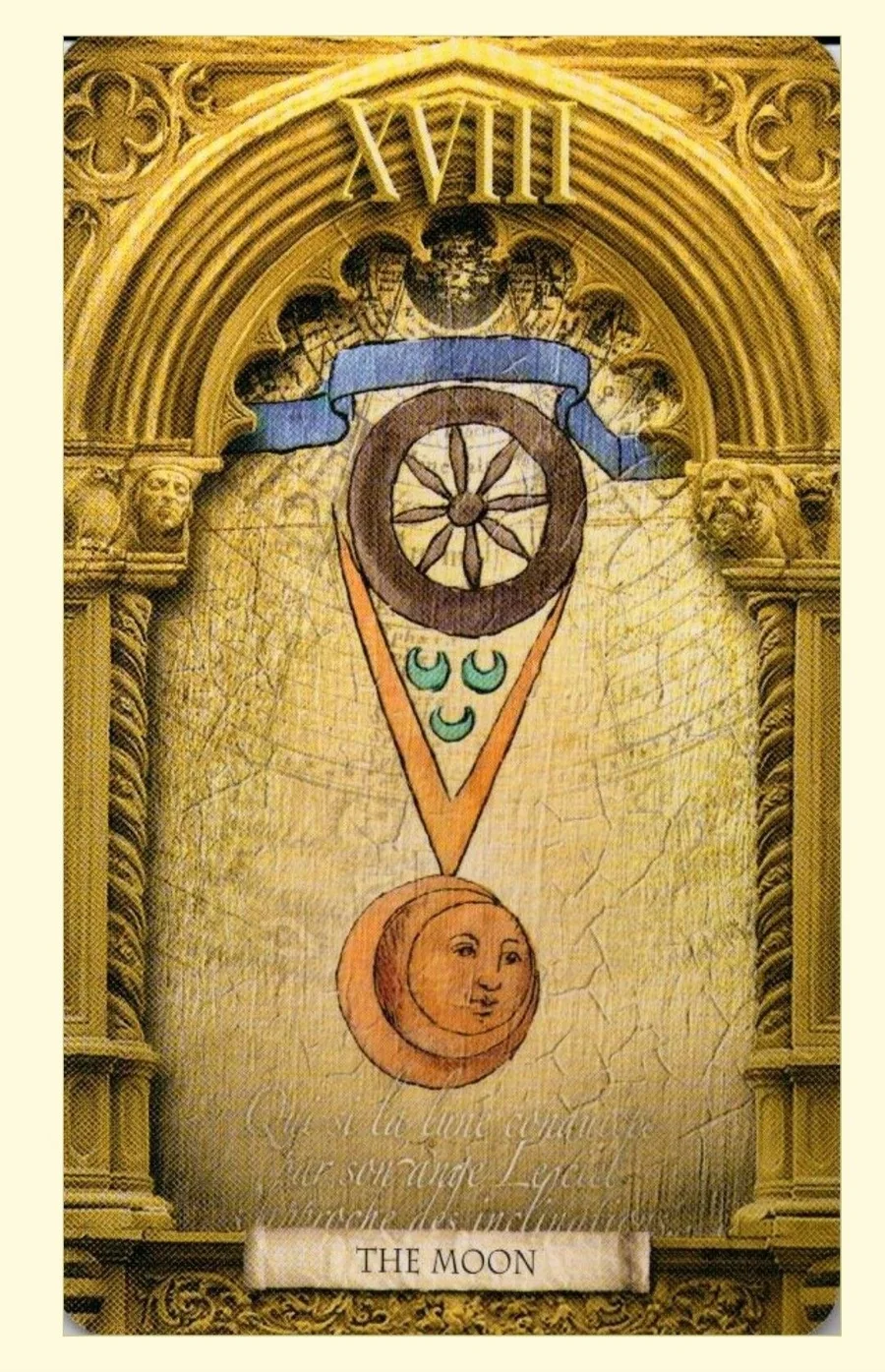
The Papess, Hermit, Fortune’s Wheel, and Moon form a useful sequence for study: hidden knowledge, solitary examination, changing conditions, and uncertain illumination. Together they ask when to interpret, when to wait, and when no amount of analysis can remove ambiguity.
Easy, medium, and hard readings
Easy: “What sign deserves my attention today?” Pull one card and identify the first object or figure your eye returns to. Translate that one detail into a practical action.
Medium: “What cycle am I inside?” Use three cards for what is repeating, what has changed, and what breaks the pattern. This deck’s wheels, celestial bodies, ranks, and diagrams give the spread a strong sense of time.
Hard: “Which inherited belief is shaping my forecast?” Use four cards for the inherited story, the evidence that supports it, the evidence that challenges it, and the action available now. This keeps prophecy from becoming fatalism.
Art style and reading personality
The cards combine manuscript-like illustration, architectural frames, scroll labels, astronomical graphics, maps, and selectively colored figures. Muted parchment, grey, black, and ochre make the flashes of red, blue, and gold feel deliberate. The printed frame turns each card into an exhibit or page rather than a window onto a naturalistic scene.
That page-like quality creates useful distance. The deck does not always ask, “How do you feel?” It often asks, “What pattern are you looking at, who named it, and what happens if the interpretation becomes policy?” This makes it unusually strong for examining narratives, institutions, and claims of certainty.
The mood can be solemn, ecclesiastical, and occasionally severe. Readers who want warm contemporary faces may find it remote. Readers who love old maps, strange archives, alchemical diagrams, and symbolic puzzles are likely to find the deck absorbing.
Card study
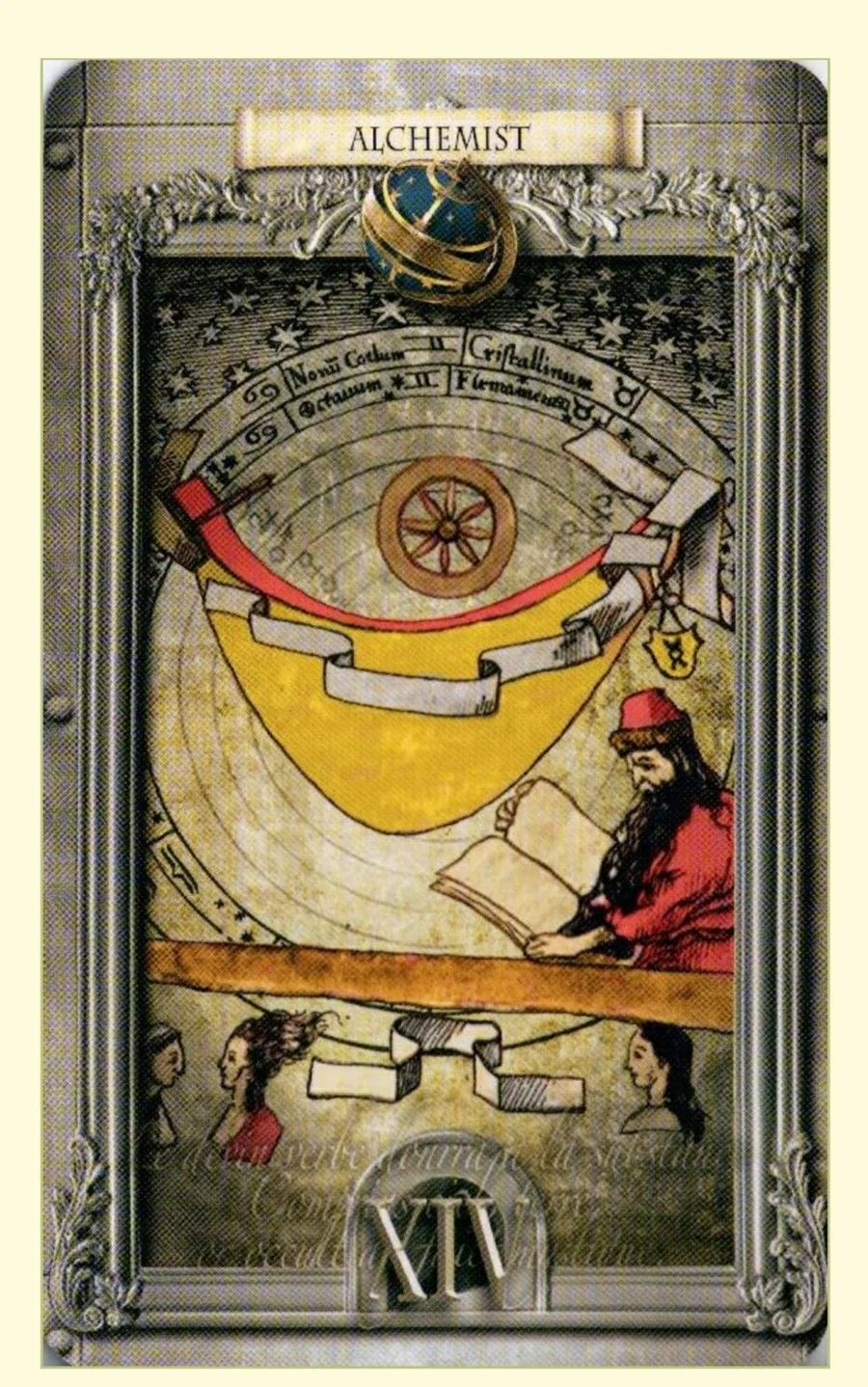
The Alchemist of Spheres makes knowledge accountable
A bearded figure in red sits at the right with an open book. Behind him, a large circular chart fills the card: concentric bands, a central wheel, a red arc, small symbols, and a field of stars. A blue-and-gold armillary form rests above the frame. Scrolls cross the diagram, while two smaller observers appear below a horizontal ledge.
The Alchemist is not shown producing a theatrical flash. He reads, compares, and works inside a system of recorded knowledge. The card therefore suggests synthesis: bringing text, observation, geometry, and consequence together. In shadow, it can warn that a beautiful model is being mistaken for reality. Ask: What theory am I ready to test, and what result would make me revise it?
Four pack
The courts describe four kinds of authority
Prince of Suns, Master of Moons, Pope of Stars, and Alchemist of Spheres show leadership through visibility, emotional stewardship, institutional office, and integrated knowledge. Use them to ask not only who has power, but what kind of power the situation actually needs.
Who will love this deck—and who may not
This deck suits collectors, history lovers, astrologically curious readers, symbolic researchers, and tarot practitioners who enjoy building a relationship with an unfamiliar system. It is particularly rewarding for journaling and for slow readings in which one card can remain on the desk for several days.
It may not suit readers who want expressive modern characters, simple keywords, a strict Rider-Waite-Smith clone, or a deck that reads effortlessly without its guide. The imagery also uses Christian and papal symbolism extensively. That can be historically and visually fascinating, but it will not be comfortable or relevant for everyone.
What to know before buying
The current Amazon listing for ISBN 978-1-80069-066-0 credits John Matthews and Wil Kinghan and lists Orange Hippo as publisher, with an April 2021 publication date. Earlier editions and kits also circulate under different publishers and ISBNs. Confirm the edition, language, format, seller, and included materials on the product page before ordering; TarotFans does not make a live price or stock claim.
The physical deck is the right choice if the gallery’s fine print, celestial diagrams, and layered historical imagery make you want a closer look. If you mostly read in low light or prefer uncluttered scenes at a glance, inspect several minor and court cards before buying—not only the dramatic majors.
Orica’s golden rule for this deck
Read the sign, then test the forecast. This deck is built around prophecy, but tarot is most useful when it restores agency rather than removing it. Name what the image suggests, identify the evidence in your life, and choose one action that can confirm, change, or outgrow the prediction.
Final thoughts
The Lost Tarot of Nostradamus is not a historical replica and not a conventional modern tarot. It is a creative divination system assembled from prophetic imagery, tarot structure, and a strong fascination with how people read the future. Its best cards feel like fragments from a lost observatory: formal, mysterious, and crowded with competing ways to make meaning.
For readers who want instant familiarity, it may be too demanding. For those who enjoy archives, symbolism, renamed suits, unusual courts, and the productive discomfort of not knowing at first glance, it can become a deeply engaging working deck. Use the official video and the 74-card verified gallery to decide whether its world is one you want to study.
The Lost Tarot of Nostradamus FAQ
How many cards are in The Lost Tarot of Nostradamus?
The published deck contains 78 cards. TarotFans currently shows 74 verified card fronts; The Lovers, Two of Moons, Four of Stars, and Eight of Spheres were unavailable in the recoverable source set.
Who created The Lost Tarot of Nostradamus?
The deck is credited to John Matthews and Wil Kinghan. Modern listings describe them as adapting prophetic manuscript imagery associated with Nostradamus into a complete tarot system.
Did Nostradamus actually paint these tarot cards?
That should not be stated as settled fact. The deck is inspired by a real manuscript and a publishing tradition associating its images with Nostradamus, while scholars also connect the material with older papal-prophecy manuscripts. The modern 78-card tarot arrangement is the work of Matthews and Kinghan.
What are the four suits?
The suits are Suns, Moons, Stars, and Spheres. Their court titles also change by suit, using ranks such as Prince, Master, Pope, Astrologer, and Alchemist.
Is The Lost Tarot of Nostradamus good for beginners?
It is usable by a committed beginner, but it is easier as a second deck. The renamed suits, unusual courts, and dense historical imagery benefit from guidebook study and comparison with a standard tarot reference.
Which readings suit this deck best?
It is especially strong for long-range planning, spiritual study, institutions, inherited beliefs, creative research, career systems, and questions about how a prediction or narrative shapes present choices.


