Slow Tarot Cards
Explore this verified partial selection of Slow Tarot artwork. Choose a group or open any card for a larger carousel view.
Quick Take: Who Is Slow Tarot For?
Slow Tarot is best for thoughtful readers who want a deck for reflection, journaling, shadow work, grief, transition, creative practice, and honest life questions. It suits readers who enjoy sitting with an image instead of chasing an instant answer.
- Best for: slow readings, personal reflection, seasonal spreads, shadow work, and creative guidance.
- Reading level: beginner-friendly for patient readers, but not ideal for someone who wants obvious visual keywords.
- Style: earthy, emotional, painterly, and symbolic.
I love how this deck makes a small detail feel like a hand resting lightly on my shoulder. A figure’s guarded posture, a bruised patch of sky, or a green shoot at the edge of the scene can be the quietest thing in the card and still become the heart of the reading.
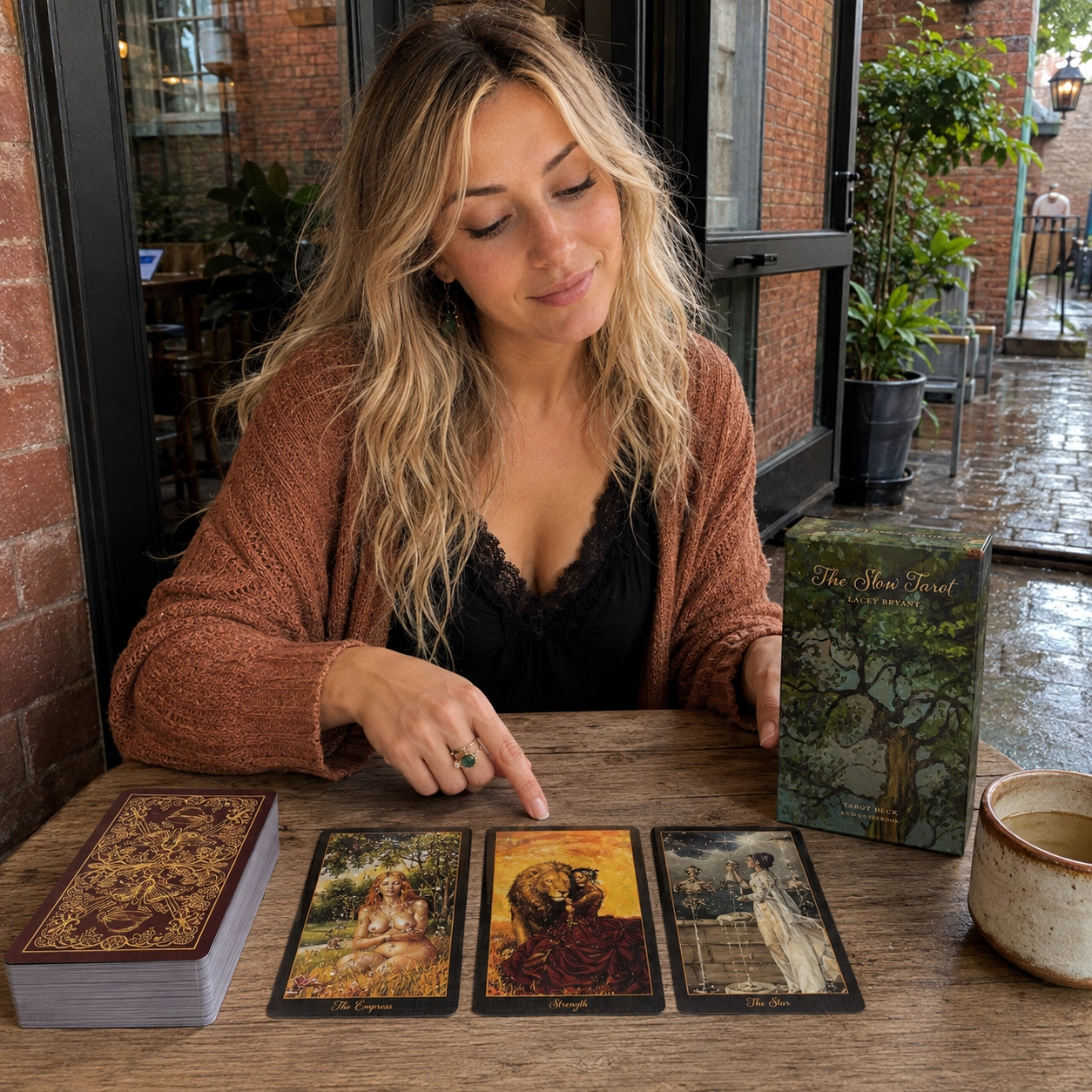
I begin with whatever my eye returns to, then bring that feeling back to the card’s familiar role and the question in front of me. With The Empress, Strength, and The Star together, I feel a patient movement from tending, through courage, into renewal. The message is not to force hope, but to give it somewhere real to take root.
I reach for Slow Tarot when a question needs honesty without hurry—creative blocks, changing relationships, grief, and the long middle of becoming. I keep the spread small and ask for one practical act of care, because this deck is at its clearest when feeling becomes a gentle, grounded choice.
Slow Tarot reminds me that patient attention is already a form of courage; give the image a little quiet, and it can help your own steady hope find room to grow.
Slow Tarot lives up to its name. It is not a deck that begs you to rush through a spread. It asks you to breathe, look carefully, and let the symbol settle before you decide what it means.
This Slow Tarot review is for readers who like earthy art, patient symbolism, and readings that feel more like deep listening than fast fortune-telling. The deck has a grounded, painterly voice: animals, bodies, landscapes, shadow, light, and old story energy all working together.

Card study
The Empress: growth as care, not control
The Empress shows the deck’s earth-magic beautifully. In a real reading, I would not rush her into a simple “abundance” keyword. I would ask: what needs warmth, nourishment, body trust, and time? For burnout, creativity, home life, or self-worth, this card says growth becomes safer when it is tended instead of forced.
Let the first image breathe
Before I connect several cards, I pause with one image long enough to notice its emotional weather. That pause keeps the next group from becoming a list of meanings and lets the story unfold with a human rhythm.
Card moment
The slow beginning


These four cards make a gentle opening arc: begin, shape the energy, listen inwardly, then feed what is ready to grow.
Art Style: Earthy, Painterly, and Contemplative
The artwork feels rich without shouting. Slow Tarot has an old-world, mythic quality, but it still reads clearly enough for practical questions. The images invite you to look at posture, landscape, color, gaze, and atmosphere before you decide what the card means.
That is the charm of the deck. It does not flatten tarot into instant answers. It lets a card feel like a scene you can enter. A tree, a wound, an animal, a hand, or a quiet face may become the part of the reading that speaks first.
How Slow Tarot Reads in Practice
Slow Tarot reads with gravity and grace. It is strong for questions where the real answer is not “yes or no,” but “what is ripening, what is ending, and what must I tend?” It can be practical, but its practicality comes through patience.
My favorite way to use it is to pull fewer cards and give them more space. One card can be enough for a morning reflection. Three cards can be enough for a relationship pattern, a creative block, or a transition you are still trying to understand.
Card moment
Pressure and pace


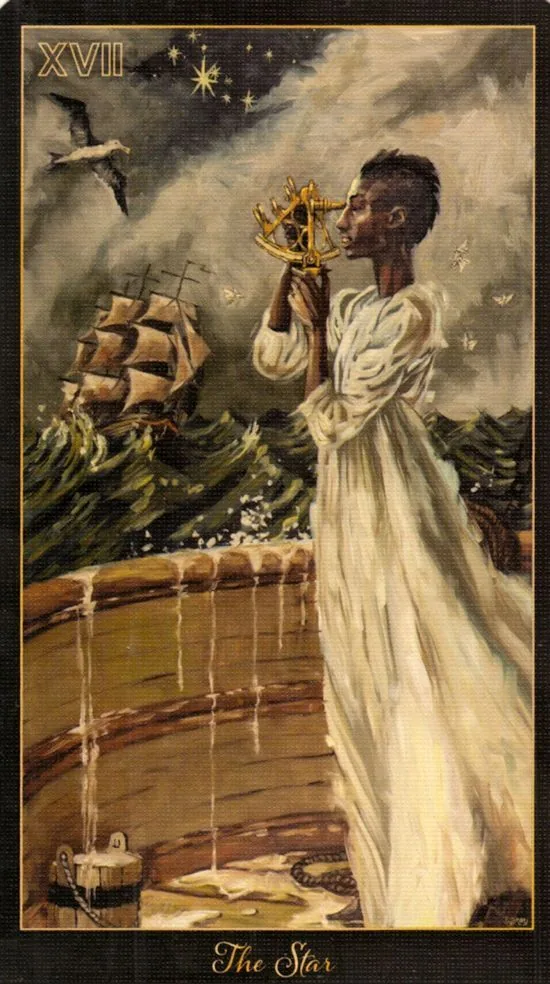
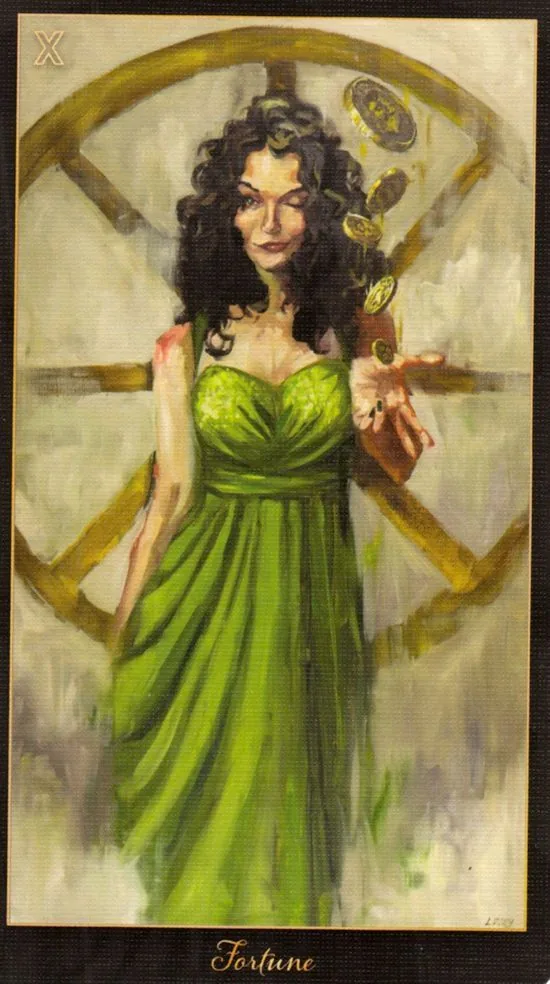
These cards show the deck’s steady approach to courage, solitude, renewal, and fair choices. Nothing here feels rushed; every lesson asks for attention.
Beginner Friendliness
Slow Tarot can be beginner friendly for thoughtful readers, especially if you enjoy art, journaling, and patient interpretation. It may feel harder if you want every card to shout a simple textbook meaning at first glance.
If you are new, keep the guidebook close. Pull one card, describe three things you see, name one feeling, then check the traditional meaning. That little ritual keeps the reading grounded while still letting the art speak in its own language.
Easy Reading Example: The Empress
If The Empress appears in a daily pull, the message is about tending life, not forcing it. The easy question is: what needs warmth, nourishment, and time instead of pressure? This could be a project, a friendship, your body, or your home.
Aurica’s practical advice would be simple: do one caring thing that makes growth easier. Water the plant. Feed yourself properly. Send the kind message. Give the creative idea a real hour on the calendar.
Medium Reading Example: 5 of Swords
If 5 of Swords appears in a conflict reading, Slow Tarot asks you to look at the cost of winning. Being right can still leave everyone exhausted. This card is useful when a situation has become more about pride than repair.
The medium-level question is: what would a cleaner exit look like? Sometimes the answer is an apology. Sometimes it is a boundary. Sometimes it is choosing not to spend more spirit on a fight that has stopped teaching you anything.

Card study
5 of Swords: what is this victory costing?
This card is one of the deck’s clearest moral teachers. I would use it when a reader is caught between defending themselves and draining themselves. The practical message is not “lose.” It is: choose the form of honesty that does the least damage to your future self.
From one hard truth to the wider pattern
After listening to the 5 of Swords alone, I widen the spread and ask what surrounds the conflict. Heat, sorrow, movement, and material strain can then show where repair has space to begin.
Card moment
Conflict with consequence


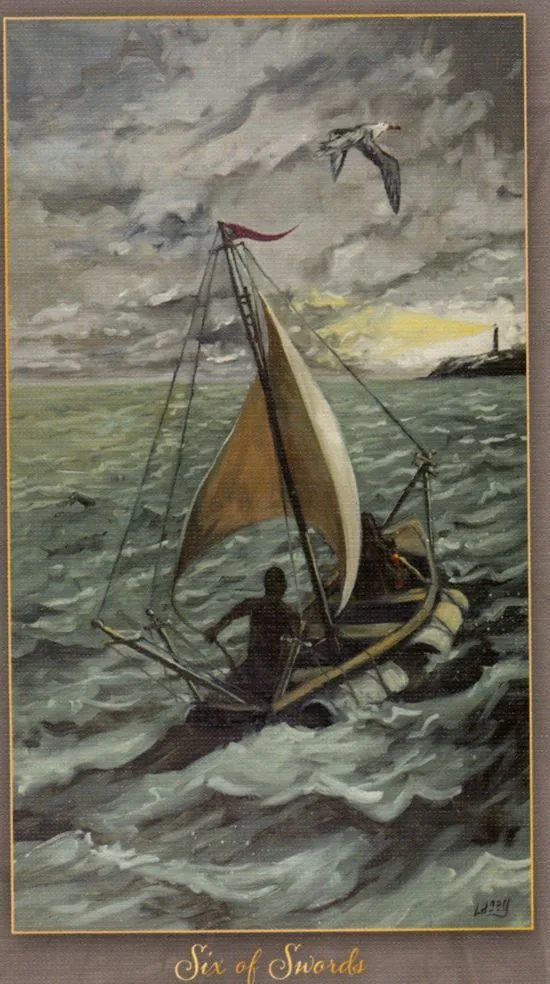

These cards show friction and recovery from different angles: heat, grief, transition, and material worry. Together they make a grounded strip for hard conversations and honest repair.
Hard Reading Example: Death as Atonement
In this package, the Atonement image maps to the traditional Death position. That gives the transformation card a deeply relational feeling: endings, repair, confession, release, and the courage to let an old self fall away.
In a hard reading, I would not treat this as a scary card. I would ask: what truth has been avoided, and what becomes possible when it is finally named? Slow Tarot makes transformation feel less like drama and more like sober, sacred responsibility.
Best Uses for Slow Tarot
- Shadow work: use the deck for questions about patterns, avoidance, and inner honesty.
- Slow journaling: pull one card and write what you notice before reading any keywords.
- Grief and transition: let the deck hold complicated feelings without rushing them into a lesson.
- Creative reflection: ask what wants to be made, tended, edited, or released.
- Seasonal spreads: the deck is excellent for solstice, equinox, birthday, and year-ahead readings.

Card study
Atonement / Death: the repair that lets a new season begin
This card makes the Death lesson more intimate. It is not only “something ends.” It asks what must be faced honestly so the next chapter is clean. In practical terms, it can point to closure, accountability, forgiveness, or the moment when you stop dragging an old story into new ground.
What To Know Before Buying
Buy Slow Tarot if you want a deck with patience, depth, and a strong artistic soul. Do not buy it if you want a bright, ultra-simple keyword deck for instant answers. This deck wants time, space, and a reader who enjoys looking closely.
The deck also suits readers who like the earth suit called Coins. If you know Pentacles, the basic life area is familiar: body, money, work, resources, craft, and grounded choices. The language just feels a little more old-world and material.
Card moment
Earth work


The Coins bring the reading back to the body: resources, craft, patience, and the real-world choices that let spiritual insight become usable.
Aurica’s Golden Rule
Let Slow Tarot set the tempo. If you pull this deck, do not demand a fast answer from a card that is trying to teach patience. Look first. Feel second. Interpret third. Then choose one grounded action.
Final Thoughts
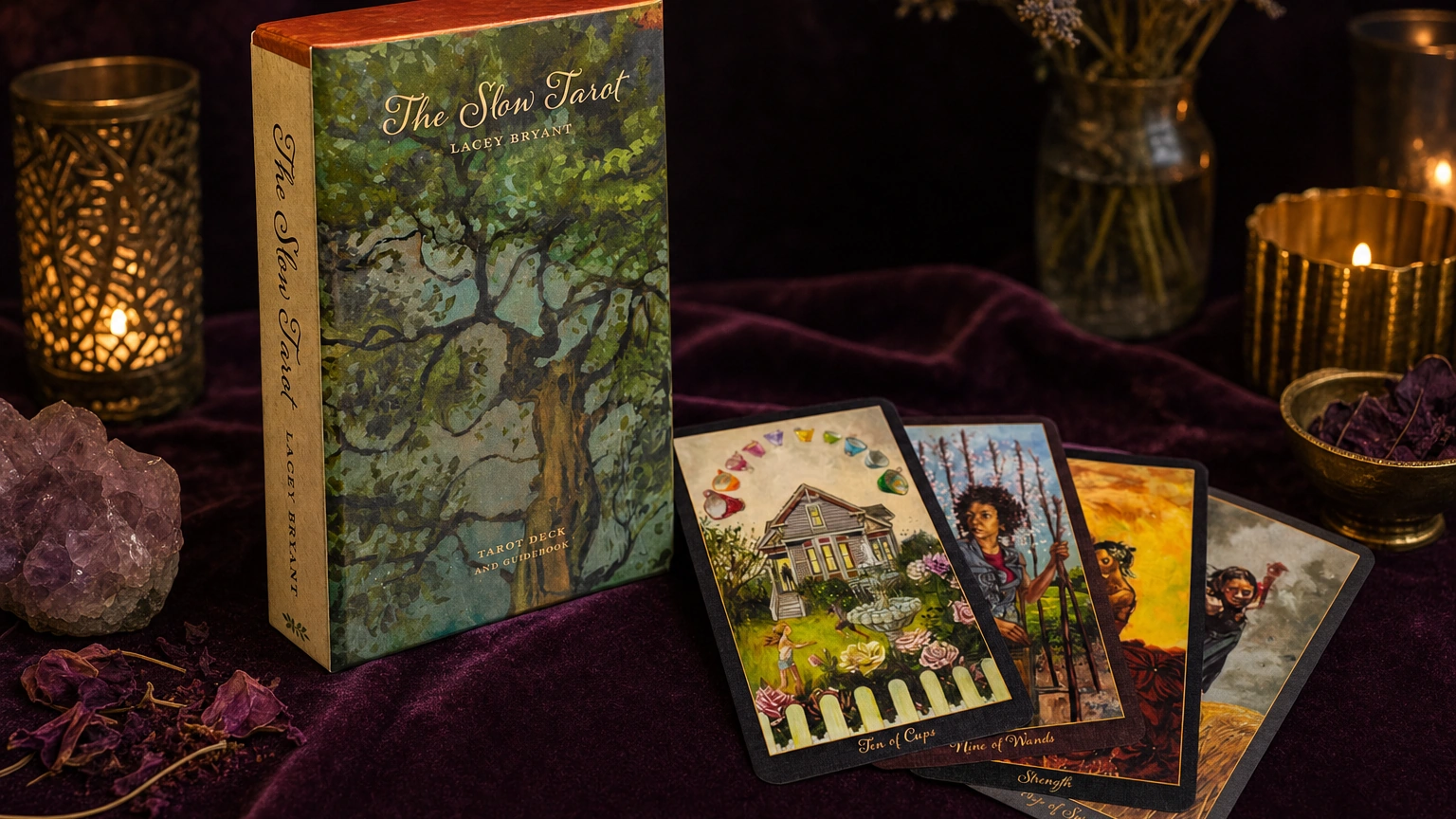
Slow Tarot is a beautiful choice for readers who want their cards to feel deep, earthy, and emotionally honest. It is not the fastest deck on the shelf, but that is exactly the point. It helps you stay with the question long enough for the real answer to rise.
I would recommend it for reflective readers, journal keepers, shadow workers, creative people, and anyone who wants tarot to feel like a quiet room with a candle burning: practical, mystical, and patient.
Slow Tarot FAQ
Is Slow Tarot good for beginners?
Yes, if the beginner enjoys art, journaling, and slow interpretation. It is less ideal for someone who wants a very obvious keyword deck, but thoughtful beginners can learn a lot from it with a guidebook nearby.
Why is it called Slow Tarot?
The name fits the reading experience. The deck encourages unhurried looking, emotional honesty, and meanings that unfold over time instead of instant answers.
Does Slow Tarot use Pentacles or Coins?
Slow Tarot uses Coins for the earth/material suit. If you know Pentacles, read Coins through similar themes: body, work, money, resources, stability, craft, and practical life.
Is the Slow Tarot gallery complete?
No. This review presents a verified partial selection of Slow Tarot artwork, offering an honest look at the deck without implying complete coverage.
What is Atonement in Slow Tarot?
Atonement maps to the traditional Death position in this gallery package. It gives the transformation lesson a strong theme of accountability, repair, release, and honest closure.
What spreads work best with Slow Tarot?
Try one-card reflection, shadow-work spreads, grief or transition spreads, seasonal readings, creative-block spreads, and questions about what needs time, care, and honest tending.