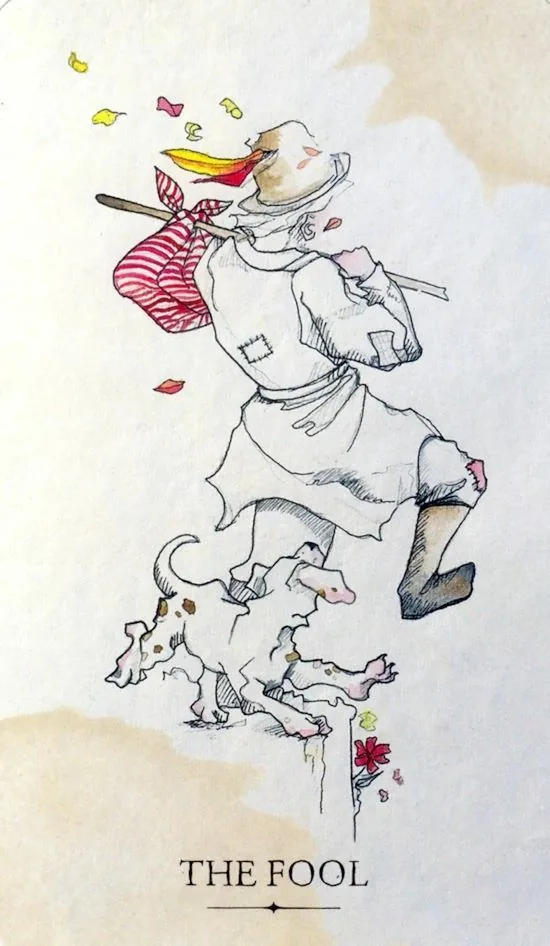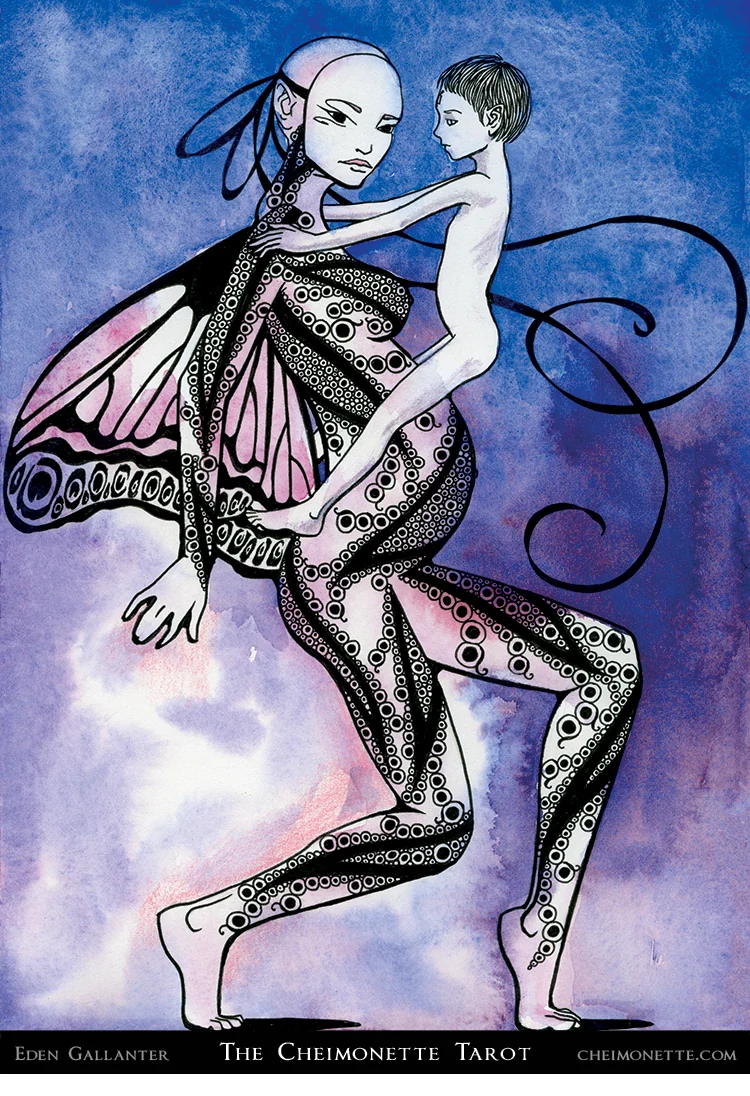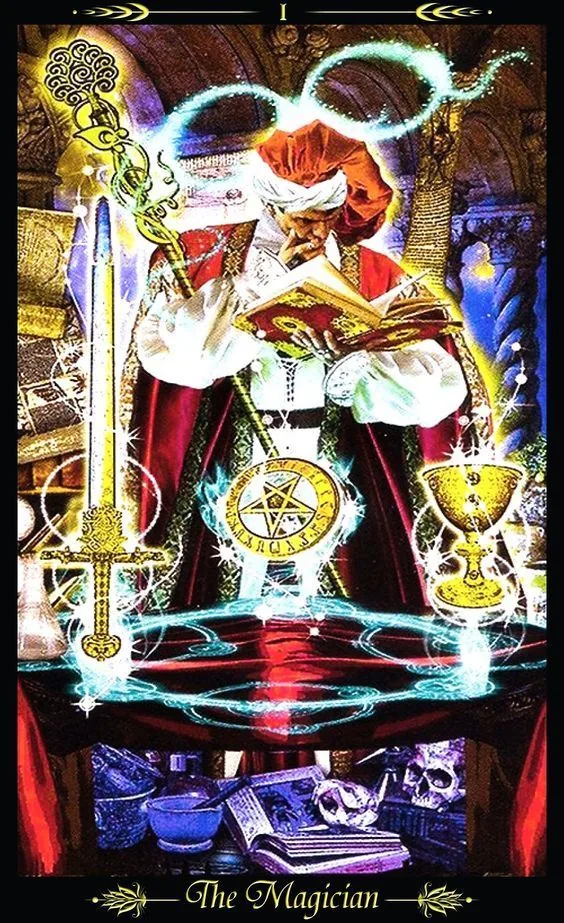
Verified deck imagery
Bosch Tarot Cards
Explore the verified exact-edition card artwork in canonical tarot order. Open any card for a larger carousel view.

A note from Aurica
I never feel that Bosch Tarot gives me a single doorway. It opens a whole painted town at once: saints and fools crossing the same path, small creatures watching from the grass, and ordinary objects becoming temptations, shelters, or warnings. I let my eye wander first, then notice the detail that keeps calling me back.
The golden-robed figure here feels calm, but the bright disc in her hand makes that calm feel deliberate rather than passive. She reminds me to ask what is being offered and what it might cost. Beside the red elder and the armoured cup-bearer, her stillness becomes a pause between wisdom and action, not an escape from either.
In a reading, I begin with posture. Who leans forward, who turns away, who carries something too large, and who seems strangely at ease? Then I bring that little piece of theatre back to the card’s traditional role and the question on the table. That keeps the imagery alive without letting every odd creature become a vague omen.
I especially like this deck for shadow work, creative decisions, and moments when the polite answer is hiding the honest one. A three-card spread—what tempts me, what protects me, and what asks for courage—gives the pictures enough room to speak. Nearby cards tell me whether the scene is playful, cautionary, tender, or truly urgent.
This is not the deck I would hurry. Its soft colours can look gentle while the story underneath feels sharp, so I write down one visible clue before reaching for a guidebook. That small discipline turns surprise into a useful next step.
Bosch’s strange little world reminds me that even a tangled path can reveal one bright, brave step forward.
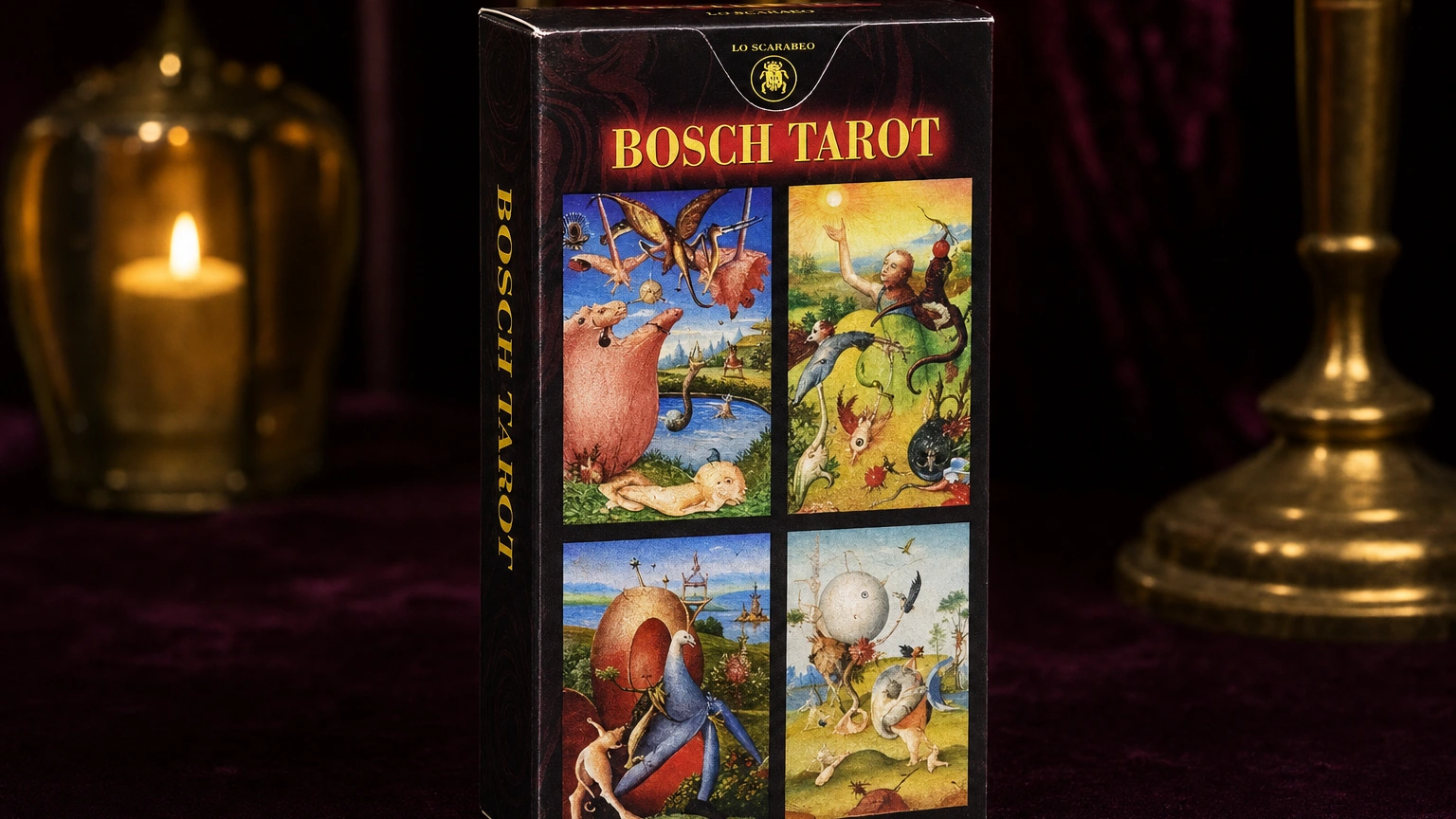
Bosch Tarot is a strange, beautiful, and slightly unsettling art deck inspired by the dreamlike world of Hieronymus Bosch. It is not a soft beginner deck. It is a deck for readers who enjoy symbols, odd creatures, moral puzzles, visual mystery, and cards that make you pause before you speak.
The first thing I notice is the atmosphere: golden hills, pale skies, saints, monsters, vessels, coins, birds, bodies, and tiny theatrical scenes. Many cards feel like a miniature warning story. That makes the deck powerful for shadow work, creative writing, art study, and deep reflective readings.
Best for: art lovers, intermediate tarot readers, collectors of unusual decks, and anyone who enjoys medieval-surreal symbolism. Less ideal for: readers who want simple, bright, instantly readable Rider-Waite-Smith scenes.
What the Bosch Tarot Feels Like in a Reading
This deck reads like a candlelit gallery where every painting is whispering at once. Some cards are easy to feel because the emotion is clear: a figure reaching, hiding, carrying, falling, watching, or being watched. Other cards ask you to slow down and look for patterns.
Orica’s golden rule with the Bosch Tarot is simple: read the scene before you reach for the textbook meaning. Ask: Who is acting? Who is trapped? What object is too large, too small, or out of place? What feels holy, foolish, tempting, or exposed?
Bosch Tarot visual mood: saints, fools, creatures, and strange offerings


These cards show the deck’s core flavor: devotional figures, animal-human hybrids, odd ritual objects, and a world where beauty and danger sit very close together.
Art Style and Symbolism
The artwork borrows the mood of Northern Renaissance painting: pale bodies, warm ochres, cool blue skies, thin landscapes, and bizarre creatures that feel symbolic rather than random. The images are often humorous and disturbing at the same time, which is very Bosch.
Instead of giving you one clean answer, the deck often gives you a moral scene. A cup may look like a reward, but also like a temptation. A road may suggest movement, but also uncertainty. A creature may look foolish, but it might be telling the truth no human wants to say.

Case study one
The World: a complete world held inside a glass sphere
This image is perfect for questions about emotional safety, family patterns, or a private dream you are protecting. The little world inside the sphere feels complete, but also fragile.
In a reading, I would ask: what are you preserving, and what are you afraid will break if other people see it? As The World, it asks whether completion has become a living wholeness or a beautiful enclosure that is now too fragile.
How Easy Is Bosch Tarot for Beginners?
Bosch Tarot is readable, but it is not the easiest first tarot deck. A brand-new reader may feel lost if they need every card to show a familiar tarot scene right away. The deck rewards patience, art observation, and intuition.
If you are new, use it beside a simpler guidebook or a deck you already know. Pull one Bosch card, write down five visible details, then compare those details to the classic meaning. This keeps the reading grounded instead of turning into a guessing game.
Reading the deck through visual clues


Notice the repeated body language: bending, carrying, balancing, being pierced, or being suspended. Bosch Tarot often speaks through posture before it speaks through neat labels.
Card Stock, Titles, and Deck Details
The deck keeps a traditional tarot structure, with Major Arcana and Minor Arcana suits. The suits are generally presented as Wands, Chalices/Cups, Swords, and Pentacles/Coins, depending on edition wording and translation. Court cards may use older titles such as Knave in some references.
The card borders and multilingual labels give the deck an old-world collector feeling. The art is the main event, though. Most readers will buy this deck because they want to sit with the images, not because they want a plain teaching deck.

Case study two
The Star: a protected group under a starry dome
The Star feels like a private circle, a shared secret, or a moment of protection. The dome creates a boundary between the figures and the outer world.
For relationship or community readings, I would read this as a question of belonging: who is inside the circle, who is outside it, and whether the boundary is healthy shelter or emotional avoidance.
Best Uses for Bosch Tarot
- Shadow work: excellent for naming hidden motives, temptations, fears, and self-deception without making the reading cruel.
- Creative prompts: wonderful for writers, artists, and journaling because every card looks like a strange little story.
- Deep personal readings: strong for “what am I not seeing?” questions.
- Deck study: useful for readers who want to compare historical art symbolism with tarot structure.
I would not use Bosch Tarot for a very quick yes/no reading. It wants space. It wants a cup of tea, a quiet table, and enough time to look twice.
Creature logic and dream logic


The creature cards are not just “weird.” They are where the deck becomes psychologically sharp. They can show instinct, appetite, shame, play, and the strange masks people wear.
What I Like Most
What I like most is that Bosch Tarot does not flatten life into neat advice. It lets a reading feel layered. A card can be funny and serious. Beautiful and uncomfortable. Holy and ridiculous. That is useful, because real life is often all of those things at once.
The deck also trains your eye. Over time, you start noticing tiny symbolic choices: a hand reaching, a vessel tipping, an animal watching from the edge, a body turned away from the obvious action. Those details can become the heart of the message.
Case study three
The Devil: the horned figure on a red throne
The Devil is one of the most intense images in the available gallery. It feels theatrical, tempting, and confrontational, like the part of the psyche that wants attention immediately.
I would use this image carefully in readings about desire, ego, obsession, or power. The point is not to frighten the querent. The point is to ask what has become louder than wisdom.
What to Know Before Buying
Buy Bosch Tarot if you want an art deck that challenges you. Skip it if you want gentle, modern, pastel imagery or a deck where every card meaning is obvious at a glance. This deck is more like a symbolic labyrinth than a tidy classroom.
Collectors may love it for the Bosch-inspired world alone. Working readers may love it when they need a deck that goes beneath the polite surface of a question.
Soft beauty beside unsettling symbols


These images show why the deck is not simply dark. It can be graceful, tender, and luminous too. The magic is in the tension between elegance and unease.
Final Thoughts
Bosch Tarot is a memorable, strange, and rewarding deck for readers who enjoy symbolic depth. It is not the deck I would hand to every beginner, but it is one I would keep close for reflective readings, art-based spreads, and questions that need honesty rather than quick comfort.
If you like tarot decks that feel like portals into another moral universe, Bosch Tarot is worth exploring.
Bosch Tarot FAQ
Is Bosch Tarot good for beginners?
It can work for curious beginners, but it is better for readers who already know basic tarot structure. The imagery is symbolic and surreal, so it helps to read slowly and journal visible details.
Is the deck based on Hieronymus Bosch’s paintings?
Yes, the deck is inspired by the strange, moral, creature-filled world associated with Hieronymus Bosch. It feels more like a Bosch-inspired tarot universe than a simple copy of one painting.
Does Bosch Tarot follow the Rider-Waite-Smith system?
It uses a traditional tarot framework, but the imagery is much more art-historical and surreal. Readers should combine classic meanings with close visual observation.
What kinds of readings suit Bosch Tarot best?
It is especially strong for shadow work, creative questions, personal reflection, and readings about temptation, fear, choice, or hidden motives.
Is Bosch Tarot scary?
Some images are strange or unsettling, but the deck is not just scary. It mixes humor, beauty, warning, and mystery. The tone depends on how gently the reader frames the message.
Does this review include a Bosch Tarot card-image gallery?
Yes. This page includes a gallery of 77 available Bosch Tarot card images for visual browsing, so you can study the deck’s strange creatures, soft colors, symbolic objects, and storybook scenes.