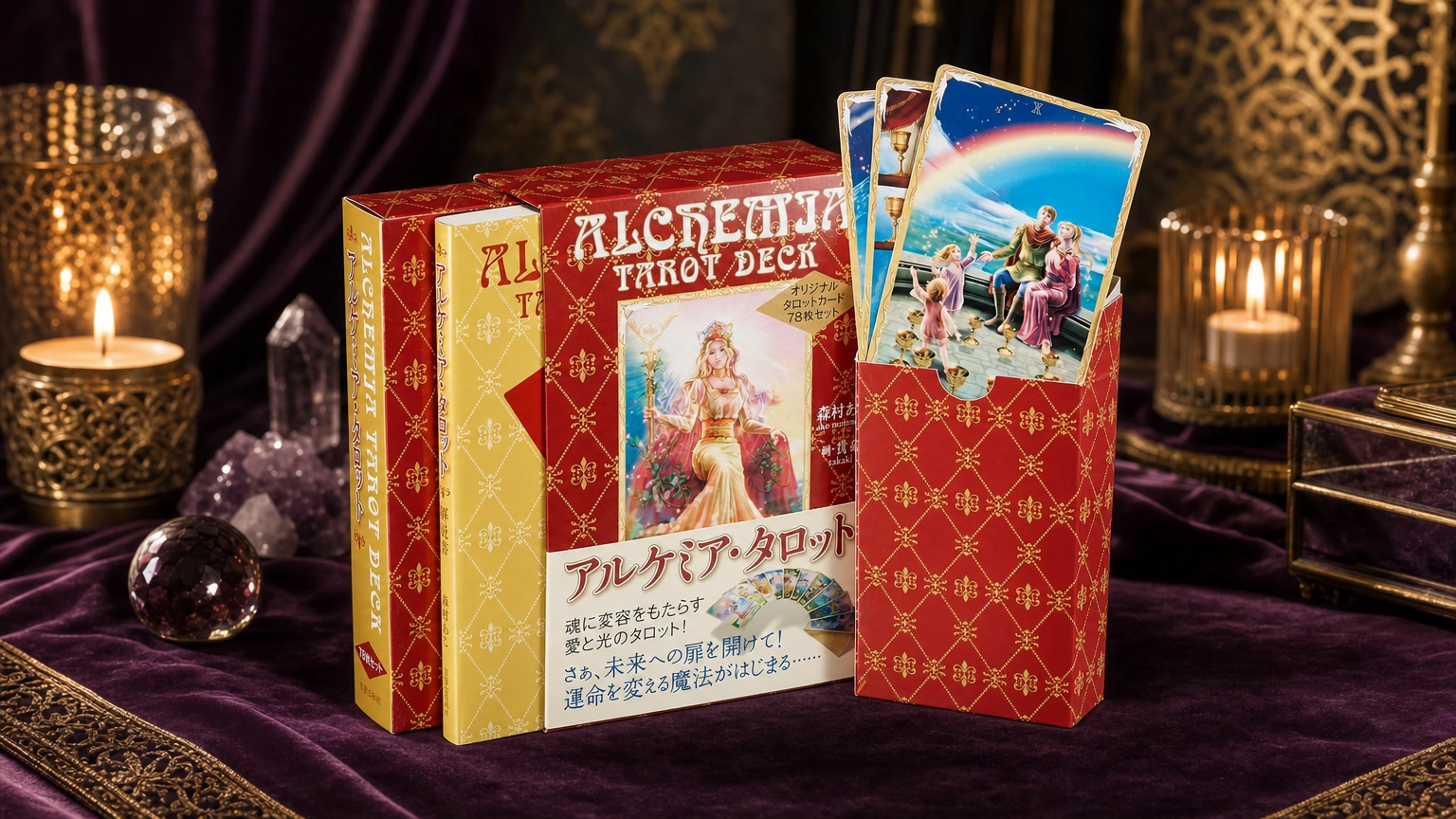
I read Alchemia Tarot as a luminous, highly polished deck for people who like their tarot to feel magical, symbolic, and a little dramatic. The art has that glossy Japanese fantasy style: jewel colors, elegant figures, glowing tools, wings, water, fire, swords, cups, and a constant feeling that something inside the card is changing form. For me, that is where the “alchemy” lives. It is not just old laboratory glassware or literal medieval alchemy. It is emotional alchemy: fear becoming courage, confusion becoming choice, grief becoming wisdom, and raw energy becoming something usable.
The deck still follows familiar tarot bones, so it is not impossible to read if you know the Rider-Waite-Smith system. But it does not feel like a plain clone. The images often read like a ritual lab: each card gives you a person, an element, a mood, and a symbolic reaction. I find myself asking, “What is being heated, cooled, dissolved, purified, or transformed here?” That question makes the deck especially good for personal growth readings.
Alchemia Tarot Cards
Explore the available Alchemia Tarot card images in this partial gallery, then tap any card to open a larger carousel view.
A note from Aurica
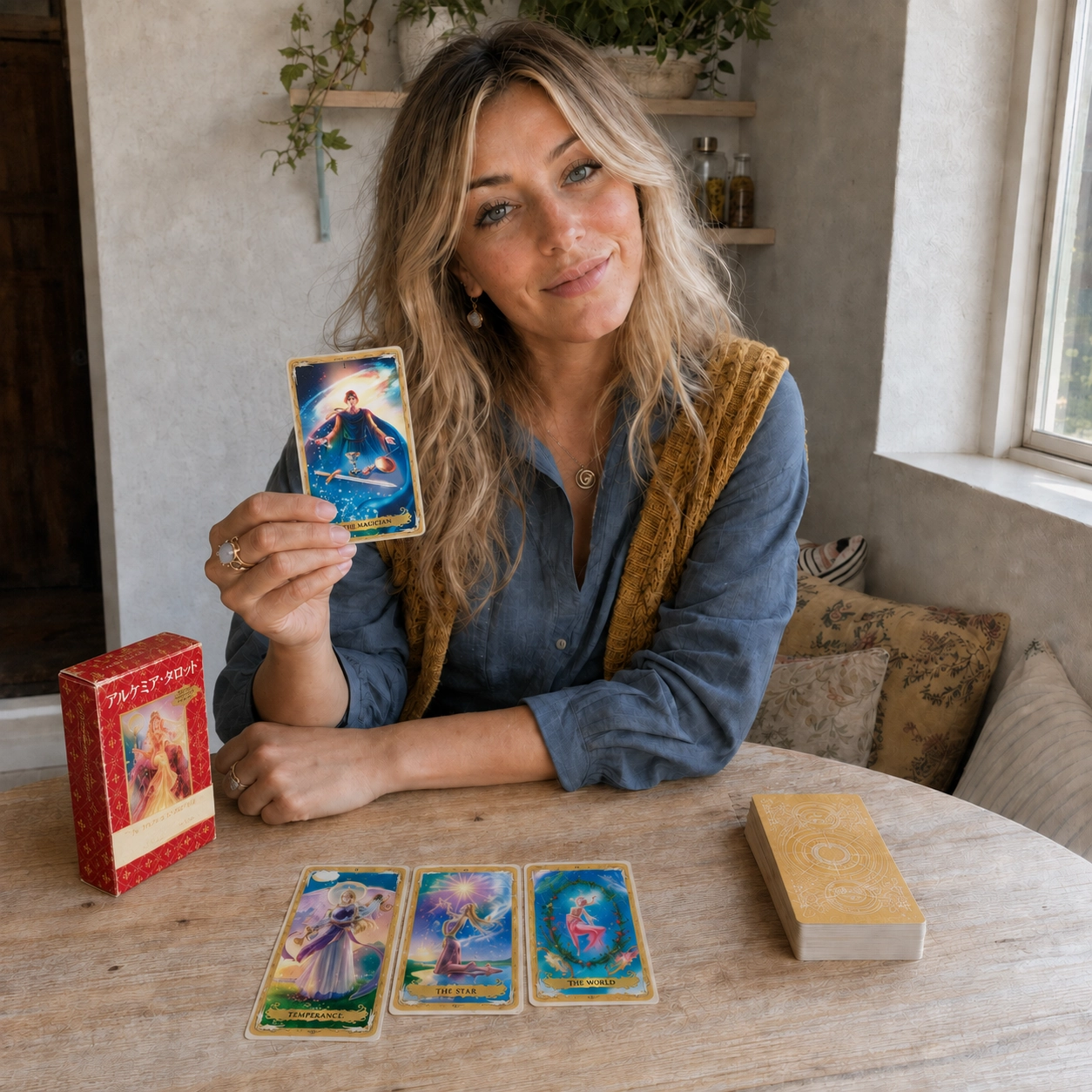
Alchemia Tarot feels as though someone has opened the windows of an old workshop and let coloured light spill across every bottle, feather, and star. The pictures are bright and polished, yet what draws me in is their movement: robes sweep, wings lift, water pours, and even still figures seem poised on the edge of becoming. I begin a reading by noticing where that movement wants to carry my eye.
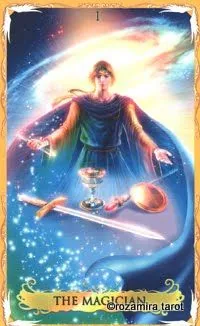
The Magician captures the deck’s heart for me. He stands inside a rush of blue and gold with the tools of the elements spread before him, not waiting for magic to arrive but arranging what is already within reach. When he appears, I ask what ingredient the question has overlooked. Talent matters, but so do timing, attention, and the courage to place one useful thing beside another.
Temperance deepens that idea with a gentler rhythm. Her flowing vessels and luminous wings make balance feel alive rather than fixed, as if harmony is something we keep making through small adjustments. Beside The Star, I read that careful mixing as a return of hope after strain. The surrounding cards tell me whether the medicine is patience, honesty, rest, or one brave experiment.
I love using this deck when a situation feels vivid but hard to name. Its colour can reveal the emotional temperature before the mind has formed a tidy answer: a cool blue may ask for space, a flare of gold may show confidence returning, and a guarded pose may uncover the part of us that is not ready to move. I follow those clues, then test them against the card’s familiar tarot role so intuition stays useful.
The World is a beautiful final reminder that transformation does not erase who we were; it gathers the lessons into a wider circle. Let these cards help you see the materials already glowing on your own table, because your next bright change may begin with one small, wholehearted act of alchemy.
What makes Alchemia Tarot different
The strongest part of Alchemia Tarot is its atmosphere. The cards feel clean, ornate, and enchanted, with a lot of attention on posture, costume, light, and elemental movement. The Cups can feel watery and emotional without becoming mushy. The Wands carry heat, will, and creative fire. The Pentacles feel like earth, skill, and real-world growth. The Swords have a sharper mental charge, often showing the pressure of thought, truth, and conflict.
I like this deck most when I am asking about change. It suits questions like: “What part of me is ready to transform?”, “What ingredient is missing from this situation?”, “Where am I forcing the process?”, “What needs patience before it becomes gold?”, or “How can I turn this difficult feeling into a wiser choice?” The deck has enough fantasy beauty to feel inspiring, but it also has enough structure to keep a reading grounded.
A quick gallery note: the current TarotFans native gallery shows 76 available card images for this review. I keep that count honest here, so I will not claim the live gallery displays every single card. The gallery is still large enough to show the deck’s style, suits, majors, and reading personality clearly.
Alchemy of will
The Magician as the working table
The Magician is a perfect doorway into this deck. I read this card as the moment when raw ingredients become practice. In a normal tarot reading, The Magician is skill, focus, and using what you have. In Alchemia Tarot, I also feel the laboratory mood: gather the tools, name the intention, and do not waste energy. If this card came up for a creative block, I would ask which element is missing: feeling, action, plan, body, or belief.
How it reads in real life
In real readings, Alchemia Tarot tends to speak through mood first and details second. I notice the color temperature, the direction of the figure’s body, the object being held, and the element that seems most active. A fiery card may ask where energy is building. A watery card may ask what feeling needs to move. A sword card may point to the thought that cuts through confusion, or the thought that is cutting too deeply.
This is a good deck for journaling because its images invite comparison. If The Magician appears, I might ask which tools are already on my table. If Temperance appears, I think about mixing instead of forcing. If Death appears, I look for the stage of transformation where one form has ended but the next one is not fully stable yet. That is very alchemical. The card is not just saying “change.” It is showing the messy middle of becoming.
I would not call this the most minimal beginner deck. The art can be ornate, and some readers may need a moment to separate decoration from message. But if you enjoy rich digital fantasy art and you already know basic tarot meanings, Alchemia Tarot gives you a beautiful language for inner change.
Card studies and four-card moments from the live gallery
I like this part of the review best when the visuals have room to breathe. So instead of stacking every study together, I move between one close look and one small spread. That feels closer to the way I actually read Alchemia Tarot: study one card, then let a few cards react together.
After The Magician, I like to widen the question into a whole transformation path. This first four-card moment is for checking what is already on the table, what still feels hopeful, what needs to change form, and where the process wants to end.
The inner alchemy check-in


Ask: what tool do I have, what hope is guiding the process, what must change form, and what wholeness is trying to emerge?

Alchemy of balance
Temperance as the careful mixture
Temperance is where Alchemia Tarot feels most like emotional chemistry. This card is not about rushing to fix everything. It is about blending two truths until a third path appears. In a relationship reading, I would read it as patience, listening, and careful balance. In a healing reading, I would ask what needs dilution, rest, or gentler timing. The message is simple: transformation works better when the mixture is right.
Temperance makes the deck feel softer and more patient, so I like pairing that study with a Cups-based spread. The images move from clean feeling into disappointment, wish, and emotional maturity, which is very useful when a reading is about healing instead of quick answers.
Emotional purification spread


Use this when feelings are cloudy. Read it as the pure feeling, the grief or disappointment, the wish underneath, and the mature emotional response.
The next useful angle is creative energy. Alchemia Tarot has enough fire and shine to make Wands feel alive, but it still asks for direction. I would use the next four cards when a person has inspiration but needs to turn it into steady action.
Creative fire to finished action


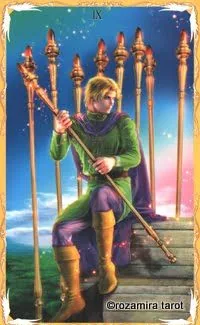

Ask what spark wants attention, where the plan is expanding, what stamina is needed, and how to lead the fire without burning out.

Alchemy of thought
Eight of Swords as thought turned into a cage
The Eight of Swords is a strong example of how this deck handles shadow. Swords are air, thought, words, and pressure. Here I would read the card as a mental formula that has gone wrong: “I have no choice,” “I will fail,” “Everyone is judging me,” or “I cannot move until I am certain.” The alchemical work is not to pretend the fear is fake. It is to test the thought, loosen the binding, and find the one small movement that proves change is possible.
That Eight of Swords study is why I do not read this deck as only pretty fantasy art. It can show pressure clearly. After looking at the card alone, I like to place it inside a small Swords sequence so the reading has movement: stuckness, recognition, transition, and the decision that comes after clearer thinking.
From stuck thought to clear choice


Read this as pause, mental trap, movement away from the trap, and the clean decision that comes after honest thinking.
Who will love this deck
Alchemia Tarot is a lovely match for readers who enjoy fantasy art, symbolic details, and transformation-based spreads. It is especially good for journaling, shadow work, creative blocks, emotional growth, and readings about becoming the next version of yourself. If you like decks that feel like a magical study table, this one has a lot of charm.
I would be more careful recommending it to someone who wants very plain, everyday scenes. The beauty is part of the message, but it can also make the cards feel more theatrical than practical at first. I think the best way to learn it is to pull one card and write three notes: the element I notice, the change happening in the image, and the real-life action it suggests.
For me, the bottom line is that Alchemia Tarot is not only about predicting what happens next. It is about noticing the ingredients already present in your life and choosing the next reaction with more awareness. That makes it gentle, magical, and surprisingly useful when you are in a season of change.
Bottom line: Alchemia Tarot is a bright, elegant deck for readers who want tarot to feel like magical transformation. It keeps enough classic structure to be readable, but its real beauty is the way it turns everyday questions into a process of mixing, testing, releasing, and becoming.
Alchemia Tarot FAQ
Is Alchemia Tarot good for beginners?
It can work for beginners who like detailed fantasy art, but I would keep a basic tarot keyword guide nearby. The deck follows familiar tarot structure, yet the ornate images may feel easier after you know the core meanings.
What is the main personality of Alchemia Tarot?
It feels symbolic, polished, magical, and transformation-focused. I read it like a ritual lab for emotional change, where each card shows an ingredient, reaction, challenge, or next step.
Does Alchemia Tarot follow Rider-Waite-Smith meanings?
Mostly yes in structure, but the art gives the meanings a more alchemical and fantasy tone. I would use standard tarot meanings as the base, then let the colors, elements, and figures refine the message.
What questions suit this deck best?
It is strongest for questions about personal growth, creative energy, emotional healing, choices, shadow work, and transformation. Prompts like “What is changing in me?” or “What needs to be balanced?” fit it well.
Is the artwork dark or gentle?
The deck has drama and shadow, especially in cards like Death, The Tower, and the Swords, but the overall feel is elegant rather than harsh. It can handle difficult topics while still looking beautiful.
Is every Alchemia Tarot card image shown in this gallery?
No. This is an honest partial gallery, so I do not describe it as the complete deck. The available images still give you a generous look at the deck's colour, movement, and reading atmosphere.