The gentlest way into a reading is sometimes a clear picture and a few well-chosen words. Emilie Muñiz designed Simplicity Tarot around that idea: familiar tarot scenes, softened into uncluttered watercolor illustrations, with keywords printed on the cards. It gives a new reader somewhere to begin without asking them to memorize a whole book first. The deck is rooted in Rider–Waite–Smith imagery rather than a newly invented system. Creator’s overview
Here is the important counting detail: the publisher’s edition has the familiar 78-card tarot sequence plus Spiritual Cleansing and Spiritual Guide, making 80 physical cards. The two additions are optional in a reading; they do not replace any of the traditional cards. Creator’s extra-card notes
What makes this edition feel simple?
Muñiz has not thrown away the old tarot stories. The Major Arcana still follows the Fool’s Journey, while the minor suits are Wands, Cups, Swords, and Coins. What changes is how quickly your eye can settle: the artwork keeps recognizable figures and symbols without crowding every corner, and the keywords offer a little handrail when a card feels unfamiliar. The publisher describes this printing as watercolor art with gold-gilt edges, petite cards, a two-piece box, and an accompanying guidebook. Creator’s Major Arcana descriptions
Those keywords can be useful, but they are not the whole reading. Let your first impression of a figure or gesture arrive before you read the printed prompt. Then ask whether the word confirms that impression, complicates it, or seems at odds with the question. A clear card can still hold more than one mood.
A closer look at the Fool
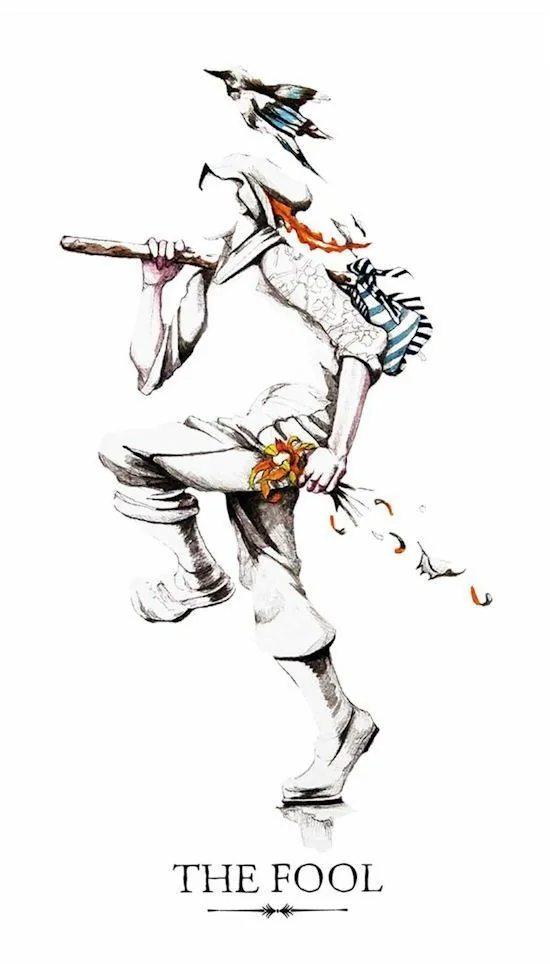
In Muñiz’s description, the Fool dances on tiptoe with a small bundle tied to a stick. A dog barks nearby, and the cliff lies just ahead. There is something tender in that contrast: delight in moving forward, and a reminder to look where you are going. In a reading about a new beginning, I would ask what deserves the Fool’s open heart—and which practical detail deserves one more glance before the leap. That is an interpretation of the creator’s published description, not a claim that I handled a physical copy. Creator’s card descriptions
How I would use the two additional cards
Spiritual Cleansing and Spiritual Guide sit outside the traditional 78-card sequence. A learner could set them aside while practicing standard card associations, then add them when a reading calls for a more explicitly spiritual lens. Another reader may prefer to keep them in from the start. Neither choice changes the familiar Major and Minor Arcana structure beneath them. The creator identifies both cards, and an independent 2020 review discusses reading with or without them. Creator’s extra-card notes · Independent reading notes
A simple three-card practice makes the distinction useful. Draw from the standard sequence for what is present, what wants attention, and a possible next step. If you include either bonus card, let it shape the tone of your reflection rather than treating it as a substitute for the question you asked.
Who might enjoy it?
This is a thoughtful choice for someone learning the Rider–Waite–Smith pattern who wants a visible cue on each card. It may also suit an experienced reader who likes a quieter table: the reduced detail can leave more room for a conversation about the central scene. Benebell Wen’s independent review likewise emphasizes the preserved symbolism, representation, and the usefulness of the keywords. If you prefer densely layered esoteric details or no words on the card faces, those same design choices may not be for you. Independent review
Edition and identity notes
This review concerns Simplicity Tarot by Emilie Muñiz, specifically the 80-card U.S. Games Systems printing (ISBN 978-1-64671-066-9). The creator also describes earlier indie editions as out of print; do not assume that an older photograph or listing depicts this publisher printing without checking its box and card details. Creator’s edition overview
Do not confuse it with Simplicities Tarot, a separate 78-card project credited to Lorina Joy. The names sound alike, but the credited creators and deck descriptions differ. Separate-project reference
Final Thoughts
Simplicity Tarot leaves the door to the older tarot stories open while making the first step feel less daunting. Its gift is not a shortcut past observation; it is a little breathing room to notice the scene, read the words, and find your own next question. For a learner drawn to familiar symbolism and clear prompts, that is a lovely place to begin.
Frequently Asked Questions
How many cards are in Simplicity Tarot?
The publisher lists 80: the standard 78 tarot cards plus Spiritual Cleansing and Spiritual Guide.
Is this the same as Simplicities Tarot?
No. This Simplicity Tarot is by Emilie Muñiz; Simplicities Tarot is credited to Lorina Joy. Creator biography · Separate-project reference
Does the deck follow a familiar tarot structure?
Yes. The publisher identifies Rider–Waite-based artwork, and the creator describes the 22 Major Arcana and familiar minor suits, including Coins. Creator’s card descriptions
Can I read without the extra cards?
Yes. Removing the two bonus cards leaves the traditional 78-card sequence intact; you can bring them back if their spiritual themes suit a particular reading. Creator’s extra-card notes