
Fairy Tarot Alligo Cards
Browse the recovered Fairy Tarot Alligo card fronts in deck order. The unavailable cards are The Dryad (Justice) and the Ten of Acorns; no uncertain images have been used. Tap any card to open a larger carousel view.

A note from Aurica
Fairy Tarot feels like opening a tiny door at the foot of an old tree and finding a whole village already awake behind it. Antonio Lupatelli’s fairies are busy, mischievous, tender, and occasionally gloriously foolish. I love how a moon, a mushroom, a leaf, or one sideways glance can carry the emotional weight of a scene without making it feel heavy.
When I read with these cards, I begin by noticing where the movement wants to go. The Elf dances forward beneath the moon as if curiosity has outrun caution; The Naiad pours bright streams into the dark, turning hope into something we can actually share; and The Sun gathers its warmth around companionship rather than solitary triumph. Those small gestures help me hear whether a question needs courage, patience, play, or a kinder way of speaking the truth.
The renamed suits of acorns, hearts, leaves, and bells make familiar tarot patterns feel freshly alive. I still hold the traditional structure in mind, but I let the woodland details choose the first doorway into a reading. An acorn can suggest potential that needs tending, a bell can call attention to what has been ignored, and a crowded little scene can reveal the difference between joyful company and distracting noise. The surrounding cards then show whether that first impression is an invitation, a warning, or simply permission to lighten my grip.
This is a deck I would reach for when a reading has become too stern or when someone needs a practical truth delivered with warmth. Its humour never erases difficulty; it reminds us that wonder, friendship, and resourcefulness can live beside it. Fairy Tarot leaves a trail of bright crumbs through the forest, encouraging you to trust your curiosity and discover that the next hopeful step may be closer than it first appears.

Fairy Tarot Alligo Review: tiny scenes, practical magic
Fairy Tarot Alligo looks soft at first: little figures, oversized acorns, woodland props, bells, leaves, hearts, animals, and moonlit fairy scenes. But the deck is not just cute. It works because the tiny storybook details turn a reading into a scene you can actually understand. Someone is hiding, waiting, carrying too much, ringing a bell, guarding a treasure, or pretending the obvious sign is not obvious yet.
This updated TarotFans review keeps the recovered same-deck gallery honest at 76 available card images, adds the walkthrough video, a native lightbox gallery, a table reading visual, card studies, four-card moments, pros and cons, and a six-question FAQ so you can preview the deck before buying.
The reading voice: gentle, symbolic, and sharper than it looks
The best thing about Fairy Tarot Alligo is how it makes serious advice feel approachable. Instead of shouting, the cards use fairy-tale exaggeration: one acorn becomes huge, one bell becomes impossible to ignore, one animal companion changes the whole mood. That makes the deck useful for people who need clarity but tense up around harsh imagery.
I would not use it when someone asks for a severe, no-softening shadow-work deck. I would use it when the person needs to stay open long enough to hear the truth. Fairy Tarot Alligo is especially good for creative choices, relationship patterns, small daily decisions, and inner-child readings where humor and gentleness are part of the medicine.

Storybook card study
The Elf: the invitation into the fairy path
The Elf opens the deck beneath a full moon, beating a tambourine as an animal companion follows. Its lively, happy disorder makes the beginning feel playful rather than reckless.
This is the deck’s Fool archetype. In a reading, The Elf asks where curiosity can loosen fear without replacing common sense.
Four-card moment
Beginning the fairy path
The Elf, Magician, High Priestess, and Empress move from first impulse to skill, inner knowing, and creative abundance—the deck’s opening path from curiosity into confident participation.



Artwork and first impression
The artwork has a handmade, slightly antique charm. It is not trying to look like a polished digital fantasy poster. It feels closer to old illustrated folklore: textured backgrounds, expressive tiny bodies, symbolic props, and scenes that invite you to wonder what happened one second before the picture.
That style is a strength. The deck gives you practical clues without flattening the mystery. A beginner can point to the mood, the object, or the character’s posture. A more experienced reader can layer in suit logic, numerology, and the old fairy-tale question: what bargain, gift, warning, or trick is being shown here?

Woodland wisdom
The Chariot: choosing a clear direction
The Chariot gathers a tumbling rush of winged creatures beneath one armored, sword-bearing driver. The busy scene turns movement into a question of command: which impulse leads, and which distractions must fall into formation?
In a reading, The Chariot asks for a chosen direction rather than more speed. Progress comes when scattered energy serves one intention.
Four-card moment
Love, movement, solitude, and change
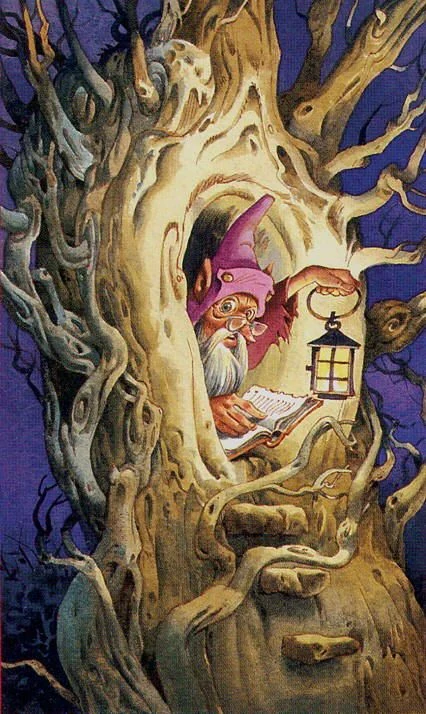
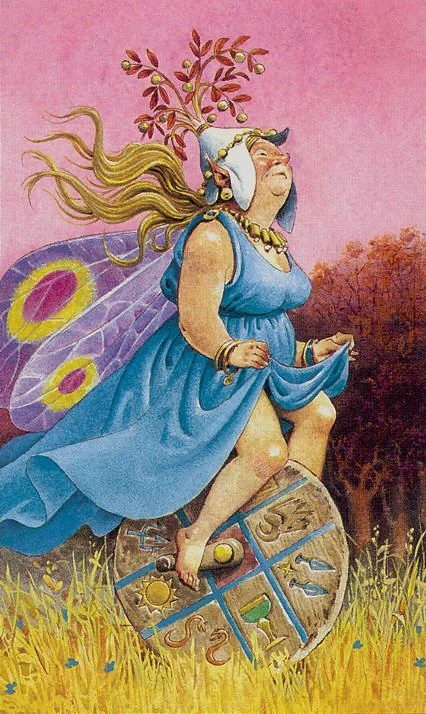
The Lover, Chariot, Hermit, and Oread trace a living rhythm: choose with the heart, commit to a direction, step back for wisdom, then accept the turning of the wheel.

Beginner friendliness
Fairy Tarot Alligo can work for beginners, especially visual beginners who like stories more than memorized keywords. You can start by asking simple questions: What is oversized? Who looks confident? What is hidden? What object is being offered? Where is the card asking for patience?
The one caution is that the deck is not a plain Rider-Waite-Smith clone. If you want every card to mirror familiar textbook scenes, this may feel indirect. If you enjoy learning meanings through mood, objects, and little narrative clues, the deck becomes easier and more fun with each reading.

Acorn-and-bell study
The Tower: when the old structure breaks
Lightning splits a tall stone tower, throwing masonry into the sky as a small winged figure falls away. The deck makes upheaval unmistakable: a structure that looked permanent can no longer hold.
In a reading, The Tower can mark revelation, rupture, or a forced reset. Its useful question is not how to preserve the broken structure, but what truth becomes visible once it falls.
Four-card moment
Balance, shadow, upheaval, and intuition
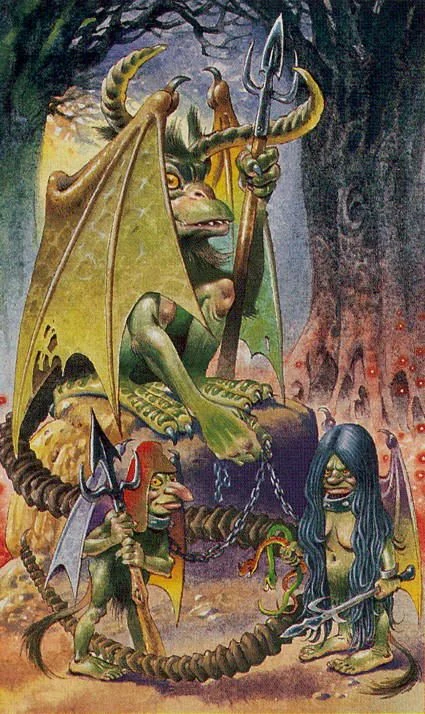
The Sylph, Troll, Tower, and Moon travel from balance into shadow, sudden upheaval, and the uncertain light that follows. Together they ask for composure without denial and intuition without fantasy.


Best uses for Fairy Tarot Alligo
I like this deck for daily pulls, creative planning, friendship questions, family emotions, gentle romantic readings, and reflective journaling. It can also be a lovely companion for writers and artists because each card feels like a tiny prompt. You can ask, “What scene am I in today?” and the deck will usually answer with something visual and useful.
For career and money, it works best when the question is about timing, patience, habits, confidence, or creativity. It is less ideal for someone who wants a cold business audit. Fairy Tarot Alligo prefers to teach through symbols, small steps, and the quiet consequences of choices.

Emotional clarity
Four of Acorns: protecting what matters
Four ripe acorns hover above a leafy shelter where a fairy sits close beside small woodland companions. The image turns stability into a protected little world: enough has been gathered to create safety.
In a reading, the Four of Acorns asks whether security is supporting connection or becoming a hiding place. Protect the resource, but leave room for growth and exchange.
Four-card moment
Building and protecting the acorn suit
Three and Four of Acorns lead into the Knight and Queen, moving from shared effort and secure foundations toward purposeful action and mature stewardship.


Pros and cons
| Pros | Cons |
|---|---|
| Honest 76-card native gallery lets you preview the recovered same-deck artwork clearly. | The gallery is still missing two verified standard cards, so completionists may want to wait for a fuller source. |
| Old-storybook fairy art is warm, memorable, and easy to read intuitively. | Readers who prefer direct Rider-Waite-Smith scenes may need extra time to adjust. |
| Great for daily pulls, creative blocks, gentle emotional readings, and journaling prompts. | The soft tone may not satisfy readers who want dark, blunt, or minimalist tarot imagery. |

Everyday fairy magic
Four of Leaves: a stable place to grow
Four leaves float above a tiny crowned figure held in a nest while four bright birds gather on the surrounding branches. The scene makes steadiness feel communal rather than static: shelter is created through attentive support.
In a reading, the Four of Leaves asks what foundation is already strong enough to nurture the next stage—and which dependable people or habits help keep it that way.
Final Thoughts
Fairy Tarot Alligo is a charming, specific, and surprisingly useful fairy deck. It is best for readers who want gentle images with real advice inside them. The recovered gallery is missing only The Dryad (Justice) and the Ten of Acorns, but it is strong enough to show the deck’s voice: old storybook magic, tiny symbolic clues, soft humor, and practical emotional guidance.
If you enjoy folklore decks that feel cozy without becoming shallow, Fairy Tarot Alligo is worth exploring. Let the small scenes speak slowly. The advice is usually hiding in the detail you almost skipped.
Fairy Tarot Alligo FAQ
How many Fairy Tarot Alligo cards are shown here?
This TarotFans review shows 76 verified Fairy Tarot Alligo card fronts. The unavailable cards are The Dryad (Justice) and the Ten of Acorns, so the gallery does not pad the deck with uncertain art.
Is Fairy Tarot Alligo beginner friendly?
Yes, if you enjoy intuitive and story-based reading. The scenes are expressive, funny, and emotional, though total beginners may still want a classic tarot guide beside it.
What makes this deck different from other fairy decks?
Fairy Tarot Alligo feels more like an old illustrated storybook than a glossy fantasy deck. The acorns, bells, leaves, animals, and tiny fairy gestures make the messages practical and memorable.
What readings fit Fairy Tarot Alligo best?
It is lovely for daily pulls, creative blocks, family and friendship questions, gentle shadow work, emotional check-ins, and readings where humor can make the truth easier to hear.
Does Fairy Tarot Alligo feel dark?
No. It has nocturnal and mischievous moments, but the overall tone is warm, clever, and soft rather than scary or heavy.
Who will enjoy Fairy Tarot Alligo most?
Readers who love fairies, folklore, tiny symbolic details, old European illustration, and gentle but useful advice will probably enjoy this deck most.


