Corneal Edema Tarot Review
Tarot Deck By John R. Dybowski
TAROT CARDS REVEALED✦ 7 MIN READ
Explore the Cards
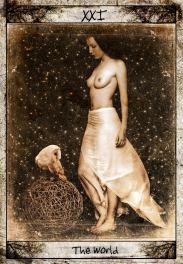
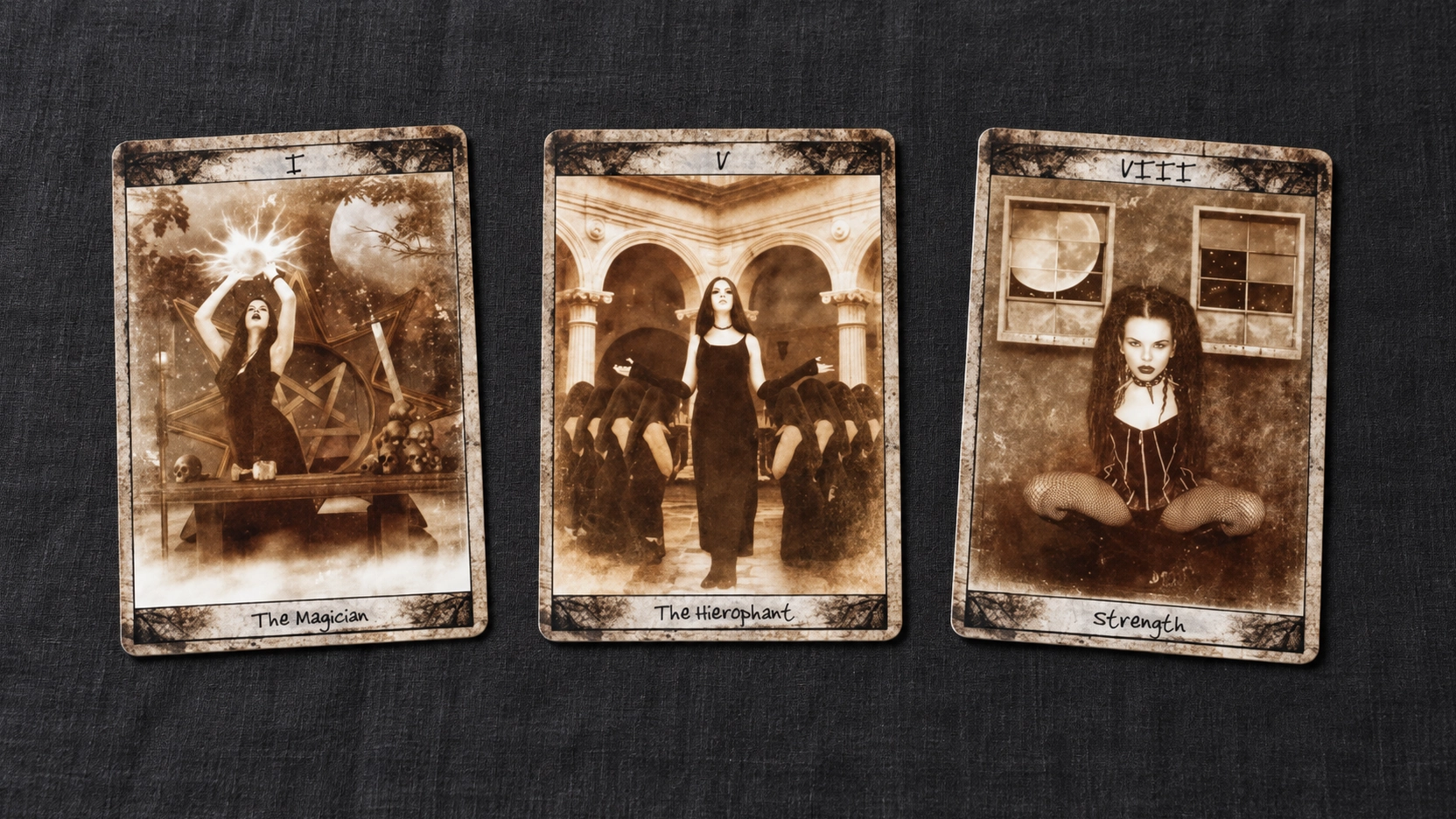
Sepia light, dark clothing and faces that seem to look back at us: these original publisher samples reveal the deck’s intimate gothic mood. This is a selection, not a complete gallery. Artwork by John R. Dybowski, sourced from the Alchemy Web Bookshop’s Corneal Edema edition.
Showing the verified publisher selection.
A note from Aurica
I’m drawn to the hush in these images. Their brown light feels like an old photograph kept inside a favourite book, yet the faces are startlingly present. They do not disappear into their gothic surroundings; they meet us there.
The Magician catches my eye first. Her lifted hands turn intention into a visible gesture, while Strength offers a quieter kind of courage. I like that conversation: sometimes we need to reach outward, and sometimes we need to stay gently with ourselves.
I would approach this deck slowly, with one clear question. What draws me closer? What makes me pull away? The textured surfaces invite feeling, while the familiar card title gives that feeling somewhere to land.
For me, the beauty here is not darkness for its own sake. It is the small brightness that remains inside it. Let these images remind you that your tenderness and your strength can share the same room.
A Gothic Deck With a Human Pulse
Corneal Edema Tarot is the work of American artist John R. Dybowski. The publisher describes posed photographs transformed into textured spaces, and that is exactly where its spell begins. These are human figures, not distant fantasy characters. The sepia palette softens the edges, while black clothing and direct gazes keep the pictures emotionally close.
The Alchemy Web Bookshop edition is a Major Arcana deck. It is not a conventional full tarot with four suits. Its publisher lists 22 cards, approximately 130 × 90 mm, signed and numbered by the artist. Those details describe that published edition; ask a seller to confirm the individual copy and its contents before ordering.
The title invites a metaphor of altered vision. I would let that become a question about perspective, rather than turn the images into medical symbolism. How does a feeling change what we notice? What might become clearer if we sit with the picture a little longer?
Card study
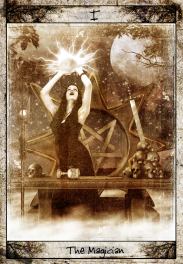
The Magician: Give the Feeling a Form
A dark-clothed figure lifts her hands toward a bright point above her head. A large pentagram sits to her right, and a horizontal surface crosses the foreground. The mottled brown setting makes the light feel concentrated, as though an intention has suddenly found its centre.
That gesture gives the Magician’s familiar theme of agency an intimate shape. I read it as the moment between wanting something and giving it a practical form. The shadow is mistaking a powerful feeling for a completed action.
For a creative question, I would ask: “What can I make with what is already within reach?” Choose one small action after the reading. The image may kindle the wish, but your next step gives it weight.
Let the Photograph Speak Before the Keyword
With a photographic deck, the face often arrives before the symbol. Notice the direction of the gaze, the distance between figure and viewer, and the way the body occupies the frame. Then return to the printed card name. This keeps an intuitive response connected to tarot instead of letting atmosphere answer every question.
I would start with one card rather than a crowded spread. Name something visible, name the feeling it brings, and only then connect it to the situation. “She looks steady” is a useful beginning; “this guarantees success” leaps far beyond the image.
Four cards, one conversation
From Intention to Inner Light
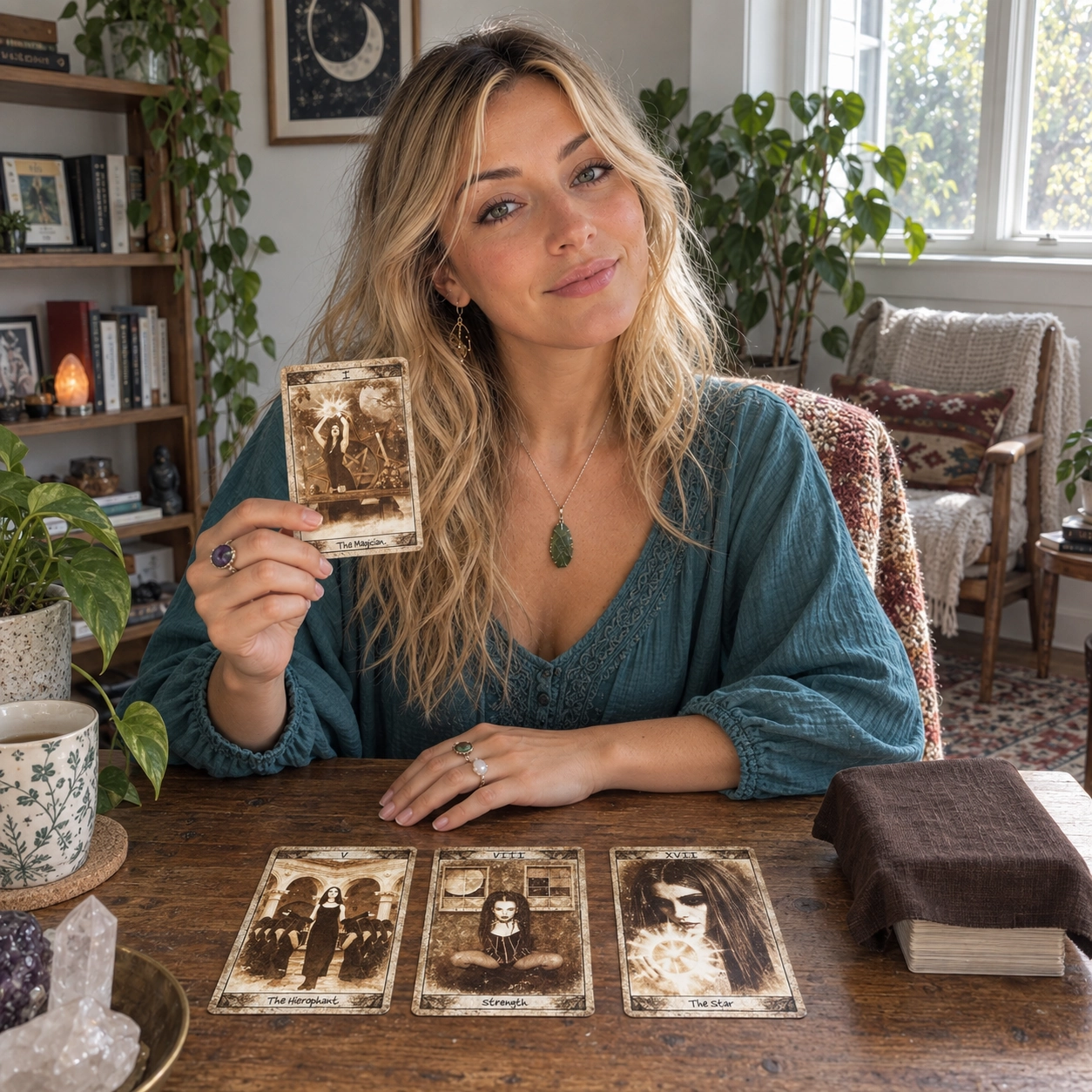
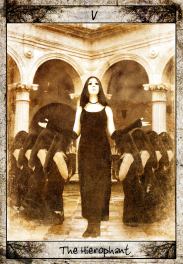
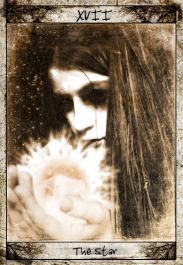
The Magician gathers energy; the Hierophant brings us into relationship with inherited ideas; Strength asks how we hold ourselves; the Star lets hope become visible again. Together, they suggest a gentle sequence: begin, question, steady yourself, then make room for possibility.

Is It Friendly to a New Reader?
The familiar Major Arcana titles offer a useful handrail, but the photographic treatment asks for a little patience. A beginner can enjoy it alongside a dependable reference for the majors. It is less suitable if you want one deck to teach every suit and court card, because that is not the structure of this edition.
For an easy prompt, try “What deserves my attention today?” For a deeper question, place two cards together and ask “What am I showing, and what am I protecting?” For a more demanding reflection, ask “Which belief shapes the way I see this?” and write down both a supportive interpretation and a possible blind spot.
I would leave enough space between readings to notice what changes. A striking face can stir a strong response; that response is useful material for reflection, not proof that one interpretation must be right.
Card study
Strength: A Quiet, Unflinching Presence
Strength places a dark-haired figure low in the picture, her face turned toward us. Her arms form a grounded shape beneath her, while rectangular details behind her bring a sense of enclosure. The stillness matters: there is no need to fill the frame with motion to hold our attention.
For me, this turns Strength toward steadiness rather than spectacle. Its useful expression is the courage to remain present without hardening. Its shadow might be staying guarded so long that nobody can come close.
In a reading about a difficult conversation, I would ask: “How can I stay clear without becoming cruel?” It is a small, practical way to let firmness and tenderness work together.
What the Sepia Palette Changes
The shared brown tones make different scenes feel like pages from one remembered world. That visual unity can help a spread settle into a mood, but it can also tempt us to give every card the same sombre answer. I would look for the differences: a lifted hand, an open gaze, the placement of a bright shape.
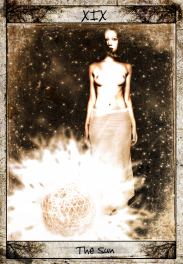
The Sun and the World are especially useful reminders that gothic imagery need not mean a gloomy reading. Their titles bring warmth and completion into the conversation. Let the image complicate the familiar meaning, not erase it.
Four cards, one conversation
Make Room for a Gentler Ending
Strength, the Star, the Sun and the World carry a movement from staying present toward hope, warmth and integration. I would not treat them as a promise that everything becomes easy. I would ask what already supports me, what can be welcomed, and what feels ready to come together.
Who Might Love It — and What to Check
This deck is likely to appeal to readers who enjoy gothic photography, intimate portraiture and art-led Major Arcana collections. I especially like the tension between worn-looking textures and the immediacy of a living face. If you prefer bright illustrated scenes or a full deck for everyday multi-card spreads, another style may feel more comfortable.
The publisher’s listing now says sold out. Tarot Garden has a direct Corneal Edema Tarot listing under Alchemy Web Bookshop; its sample artwork matches the publisher’s Magician, Hierophant, Strength and Star. Availability and the condition of a particular copy can change, so check the seller’s current description and ask about completeness, signatures and any accompanying material. We have not verified a box or a card-back design and do not make claims about either.
Shopping links on this page all lead to that specific Tarot Garden listing. They are not Amazon links and carry no Amazon affiliate tag. The two lifestyle scenes are AI-generated editorial illustrations; use the original card gallery and seller photographs—not those scenes—to judge the artwork or physical product.
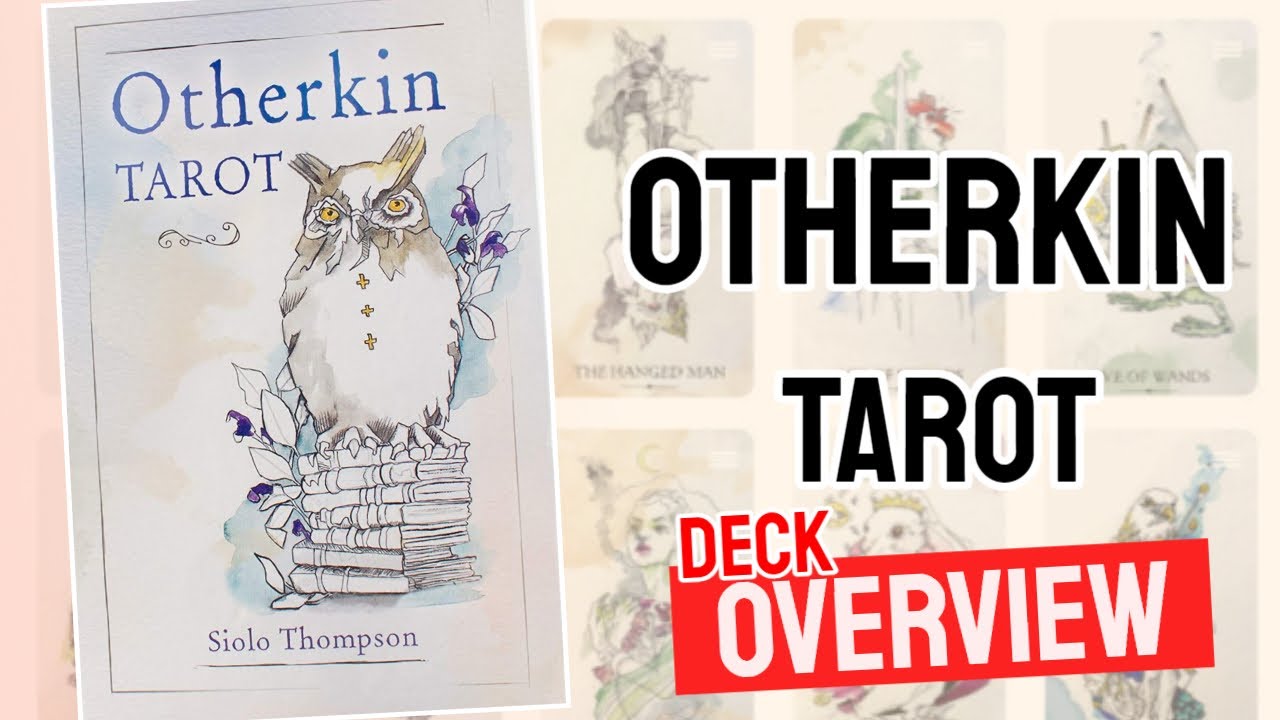
For a different visual language, explore our Morgan Greer Tarot review. If animal imagery speaks more readily to you, the Otherkin Tarot review offers another direction.
A Golden Rule for This Deck
Let the mood open the door, then let one visible detail keep your feet on the floor. You do not need to decode every texture. A single clear observation, joined to a thoughtful question, can be enough to begin an honest reading.
Final Thoughts
Corneal Edema Tarot holds its gothic mood close to the human face. Its strength lies in that intimacy: these archetypes feel looked at, lived in and slightly weathered. I would choose it for slow Major Arcana reflection and for the pleasure of seeing familiar titles through Dybowski’s photographic imagination.
There is room here for unease, but also for courage and a fragile kind of light. If that balance draws you in, spend a little time with the original samples before deciding. The right deck need not explain everything at once; it can simply invite you to look again, with a little more care.
Frequently Asked Questions
Who created Corneal Edema Tarot?
American artist John R. Dybowski created the deck. Alchemy Web Bookshop published it as number six in its limited-edition Artwork Tarots series.
Is this a full tarot deck?
The publisher documents this edition as a 22-card Major Arcana deck. It does not include the four Minor Arcana suits. The gallery here is a selection of original publisher samples.
What makes its artwork distinctive?
Posed photographs sit inside textured sepia spaces. Dark clothing, direct gazes and small areas of brightness give familiar archetypes an intimate gothic mood.
Can a beginner read with it?
Yes, with a reference for Major Arcana meanings and a little patience. Start with one card and one visible detail. Choose a different deck if you want to learn all the suits and courts from a single set.
Where can I check a copy for sale?
The shopping links lead to the specific Corneal Edema Tarot listing at Tarot Garden. Check the seller’s current availability, condition and included contents. The original publisher’s page states that its stock is sold out.