Explore The Sirian Starseed Tarot Cards
Explore the complete exact-edition deck in its official sequence. Choose an official group to filter the continuous gallery, or select a card for the full-size Lightbox.
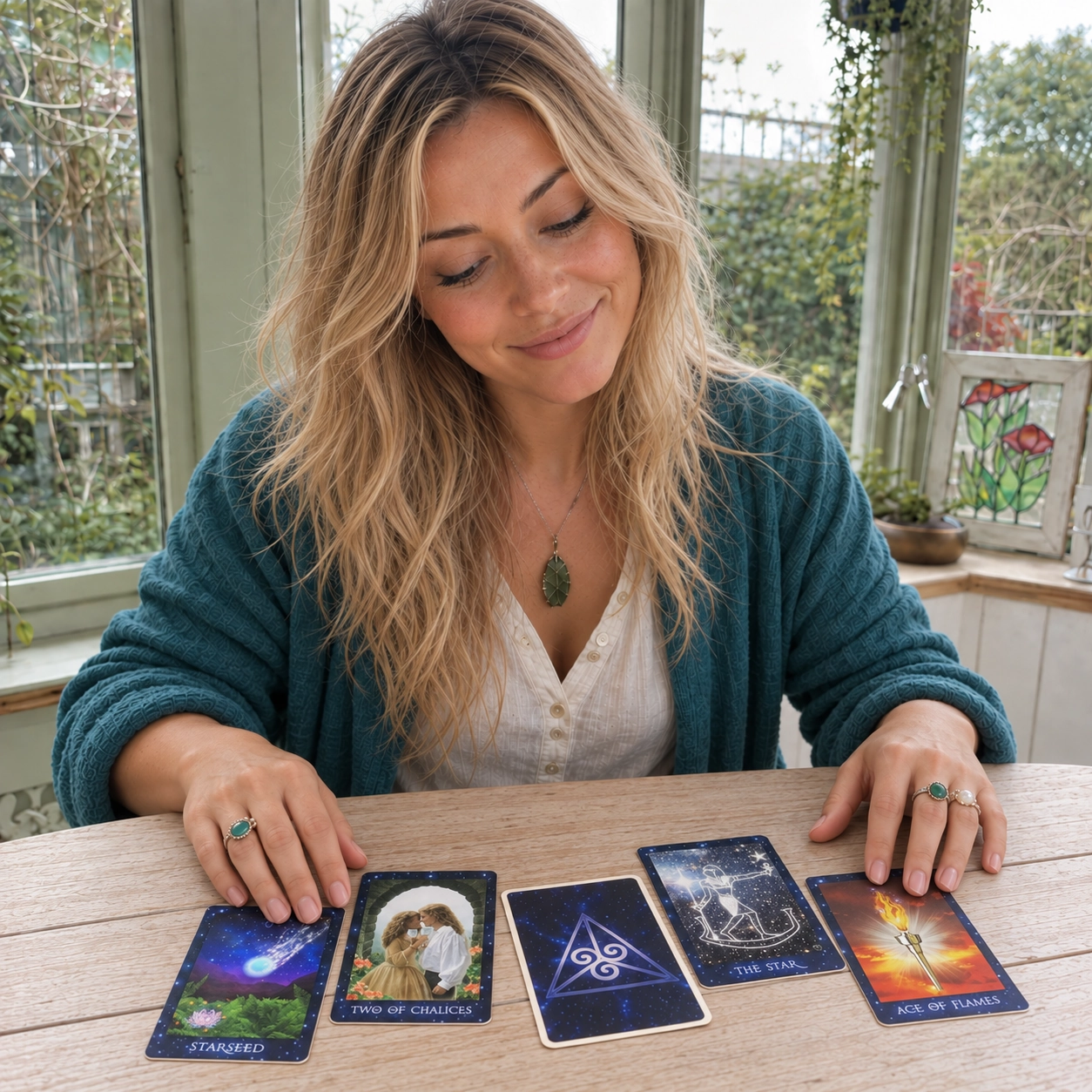
Aurica’s Quick Take
I reach for this deck when a question feels larger than the room around me. Its midnight borders frame each image like a little window, while water, crystal, flame, and human faces call the reading back into sensation.
The renamed cards make me slow down. I have to notice the gaze, distance, colour, and the place where my eye refuses to leave. That pause is where the deck becomes honest.
If you love intuitive reading and a fresh vocabulary, The Sirian Starseed can make uncertainty feel spacious rather than empty. Let one clear image become your first star, and trust yourself to find the next.
A COSMIC DECK WITH EARTH UNDER ITS FEET
What makes The Sirian Starseed different?
The deck keeps the familiar shape of a 78-card tarot while changing the language around it. Its suits are Flames, Chalices, Crystals, and Orbs. Its courts rise through Seeker, Adept, Sage, and Master. Major Arcana such as Indigo, Higher Self, Reason, Guidance, Reflection, Alchemy, Solar Deity, Karma, and Ascension invite you to meet an old structure through new words.
The artwork moves between photographic scenes and cosmic collage. One card may feel like a doorway cut into a starry night; the next may bring you close to a human gesture, a forest path, a vessel, or a flame. That variety is not quiet, but it gives an intuitive reader plenty to notice.

CARD STUDY
0 Starseed
A turquoise-white orb hangs over purple mountains while green ferns gather around a pale crystal lotus. The scene feels like a first breath taken beneath an enormous sky: small, tender, and still full of possibility.
In a reading, I treat this card as permission to begin before certainty arrives. Upright, it opens a path through curiosity and wonder; in shadow, the beautiful distance can become avoidance. Ask what one earthly step would let the dream touch the ground.
How it reads in practice
I begin with the detail that catches first: a bright orb, a turned body, a hard edge, a colour that seems almost too alive. Then I compare that feeling with the card’s role and with the cards beside it. The renamed system encourages this gentle double-check instead of a quick keyword.
For a daily pull, ask one grounded question and write the first three things you can actually see. For a larger spread, notice whether the cards keep lifting your gaze toward sky and light or drawing it back to water, rooms, gardens, and bodies. That movement often tells you whether the reading needs vision or embodiment.
FOUR-CARD MOMENT
Four thresholds of awakening
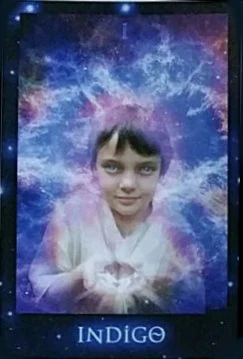
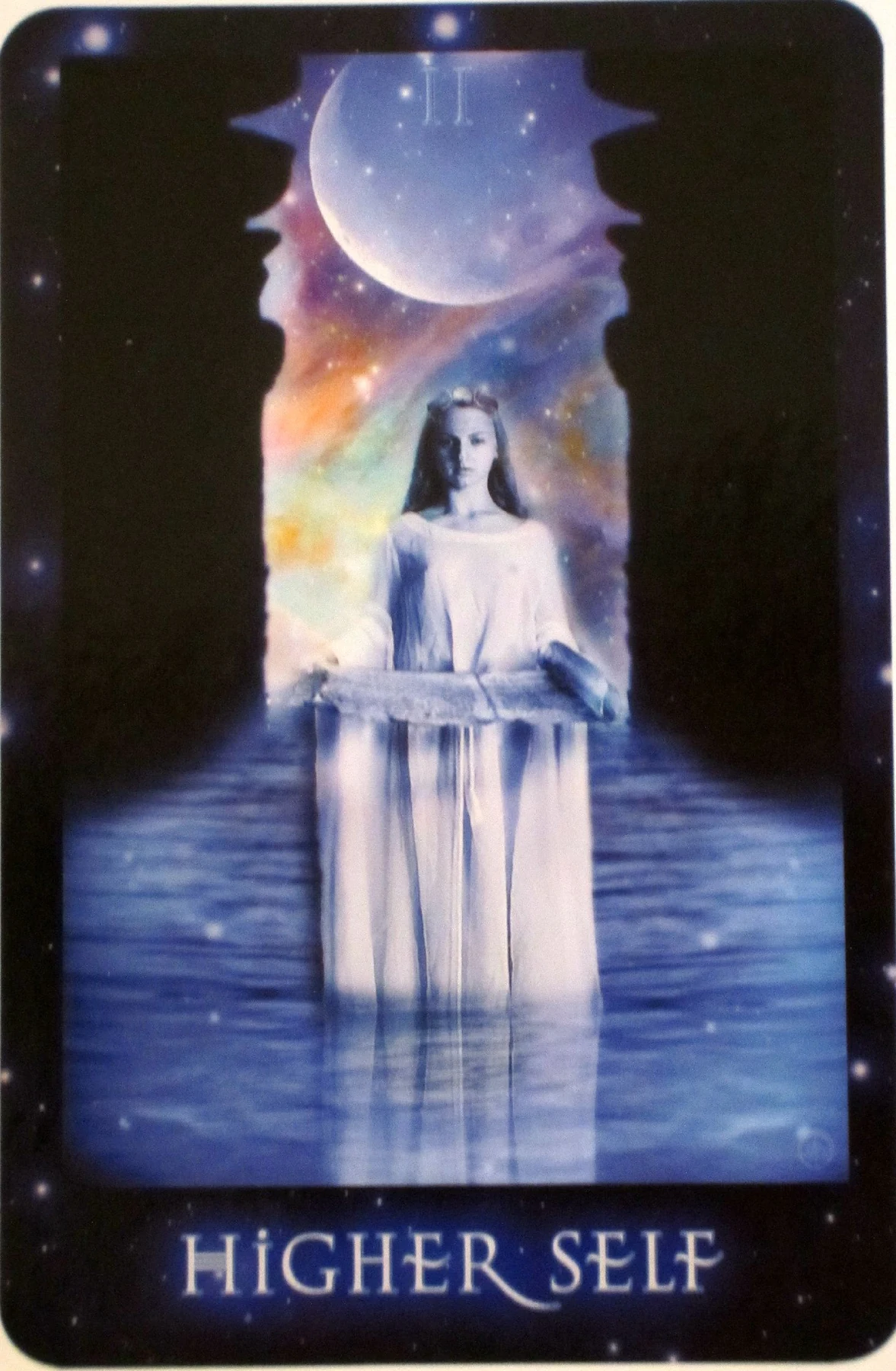
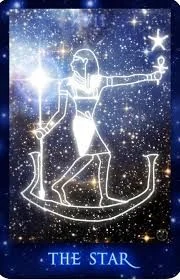
Indigo, Higher Self, The Star, and Ascension move from inward recognition to a wider horizon. Together they ask you to listen, name what is true, orient by hope, and then carry that insight into a larger life.

Beginner friendliness and reading depth
A beginner can read this deck, but it is not a plain translation of the labels found in every tarot handbook. Keep the guidebook nearby while the renamed suits and courts settle into memory. The reward is a relationship that grows from looking, not merely reciting.
Easy reading
What quality wants to be noticed today?
Medium reading
What am I sensing clearly, and what am I colouring with hope or fear?
Deep reading
Where does a beautiful vision need a practical form?

CARD STUDY
Two of Chalices
Two people lean toward one another beneath a dark stone arch, pale cups lifted between them and flowers bright at their sides. Their closeness is the card’s pulse; the arch makes the meeting feel sheltered, but also asks what has been left outside.
For love, friendship, or collaboration, this card favours mutual attention rather than dramatic promises. Its shadow appears when harmony is performed instead of felt. Notice whether both people are truly bringing a cup to the exchange.
Love, work, and creative questions
In relationship readings, the deck is strongest when you ask about emotional presence, distance, reciprocity, and the story each person is carrying. It can be dreamy, so I bring every insight back to the visible exchange between people.
For work or creative life, Flames can reveal appetite and motion, Crystals can show what needs shape, Chalices keep the emotional current visible, and Orbs can illuminate thought and perspective. Read the image first, then choose one action small enough to complete.
FOUR-CARD MOMENT
The deck’s four first sparks
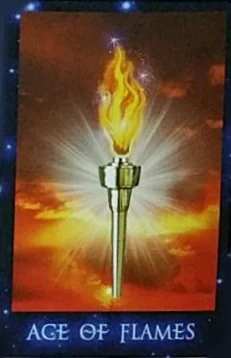
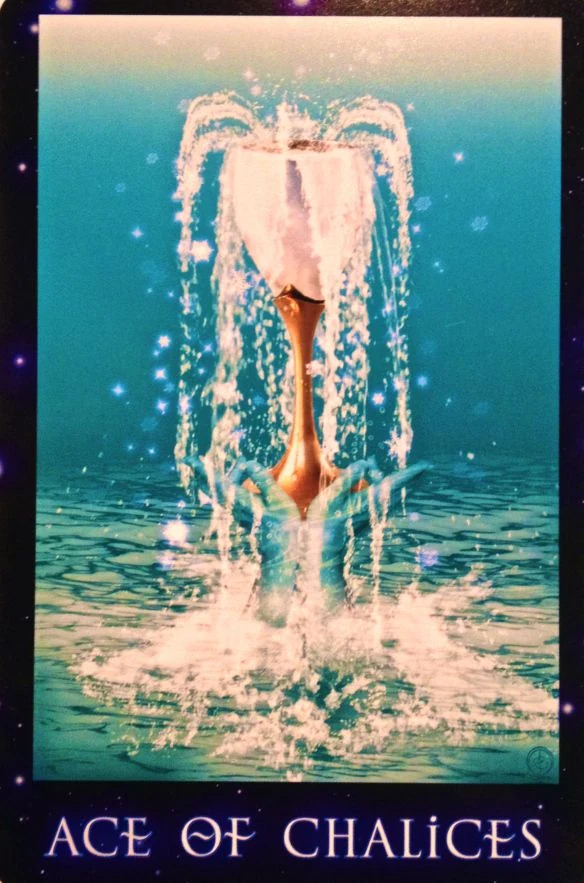
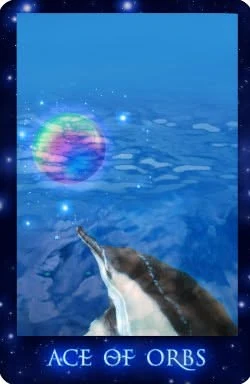
The four Aces let each renamed suit speak in a single clear image: fire rises, water overflows, crystal takes form, and an orb hovers over an open sea. Use them as a compass for action, feeling, embodiment, and thought.

Artwork, atmosphere, and personality
The dark star-speckled borders make the whole deck feel like one night sky holding many worlds. Inside those borders, cool blues and greens often meet sudden amber fire, white cloth, or bright water. I find that contrast useful: it shows where a reading is still dreaming and where it has begun to warm into choice.
This is a deck for readers who enjoy a strong point of view. Its images do not disappear politely behind standard meanings. They ask for time, curiosity, and a willingness to let symbolism feel personal without pretending every feeling is a fact.
CARD STUDY
Eight of Orbs
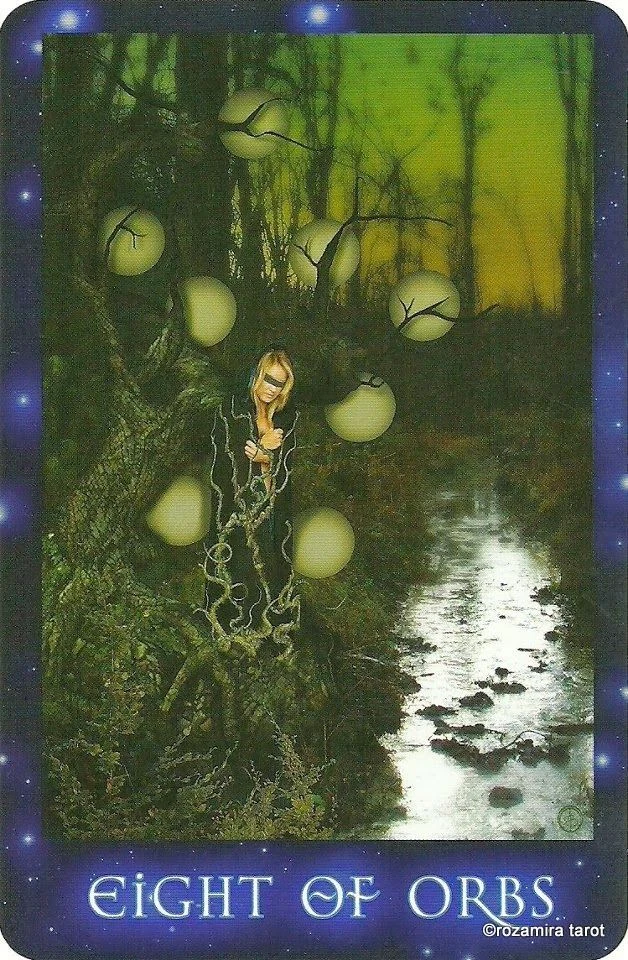
A narrow stream catches the forest light while pale orbs hang among green trunks. A small figure stands inside that living corridor, giving the image a patient, searching stillness rather than a rush toward an answer.
I read it as concentration that grows by returning to the same path with sharper eyes. Upright, it rewards practice and careful observation; in shadow, repetition can become a hiding place. Choose the next skill you can refine, then let the results—not perfection—show you where to go.
Who will connect with this deck?
It may suit intuitive readers, visual journalers, collectors of renamed systems, and anyone who likes spiritual or cosmic imagery. It is also lovely for readers who want a spread to feel like a conversation between inner life and the wider world.
You may prefer another deck if photographic collage distracts you, if altered titles slow you down too much, or if you want close visual continuity with familiar Rider–Waite–Smith scenes. Attraction matters here; browse until you know whether the atmosphere feels like an invitation.
FOUR-CARD MOMENT
Four ways abundance becomes visible
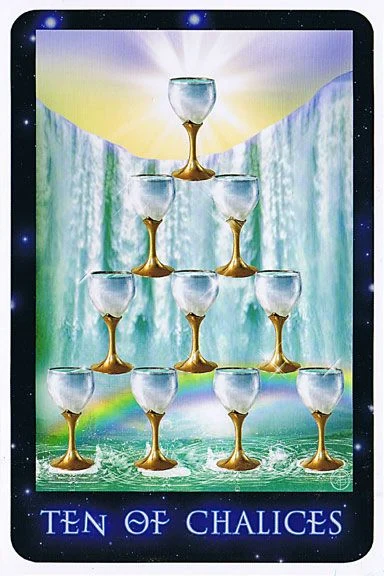
Nine of Chalices, Nine of Crystals, Ten of Chalices, and Ten of Orbs shift fulfilment from a private feeling into a lived environment. Read them together when you need to ask whether “enough” is emotional, material, shared, or simply quiet.



Buying guidance and Aurica’s golden rule
The box credits Patricia Cori and Alysa Bartha, and the deck’s title, suit names, and card faces should match the edition shown throughout this gallery. When shopping second-hand, compare the cover and a few visible cards rather than relying on the title alone.
Golden rule: let the stars open the question, then let one visible detail bring the answer home.
This keeps a cosmic reading from floating away. If your interpretation cannot touch a gesture, object, colour, relationship, or next step, look again until the image gives you something you can carry.
Final Thoughts
The Sirian Starseed is not shy about wonder. Its brightest cards can feel like windows flung open, yet its most useful moments arrive when that vastness meets a cup, a path, a human gaze, or a crystal held close to the earth.
I would recommend it to a reader who wants imagination without giving up practical reflection. Browse the cards slowly, notice which image follows you after the page closes, and begin there.
 View The Sirian Starseed Tarot on Amazon
The Sirian Starseed Tarot FAQ
Who created The Sirian Starseed Tarot?
Patricia Cori and Alysa Bartha are credited on the deck. Their names also appear together on the exact-edition box used as the visual reference for this review.
How closely does it follow familiar tarot structure?
It keeps a 78-card framework, yet changes much of the vocabulary. Flames, Chalices, Crystals, and Orbs replace the familiar suit labels, while Seeker, Adept, Sage, and Master reshape the courts. Several Major Arcana titles also change, so the guidebook and the image in front of you both matter.
Is this a good first tarot deck?
It can be, especially for a visual beginner who is happy to learn this deck on its own terms. If you want card names that match common beginner books word for word, a more traditional deck may feel easier at first.
What questions suit this deck best?
I like it for identity, purpose, creativity, emotional patterns, and moments of transition. Open questions such as “What wants my attention now?” give its spacious images room to answer.
Do I need to identify as a starseed to use it?
No. You can meet the cosmic language as metaphor, imagination, or spiritual symbolism. The useful question is whether the pictures help you see your situation with more honesty and tenderness.
What should I notice before buying?
Look through several cards rather than judging by the box alone. The dark star-field borders, photographic collage, renamed suits, and altered court titles create a distinct reading voice; they will either feel inviting or ask more adaptation than you want.
KEEP EXPLORING
More Tarot Decks to Discover
Follow another visual language once these cosmic cards have settled.