Explore The Gentle Tarot Cards
Browse the individually verified card fronts recovered from the edition shown in our review. This is a truthful partial archive; shop links lead to the current Seed Edition, which may differ in format and packaging. Choose an official group to filter the continuous gallery, or select any card to open the full-size Lightbox.

Aurica’s Quick Take
I feel this deck before I explain it. A whale rises through deep water, a moon watches from a lilac sky, and a shell drifts free of the home it once needed. Those images make room for the truth to arrive gently.
I follow the movement—rising, curling, opening, waiting—then bring it back to each card’s familiar work. The Gallery is a truthful 60-card partial archive from the edition shown in the review; the current Seed Edition may differ, so compare the live listing before choosing a format.
What I love most is how these cards hold difficult feelings without making them smaller. Let one creature, colour or current guide you toward the next brave step, and this deck can turn even a quiet reading into a hopeful beginning.
A deck that speaks softly without looking away
The Gentle Tarot feels like a breath taken beside cold water: quiet, bracing and alive. Mariza Ryce Aparicio-Tovar fills its cards with whales, shells, mountains, stars, plants and human figures who seem held inside a much larger natural story.
I love that gentleness here is not the same as sweetness. Dark water remains dark, Death still asks us to release, and Thunder can split the sky. The artwork simply makes enough room around a difficult feeling that we can stay present with it.
What makes The Gentle Tarot different?
The familiar 78-card framework is reshaped through the deck’s own elemental vocabulary. Wands and Cups remain, while Thunder and Stones carry the sharper and earthier parts of the Minor Arcana. The court stages become Seed, Root, Flower and Harvest, turning rank into a cycle of development.
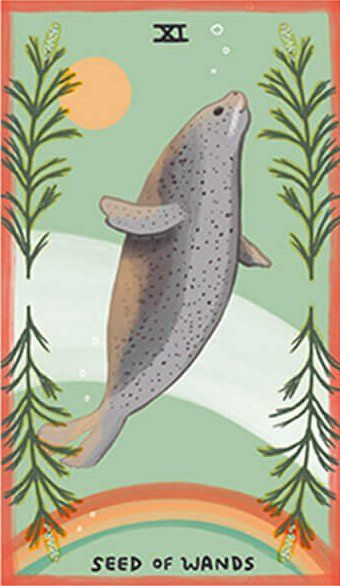
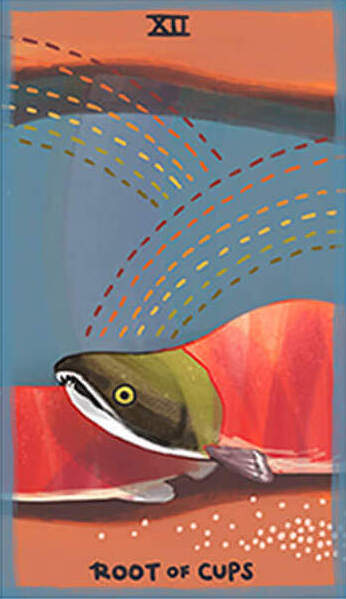
That naming changes the reading rhythm. A Seed asks what is beginning; a Root asks what holds or feeds it; a Flower makes expression visible; a Harvest asks what can finally be gathered. The system feels less like climbing a ladder and more like watching a living season unfold.
Card study
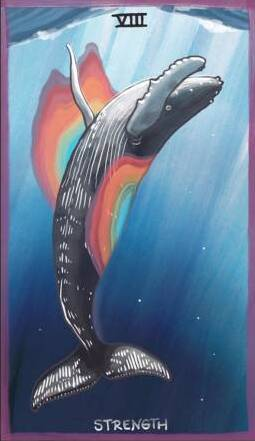
Strength: the whale that rises
A dark humpback lifts through deep blue water, its pale throat grooves and white markings catching the light. Behind it, a warm orange-red shape curves like a current or an inner flame. There is no bridle and no contest here; the animal rises because its own body knows the way upward.
In a reading, I take that upward movement as courage held inside softness. Upright, Strength asks for steady self-trust, patient breath and power that does not need to dominate. In shadow, the same deep water can become emotional pressure kept too long below the surface. Ask what feeling needs room to rise before it can move on.
How the artwork behaves in a spread
The pictures use strong silhouettes, deep ocean blues, coral warmth, night-black fields and pale lines that resemble currents, roots or rays. I begin with movement: what rises, curls, watches, opens or waits? Then I check that sensation against the card’s traditional work and the cards around it.
In a three-card spread, notice whether the scenes move toward water, sky or land. That shift can show whether the question needs emotional honesty, a wider view or one grounded action. The deck rewards looking slowly, but its central gesture is often clear enough to hold the whole reading.
Four-card story
From depth to daylight
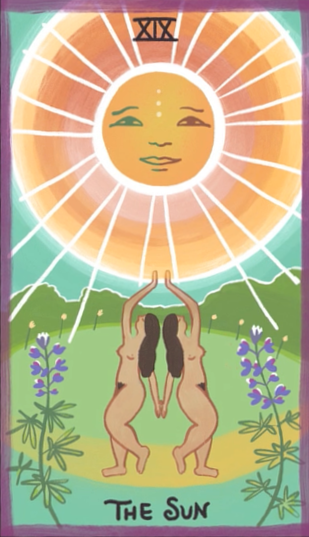
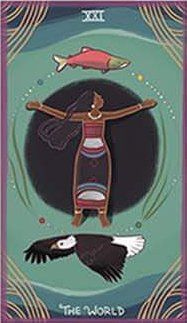
Strength, The Moon, The Sun and The World trace a gentle passage: rising from deep water, crossing uncertainty, receiving warmth and returning to a larger whole. Read them together when courage needs time rather than force.
Beginner friendliness and useful prompts
A beginner can grow with this deck, especially if images make meanings easier to remember. The renamed suits and courts are the main learning curve, so write both the printed title and the familiar tarot function in your journal until the bridge becomes natural.
Easy
What wants gentle attention today?
Deeper
What is growing beneath the feeling I can already name?
Demanding
Where am I confusing kindness with avoidance?
Card study
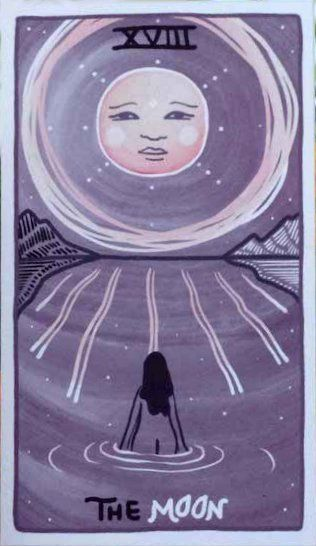
The Moon: wading beneath a watchful face
A lone dark figure stands knee-deep in rippling water while pale channels run from distant mountains toward the foreground. Above, an enormous blushing moon-face hangs inside circular bands of mauve and white, its expression tender yet uneasy. The scale makes the human feel small, but not abandoned.
This is uncertainty you can enter one careful step at a time. Upright, The Moon favours intuition, dreams and noticing what the body senses before language arrives. Its shadow is projection: allowing the vast face overhead to become whatever fear expects. Name what is visible, what is felt, and what still needs time before you decide.
Relationships, work and creative readings
For relationships, I watch distance and exchange: who faces whom, what is offered, and whether the surrounding landscape feels open or guarded. The deck is tender enough for vulnerable questions, yet a dark field or uneasy gaze will still tell you when closeness needs honesty.
For work and creativity, Wands can show appetite, Cups reveal emotional investment, Thunder gives conflict or clear thought a weather system, and Stones brings the answer back to resources, body and time. End by choosing one action that the image can genuinely support.
Four-card story
A life cycle held in four suits
Seed of Wands, Root of Cups, Flower of Thunder and Harvest of Stones show the deck’s renamed courts as stages of growth. Spark becomes feeling, feeling finds a voice, and patient work ripens into something that can be gathered.


Who will feel at home with it?
This deck may suit nature lovers, intuitive readers, visual journalers and anyone who wants compassionate imagery without flattening difficult cards. Its Alaskan land-and-water feeling gives even familiar archetypes a spacious, elemental pulse.
You may want a more traditional deck if renamed suits slow you down, if you prefer busy human scenes, or if you need every symbol to match a standard beginner book. Browse widely before buying; the quieter Minor Arcana reveal the deck’s temperament better than one dramatic Major alone.

Card study
Death: the shell that cannot stay occupied
Two richly patterned shell forms float against a black, star-speckled field. The upper shell glows with coral, teal and cream; beneath it, a soft-bodied creature curls beside another orange shell, its feelers reaching into open space. Fine pale rays around the upper form suggest release rather than ruin.
Death here feels like leaving a shelter that has become too small. Upright, it marks an ending, shedding or passage into another shape. In shadow, the beautiful empty shell can tempt us to keep polishing what no longer holds life. Honour what protected you, then notice where living movement has already begun.
Buying guidance and the golden rule
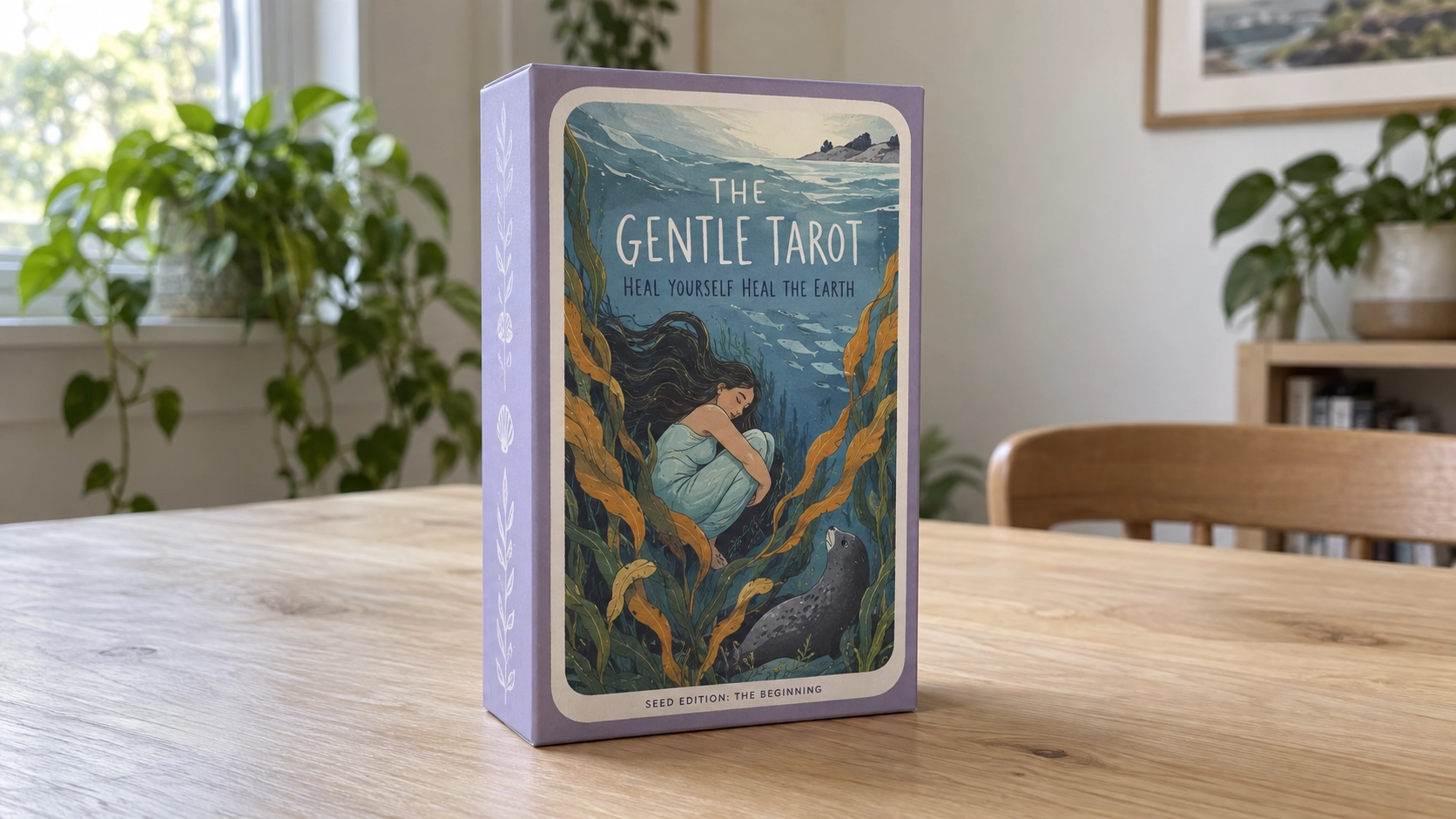
The creator’s official shop carries changing formats and editions. The source set used for this review reflects the first-edition artwork shown in the assigned walkthrough; current pocket, seed or later editions may differ in size, packaging or card selection. Compare the live listing carefully before purchasing.
Golden rule: let the image soften your grip, not the truth of the message.
Gentleness is the way this deck opens the door. It is not permission to edit away an ending, a conflict or an uncomfortable need. Name what the card shows, then choose the kindest honest response.
Four-card story
Four cards for tending belonging
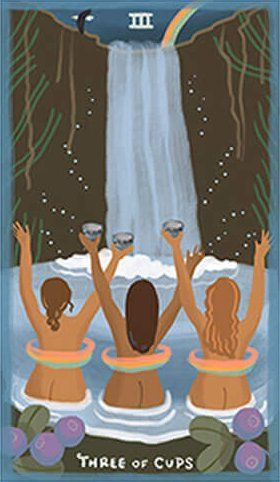
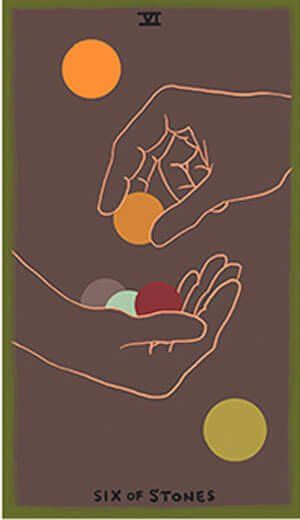
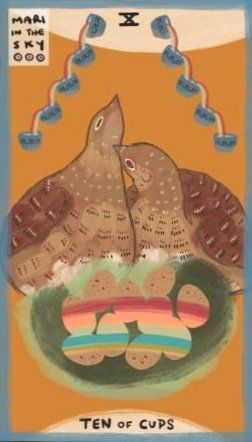
Two of Cups, Three of Cups, Six of Stones and Ten of Cups gather connection around exchange, friendship, practical support and shared emotional shelter. Let each card show what care looks like when it becomes an action.

Final Thoughts
The Gentle Tarot carries difficult things the way the sea carries a whale: with enormous space around them. Its best readings feel spacious rather than vague, tender rather than timid.
I would recommend it to readers who want nature, emotion and clear visual movement in the same deck. Let one colour or creature catch your eye, follow the feeling back to the card’s function, and trust that a gentle answer can still be brave.
 View The Gentle Tarot Seed Edition
The Gentle Tarot FAQ
Who created The Gentle Tarot?
Mariza Ryce Aparicio-Tovar, also known as Mari in the Sky, created The Gentle Tarot and independently publishes it through Mari in the Sky.
Is The Gentle Tarot a 78-card deck?
Yes. The edition reviewed follows a 78-card tarot structure. This page presents only the card fronts that could be verified from the available exact-edition source set, so the gallery is intentionally partial.
What are Thunder and Stones?
Thunder and Stones are this deck’s names for two of the four Minor Arcana families. The court progression also uses Seed, Root, Flower and Harvest, giving the deck a language of weather, earth and growth.
Is The Gentle Tarot good for beginners?
It can be a welcoming first deck for a visual learner, although the renamed suits and courts ask for a little study. Keep the guidebook nearby and begin with what you can plainly see in each image.
What readings suit it best?
Its nature imagery is especially lovely for emotional reflection, relationships, creativity, transitions and daily guidance. The soft voice does not prevent serious answers; it simply invites you to approach them without unnecessary harshness.
Which edition should I buy?
The official shop currently carries changing formats and editions. Compare the title, size, packaging and card artwork with the edition you want rather than assuming every listing matches the first-edition cards shown here.