Tarot De Maria Celia Cards
Explore this carefully identified partial selection from Tarot De Maria Celia. Tap any card to open the larger carousel, or use the filters to browse its official tarot groups.

A note from Aurica
Tarot de Maria Celia feels to me like opening a small painted chapel where every figure has brought a secret, a flower, and a slightly crooked smile. Its parchment colours are soft with age, yet the pinks, greens, and golds still glow. I find that contrast wonderfully disarming: the deck looks gentle enough to welcome me in, then lets one clear gesture tell the truth.
In The Lovers, I notice the central figure looking almost caught between two voices while the winged presence leans close above. That makes the card less about a perfect romance and more about the tender pressure of choosing what I can truly stand behind. Beside The Star, the question softens: what would become possible if I stopped hiding the most honest part of myself?
The Sun brings warmth without losing the deck’s odd little shadows. The two children seem joined by trust, but the old walls behind them remind me that joy still needs a safe place to live. In a relationship or family reading, I watch whether nearby cards protect that openness or ask for a firmer boundary before everyone can step into the light.
I read this deck slowly. First I let the colour or face that catches my eye speak; then I return to the card’s familiar Marseille role and test that first feeling against the rest of the spread. Because the numbered suits are scenic in pattern rather than modern storyboards, repetition, spacing, and direction matter as much as facial expression.
I reach for Tarot de Maria Celia when a question needs kindness without vagueness—especially around love, belonging, creative courage, and choices that have been postponed. It can turn a complicated mood into one vivid image I can carry through the day. Its gentle courage reminds me that an honest choice can still bloom beautifully, and that there is always room to step forward with hope.
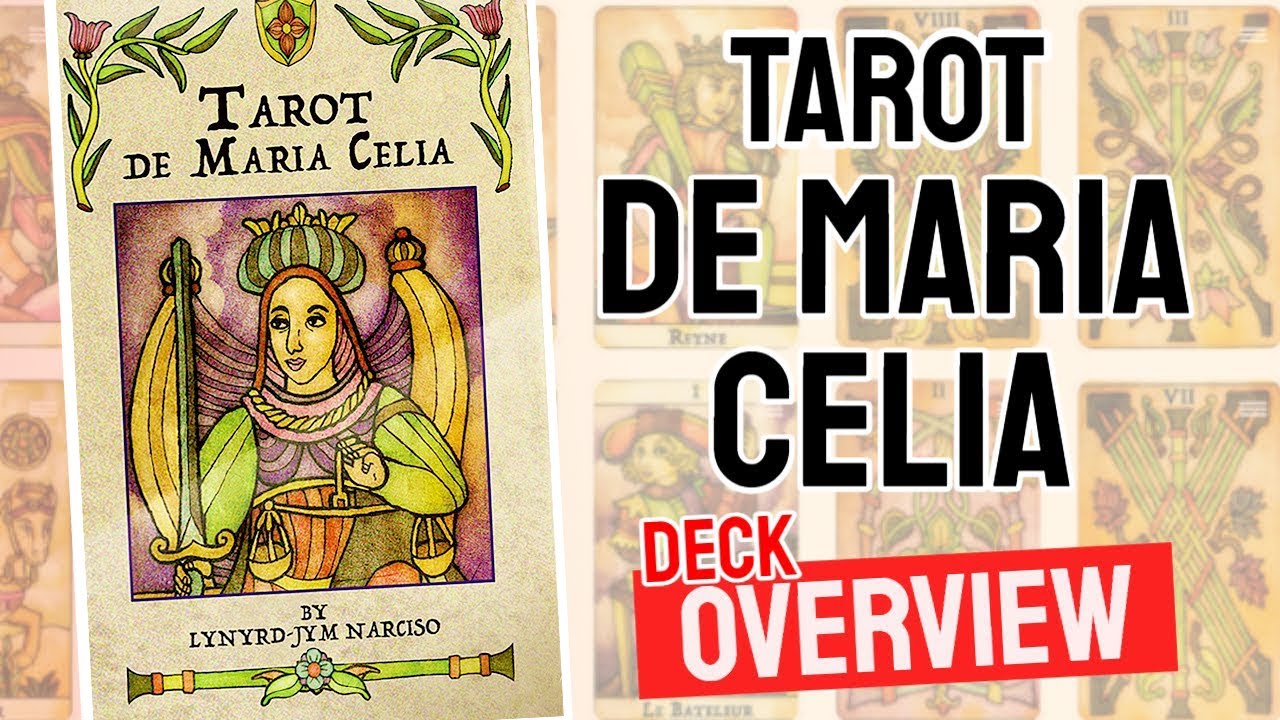
Tarot de Maria Celia is a warm, folk-art style tarot by Lynyrd-Jym Narciso. The box already tells you a lot about the deck: cream parchment tones, curling green vines, pink flowers, and a crowned figure holding two curved golden blades. It feels handmade, devotional, old-world, and a little storybook rather than glossy or minimal.
Quick take: choose this deck if you enjoy tarot that reads through color, costume, gesture, and symbolic atmosphere. It is especially lovely for reflective daily pulls, emotional questions, creative journaling, ancestral themes, and slow intuitive readings. Skip it if you need crisp modern linework, high-contrast digital art, or a deck that looks exactly like a standard Rider-Waite-Smith clone.
What Tarot de Maria Celia Feels Like
The first thing I notice is the deck’s tenderness. The art has a parchment-soft palette, with greens, golds, reds, muted purples, and hand-drawn shapes that feel closer to illuminated folk illustration than polished fantasy art. That gives the cards a personal quality. They do not shout meanings at you; they invite you to sit closer and notice what a figure is holding, where the face is looking, and how a color repeats across the scene.
This is useful in readings because the deck can slow down a question. Instead of jumping straight to a keyword, you can ask: what is being carried, protected, offered, hidden, or balanced here? The figures often feel like characters in a small sacred play. That makes the deck friendly for readers who like narrative spreads and journal prompts.
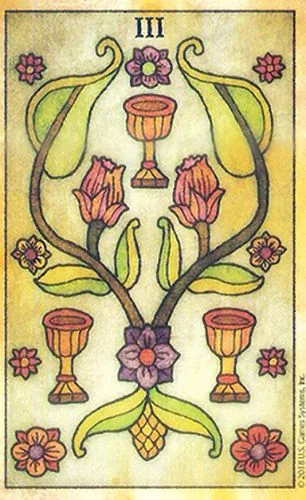
Four-card moment: color, courage, and choice



Best Uses for the Deck
Tarot de Maria Celia is strongest when the question has feeling in it. Love, grief, forgiveness, creative fear, family patterns, spiritual practice, and “what is my heart trying to say?” are all good fits. The imagery has enough softness for tender topics, but it is not vague. The repeated blades, flowers, crowns, robes, and framed scenes give your intuition plenty to hold onto.
For beginners, I would use it beside a simple guidebook or keyword list at first. Look at the traditional meaning, then return to the image and ask what the card is doing emotionally. For example, a card may technically point to choice, conflict, or movement, but the face, posture, and color may show whether that movement feels brave, tired, protected, or blessed.
Artwork and Symbolism
The deck’s charm comes from the combination of sacred-feeling figures and botanical ornament. The flowers are not just decoration. They soften the harder symbols and remind the reader that growth can happen around a difficult truth. The golden curves and sword-like shapes bring focus and decision-making, while the cream backgrounds make the whole deck feel aged and intimate.
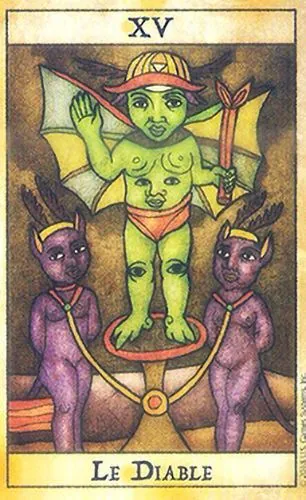
Card study
The Devil: what holds the reins?
A green winged figure stands above two smaller purple figures, joined by a looping golden cord. The raised blade, horned cap, watchful faces, and tight central composition make power feel immediate rather than abstract.
In a reading, I use those visible bonds to ask who is directing the situation and which attachment has begun to feel automatic. Upright, the card can expose appetite, control, or a pattern ready to be named; in shadow, it warns against pretending the cord is not there. The hopeful turn is that seeing the bond clearly is already the first movement toward choice.
Because the illustration style is stylized, you do not need every detail to be realistic. In fact, the slightly folk-art proportions can help. The cards feel symbolic rather than literal. A crown may point to dignity, responsibility, or inherited wisdom. A flower may point to healing. A blade may point to clarity, protection, or a choice that cannot be avoided.
How It Reads in Practice
In a three-card spread, Tarot de Maria Celia works well as a conversation. Try reading the first card as the visible situation, the second as the emotional root, and the third as the action or blessing. The deck’s figures make it easy to imagine dialogue between cards: one figure may appear guarded, another generous, another ready to cut through confusion.
For a one-card daily pull, keep the question simple: “What should I notice today?” or “What kind of courage is needed?” Then write three observations before you look up the meaning. Name one color, one object, and one feeling. This deck rewards that method because its visual language is full of small cues.
Four-card moment: devotion, repair, and return


Who Will Love Tarot de Maria Celia?
This deck is a natural match for readers who like art with a handmade soul. If you collect decks because each one has a distinct voice, this one belongs in the “quiet but memorable” category. It also suits readers who enjoy mythic, devotional, or ancestral moods without wanting something overly dark.
It may be less ideal for someone who wants ultra-clear beginner scenes on every card. If you are brand new to tarot and want each card to spell out the classic meaning at a glance, you may prefer a more traditional teaching deck first. But if you are willing to learn by looking slowly, Tarot de Maria Celia can become a very personal reading companion.
Pros and Cons
- Pros: distinctive folk-art personality, warm parchment palette, strong emotional tone, beautiful for journaling, memorable symbolic details, and a gentle mystical atmosphere.
- Cons: the stylized art may not suit everyone, some meanings may require slower interpretation, and readers who need crisp modern realism may find it too old-world.

Card study
Two of Cups: balance without a portrait
Two small golden cups face one another beneath mirrored green bird forms. Between them, a flowering stem rises through layered leaves and curling red, gold, and green ornament, while the Roman numeral II rests quietly at the top.
The symmetry makes relationship visible through balance rather than a human embrace. In a reading, I ask what each side is offering and whether the shared centre is truly being nourished. Upright, it can suggest mutual exchange and a bond taking root; in shadow, beautiful symmetry may conceal unequal care. Its practical invitation is simple: let reciprocity become something both people can see and tend.
Beginner Tips
If you are learning with this deck, do not rush to memorize everything at once. Start with the card’s mood. Is it protective, blooming, watchful, sorrowful, brave, or ceremonial? Then connect that mood to the traditional meaning. This keeps the deck from feeling confusing and lets the art become part of your reading language.
A helpful exercise is to choose four cards from the gallery and give each one a sentence. Not a full interpretation; just a sentence. “This card protects a tender truth.” “This card asks for a clean decision.” “This card grows after a difficult season.” Those simple lines can become useful prompts when the same image appears in a real reading.
Sample Spread to Try
For this deck, I like a five-card “garden gate” spread because it matches the box’s vine-and-flower feeling. Card one is the gate: what you are ready to enter. Card two is the root: the hidden feeling underneath the question. Card three is the blade: what needs a clearer boundary or decision. Card four is the flower: what is already trying to heal. Card five is the blessing: the next gentle action.
Read the spread slowly. Before you name the official card meanings, look for repeating colors and objects. If several cards show gold, the reading may be asking for courage, value, or spiritual attention. If green keeps appearing, the question may need patience and growth rather than instant action. If the figures look away from each other, ask what part of the situation is not communicating yet. This style of reading keeps the deck practical while still honoring its soft, sacred mood.
Four-card moment: endings that still bloom


Final Thoughts
Tarot de Maria Celia is not trying to be the loudest deck on the shelf. Its magic is quieter: parchment cream, vine borders, jewel-like colors, and figures that feel as if they stepped out of a small handmade legend. For readers who enjoy symbolic art and patient interpretation, that is exactly the appeal.
If the available card images make you pause, zoom in, or imagine a story, this deck is worth exploring further. Watch the walkthrough, compare the gallery, and notice whether the art makes your intuition speak in full sentences. That reaction is often the best sign that a deck will actually be used, not just admired.

Frequently Asked Questions
Is Tarot de Maria Celia beginner-friendly?
It can be beginner-friendly if you enjoy intuitive image reading. Absolute beginners may want a simple keyword guide nearby, because the deck’s folk-art symbolism works best when you take time with the images.
What style is the artwork?
The artwork feels like hand-drawn folk illustration with parchment tones, botanical borders, warm colors, and symbolic figures. It is softer and more old-world than a glossy modern digital deck.
What kinds of readings suit this deck?
It is strong for emotional, creative, reflective, and spiritual questions. It is also good for journaling because the images invite story, mood, and symbolic observation.
Does the gallery show every card?
The TarotFans gallery is a verified partial visual walkthrough of the deck. Use it to explore the deck’s mood, colour language, and reading personality without treating the selection as complete.
Is this deck close to Rider-Waite-Smith?
It can still be read with tarot structure, but the visual language is more personal and folk-art inspired. Readers who depend on exact classic scenes may need a little adjustment time.
Who should skip this deck?
Skip it if you want very modern, minimal, high-contrast, or ultra-literal card art. This deck is better for people who enjoy atmosphere, symbolism, and slower visual reading.