Edition note: the video shows later packaging. The gallery and package reference below focus on the second-edition artwork; compare editions before buying.
Explore the Sepia Stains Tarot Cards
Explore a curated selection of second-edition cards by Bethalynne Bajema. These are the clearest clean single-card originals we could verify; some cards remain unavailable, and source resolution varies. Filter by suit or open a card to see its full source image. The printed names The Priestess, Chalices and Coins are preserved.
Showing the selected card group.
A note from Aurica
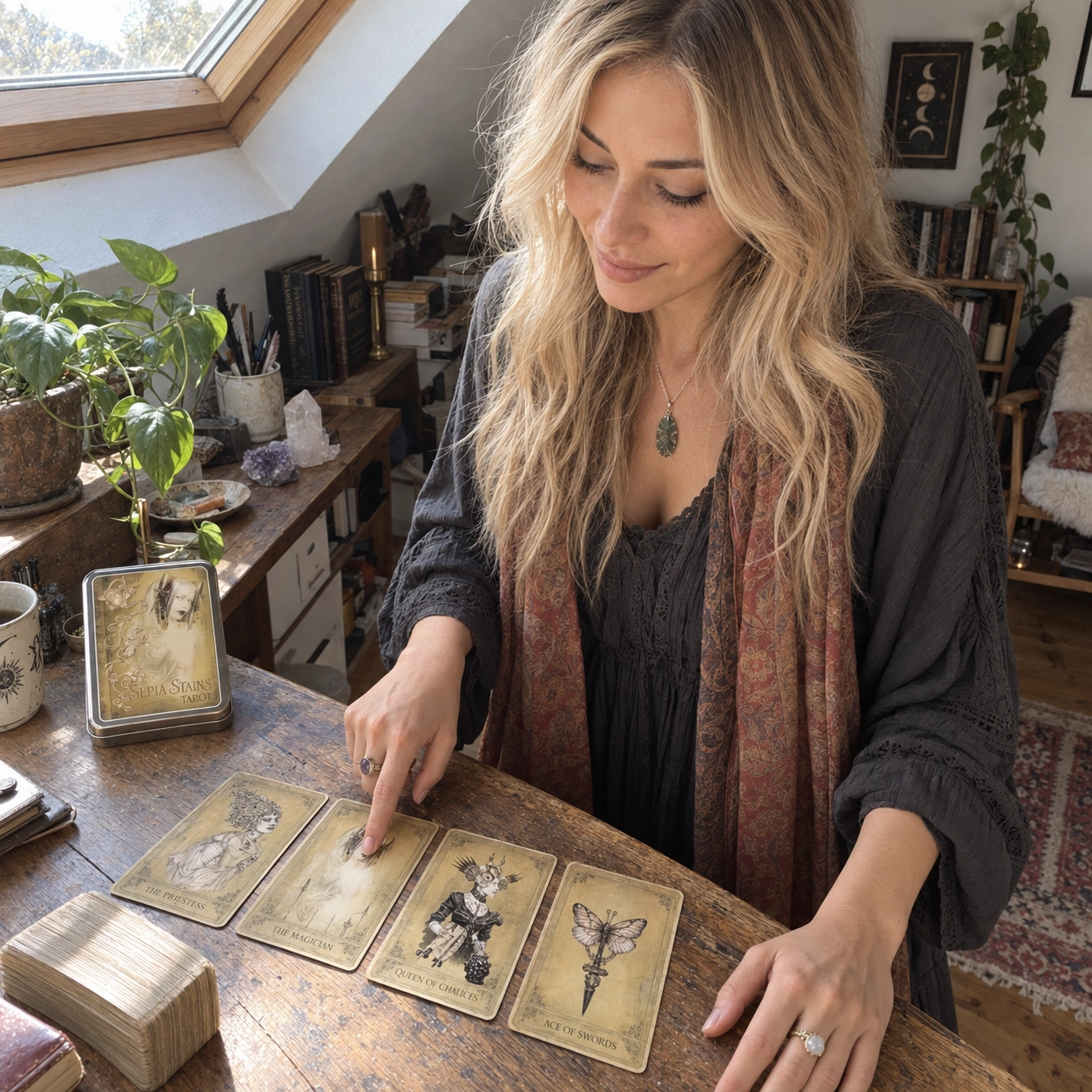
I love how Sepia Stains Tarot makes old gold feel alive. A portrait turns away, a butterfly balances on a blade, and the reading becomes a half-remembered room. I begin with the detail that catches in me, then ask what feeling it gives to the card’s traditional role.
Portraits speak through gaze and posture; pips through rhythm and space. I let surrounding cards show whether a repeated pattern is protection, longing, habit or release. The quiet palette makes every small interruption point straight to what matters.
I reach for this deck when a question has history folded inside it. Look slowly, name what is visible, and carry one practical step into daylight. Sepia Stains Tarot reminds us that an old mark can become part of a brave and beautiful new pattern.
A tarot world steeped in old gold and strange memory
Sepia Stains Tarot feels as though a box of Victorian cabinet portraits has been left beside a clockmaker’s drawer. Bethalynne Bajema surrounds pale figures with tarnished gold, insects, hooks, jewels, mechanical stems and scraps of costume. The result is beautiful, uneasy and wonderfully difficult to dismiss.
Bajema created the deck as an extension of The Black Ibis, and that fictional root matters. The cards do not behave like neutral teaching diagrams. They feel inhabited. Even the most symmetrical pip can seem like an object recovered from somebody else’s dream, still carrying the warmth of a hand we never saw.
How the sepia imagery changes a reading
The palette makes time feel present. Cream skin, bruised charcoal, tobacco brown and old-gold borders create the hush of an attic photograph, while a sudden pink fringe, striped sleeve or silver blade pulls the eye forward. I begin with that interruption: what refuses to stay in the past?
The Majors and courts are portrait-led, yet many numbered cards are closer to elegant pips. Their repeated wands, chalices, swords and coins are decorated with flowers, insects and tiny mechanisms. That shift asks for two kinds of attention: emotional body language in a face, then number, spacing and pattern in a suit card.
Card study
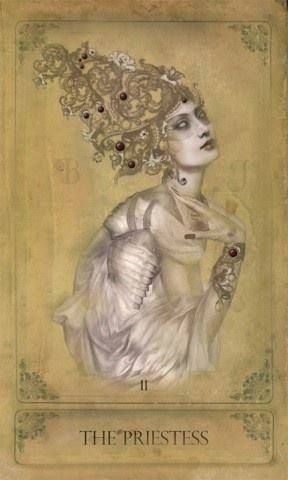
The Priestess — a secret held close to the skin
A pale figure turns in profile against a worn gold field. Her high, elaborate headdress curls outward like filigree or smoke, studded with dark beads. One hand rests across her chest, while the soft shell-like sleeve and small dark throat jewel make the portrait feel ceremonial, guarded and intimate.
The Priestess traditionally keeps knowledge behind the veil, and Bajema gives that silence a human posture: chin lifted, gaze elsewhere, hand protecting the heart. Upright, she asks me to notice what is known before it is spoken. In shadow, privacy can become withholding or intuition can be confused with fear. In a reading, I would look to the neighboring card to learn whether this secret needs patience, a boundary or a gentle name.
How Sepia Stains Tarot reads in practice
This deck reads beautifully when the question contains memory, identity, desire or something half-hidden. I describe the first visible tension before reaching for a keyword: a face turns away while a hand draws inward; a neat row of blades becomes almost too neat; a crown looks as much like a burden as an honor.
Try a four-card spread called the stain, the story, the boundary, the next step. What still lingers? What meaning have you attached to it? What deserves a kind but firm limit? What can you do today? Let a portrait reveal the feeling, and a pip show the practical pattern beneath it. Read all four together before deciding what to carry forward.
Four-card reading
Four ways to begin again
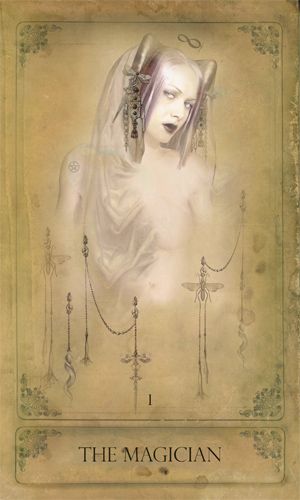
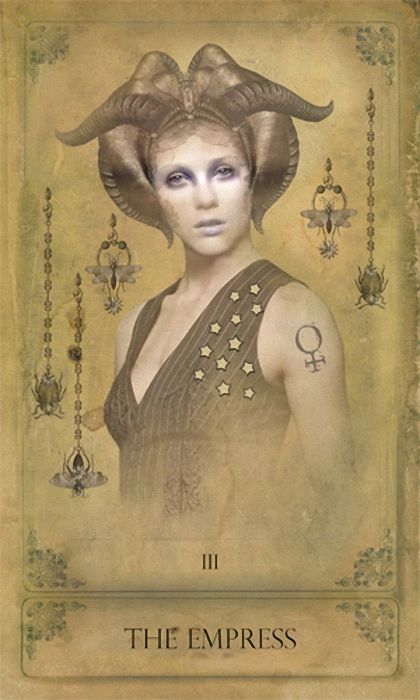
The Magician gathers intention, The Priestess listens inward, The Empress makes room for life, and The Emperor gives it a boundary. I use these four portraits as prompts rather than a prediction: what can I do, what do I know quietly, what needs care, and what needs a clear limit? Lay four cards in a line and read the last as a small action you can actually take.
Beginner guidance and three useful prompts
A beginner can use Sepia Stains Tarot, but it will not do all the work for you. The familiar titles and complete 78-card structure are reassuring. The non-scenic pips are the learning curve. Keep a small reference for number and suit, then ask what the objects are doing together: balancing, crowding, mirroring, enclosing or drifting apart.
Gentle
Which small detail deserves my attention today?
Deeper
What old story is coloring the way I see this moment?
Demanding
Where have I made a beautiful pattern around something I am afraid to name?
Card study
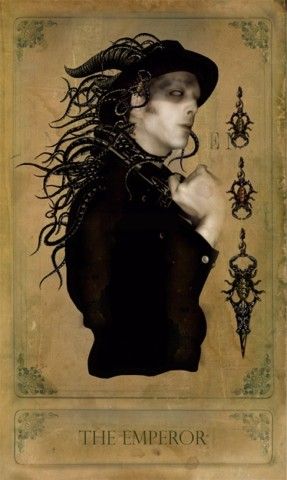
The Emperor — authority held close
A pale figure in a black coat and hat turns in profile against worn gold. One hand closes near the throat. Dark curling tendrils stream behind the head, while three pointed ornaments hang in a vertical line beside the face. Instead of a throne or a distant landscape, we meet a tightly contained person.
The Emperor usually asks about structure, responsibility and limits. Here I notice the contrast between that firm silhouette and the unruly curls behind it: what must be held, and what refuses to be controlled? At his best, he gives a fragile plan a boundary strong enough to grow inside. In shadow, protection becomes a locked door. In a reading about work or family, ask for one useful rule, then check whether it protects a real need or only the fear of losing control.
Reading portraits beside patterned pips
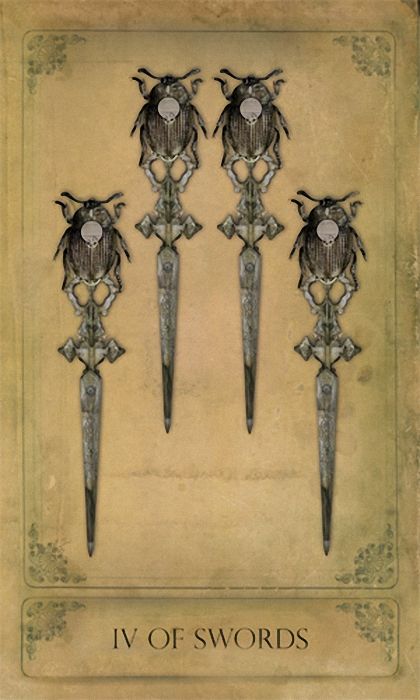
A face card can seduce the reading into becoming a character study, while a pip can feel cool and abstract. Place them in conversation. If The Emperor sits beside IX of Wands, the ring of staffs may turn his protective boundary into a barricade. If The Priestess meets IV of Swords, silence may become a deliberate pause rather than an answer withheld.
Nearby cards stop the deck’s beauty from becoming vague. Ask which direction a portrait faces, then notice whether the neighboring pattern opens or closes around that gaze. A court beside Coins may need grounding; beside Chalices, tenderness; beside Swords, a clearer name; beside Wands, permission to act.
Four-card reading
When repetition becomes pressure
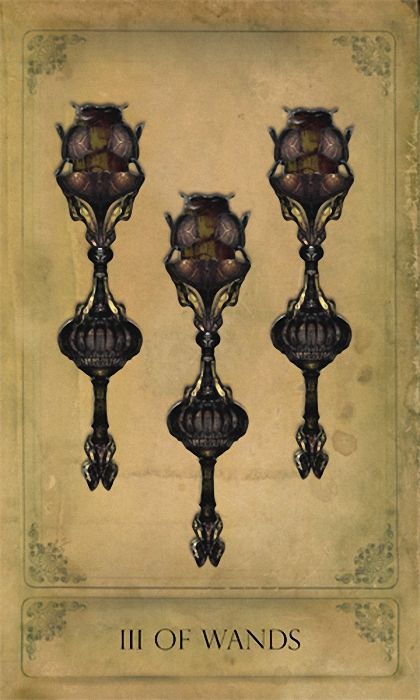
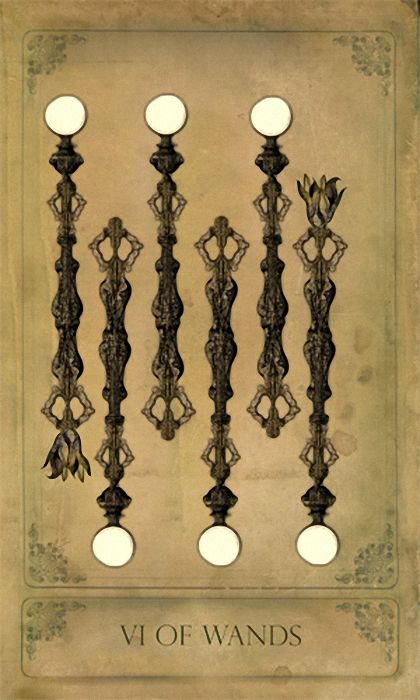
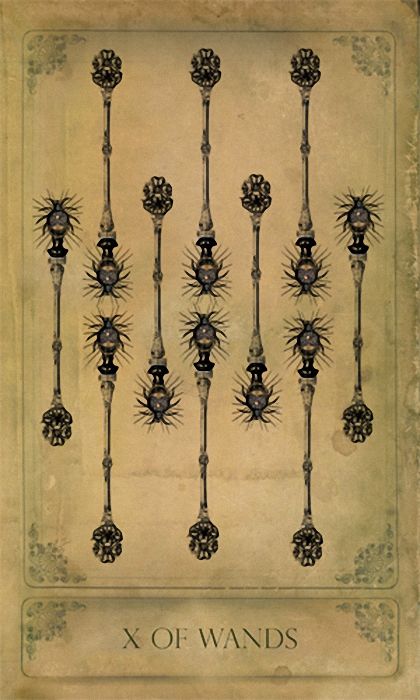
III, VI, IX and X of Wands arrange ornate staffs as balance, mirrored rhythm, enclosing ring and dense burden. With no human scene to dictate the mood, spacing does the speaking. I read the growing visual weight beside the question: what is being built, celebrated, defended or carried past its useful limit?

Who will feel at home in this deck?
Sepia Stains Tarot may delight collectors of gothic, Victorian, surreal and collage art; intuitive readers who notice gesture and atmosphere; and journalers who enjoy letting one image unfold slowly. It is especially expressive for shadow work, creative blocks, complicated relationships and questions about who we become inside an old story.
You may prefer another deck if you want bright modern color, familiar scenic pips or instant keyword reassurance. Browse the numbered minors, not only the arresting portraits. They reveal whether the deck’s ornamental language will keep you curious after the first shimmer of old gold.
What I love — and what to consider
The attraction is not simply that these cards look old. Their worn-gold calm gives a strange detail room to speak. Before choosing a copy, weigh that pleasure against the extra interpretive work the pips ask of you.
| Pros | Things to consider |
|---|---|
| Expressive portraits invite close attention to posture, gaze and emotional tension. | Non-scenic pips give fewer story clues than a familiar scenic beginner deck. |
| A restrained sepia palette makes small changes in colour and spacing feel meaningful. | Fine details reward a slow look; the available archive images vary in resolution. |
| Traditional structure with distinctive Chalices and Coins suit names. | Editions and packaging differ. Check the exact artwork rather than buying from a title alone. |
Card study
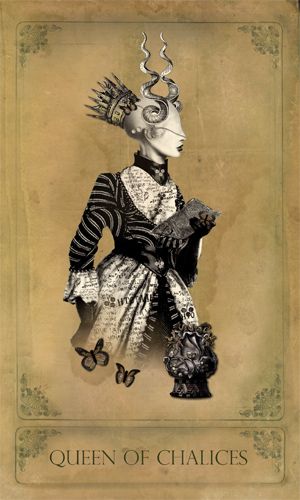
Queen of Chalices — tenderness dressed in strange armour
The Queen stands in profile wearing black-and-cream striped sleeves, lace at her chest and waist, and a small crown behind a spiral horned headpiece. Butterflies gather around her lowered hand and skirt, while she cradles a dark furry creature close to her body. Her long pale face remains composed rather than sugary.
The Queen of Chalices is emotional maturity, imagination and receptive care. Here, softness lives beside eccentric armour: lace, stripes, horns, creature and butterflies all belong in the same emotional world. Upright, she can hold complexity without rushing to tidy it. In shadow, care may become performance or absorption in another person’s mood. In a reading, I would ask what deserves to be held, what needs to be released, and whether the surrounding cards show true empathy or emotional camouflage.
Love, work and creative readings
In love readings, watch distance, gaze and what each figure holds close. The cards can expose attraction wrapped around secrecy, care wrapped around self-protection, or a polished bond that has become too symmetrical to breathe. Ask what feeling is alive now rather than turning the antique mood into a prediction about fate.
For work and creativity, the pips become useful design maps. Repeated tools show rhythm, systems, workload and pressure. Finish every atmospheric reading with one ordinary action: send the note, reduce the task, protect the hour, or make the first imperfect mark.
Four-card reading
From a sharp thought to a quieter mind
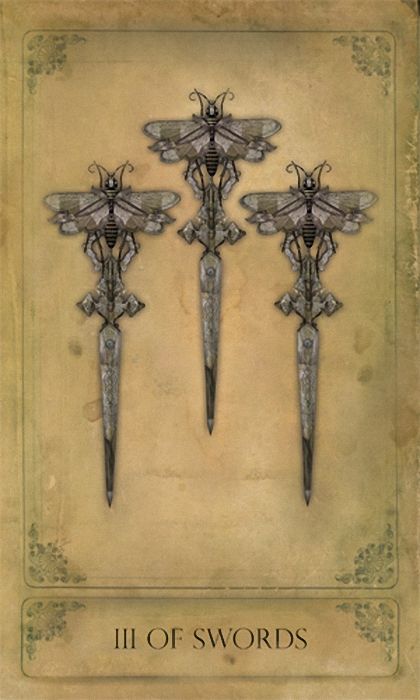
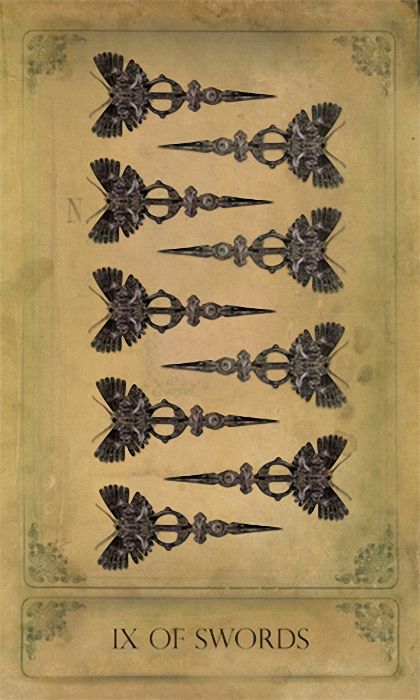
Ace, III, IV and IX of Swords turn the suit into delicate blades and insect-like mechanisms. The lifted wings of the three give way to the more closed beetle forms of the four; repetition can feel measured, or it can grow restless. Read them as four positions: name the thought, acknowledge its sting, make room for rest, and question the worry that keeps returning. Let the card’s number and nearby images temper your first impression.

Buying guidance: know which edition you are choosing
This review follows the older, second-edition artwork and its sepia-gold frames. The creator is Bethalynne Bajema. The deck itself has 78 cards, but this gallery is a curated selection of clean source images, not a complete scan of a physical copy.
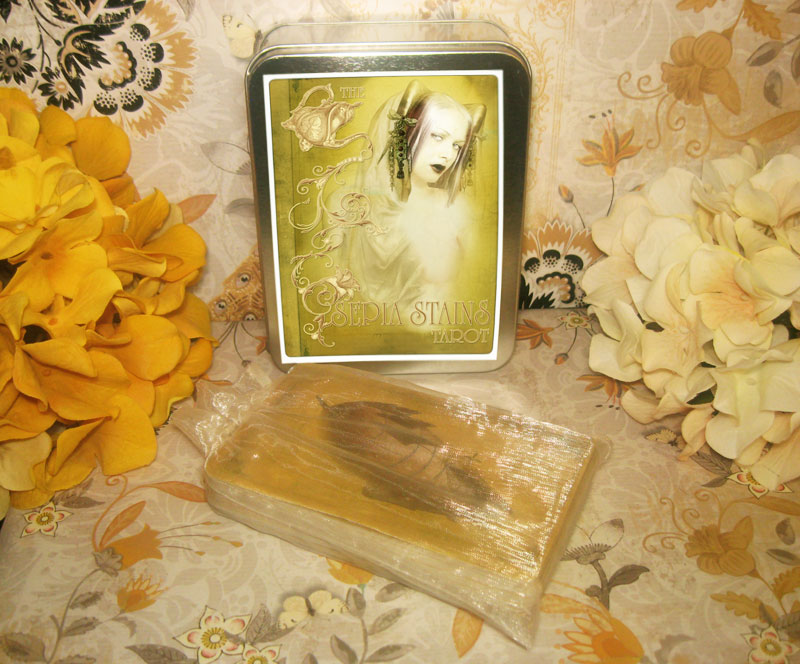
The second-edition tin
The creator’s archive shows the silver metal tin, pale portrait label and gold-toned pouch pictured here. This original package photograph is a useful comparison when a second-hand listing is vague.
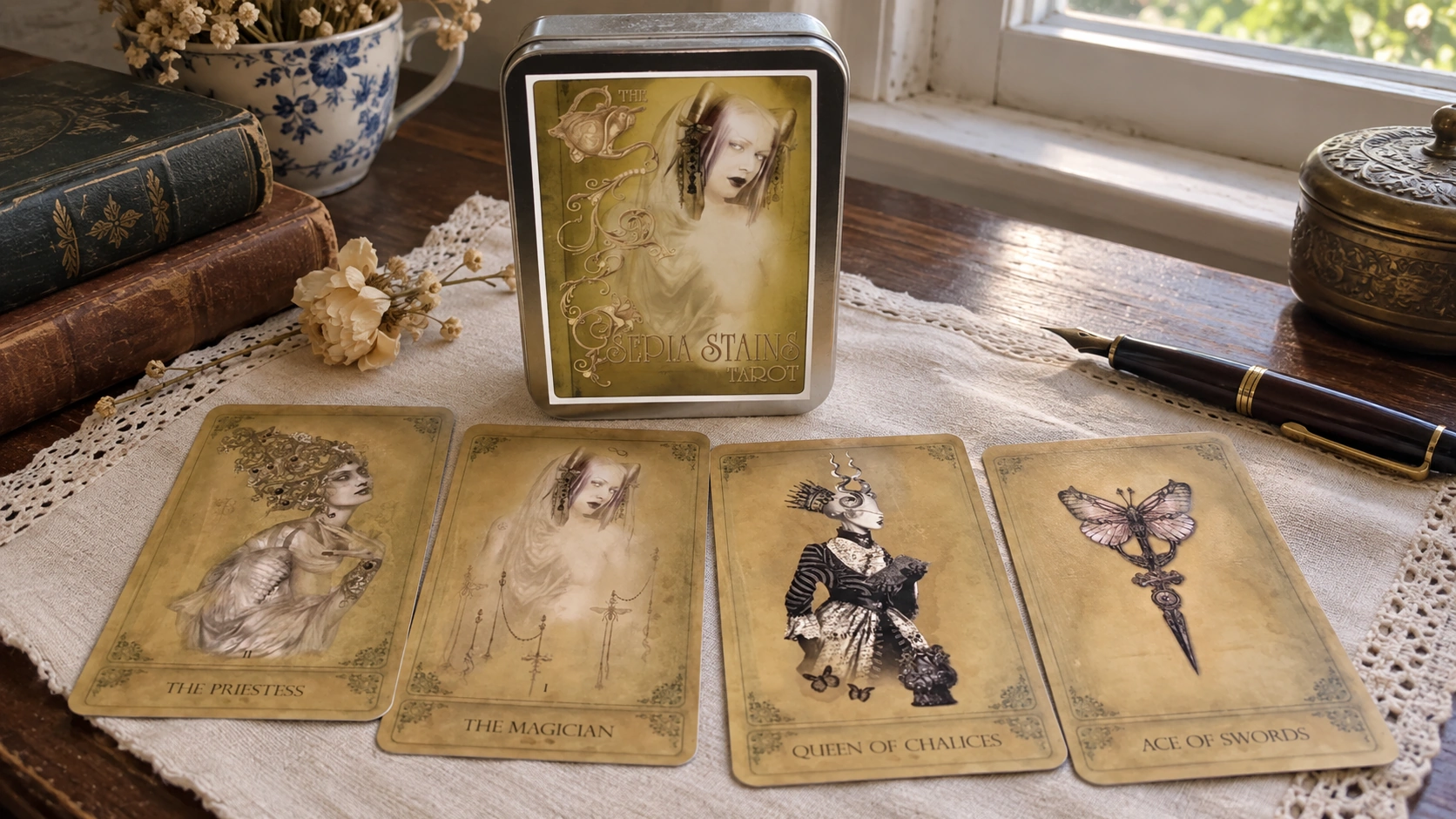
The generated Aurica and final reading-table images on this page take their packaging cues from that reference. They are editorial illustrations, not seller photographs.
I could not verify a current second-edition Amazon or Etsy listing. The yellow buttons and Gallery popup therefore open the creator’s matching edition archive, not a purchase offer. Ask a second-hand seller for clear photographs of the tin, a Major Arcana card and the numbered minors before committing.
The creator also has a direct third-edition product listing. It was marked out of stock when checked for this update. That listing is a different edition; its stock, artwork and package contents should be checked directly rather than assumed to match this gallery.
Aurica’s golden rule for Sepia Stains Tarot
Let the pattern set the stage, then let the neighboring face tell you why it matters.
The pips carry rhythm and pressure; the portraits carry motive and feeling. Read them together and the deck’s old-gold silence begins to speak plainly.
Final Thoughts
Sepia Stains Tarot is moody without being empty, ornate without becoming merely decorative, and traditional enough in structure to keep a reader oriented. Its strongest gift is the tension between intimate portraiture and impersonal, beautifully engineered pips.
I recommend it to the reader who enjoys looking twice. Begin with what catches like a burr in the fabric, test it against the card’s traditional function, and let the surrounding cards bring the message back into life. There is courage in seeing an old stain clearly, and this deck can help you turn that mark into a new pattern.
Sepia Stains Tarot FAQ
Who created the Sepia Stains Tarot?
Artist and writer Bethalynne Bajema created the Sepia Stains Tarot as an extension of her graphic-novel world, The Black Ibis. Her official archive says she began the deck in the mid-2000s and completed it at the start of 2008.
How many cards are in the Sepia Stains Tarot?
The reviewed second edition has 78 cards: 22 Major Arcana, followed by Wands, Chalices, Swords and Coins, with 14 cards in each suit.
Does the Sepia Stains Tarot follow Rider–Waite–Smith imagery?
It keeps the familiar 78-card structure and recognizable titles, but its pictures are deliberately non-traditional. The Major Arcana use sepia portrait collage, while many numbered suit cards communicate through repeated ornamental objects rather than narrative scenes.
Is the Sepia Stains Tarot suitable for beginners?
It suits a visually curious beginner who is willing to keep a meanings reference nearby. The traditional card names help, but the non-scenic pip cards ask you to combine number, suit, pattern and nearby cards rather than rely on familiar Rider–Waite–Smith scenes.
What readings suit the Sepia Stains Tarot best?
Its antique portraits, mechanical insects and carefully arranged objects are especially expressive for shadow work, creative blocks, identity, memory, relationship patterns and questions about what is hidden beneath a polished surface.
Where can I find the exact edition shown here?
This Gallery documents Bethalynne Bajema’s second-edition artwork and card-frame family. The creator’s archive documents that edition, but a current second-edition purchase offer was not verified. The creator’s direct shop lists the third edition, which is different and was marked out of stock at our check. Compare the creator, packaging, frames and actual card photographs before buying second-hand.