Explore the Samiramay Tarot Cards
Explore the individually checked Samiramay Tarot artwork below. This archive prints Page, Knight, Princess and Prince on its courts; the linked Vieux Monde Express product photographs show Queen and King instead. Compare the printing before buying. Choose a group to filter the Gallery, or open a card for a closer look.
Showing the selected card group.
Aurica’s Quick Take
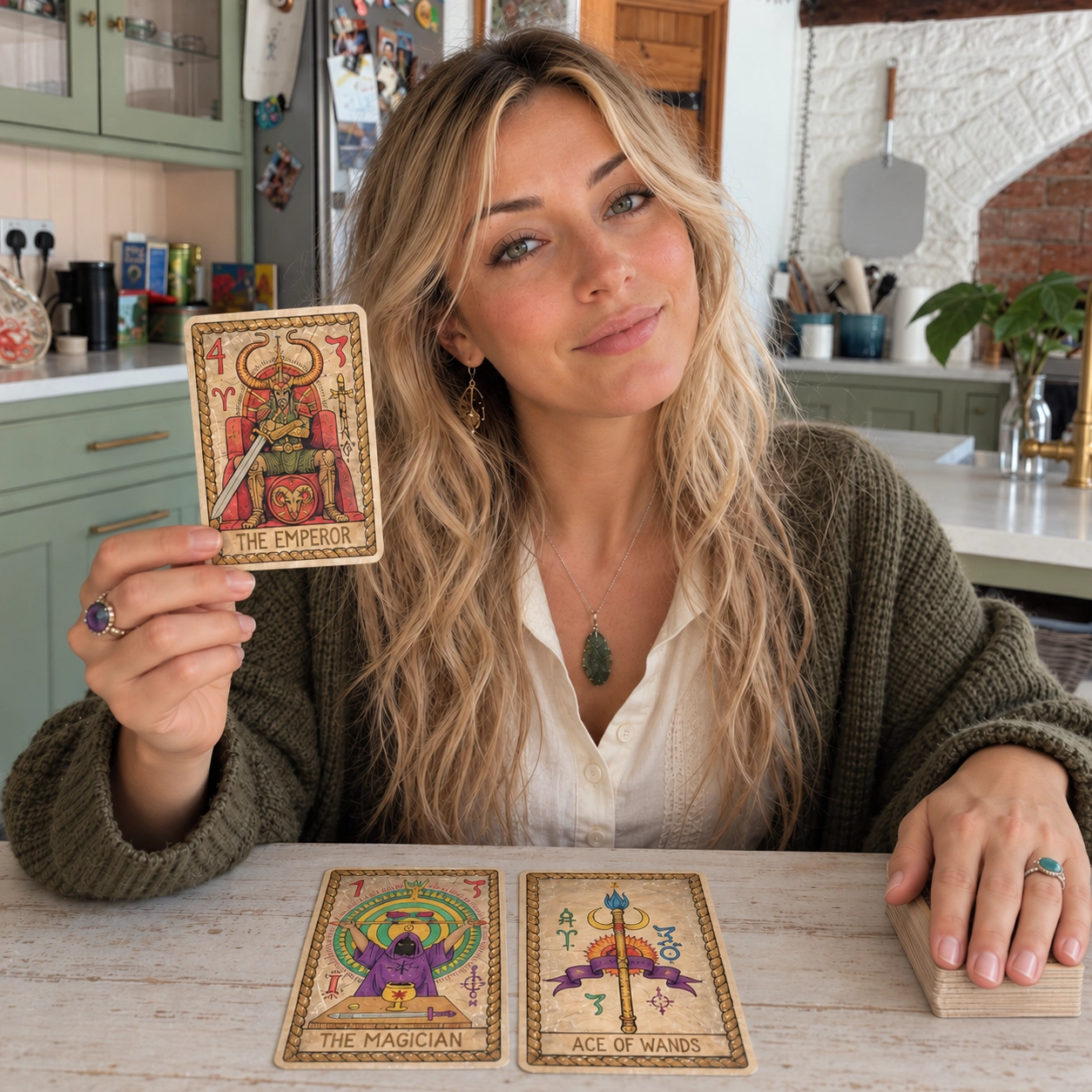
Samiramay Tarot feels like opening an old observatory notebook after midnight. Vera Petruk fills each card with weathered stone, hand-drawn symbols and tiny pathways for the eye to follow. The images are busy, but never cold. A lifted hand, a bright star or a narrow stretch of water gives the reading somewhere human to begin.
I would read this deck slowly. First I name the detail that catches me; then I return to the card’s traditional meaning and ask how nearby cards change its tone. The Moon may bring uncertainty, while The Star beside it turns that uncertainty into patient navigation. A Sword sharpens the question, while a Cup shows what the heart is trying to protect.
This is a beautiful choice for readers who enjoy symbolism without losing the practical thread. Follow one clear sign at a time, and the deck can help you turn a crowded sky into a path you feel brave enough to walk.
A deck that turns every card into a small observatory
Samiramay Tarot feels weathered and cosmic at once. Vera Petruk surrounds human figures with stone-textured borders, handwritten marks, stars, numbers and diagrams, then leaves one clear gesture at the centre. The structure stays recognisable, so traditional meanings provide a strong floor beneath the unusual art.
I would read the visible scene first, return to the card’s tarot function, and let neighbouring cards decide which symbols deserve attention. You do not need to solve every tiny mark before a card can speak. A reaching hand, a stretch of water or the way a figure meets your gaze is often a warmer and more useful beginning.
The muted paper colours give bright details room to shine. I find that contrast especially inviting for journaling: describe one small thing you can actually see, then ask why it matters to the question you brought. The symbols become companions to the reading rather than a test you have to pass.
Card study
The High Priestess — a quiet threshold of knowledge
The High Priestess sits with her knees together and an open book resting across her lap. Purple hair falls over her eyes; one palm is lifted towards us while the other hand holds an ochre scroll. Behind her, a dark crescent curves around her head. A blue flower and scattered signs soften the weathered, stone-like frame.
I am drawn to the contrast between the open book and those hidden eyes. There is knowledge here, but not the kind we can collect by staring harder. Her raised hand feels like a small, kind pause: leave a little room for what has not found its words yet. The book offers something to study; the scroll keeps another part of the story folded away.
In an upright reading, I would let her speak for attentive listening, private understanding and the courage to wait before explaining yourself. Her shadow is quieter: calling avoidance intuition, or collecting symbols when one honest conversation would help more. Stillness should make the question clearer, not hide it beneath another layer of mystery.
Try asking, What do I already sense, and what would help me check it gently? Beside an Ace, she may ask you to protect a tender beginning. Beside a Sword, she invites a distinction between what you know, what you suspect and what you need to ask. Let her give your answer breathing room without handing away your own judgment.
How to read the symbols without getting lost
Choose the detail your eye returns to and describe it plainly. Ask what it is doing: opening, blocking, lifting, dividing, sheltering or pointing. Then check the suit and spread position. This keeps intuition grounded in the question.
If several symbols compete for your attention, let the spread position choose the first one. A card about support may draw your eye towards a cup or an open hand; a card about a difficult decision may make a narrow passage feel more important. You can return to the other details later, when the first sentence of the reading has become clear.
Four pack
Four doors into the elements
The four Aces separate desire, feeling, thought and material possibility so a new beginning can be named more clearly.
What the deck feels like in practice
The parchment colours slow the pace while blue, gold and red pull attention toward the emotional centre. Try a three-card spread: what I can see, what I am assuming, what deserves trust.
I like this little spread because it leaves room for both sensitivity and curiosity. Write a plain observation beneath each card before adding the interpretation. If the story begins to feel too certain, look for the detail that complicates it: an averted face, a steady hand, or a path that continues beyond the frame.
Card study
The Star — hope made visible
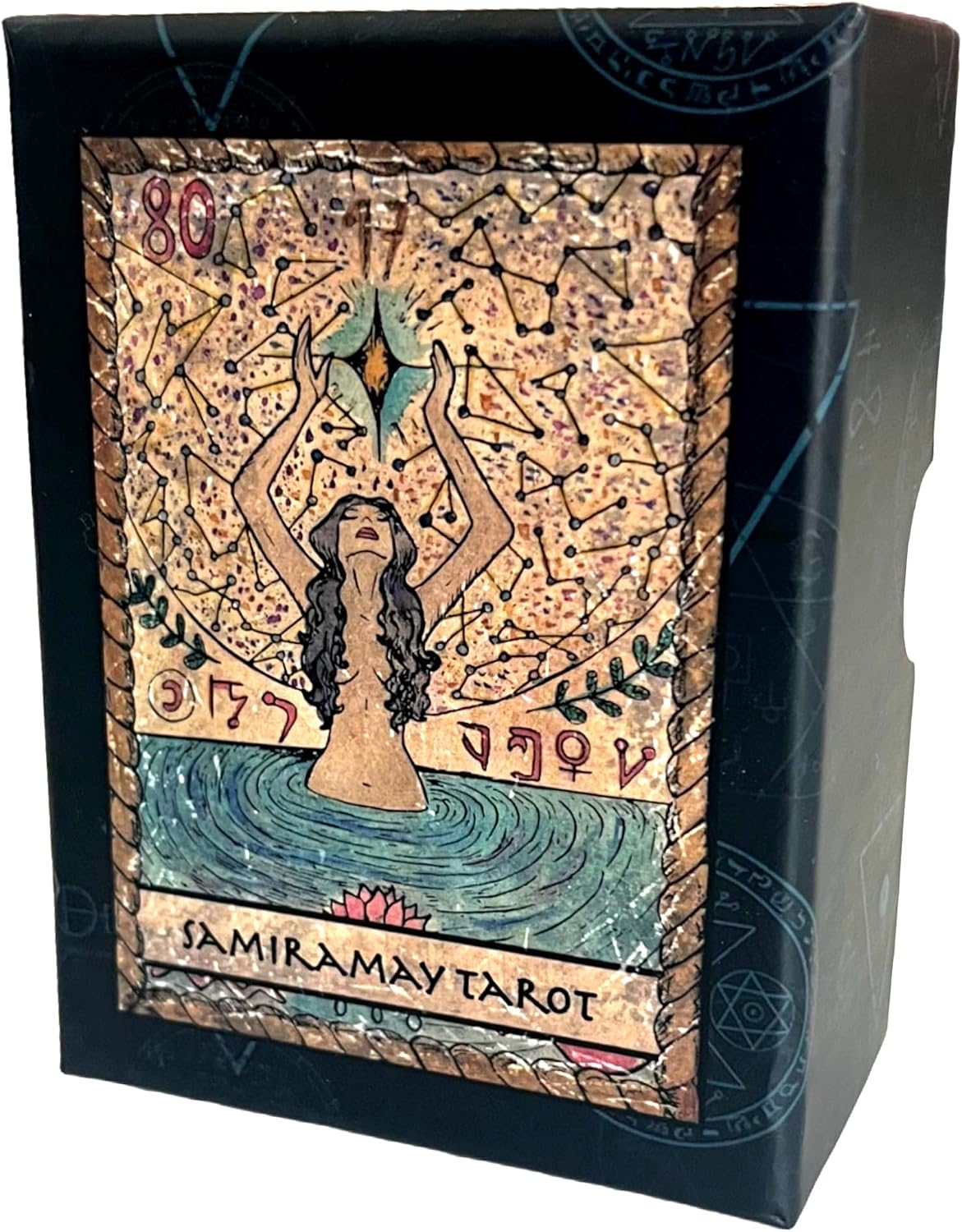
The Star rises waist-deep from turquoise water, her arms lifted towards a long, pointed light between her hands. Ripples circle her body. Above her, dots and thin connecting lines turn the parchment sky into a little map of constellations; a pink flower peeks up near the lower edge. The picture is full of marks, yet her upward gaze gives it a clear centre.
What feels hopeful to me is not the promise of an empty sky. The sky is still crowded. She simply finds one light worth reaching towards. The water holds the lower part of her body while her hands extend above her, bringing feeling and aspiration into the same gentle movement.
Upright, this can be a card of renewed trust, creative openness and recovery after a difficult stretch. Its shadow is waiting for a beautiful feeling to do all the work, or turning someone else into the star you must follow. Hope becomes more useful when it gives your own hands something small and real to do.
For a reading, name one thing that is becoming possible again. Then draw a neighbouring card for the action that would nourish it: a Cup may point towards connection, while a Pentacle asks for a steady habit. I would let The Star make the next step feel possible, rather than asking her to promise the whole journey.
Beginner guidance and gentle pacing
A beginner can use Samiramay Tarot, although it is not the quickest teaching deck. Begin with one card and write down three visible facts before interpreting. Once the core meaning is clear, add a second card for context.
For an easy reading, ask what deserves your attention today. For a gentler challenge, draw two cards for what you feel and what you can try. When you are ready for something deeper, use three cards for the pattern, the need beneath it and a response you can practise. Small spreads give this dense artwork room to breathe.
Four pack
Light across strange skies
The High Priestess, Star, Moon and Sun move from inward knowledge through hope and uncertainty toward illumination.
Relationships, work and creative questions
In relationship readings, notice the direction of faces and hands. In work readings, Pentacles and Wands show the difference between a promising idea and the daily structure needed to carry it. Creative readers can ask where energy is gathering and which symbol feels like an invitation.
Card study
The Moon — navigation before certainty
A sailing ship passes between two tall stone structures, with a vast yellow disc glowing behind it and a crescent high above. A small figure balances on a line stretched across the passage. Two dogs lift their muzzles from the foreground, while pale diamonds and coloured signs gather in the blue sky. Even the water seems to hold several different kinds of light.
The ship and the balancing figure make uncertainty feel physical. Both are moving, but neither can ignore the space beneath them. I like that the image offers landmarks without making the whole route visible. The Moon does not have to mean that everything is false; sometimes it means that atmosphere, memory and evidence are arriving together.
Upright, I would read this as sensitivity, imagination and the need to move at a pace that leaves room for checking your bearings. Its shadow is letting a fear become a fact simply because it feels vivid. A strong feeling deserves attention, but it does not have to become the final answer.
Try three cards for what I can see, what I am adding to the scene, and what would help me steer. With The Star nearby, a small reliable sign may be enough for now; with a Sword, a clear question can cut through the fog. Keep one hand on the visible rope, and let clarity arrive a little at a time.
Who will connect with this deck?
Samiramay may suit journalers, artists, astrology lovers and readers who enjoy layered esoteric imagery. You may prefer a cleaner deck if small symbols feel distracting. Use the Gallery to decide whether its visual language feels intriguing or tiring.
For me, the invitation is to stay curious without losing the person inside the picture. A card can be wonderfully mysterious and still offer a practical question. If you enjoy returning to an image and discovering something you missed, these weathered little worlds have plenty of room for you.
Four pack
Four faces of earthly responsibility
Page, Knight, Princess and Prince of Pentacles move from learning and carrying to tending and directing practical life.
At a glance
Samiramay Tarot Pros & Cons
What I love
- Intricate symbolic art rewards patient study.
- The familiar 78-card framework keeps readings grounded.
- Earthy parchment colours give the deck a distinct voice.
- Excellent for journaling and creative questions.
- The complete Gallery supports careful edition checks.
What to know
- Dense symbols can feel busy in a quick reading.
- Small printed details need good light.
- This archive uses Princess and Prince court titles.
- Different printings may vary in labels and packaging.
- Check the exact printing and its card photos before buying.
Buying and edition guidance
This Gallery preserves a 78-card archive with Page, Knight, Princess and Prince printed on the courts. The linked Vieux Monde Express product photographs use Queen and King for those final two ranks. The artwork belongs to the same family, but that visible wording difference means you should not assume the archive and offered printing are identical.
Vieux Monde Express credits Vera Petruk for the artwork on its Samiramay printing. Check the card and packaging photographs of the copy you are considering; similar names alone do not establish that it is this illustrated deck.
Aurica’s golden rule
Follow one true symbol before you follow every symbol.
Begin with the detail that feels honest, test it against the traditional meaning, and let the spread show where the path continues.
Final Thoughts
Samiramay Tarot is intricate, distinctive and best enjoyed without rushing. If you enjoy cards that reward attention, it can make every reading feel like a small act of discovery. Keep your question close, follow the visible path, and trust yourself to meet the next symbol when it arrives.
Samiramay Tarot FAQ
Who created Samiramay Tarot?
The artwork is by Vera Petruk. The linked Vieux Monde Express listing credits her as the artist.
How many cards are in Samiramay Tarot?
The deck follows a 78-card tarot structure: 22 Major Arcana and four 14-card suits.
Which court titles appear in this Gallery?
The photographed archive shown here prints Page, Knight, Princess and Prince. Compare court titles when checking another printing.
Is Samiramay Tarot beginner-friendly?
A beginner can use it with a dependable reference, but the dense symbols reward slow one-card and three-card practice.
What readings suit this deck?
It works especially well for creative blocks, emotional patterns, spiritual study and layered questions.
What should I compare before choosing a printing?
Compare the box art, card borders, printed court titles and included guidebook with the photographs of the particular copy offered. A shared deck name does not guarantee identical packaging or card details.


