
Sakki-Sakki Tarot Review
TAROT CARDS REVEALED
Explore the Sakki-Sakki Tarot Cards
Browse the verified card artwork in the deck’s own vivid hand-drawn sequence. Choose an official group to filter the continuous gallery, or select a card for the full-size Lightbox.
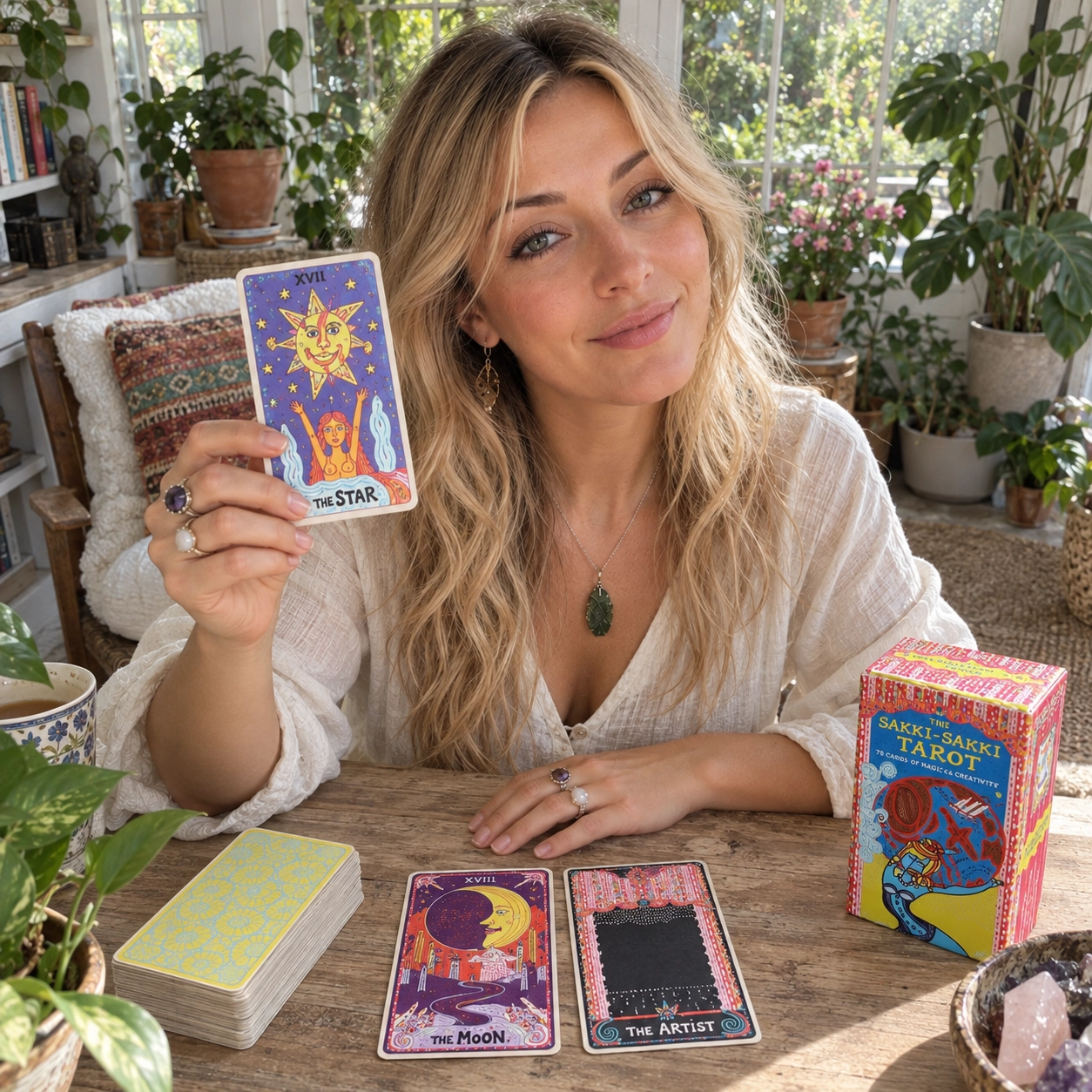
A note from Aurica
I love how Sakki-Sakki feels as though a sketchbook has opened and begun speaking in symbols. The faces are bright, strange and tender, and even the smallest detail—a tilted eye, a curling line, a sudden patch of red—can become the part of the card that answers first.
I would let that first visual tug lead me into the familiar tarot meaning. The Star feels hopeful without becoming sugary; The Moon asks me to stay with what is half-seen; and The Artist turns the whole spread back toward the reader with one quiet question: what are you ready to make from what you now understand?
This is a deck for readers who enjoy intuition with texture and personality. Give its handmade images a little room, and they can help you meet your own creative voice with more courage, curiosity and delight.

THE ORIGINAL EDITION
An artist’s tarot, built as a creative language
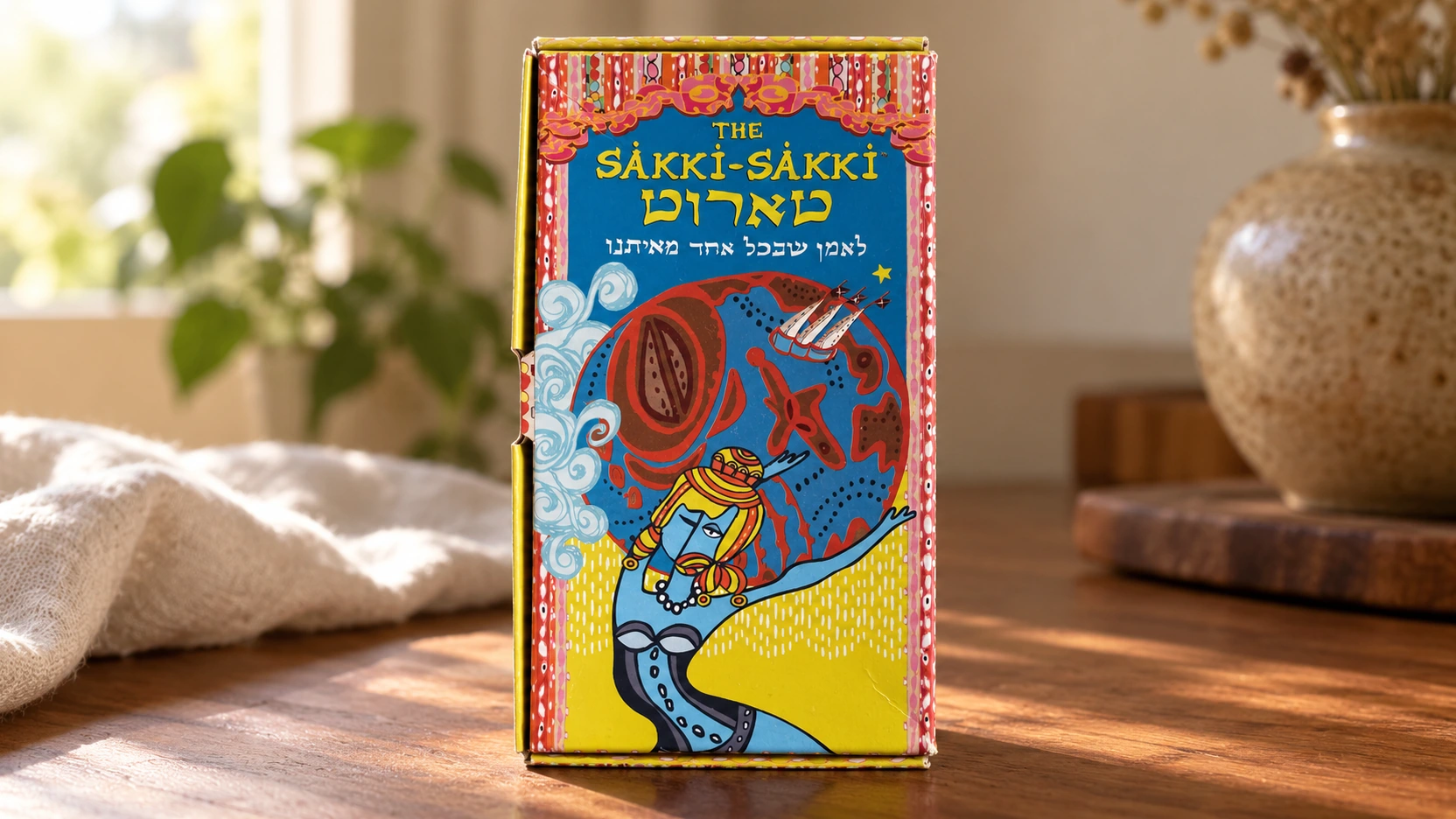
The Sakki-Sakki Tarot: For the Artist in Each of Us is Monicka Clio Sakki’s self-published 2004 deck. The original package pairs the deck with a small guidebook and presents the cards as tools for intuition, play and creative discovery.
Collector note: this exact edition is officially out of print. The buttons here browse Etsy’s Sakki-Sakki Tarot marketplace, not a verified in-stock retail offer. Resale availability varies; check each seller’s photographs and edition details. If you find a second-hand copy, check the edition, condition and included cards before buying.
Sakki-Sakki does not look like a deck that was polished into sameness. Its pictures feel drawn, cut, painted and dreamed into being. Faces stretch, symbols float out of scale, and little visual jokes sit beside serious spiritual questions. That handmade restlessness is the deck’s central strength.
The structure remains familiar: twenty-two trumps and fifty-six suited cards in Rods, Cups, Swords and Coins. There is also a little stage waiting for you: The Artist, an extra card for the creative life within the reader. Trump XX carries the lovely name The Angel. I keep those printed names, because they are part of the deck’s invitation rather than details to smooth away.
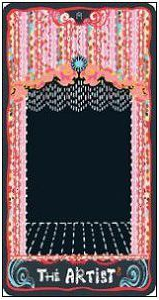
The Artist — a stage waiting for your voice
Pink patterned curtains surround a deep, almost empty black stage. Fine lines run across the floor, and a small blue ornament hangs above the opening. There is no painted person to tell us who belongs here. That quiet absence is the point: the reader is invited into the picture.
I find this a tender addition to such a busy, colorful deck. It gives imagination somewhere to breathe. Beside The Magician, it can ask what you are ready to make; beside a difficult Swords card, it can ask which story you are rehearsing about yourself. It is an extra creative prompt, not a replacement for one of the traditional trumps.
Its useful expression is authorship: choosing a small act that gives your intention form. Its shadow is waiting for a perfect identity before beginning, or treating every outcome as something you should be able to control. Ask: What is one honest mark I can make today? A page, a conversation or a changed habit can all be a beginning.
A familiar system in an unfamiliar voice
Readers who know Rider–Waite–Smith can enter without learning a new grammar from scratch. The card numbers, suits and court hierarchy remain recognizable. What changes is the emotional temperature. Sakki’s figures feel more like actors in a private myth than illustrations of fixed keywords.
That makes the deck productive for free association. A symbol may land before the textbook meaning does: a spiral, a mask, a pair of eyes, a hand reaching into another visual layer. Rather than correcting that first response, Sakki-Sakki rewards following it.
A handmade symbolic language
These four pictures feel like a small creative life: a blue-faced maker at a table, two bodies meeting, raised arms beneath a bright star, and a figure held within a rounded world. Let their gestures tell the story before the keywords do.
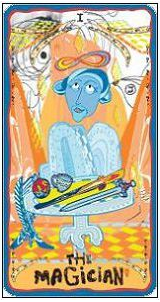


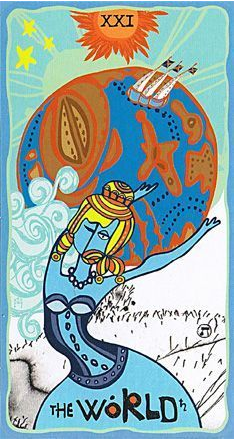
The Magician gathers what is available. The Lovers asks what we will join with. The Star makes room for hope, and The World gathers the experience into something whole. In a project reading, ask where that gentle movement has stalled: making, connecting, trusting or completing.
How the deck reads
Sakki-Sakki is strongest when a reading needs invention rather than reassurance. The cards are bright, but they are not simply cheerful. A funny little face may loosen a thought that has become stiff. An awkward body may echo the way a situation feels. I would treat those associations as openings for a question, then bring them back to the card’s function and the rest of the spread.
In a daily draw, begin with three visible facts before naming a meaning: a color, an object and a gesture. Then ask how those details interact. This slows the impulse to force the image into a memorized definition and lets the deck’s own language speak.

XX. The Angel — hearing an invitation, not a verdict
A pale face with a crown of red and orange curls fills the upper card. A trumpet extends from the mouth, pale rays travel downward, and smaller headless figures reach and move below. The blues feel airy against the warm hair, as though the sound has opened a window through the whole scene.
This is the deck’s Judgement position, but the printed name is The Angel. I hear its awakening as a call toward life rather than a scolding. The smaller figures need not have their identities settled before they respond. Something can move in us before we have found the words for it.
In a reading, its clear expression is recognition followed by action: answering a message, returning to work that matters, or allowing an old chapter to close. In shadow, every inner voice can sound like an order. Read the neighboring cards and ask: Which call feels truthful, and what gentle, concrete response can I give it?
When a call becomes a choice
The Angel is a turning point, but the card does not demand a dramatic performance. Its trumpet-like lines can feel like an invitation to name what has been waiting beneath the noise. Before moving on, notice who is looking up, who is still, and where the image gives the eye room to breathe.
That pause matters in a reading. A call becomes useful when it changes the next small action: send the message, return to the work, forgive the unfinished draft, or let a borrowed expectation fall away. Sakki-Sakki keeps the spiritual moment close to ordinary life.
Four beginnings, four kinds of material
A tall organic rod, a rose-colored cup with flowing streams, a single upright blade and a warm round coin each offer a different kind of beginning. Their colors make the elements feel like materials waiting in an artist’s hands.
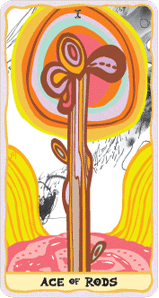


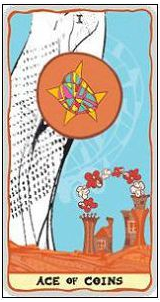
Rods asks for a spark; Cups for an open heart; Swords for a clear thought; Coins for something you can tend in the world. I would choose one small next step from the element that is missing, rather than asking enthusiasm alone to do the work of all four.
Is Sakki-Sakki good for beginners?
Yes, with one qualification. The familiar structure gives beginners a map, but the artwork does not always narrate a scene as literally as a classic Rider–Waite–Smith deck. A new reader who wants strict keyword confirmation may initially find it slippery. A visually curious beginner will probably experience that openness as freedom.
The most useful approach is to keep a small image journal. Write what you actually see, then compare that response with a standard meaning. Over time, the gap between those two notes becomes your personal reading vocabulary.
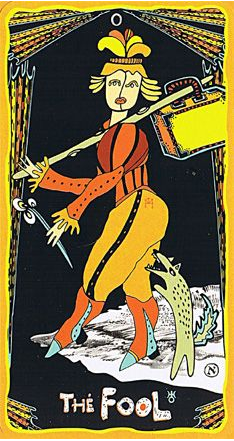
The Fool — beginning before the costume feels perfect
A bright yellow-clothed traveler crosses a dark stage framed by golden curtains. A long staff rests across the shoulders; a small pale animal stays close to the feet. The clothes, the angled limbs and the contrast between yellow and black make the figure feel caught in motion, not posed for approval.
After The Artist’s empty stage, this little performer has actually stepped into the light. I love that connection: possibility becomes a body doing something. The traditional Fool’s trust is still here, but the theatrical setting reminds me how exposed a new beginning can feel.
Upright, the card welcomes curiosity, play and a first imperfect attempt. Its tension is confusing freedom with having no need to look where we are going. For a new project, ask: What small experiment is safe enough to try, and what would help me keep my footing? Let courage open the door without asking it to carry every bag.
Shadow, difficulty and emotional honesty
The deck’s playful style does not erase difficult material. It changes how difficulty enters the conversation. Anxiety, loss and exhaustion appear through exaggerated bodies, stark contrasts and dreamlike staging rather than polished realism. That distance can help a reader approach hard cards without pretending they are harmless.
I would not rush to turn a painful image into a cheerful message. First name what it touches: feeling left outside, having too much on your mind, or reaching the end of something. Then look for the card beside it that offers a response. The deck’s wit is a way into an honest conversation, not a reason to skip the feeling.
From exclusion to reclaimed ground
The gray, angular Five of Coins feels exposed beside the Queen’s blue waters. The Ten of Swords gives an ending its sharp outline; the headless figure in the Nine of Coins stands among abundant flowers. These are different rooms of the same emotional house.


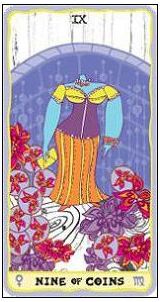
Read these as a conversation, not a promise that hardship must produce a reward. Where is support hard to reach? What helps you hold the feeling? What has truly ended? What can you cultivate now? The Queen’s cup offers a tender pause between hurt and rebuilding.
Who will love this deck?
Sakki-Sakki suits readers who enjoy outsider art, collage-like symbolism, expressive faces and images that keep changing under attention. Artists and journalers may connect especially strongly with its insistence that interpretation is an act of making.
It may be less comfortable for someone who wants photographic realism, perfectly uniform digital rendering or an edition that is easy to replace. The original is collectible and out of print, so condition and completeness matter when evaluating a second-hand copy.
Pros & Cons
What works
- Distinctive handmade art with a strong personal voice.
- Familiar tarot structure supports intuitive experimentation.
- The Artist adds a genuinely useful creative prompt.
- Rich color, symbols and expressive figures reward repeat readings.
What to consider
- The original 2004 edition is out of print.
- Some scenes are more symbolic than narratively explicit.
- The unconventional drawing style will not suit every reader.
- Buyers must distinguish the original from the later successor deck.
Original deck or successor edition?
The deck reviewed here is the original 2004 Sakki-Sakki Tarot. Monicka Clio Sakki later created I AM THE ARTIST Tarot as a reworked successor. They are related, but they are not interchangeable editions. A listing for the newer deck should not be presented as a live purchase route for the original.
I would start with the creator’s own account of the deck, then take my time with any second-hand offer. The Etsy link browses marketplace results; it does not confirm that an exact-edition copy is currently available. Ask for clear photographs of the original box, card fronts and The Artist, and check whether the booklet is included. The separate Playing with Symbols companion book is not the deck itself. A beautiful title is not enough to identify what a seller is offering.
A golden rule for this colorful deck
Notice first, name second, choose one small action. Let a color, gesture or object catch your eye. Connect it with the card’s familiar tarot role, then find a useful step that belongs to your actual question. If an interpretation is lovely but tells you nothing about the situation, let it soften until something simpler comes through.
For an easy draw, ask what deserves your attention today. For a deeper three-card reading, try what is stirring, what is getting tangled, and what you can make from it. For a more demanding reflection, place The Artist beside the spread and ask which part of your own story you are ready to revise.
Final thoughts
Sakki-Sakki’s lasting appeal is not polish but presence. It asks the reader to participate—to notice, associate, question and make something from the encounter. The seventy-ninth card turns that invitation into the deck’s thesis: the reader is not only decoding the image. The reader is also an artist.
 See Sakki-Sakki Tarot on Etsy
Frequently Asked Questions
How many cards are in the Sakki-Sakki Tarot?
The original has 79 reading cards: the familiar tarot structure plus The Artist, a little invitation to bring your own creative voice into the reading.
Who created the Sakki-Sakki Tarot?
The deck was created and illustrated by Monicka Clio Sakki. The original English-language edition was self-published in 2004.
Is card XX called Judgement?
No. The printed card title is XX. The Angel. It occupies the conventional Judgement position, but the visible title should be respected in captions, alt text and readings.
Is The Artist a card back?
No. It is an extra creative card with a dark, empty stage surrounded by patterned curtains. It is meant to invite the reader into the scene, not to serve as the card back.
Can I still buy the original Sakki-Sakki Tarot?
The creator identifies the 2004 original as out of print. Second-hand copies may appear, but this review does not treat stale marketplace pages as guaranteed availability.
Is I AM THE ARTIST Tarot the same deck?
No. It is a later reworked successor by the same creator. It shares creative lineage with Sakki-Sakki but has different content and packaging.


