Jolanda Tarot Card Gallery
Browse the available Jolanda Tarot artwork in a larger carousel. Each image and filename is matched to the printed card title or suit and rank.
A note from Aurica
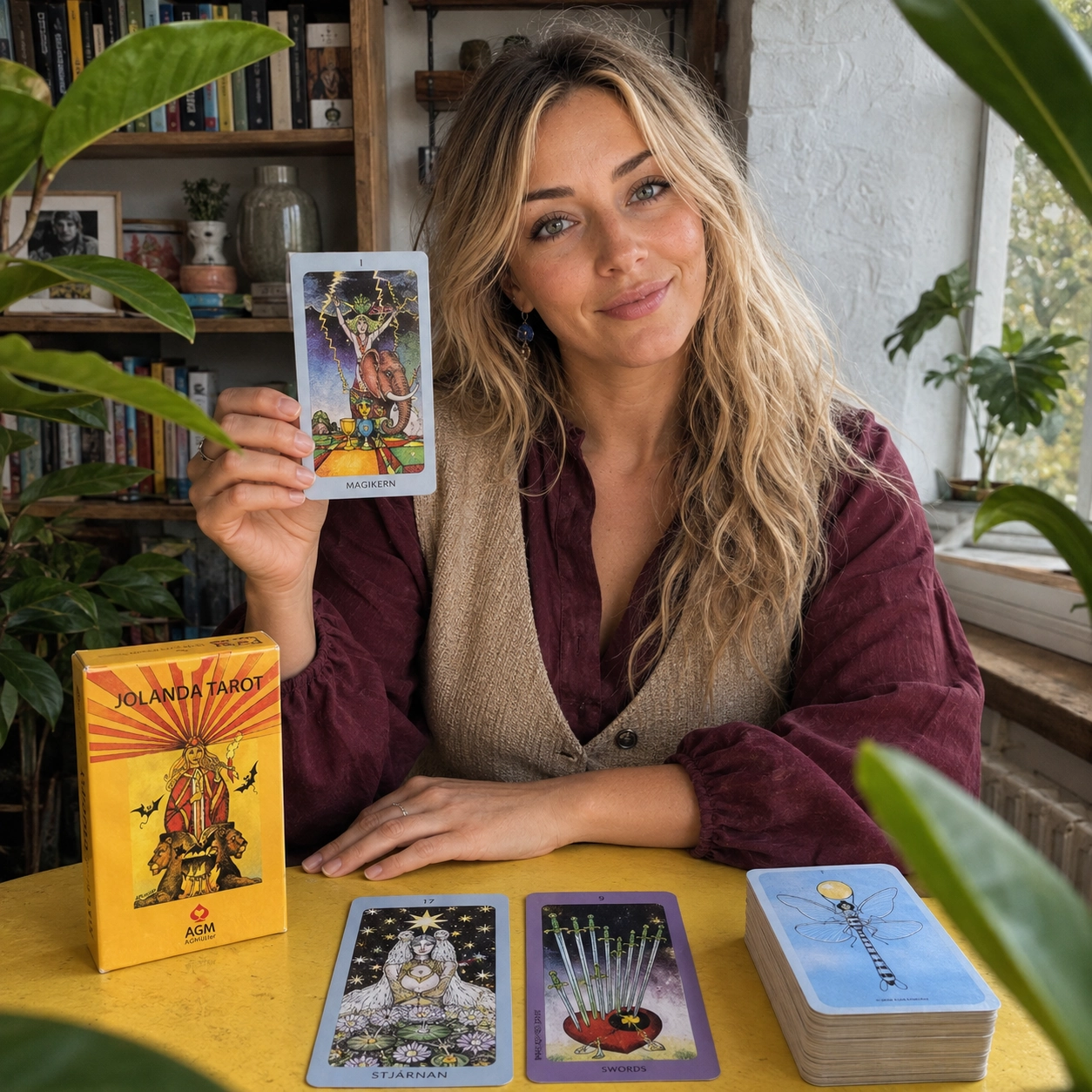
Jolanda Tarot feels like a bright little theatre where every character has wandered in carrying a secret. I notice the sharp blocks of colour first, then the strange faces, tilted bodies, and tiny details that make an ordinary tarot idea feel delightfully unsettled. The cards rarely whisper politely; they tug my sleeve and ask me to look again.
The Magician captures that energy beautifully. Lightning jumps through the dark sky while the red elephant makes power look clever, unruly, and impossible to ignore. In a reading, I would begin with the detail that feels most alive, connect it to the card’s familiar role of focused will, and then ask whether that power is being directed with purpose or merely making noise.
I especially like this deck for creative blocks, relationship patterns, shadow work, and questions that have become too tidy in the telling. The Star can open a tender window of hope, while the Nine of Swords gives worry a sharp physical shape. When these images feel intense, I describe the scene in plain words before interpreting it; that simple pause keeps intuition grounded in what the card is actually showing.
This is not the deck I would choose for a soft, predictable answer, but it is wonderfully alive when honesty needs colour, humour, and a touch of dream logic. Let Jolanda Tarot remind you that even the strangest inner scene can reveal a clear next step—and that your imagination is not a distraction, but a brave and useful lantern.
Jolanda Tarot reads like a surreal little theatre: bright, strange, expressive, and emotionally direct. Hans Arnold’s images use masks, angled bodies, sharp color, and dream logic to make familiar tarot ideas feel a little less tidy and a lot more alive.
This TarotFans upgrade uses deck-specific Jolanda Tarot artwork and matches every available gallery image to the printed card title or suit and rank. It does not fill the gallery with uncertain images.
Jolanda Tarot review: quick take
Jolanda Tarot is best for readers who enjoy expressive art, psychological readings, and decks that make you feel a card before you explain it. It is not a soft pastel comfort deck. It is more like a symbolic stage set where every face, color, and odd pose hints at a private drama.
The deck still sits inside a familiar tarot structure, so readers can bring standard meanings to the majors, suits, and courts. What changes is the emotional temperature. A simple card can feel theatrical, mischievous, anxious, or strangely funny depending on how the art pushes the eye.

Card study
The High Priestess: the locked inner room
The High Priestess shows why this deck works so well for intuitive questions. She feels private, watchful, and almost mask-like, as if the card is guarding something that should not be explained too early.
In a reading, I would treat this as protected instinct. The answer may be real, but it needs quiet, privacy, and a little distance before it becomes useful enough to share.
Artwork, mood, and symbolism
The first thing I notice is the deck’s graphic confidence. Jolanda Tarot uses flat fields of color, surreal faces, and bold shapes instead of soft atmospheric prettiness. That gives the cards a quick emotional read from across the table, especially in relationship and shadow-work spreads.
Some of the cards feel playful, but they are rarely shallow. The humor has teeth. The intense cards do not hide their pressure. That makes the deck useful when a reading needs honesty rather than reassurance.
A four-card pressure check


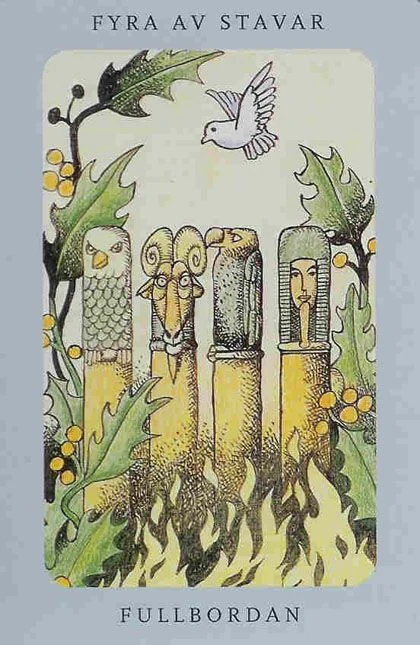

Four of Cups, The Hermit, Eight of Swords, and Ten of Wands move from boredom to isolation, mental restriction, and overload. It is a clear spread for asking where someone has carried a problem alone for too long.
How Jolanda Tarot reads in practice
In practice, I would read Jolanda Tarot visually first. What is the body doing? Where is the face looking? Is the color warm, theatrical, cold, or trapped? After that, I would bring in the card’s usual tarot meaning. This order lets the deck speak in its own language instead of turning it into a generic keyword sheet.
The partial gallery still gives enough range to feel the deck’s personality: majors with strong archetypal charge, cups with surreal emotional weather, swords with visible tension, and pentacles that feel grounded but not boring.

Card study
Death: stop decorating the old shape
Death is dramatic here in a way that fits the deck perfectly. The image does not soften the ending, but it also does not make change feel empty.
For a client leaving an old role, I would read this as clean release: name what is finished, remove the symbol of the past, and let the next identity have room to form.
Best readings for this deck
I like Jolanda Tarot for shadow work, relationship patterns, identity questions, dream journaling, creative blocks, and moments when the querent says, “Please tell me what is really happening.” It is also a good artist’s deck because it asks you to read composition, color, gesture, and mood.
For tender readings, I would use it with care. The deck can be honest in a sharp way. If someone wants a gentle hug, I might choose a warmer deck. If they want a vivid mirror, Jolanda Tarot can be excellent.
Temptation, will, movement, feeling
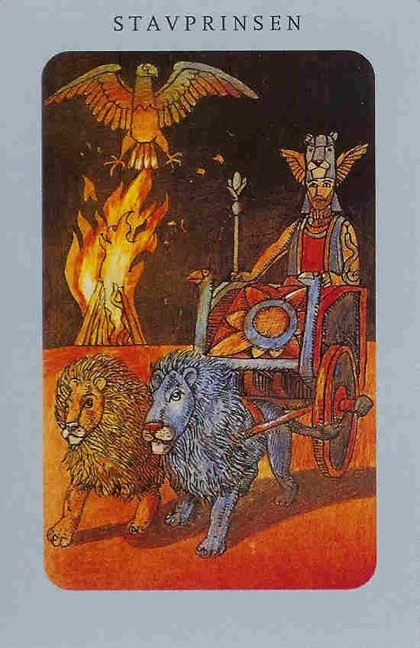


The Devil, The Magician, The Chariot, and Ace of Cups make a lively practical line: desire is present, but so are skill, direction, and a fresh emotional opening.
Beginner friendliness
A brand-new reader can use Jolanda Tarot if they are brave with images, but I would usually call it a strong second deck. The structure is readable, while the art asks for intuition. If you want literal scenes on every card, start somewhere clearer. If you want a deck that trains your eye, this one has a lot to teach.
A simple method helps: describe the image in plain language, name the strongest feeling, connect it to the classic meaning, then ask what the card refuses to make pretty. That last question is often where Jolanda Tarot becomes useful.
Card study
King of Swords: a hard clear sentence
The King of Swords has the kind of authority this deck handles well: direct, graphic, and not especially interested in politeness for its own sake.
In a conflict reading, I would say to name the rule, write the boundary, and stop negotiating with fog. The caution is to keep truth precise rather than cold.
Pros and cons
| What works beautifully | What to know first |
|---|---|
| Surreal, expressive artwork gives readings immediate emotional color. | The TarotFans gallery is a verified partial selection rather than a complete display. |
| Excellent for shadow work, relationship patterns, creative blocks, and dream-style journaling. | Gallery names and filenames now follow the printed card titles or visible suit and rank. |
| Familiar tarot structure makes it usable if you already know standard meanings. | The art can feel sharp or strange if you want a very soft beginner deck. |
| Strong color and theatrical figures make spreads easy to scan for mood. | The final CTA uses the ISBN-matched Jolanda Tarot box; packaging can vary by edition, so check the listing details. |
Choices and emotional intelligence
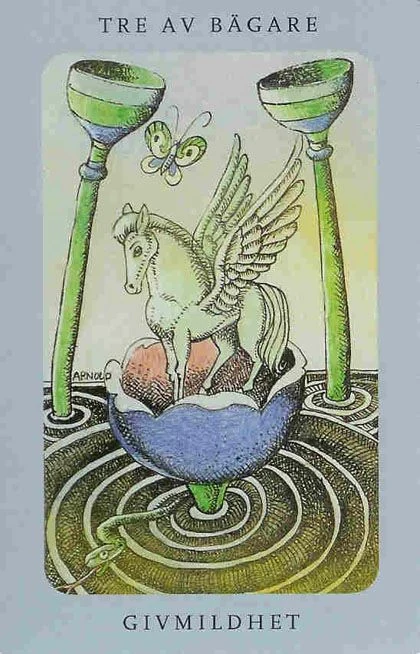


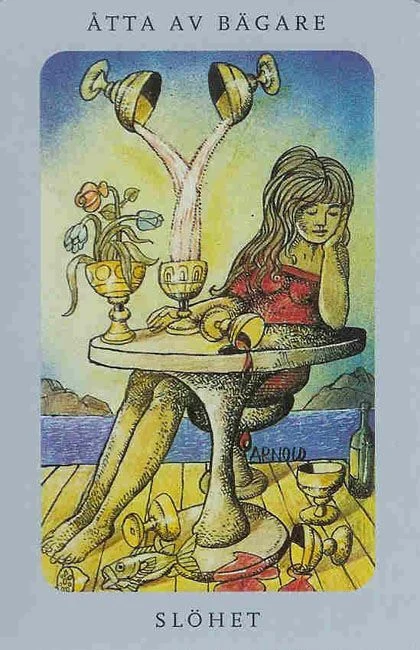
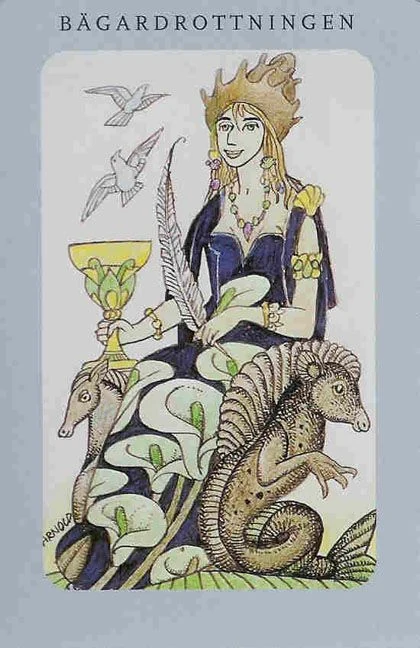
Justice, Seven of Cups, Seven of Swords, and Queen of Cups form a smart relationship line: fairness, fantasy, hidden strategy, and mature feeling all need to be separated.
Buying and edition notes
Because Jolanda Tarot can appear in different conditions and listings, check the exact edition before buying. Look for whether the listing includes the full physical deck, booklet or guidebook, box, language, and whether the cards are new, used, or collectible.
If you are browsing the gallery first, focus on whether the art style feels readable to you. The deck’s personality is very specific. That is good news if it clicks, and useful information if it does not.
Money, roots, sharing, celebration
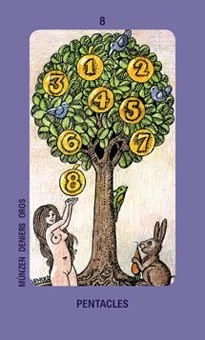
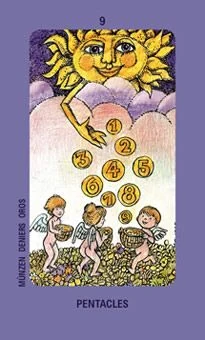

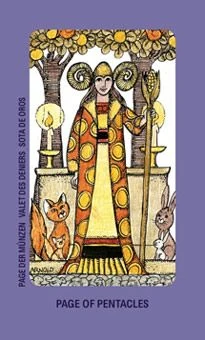
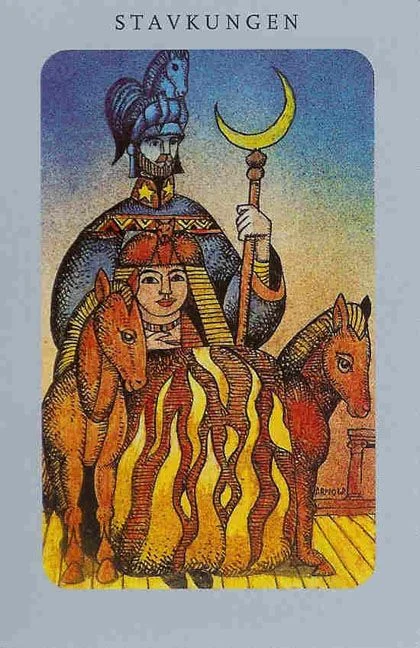
Seven of Pentacles, Ten of Pentacles, Six of Pentacles, and Four of Wands show the deck’s practical side: patience, legacy, fair exchange, and a reason to celebrate what has been built.
Final Thoughts
Jolanda Tarot is worth exploring if you want a deck with bold surreal art and a psychologically honest voice. It is not trying to be universally sweet. It is trying to make the reading feel alive.
The verified partial Gallery is enough to show the deck’s language: bright tension, dream logic, expressive faces, and images that keep talking after the reading ends. If those qualities appeal to you, Jolanda Tarot can become a memorable reading companion.
Jolanda Tarot FAQ
Does the gallery use verified Jolanda Tarot artwork?
Yes. Each available gallery image was matched to the printed card title or visible suit and rank, and uncertain images were not added to fill gaps.
Who created the Jolanda Tarot?
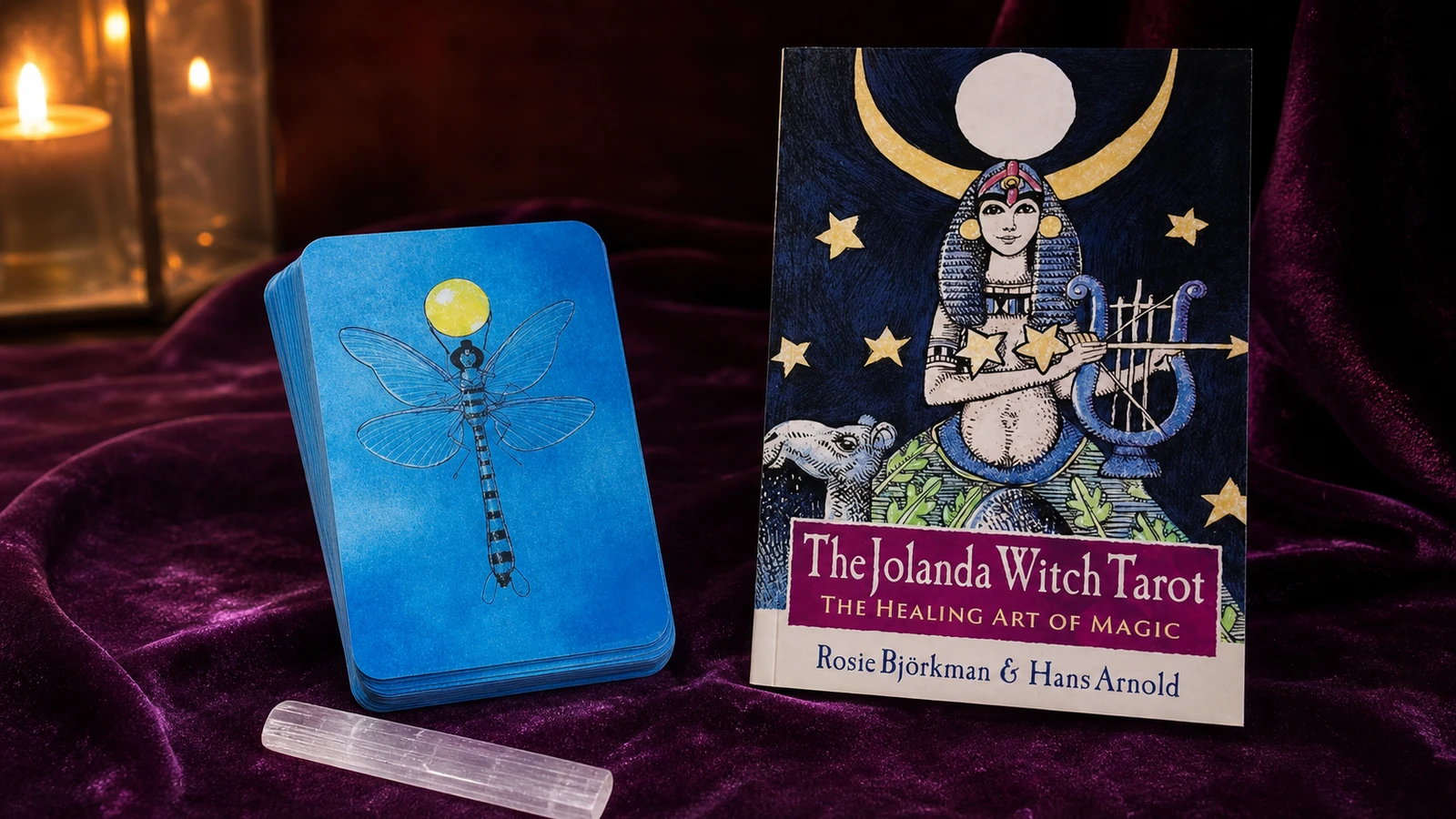
The Jolanda Tarot was created by Rosie Björkman with artwork by Hans Arnold. It is known for surreal, expressive, theatrical artwork with a strong European illustration feeling.
Is Jolanda Tarot beginner-friendly?
It can work for visually curious beginners, but it is usually easier as a second deck. The images are expressive and surreal, so the deck rewards intuition and visual study.
What readings suit Jolanda Tarot best?
I like it for shadow work, relationship patterns, creative blocks, dream journaling, identity questions, and honest intuitive readings.
Does Jolanda Tarot follow Rider-Waite-Smith meanings?
You can bring standard tarot meanings to it, but the deck changes the emotional tone through surreal art, strong color, and unusual body language.
Can Jolanda Tarot work for daily card pulls?
Yes. Its printed keywords, strong colors, numbers, and surreal symbols make it useful for focused daily pulls. Start with the keyword, then note the dominant color and shape before connecting the card to your day.


