Explore the Quantum Tarot: Version 2.0 Cards
Browse the verified 78-card tarot sequence from Quantum Tarot: Version 2.0 by Kay Stopforth and Christopher Butler. Choose a group to filter the continuous gallery, or select any card to open the full-size Lightbox.
Showing all verified cards.

A note from Aurica
I love how Quantum Tarot makes uncertainty feel less like a locked door and more like starlight scattered across the table. My eye often lands on one bright thread—a face, an orbit, a pulse of colour—and I let that detail speak beside the card’s traditional meaning before I decide what the reading is asking me to notice.
When I read with it, I begin with the familiar tarot structure, then listen for the quieter pattern moving through the spread. The Star may soften a difficult card with hope, while The High Priestess reminds me that not every answer needs to arrive all at once. I test that first feeling against the neighbouring cards and bring it back to one practical next step, so the cosmic imagery never floats away from real life.
This is a beautiful deck for questions about change, possibility and the invisible ties between our choices. Let its luminous worlds widen your view, then trust yourself to carry one clear spark of insight gently forward.
Quantum Tarot: where the inner world meets the universe
Quantum Tarot: Version 2.0 feels like opening a window between two scales of existence. One moment I am looking into a human face; the next I am drifting past galaxies, molecules and luminous threads of energy. Kay Stopforth’s concept and Christopher Butler’s photographic collage art do not turn physics into a set of dry lessons. They use it as a language for uncertainty, relationship and change.
This is a conventional 78-card tarot system beneath its futuristic surface: 22 Major Arcana and four 14-card suits. The familiar structure gives the imagery somewhere firm to land, while the cosmic treatment invites an intuitive reader to notice patterns, reflections and invisible forces.
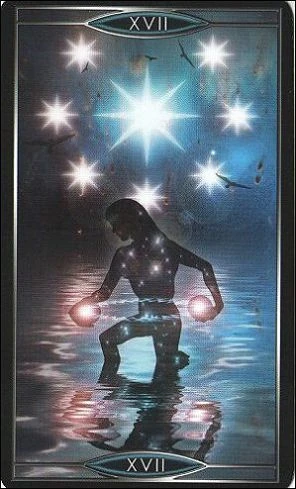
The Star: hope reflected in living water
A dark human figure kneels in rippling blue water beneath a brilliant central star and a ring of smaller white lights. A horizontal band meets the figure near the waist, while the water catches broken pink, silver and turquoise reflections. The two glowing vessels in the figure’s hands bring the vast sky down to the scale of touch.
That meeting of cosmic light and reflective water gives hope a physical rhythm: receive, pour, watch, begin again. Upright, The Star can restore trust after strain and ask which small act will carry inspiration into daily life. In shadow, the distant radiance may tempt us to admire possibility without tending it. In a reading, I would ask what one clear action lets the light become useful today.
How the deck behaves in a reading
These cards are strongest when the question has movement in it: a choice, a turning point, a relationship changing shape, or a future that refuses to be reduced to one outcome. The collage work gives the eye several places to enter, so the first detail that catches you often matters.
I read the traditional card first, then notice what the scientific image adds. A network can suggest connection, a reflection may reveal feedback, and an orbit can point to a pattern that keeps returning. The art opens the door, but the surrounding cards decide which interpretation belongs in the room.
The Field of Possibility
A spread for choices that seem to change when you look at them. Read left to right: the present signal, the repeating pattern, the unseen variable, and the most grounded next move.

Is Quantum Tarot beginner-friendly?
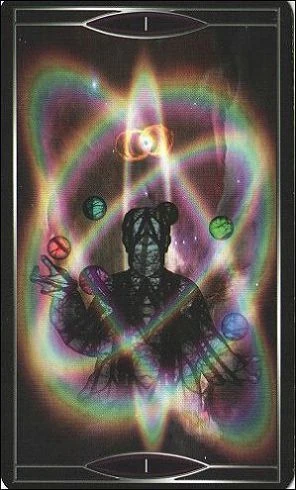
Yes, if you already know the broad shape of the Rider–Waite–Smith system or enjoy learning through visual association. The standard card order and suits are reassuring. What changes is the scenery: court figures, archetypes and pip cards are translated into photographic worlds filled with planets, light, geometry and human forms.
A new reader may want a simple reference book nearby for the first few weeks. Resist the urge to explain every image at once. Name the traditional card, choose one visible detail, and connect that detail to the actual question. This keeps the reading clear without flattening the deck’s sense of wonder.
Death: transformation held between two forms
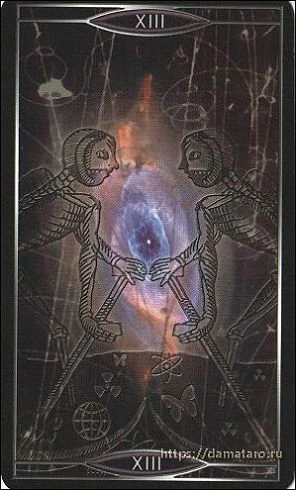
Two mirrored skeletal figures face one another across a luminous blue-violet oval, their hands curved around it without quite closing. Fine diagram-like lines web the dark background, and small scientific and planetary emblems sit below the central glow. The symmetry feels ceremonial: one form meets its likeness across a charged threshold.
The card’s tension lives in that suspended space between the figures. Upright, Death can name an ending that releases energy for another shape; in shadow, it can show two hands still trying to contain what has already begun to change. In a reading, I would place the next card beside that central light and ask what new form is ready to receive it.
Questions that suit this deck
For an easy reading, ask: “What energy is shaping today?” For a medium reading, try: “What pattern am I reinforcing, and what changes if I interrupt it?” For a deeper reading, ask: “Which possibility becomes more likely when I give it attention, time and action?”
The deck is less comfortable with questions demanding a frozen yes or no. Its gift is showing how conditions interact. When the answer feels too wide, pull one clarifier with the practical question: “What can I influence now?”
The Entanglement Spread
Use this for a relationship, collaboration or emotional bond. The positions are: what I carry, what you carry, the field between us, and the choice that restores clarity.

Artwork, mood and personality
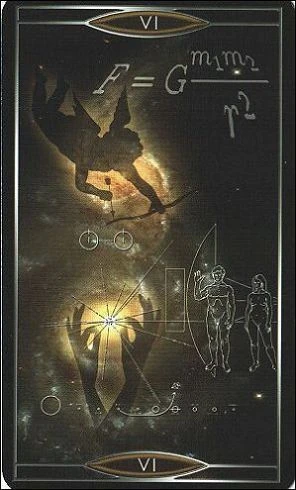
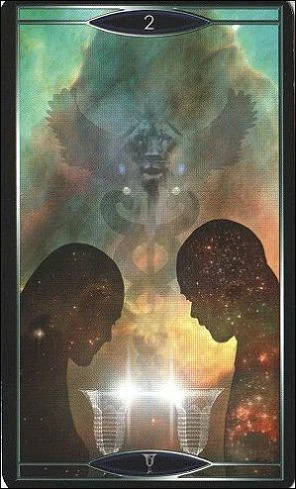
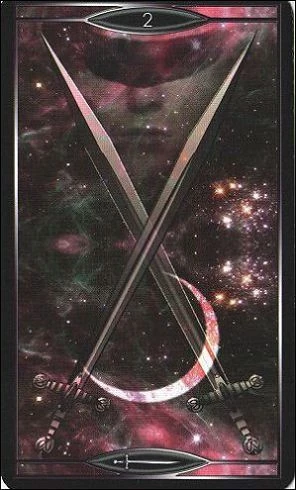
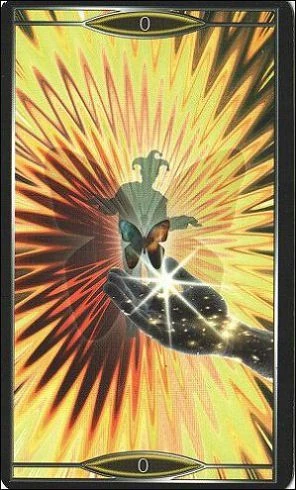
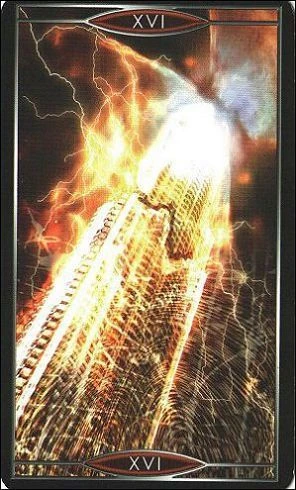
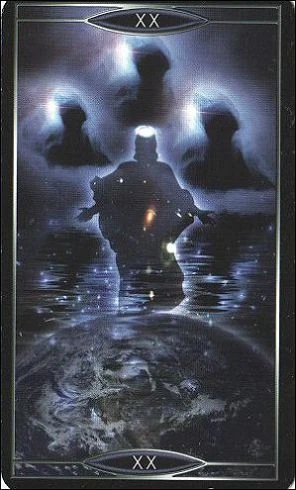
Butler’s images have the polished strangeness of a dream seen through a telescope. Faces appear inside grids. Bodies become landscapes. Coloured points behave like particles, stars or thoughts depending on the question. The black metallic frame keeps these worlds from floating away and gives the full deck a cohesive rhythm.
The result is dramatic without being noisy. It can feel cool and cerebral at first, yet many cards hold a surprising tenderness. The human figure is rarely separate from the universe around it. That visual idea gives relationship and consequence a special weight throughout the deck.

Ace of Pentacles: possibility given a structure
A bright amber-red sphere burns at the centre of a large pentagram drawn inside an orbit-like circle. Fine rays and scattered blue-white points travel through the surrounding black field, while a hazy ring of gold and violet light gives the geometry depth. The small pentacle emblem at the base quietly repeats the larger construction above it.
The image makes a material beginning feel like energy held by a workable form. Upright, the Ace favours a seed with practical potential: a plan, resource, body or commitment sturdy enough to contain the spark. In shadow, the beautiful idea may remain suspended inside its diagram. In a reading, name the smallest physical proof that this opportunity has truly begun.
Who will connect with Quantum Tarot?
This deck suits readers drawn to astronomy, modern collage, speculative ideas and cards that reward patient looking. It is especially lovely for journaling, creative planning and readings about systems, change or connection.
It may not suit someone who wants soft pastoral scenes, plain keywords or close copies of Pamela Colman Smith’s compositions. The scientific vocabulary is atmospheric rather than instructional, so choose it for symbolic resonance—not as a textbook on quantum mechanics.
Crossing the Threshold
For a life transition: what is calling, what must break open, what deserves an answer, and what wholeness could look like on the other side.
Quantum Tarot pros and cons
What shines
- A complete familiar tarot structure beneath genuinely distinctive imagery.
- Rich visual prompts for change, connection and possibility.
- Cohesive black, violet and teal presentation across the deck.
- Excellent for journaling and layered intuitive readings.
What to consider
- The collage style may feel visually dense to minimalist readers.
- Beginners may still want a traditional reference while learning.
- The science is symbolic language, not a technical teaching system.
- Dark artwork benefits from good light during a reading.
A golden rule for reading Quantum Tarot
Let wonder open the reading, then bring the answer back to earth. Choose the detail that glows, turns or repeats; connect it to the traditional card; test it against the neighbouring cards; and finish with one sentence the querent can actually use.
Final Thoughts
Quantum Tarot: Version 2.0 is memorable because it makes uncertainty feel spacious rather than empty. It asks us to see ourselves as part of a living field of choices, relationships and consequences. For readers who love cosmic imagery and still want a recognisable tarot spine, it offers a beautiful balance of structure and surprise.
 View Quantum Tarot: Version 2.0 on Amazon
Quantum Tarot questions
Who created Quantum Tarot: Version 2.0?
Kay Stopforth created the deck concept and interpretive writing, while Christopher “Chris” Butler created its photographic-collage artwork. Version 2.0 is published by Lo Scarabeo.
How many cards are in Quantum Tarot?
The current Lo Scarabeo product is a conventional 78-card tarot: 22 Major Arcana and 56 Minor Arcana. Some historical Version 2.0 discussions also describe two additional archetypal cards, so check the contents of the exact edition or kit you are buying.
Does it follow Rider–Waite–Smith tarot?
Its 78-card structure, suit sequence and Strength VIII/Justice XI ordering are familiar to Rider–Waite–Smith readers, but the photographic cosmic imagery follows its own visual language.
Is Quantum Tarot suitable for beginners?
It can be, especially for a visually intuitive beginner who uses a basic tarot reference alongside the cards. Readers who need direct scene-for-scene RWS cues may find the collage symbolism more demanding at first.
What kinds of readings suit this deck?
It is particularly expressive for questions about choices, patterns, relationships, transformation, creative work and the conditions shaping a possible future.
Which edition is shown in this review?
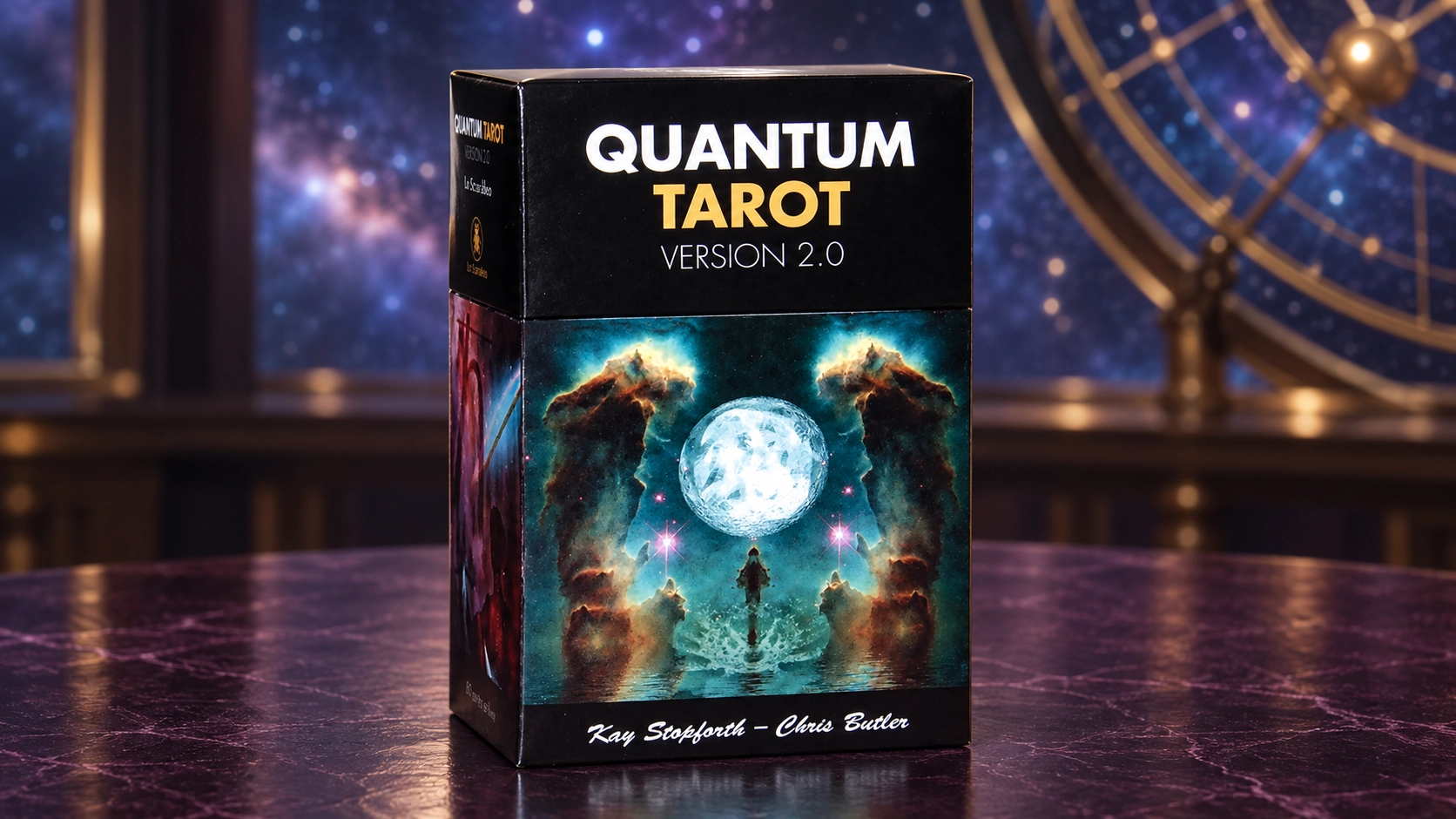
The gallery and product presentation show the dark-framed Lo Scarabeo Quantum Tarot: Version 2.0, credited to Kay Stopforth and Chris Butler.