Explore the Persona 3/4 Tarot Cards
Explore the verified fronts recovered for ArtisticsMeasure’s Persona 3/4 Tarot Cards. The cards retain the printed system—Major Arcana; Coins, Wands, Cups, and Swords numbered 1–10, P, N, Q, K—followed by the verified extras. Extras absent from the recovered source set are omitted rather than guessed. Choose a printed group to filter the continuous gallery, or select any card to open the full-size Lightbox.
Showing all verified cards.
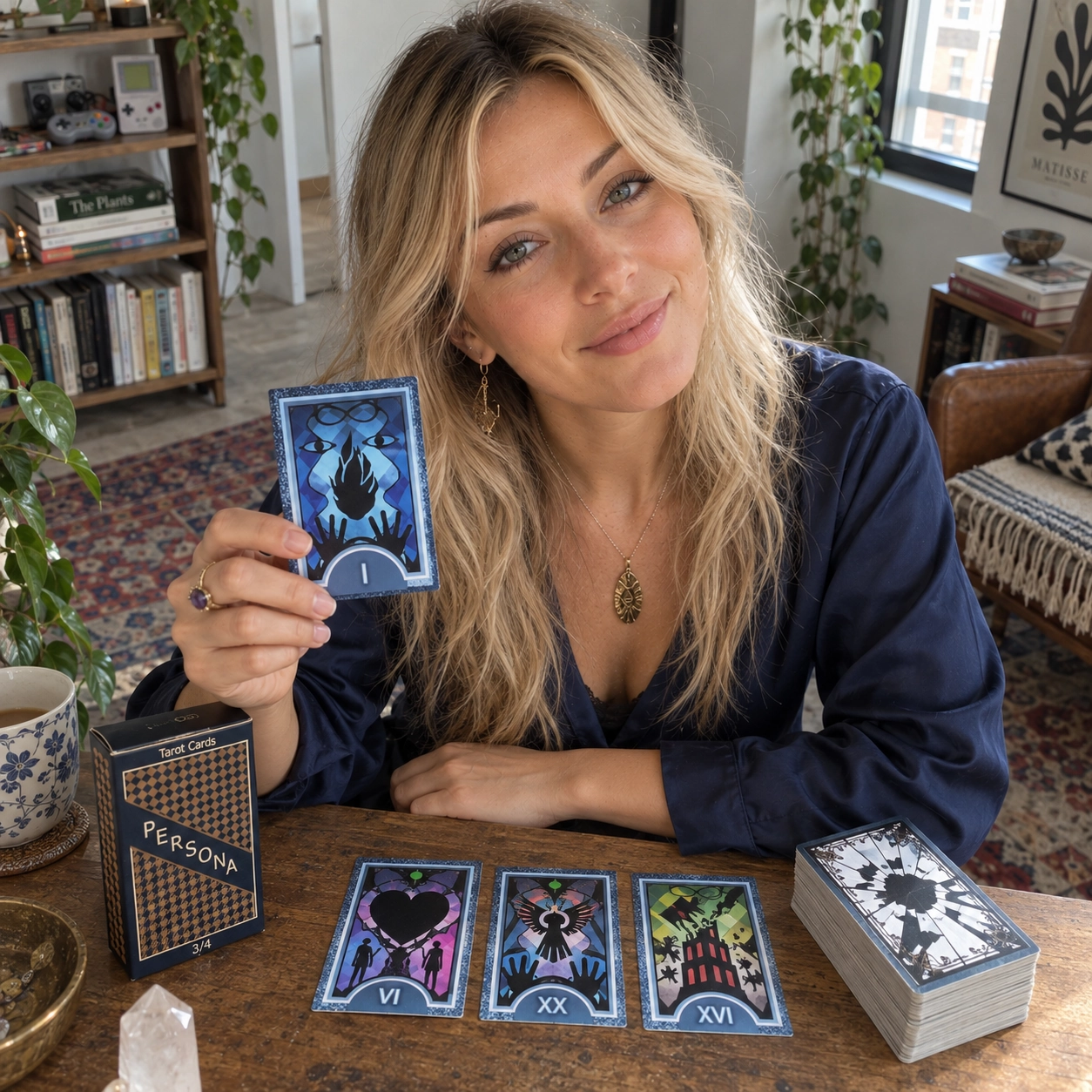
Aurica’s Quick Take
I am drawn first to the way these cards hold darkness without letting it swallow the color. The silhouettes feel like the private self behind an everyday face, while the stained-glass shapes turn that inner world into something I can actually read. I would reach for this deck when a question is really about identity, choice, or the self asking for more room.
I begin with the brightest color, the direction a figure leans, and the shape that contains them. Only then do I add the traditional meaning. That pause keeps the images alive: The Lovers becomes a question about what two people truly see, while Aeon can feel like a future self sending a patient signal backward through time.
You do not need to know every game reference. Let the mood arrive, test it against your question and the nearby cards, then name the practical message. When a deck makes shadow this beautiful, it can help you find the bright piece of yourself that is ready to step forward.
A stained-glass journey through shadow, choice, and becoming
Persona 3/4 Tarot Cards turns the emotional theatre of Persona 3 and Persona 4 into an 85-card physical deck: a complete 78-card tarot core plus seven game-derived extras. ArtisticsMeasure’s dark silhouettes and jewel-bright geometric fields make every card feel like a secret lit from behind.
Striking, cohesive, and especially rewarding for readers who enjoy symbolism, character tension, and stories about identity. Its imagery carries more atmosphere than beginner-style instruction, so it asks you to look closely.
What makes Persona 3/4 Tarot different?
This deck does not soften its feelings. Black figures stand inside blue, rose, amber, and violet panes, as though private thoughts have become stained glass. The silhouettes leave enough mystery for your intuition, while the posture, spacing, and color around them still give each reading a clear emotional direction.
The structure remains familiar: 22 Major Arcana, then Coins, Wands, Cups, and Swords. Yet the physical set extends beyond that core with seven game-derived cards. Our Gallery presents the complete tarot core and the extras supported by clean isolated fronts; anything absent from the recovered source set is intentionally omitted rather than replaced with a guess.
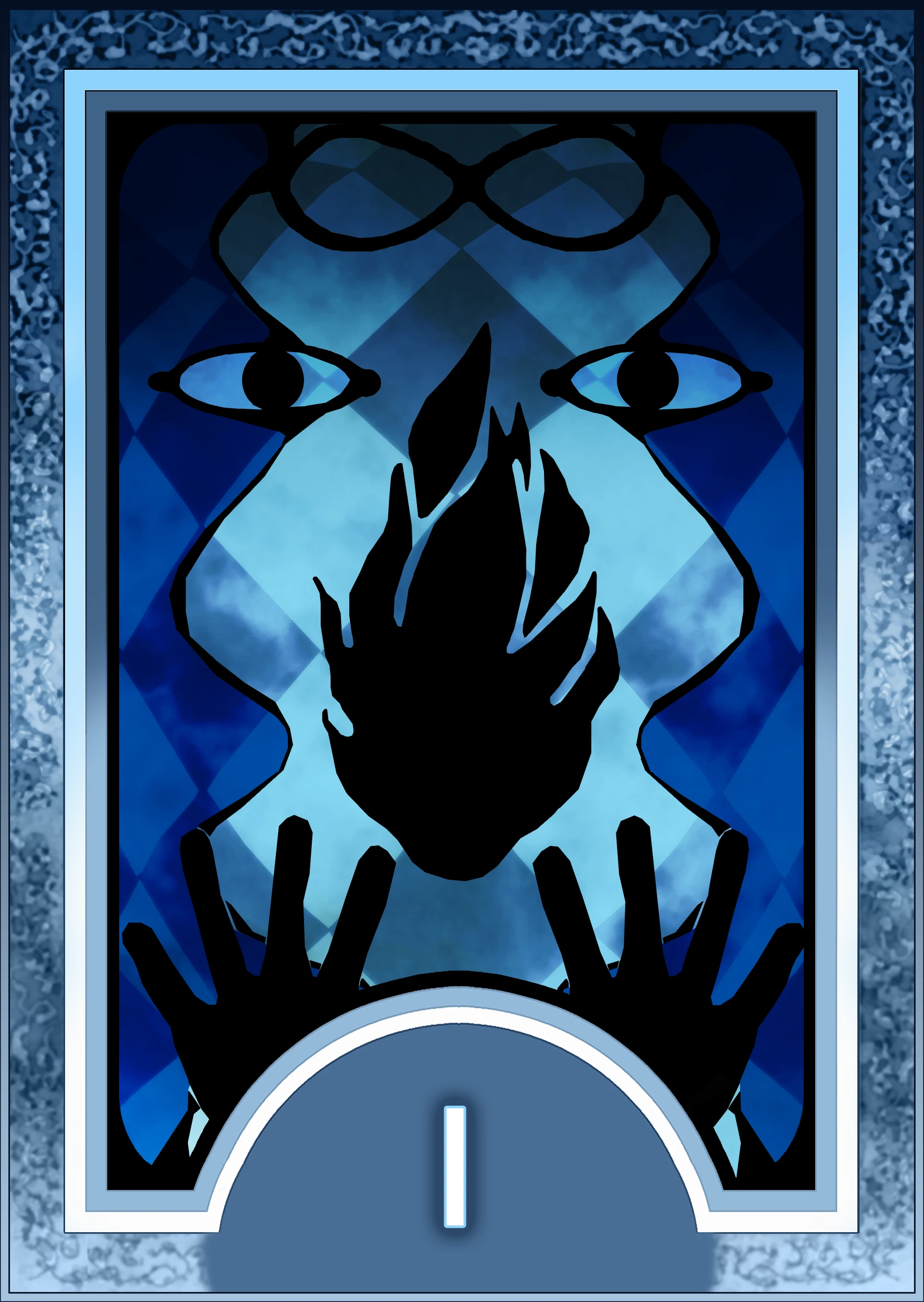
The Magician
A black silhouette stands beneath an arched field while the four suit emblems gather around the figure. The repeated tools make ability visible, but the dark central body keeps that ability from feeling effortless.
In a reading, this Magician asks whether your skills are merely present or consciously directed. Upright, it favors agency, practice, and making a choice with the resources already in reach. In shadow, it can show performance without substance, scattered talent, or a clever plan that has not yet met honest purpose.
An 85-card deck with a complete tarot heart
The box contains 78 core cards and seven extras, for 85 cards in total. The Minors visibly use numbers 1–10 and the court initials P, N, Q, and K. We expand those marks as One through Ten, Page, Knight, Queen, and King in the Gallery so each image has a useful, searchable name without pretending that every English title is printed in full.
The recovered extras include The Fool (Persona 3), Hunger/Lust, and Aeon. They belong to the physical deck’s larger extra group rather than changing its stated total. Extras without a clean isolated front remain out of the Gallery instead of being represented by a guess.
Four ways the self meets the world
These Majors move from inner knowing to relationship, solitude, and the turning conditions around us.
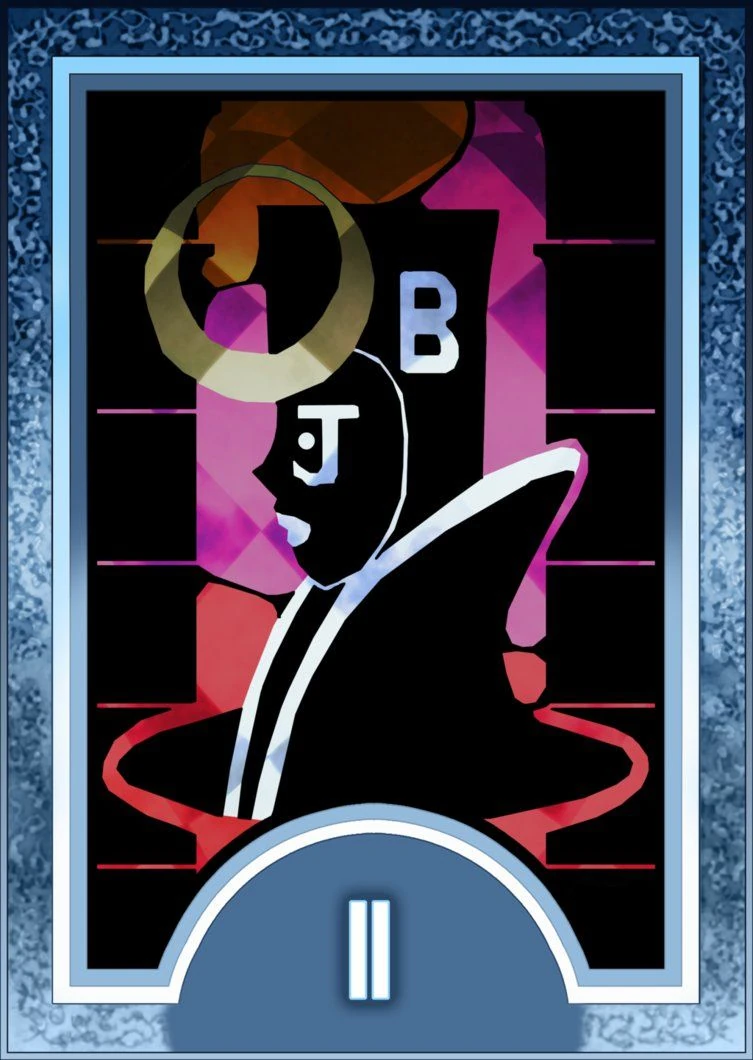
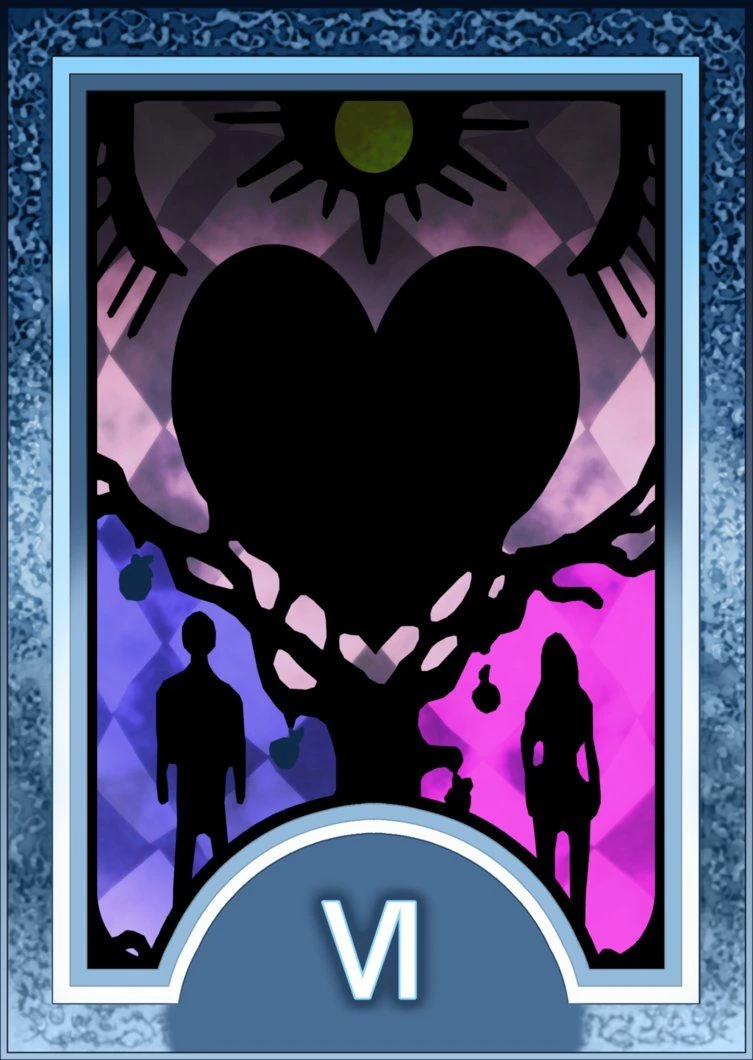
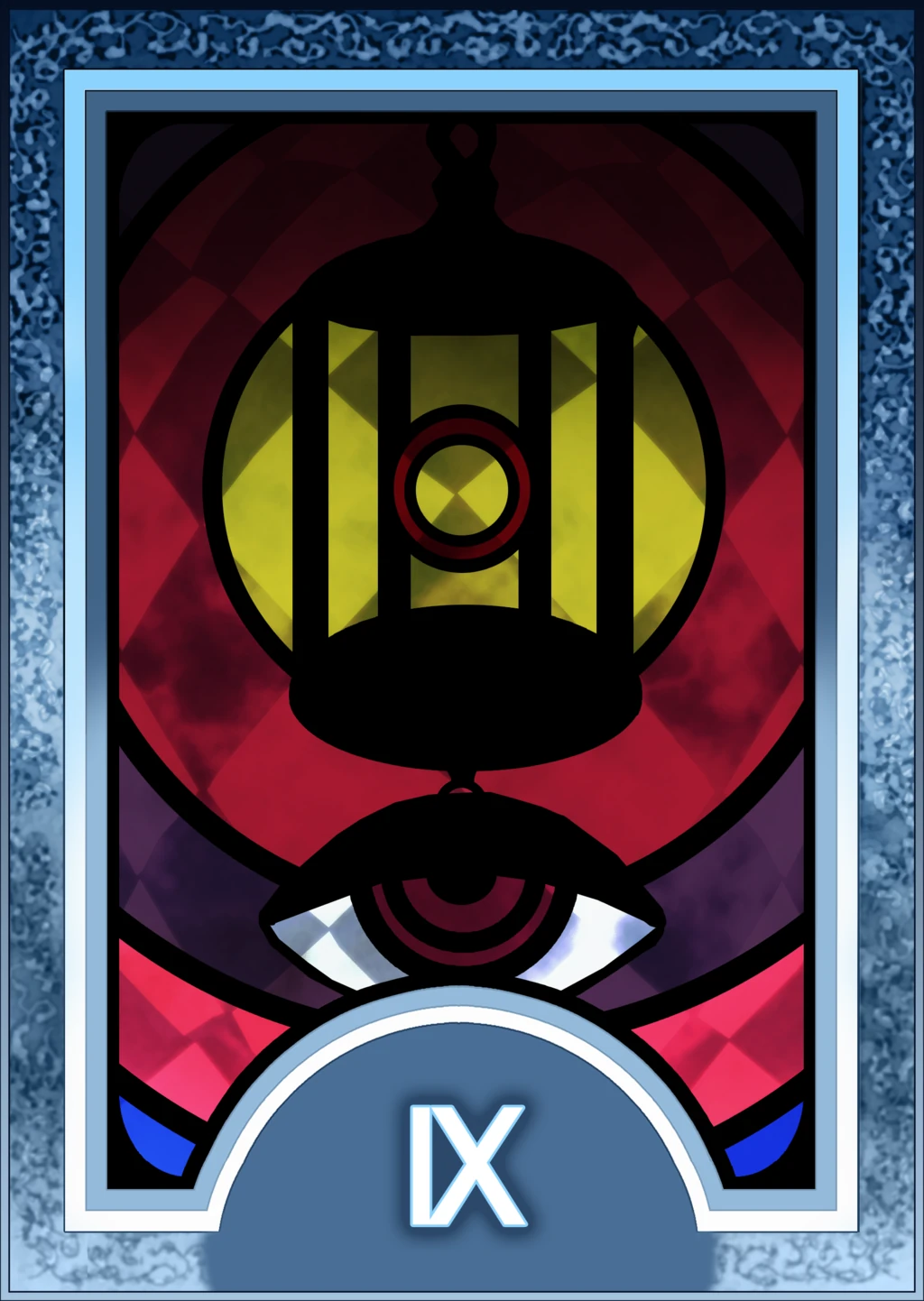
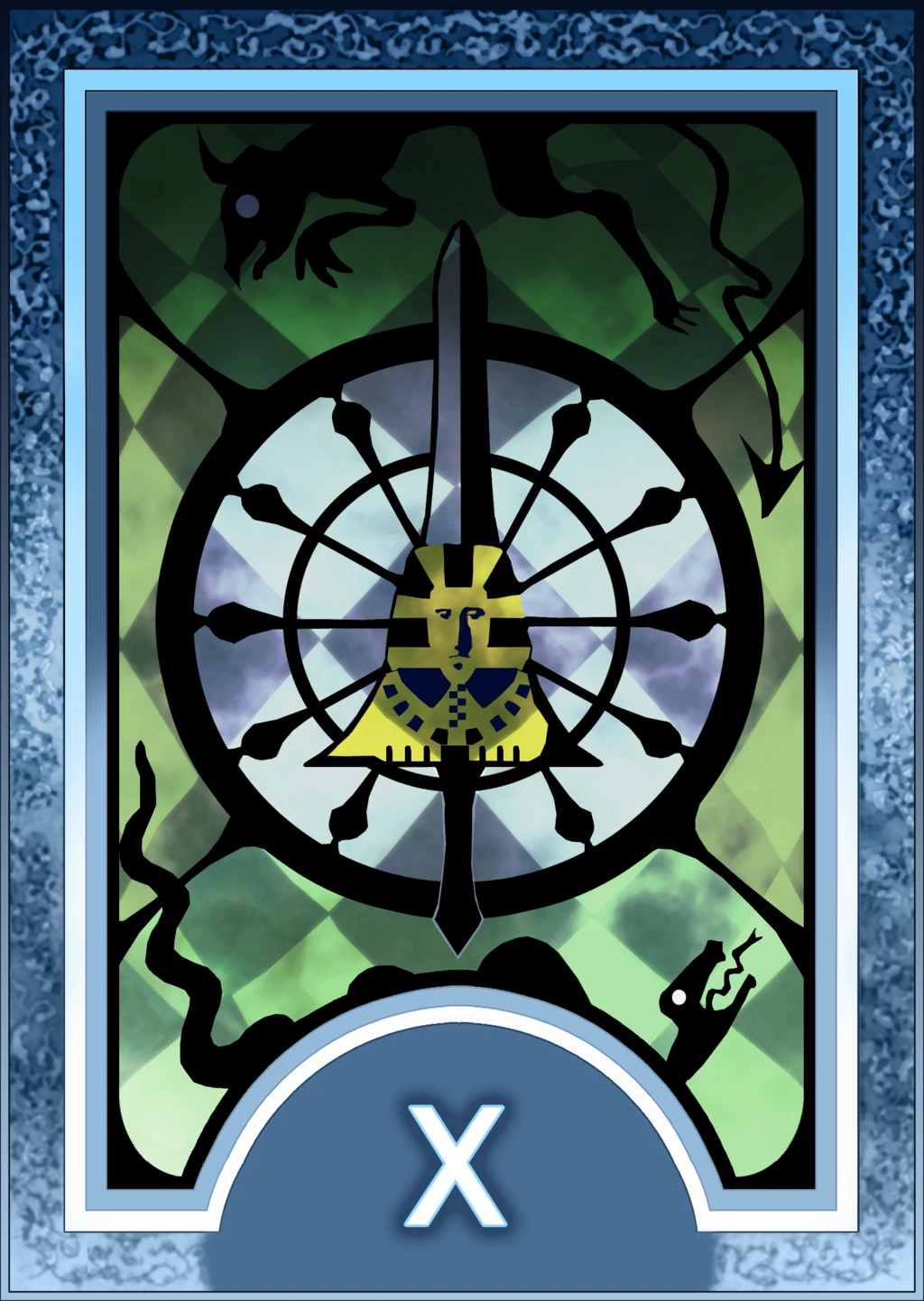
Read them together: The High Priestess begins in silence, The Lovers reveals what relationship asks of you, The Hermit carries the question inward, and Fortune returns it to a world that will not stand still.
Artwork that reads like illuminated memory
The visual language is disciplined: deep blue frames, pale inner borders, silhouette figures, and luminous geometric scenes. Because faces are often reduced or absent, a bent shoulder, widened distance, lifted hand, or crowded background can become more important than expression. The image feels less like a portrait and more like a memory you are still trying to understand.
That makes color unusually active. Cool blue can hold distance or reflection; red and pink can press desire closer to the surface; gold can suggest value, visibility, or a hard-won center. I would name the dominant color first, then ask what the silhouette is doing inside it.
The Lovers
Two contrasting silhouettes face one another inside a bright, symmetrical pink-red field. Curves and mirrored forms pull the eye toward the space between them, so the card feels charged by relationship before any keyword arrives.
Upright, it can speak of alignment, meaningful attraction, or the moment a value becomes a choice. Its tension asks whether both people—or both sides of one decision—are truly seen. In shadow, symmetry can become projection: loving the reflection, avoiding the difference, or asking another person to complete a choice that is yours.
How the deck reads in practice
Persona 3/4 Tarot is strongest when the question contains a living emotional conflict: who am I becoming, what part of me is hidden, what bond is changing, or which truth is asking to be faced? The cards are direct enough to shape a story, but open enough that surrounding cards can change the mood.
Begin with three observations: the dominant color, the silhouette’s movement, and the strongest boundary or opening in the frame. Only then add the traditional card meaning. This keeps the reading rooted in what is visible instead of turning the artwork into decorative wallpaper.
A turning point in four lights
Use this sequence when an old structure is ending and the next shape is not yet clear.

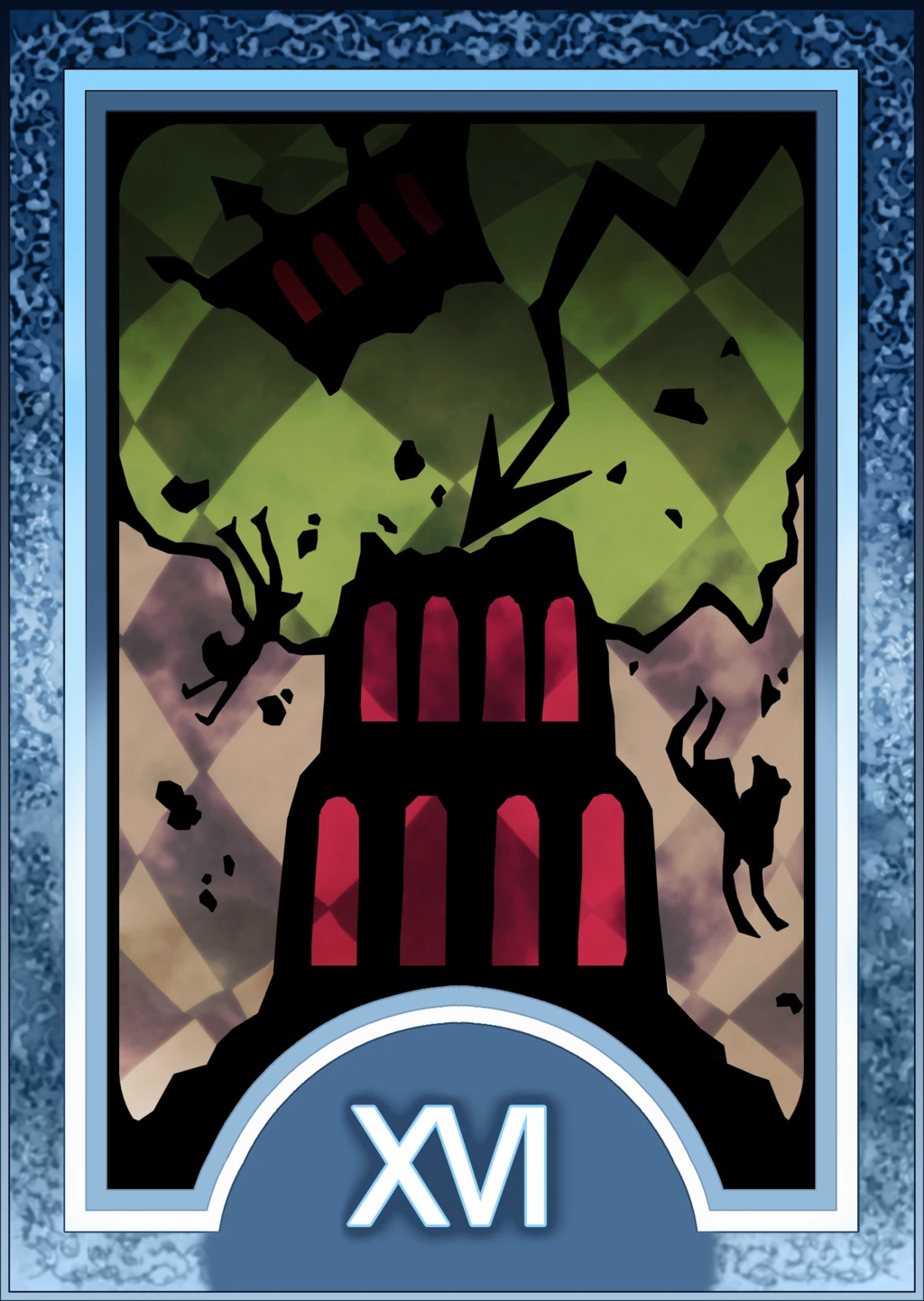
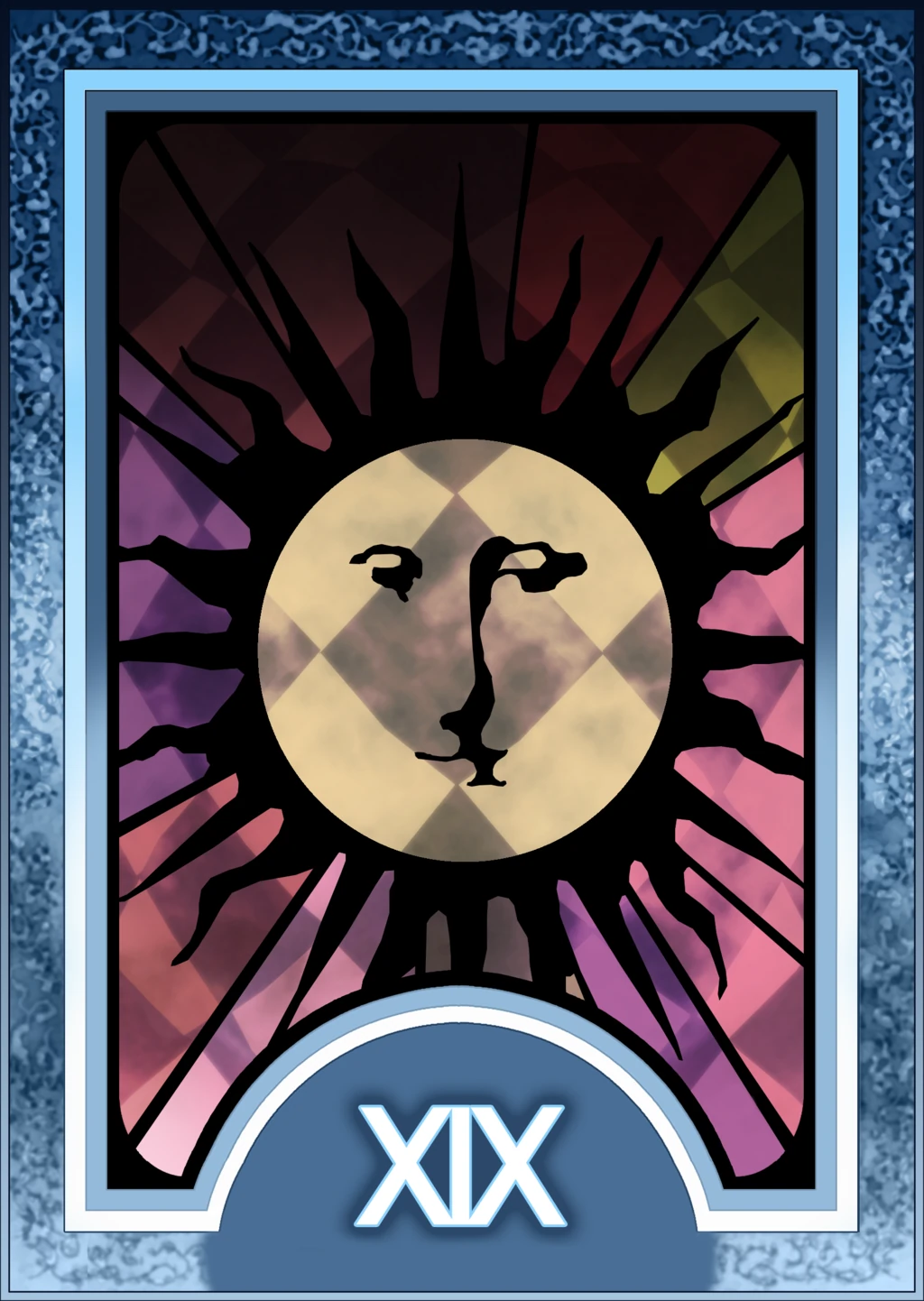

Read them together: Death closes a door, The Tower breaks the structure that kept it pretending, The Sun reveals what remains, and The World helps the new pattern become whole rather than merely patched.
Is Persona 3/4 Tarot beginner-friendly?
A beginner who loves the visual world can learn beautifully with this deck, especially with a simple reference for traditional meanings nearby. The complete core gives you a recognizable tarot map, but the art prefers atmosphere and symbolic tension over literal scene-by-scene teaching.
The extra cards are best treated as invitations, not complications. Read their visible numeral, color, figure, and felt pressure first. You do not need to identify every game character to understand whether an image feels like appetite, renewal, secrecy, rupture, or return.

Aeon
An upright central figure appears within nested rainbow-like oval bands. Below, a seed or egg shape rests above open hands, creating a strong sense of something held through time and brought toward renewal.
Aeon can widen a reading beyond one immediate decision. Upright, it asks what cycle is maturing and what you are ready to meet with a longer view. In shadow, it can point to waiting for a grand transformation while overlooking the small repeated act that actually changes the pattern.
Three reading depths to try
What wants my attention?
Pull one card. Name its color, movement, and emotional temperature before opening a guide.
Mask, choice, consequence
Use three cards for what is hidden, what can be chosen now, and what that choice begins to shape.
The self across a threshold
Read five cards for the identity you inherited, the role you perform, the truth underneath it, the threshold, and the self emerging beyond it.
From feeling to grounded action
Four suits carry one inner signal through relationship, transition, and practical form.
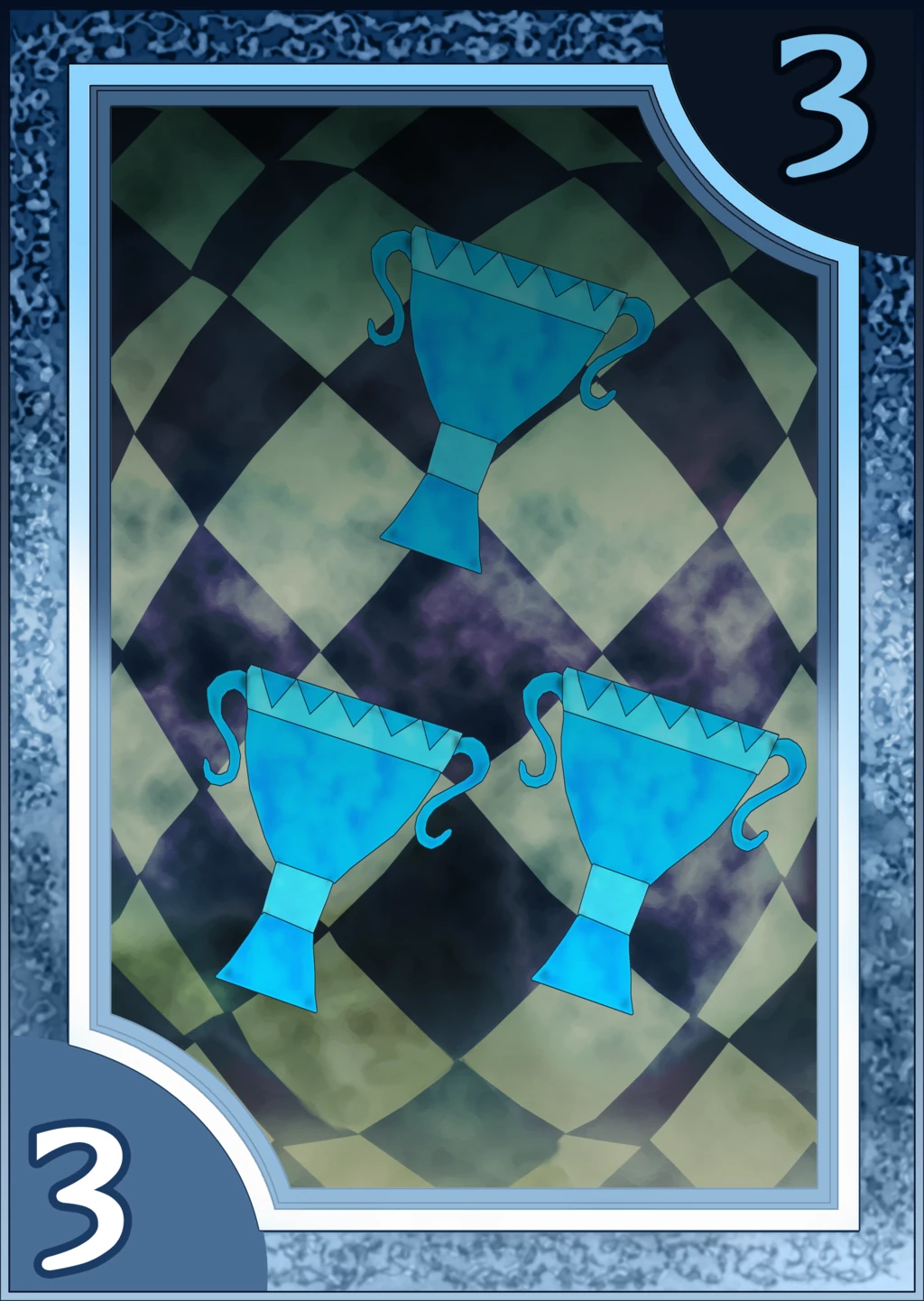
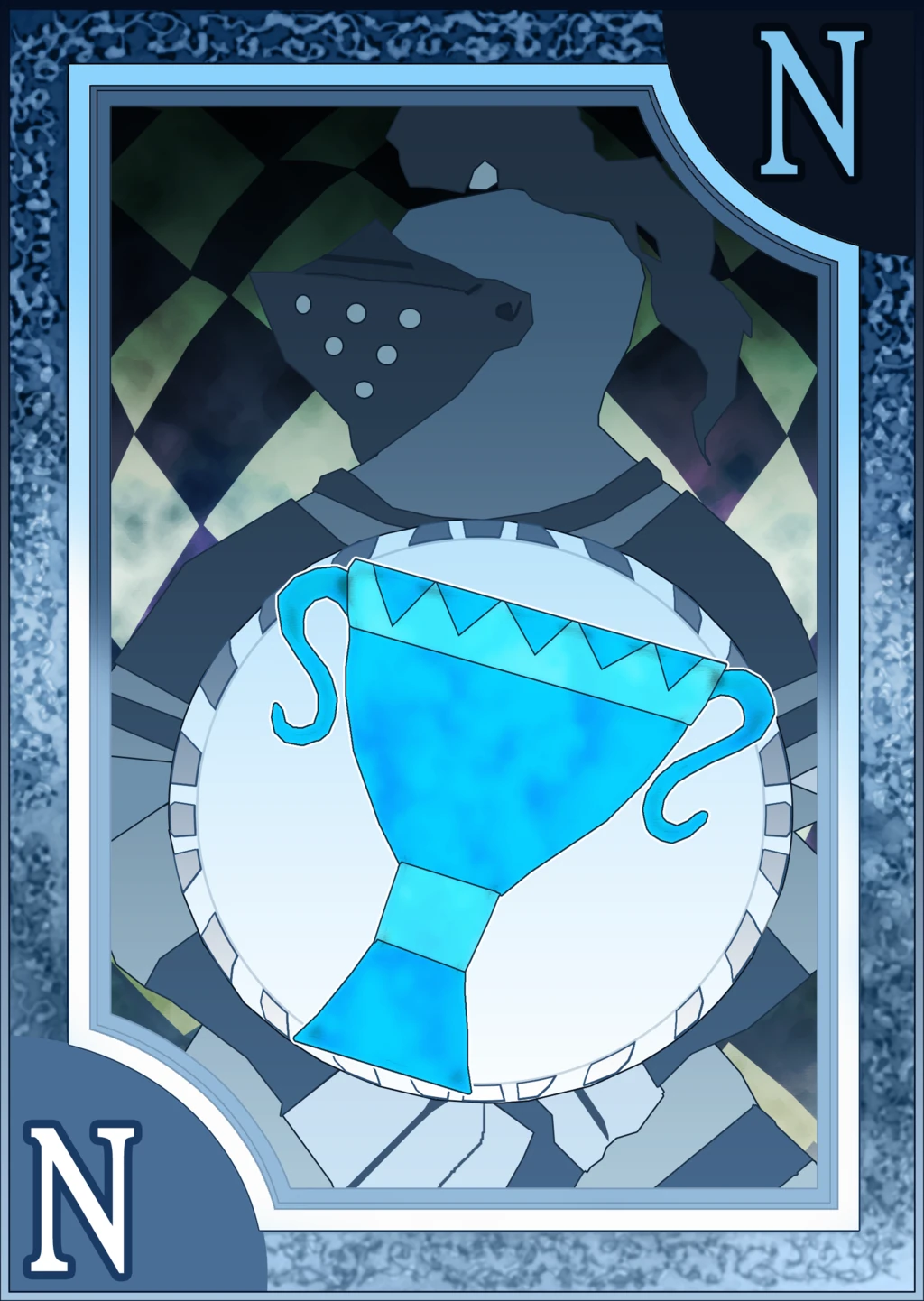
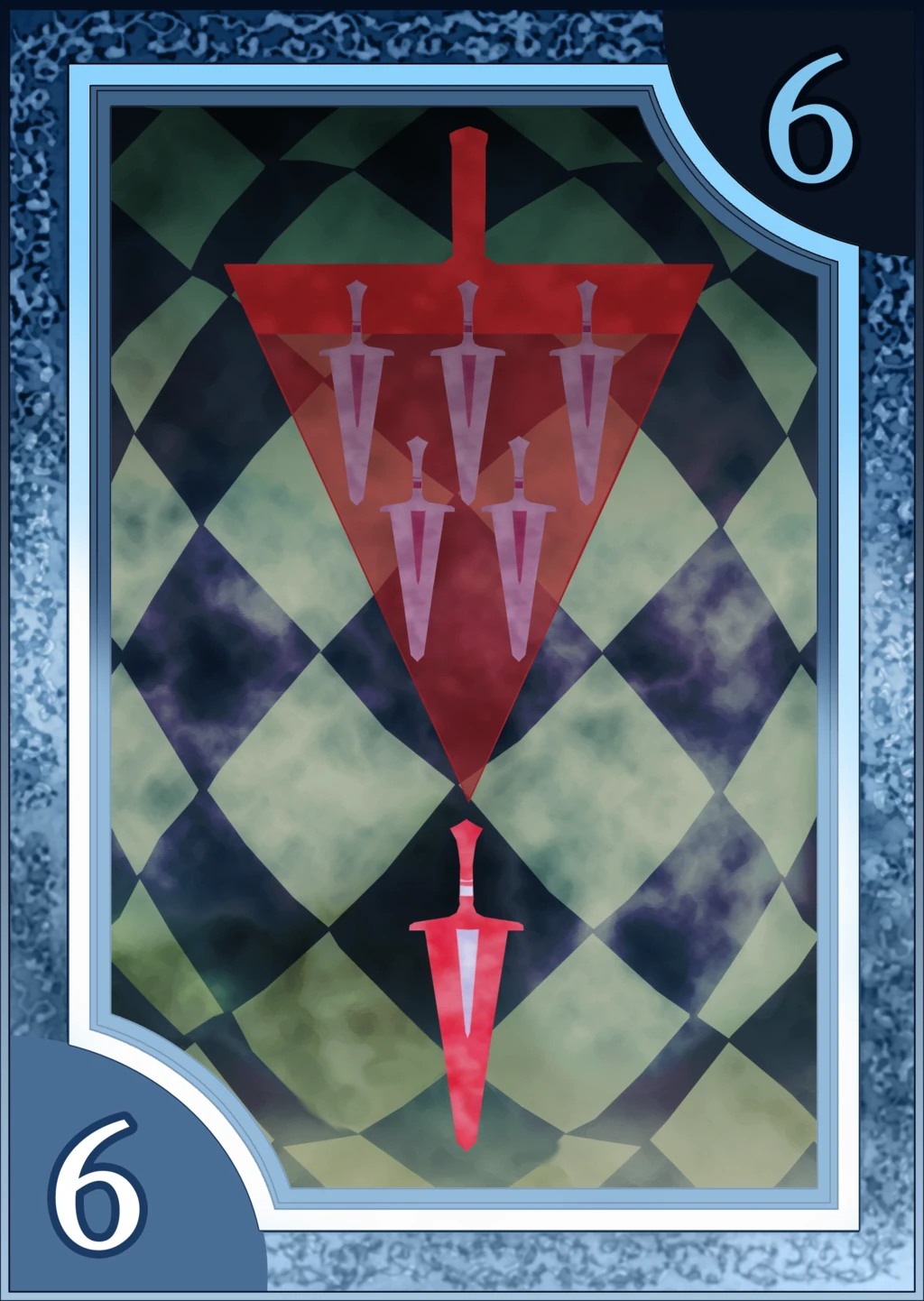
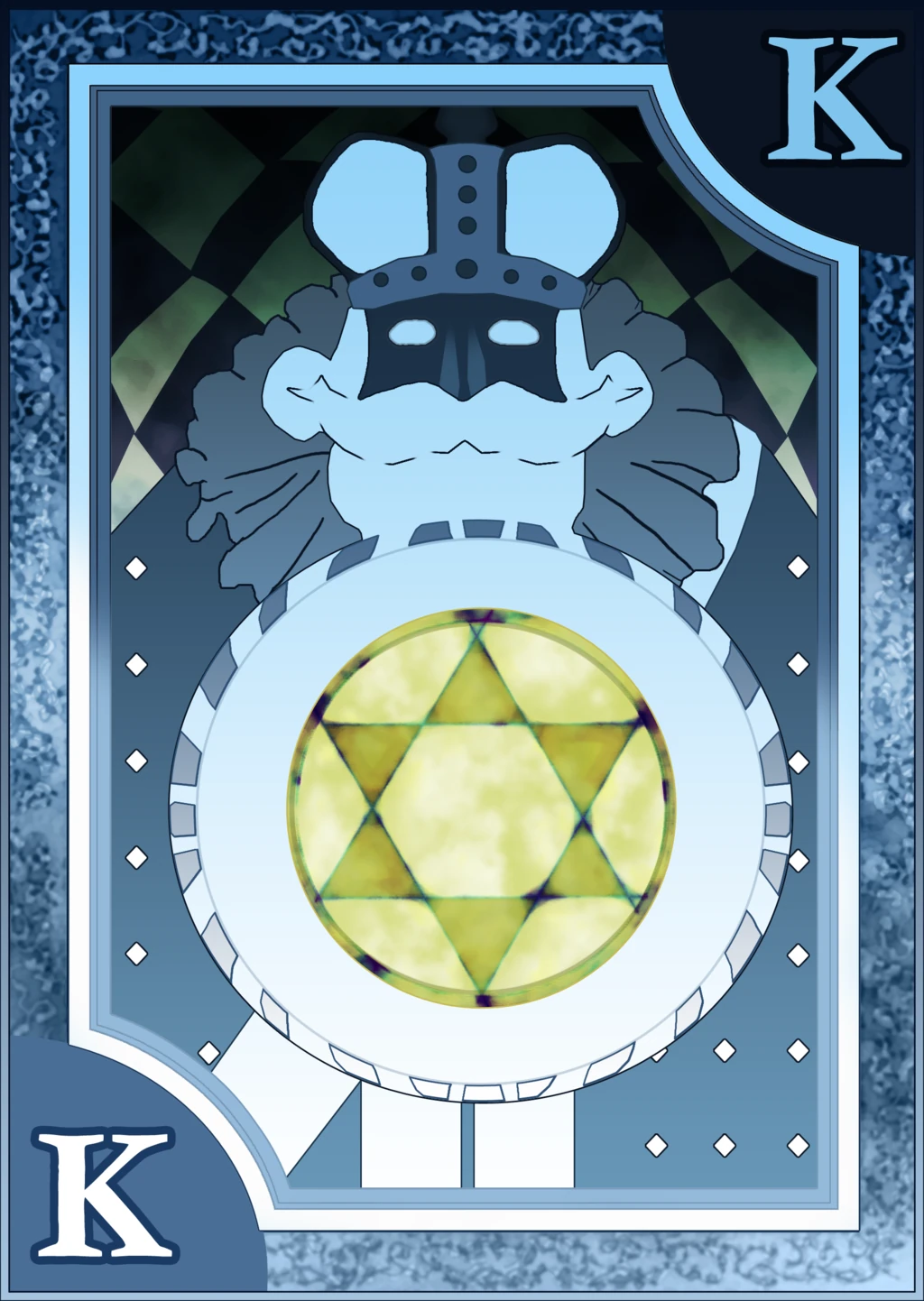
Read them together: The Three opens a circle, the Knight carries its feeling forward, the Six chooses a passage, and the King asks what can be made stable after the crossing.
Who will connect with this deck?
Choose it if…
- You love the visual language of Persona 3 and Persona 4.
- You read through color, atmosphere, posture, and symbolic contrast.
- You want a complete tarot core with game-derived extras.
- You enjoy decks that make shadow work feel vivid rather than abstract.
Consider another deck if…
- You need scenic Minors that mirror a standard teaching deck closely.
- You want every card meaning explained by an included guidebook.
- You prefer soft, naturalistic figures over graphic silhouettes.
- You need all seven extras visible in an online Gallery before buying.
Buying and edition guidance
The verified product is titled Persona 3/4 Tarot Cards, designed by ArtisticsMeasure and sold/manufactured by TheMysteryShack. The listing describes 310gsm linen cards measuring 2.75 × 4.75 inches in a custom rigid matte linen box. A guidebook is not documented, so I would buy it for the cards themselves rather than expecting a companion book.
The Amazon title mixes Persona wording, but the verified ASIN, product description, specifications, imagery, manufacturer, and seller resolve to this 85-card set. Check the listing images for the black box with bronze checker and houndstooth panels, the diagonal white PERSONA title, and the small 3/4 mark before ordering.
Read the silhouette before you name the character
Let posture, distance, color, and the shape of the frame speak first. The deck stays open to your question when you resist turning every shadow into trivia and allow the image to become a mirror.
Sources checked
Deck identity, physical specifications, total card count, designer credit, product imagery, and listing details were checked against TheMysteryShack product listing. Card identities and Gallery coverage were verified against the recovered exact-edition source set and visible card numerals, suit marks, and artwork.
Final Thoughts
Persona 3/4 Tarot feels like walking through a dark gallery where every window has kept one piece of colored light. The silhouettes leave room for you, the geometry gives that feeling a frame, and the familiar tarot sequence keeps the journey from drifting.
If its blue borders, stained-glass tension, and Persona-inspired atmosphere already make you curious, that response is worth trusting. Give the deck one honest question, notice where the figure is moving, and let the next card show you what waits beyond the threshold.
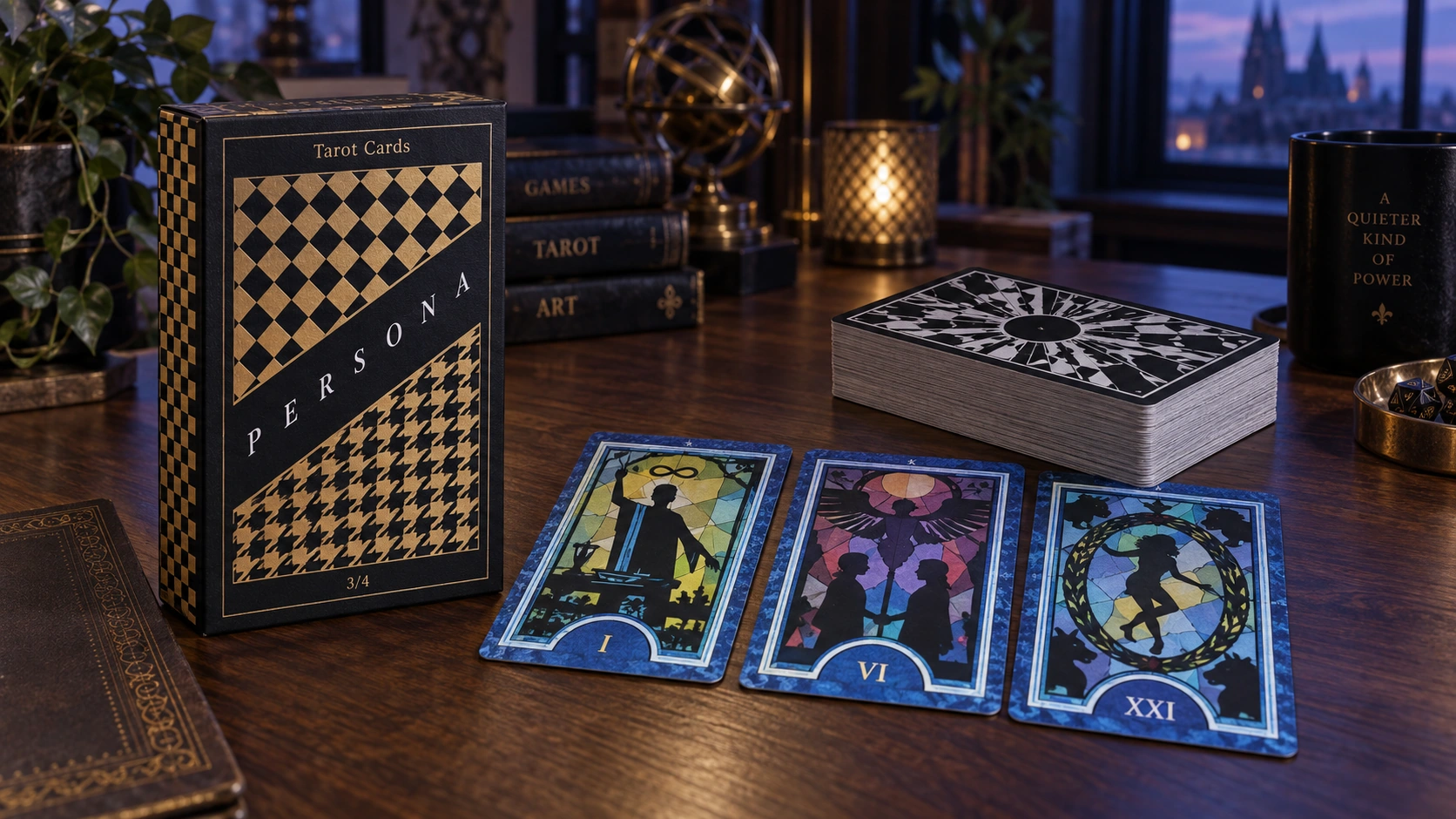 Persona 3/4 Tarot by ArtisticsMeasureAn 85-card linen set with a complete tarot core and seven game-derived extras.View Persona 3/4 Tarot on Amazon
Persona 3/4 Tarot questions
Who designed Persona 3/4 Tarot?
The product listing credits ArtisticsMeasure as the designer. TheMysteryShack sells and identifies itself as the manufacturer of the physical deck; no separate publisher or Atlus/Sega licensing statement was documented in the sources reviewed.
How many cards are in the deck?
The physical set contains 85 cards: a complete 78-card tarot core plus seven game-derived extras.
Does it use traditional tarot suits?
It uses Major Arcana plus Coins, Wands, Cups, and Swords. The Minors visibly print 1–10 and the court initials P, N, Q, and K; our captions expand those marks for clarity.
Is Persona 3/4 Tarot good for beginners?
Yes for a beginner who loves its artwork and is happy to keep a traditional tarot reference nearby. The imagery is symbolic and atmospheric rather than a literal copy of a standard teaching deck.
Does the deck include a guidebook?
A guidebook is not documented in the verified product description. Buy it for the 85 linen cards and rigid box rather than assuming a companion book is included.
What readings suit this deck best?
It shines in readings about identity, relationships, shadow, choices, turning points, and personal transformation—especially when you read the color, posture, and geometric framing before reaching for a keyword.