Explore Native American Tarot Cards
Open any card to study the complete artwork, or filter the verified exact-edition sequence by the deck’s own groups. Source scans vary in sharpness and may retain historic watermarks, but backs, packaging, collages, unrelated decks, and duplicate images are excluded.
Showing the complete verified Gallery.

Aurica’s Quick Take
I keep returning to the quiet space inside these cards. Soft pencil colour and patterned black frames make a small gesture feel important: a bent shoulder, an animal at the edge, a change in the weather. I let that first detail breathe before reaching for a meaning.
I begin with the printed title, then notice what complicates it. Medicine Woman feels still, yet her hands are busy. Justice gathers several people around a shared centre, making me wonder whose voice is being heard. Those questions bring the image back to a real choice rather than a neat answer.
I use the booklet as a companion and approach the deck’s cultural references with humility, not as explanations of living Indigenous traditions. Read slowly, look twice, and let these gentle drawings encourage a clearer heart and a kinder next step.
What makes Native American Tarot different?
Native American Tarot was created by Magda Weck Gonzalez and illustrated by J. A. Gonzalez, with material related by Blackfoot medicine man Harry Sparrowhawk. Published by U.S. Games Systems, it reshapes the familiar 78-card tarot through stories, landscapes, social roles, and symbolic teachings drawn from many Indigenous nations across North America.
The deck keeps the broad tarot structure—22 Major Arcana and 56 Minor Arcana—yet changes the emotional vocabulary. Wands become Pipes, Cups become Vessels, Swords become Blades, and Pentacles become Shields. Court ranks become Maiden, Warrior, Matriarch, and Chief. Many numbered cards carry their own titles, so a reading feels less like counting symbols and more like entering a short story with a mood, a conflict, and a consequence.
I approach that ambition with respect and a little caution. No single deck can speak for the living cultures of many distinct nations, and this one is a product of its era as well as its creators. It is most useful when its scenes open a door to reflection, not when the cards are treated as a substitute for learning directly from the peoples and traditions they reference.

The Fool — holy curiosity with dirt on its knees
A masked figure moves through a bright, unsettled landscape while small animals and open sky keep the scene alive around them. The card feels playful, but not empty-headed. There is risk here, and there is also the strange wisdom of beginning before every answer arrives.
In a reading, I watch where The Fool is looking and what the surrounding cards ask it to carry. Beside Justice, freedom needs accountability. Beside The World, the leap may be the first step into a larger cycle. Upright, this card gives curiosity permission to breathe; in shadow, it asks whether spontaneity has become avoidance.
How the deck reads in practice
The images are quieter than many modern illustrated decks. Their pale backgrounds, black geometric borders, hand-drawn lines, and soft color can feel almost spare at first. Then a detail catches: smoke bending across a horizon, a figure turning away, a hand offering or withholding, an animal watching from the edge. That small detail often becomes the emotional hinge of the reading.
I begin with the printed title, because names such as Mourning, Mockery, Joint Effort, and Vision Quest already frame a human situation. Next I notice posture, direction, and weather. Only then do I connect the card to its suit and traditional tarot function. This keeps the reading grounded in what is actually visible rather than forcing every scene back into a Rider–Waite–Smith script.
Direction and consequence
Use this line when a new path feels exciting but its cost is still unclear.


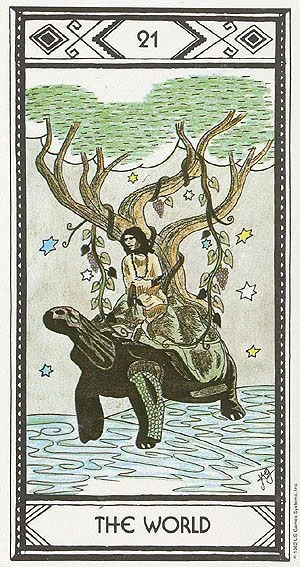
Let The Fool name the invitation, Hosteen Coyote reveal the clever move or complication, Justice test the choice, and The World show the larger pattern that choice completes.
Is Native American Tarot beginner-friendly?
A patient beginner can read with it, but it is not a plug-and-play teaching deck. The cards preserve tarot’s larger structure while renaming suits, courts, and many numbered cards. The companion booklet becomes important because the cultural stories and deck-specific titles carry more weight than familiar scenic shortcuts.
Start with one card and one concrete question. Write down the title, the first visible action, and the feeling that arrives before interpretation. Then compare that response with the booklet. This rhythm helps you listen without pretending you already understand every reference.
Easy reading
Name the card’s action and finish with one practical next step.
Medium reading
Add the renamed suit, direction of movement, and relationship to nearby cards.
Deep reading
Study the booklet’s story, the deck’s regional framework, and the card’s traditional tarot role together.

Medicine Woman — listening before naming
The Medicine Woman stands with a calm, contained presence. Her stillness does not feel passive; it feels like the moment before a truth is spoken. The pale space around her makes every gesture matter, while the patterned border keeps the scene held like a quiet patterned frame.
She often appears when information is present but not yet ready to be pushed into a decision. Upright, she asks for observation, intuition, and careful timing. In shadow, silence can become distance or secrecy. Beside a Blade, listen for the thought that has not been voiced; beside a Vessel, notice the feeling that needs a safe shape before it can be shared.
Artwork, symbolism, and cultural context
J. A. Gonzalez’s art uses colored-pencil softness rather than glossy spectacle. The open white fields can make a card look simple from a distance, but the scenes become more textured when you slow down. Clothing, animals, dwellings, tools, seasons, and community activities carry much of the meaning. The black-and-white border gives the deck a strong family resemblance from card to card.
The deck draws from Apache, Arapaho, Cherokee, Cheyenne, Chippewa, Comanche, Hopi, Huron, Inuit, Iroquois, Kiowa, Navajo, Papago, Pima, Pueblo, Shawnee, Sioux, Yaqui, and other traditions named by the publisher. That breadth is also the reason to read carefully. These cultures are not interchangeable. I treat each image as an invitation to learn, not as a final statement about a people or practice.
Listening before action
Lay these cards when emotion is loud and the wisest response may begin in stillness.


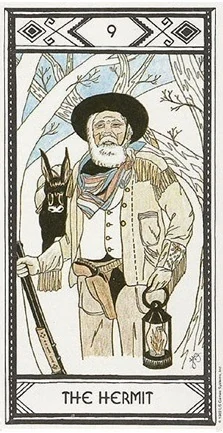

Mourning names what hurts, Vision Quest asks what the experience is revealing, The Hermit creates quiet enough to hear it, and Contentment shows the peace that can grow from honest attention.
Love, work, and creative readings
In relationship readings, Vessels carry tenderness, family patterns, emotional circulation, and the ways people hold one another. Union can show genuine meeting, but nearby cards reveal whether that bond has room to breathe. Indolence may point to emotional drift, while Contentment asks what enoughness feels like when performance falls away.
For work and money, Shields speak through craft, cultivation, exchange, and harvest. These images are useful when a question needs practical pacing rather than a dramatic prediction. Blades expose conflict, strategy, loss, and speech; Pipes show energy moving through shared effort, challenge, and recognition. The renamed suits make the reading feel specific without removing tarot’s familiar bones.

The Sled — choosing what carries you
The Sled turns the Chariot’s forward drive into something shaped by weather, teamwork, and terrain. Movement is possible, but it is not isolated. Direction depends on preparation, the conditions underfoot, and the relationship between the traveler and the forces doing the pulling.
In a reading, this card asks more than “Are you moving?” It asks what is carrying you, whether everyone involved shares the direction, and what the landscape will allow. Upright, momentum becomes coordinated effort. In shadow, speed can hide exhaustion or a route chosen for urgency rather than wisdom.
Pros & Cons
| Pros | Cons |
|---|---|
| Distinct deck-specific titles create vivid, memorable readings. | The broad blending of many nations requires cultural care and further learning. |
| Soft hand-drawn art rewards patient observation. | Renamed cards create a genuine learning curve for beginners. |
| Renamed suits and courts offer a fresh way into familiar tarot structure. | Some imagery and framing reflect the period in which the deck was created. |
| Strong for reflection on community, responsibility, work, grief, and change. | Readers wanting lush modern scenes may find the open backgrounds austere. |
| The 108-page booklet adds important context and several original spreads. | Source scans vary in sharpness and may retain historic watermarks. |
Buying and edition guidance
The current U.S. Games edition contains 78 cards and a 108-page booklet. The cards measure approximately 2.375 × 4.375 inches, and the ISBN is 978-0-88079-009-3. When buying second-hand, compare the box, booklet, card backs, and full card count rather than relying on the title alone; several similarly named Native-themed decks use completely different artwork.
The product buttons on this page point to the direct Amazon listing identified by the deck’s U.S. Games ISBN/ASIN family. Stock, seller, and packaging can change, so compare the listing photographs with the tan U.S. Games box and black geometric card borders shown here.
From effort to result
Use this spread when a long project needs both patience and a clear finish line.


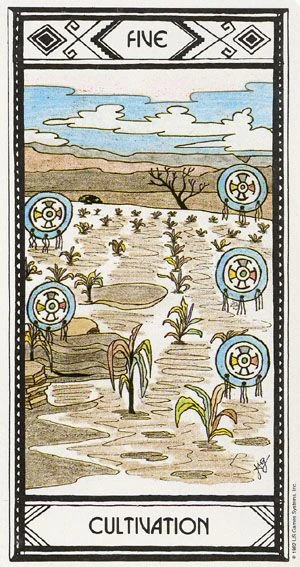

Joint Effort identifies the shared labor, The Craftsman asks what skill needs care, Cultivation measures patient progress, and Harvest names the result that is ready to be gathered.
Let the title open the door, then let the picture complicate it
This deck gives you powerful words, but the title is only the threshold. Look for who is present, what they are doing, what the land is doing around them, and what has been left outside the frame. The richest reading arrives when a printed name and a visible detail disagree just enough to make you curious.
Final Thoughts
Native American Tarot is unusual, thoughtful, and sometimes challenging. Its best cards feel like small windows into work, kinship, weather, consequence, and the quiet moral weight of ordinary choices. I value the way it slows me down. It asks me to look twice before reaching for a conclusion.
I also believe it deserves an honest frame: this is a tarot deck inspired by many Indigenous cultures, not a complete voice for them. Read the booklet, follow the references that stir your interest, and keep listening beyond the cards. Used with humility, the deck can encourage a gentler kind of attention—one that notices relationship, responsibility, and the path your choices leave behind.

Native American Tarot FAQ
Who created Native American Tarot?
The deck was created by Magda Weck Gonzalez and illustrated by J. A. Gonzalez, with material related by Blackfoot medicine man Harry Sparrowhawk. U.S. Games Systems publishes the current English edition.
How many cards are in Native American Tarot?
The complete deck contains 78 cards: 22 Major Arcana and 56 Minor Arcana. This review’s Gallery presents the complete verified card sequence.
What are the four suits?
The suits are Blades, Pipes, Vessels, and Shields. They broadly correspond to Swords, Wands, Cups, and Pentacles, while the courts become Maiden, Warrior, Matriarch, and Chief.
Is Native American Tarot good for beginners?
A committed beginner can use it, but the renamed cards and cultural stories make the companion booklet important. Start with one-card or four-card readings and learn the deck’s own language gradually.
Does the deck follow Rider–Waite–Smith meanings?
It keeps the standard 78-card tarot structure, but many titles and scenes are substantially reworked. Traditional meanings can provide a foothold, yet the printed title, visible story, and booklet should lead the interpretation.
Where can I buy Native American Tarot?
The commercial buttons on this review point to a direct Amazon product listing associated with the U.S. Games deck. Compare the seller’s current photographs and description before ordering because availability and packaging may change.


