
Light Grey Tarot Card Gallery
Browse the verified card fronts currently available from this collaborative deck, arranged in traditional sequence. Use the official-group filters, then open any card for a larger carousel view.
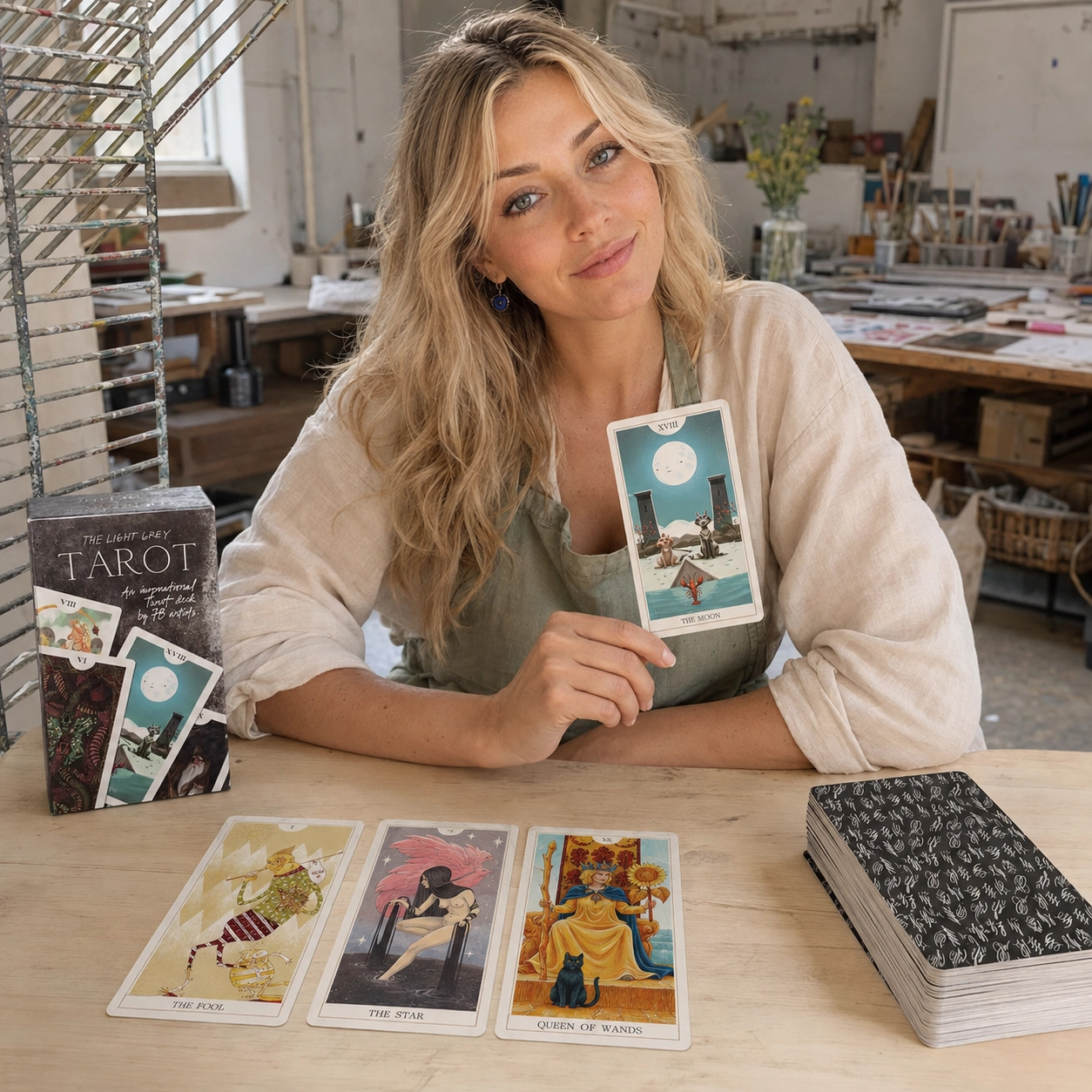
Aurica’s Quick Take
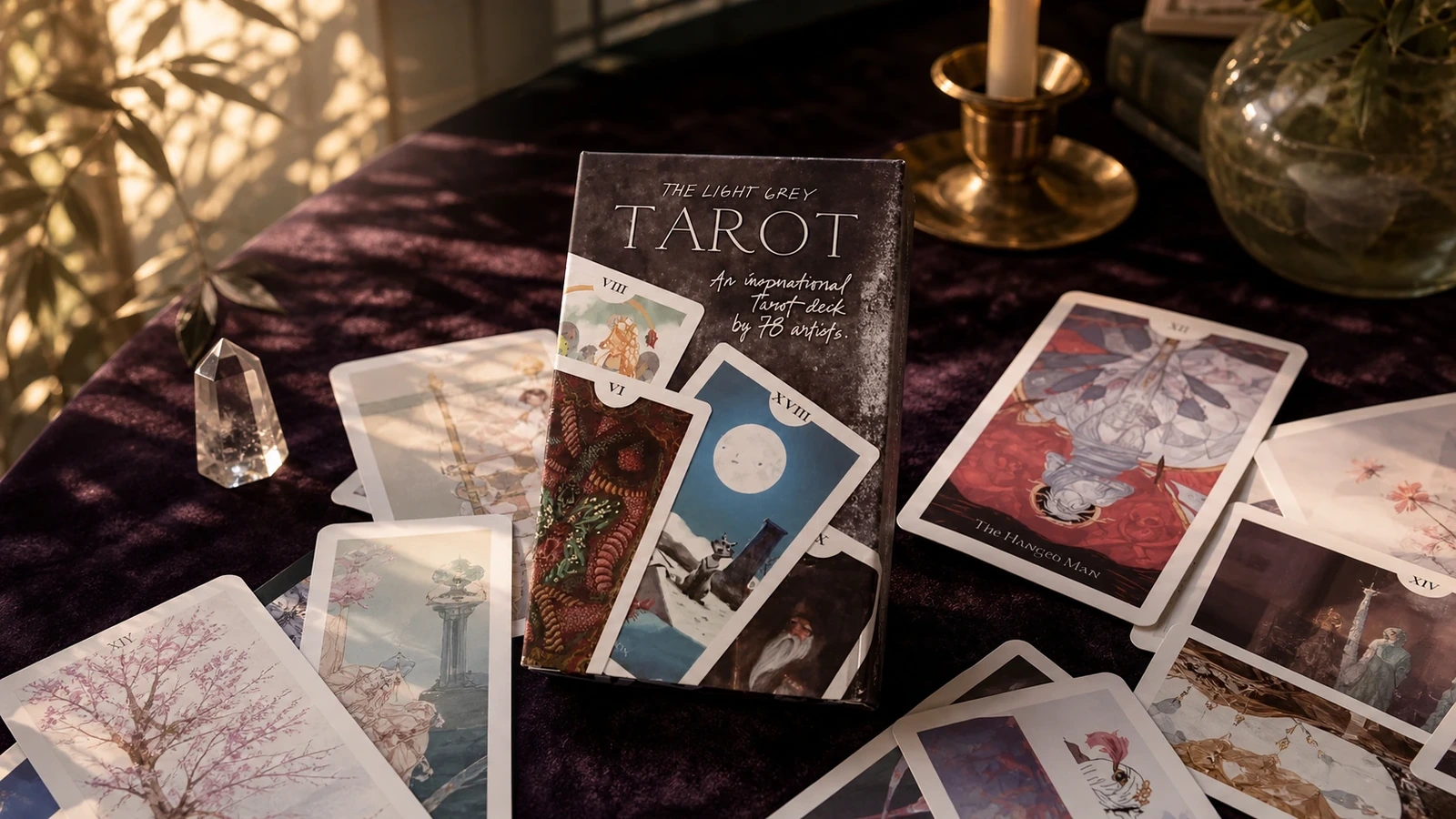
The Light Grey Tarot is a true collective deck: one tarot structure interpreted through the hands of 78 artists. That makes it less visually uniform than a single-artist deck, but also far more surprising. A spread can move from delicate linework to saturated digital colour, storybook illustration, collage, abstraction, and shadowy realism without losing the familiar Major and Minor Arcana framework.
My quick take: choose it if you enjoy discovering how different artists solve the same symbolic problem and you do not need every card to speak in one visual accent. Skip it if consistency is essential to your reading flow or if you want a deck that teaches Rider–Waite–Smith imagery through repeated visual conventions.
I love the little jolt of recognition that arrives when one card speaks in a whisper and the next bursts into the room. The Moon’s pale face watches a dog and cat beneath a turquoise sky, while the Queen of Wands glows in sunflower gold beside her black cat. Their styles differ, yet both make emotion visible before I have reached for a keyword.
When I read with this deck, I let the first image that catches my eye set the tone, then test that feeling against the card’s traditional role and the neighbours around it. The Fool’s strange, bright traveller can open a brave door; The Star’s quieter rose-grey figure can ask what tenderness remains after the noise has passed. The shifting visual language becomes useful when I treat contrast as part of the message rather than something to smooth away.
I would bring Light Grey Tarot to creative questions, crossroads, or any reading that has gone stale in familiar imagery. Give each artist a moment to introduce their card, and this many-voiced deck can remind you that there is always another beautiful way to see the path ahead.
What makes this 78-artist deck different?
Light Grey Art Lab brought the project together for its Tarot, Mystics, and the Occult exhibition. Each participating artist received a card, so the finished deck behaves like a curated gallery in miniature. Paper Bicycle developed the card format, packaging, and guidebook design, giving the varied artwork one physical framework.
The deck still uses the familiar 78-card tarot architecture—22 Major Arcana and 56 Minor Arcana—but its visual language changes from card to card. That is the point. Instead of learning one illustrator’s private system, you practice identifying the emotional and symbolic core that survives across many styles.
Deck-specific card study
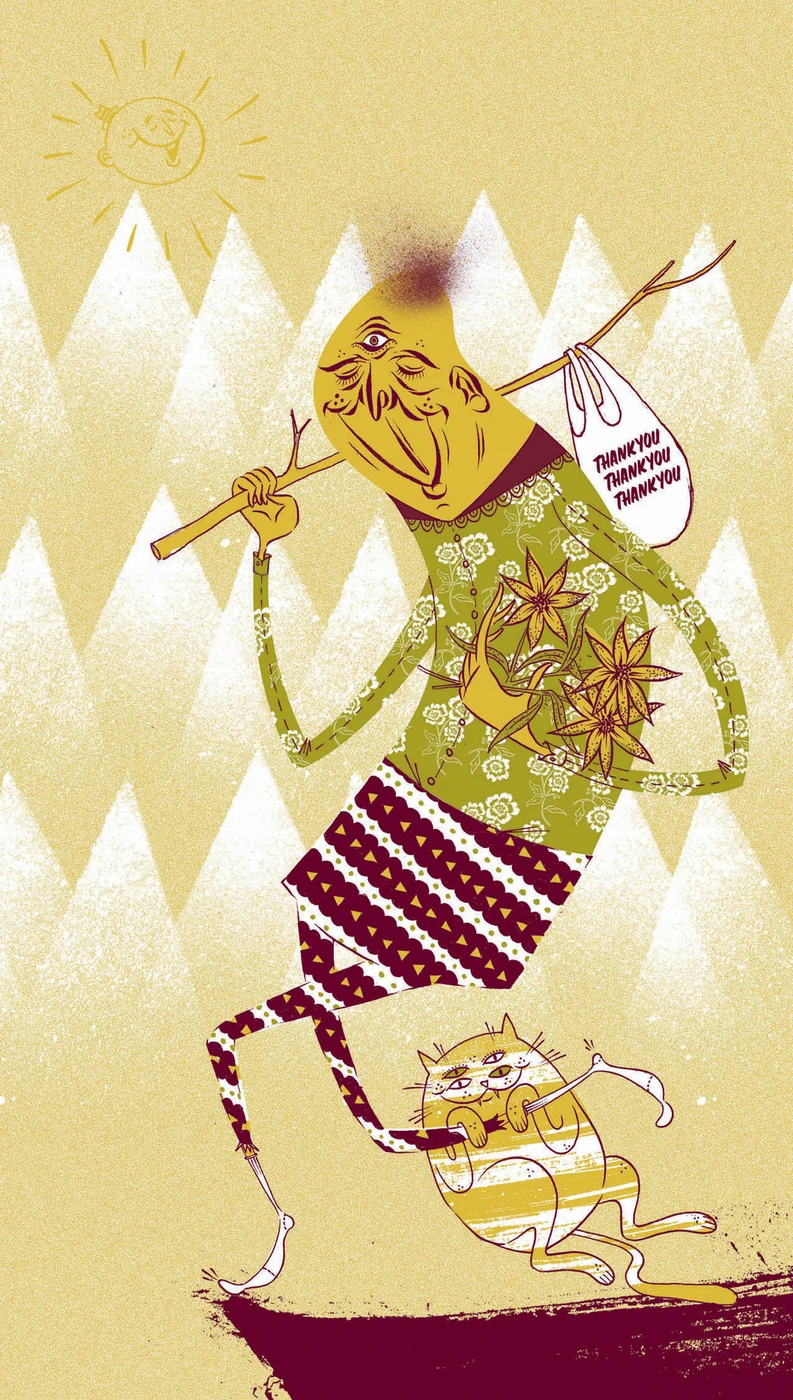
The Fool: motion assembled from joyful fragments
This Fool steps through a pale yellow world of sharp white mountain shapes. The figure’s patterned green coat, striped trousers, pointed shoes, bundle, flower, and alert little dog make the card feel busy, playful, and slightly precarious. Rather than presenting innocence as blankness, the artist presents it as a willingness to carry many impressions at once and keep moving.
In a reading, the card can support a brave beginning, experimentation, and trust in momentum. Its shadow is scattered enthusiasm: so many patterns and possibilities that the next foothold is ignored. Ask what deserves to come with you—and what is only decoration on the road.
How Light Grey Tarot reads in practice
This deck rewards a two-stage reading. First, name the card’s traditional function. Then describe what this particular artist changed: palette, viewpoint, body language, historical setting, abstraction, or emotional temperature. The gap between those two observations often contains the most useful message.
In a spread, visual discontinuity can become an advantage. A card that suddenly looks quieter, harsher, brighter, or more graphic than its neighbors naturally attracts attention. Treat that contrast as emphasis rather than trying to smooth it away.
Four-card pack
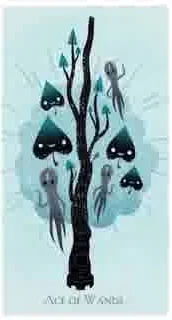
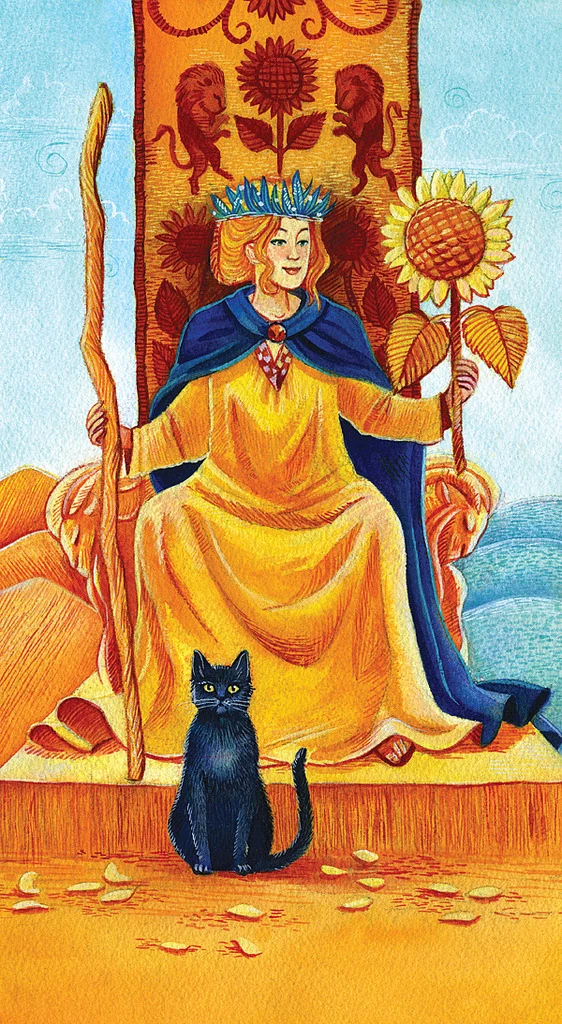
Creative fire in four different voices
The Ace begins as strange organic possibility, the Four turns energy into celebration, the Six carries achievement forward, and the Queen embodies warmth with unmistakable confidence. Together they show how this collaborative deck can change style completely while keeping a suit’s momentum legible.


Is Light Grey Tarot beginner-friendly?
It can be, but it teaches flexibility rather than visual repetition. The titles and standard structure give beginners a reliable map, while the changing art styles train close observation. A concise reference book or familiar tarot keyword list will help when a card’s illustration moves far from conventional Rider–Waite–Smith staging.
Start with one card a day. Write the traditional meaning, three visible details, and one sentence about how this artist’s choices alter the mood. That method prevents the deck from becoming a collection of attractive but disconnected pictures.
Deck-specific card study
The Star: hope as a quiet act of attention
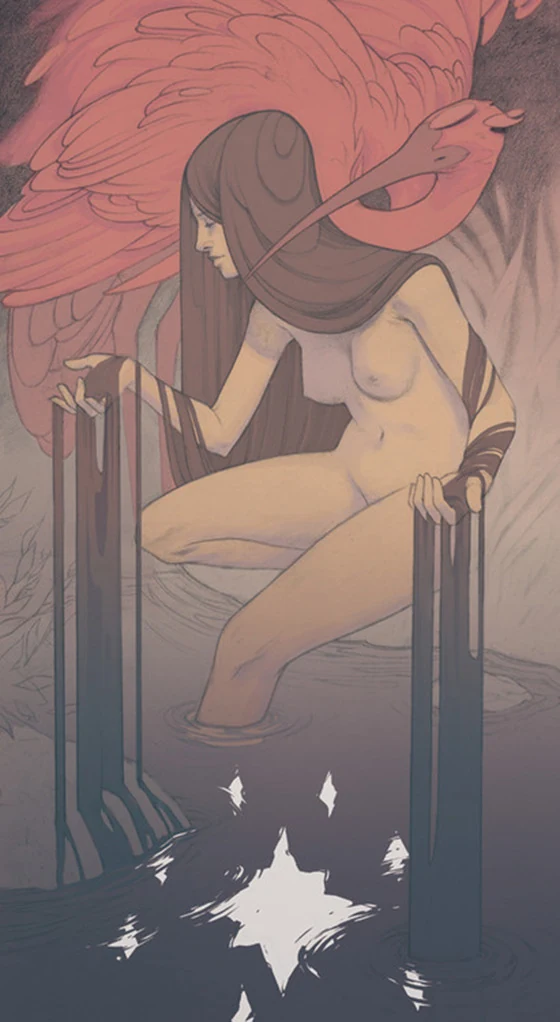
A seated figure fills this muted rose-toned Star. Long flowing hair or cloth sweeps across the body, while one hand reaches toward a bright white splash below. Small white drops rise between the figure and that luminous mark, making the scene feel private and restorative rather than grand.
The card’s hope is not spectacle; it is contact with one clear source of renewal. Upright, it can indicate healing, honesty, and the return of trust after strain. In shadow, it asks whether hope has become passive waiting. What small gesture would let inspiration touch the real world?
Love, friendship, and emotional readings
The suit of Cups demonstrates the deck’s range especially well. Intimacy can appear as theatrical romance, private grief, family memory, whimsical appetite, or calm elemental presence. That variety is useful for relationship readings because it stops “emotion” from collapsing into a single sentimental tone.
Ask relational questions that make room for complexity: What feeling is being performed? What is privately carried? Which bond is reciprocal, and which one is sustained by fantasy? The cards are often strongest when the question invites description before judgment.
Four-card pack
Connection, loss, belonging, and emotional authority
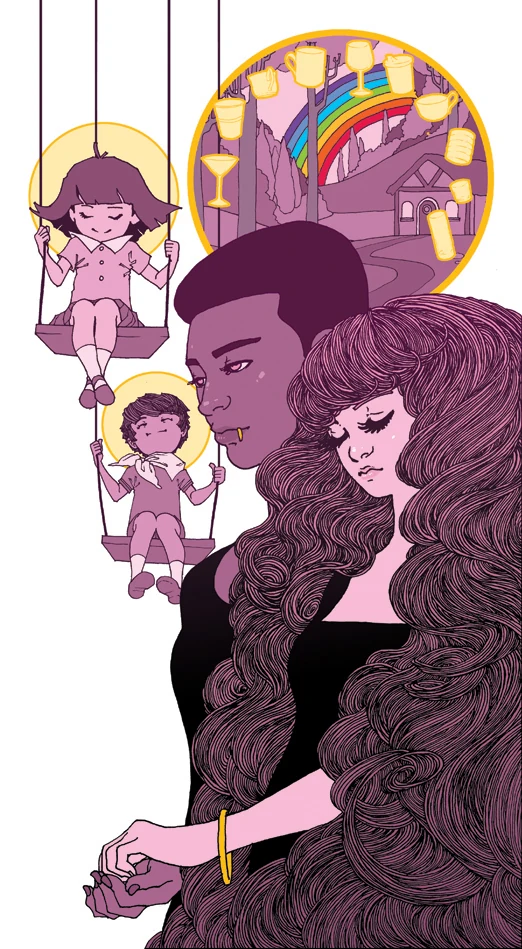
The Two stages a vivid meeting, the Five turns inward toward what has been lost, the Ten layers personal feeling with family imagery and a rainbow of cups, and the Queen rests in an underwater world of color. The sequence makes emotional maturity feel larger than simple happiness.



Where the collaborative format shines—and where it can resist
What works
- Every draw can reveal a fresh visual solution.
- The standard tarot structure remains usable beneath the stylistic variety.
- Contrasts between cards create natural emphasis in spreads.
- The deck rewards art lovers, journalers, and readers who enjoy interpretation.
What to consider
- A spread will not have one seamless palette or visual world.
- Some images stay close to familiar symbolism while others are more abstract.
- Readers who depend on repeated visual cues may need the guidebook nearby.
- The deck is an older, collectible release, so availability and condition can vary.
Deck-specific card study
Nine of Swords: anxiety in a room full of ordinary life
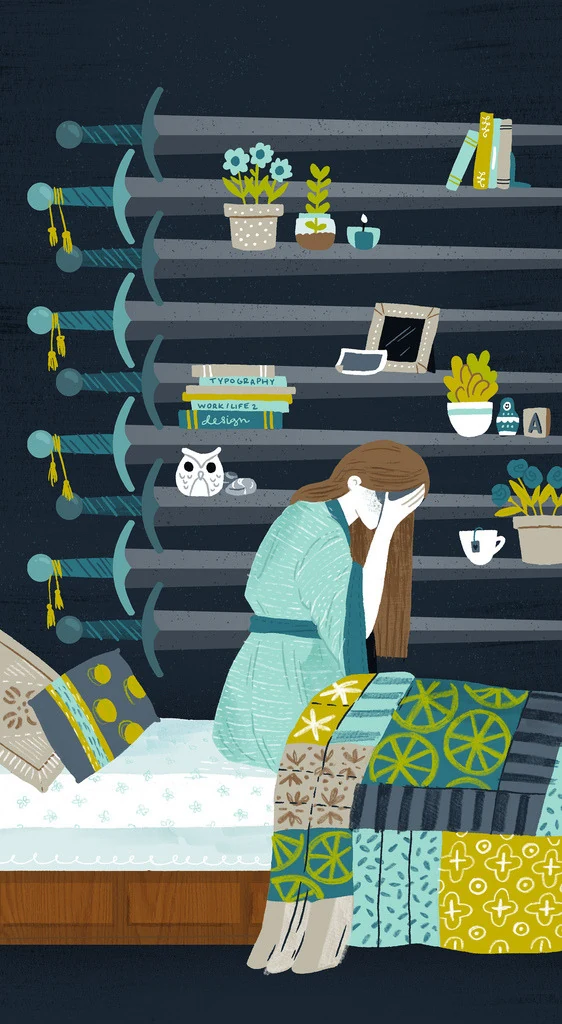
A figure sits folded on the edge of a bed, head lowered into one hand. Behind them, horizontal sword-like shelves share space with books, a plant, small objects, and a cat. The bedroom remains recognizably lived-in, but the repeated blades turn its ordinary order into mental pressure.
This is worry that colonizes familiar space. Upright, it can name rumination, sleeplessness, and a problem made larger by isolation. Its useful challenge is to separate what is materially present from what the mind keeps rehearsing. Which “sword” is a fact, and which one is a thought placed back on the shelf?
Buying and collecting notes
The Light Grey Tarot is a 78-card set associated with a 32-page guidebook and the Light Grey Art Lab project. It is no longer a routine mass-market release, so listings may be new old stock or second-hand. Check that a listing includes the complete deck, booklet, and the packaging shown by that seller; do not rely on a title alone.
The Amazon link on this page points to ISBN-10 0989311627, the identifier historically used for this edition. Availability can change, so the button is intentionally phrased as an availability check rather than a stock promise.
Four-card pack
Material life from balance to stewardship
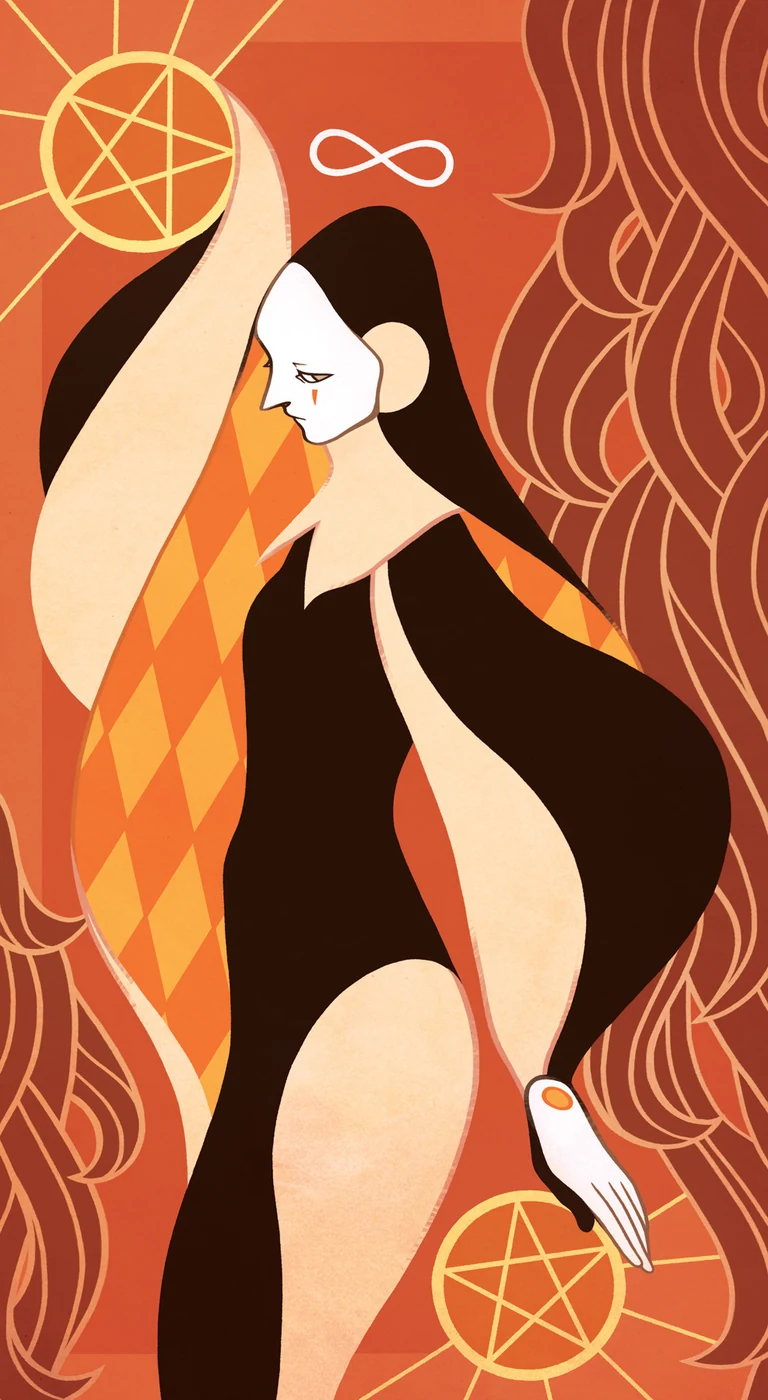
The Two balances bright pentacles through bold graphic rhythm, the Ten frames abundance as cultivated identity, the Page experiments with matter and possibility, and the Knight carries resources through a difficult landscape. Together they make “earth” feel inventive rather than merely practical.



Aurica’s golden rule for reading this deck
Let difference become information. Do not apologize for the moment a spread changes style. Name the contrast and ask why that card needed to arrive in a different visual voice. In Light Grey Tarot, inconsistency is not noise to remove; it is one of the deck’s main interpretive tools.
Final Thoughts
Light Grey Tarot succeeds because its central idea is visible in every shuffle. It is a tarot deck, an exhibition, and a conversation among artists at the same time. The result can be uneven by design, but it is rarely dull.
It is best for readers who like collaborative art, symbolic comparison, visual journaling, and spreads that surprise the eye. Readers seeking one immersive world may prefer a single-artist deck such as Prisma Visions Tarot or The Linestrider Tarot.
Light Grey Tarot FAQ
Who created the Light Grey Tarot?
Light Grey Art Lab organized the project as a 78-artist collaboration. Each artist interpreted one card, while Paper Bicycle developed the shared card format, packaging, and guidebook design.
Does it contain a complete traditional tarot structure?
Yes. The published deck uses the standard 78-card structure: 22 Major Arcana and 56 Minor Arcana across Wands, Cups, Swords, and Pentacles.
Is Light Grey Tarot good for beginners?
It can be, especially for visually curious learners. Because every card uses a different artist’s style, beginners may want a Rider–Waite–Smith reference or the included guidebook beside them while learning.
Why do the cards look so different from one another?
The visual variation is intentional: 78 artists contributed to the project. The changing palettes and techniques are part of the deck’s identity rather than a printing inconsistency.
Is the deck still in print?
It is generally encountered as an older collectible release. Availability varies, so verify the seller’s photos, condition, booklet, card count, and packaging before buying.
What readings suit it best?
It is especially effective for creative questions, visual journaling, comparative card study, and spreads where contrast between artistic styles can reveal emphasis.


