Joe Sparrow Tarot Card Gallery
Browse the Joe Sparrow Tarot card-front gallery in official deck order. Tap any card to open a larger carousel view.

Aurica’s Quick Take
I find Joe Sparrow Tarot witty, strange, bright, and unusually easy to remember. Its thick linework and comic staging make each card feel like a tiny scene already in motion. It is a lovely match for visual readers who prefer character, mood, and narrative clues over polished realism.
I begin with the atmosphere: who is moving, what is turning away, and where the picture seems to hold its breath. The Fool catches the heartbeat before a leap, while The Moon turns one red leaf and widening ripples into emotional weather. A tilted head, ladder, or bright shape can carry a whole spread before I add the traditional meaning.
The renamed majors and Cavalier courts reward a quick correspondence note, but they also loosen familiar stories in playful ways. I reach for this deck for journaling, creative blocks, and relationship dynamics; for the right reader, every odd little gesture becomes an invitation to trust what you notice and open one bright new door.
Why it stands out
What makes Joe Sparrow Tarot different?
The complete card sequence feels like a hand-drawn animated world: elastic figures, abrupt shifts in scale, flat blocks of candy color, and visual jokes that still leave room for serious readings. A ladder becomes the central architecture of the Ace of Swords; the Ace of Coins grows from two oversized hands; and The Hermit is tucked into a crowded shelf-like interior rather than isolated on a mountain.
The printed vocabulary also gives the deck its own voice. The visible cards use names such as The Magus, The Priestess, The Pontiff, Adjustment, and Chance, while the mounted court rank is Cavalier. Those changes are readable, but they signal that this is an interpretation of tarot rather than a tracing of familiar Rider–Waite–Smith scenes.
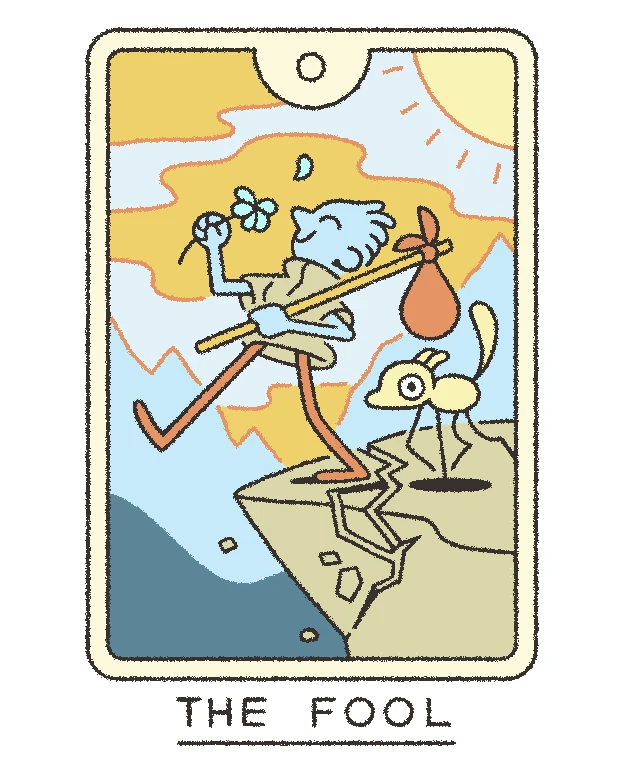
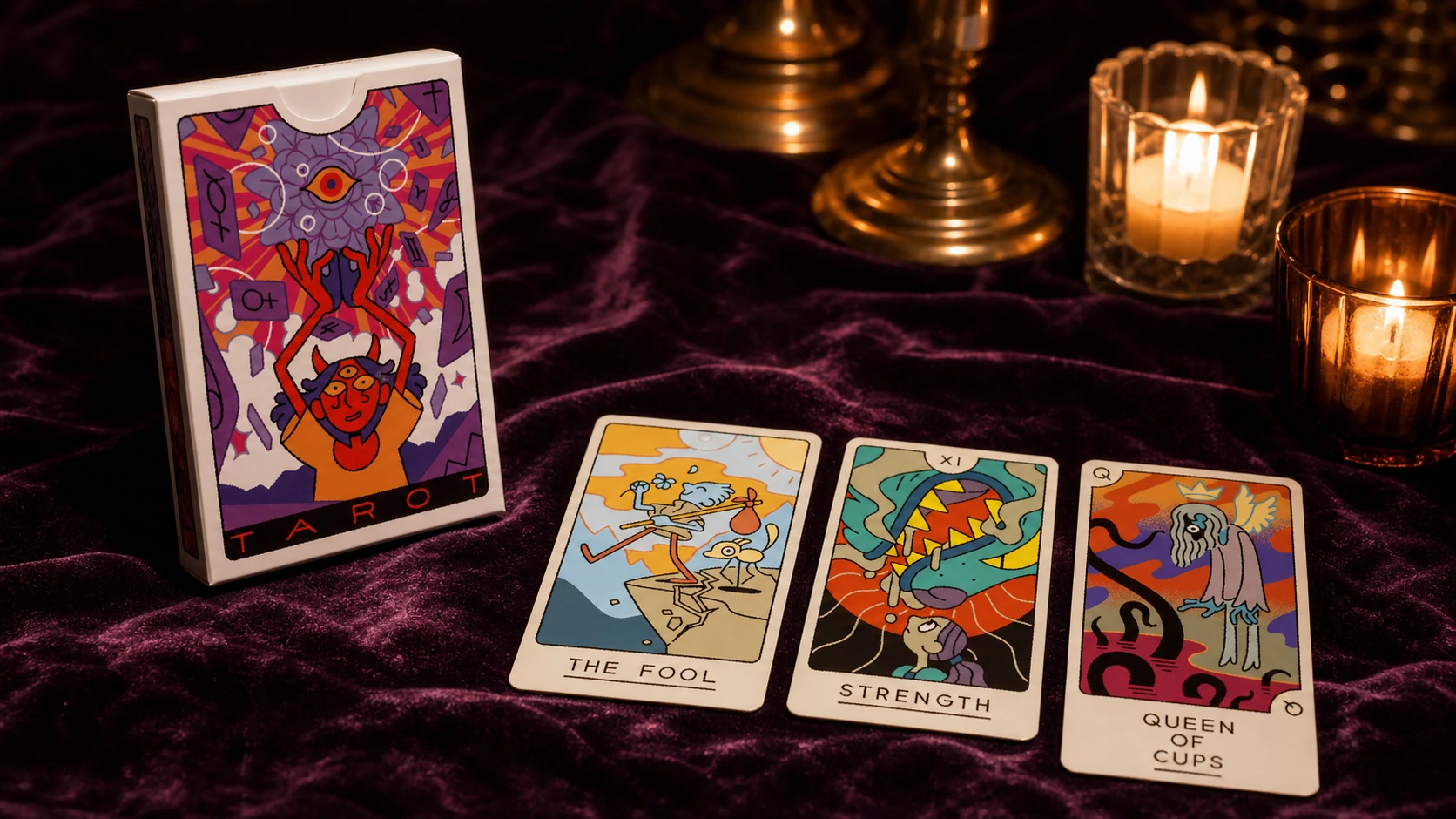
The Fool — momentum before certainty
A small traveler carries a bindle while stepping across a broken ledge. A long-legged companion balances nearby, flowers sit in the foreground, and mountains and sunlit clouds keep the scene playful rather than ominous.
The useful reading question is immediate: is this brave movement, comic overconfidence, or both? Upright, the card can open a conversation about curiosity and first steps. In shadow, the cracked ground asks whether enthusiasm is outrunning attention.
Reading behavior
How the Joe Sparrow Tarot reads in practice
This deck reads best from observation outward. Begin with the action: who is moving, hiding, falling, presenting, watching, or being watched? Then notice scale, direction, color, and the odd detail that makes the scene memorable. Only after that should you add the traditional card meaning.
That order keeps the artwork useful instead of decorative. The cards are especially effective for questions about motivation, social dynamics, creative blocks, and the difference between what a situation looks like and how it actually feels.
Four ways of meeting the unknown
The Magus, The Priestess, The Hermit, and The Moon move from deliberate action into guarded knowledge, private work, and emotional uncertainty.
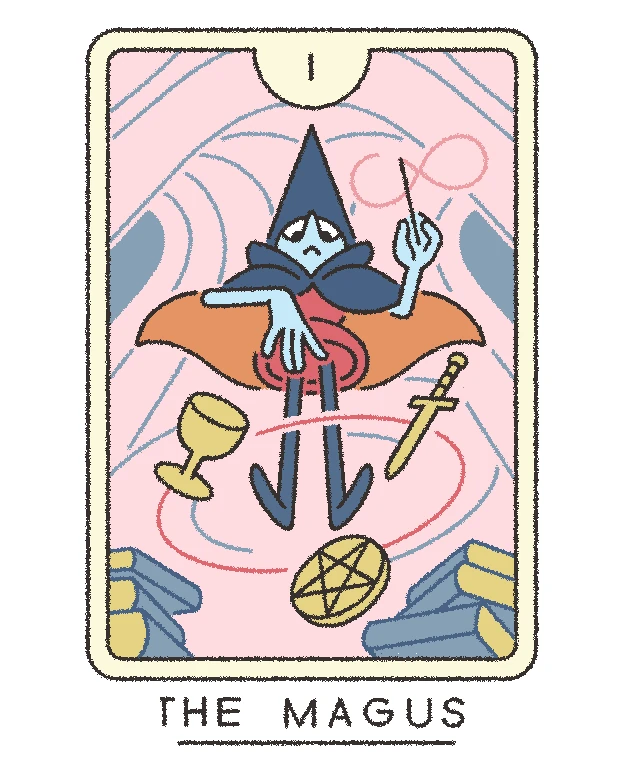

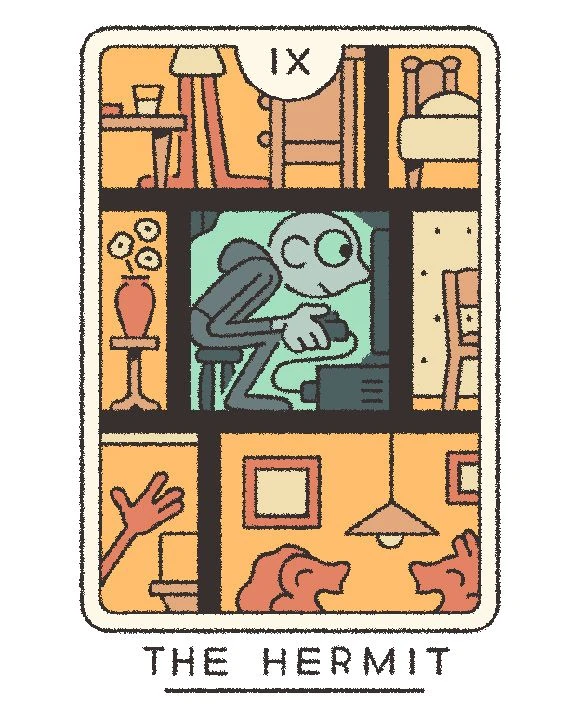
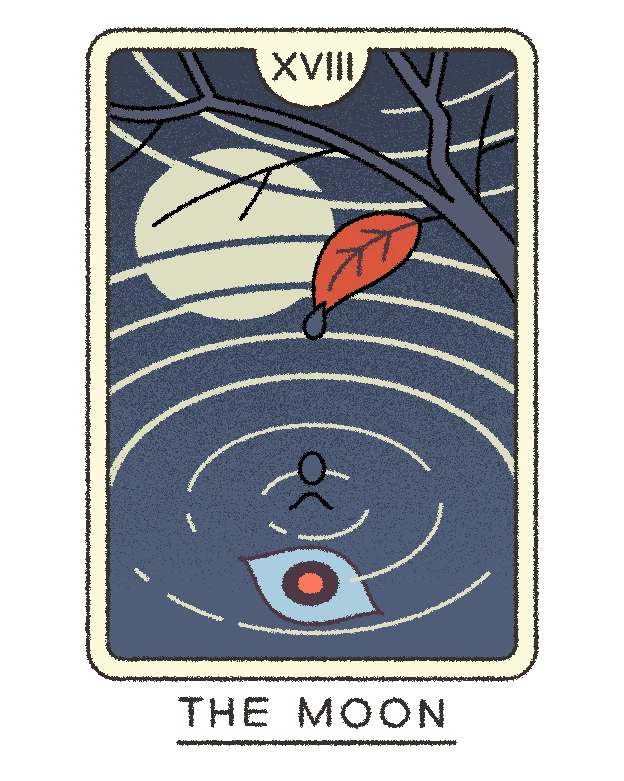
Ask: What can I act on, what must remain protected, what needs solitary attention, and what can only be understood by sitting with uncertainty?
Learning the deck
Is Joe Sparrow Tarot beginner-friendly?
Yes—with one qualification. The clear compositions and expressive characters give a new reader plenty to describe, but the renamed Major Arcana and Cavalier courts may require a simple correspondence note at first. If you already know the usual 78-card structure, the transition is straightforward.
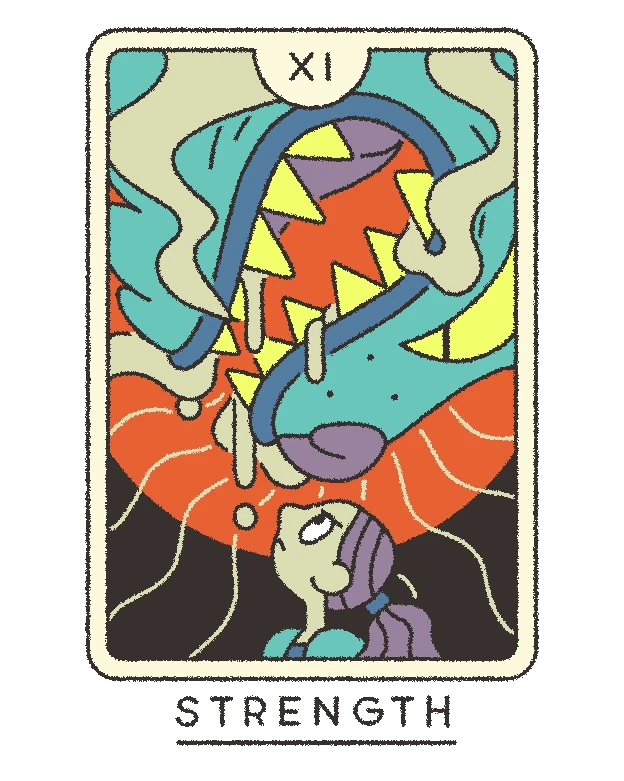
Strength — courage inside the creature
A huge colorful creature fills most of the frame, its open mouth and teeth looming above a much smaller figure. Curving teal forms, orange bursts, and a bright triangular eye make the encounter feel loud and physical.
Instead of presenting strength as calm control from a safe distance, the card puts the reader beneath the force being faced. It can describe courage under pressure, but it can also ask whether power is being understood, endured, or merely provoked.
Art and personality
Joe Sparrow’s art turns symbolism into character
The deck’s visual language is economical: strong black outlines, limited color families, and silhouettes that remain legible even at thumbnail size. Small facial expressions and bodily poses carry much of the meaning. That makes the gallery useful as a reading tool, not just an archive.
The humor never forces every card into the same emotional register. The Moon is sparse and quiet, with concentric ripples, a single eye, a red leaf, and bare branches. The Queen of Cups is stranger and more theatrical, standing against orange, blue, and black curves. The range keeps the full sequence from becoming one-note.
The four Aces as four kinds of beginning
Each Ace gives its suit a distinct physical gesture: a climb, a dance, a rush of air, and a tangible offering.
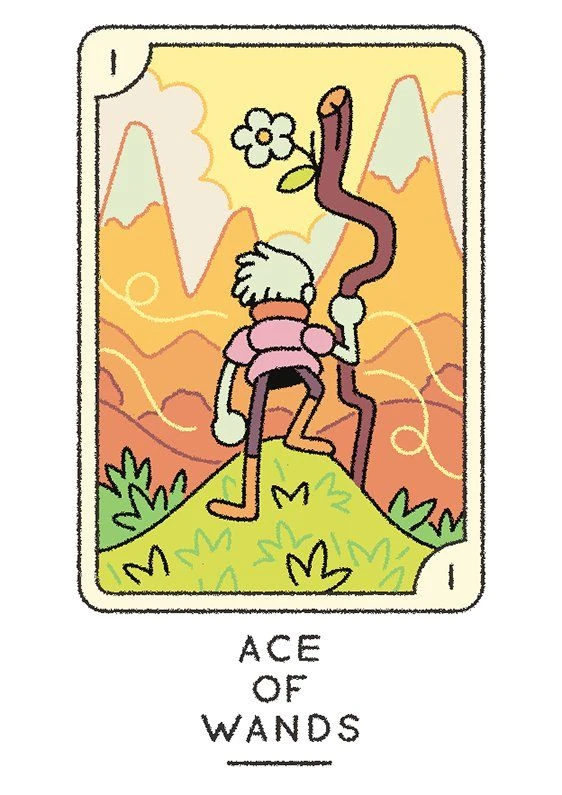

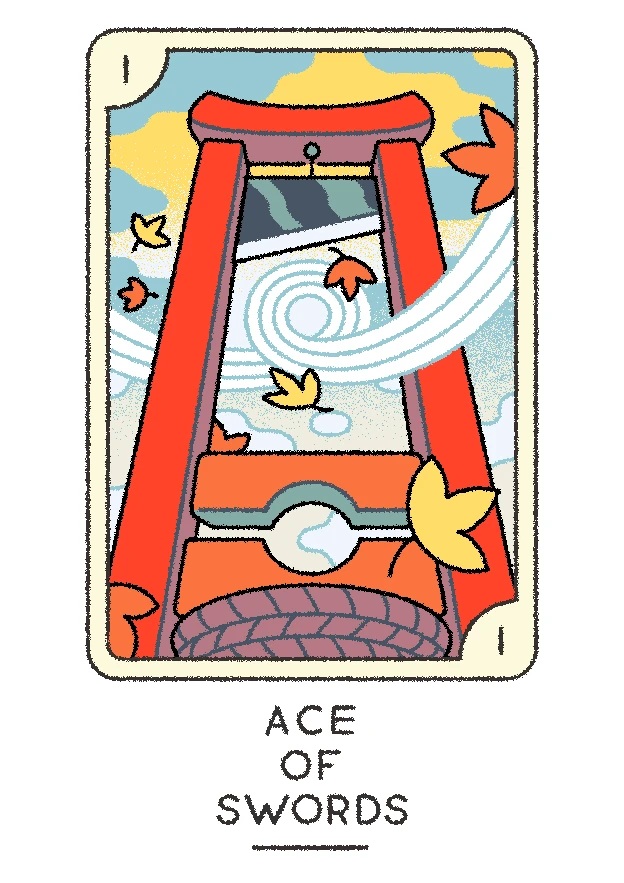

Together they ask whether a new situation needs enthusiasm, emotional openness, a sharper idea, or practical resources first.
Audience fit
Who will connect with this deck?
Joe Sparrow Tarot is a particularly good fit for readers who think in scenes, comics, animation, and visual metaphor. It supports daily pulls, creative problem-solving, relationship dynamics, and spreads where each card needs to contribute a clear beat to a larger story.
Readers who prefer ceremonial detail, antique engraving, or near-photographic fantasy may find the style too playful. That is not a weakness so much as the deck’s strongest filter: the artwork tells you quickly whether its world is one you want to read inside.
Aurica’s favorite quality
What Aurica likes most
The deck makes observation feel rewarding. Even when a scene is absurd, it is rarely vague. You can point to a ladder, an eye in water, a rider, a cup, a coin, a flower, or a character’s posture and begin from evidence. That makes intuitive reading more disciplined, not less.
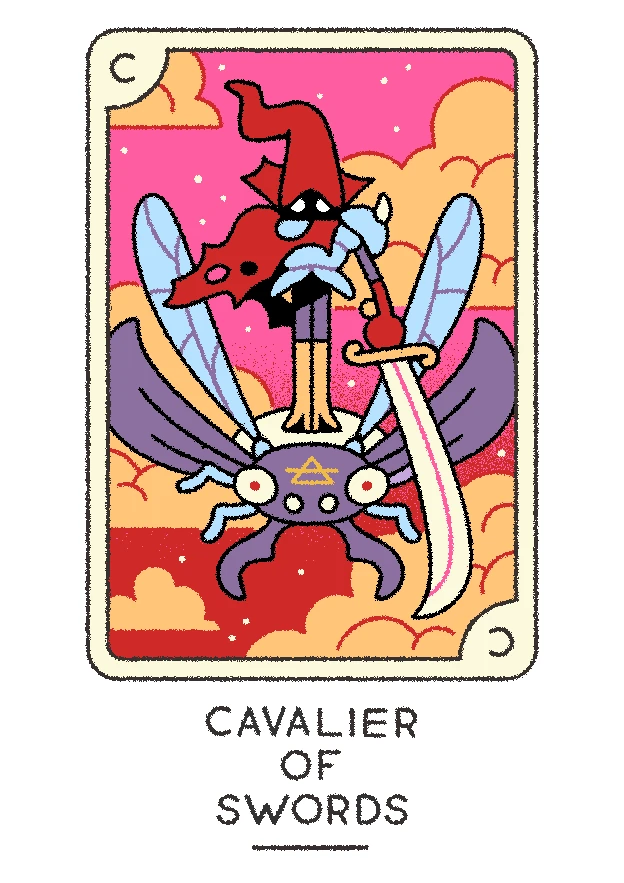
Cavalier of Swords — speed sharpened into a pose
A long-snouted armored figure dominates a pink and orange sky, framed by two pale blades and a smaller emblem below. The composition is symmetrical but restless: hard diagonals, pointed forms, and the saturated background create immediate forward pressure.
In a reading, that energy can be useful for decisive speech and rapid action. The warning is equally visible: once speed becomes the whole identity, listening and course correction become harder.
Before you buy
Buying and availability guidance
Availability can change, especially for independently circulated or older decks. Before ordering, compare the seller’s photos with the card fronts shown here, confirm that the listing contains the full 78-card sequence, and check whether a guidebook or tuck box is included. The Amazon button opens a current marketplace search rather than promising a specific edition or seller.
Four court personalities
The courts keep rank visible while giving every figure a different posture, palette, and emotional temperature.
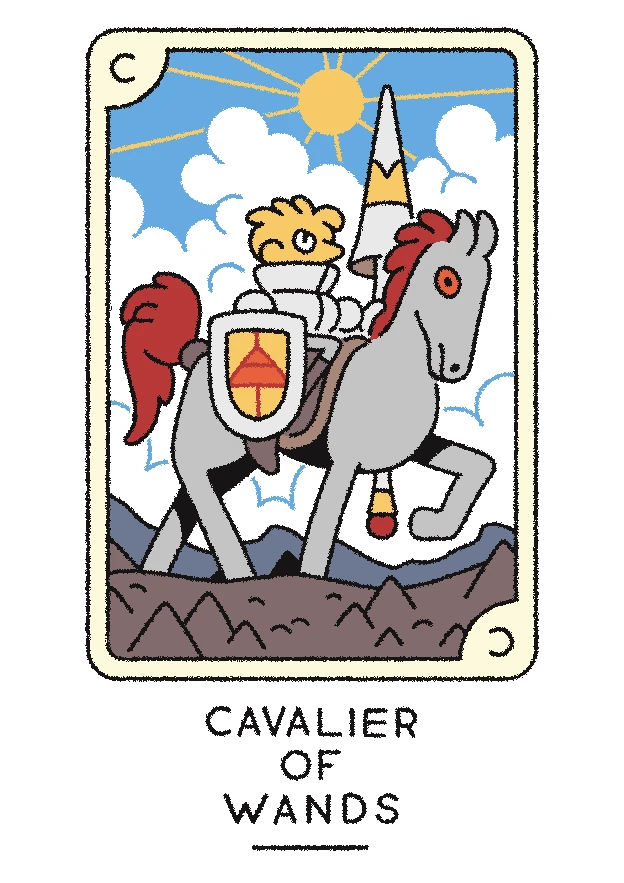

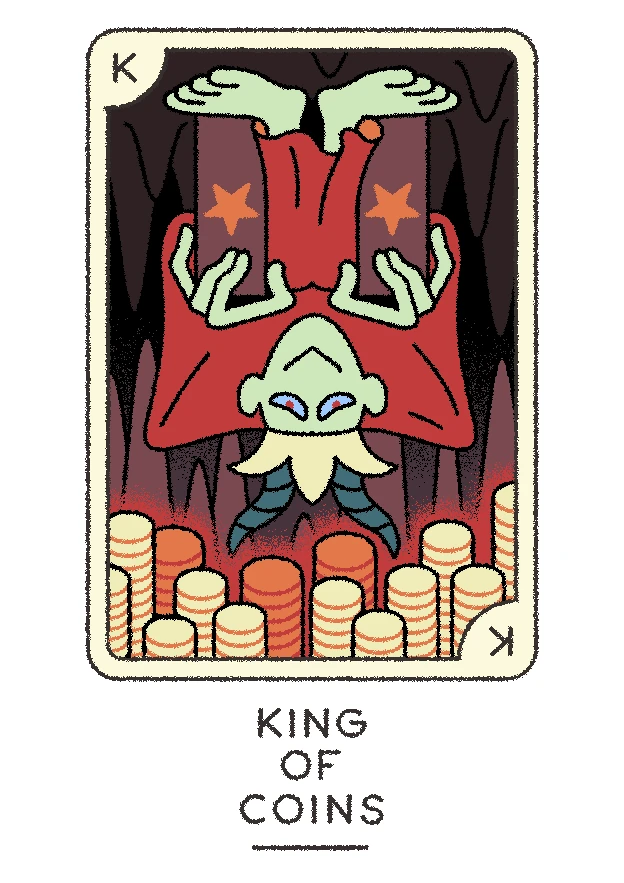
Read them as four approaches to agency: enthusiastic pursuit, emotional presence, strategic speed, and material stewardship.
The golden rule
Describe the scene before naming the meaning
With Joe Sparrow Tarot, the most reliable interpretation starts in the picture. Say what is visibly happening, identify the emotional shift it creates, and then connect that observation to the card’s traditional role. The method keeps the deck’s humor, tension, and oddness intact without turning every unusual detail into unsupported symbolism.
Final Thoughts
Joe Sparrow Tarot succeeds because it has a point of view. The illustrations are playful without being empty, readable without being generic, and coherent without repeating the same visual trick. It is the kind of deck that can make a familiar card feel newly observable.
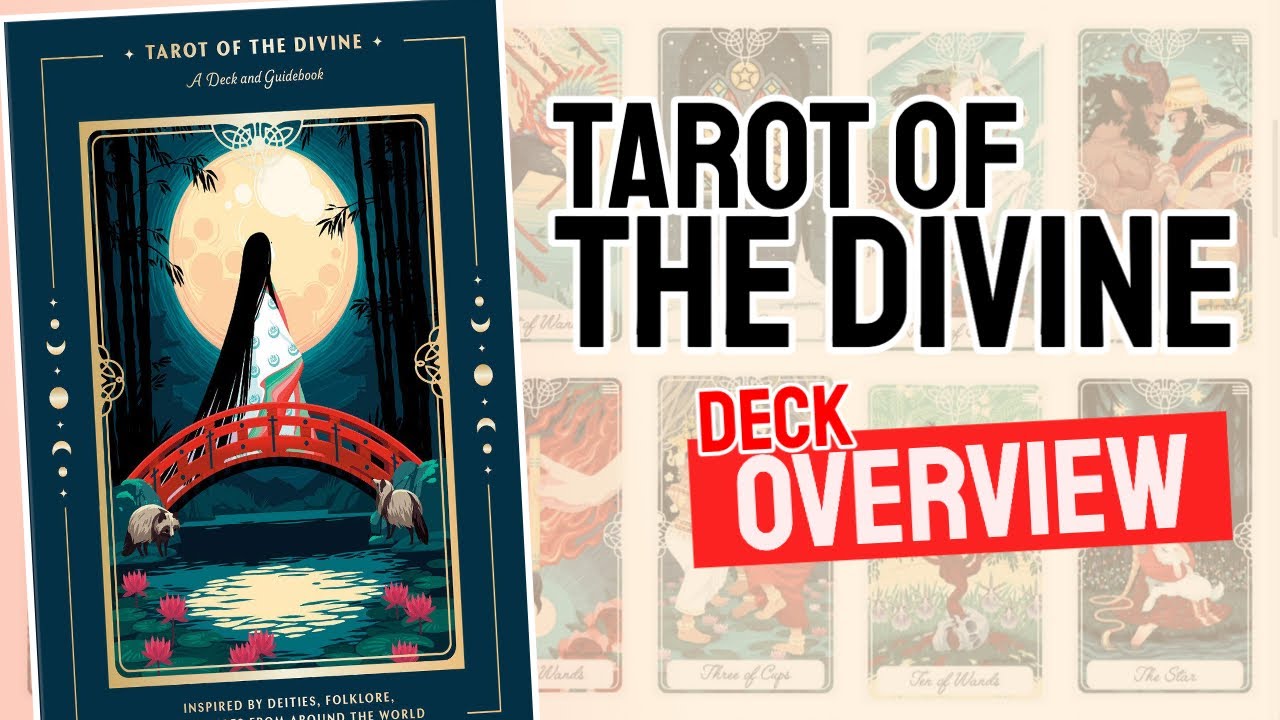
If this style appeals to you, compare it with the dreamlike continuity of Prisma Visions Tarot, the storybook range of Tarot of the Divine, or the darker theatricality of Deviant Moon Tarot.
Joe Sparrow Tarot FAQ
Who created Joe Sparrow Tarot?
The deck’s artwork is by illustrator Joe Sparrow. The cards use his distinctive comic linework, bold color blocks, and expressive character design.
How many cards are in Joe Sparrow Tarot?
Joe Sparrow Tarot follows a complete 78-card tarot structure. The TarotFans gallery presents all 78 identities in official deck order.
Why do some card names look different?
The printed deck uses several alternative names, including The Magus, The Priestess, The Pontiff, Adjustment, Chance, and Cavalier. They occupy familiar tarot positions but give the deck its own vocabulary.
Is Joe Sparrow Tarot suitable for beginners?
It can be. The scenes are clear and memorable, but a beginner may want a short correspondence list for the renamed Major Arcana and Cavalier court cards.
What readings suit Joe Sparrow Tarot best?
Its expressive scenes work especially well for creative questions, relationship dynamics, daily pulls, journaling, and narrative spreads that explore what happens next.
Does Joe Sparrow Tarot follow Rider–Waite–Smith?
It keeps the familiar 78-card tarot framework, but several printed titles change: The Magus, The Priestess, The Pontiff, Adjustment, Chance, and Cavalier occupy recognizable positions while giving the deck its own vocabulary.