Explore the Welcome to Night Vale Tarot Cards
Browse all 78 first-edition Welcome to Night Vale Tarot card fronts in deck order. Choose an official group to filter the Gallery, or select any card to open the larger Lightbox view and verified product link.
Showing the selected card group.
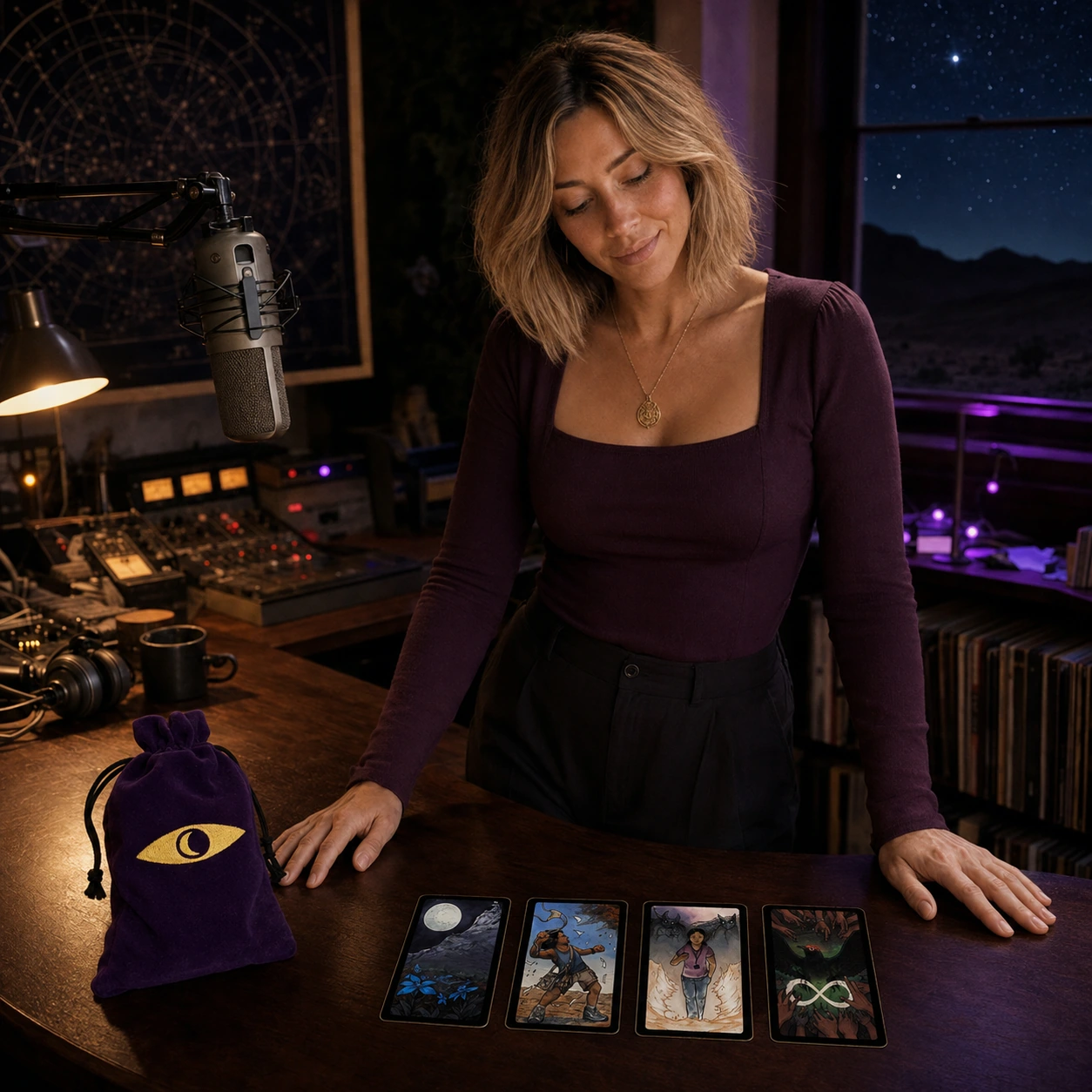
Aurica’s Quick Take
Welcome to Night Vale Tarot reads like a broadcast arriving from a familiar place at the wrong hour. Jay Holloway translates characters and incidents from the podcast’s first three years into a full tarot structure, so each card carries both a traditional role and a piece of Night Vale memory.
I start with the scene before the reference. The Moon can still describe uncertainty even if you do not recognize Svitz; The Emperor can still show authority even before you name the Glow Cloud. Knowing the story adds resonance, but the image must be allowed to speak first.
For a four-card reading, I ask: what signal is reaching me, what has been distorted, what remains true, and what can I do next? That sequence keeps the deck’s surreal humor from becoming vagueness and turns atmosphere into a usable decision.
This is a deck for readers who enjoy mystery without surrendering discernment. Listen carefully, separate the strange from the important, and let the final card return you to one brave, practical step.
Welcome to Night Vale Tarot review
What is Welcome to Night Vale Tarot?
Welcome to Night Vale Tarot is the first official tarot deck based on the surreal podcast world. Designed and illustrated by Jay Holloway, the 78-card deck maps people, places, broadcasts, disasters, jokes, and civic mysteries from the show’s first three years onto a standard tarot framework.
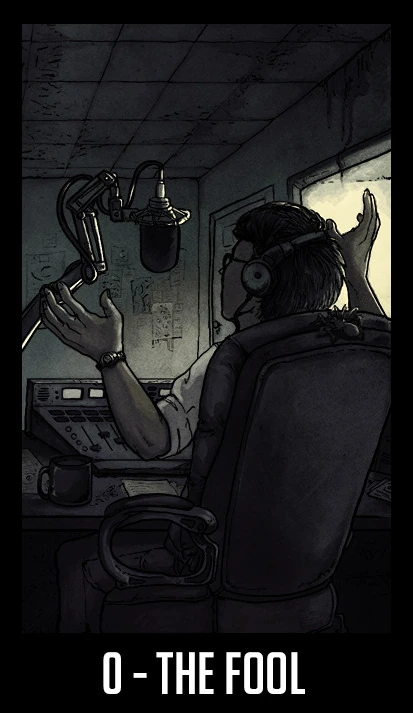
That premise matters. This is not simply merchandise with character portraits placed on familiar labels. Holloway chooses scenes whose emotional mechanics can carry the card: a radio booth for The Fool, the Glow Cloud for The Emperor, the Whispering Forest for The Lovers, and the town beside the void for The World.
Deck details at a glance
- Creator & illustrator
- Jay Holloway
- Release
- June 2015
- Cards
- 78-card tarot
- Structure
- 22 Majors + 56 Minors
- Suits
- Wands, Cups, Swords, Pentacles
- Story range
- Podcast years 1–3
- Packaging
- Purple velvet drawstring bag
- Publisher / shop
- Welcome to Night Vale / TopatoCo
- Edition reviewed
- Jay Holloway first deck
Artwork built for a town where symbols are evidence
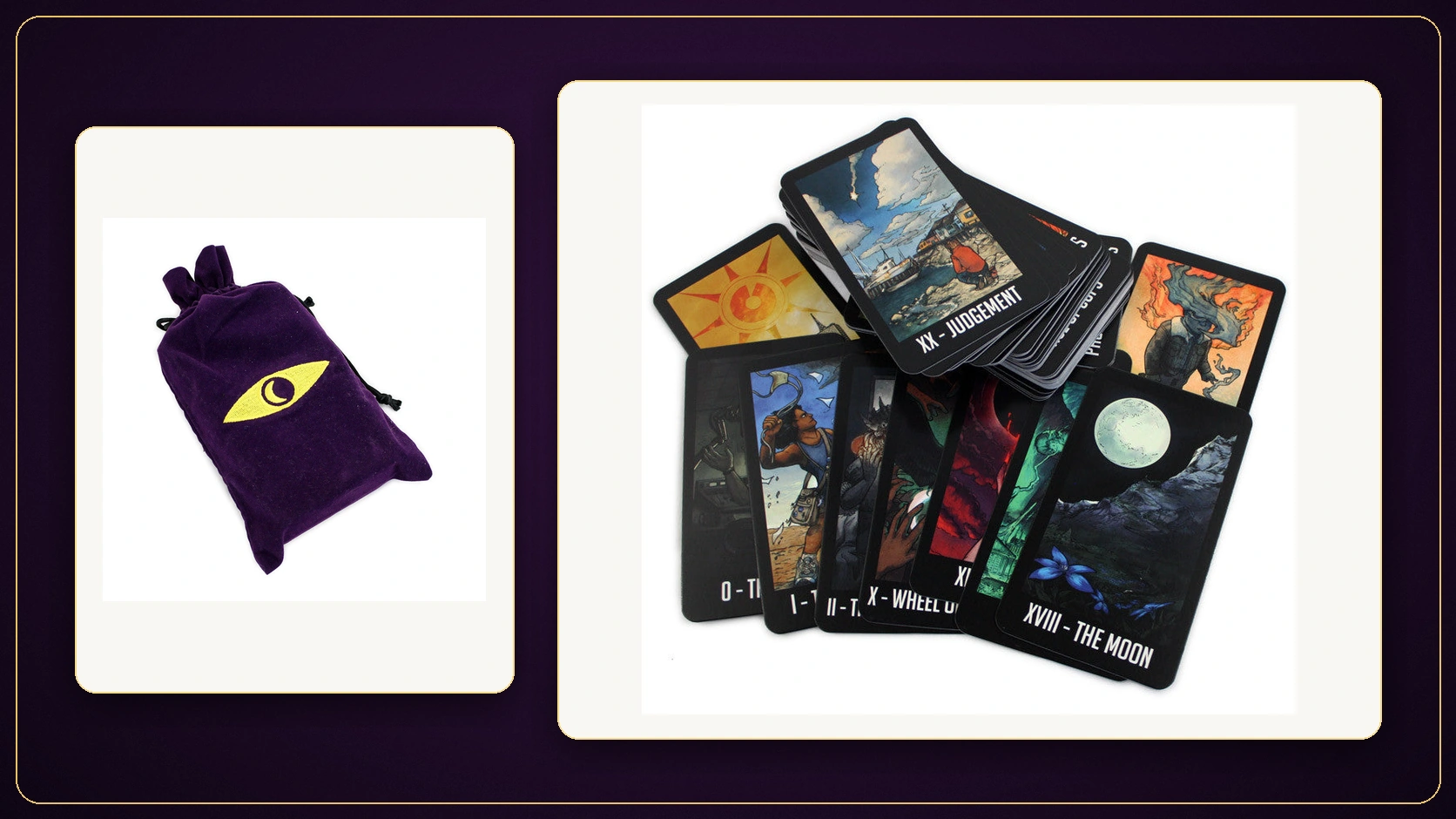
The cards use rounded black borders, large condensed white titles, and richly colored illustrated scenes. Blues, storm greys, desert ochres, emergency reds, sickly greens, and deep violets move through the deck like changing radio frequencies. Across a spread, that consistency keeps wildly different subjects inside one visual world.
Read the picture before reaching for the episode reference. Notice scale, distance, posture, light, and the direction of movement. Then connect the image to the card’s traditional role. The reference should deepen the reading, not become a trivia test.
Card study
The Fool: the broadcast begins
Cecil Palmer sits at the microphone, his back turned toward the listener while the studio window holds a thin strip of light. Holloway makes the classic leap into the unknown feel like speaking before you can know who is listening.
In a reading, start with voice and risk. What must be said without complete certainty? The card supports experimentation, but its dark booth also asks you to distinguish openness from carelessness.
How it reads in practice
The deck is especially strong for questions about messages, collective pressure, identity, fear, belonging, and the stories communities tell themselves. Its surrealism can expose assumptions quickly: a strange image makes the reader explain why it feels safe, threatening, hopeful, or absurd.
Keep a three-column note for difficult cards: what is visibly present, what the Night Vale reference contributes, and what action the tarot position requires. This prevents atmosphere from replacing judgment.
Four-card reading
Tune the signal before you answer
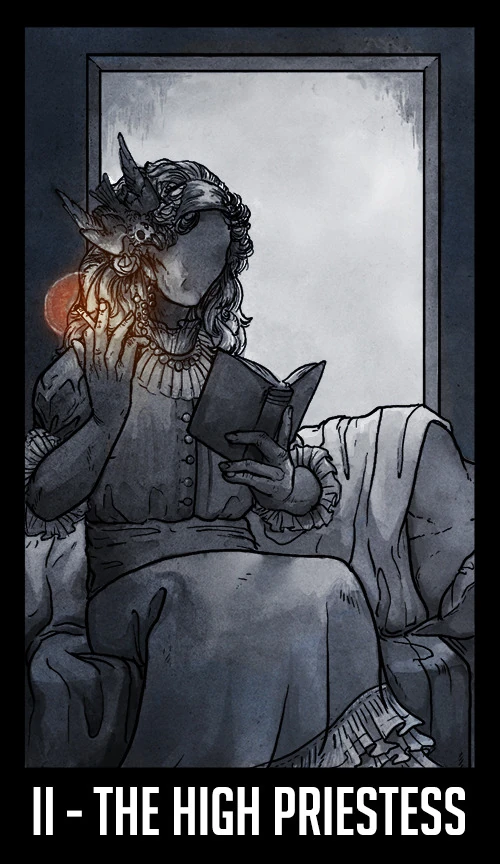
Read The Magician, The High Priestess, The Moon, and Ace of Swords as the message you can shape, the knowledge held in silence, the distortion around it, and the clean statement that survives. Describe each image aloud before interpreting the spread.
See Gothic Tarot Deck on Amazon

A practical first week with the deck
Begin with one card a day. Record the strongest visual fact, one traditional association, and one sentence that could be spoken as a radio bulletin. After seven days, arrange the cards in sequence and look for repeated colors, locations, or relationships.
Use the official card titles as anchors. The deck retains familiar ranks and suits, including Page, Knight, Queen, and King, while its scenes supply the distinctive voice.
Card study
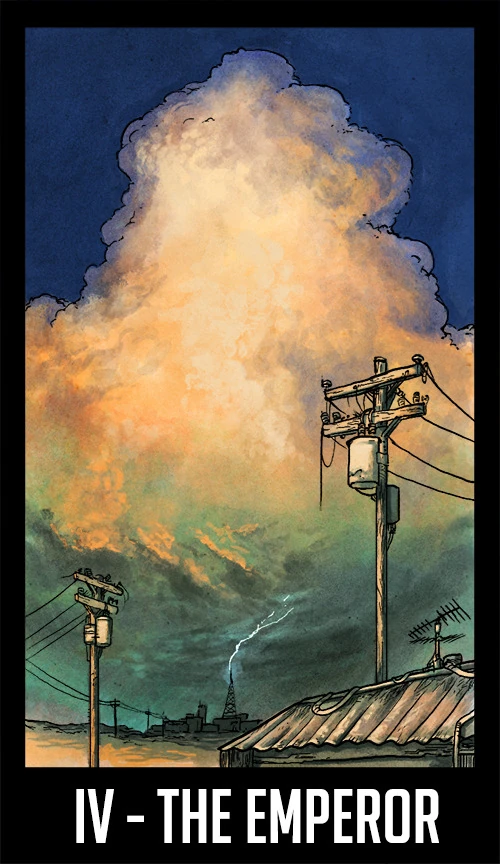
The Emperor: authority as weather
The Glow Cloud towers over rooftops and utility poles, magnificent, luminous, and impossible to negotiate with. The composition turns authority into atmosphere: everyone below must orient around it whether or not they understand it.
Use this card to examine structures that feel larger than one person. Ask who sets the rules, what order protects, and where compliance has replaced conscious choice.
Reading loss, memory, and community
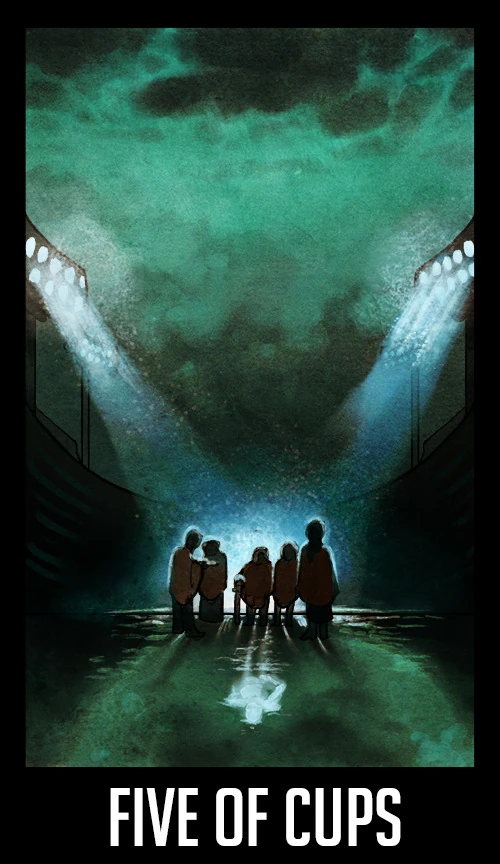
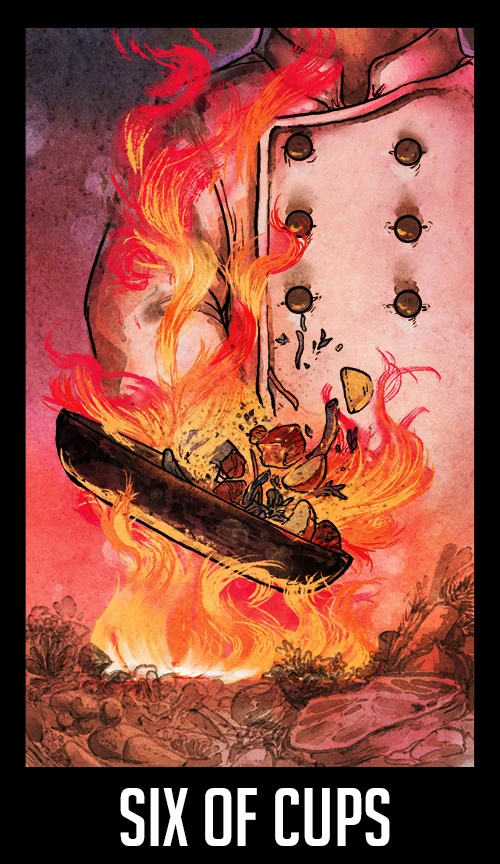
Night Vale stories often make public events personal and private feelings civic. The Cups suit is useful here: it can move from companionship to mourning, memory, and renewed belonging without pretending those stages happen neatly.
Ask who is present, who is absent, and what the setting asks everyone to carry. The spread becomes more useful when grief and support are both given visible positions.
Four-card reading
A community reading after loss
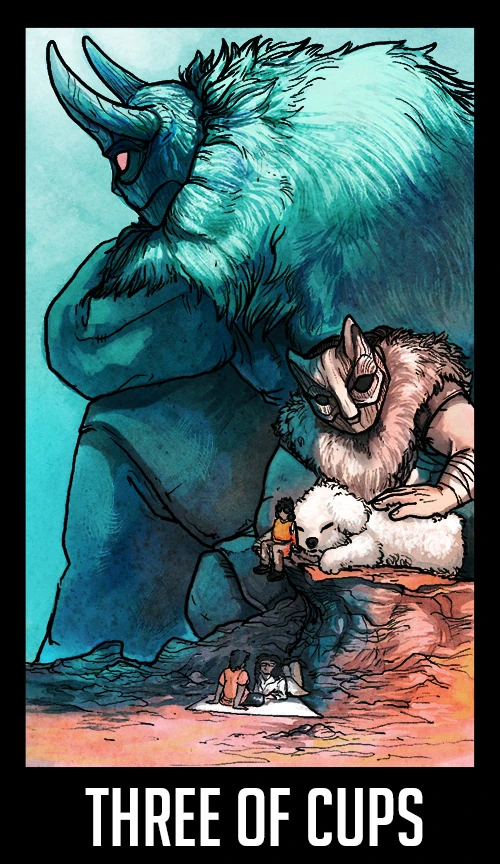
Use Three of Cups, Five of Cups, Six of Cups, and Ten of Cups for the people still present, the grief that deserves naming, the history shaping the moment, and the form of belonging worth rebuilding. Do not rush the fifth card past mourning; resilience begins by measuring what remains.

Clarity without flattening the mystery
The deck does not require every uncertainty to be solved. Cards such as The Moon, The High Priestess, and Seven of Cups can hold ambiguity while Swords test language, evidence, and decisions. That balance suits journaling and creative work as well as personal readings.
For medical, legal, safety, or financial decisions, use tarot for reflection only and rely on qualified real-world guidance. A mysterious card can frame a better question; it should not impersonate evidence.
Card study
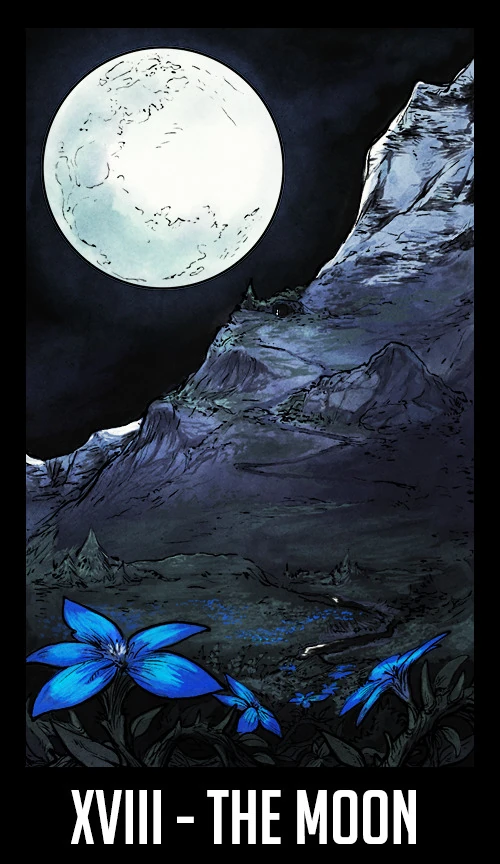
The Moon: what moves beyond the floodlights
A pale moon hangs over a dark rocky slope while a small blue flower holds the foreground. The image is quiet rather than theatrical, letting uncertainty build through distance, shadow, and scale.
Read it as an invitation to verify impressions. Dreams and intuition matter, but the next step is to notice what is known, what is assumed, and what still needs patient observation.
Who will enjoy Welcome to Night Vale Tarot?
It is an obvious fit for podcast listeners, collectors of narrative decks, and readers who enjoy dark humor, surreal civic mythology, and emotionally specific illustration. It also works for visual readers who can let a scene lead before identifying every character.
Readers who want a traditional occult deck, a detailed guidebook-led system, a rigid box, or very bright minimalist art may prefer another edition. Browse all 78 cards first and notice whether the images create questions you genuinely want to explore.
Four-card reading
Move from pressure to agency
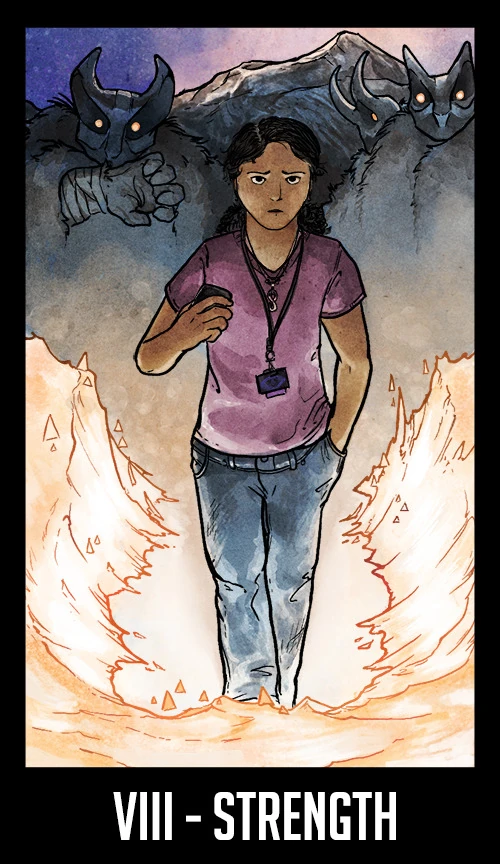
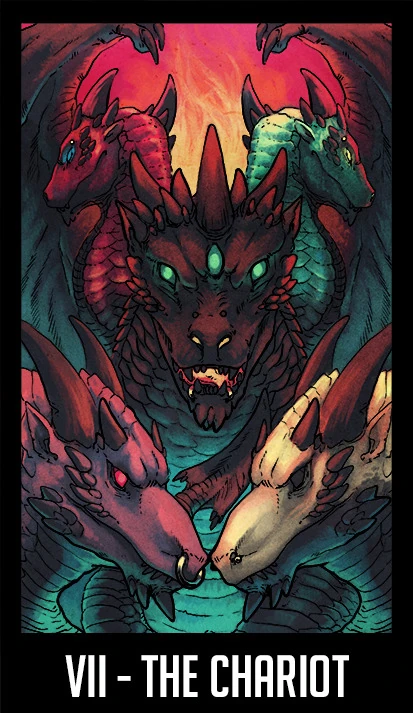
Place Strength, Two of Swords, Eight of Swords, and The Chariot as inner steadiness, the decision being delayed, the story that narrows your options, and the direction you can actively choose. Let the sequence end in movement, not prediction.


Welcome to Night Vale Tarot pros & cons
Pros
- A complete 78-card structure gives both Major and Minor Arcana room to develop.
- Jay Holloway’s illustrations connect tarot archetypes to characters and events from the podcast’s first three years.
- Black borders and condensed white titles keep a large spread visually coherent.
- The imagery is expressive enough to read from composition, color, and gesture even when a reference is unfamiliar.
- The compact velvet drawstring bag makes the first edition distinctive and portable.
Cons
- Readers who do not know Welcome to Night Vale will miss some character-specific layers.
- The first edition includes a velvet bag rather than a rigid storage box.
- Some cards are deliberately dark and may need strong table lighting.
- The busy narrative scenes can be slower to scan than a minimalist deck.
- Surreal references reward interpretation but can distract readers who want literal symbolism.
Buying guidance
Match the listing to the edition reviewed here: the first Welcome to Night Vale Tarot, with 78 cards illustrated by Jay Holloway and supplied in a purple velvet drawstring bag with a yellow embroidered eye-and-crescent emblem. Do not confuse it with the later Jessica Hayworth Tarot Deck #2.
The deck’s golden rule: receive the signal, check the evidence, and translate the strange into one grounded choice.
Final thoughts
Welcome to Night Vale Tarot succeeds because it treats adaptation as interpretation. Familiar tarot roles are not merely renamed; they are given scenes whose power, humor, uncertainty, or tenderness can carry a reading.
Approach it with curiosity and a little discipline. Let the art speak, let context add depth, and let the final card bring the broadcast back to your own next step.
 See Welcome to Night Vale Tarot at TopatoCo
Welcome to Night Vale Tarot FAQ
Who created the first Welcome to Night Vale Tarot?
Artist Jay Holloway designed and illustrated this first official 78-card Welcome to Night Vale Tarot deck.
How many cards are in the deck?
There are 78 cards: 22 Major Arcana and 56 Minor Arcana across Wands, Cups, Swords, and Pentacles.
Which part of the podcast does the artwork cover?
Holloway’s official portfolio describes the deck as depicting characters and events from the podcast’s first three years. It was released in June 2015.
Is this the same as the Jessica Hayworth deck?
No. This review covers Jay Holloway’s first Welcome to Night Vale Tarot. TopatoCo separately identifies Jessica Hayworth’s later work as Tarot Deck #2.
What comes with the first edition?
TopatoCo lists 78 cards in a purple velvet drawstring bag embroidered with the yellow Night Vale eye-and-crescent emblem.
Where can I buy Welcome to Night Vale Tarot?
See Welcome to Night Vale Tarot at TopatoCo. Check current price, stock, and shipping before ordering.
Keep exploring
6 Tarot Decks to Discover
Continue with six atmospheric TarotFans reviews and visual galleries.