
Divine Diversity Tarot Cards
Explore the complete Divine Diversity Tarot card gallery in canonical order. Use the filters to browse its traditional groups, then open any card for a larger carousel view.

A note from Aurica
Divine Diversity Tarot feels like walking into a lively room where nobody has been asked to soften the edges of who they are. Joe Phillips gives these cards bright colour, theatrical movement, and faces that seem ready to answer back. I am especially drawn to Justice: she meets my gaze without apology, sword steady and scales poised, as if fairness must be both clear-eyed and deeply human.
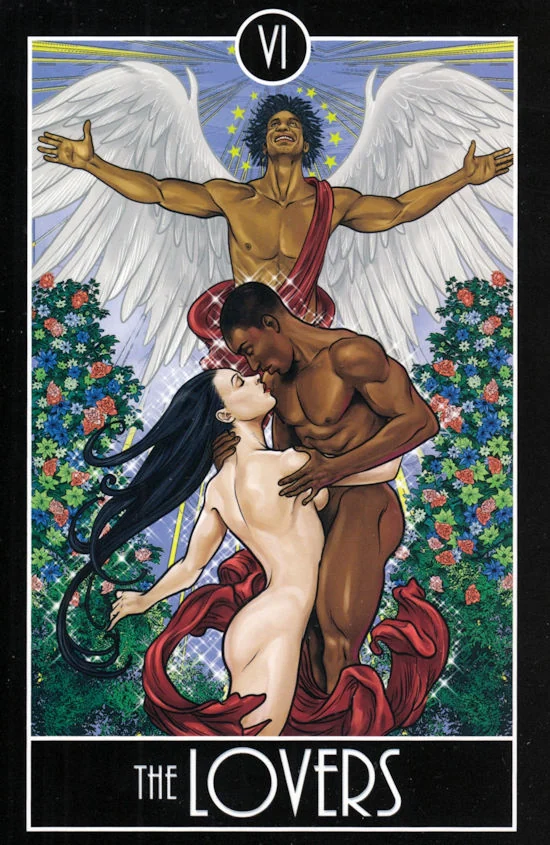
When I read with this deck, I notice relationship before I reach for a keyword. Who is leaning closer, who is making space, and who seems to hold the power in the scene? The Lovers becomes more than romance; the open wings, flowers, touch, and gathered bodies turn it into a question about consent, welcome, and being fully seen. Beside Justice, it asks whether a choice honours everyone involved rather than simply preserving the easiest peace.
The Fool and the Sun bring a delicious rush of movement. One steps towards the cliff with a rose and a delighted little dog, while the other leaps through gold light above the sunflowers. I would use that pair when someone feels trapped between caution and desire. First I would ask what freedom looks like in the pictures, then test that spark against the surrounding cards: is this brave openness, a needed fresh start, or enthusiasm that still needs a truthful boundary?
I love that this deck lets classic tarot bones carry so many kinds of bodies, loves, moods, and ways of belonging. Its images can be playful without becoming shallow and direct without losing tenderness. Divine Diversity Tarot reminds you that your presence is not a footnote in the story; you are allowed to step into the light, make an honest choice, and build a future spacious enough for your whole self.
Divine Diversity Tarot review: inclusive scenes with classic tarot bones
Divine Diversity Tarot is a bright, people-centered tarot deck for readers who want the cards to feel socially alive. It does not treat diversity as a decorative theme added after the fact. Different bodies, relationships, styles, moods, and identities sit directly inside the tarot scenes, so a reading often feels like watching real people negotiate choice, desire, fear, courage, fairness, and belonging.
The art has a confident comic-illustration pulse: clean lines, expressive faces, saturated color, and enough drama to make each card easy to enter. What keeps it readable is that the deck still follows the standard 78-card tarot structure. The native TarotFans gallery below uses the full standard set in safe canonical order, while excluding same-deck alternate variants so the count stays honest.
I like Divine Diversity Tarot most when the question has a human heartbeat. It is strong for relationship dynamics, creative confidence, identity work, chosen family, boundaries, and the uncomfortable moment when someone knows they need to be more visible but is not sure how much of themselves the room can hold.
Card study
The Lovers: choice, consent, and being fully seen
The Lovers is an obvious key card for this deck, but it is not only romantic. Here I read it as consent, self-recognition, attraction, and the bravery of choosing from the whole self rather than the most acceptable self.
In a relationship spread, this card asks whether the bond gives both people enough room to be visible. In a personal spread, it asks whether the choice in front of you is aligned with your actual values or just with the version of you that keeps everyone else comfortable.
How Divine Diversity Tarot reads in real spreads
In practice, this deck rewards observation before keywords. I still begin with the traditional meaning, but then I ask what the figures are doing with that meaning. Who is leaning in? Who is withholding? Who has power? Who looks safe, exposed, proud, exhausted, or ready to move?
That extra social layer is why Divine Diversity Tarot can feel direct without becoming simplistic. The Swords are not only thoughts; they are conversations, defenses, and hard truths. The Cups are not only feelings; they are tenderness, longing, intimacy, and memory. Wands carry performance, heat, pride, and creative courage. Pentacles bring everything back into body, work, money, care, and the life you actually have to live after the reading ends.
New identity, new voice
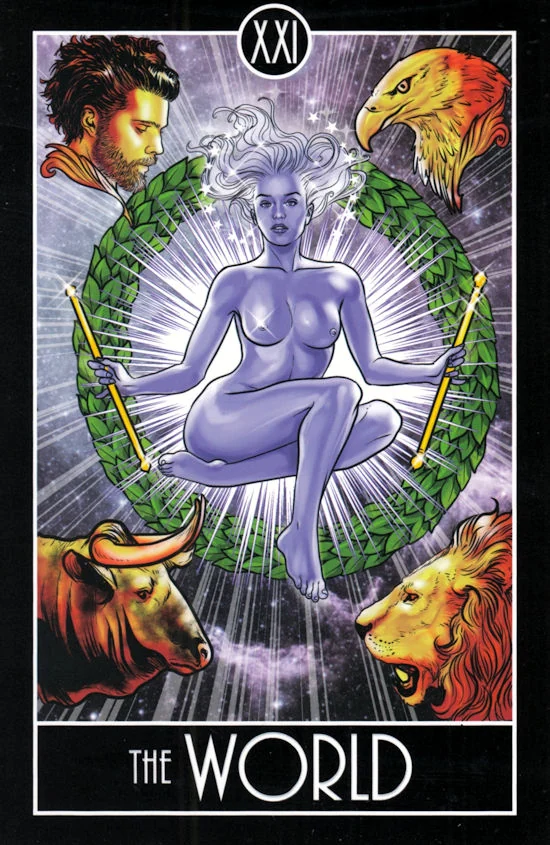
This four-card moment moves from beginning, to agency, to inner knowing, to integration. I would use it when someone is trying to step into a larger and more honest version of themselves.



Artwork, symbolism, and the complete card gallery
The strongest thing about the gallery is how readable the people are. Many decks ask modern readers to translate older symbolic scenes into current life. Divine Diversity Tarot often starts in current life already. The clothes, gestures, body language, and emotional setups give the reader practical material before the esoteric layer even begins.
That does not make the deck shallow. If anything, the vivid human surface can make the harder cards land more personally. Justice becomes a question about whose voice is included. The Devil becomes a question about pleasure, pressure, shame, and control. Pentacles ask who is supported by the practical system and who is quietly carrying more than their share.

Card study
Justice: fairness with a human face
Justice matters in this deck because representation is never only aesthetic. In a reading, I would ask who gets to define fairness, who has been left outside the room, and what kind of accountability would restore balance without turning cold.
This card is useful for legal, ethical, workplace, family, and community questions. It keeps the classic meaning intact, but it also makes the reader look at the human cost of pretending a situation is neutral.
Choice becomes clearer in company
Justice sharpens the question, while the next four-card moment lets feeling move through relationship rather than standing alone. I look for repeated gestures, colours, and distances between figures; together they show whether fairness is opening a door or merely keeping the peace.
Love that has room to breathe
This Cups line opens with feeling, moves into mutual recognition, remembers tenderness, and ends with shared emotional space. It is a good mini-spread for relationship check-ins where kindness matters as much as chemistry.


Strengths and watch-outs
The biggest strength of Divine Diversity Tarot is emotional recognition. For many readers, a deck becomes more useful when the art does not make them translate themselves out of the picture. This one can feel welcoming without becoming soft or vague. It still has conflict, grief, desire, pressure, and responsibility.
The watch-out is that the visual personality is strong. If you prefer very quiet, minimalist, Marseille-style, or purely ceremonial decks, this may feel too vivid. I also would not reduce every reading to identity alone. The deck is broader than that. It can read money, work, burnout, power, grief, creativity, and spiritual growth when the full tarot system is allowed to speak.
Creative courage under pressure
Here the fire starts as inspiration, becomes a wider vision, meets resistance, and matures into leadership. It suits artists, performers, organizers, and anyone defending their spark.


Who will love this deck
I would recommend Divine Diversity Tarot to readers who like expressive artwork, inclusive decks, and spreads focused on real emotional life. It is especially good for self-discovery, relationship readings, community dynamics, creative blocks, chosen-family questions, and moments when someone needs a deck that says, clearly and without apology, that they are allowed to be here.
Beginners can use it if they are willing to learn classic card meanings alongside the imagery. Intermediate readers may get the most from it because they can hold both layers at once: the familiar tarot skeleton and the deck’s vivid, modern, human storytelling.

Card study
Six of Pentacles: care, exchange, and power
The Six of Pentacles is a beautiful test card for Divine Diversity Tarot because generosity is never only about generosity. It is also about who has resources, who is allowed to ask, and whether help is offered with respect.
In practical readings, I would use this card to examine the power dynamics inside support. Is care mutual? Is someone giving in a way that keeps control? Is someone receiving without shame? The deck makes those questions feel immediate.
Let practical care follow insight
The Six of Pentacles asks who gives, who receives, and whether the exchange leaves everyone with dignity. The following group carries that question into everyday life, where collaboration, patience, and a strong foundation turn good intentions into something that can truly support you.
Building a life that supports you
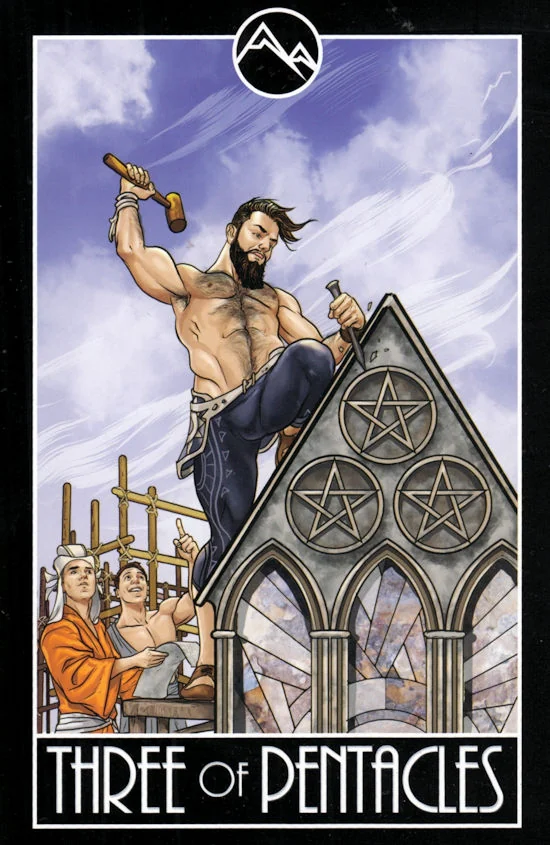
This Pentacles moment is practical and reassuring: plant the seed, collaborate well, enjoy earned independence, then manage resources with mature confidence.



Final Thoughts
Divine Diversity Tarot is colorful, readable, emotionally alert, and unusually direct about the human world that tarot readings actually happen inside. It is not the deck I would choose for a stripped-down symbolic study session. It is the deck I would choose when a querent needs clarity that does not erase personality, desire, history, or social context.
The complete card gallery gives the review enough evidence to judge the deck fairly. My verdict is simple: if you want classic tarot structure with inclusive, expressive, people-forward artwork, Divine Diversity Tarot is worth studying closely.

Divine Diversity Tarot FAQ
Does Divine Diversity Tarot use the traditional tarot structure?
Yes. The gallery presents the deck’s complete standard sequence in canonical order. Same-deck alternate Lovers and Devil variants are excluded because they are optional alternatives rather than missing cards.
Who created Divine Diversity Tarot?
The Divine Diversity Tarot card deck is credited in the source material to artist Joe Phillips, with the full scan source linked through Portfolio52 to Mary T. Cusack’s tarot deck archive.
What makes Divine Diversity Tarot different?
It reads classic tarot through expressive, inclusive, character-focused scenes. The cards keep recognizable tarot structure while putting identity, relationship, visibility, and real human body language near the center of the reading.
Is Divine Diversity Tarot beginner-friendly?
It can work for beginners who like vivid illustrated scenes and are willing to learn the classic card meanings at the same time. Readers who want very traditional Rider-Waite-Smith symbolism may need a few readings to adjust.
Where can I find Divine Diversity Tarot?
I am using a cautious Amazon availability search CTA rather than inventing a specific product listing. Check the live search and the video walkthrough before buying, especially because older or independent decks can move in and out of stock.


