Babylonian Tarot Card Gallery
Explore the verified recovered partial Gallery in preserved deck order. Choose a deck family below, then select any card to open its larger Lightbox view.

A note from Aurica
The first thing I feel in Babylonian Tarot is the hush of entering an old painted chamber. Its gods sit on thrones, raise cups, guard thresholds, and stare back with the weight of a story already moving. I pause before naming a familiar meaning, because posture and mood often speak first.
The High Priestess, Ishtar of Uruk, draws me into the deep blue around her, while the lions at her feet make her stillness powerful rather than passive. Beside her, Judgment becomes Etana and the Eagle rising over a pale landscape. Together they ask: what quiet knowing is ready to lift into action?
I read this deck slowly and visually. A bright colour, the direction of a hand, or the animal nearest a figure becomes my doorway; then I compare that detail with the card’s traditional work in tarot. The Babylonian names add depth, but the scene still tells us who holds power, what is offered, and where energy wants to move.
I would reach for Babylonian Tarot when a question has roots—family patterns, old promises, creative callings, spiritual study, or a choice that feels larger than today. Even the Two of Cups feels less like a sweet slogan and more like an honest exchange: two lives meeting at the vessel between them.
My favourite beginning is a three-card reading for inheritance, living power, and the next brave step. Let the first image show what you have carried, the second reveal what is alive now, and the third offer one action that honours both. When you meet these ancient symbols with curiosity and courage, you can choose the next bright line of your own story.

Babylonian Tarot is a myth-rich, hand-painted tarot deck that translates familiar tarot structure into Mesopotamian gods, spirits, tablets, arrows, disks, cups, and wands. The result feels like reading inside a painted temple wall: bright, ceremonial, and full of story clues.
Quick answer: choose this deck if you like mythology, symbolic art, and readings that ask you to slow down. It is not a plain keyword deck. It works best when you want a reading that feels reflective, ancestral, creative, and a little scholarly without becoming cold or academic.
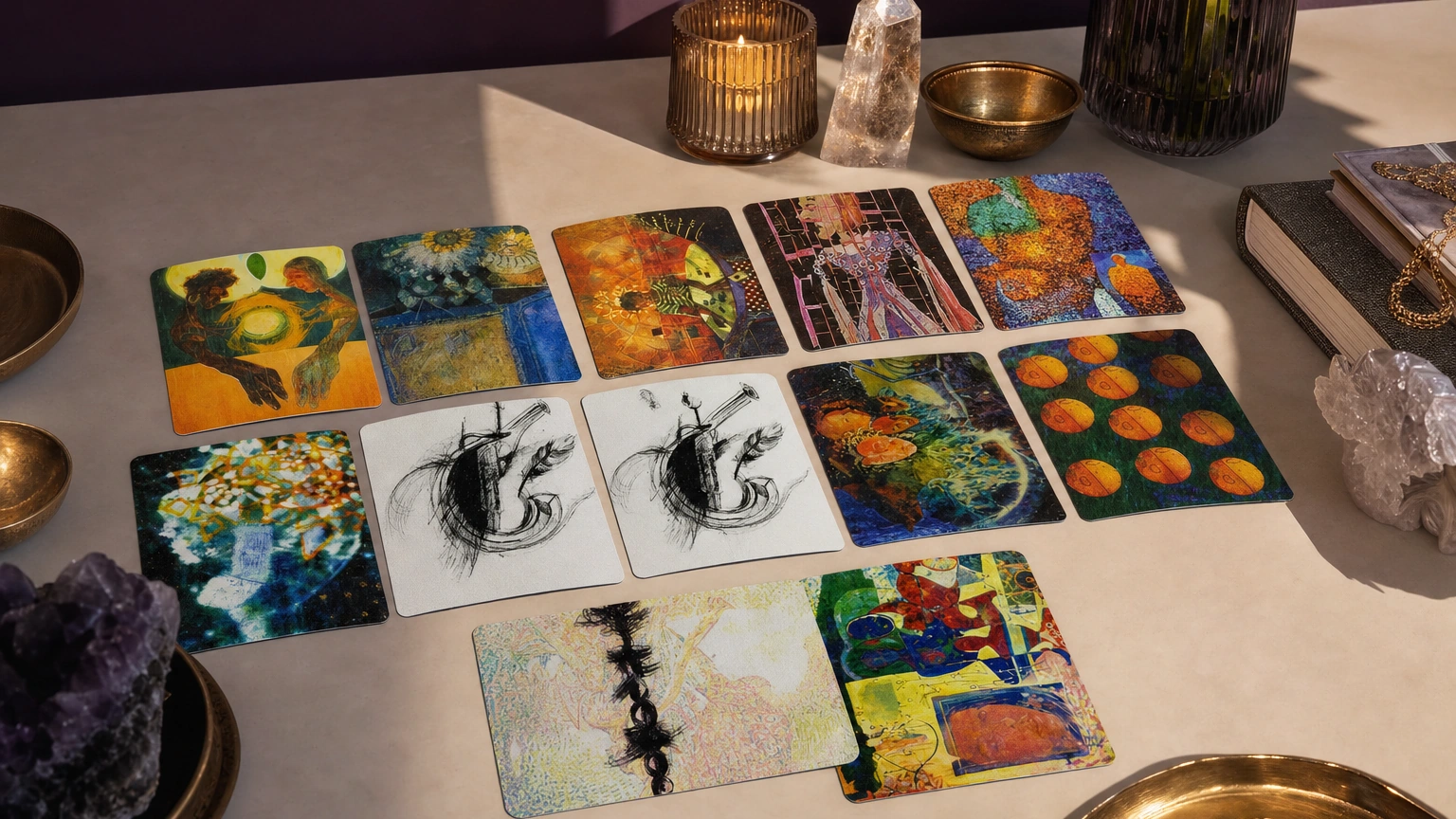
Babylonian Tarot card gallery
The TarotFans Gallery for this page is a verified partial archive from an eighty-three-card deck. It stays honest about the missing cards, and one unclear source image remains explicitly unidentified rather than guessed.
How this deck reads
In readings, Babylonian Tarot often feels direct but not simplistic. The figures stand strongly, the colors are saturated, and many cards look like a scene from a myth rather than a casual modern illustration. That makes it helpful for questions about patterns, vows, power, fear, family stories, and the long arc behind a choice.
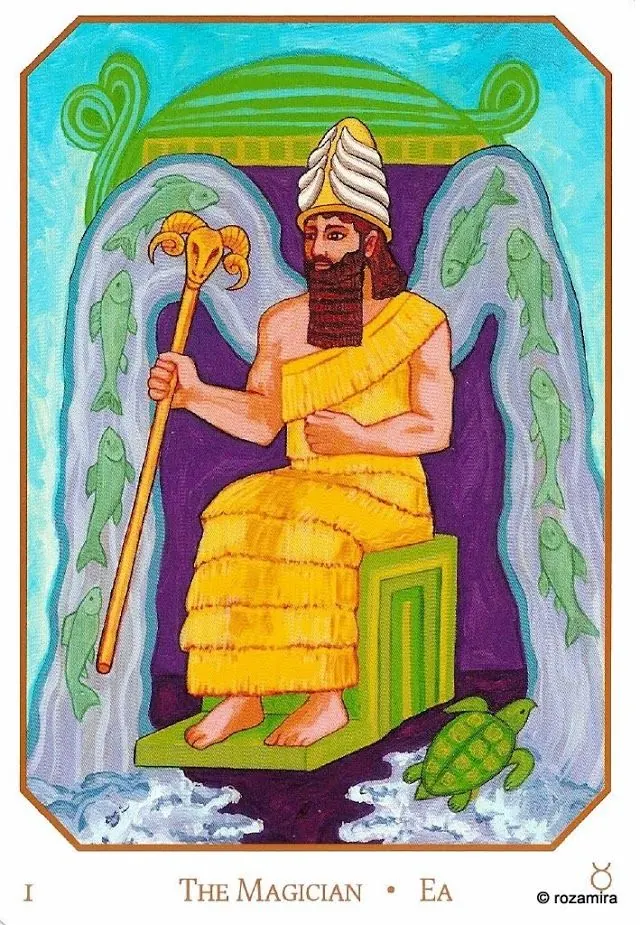
Creative power
Ea makes The Magician feel like a maker, teacher, and problem-solver. In a reading, this card points to practical magic: use the tools already in reach, name the problem clearly, and create a way through instead of waiting for permission.
The deck is especially strong when you read visually. Instead of rushing to a memorized keyword, look at posture, direction, object, animal, and color. Many images give a quick emotional answer first, then a deeper mythic layer when you sit with them.
Major Arcana energy
The Major Arcana cards are where the ancient-world identity feels loudest. They can be devotional, dramatic, or strange in a good way. If you enjoy decks that make the Majors feel like archetypal beings rather than simple life lessons, this one has real personality.
Four mythic gates in the Major Arcana
Use this mini sequence when a question feels bigger than daily planning. It moves from first instinct to sacred knowledge, pressure, and renewal.
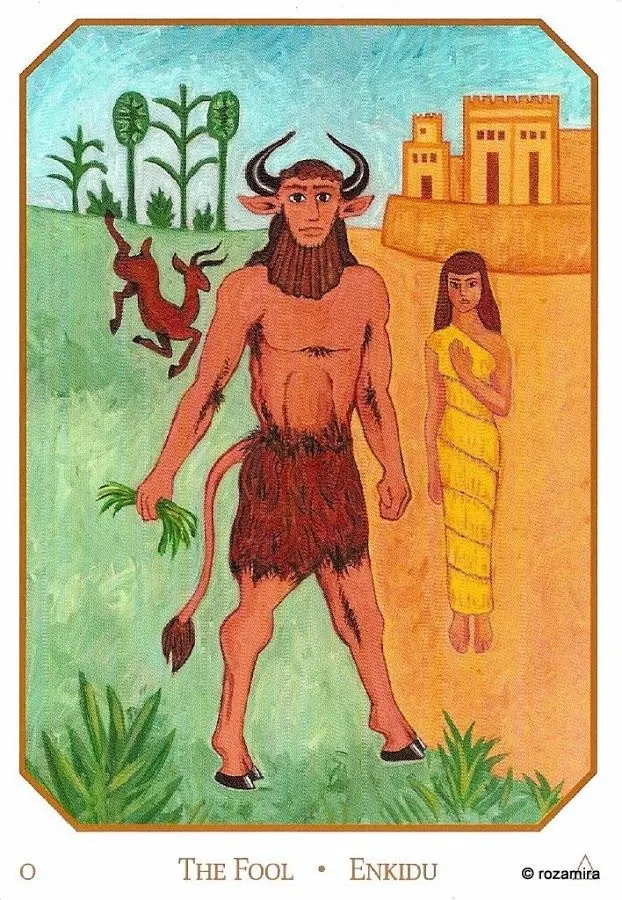
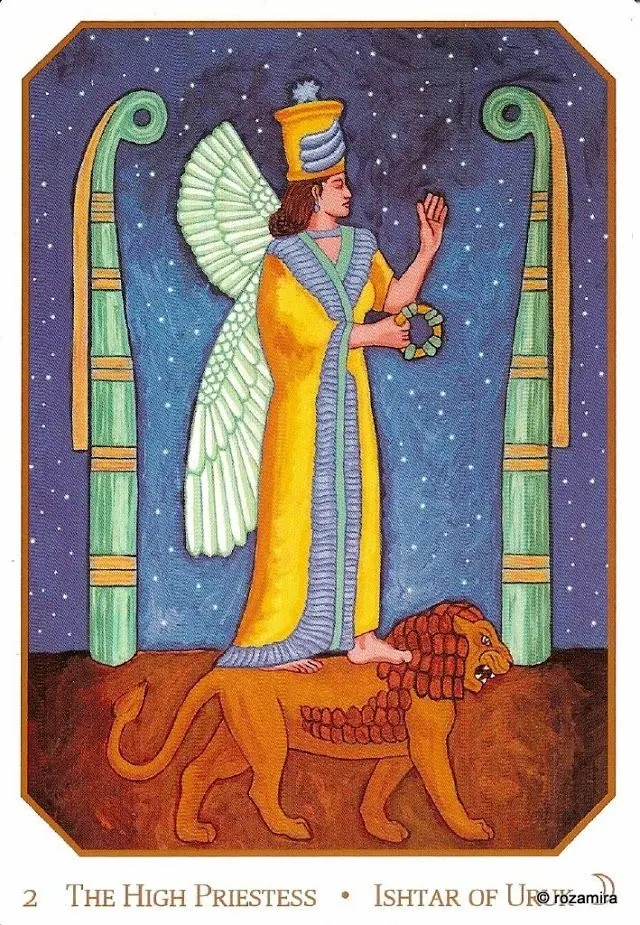

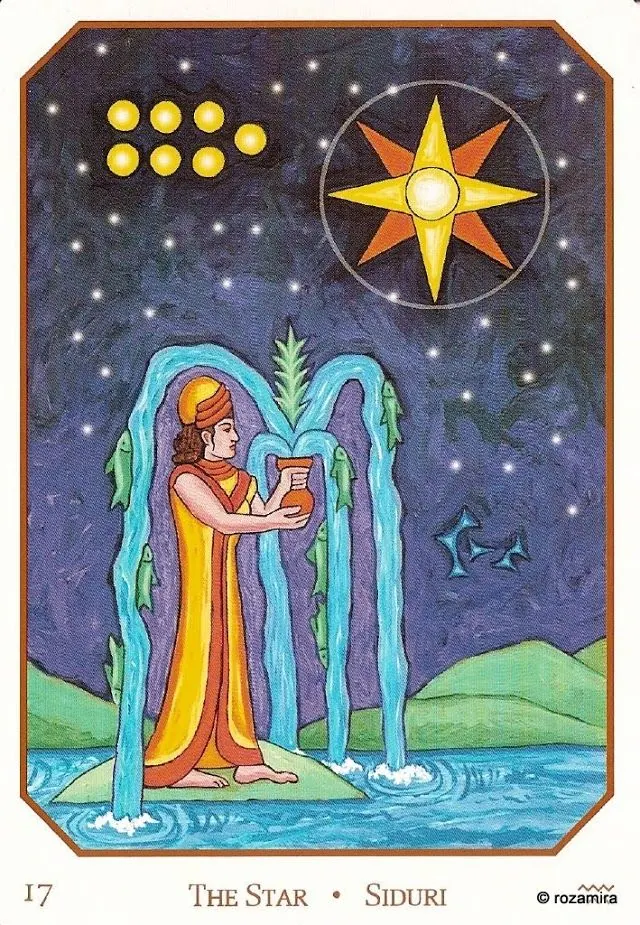
Sacred knowledge
This card is a good example of the deck at its best. The mystery is not vague. It feels embodied, powerful, and protective. It asks the reader to respect what is hidden instead of trying to flatten every symbol into a fast answer.
Because the deck uses mythic names, it rewards small research moments. You do not need to become an expert in Babylonian history to use it, but reading the titles out loud and noticing repeated images can make the deck much richer.
Wands, fire, and action
The Wands are bold and kinetic. They carry heat, movement, conflict, reward, ambition, and the cost of pushing too hard. This suit is where the deck is easiest to use for creative blocks, business choices, motivation questions, and energy management.
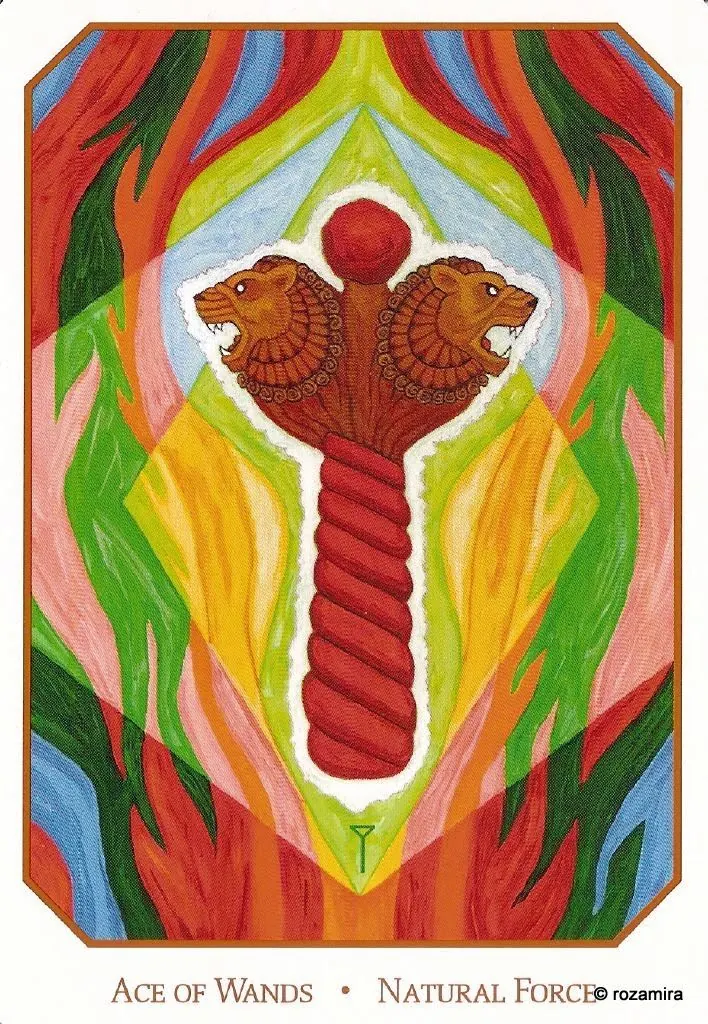
First flame
This Ace is not a tiny spark. It feels like raw life force entering the room. In readings it can say: begin, but respect the energy you are calling in. Fire helps, but it also asks for direction.
A four-card fire check
This spread is useful when someone has energy but does not know how to aim it. The cards move from spark, to tension, to speed, to earned confidence.
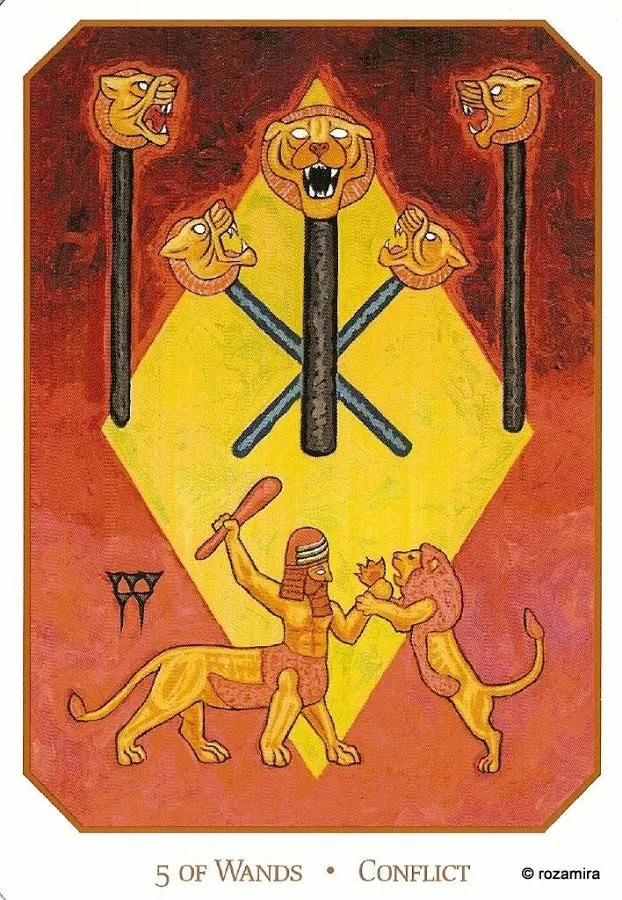
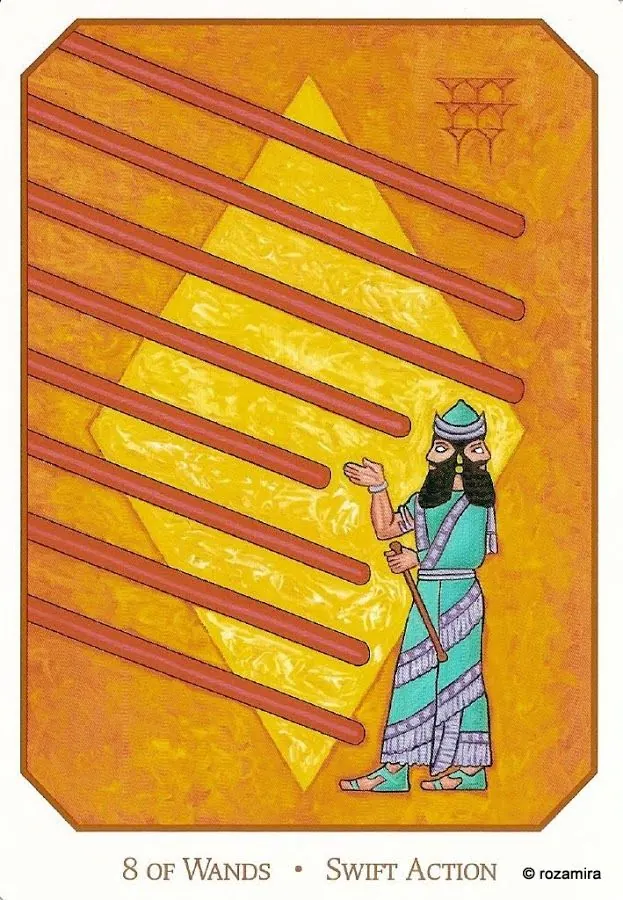
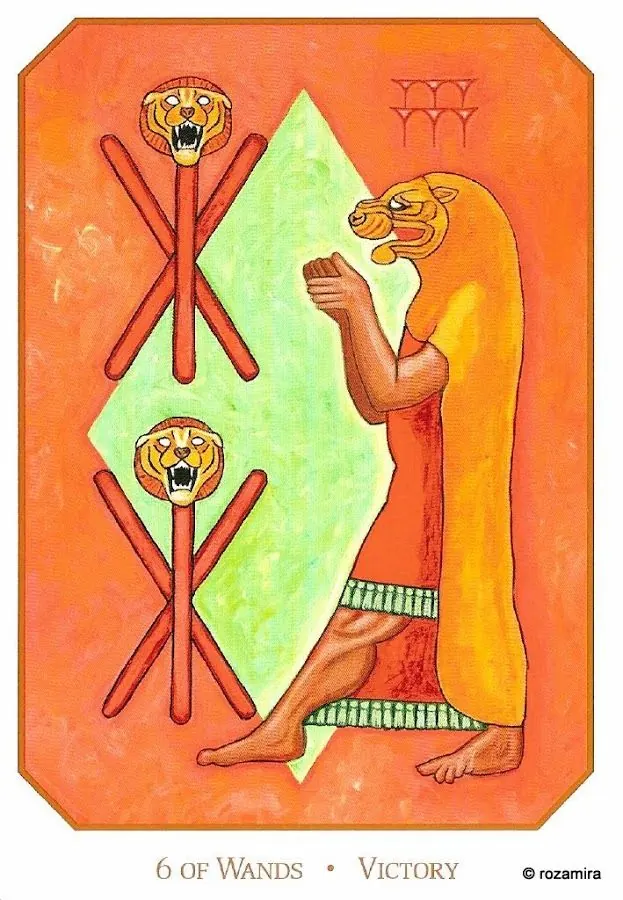
If a reading has many Wands, keep the interpretation grounded. The deck can make action feel heroic, but it also shows the stress of too much heat. Ask where courage is needed, then ask where the querent is burning energy without support.
Cups, feeling, and relationship patterns
The Cups in Babylonian Tarot are emotional, but not overly soft. They often feel ceremonial, like offerings, vows, blessings, and inner weather. This makes the suit useful for love readings, family questions, and emotional repair work.
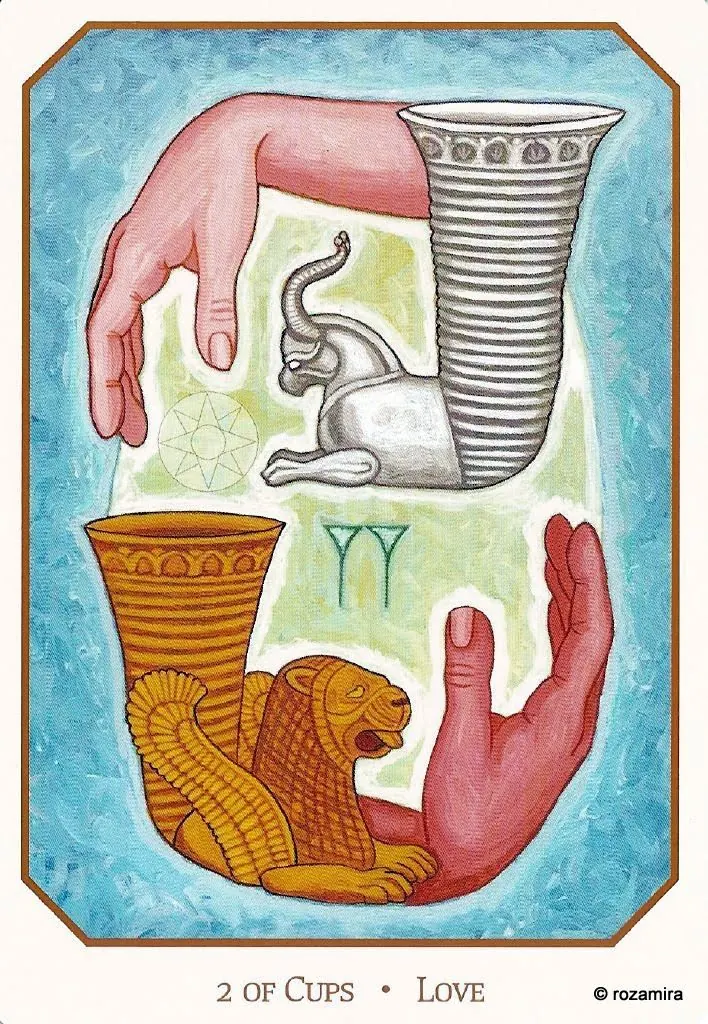
Mutual offering
Two of Cups keeps the relationship message simple: connection is not only attraction, it is exchange. The image works well for questions about trust, emotional balance, and whether two people are meeting each other with equal care.
For relationship readings, this deck is best when you avoid yes-or-no shortcuts. It has enough symbolic texture to ask better questions: What is being offered? What is being withheld? What pattern is older than this moment?
Disks, work, and material life
The Disks are where the deck becomes practical. Money, security, labor, patience, resources, and the body all show up with a grounded feel. These cards are useful when a mythic reading needs to come back to the real table: what can be paid, built, stored, shared, or repaired?
A four-card grounding spread
Use this spread when the reading is too big, emotional, or spiritual and needs to land in daily life. It moves from beginning, to protection, to help, to completion.

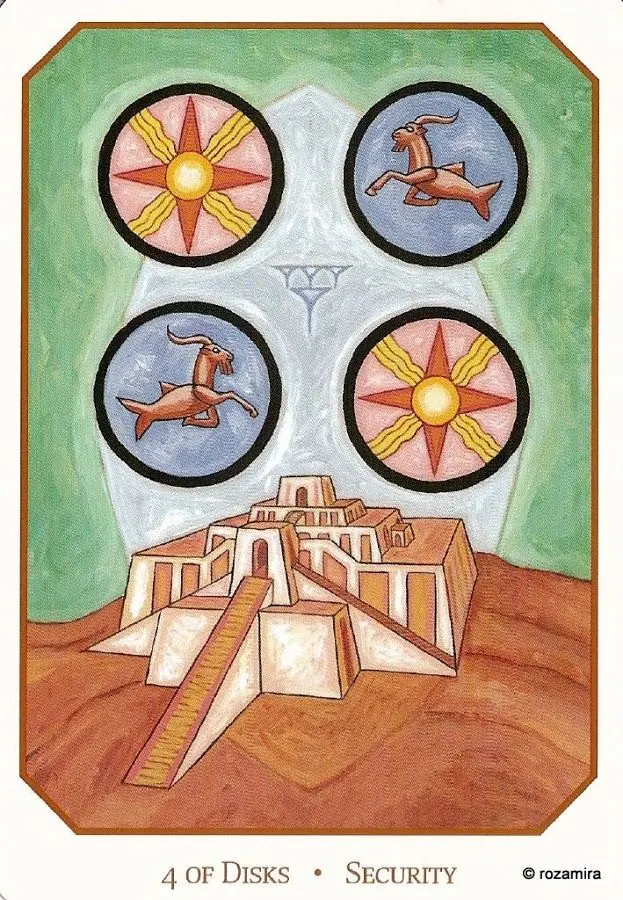

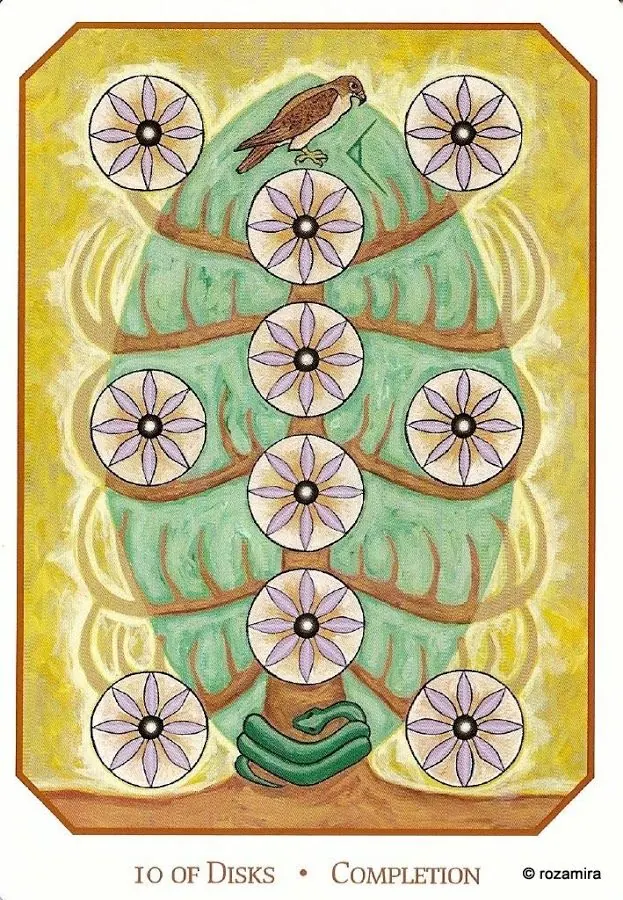
Real-world seed
This Ace is a reminder that spiritual insight still needs a place to live. In a practical reading, it points to the first tangible step: budget, body, home, tool, habit, or resource.
The Disks are also helpful for readers who find the deck intense. When the symbolism gets very mythic, the earth cards bring the question back to food, rest, money, craft, and what can actually be done this week.
Arrows, truth, and hard messages
The Arrows suit can be sharp. It handles conflict, grief, strategy, defeat, rest, relief, restriction, and ruin with clear imagery. These cards are not here to scare the reader. They are here to name what is happening so it can be handled with more honesty.
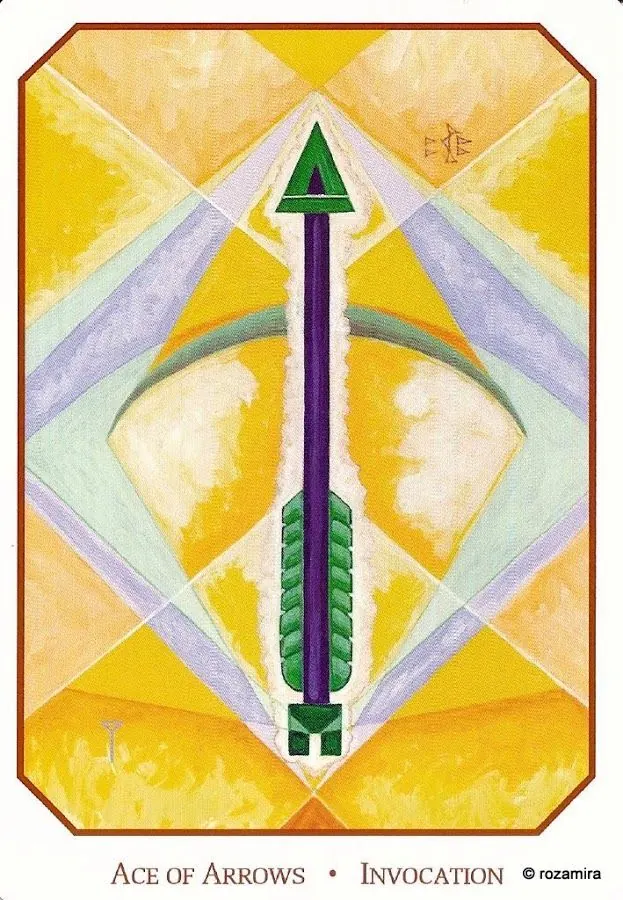
Calling the truth
Ace of Arrows begins the suit as a call for clarity. It is a strong card for naming the real issue, especially when a reading has been circling around the problem instead of speaking directly.
A four-card truth and repair spread
Use this sequence when a reading needs honesty without melodrama. It names the call, the possible peace, the wound, and the next dignified step.
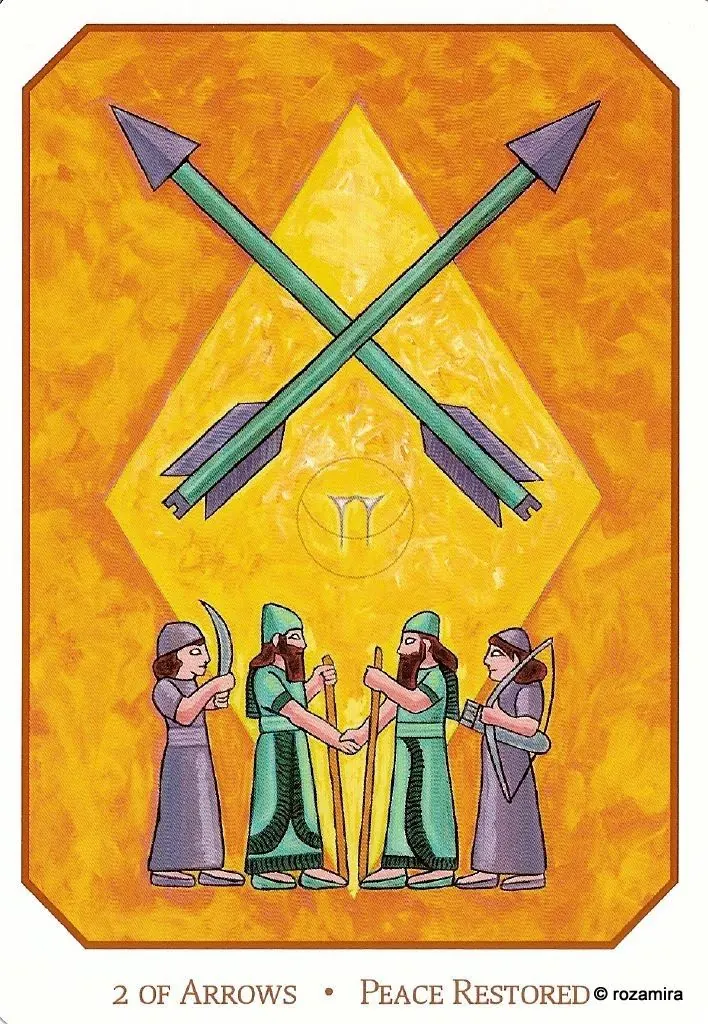
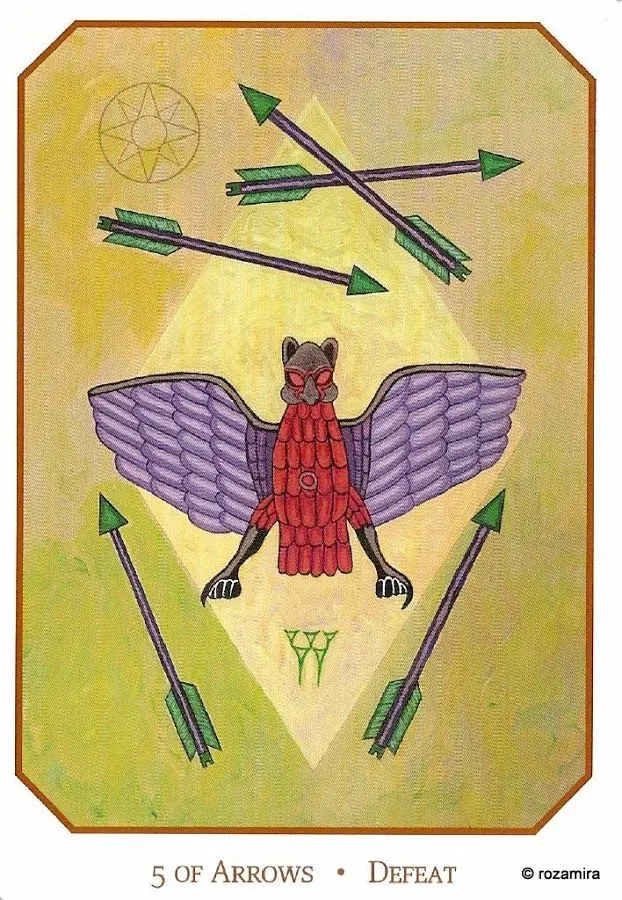
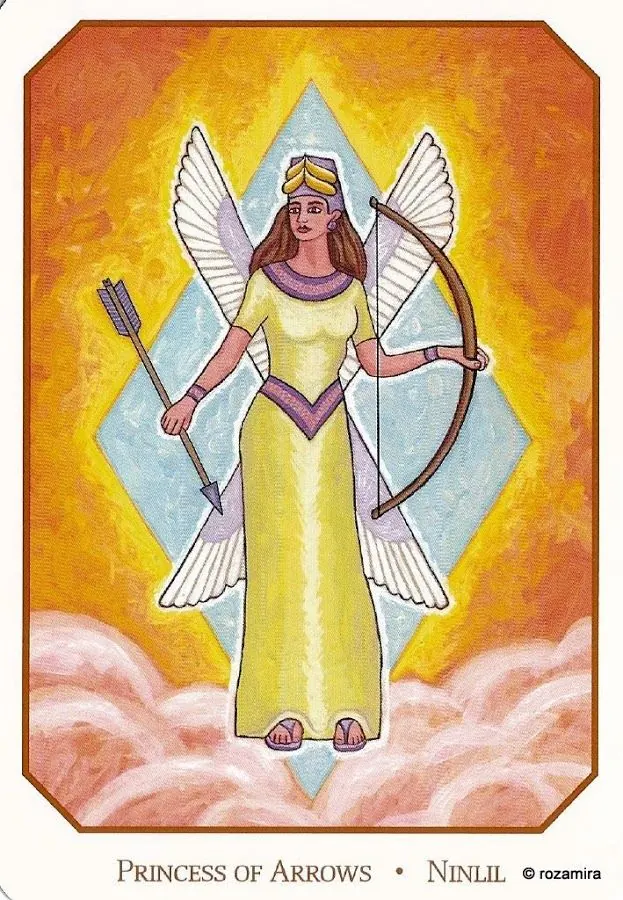
When Arrows appear, use careful language. Younger readers or sensitive clients do not need dramatic doom. They need plain meaning, kind boundaries, and a practical next question: What truth helps, and what story is only adding fear?
Beginner friendliness
Babylonian Tarot is beginner-possible, but it is not the easiest first deck. A beginner can read the scenes visually, yet the mythic names add an extra layer. If you are new, start with one-card pulls and write down what you see before checking a guidebook.
First step
The Fool gives the deck a strong opening note. It still carries beginner energy, but Enkidu makes that beginning feel wild, embodied, and ancient. This is not just naivety; it is the start of a mythic journey.
A good practice is to separate the reading into three passes. First, read the picture. Second, read the tarot title. Third, read the mythic name. That keeps the deck accessible while still respecting its depth.
Pros and cons
| Pros | Cons |
|---|---|
| Distinctive Mesopotamian mythic identity | Not the fastest deck for total beginners |
| Bright, memorable, symbolic artwork | Some mythic names invite extra study |
| Excellent for ancestry, creativity, and spiritual reflection | Current TarotFans Gallery is a verified partial archive |
| Feels different from common Rider-Waite clones | May feel too dense for quick daily pulls |
Final thoughts
Babylonian Tarot is best for readers who want a deck with a strong world of its own. It asks for attention, but it gives back atmosphere, memorable symbols, and readings that feel rooted in story rather than quick keywords.
If you want a simple modern beginner deck, this may not be the first choice. If you want a colorful mythic tarot that feels ancient, strange, and alive, Babylonian Tarot is worth exploring slowly.

Babylonian Tarot FAQ
Is Babylonian Tarot good for beginners?
It can be, but it is better for beginners who enjoy mythology and do not mind learning extra symbolic references.
Is the TarotFans Gallery complete?
No. Babylonian Tarot is an eighty-three-card deck, and this verified recovered Gallery is partial. TarotFans shows only the card images whose source identity can be retained honestly.
Is this deck Rider-Waite based?
It keeps tarot structure, but the imagery and card titles lean strongly into Babylonian and Mesopotamian mythic symbolism.
What kinds of readings suit this deck?
It works well for ancestry questions, creative blocks, spiritual study, shadow work, and reflective spreads with time to interpret images.
Is the artwork dark?
The tone can be serious, but the palette is bright and colorful rather than gloomy.
Who should skip this deck?
Readers who want very simple, modern, keyword-style cards may prefer a cleaner beginner deck.